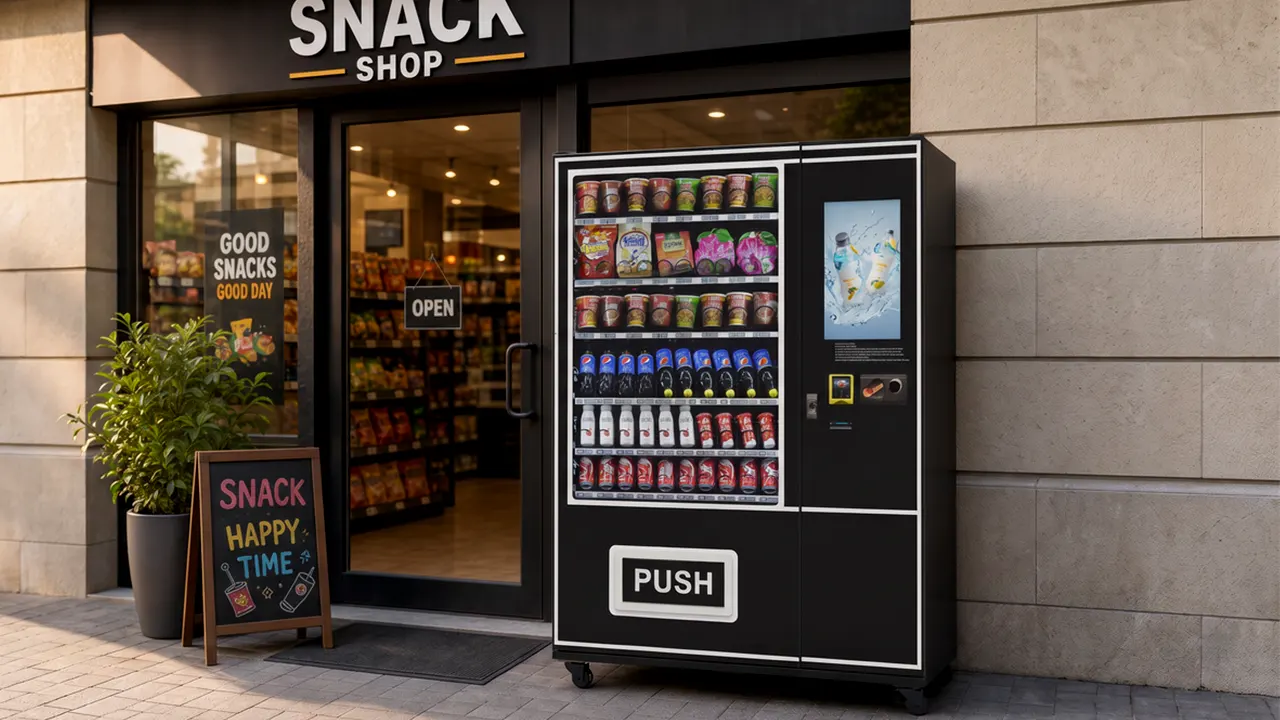
Vending machine insurance usually starts with general liability and protection for the machine itself, then expands according to the way the business operates. Refrigerated equipment can add equipment-breakdown and spoilage exposure. Cashless machines introduce payment, account-security, and network risks. Employees, service vehicles, higher-value products, and machines installed away from the operator’s main facility create additional insurance questions. Published 2025 policy-purchase data from Insureon reports median monthly premiums of $37 for general liability and $58 for a business owner’s policy among vending machine operators.[1] Those figures are useful reference points, not quotations. The more important task is identifying exactly what needs protection: the cabinet, optional hardware, inventory, customer liability, refrigeration, downtime, vehicles, and connected systems do not necessarily fall under the same policy.
Vending Machine Insurance at a Glance
There is no single policy that automatically covers every vending machine loss. A vending business combines physical equipment, merchandise, customer interaction, electrical components, payment hardware, software, transportation, and maintenance work. Each part creates a different financial exposure.
For a simple machine selling packaged products, general liability and property protection may be the first policies to examine. Add refrigeration and the discussion changes. Add employees, vehicles, remote management, or expensive inventory and it changes again.
I’d recommend starting with the loss rather than the insurance product. Ask what would happen financially if a customer were injured, a cabinet were vandalized, a compressor failed, chilled inventory had to be discarded, a delivery vehicle crashed, or an administrative account controlling connected machines were compromised. Once the loss is defined, the appropriate policy is much easier to identify.
| Risk | Example | Coverage to Review | Detail Worth Confirming |
|---|---|---|---|
| Customer injury | A person is injured while using or standing near the machine | General liability | Per-occurrence limit, aggregate limit, exclusions |
| Product-related claim | A product allegedly causes illness or injury | Product liability | Products-completed operations terms and product exclusions |
| Cabinet damage | A covered event damages the machine | Commercial property or equipment coverage | How machines away from the main premises are insured |
| Mechanical failure | A compressor, motor, or electrical component breaks down | Equipment breakdown | Mechanical and electrical breakdown definitions |
| Spoiled products | Cooling failure makes temperature-sensitive inventory unsellable | Spoilage coverage | Covered causes, sublimits, documentation requirements |
| Vandalism or theft | A door, screen, payment device, or product compartment is damaged | Property and crime-related coverage | Theft conditions, deductibles, inventory limits |
| Employee injury | A route worker is hurt while lifting, stocking, or servicing equipment | Workers’ compensation | Worker classification and applicable requirements |
| Vehicle accident | A restocking or service vehicle is involved in a collision | Commercial auto | Owned, rented, leased, and employee-owned vehicle use |
| Connected-system incident | A remote-management account or related digital system is compromised | Cyber insurance | First-party response and third-party liability |
This table is a planning tool, not a statement that a particular loss will be covered. Policy wording, exclusions, deductibles, endorsements, limits, and the facts of the incident determine how an insurer responds.
How Much Does Vending Machine Insurance Cost?
Insurance cost depends on far more than the number of machines. An operator with five basic indoor snack machines can present a very different risk from an operator with five refrigerated machines carrying expensive food, large touchscreens, remote-management hardware, and route vehicles.
One useful reference is Insureon’s vending-machine-specific cost data, updated in 2025. Its published figures are based on the median cost of policies purchased by vending machine operators through its platform. Using the median reduces the influence of unusually high or low premiums.[1]
| Policy Type | Published Monthly Cost | Published Annual Cost | Main Exposure |
|---|---|---|---|
| Business owner’s policy | $58 | $698 | General liability plus qualifying business property |
| General liability | $37 | $442 | Third-party bodily injury and property damage |
| Workers’ compensation | $86 | $1,036 | Work-related employee injury |
| Commercial umbrella | $59 | $707 | Additional liability limits over qualifying underlying policies |
| Commercial auto | $171 | $2,054 | Business vehicle exposure |
These numbers should not be treated as a vending insurance price list. They come from one policy-purchase dataset. Actual premiums can change substantially with equipment value, revenue, claim history, employee count, product type, vehicle use, policy limits, deductibles, site conditions, and optional endorsements.
Why Two Similar Fleets Can Have Different Premiums
Machine count is only one underwriting variable. A machine selling inexpensive packaged snacks does not expose the insurer to the same potential property loss as a vending machine carrying high-value electronics or collectibles. A non-refrigerated machine does not create the same spoilage issue as fresh-food vending. A cash-only unit has a different technology profile from a self-service kiosk connected to payment services and cloud management.
Equipment value also needs to be accurate. The price of the base cabinet may not equal the replacement value after a large touchscreen, elevator delivery system, refrigeration module, card reader, bill acceptor, telemetry hardware, custom locker module, or other options are installed.
The same issue applies to inventory. A machine that normally carries $300 of packaged products and a machine that can contain several thousand dollars of specialty merchandise should not be described as identical property exposures.
Premium Is Only One Part of the Cost
A low premium can become expensive if the deductible is too high for the losses the operator expects to claim, or if an important category is excluded. A quote should be compared by limits, deductibles, sublimits, covered causes, exclusions, valuation method, and machine-location terms before comparing the annual premium.
For example, a $1,000 deductible means the business retains the first $1,000 of an eligible loss, subject to the policy terms. That may be perfectly reasonable for a major claim, but it also means many small screen, lock, or component losses may remain operating expenses.
Insurance works best when it protects against losses that are difficult for the business to absorb on its own. The Small Business Administration makes the same broader point in its business-insurance guidance: businesses should assess risks and match insurance to unexpected costs that could materially affect operations.[2]
What Does Vending Machine Insurance Cover?
The answer depends on which policies have been purchased. “Vending machine insurance” is a convenient description, but insurers generally provide coverage through established commercial insurance products rather than one universal vending policy.
A business owner’s policy may combine general liability and qualifying property coverage. Separate policies or endorsements may be needed for equipment breakdown, spoilage, commercial vehicles, cyber events, employee injuries, higher liability limits, or property that moves between locations.
| Business Asset or Exposure | Coverage Commonly Reviewed | What Should Be Checked |
|---|---|---|
| Machine cabinet and installed components | Commercial property | Location terms, covered causes, valuation, deductible |
| Customer bodily injury | General liability | Occurrence and aggregate limits |
| Products sold to customers | Product liability | Products-completed operations coverage and exclusions |
| Internal electrical or mechanical failure | Equipment breakdown | Covered equipment and causes |
| Refrigerated inventory | Spoilage endorsement or related property coverage | Covered causes, inventory limits, waiting periods |
| Cash and certain theft losses | Crime-related coverage | Cash limits, theft definitions, evidence requirements |
| Service and restocking vehicles | Commercial auto | Ownership and permitted-use structure |
| Employees | Workers’ compensation | Applicable requirements and worker classification |
| Remote management and connected accounts | Cyber insurance | Incident response, restoration, interruption, third-party claims |
There is an important distinction between the machine and the business around the machine. A damaged cabinet is a property problem. A customer injury is a liability problem. A spoiled sandwich is an inventory problem. A route-vehicle collision is an auto problem. One incident can involve more than one of those categories at the same time.
General Liability and Product Liability
General Liability
General liability is usually one of the first policies a commercial vending operator evaluates because customers interact physically with unattended equipment. It can address eligible third-party bodily injury and property damage claims, subject to the policy.
The incident does not have to originate inside the dispensing mechanism. A customer could allege that a machine component caused an injury, that water from refrigerated equipment damaged surrounding property, or that a condition associated with the installation contributed to a fall.
Insureon’s 2025 vending-machine data reports a median general liability premium of $37 per month. The example policy shown in its data carries a $1 million per-occurrence limit, a $2 million aggregate limit, and a $500 deductible.[1] Those limits are examples from the dataset, not a universal recommendation.
Placement contracts can also set their own liability requirements. The policy selected for a vending business therefore needs to satisfy both the operator’s risk tolerance and any valid contractual obligations.
Product Liability
A vending machine is a retail channel, not merely a cabinet. Once a product is sold, the operator can face allegations connected to contamination, allergens, packaging, product condition, foreign objects, labeling, or other product-related injuries.
Product liability may be included within a general liability policy through products-completed operations coverage, but the operator should verify that the actual merchandise is acceptable to the insurer. “Packaged retail products” is not a sufficiently precise description when the machine is selling chilled meals, cosmetics, electronics, health-related products, glass containers, or another category with different risk characteristics.
The machine’s inventory mix should stay consistent with the insurance application. If an operator changes a machine from shelf-stable snacks to refrigerated prepared food, that is a meaningful operating change and should be reviewed rather than treated as a simple merchandising update.
Property, Theft, Vandalism, and Equipment Breakdown
Commercial Property Coverage
Commercial property coverage is intended to protect eligible business property against covered causes of loss. For vending operations, the crucial question is often where the machine is located when the loss occurs.
Vending equipment commonly sits inside premises controlled by another business or property operator. A policy focused only on an office or warehouse should not be assumed to cover every machine at every placement site.
I’d recommend asking the broker to identify the exact policy wording that applies to machines installed away from the operator’s main premises. Depending on the arrangement, equipment may need to be scheduled individually or covered through an appropriate floater, inland marine form, or other property structure.
Replacement Value Is More Than the Base Cabinet Price
A useful equipment value should reflect the machine that would actually have to be replaced after a severe loss. That may include the cabinet, touchscreen, refrigeration system, elevator mechanism, cash equipment, card reader, telemetry device, custom control hardware, and other installed options.
This is one area where manufacturer documentation becomes genuinely useful. Zhongda Smart’s vending machine product range shows how widely machine configurations can differ: standard snack-and-drink machines, elevator machines, outdoor configurations, collectible machines, refrigerated units, and specialty retail systems can carry very different hardware.
An insurer does not need marketing language. It needs an accurate asset description.
Theft and Vandalism
Theft exposure depends on more than the amount of cash inside a machine. Modern units may contain a touchscreen, card terminal, bill validator, control boards, refrigeration components, locks, and valuable merchandise. Forced access can damage several of those items even when the amount actually stolen is small.
Document the machine before installation with clear photos of the front, sides, payment area, serial plate, locks, and final site position. Those images establish condition before a later incident.
Equipment Breakdown
Ordinary property insurance and equipment breakdown coverage do not necessarily respond to the same event. External physical damage and internal mechanical failure are different loss mechanisms.
A compressor can fail without the cabinet being destroyed. A power component can suffer electrical damage while the outside of the machine looks normal. A motor or control system can stop working after an internal failure that is not treated like fire, vandalism, or another standard property event.
For refrigerated or heavily electronic equipment, ask how the policy treats motors, compressors, refrigeration systems, control boards, electrical arcing, power-related damage, and other internal failures. The definition of covered equipment matters more than the name of the policy.
Refrigerated Machines: Spoilage and Food-Safety Risk
Refrigeration changes vending risk because machine performance and product condition become connected. A cabinet can remain physically repairable while everything inside it becomes unsellable.
The FDA Food Code includes specific provisions for vending machines holding time/temperature-controlled food, including controls intended to prevent the machine from continuing to vend qualifying food when required temperatures cannot be maintained.[3] The 2022 Food Code remains the current complete edition referenced by the FDA, with later supplemental material and corrections.
One Refrigeration Failure Can Create Several Separate Costs
Consider a compressor failure in a machine loaded with chilled products. The financial loss can include:
diagnostic labor;
replacement of the failed refrigeration component;
damage to related electrical components;
discarded inventory;
emergency travel or service expenses;
lost sales while the machine is unavailable.
Those costs may not all fall under the same coverage. Equipment breakdown may address an eligible mechanical failure. Spoilage protection may address qualifying inventory losses. Business-income coverage may require a specific covered cause and can include waiting periods or other conditions.
If I were choosing coverage for a refrigerated machine, I’d ask the broker to walk through one complete compressor-failure scenario from beginning to end. Which cost is covered? Which deductible applies? Is spoiled inventory subject to a separate sublimit? Does downtime qualify? A clear answer before deployment is far more useful than a broad statement that “refrigeration is covered.”
Temperature Records Can Matter
When temperature-sensitive inventory is discarded, the operator should be able to explain why. Useful evidence can include machine alerts, service reports, product invoices, stocking records, temperature logs where available, photographs, timestamps, and the technician’s diagnosis.
These records are valuable even when no insurance claim is filed. They help identify whether the problem came from a failed component, a door that did not close, incorrect loading, interrupted power, unsuitable ambient conditions, or another cause.
Choose Refrigeration Around the Product
A specification that simply says “refrigerated” does not answer whether the machine is appropriate for a particular product. Product requirements, airflow, cabinet loading, package size, ambient conditions, operating temperature, and food-handling procedures all matter.
Zhongda Smart’s current cashless refrigerated vending machine specifications, for example, list adjustable cooling, configurable cargo lanes, remote management, multiple payment options, and connected operation. Those are machine specifications, not insurance guarantees. They are the kind of details an operator should keep with the equipment file because they describe what is actually installed.
Cashless Machines: Payment and Cyber Risk
Cashless vending adds a digital layer to an otherwise physical retail asset. The equipment may connect to payment terminals, remote dashboards, cloud services, mobile networks, inventory-management tools, administrative accounts, software updates, and third-party service providers.
The PCI Security Standards Council states that PCI DSS provides baseline technical and operational requirements for protecting payment account data. Its intended audience includes entities that store, process, or transmit cardholder data, as well as entities that can affect the security of the cardholder-data environment.[5]
The practical responsibilities of a vending operator depend on the payment architecture. Using a third-party payment terminal can reduce the amount of sensitive payment information handled directly by the operator, but it does not eliminate the need to manage physical terminal security, administrative access, passwords, provider relationships, and connected devices.
Cyber Risk Is Broader Than Stolen Card Numbers
A connected vending operation may depend on digital services for sales reporting, inventory status, remote pricing, device health, refunds, advertising content, or maintenance alerts. A compromised account or service interruption can therefore affect operations even when payment-card data is not exposed.
The Federal Trade Commission’s small-business cybersecurity guidance recommends practical controls including software updates, backups, strong passwords, multi-factor authentication, access restrictions, secure remote access, hardware and software inventory, and incident-response planning.[4]
Those controls make sense for vending fleets because a single administrative account can sometimes manage many machines. The account deserves protection proportional to the number of assets and business functions it can affect.
Questions Worth Asking About Cyber Insurance
Does the policy include forensic investigation after a covered cyber incident?
Are data restoration and system recovery included?
Can eligible lost income from a covered cyber interruption be claimed?
Does the policy address third-party claims?
How are incidents involving a payment provider or cloud service handled?
Are fraud, cyber extortion, or social-engineering events covered, limited, or excluded?
What security controls did the insurer require during underwriting?
Does the operator have to maintain MFA, backups, patching, or other controls throughout the policy term?
A cyber application should describe the real operating environment. Checking “MFA enabled” when administrators are still sharing one password across a service team creates a documentation problem that is better fixed before coverage is bound.
Warranty vs. Maintenance vs. Insurance
Warranty, maintenance, and insurance solve different problems. Confusing them can lead to unrealistic expectations about who pays when equipment fails.
A manufacturer’s warranty generally addresses qualifying defects or covered quality issues during the warranty period and according to the warranty terms. Maintenance deals with cleaning, wear, adjustment, inspection, and routine service. Insurance is intended to transfer defined financial risks that fall within a policy.
Zhongda Smart’s current product and support information states a one-year warranty for qualifying equipment and describes replacement parts and remote technical support for covered issues. The exact conditions should always be checked against the applicable purchase and after-sales terms. The company’s vending machine FAQ and configuration guide also covers product compatibility, customization, payment systems, remote management, temperature control, shipping, warranty, and related machine questions.
| Failure or Cost | Manufacturer Warranty | Routine Maintenance | Insurance Discussion |
|---|---|---|---|
| Qualifying manufacturing defect during the warranty period | May apply under warranty terms | Usually not the primary solution | Usually not the primary solution |
| Normal wear | Typically subject to warranty exclusions | Yes | Usually not |
| Dirty condenser reducing cooling performance | Usually not a defect issue | Yes | Usually not |
| Cabinet damaged by an insured external event | No | No | Property coverage may apply |
| Internal compressor breakdown | Depends on cause, timing, and warranty terms | Depends on cause | Equipment breakdown may apply |
| Spoiled refrigerated inventory | No | No | Spoilage coverage may apply |
| Customer bodily injury claim | No | No | General liability may apply |
| Route-vehicle collision | No | No | Commercial auto may apply |
| Covered cyber incident | No | Security response may still be required | Cyber coverage may apply |
The wording “may apply” is deliberate. Coverage depends on the policy, while warranty responsibility depends on the sales agreement and warranty conditions. Neither should be assumed from a simple table.
Maintenance Still Matters When Insurance Exists
Insurance is not a substitute for condenser cleaning, lock inspection, cable checks, software administration, door adjustment, drainage checks, product-lane setup, or normal vending machine repair. Predictable maintenance costs belong in the operating budget.
Trying to insure ordinary wear usually creates the wrong expectation. The useful role of insurance is protecting the business from defined losses large enough to justify transferring the risk.
Insurance Before Installation: Freight, Delivery, and Setup
A vending machine can be damaged before it makes its first sale. Freight, warehouse handling, unloading, final delivery, and installation create a separate chain of risk that should not be confused with ordinary operating insurance.
Possible losses include cabinet dents, cracked touchscreens, broken refrigeration components, forklift impact, moisture exposure, missing accessories, payment-terminal damage, and tipping during unloading.
Know When Responsibility Changes Hands
Before shipment, the buyer should understand the commercial agreement well enough to know when responsibility for the machine changes hands, what freight or cargo protection applies, and what documentation is required if damage is found.
Do not assume that a policy written for installed machines automatically covers cargo while it is moving. Likewise, do not assume a freight claim remains available indefinitely after a damaged machine has been accepted and unpacked without documentation.
Photograph the Machine at Delivery
A simple receiving process can prevent arguments later. Photograph the outer packaging before removal, especially if it shows crushing, punctures, water exposure, or impact. Photograph the cabinet immediately after unpacking. Record the serial number and any visible damage before powering the machine.
For refrigerated equipment, allow the machine to be handled and commissioned according to the manufacturer’s instructions. A refrigeration system that has been transported or tilted may require specific handling before startup.
Installation Creates a New Risk Stage
Once the machine reaches the placement site, confirm the floor, clearance, electrical supply, ventilation, network connection, accessibility, and any anchoring requirements before normal operation begins.
A machine that was undamaged in transit can still be installed badly. Improvised electrical connections, unstable positioning, blocked refrigeration airflow, unsuitable exposure, or inadequate access for service can create avoidable problems that insurance was never meant to solve.
How Machine Design Changes the Risk
Two vending machines can look similar to a customer while creating very different operating exposures. Cabinet construction, product-delivery method, refrigeration, payment hardware, screen size, environment, and service access all matter.
Cabinet and Access Security
For higher-value merchandise or less-supervised sites, pay attention to door construction, locks, hinges, pickup-door access, glass, payment-device mounting, and service-panel design. A stronger cabinet does not make property insurance unnecessary, but it can reduce the chance that a small attempted theft becomes a large equipment repair.
Outdoor and Semi-Outdoor Installations
“Outdoor vending machine” should never be treated as one universal specification. Exposure to rain, wind-driven water, direct sunlight, heat, dust, humidity, salt, physical impact, and vandalism varies by site.
Zhongda Smart’s current outdoor snack and drink vending machine guidance makes an important distinction between sheltered or semi-outdoor placement and more exposed installations. Its product guidance asks buyers to confirm temperature, rain exposure, sunlight, humidity, dust, security conditions, electrical requirements, and payment needs before ordering.
That is the right approach from a risk standpoint. Do not buy a standard machine and expect an insurance policy to compensate for an unsuitable installation environment.
Product Delivery Method
Spiral delivery works well for many packaged products, but fragile or expensive items may need a different delivery system. An elevator mechanism can reduce the drop distance for products such as glass containers, cosmetics, electronics, collectibles, or delicate food.
The delivery method affects more than customer experience. Repeated product breakage can create refund costs, contamination, cleanup, damage inside the cabinet, and customer complaints.
Large Screens and Electronic Modules
A large touchscreen improves product presentation and can support a more advanced interface, but it also increases the value concentrated in the front of the machine. Record the screen specification and replacement value rather than treating it as part of an unidentified “cabinet.”
The same applies to elevator modules, cooling systems, cash devices, scanners, cameras, card readers, telemetry hardware, and other optional components.
Serviceability
Downtime is heavily influenced by how quickly a failure can be diagnosed and repaired. Parts availability, remote diagnosis, technical documentation, replaceable modules, and access to the machine’s internal systems can matter as much as the original purchase price.
Zhongda Smart’s intelligent vending machine deployment guide describes OEM/ODM configuration, remote monitoring, automated dispensing, payment options, and operating considerations for connected vending systems. Those details are useful when an operator is documenting what a customized machine actually contains.
Insurance may compensate for an eligible loss, but fast diagnosis remains valuable because many ordinary failures and maintenance events are not insured.
What Machine Information Should Be Kept for Insurance?
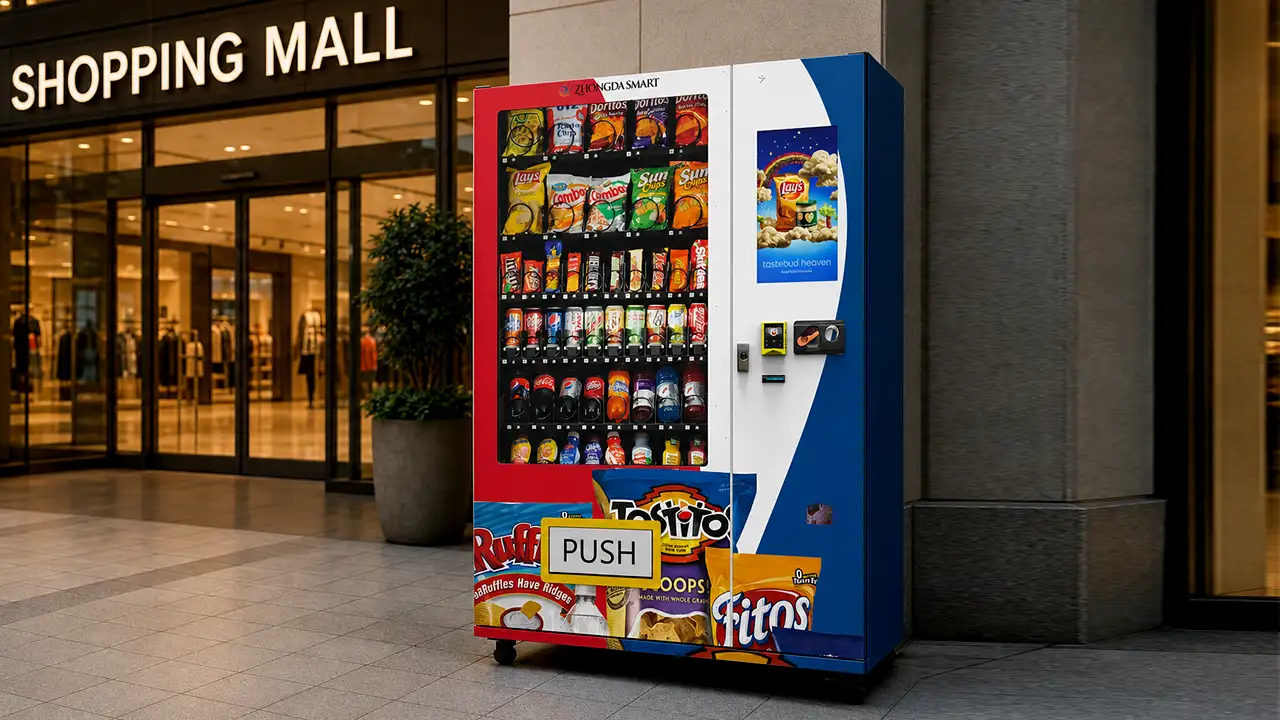
Insurance applications often start with broad business information, but a machine-level asset file becomes valuable as the fleet grows. If a serious loss occurs months after installation, reconstructing the original configuration from memory is inefficient and sometimes impossible.
From a manufacturer’s side, the most useful record is not a sales brochure. It is a clean equipment file showing exactly what was supplied.
The Zhongda Smart Eight-Point Machine Risk File
For this comparison, I’m prioritizing eight machine-level fields because together they describe most of the hardware variables that matter during replacement, maintenance, and insurance discussions.
| Record | What to Keep | Why It Matters |
|---|---|---|
| 1. Machine identity | Model, serial number, production or purchase date | Links the claim or repair to one physical asset |
| 2. Replacement value | Invoice and current replacement estimate | Prevents the base cabinet price from understating total equipment value |
| 3. Installed hardware | Screen, elevator, card reader, cash devices, scanner, camera, optional modules | Identifies equipment that may need separate valuation |
| 4. Refrigeration | Cooling configuration and required operating conditions | Supports equipment-breakdown and spoilage discussions |
| 5. Product type | Main merchandise categories and maximum stock value | Supports product-liability and inventory valuation |
| 6. Installation environment | Indoor, sheltered, semi-outdoor, environmental conditions, physical protection | Helps explain actual property exposure |
| 7. Service model | Who stocks, repairs, transports, and relocates the machine | Connects equipment to employee, contractor, and vehicle risks |
| 8. Connectivity | Network type, remote platform, payment integration, administrative access | Defines connected-system and account-security exposure |
This information does not determine whether an insurer will accept a claim. It gives the operator a much more accurate description of the asset and avoids relying on a generic label such as “snack machine.”
Keep the Final Configuration, Not Just the Original Quote
Customized vending projects change during production. A buyer may add a card reader, change the screen, select a different refrigeration package, adjust the cargo system, or add another module after the first quotation.
The insurance asset record should be based on the final supplied configuration. If the equipment is upgraded later, update the record again.
Useful supporting documents include the final commercial invoice, serial-number list, photos, machine specification, warranty information, payment-hardware record, installation record, and service history.
Placement Contracts, Certificates, and Additional Insured Requirements
A vending machine frequently operates on property controlled by another organization. That means insurance cannot be reviewed separately from the placement agreement.
The contract may address who supplies electricity, who maintains the surrounding area, who can move the machine, who is responsible for cleaning, how damage is reported, what insurance limits are required, and whether another party must be added to the liability policy.
Certificate of Insurance
A certificate of insurance provides evidence of existing insurance. It does not replace the policy and should not be treated as a document that automatically creates new coverage.
If the placement agreement requires an endorsement, additional insured status, or a specific liability limit, confirm that the insurer has actually issued the necessary coverage rather than assuming a certificate alone changes the contract.
Additional Insured Requirements
A site operator may require additional insured status under the vending operator’s liability policy. Insureon’s vending-machine insurance guidance notes that additional insured requirements and higher liability limits can affect the insurance arrangement and premium.[1]
The exact scope depends on the endorsement and contract. Send important insurance clauses to the broker before signing when possible.
Indemnification Is Not the Same as Insurance
A placement contract can create obligations broader than the insurance policy. An agreement may require one party to defend or indemnify another in circumstances that do not line up perfectly with insured losses.
The broker can explain the policy. Qualified contract counsel can explain the legal obligations created by the agreement. Those are separate questions.
Clarify Responsibility for the Installation Area
Ambiguity becomes expensive after an incident. The agreement should make practical responsibilities as clear as possible, including power supply, floor condition, environmental protection, access, unauthorized relocation, waste, surrounding cleanliness, and reporting of building-related damage.
Coverage Gaps Worth Checking Before Deployment
1. The Machine Is Covered, but Not Where It Is Installed
A property policy may protect equipment at a listed business premises without automatically covering every machine at every third-party site. Machines that move or remain away from the main premises need specific attention.
Ask where the policy says the equipment is covered. A written explanation is more useful than a casual statement that the machines “should be fine.”
2. The Base Cabinet Is Insured but Expensive Options Are Missing
A customized machine can carry substantial value in its screen, payment hardware, cooling system, elevator module, lockers, scanners, or other equipment. Using only the original base-model price can understate the amount needed for replacement.
3. Property Coverage Exists but Internal Breakdown Does Not
A compressor that fails internally or an electrical component damaged by an internal event may not be treated like a cabinet damaged by an external covered cause. This is why equipment breakdown deserves a separate question.
4. Refrigeration Repair Is Addressed but Spoiled Inventory Is Not
A repairable machine can still contain a complete inventory loss. Spoilage coverage, inventory limits, covered causes, and documentation requirements should be reviewed separately.
5. Product Liability Does Not Match the Merchandise
An operator may start with conventional packaged food and later introduce cosmetics, electronics, refrigerated meals, glass products, or specialty merchandise. The policy should continue to reflect what is actually being sold.
6. Business Vehicle Use Was Never Disclosed
Restocking, repair, cash collection, product transport, and site inspection often require vehicles. The insurance arrangement needs to match whether those vehicles are company-owned, rented, leased, or owned by an employee or operator.
7. The Cyber Policy Requires Controls That Are Not Actually Used
Cyber applications can ask about MFA, backups, patching, endpoint controls, remote access, and administrative security. Those answers should be accurate and the controls should remain in place after the policy starts.
8. Business Interruption Is Assumed to Cover Every Outage
Business-income coverage generally requires an eligible covered cause and can contain waiting periods, limits, and specific definitions. A routine jam, normal wear, unpaid connectivity service, or ordinary maintenance issue should not be assumed to create an insured interruption claim.
9. Cash and Inventory Limits Are Too Low
The value inside the cabinet can change significantly with the product category. High-value cosmetics, electronics, collectibles, accessories, or specialty products can create a larger concentration of inventory than ordinary packaged snacks.
10. The Deductible Does Not Match the Fleet Economics
A deductible should be compared with the cost of the losses an operator would realistically claim. If most equipment repairs fall below the deductible, those costs remain part of the maintenance budget.
That is not necessarily a problem. Insurance does not need to pay for every broken part. The goal is to avoid a financial structure where a severe loss reaches the business before meaningful coverage begins.
What to Document After a Claim
Claim documentation is much easier when the asset record already exists. The first priority after an incident is safety; the next is preventing additional damage and preserving useful evidence.
Protect People and Secure the Area
If equipment creates an immediate hazard, restrict access and follow the appropriate emergency procedure. Disconnect power when it is safe and appropriate to do so. A machine with damaged electrical components, broken glass, unstable positioning, or leaking water should not remain open to customer use simply to preserve the scene.
Prevent the Loss From Becoming Larger
Reasonable emergency action may include securing a damaged door, stopping a leak, moving unaffected inventory when safe, protecting exposed equipment, or arranging urgent refrigeration service.
A failed component that may be relevant to the claim should not be discarded casually. Ask before disposing of a compressor, control board, lock, payment terminal, or other part that could help establish the cause.
Photograph More Than the Broken Part
Take wide photographs of the machine and surrounding area, then closer images of the damage. Capture the serial plate, payment area, product compartment, electrical area when safe, and any visible evidence of forced entry, water, impact, or other cause.
Where relevant, preserve:
machine model and serial number;
date and time the incident was discovered;
site identifier;
photos and video;
purchase invoice;
final machine configuration;
repair estimate;
technician diagnosis;
inventory invoices;
temperature records;
machine alerts or telemetry;
transaction records;
security footage when available;
incident or police reports when applicable;
the placement agreement;
receipts for emergency expenses.
Cyber Incidents Need a Different Response
If an administrative account, payment-related system, or connected service appears compromised, preserve evidence and follow the cyber insurer’s incident instructions before making unnecessary changes.
The FTC recommends having an incident-response plan, preserving useful evidence, identifying affected assets, restricting unauthorized access, and coordinating with relevant third parties during a cyber incident.[4]
Do Not Guess About Liability
Employees and service staff should document what they observe rather than making unsupported promises about fault, payment, reimbursement, or insurance coverage. Responsibility can be evaluated after the facts, policy wording, and contract are available.
A Practical Insurance Buying Checklist
The best time to organize vending machine insurance is before a fleet becomes difficult to document. The following checklist keeps the discussion focused on actual assets and operating risks.
Start With the Equipment Schedule
List every machine, or every machine type in a planned purchase, with its value and final configuration. The schedule should separate the base cabinet from significant optional hardware and inventory.
| Asset | Value to Record | Reason |
|---|---|---|
| Base machine | Current replacement cost of the cabinet and standard components | Core property value |
| Payment equipment | Card reader, bill acceptor, coin equipment, related hardware | May be owned, leased, or supplied separately |
| Optional modules | Large display, elevator, specialty refrigeration, lockers, scanners, other options | Can materially increase replacement cost |
| Inventory | Maximum expected cost value loaded into the machine | Relevant to property, theft, and spoilage exposure |
| Spare parts | Normal value of replacement parts kept by the operator | Can become a meaningful business asset as the fleet grows |
Describe the Product Accurately
Do not describe every machine as selling “retail products.” State what it sells. Packaged snacks, chilled meals, drinks, cosmetics, electronics, collectibles, accessories, and fragile products have different operating characteristics.
Record the Refrigeration Requirement
For chilled products, record the required operating conditions, machine cooling configuration, product-loading procedure, available monitoring, alarm behavior, and service plan. Confirm that the machine specification actually matches the intended product before relying on insurance to absorb a preventable mismatch.
Map the Payment Architecture
Record the payment provider, physical terminal, network connection, remote platform, administrative accounts, and parties that can access the system. The operator should understand which payment-security responsibilities remain with the business and which functions are handled by the provider.
Describe Who Services the Machine
Insurance changes when employees, independent technicians, delivery partners, and business vehicles enter the operation. Document who stocks machines, who repairs them, who transports inventory, and who is permitted to relocate equipment.
Collect Contract Requirements Before Requesting Quotes
A placement agreement may specify liability limits, certificates, additional insured status, or other insurance conditions. Collect those requirements before buying the policy rather than discovering them after the machine is ready for installation.
Ask the Broker to Walk Through Real Loss Scenarios
Policy summaries are useful, but scenarios expose gaps faster. Ask how the proposed insurance would respond to:
a customer injury beside the machine;
forced entry that damages the door, screen, and card reader;
a compressor failure followed by inventory spoilage;
water from the machine damaging surrounding property;
an employee injured while moving stock;
a route-vehicle collision;
a remote-management account compromise;
a machine damaged while away from the primary business premises.
If a scenario is not covered, that does not automatically mean the policy is wrong. It means the operator can decide knowingly whether to change the policy, reduce the exposure, or retain the risk.
Compare Policies Line by Line
If I were choosing between similar insurance proposals, I’d compare the following items before the premium:
per-occurrence liability limit;
aggregate liability limit;
property limit;
replacement-cost or other valuation method;
deductibles;
spoilage and other sublimits;
equipment-breakdown wording;
theft and vandalism terms;
coverage for machines away from the main premises;
additional insured options;
business-income triggers;
cyber conditions;
important exclusions.
Review Coverage When the Fleet Changes
A vending fleet rarely stays static. New machines arrive, screens are upgraded, card readers change, fresh food replaces packaged snacks, vehicles are added, and inventory values rise.
The Small Business Administration recommends reassessing business insurance as equipment and operations change.[2] That practice fits vending especially well because machines can evolve considerably after the first deployment.
Where a Vending Machine Manufacturer Fits Into the Insurance Process
A manufacturer should not tell an operator what an insurance policy legally covers. That decision belongs to the insurer and depends on the actual policy wording. The manufacturer’s useful role is different: supplying accurate technical information about the asset.
Zhongda Smart manufactures and customizes vending equipment with different cabinet sizes, cooling systems, dispensing methods, touchscreens, payment options, network connections, and product configurations. That makes the factory-side documentation relevant when an operator needs to establish what a machine is and what it would cost to replace.
Useful manufacturer-side information includes:
model identification;
serial number;
final machine configuration;
screen specification;
refrigeration configuration;
payment hardware supplied with the machine;
dispensing system;
electrical requirements;
optional modules;
spare-part identification;
warranty information;
technical manuals and service records where available.
That is also why custom vending projects should be documented after the specification is finalized. A machine purchased as a basic cabinet can end production with additional hardware that materially changes the asset value.
The manufacturer’s technical record, the operator’s asset schedule, and the insurer’s description of the property should describe the same machine. When those records disagree, the problem usually remains invisible until a repair, replacement, or claim forces someone to reconcile them.
Final View: Insure the Operation You Actually Run
Vending machine insurance works best when it is built around the real machine, real products, real service process, and real placement environment. A generic policy purchased from a broad business description can leave important details unresolved.
A basic packaged-product machine may need a relatively straightforward combination of liability and property protection. Refrigeration adds equipment and spoilage concerns. Connected payment adds digital exposure. Employees and vehicles add another layer. Expensive merchandise changes inventory risk. Placement contracts can change required limits and endorsements.
Machine selection belongs in the same conversation. If I were choosing equipment for a site with significant physical-security exposure, I’d prioritize suitable cabinet construction and installation before expecting property insurance to solve repeated vandalism. For temperature-sensitive products, cooling performance, monitoring, service response, and product handling deserve attention before spoilage insurance. For connected fleets, payment architecture and administrative-account security should be treated as operating controls, not paperwork for a cyber application.
The strongest arrangement is not the one with the longest list of policies. It is the one where large financial exposures are transferred deliberately, routine maintenance remains in the operating budget, contracts match the insurance program, and accurate machine records are available when something goes wrong.
Frequently Asked Questions About Vending Machine Insurance
1. Do vending machine businesses need insurance?
Commercial vending operators should evaluate liability protection and insurance for the machines themselves. Additional coverage may be appropriate when the operation includes employees, service vehicles, refrigerated products, high-value inventory, connected payment systems, or contractual insurance requirements. Applicable legal and contractual requirements should also be checked before deployment.
2. How much does vending machine insurance cost?
Published 2025 Insureon policy-purchase data reports median monthly premiums of about $37 for general liability and $58 for a business owner’s policy among vending machine operators. The same source reports $86 per month for workers’ compensation, $59 for commercial umbrella insurance, and $171 for commercial auto. These figures are reference data from policies purchased through one insurance marketplace, not guaranteed prices for an individual operator.[1]
3. Does general liability cover damage to my own vending machine?
General liability primarily addresses eligible third-party bodily injury and property damage claims. Damage to the operator’s own vending machine is normally a commercial property or other first-party coverage issue. Confirm how machines located away from the main premises are insured.
4. Can vending machine insurance cover vandalism and theft?
Commercial property or related coverage may address eligible theft and vandalism losses, but coverage depends on the policy, deductible, covered causes, exclusions, site conditions, and how the equipment and inventory are scheduled. The cabinet, screen, payment hardware, cash, and merchandise may not all share the same limit.
5. What insurance should be considered for a refrigerated vending machine?
Refrigerated vending commonly calls for a review of general liability, property coverage, equipment breakdown, spoilage protection, product liability, and applicable business-income provisions. Machine temperature controls, service records, product-handling procedures, and inventory documentation also become more important.
6. Do cashless vending machines need cyber insurance?
Cyber insurance is worth evaluating when machines depend on connected payment systems, remote-management platforms, administrative accounts, cloud services, or business data. Coverage should be considered alongside practical controls such as MFA, secure passwords, software updates, access management, backups, and an incident-response plan.
7. Is a vending machine warranty the same as insurance?
No. A manufacturer warranty generally addresses qualifying defects or covered quality issues according to the warranty terms. Maintenance covers expected service and wear. Insurance addresses defined financial losses under an insurance contract. A compressor problem, for example, may be treated differently depending on why it failed, when it failed, and which warranty or insurance terms apply.
8. What information should I prepare before requesting vending machine insurance?
Prepare the machine model, serial number, replacement value, final configuration, payment equipment, refrigeration details, product type, maximum inventory value, installation environment, service arrangement, employee information, vehicle use, connected-system details, and placement-contract requirements. Keeping invoices, photos, manuals, and service records with the asset file can also make future claims easier to document.
Sources and References
Insureon — Vending Machine Business Insurance Costs. Updated February 19, 2025. The source publishes median policy-purchase cost data for vending machine operators, including business owner’s policies, general liability, workers’ compensation, commercial umbrella, and commercial auto. View source
Small Business Administration — Get Business Insurance. Business insurance guidance covering risk assessment, policy comparison, commercial property protection, and periodic reassessment as equipment and operations change. View source
Food and Drug Administration — Food Code 2022. Retail food-safety guidance that includes provisions relevant to vending machines holding time/temperature-controlled food. View source
Federal Trade Commission — Cybersecurity for Small Business. Guidance covering multi-factor authentication, software updates, backups, access controls, secure remote access, vendor security, cyber insurance, and incident-response planning. View source
PCI Security Standards Council — PCI Data Security Standard. Payment-security framework describing baseline technical and operational requirements designed to protect payment account data. View source
Important Disclaimer
This article provides general educational information about vending machine insurance, equipment risk, maintenance, and operational planning. It is not legal advice, insurance advice, tax advice, a coverage opinion, or an insurance quotation. Policy availability, wording, exclusions, deductibles, limits, endorsements, underwriting requirements, and legal obligations vary. A qualified insurance professional should review the actual business, machines, products, contracts, employees, vehicles, and connected systems before coverage is purchased or changed.
Zhongda Smart manufactures and customizes vending equipment. Zhongda Smart is not an insurance carrier, insurance broker, law firm, payment-security assessor, or food-safety regulator. Machine specifications and manufacturer-side recommendations in this article are intended to help operators document equipment and understand technical risk factors. They do not guarantee that an insurer will issue coverage, reduce a premium, or pay a claim.