Vending machine dimensions tell only part of the installation story. A machine may fit the floor space and still be impossible to deliver through the doorway, open fully for restocking, ventilate correctly, or operate from the available electrical supply. When I compare vending machines, I look at five numbers together: cabinet height, width and depth, service clearance, loaded weight, rated electrical input, and realistic energy use. Current Zhongda Smart floor-standing configurations show how wide the range can be: the machines compared in this guide run from 800 to 1,380 mm wide and from 185 to 380 kg before product loading. The sections below explain how to read those numbers, measure a site, compare compact and full-size cabinets, estimate loaded weight, plan electrical service, and decide whether a standard or custom cabinet makes more sense.
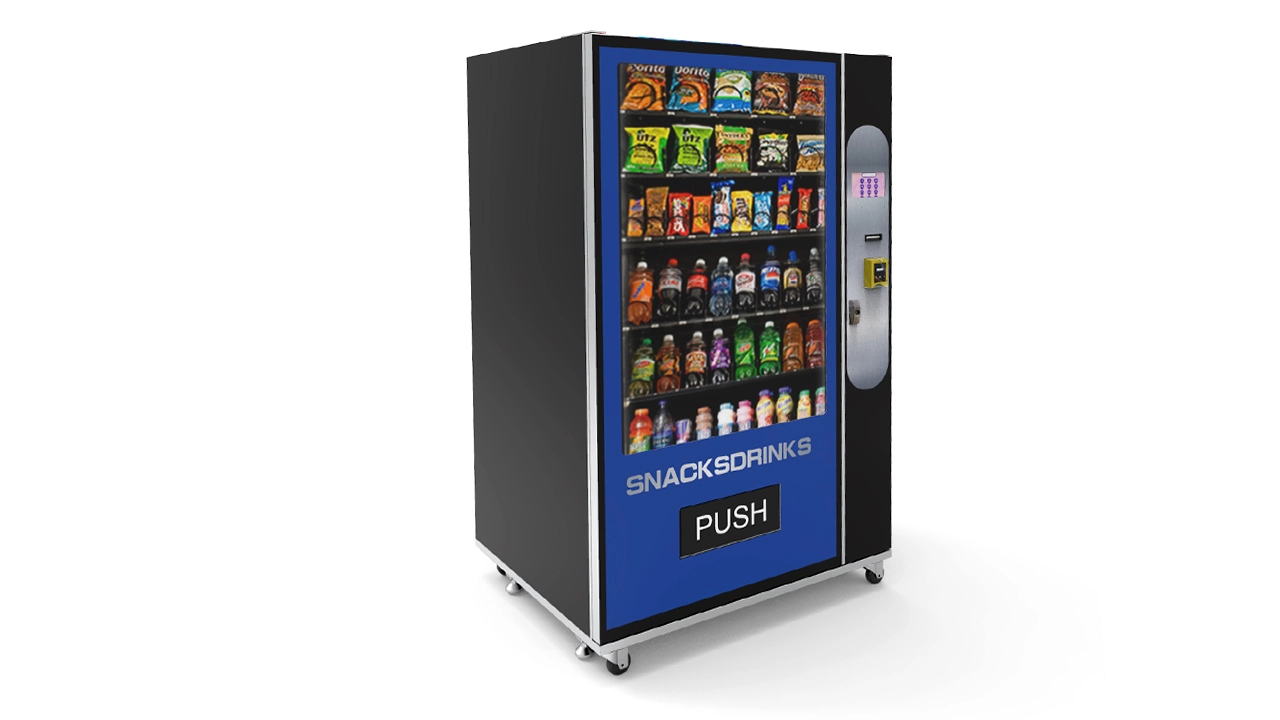
Vending Machine Size, Weight and Power at a Glance
There is no single standard vending machine size. A compact machine for boxed merchandise may be little more than 800 mm wide, while a wide refrigerated or elevator-delivery cabinet can approach 1,400 mm. Weight and electrical demand vary just as much.
The three Zhongda Smart configurations below make that difference easy to see. These are published specifications for the listed configurations, not dimensions that apply automatically to every machine in the same family.
| Configuration | Published Machine Size | Approx. Inch Size | Published Weight | Approx. Weight | Cabinet Footprint | Published Power |
|---|---|---|---|---|---|---|
| ZD-C-7 compact machine | H 1954 × W 800 × D 850 mm | 76.9 × 31.5 × 33.5 in | 185 kg | 408 lb | 0.68 m² | 50 W |
| ZD-L-22 snack and drink machine | H 1990 × W 1315 × D 920 mm | 78.3 × 51.8 × 36.2 in | 380 kg | 838 lb | 1.21 m² | 650 W |
| ZD-LS-22 elevator-delivery machine | H 1950 × W 1380 × D 920 mm | 76.8 × 54.3 × 36.2 in | 300 kg | 661 lb | 1.27 m² | 400 W |
Source: Zhongda Smart published product specifications checked in September 2026. See the ZD-C-7 compact vending machine specifications, ZD-L-22 snack and drink machine specifications, and ZD-LS-22 elevator vending machine specifications. Final order specifications may change when optional hardware or custom engineering is added.
Across these three published Zhongda Smart configurations, cabinet width varies by 580 mm and listed machine weight varies by 195 kg. That is a large enough spread that a phrase such as “standard vending machine dimensions” is not precise enough for purchasing or site preparation.
The footprint also tells an interesting story. The 800 × 850 mm compact cabinet occupies about 0.68 m² before any service space is added. The 1380 × 920 mm elevator model uses about 1.27 m². The larger cabinet therefore occupies roughly 87% more closed-cabinet floor area than the compact example.
That does not make either size preferable by itself. The wider machine is doing a different job. The right comparison is whether the extra cabinet volume supports products, capacity or dispensing hardware that the business actually needs.
How Vending Machine Dimensions Are Measured
Most specification sheets show height × width × depth, but those three figures are useful only when the measurement boundaries are understood.
When I review a cabinet drawing, I want to know exactly where each measurement starts and stops. A width of 1,200 mm is straightforward if the machine is a plain rectangular cabinet. It becomes less obvious when a payment terminal, card reader, protective frame, canopy, display housing or side accessory projects beyond the sheet-metal body.
Overall Height
Overall height normally runs from the floor contact point to the highest part of the operating machine. The important question is whether leveling feet, casters, a top sign, antenna or canopy are included.
For installation planning, use the maximum assembled height rather than the height of the metal cabinet alone. A machine that clears a doorway by only a few millimeters on paper may not clear it after feet, packaging or handling equipment are included.
Overall Width
Cabinet width is measured across the closed machine. Width affects product layout because it determines how much horizontal space is available for trays, channels, refrigeration components and front-panel hardware.
Width also affects service access. A wide front door can require a large swing area. If the hinge is close to a wall, the machine may fit its final position but still fail to open far enough for trays or internal components to be removed.
Overall Depth
Depth often causes more installation trouble than height or width. A 920 mm-deep cabinet is approximately 36.2 inches deep before rear ventilation space and customer standing space are considered.
Depth also determines how easily a machine can turn through corridors. A cabinet may fit through every doorway and still be unable to rotate around a tight corner.
Dimensions That Belong on a Serious Specification Sheet
A useful dimensional drawing should distinguish at least these measurements:
closed cabinet height;
closed cabinet width;
closed cabinet depth;
maximum projection of the payment hardware;
maximum projection of the screen or front housing;
door-open service envelope;
rear or side ventilation requirement;
support-foot or caster positions;
packed shipping height, width and depth.
Those numbers answer different questions. Closed cabinet dimensions determine whether the machine fits the location. Door-open dimensions determine whether it can be serviced. Packed dimensions determine whether the shipment can be handled and delivered.
Keep the Manufacturer's Millimeter Dimensions as the Reference
NIST states that one inch is exactly 25.4 mm. That makes conversion straightforward, but rounded inch values can still hide small differences when the available space is tight. For technical approval, I’d keep the original millimeter dimensions as the controlling values and use inches only as a convenient reference.
For example, 1,315 mm converts to approximately 51.77 inches. Writing that as 52 inches is fine for a general description but not for a doorway check where every fraction of an inch matters.
What Real Vending Machine Dimensions Tell You
Exterior dimensions become more useful when they are connected to the machine architecture behind them.
The Zhongda Smart ZD-C-7 measures 1954 × 800 × 850 mm in its current published configuration. Its listed layout has 36 selections, arranged as six layers with six cargo lanes, and capacity of up to 300 small boxed products depending on package size.
That cabinet is relatively narrow because it is aimed at compact merchandise rather than a wide mixed beverage layout. The 50 W listed equipment power also reflects the published configuration of that particular machine; it should not be used as a general power figure for every compact vending cabinet.
The ZD-L-22 reference configuration is much wider at 1,315 mm. Its published layout lists six layers with ten cargo lanes per layer and 300–360-piece capacity. The cabinet also includes a larger display and a refrigerated snack-and-beverage configuration.
The ZD-LS-22 is wider again at 1,380 mm and uses an elevator delivery system. Elevator equipment needs room for the moving platform, travel path, guides, sensors and transfer area. Some of that space is performing a mechanical job rather than storing additional products.
This is why exterior volume alone is a poor way to compare capacity. Two cabinets of similar size can have very different usable product space.
Width Is Usually a Capacity Tradeoff
Reducing cabinet width can remove cargo lanes from every shelf level. If a six-level machine loses one lane per level, the result may be six fewer selling positions, depending on the tray design.
The reverse is also true. Adding width can create more lane options, but only if the extra width is allocated to merchandise. A larger screen, wider pickup bay or larger cooling assembly may use the additional space instead.
Depth Affects More Than Floor Area
Deeper trays can increase the number of products loaded behind one another. That can reduce refill frequency for suitable merchandise. The tradeoff is a larger cabinet and a more demanding delivery route.
For operators, the best depth is rarely “as deep as possible.” A useful depth holds enough inventory between service visits without creating unnecessary installation problems.
Height Is Often More Stable Than Width
Full-height floor-standing machines frequently stay within a broadly similar height band because displays, customer reach, service access and internal tray stacks all need to fit within a practical cabinet. Width and depth tend to move more dramatically as capacity and dispensing architecture change.
That pattern can be seen in the three Zhongda Smart examples: height varies by only 40 mm, while width varies by 580 mm.
That is a more useful observation than trying to assign one universal dimension to a “full-size vending machine.”
How Much Space Does a Vending Machine Actually Need?
A cabinet footprint is the amount of floor area occupied by the closed machine. Installation space is larger.
For a 1,315 × 920 mm cabinet:
1.315 m × 0.920 m = approximately 1.21 m² of cabinet footprint.
That calculation is useful when comparing machines, but it does not account for the space needed to operate the equipment.
Think in Four Separate Space Zones
| Space Zone | What It Includes | What Can Go Wrong if It Is Ignored |
|---|---|---|
| Cabinet footprint | The closed machine body | The machine simply does not fit the planned position |
| Service envelope | Door swing, tray removal and technician working space | Restocking and repair become difficult or impossible |
| Ventilation envelope | Required airflow around the cooling system | Heat rejection can be restricted |
| User envelope | Standing room in front of the screen, payment hardware and pickup area | The machine is physically installed but awkward to use |
For installation approval, I’d use the full operating envelope rather than the closed cabinet dimensions.
Door Swing Is Easy to Forget
Many vending machines are serviced through a large front door. That door may carry the display, payment devices, wiring and user interface. The cabinet can fit tightly beside a wall while the door hits the wall long before reaching its normal service position.
Partial opening can also prevent internal trays from sliding out. A technician may need to reach refrigeration hardware, controllers or payment modules that are inaccessible when the door is restricted.
Before placing a machine against a side wall, confirm the hinge position and the minimum opening angle needed for service.
Ventilation Clearance Is Configuration-Specific
A refrigerated vending machine needs a path for heat to leave the cabinet. The required clearance depends on the cooling design, condenser location and airflow direction.
I would not use a generic rule such as “leave two inches behind every vending machine.” Some designs need more, some less, and some move air in a different direction. The approved technical documentation for the final configuration should give the controlling requirement.
Customer Space Is Part of the Installation
Customers need enough room to stand in front of the machine, reach the touchscreen, use payment hardware and retrieve the purchase. A machine positioned too close to a barrier may technically fit but feel cramped in normal use.
Consider the complete front area, including any door, drawer or pickup flap that moves toward the customer.
Measure the Actual Site, Not the Drawing Alone
Baseboards, wall trim, columns, utility boxes, railing, floor transitions and fixed fixtures can reduce the real space available. Measure at several heights rather than assuming a floor plan reflects every obstruction.
If the floor is uneven, the machine may also need leveling adjustment. That can change final height slightly and should be considered where overhead clearance is limited.
Doorways, Corners and Delivery Access
A machine that fits the final floor space can still fail before it gets there.
For large cabinets, I’d map the delivery path from the unloading point to the final position before approving the order. The narrowest doorway is only one part of that survey.
Measure the Full Delivery Route
unloading point and unloading height;
exterior entrance;
interior door clear openings;
door closers, handles and panic hardware;
corridor width;
90-degree and tighter turns;
ramps;
floor level changes;
thresholds;
overhead fixtures;
lifting platform dimensions and load rating where applicable;
final turning space;
space to remove the pallet or crate;
space to rotate the machine into its final position.
Doorway clearance should be measured as usable clear opening, not frame-to-frame width if hardware reduces the opening.
A 920 mm-Deep Machine Does Not Automatically Pass a 950 mm Opening
The difference looks comfortable on paper: 30 mm of spare width. In practice, the situation can be much tighter.
Packaging may add width. A protective corner can project beyond the cabinet. A pallet jack, machine skate or other handling system needs its own clearance. The machine may also need to approach the doorway at an angle.
When tolerances are small, the delivery method should be planned around the actual packed and unpacked dimensions rather than the nominal cabinet depth.
Corners Need a Different Check
A rectangular machine rotates through a larger swept area than its width alone suggests. Deep machines are especially demanding in L-shaped corridors.
If the path contains a tight turn, sketch the machine rectangle to scale or verify the move with the installation team. It is much easier to change the machine configuration or delivery plan before shipment than after a large cabinet reaches the site.
Do Not Assume a Refrigerated Machine Can Simply Be Laid Down
Tilting a cabinet may be tempting when an upright route is difficult. Refrigerated equipment should be handled according to the manufacturer’s instructions, including any required standing time before startup if the refrigeration system has been tilted.
Handling decisions should be part of the delivery plan, not made at the doorway.
Vending Machine Weight: Empty, Stocked and Installed
Vending machine weight affects freight, unloading, floor planning, installation and future relocation. The published machine weight is only the starting point.
The three Zhongda Smart reference configurations in this guide range from 185 kg to 380 kg before the planned merchandise load is added.
In pounds, that is approximately 408 to 838 lb.
Use Three Different Weight Figures
| Weight Figure | What It Represents | Where It Is Used |
|---|---|---|
| Net machine weight | Configured machine without shipping packaging and merchandise | Basic handling and equipment comparison |
| Gross shipping weight | Machine plus pallet, crate and protective packaging | Freight and unloading planning |
| Installed loaded weight | Machine plus merchandise and installed accessories | Floor and final operating assessment |
For installation planning, I would calculate loaded mass as:
Loaded mass = machine mass + merchandise + optional equipment + other installed loads
Example: A 380 kg Machine With 60 kg of Product
Take the 380 kg ZD-L-22 reference configuration and assume the planned product load adds 60 kg. This is only an example; actual inventory weight depends on the merchandise.
380 kg + 60 kg = 440 kg loaded mass
The closed cabinet footprint is approximately 1.21 m², so a simple mass-per-footprint calculation gives:
440 kg ÷ 1.21 m² ≈ 364 kg/m²
That number is useful for comparing configurations, but it is not a structural approval.
A vending machine may transfer much of its load through small feet, leveling pads or casters. The local load at each contact point can therefore be very different from a simple average across the full footprint.
If floor capacity is uncertain, the installed load and support arrangement need to be assessed for the actual structure.
Product Weight Changes More Than the Floor Load
Heavy merchandise also affects trays and dispensing hardware.
A machine filled with lightweight snack bags has a very different internal load from the same cabinet stocked with bottled beverages, dense boxed goods or glass containers.
The product list should include unit weight so the tray layout and delivery system can be matched to the merchandise.
Where the Weight Sits Matters
Vending machines are tall cabinets. Refrigeration hardware, glass, door-mounted displays, stocked trays and payment equipment all contribute to the center of mass.
Very heavy products should be loaded according to the approved configuration rather than placed wherever space is available. A poorly distributed load can make handling less predictable and may exceed the intended load of individual shelves.
The equipment should also be moved with handling gear rated for the actual machine mass. A commercial vending machine is not a cabinet that should be shifted casually by hand because the floor distance happens to be short.
Vending Machine Power Requirements
Power requirements can vary almost as much as cabinet dimensions.
A simple ambient-temperature merchandise machine may power a controller, display, motors, payment devices, lighting and network hardware. A refrigerated vending machine adds a compressor, fans and temperature-control system. Heated machines add another major electrical load.
The first electrical figure to use is the approved rating for the exact ordered configuration.
Confirm These Values Before Installation
rated voltage;
frequency;
rated current;
rated input power;
plug or connection type;
grounding requirements;
required circuit protection;
refrigeration electrical load if equipped;
heating electrical load if equipped;
additional loads created by screens, lights or optional modules.
A photograph cannot tell you the electrical requirement. Two cabinets that look almost identical may have different refrigeration packages, displays or auxiliary equipment.
Published Power Is Configuration-Specific
The Zhongda Smart examples illustrate the range:
ZD-C-7 published configuration: 50 W;
ZD-L-22 published configuration: 650 W;
ZD-LS-22 published configuration: 400 W.
Those values should not be turned into rules such as “compact vending machines use 50 W” or “snack machines use 650 W.” They belong to the listed configurations.
A customized machine can change electrical demand when refrigeration, heating, display hardware, lighting or other powered components are changed.
Electrical Safety Standards Cover More Than Power Consumption
IEC 60335-2-75:2024 covers safety requirements for electric commercial dispensing appliances and vending machines used to prepare or deliver food, drinks and consumer products within its stated scope. The standard covers rated voltages up to 250 V for single-phase appliances and 480 V for other appliances, including certain DC-supplied and battery-operated equipment.
The IEC page also notes that additional standards can apply to functions such as refrigeration. In practice, electrical planning should therefore follow the final equipment documentation and any requirements that apply to the completed machine and installation.
For purchasing, the important point is simple: do not size an electrical connection from a generic vending-machine estimate. Use the nameplate and approved specification for the machine that will actually be installed.
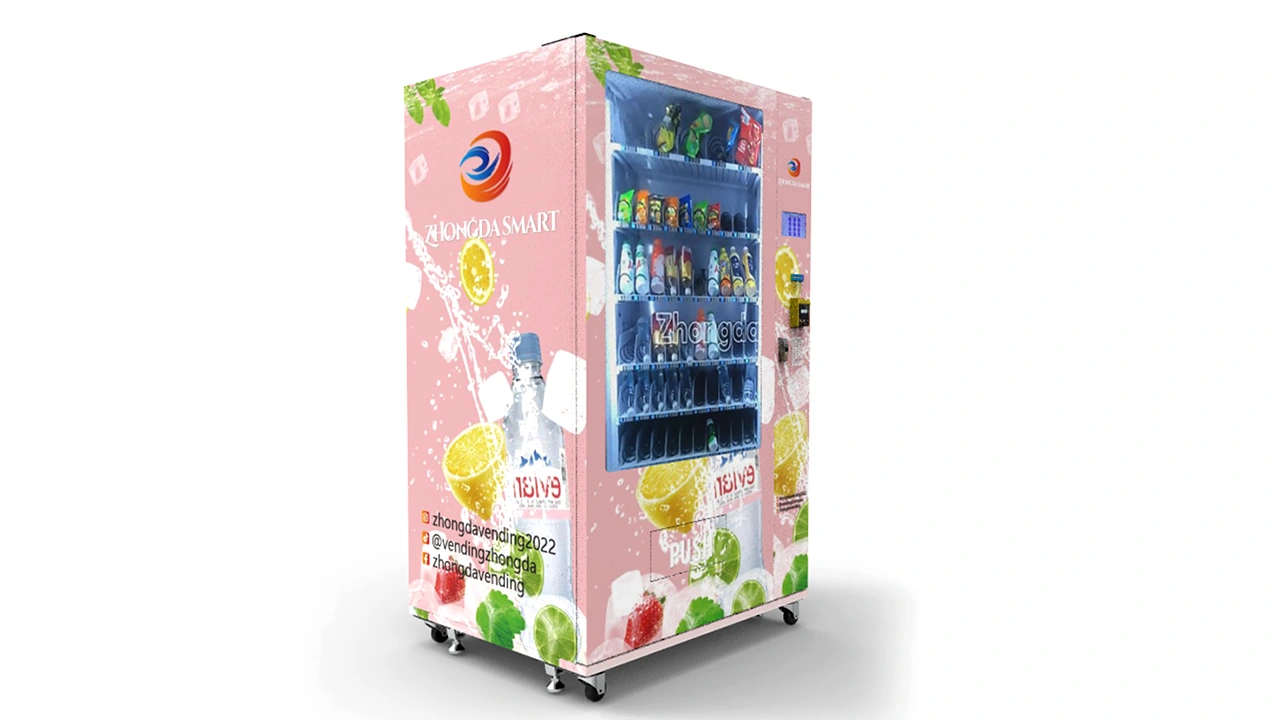
Rated Watts vs. Actual Energy Consumption
One of the most common vending machine power mistakes is treating rated watts as though they directly predict the monthly electricity bill.
They do not.
Watts describe power. Kilowatt-hours describe energy used over time.
| Value | What It Helps You Determine | What It Does Not Tell You |
|---|---|---|
| Rated power in watts | Electrical rating of the configured equipment | Exact monthly energy consumption |
| Rated current in amps | Connection and protection planning | Average current every minute of operation |
| Measured kWh/day | Energy use during a defined test or operating period | Maximum instantaneous electrical demand |
| Measured kWh/month | Useful basis for electricity-cost budgeting | Whether the branch circuit is correctly sized |
Why a Refrigerated Machine Does Not Draw Its Rated Power Continuously
The refrigeration compressor normally cycles according to temperature and control logic. Fans may cycle or change operation. Lighting and screens can have different states. Ambient temperature and product loading also affect how long the cooling system runs.
A 650 W rating therefore should not be multiplied by 24 hours and 30 days and presented as the machine’s expected monthly energy use without knowing how the equipment actually operates.
The opposite shortcut is also unsafe. A low measured average consumption cannot be used to size the electrical circuit. Circuit planning must be based on the approved electrical rating and applicable requirements.
Use Measured kWh for Operating-Cost Estimates
When an appropriate measured daily consumption figure is available, monthly energy cost is straightforward:
Monthly electricity cost = measured kWh/day × operating days × electricity cost per kWh
For example, suppose a particular machine is measured at 2.8 kWh/day under relevant operating conditions and the electricity rate is $0.18/kWh:
2.8 × 30 × $0.18 = $15.12 per 30-day month
The 2.8 kWh/day figure in that example is hypothetical. It is not a claimed consumption figure for any Zhongda Smart model.
Standardized Energy Data Is More Useful Than Guessing From Nameplate Watts
ENERGY STAR evaluates refrigerated beverage vending machines using daily energy-consumption criteria rather than simply comparing the wattage printed on the machine. Its current product information also states that certified refrigerated beverage vending machines are, on average, 9% more energy-efficient and save about 1,000 kWh annually compared with standard models within that program.
ENERGY STAR's published maximum daily energy-consumption equations are based on refrigerated volume:
Class A: 0.0523V + 2.432 kWh/day
Class B: 0.0657V + 2.844 kWh/day
In those equations, V represents measured refrigerated volume in cubic feet. These formulas apply to equipment within the program's defined scope; they are not a universal consumption formula for every vending machine.
The broader lesson is useful for any buyer: when energy cost matters, compare tested energy data under defined conditions instead of trying to infer energy use from rated watts alone.
Factors That Can Change Real Consumption
ambient temperature;
refrigeration set point;
how often the service door is opened;
temperature of newly loaded products;
screen brightness;
lighting schedule;
fan and compressor control strategy;
cabinet insulation;
condenser cleanliness;
ventilation around the installed machine;
heating functions where fitted;
low-power settings.
For a fleet deployment, even a small difference in daily kWh can become meaningful when multiplied across many machines and a full year. That makes verified consumption data more valuable than a vague claim that one model is “energy saving.”
How Machine Size Changes Capacity and Product Layout
Machine size and product capacity are related, but not in a simple one-to-one ratio.
A larger vending machine may hold more items, yet part of the additional cabinet volume may be occupied by refrigeration, insulation, a larger screen, payment hardware, an elevator, a pickup compartment or structural components.
For that reason, I would never compare two machines only by exterior cubic volume.
SKU Count, Lane Count and Piece Capacity Are Different Numbers
A machine may have 36 selections but hold 300 products. There is no contradiction.
A selection is a customer choice or selling position. One lane may contain several units of the same product.
The current ZD-C-7 configuration, for example, is published with 36 SKUs and capacity of up to 300 small boxed products. Actual capacity depends on the dimensions of the products loaded into the machine.
The ZD-L-22 reference configuration lists six layers with ten cargo lanes per layer and a total capacity of 300–360 pieces.
A wide product can occupy the horizontal space that might otherwise support two narrower lanes. A tall product can require more space between shelf levels. A deep product can reduce the number of units loaded front-to-back.
Product Dimensions Should Come Before the Final Capacity Claim
When Zhongda Smart develops or adjusts a vending configuration, the product itself is one of the first engineering inputs. The factory's current manufacturing documentation identifies width, height, depth, weight, fragility, temperature requirement and package shape as variables that influence channel design and delivery-system choice.
The following product matrix is a practical starting point:
| Product Information | What It Changes Inside the Machine |
|---|---|
| Package width | Lane width, divider position and how many channels fit across a shelf |
| Package height | Vertical distance between shelf levels |
| Package depth | Units that can be stored through the depth of a lane |
| Unit weight | Tray loading and delivery-system requirements |
| Package shape | Stability in spirals, pushers, conveyors or other delivery hardware |
| Fragility | Whether a direct drop is acceptable or controlled delivery is preferable |
| Temperature requirement | Whether refrigeration or heating equipment is required |
| Target stock per SKU | How much lane depth or duplication each product needs |
This is one area where a manufacturer has more useful information than a generic size chart. A package may technically fit between two dividers and still vend poorly because it twists, leans, catches on a spiral or becomes unstable when the product behind it moves forward.
Product Fit Is a Mechanical Question
Suppose two boxes both measure 100 mm wide. One is rigid and rectangular; the other has flexible packaging with a soft edge. They may need different lane spacing even though the nominal width is identical.
Weight distribution also matters. A top-heavy bottle behaves differently from a low rectangular package. A glass container may fit a spiral but still be a poor candidate for an uncontrolled drop.
This is why sample testing is valuable when merchandise is unusual or fragile.
Capacity Should Match Refill Frequency
More capacity is useful when it reduces unnecessary service visits. It becomes less useful when the extra inventory sits in the machine for long periods.
If one product sells 20 units between planned service visits and another sells three, they do not need equal lane depth simply because both are part of the assortment.
A well-sized machine puts more capacity behind high-turn products while preserving enough selection variety for slower items.
Choosing the Right Vending Machine Size
The product and service model should drive cabinet size, not the other way around.
Compact Boxed Merchandise
Small boxed merchandise, personal-care products, compact accessories and similar items often do not need the width or refrigeration equipment associated with a beverage-heavy machine.
If I were choosing for a compact merchandise program, I’d prioritize usable lane count per square meter and easy site access. A narrower cabinet can work well when packages are consistent and inventory volume is moderate.
The 800 mm-wide ZD-C-7 is a useful example of this approach. Its width is substantially lower than the larger snack, beverage and elevator configurations reviewed earlier.
Mixed Snacks and Bottled Drinks
Mixed-product machines usually need more width and more flexible shelf spacing because bottles, cans, bags and boxes do not share one package format.
The refrigeration system also consumes internal cabinet space and adds weight.
If I were specifying this type of machine, I would compare:
how many bottle and can lanes are required;
how many snack selections are required;
planned refill interval;
temperature range;
total loaded product weight;
available site width;
electrical supply;
service-door clearance.
A slightly larger machine can be justified if it eliminates frequent sellouts or reduces unnecessary refill visits. Extra width is harder to justify if the additional lanes remain underused.
Fragile Merchandise
Cakes, delicate boxed food, cosmetics, electronics, glass-packaged items and other damage-sensitive merchandise may benefit from an elevator or another controlled delivery method.
The current Zhongda Smart ZD-LS-22 illustrates the dimensional tradeoff. It is 1,380 mm wide in the published configuration and uses an elevator delivery mechanism rather than relying only on a conventional drop.
The internal elevator needs a clear movement path. That mechanical space has a purpose: reducing uncontrolled drop distance.
If I were choosing for fragile products, I’d prioritize delivery quality before trying to minimize every millimeter of cabinet width.
Large or Irregular Products
Irregular products can become difficult long before their nominal dimensions exceed the cabinet.
A long flexible package may bow. A large flat package may twist. An object with an uneven center of gravity can rotate during delivery. A product with a protruding tab may catch on a divider.
These products may need pushers, conveyors, lockers, larger compartments or another delivery format rather than a standard spiral channel.
Touchscreen-Heavy Retail
Some vending projects depend heavily on digital merchandising. The machine may use a larger screen for detailed product information, advertising, membership functions or interactive purchasing.
A large display changes the front-panel layout. It competes with glass viewing area, payment hardware, locks, ventilation and pickup access.
For this type of project, screen size should be treated as a mechanical input rather than a cosmetic option added after the cabinet is finalized.
Custom Vending Machine Dimensions: What Can Be Changed?
A custom vending machine is not simply a standard cabinet stretched or compressed to a requested width.
Cabinet dimensions are connected to shelf length, door strength, delivery hardware, wiring, payment components, refrigeration airflow, product capacity and service access.
Zhongda Smart's current OEM and custom vending machine program includes cabinet adjustments, slot sizing, shelf layouts, spiral, conveyor, elevator and locker delivery options, payment configuration, connectivity, interface customization and branding.
Start With Hard Limits
A good custom project separates fixed constraints from preferences.
Hard limits may include:
maximum allowable machine width;
maximum depth;
maximum assembled height;
minimum doorway clearance;
required number of products or SKUs;
minimum stock quantity for specific products;
required temperature range;
required payment hardware;
required display size;
maximum installed mass;
required delivery method.
A preferred cabinet color is flexible. A doorway that physically cannot become wider is not.
Work From the Product Outward
If I were developing a new custom cabinet, I would use this order:
Measure the merchandise.
Define the number of SKUs.
Set the target inventory for each SKU.
Select the dispensing method.
Determine refrigeration or heating requirements.
Lay out the trays, lanes or compartments.
Place the screen and payment equipment.
Allocate controller, wiring and service space.
Size the cabinet around the working internal layout.
Check that cabinet against the site's maximum envelope.
That sequence is more reliable than choosing an exterior box first and forcing everything inside afterward.
Reducing Width Has Consequences
Imagine a standard tray can hold ten lanes. Reducing cabinet width by 150 mm may force one lane to disappear from each shelf. If there are six shelf levels, that change could remove six selling positions.
The actual result depends on lane width and tray design, but the principle is consistent: exterior changes propagate inward.
Reducing depth can reduce units per lane. Lowering cabinet height can remove a shelf level or reduce vertical product clearance.
Dimensional customization is therefore a tradeoff between site fit and vending capacity.
A Larger Cabinet Also Needs a Reason
Custom projects sometimes move in the opposite direction: the requested cabinet becomes wider because buyers want more selections.
Before adding width, I would ask how the extra lanes will be used. If the additional capacity supports strong-selling products or extends the refill interval, it may have clear operating value. If the extra space simply creates duplicate slow-moving selections, the larger footprint may not earn its keep.
Prototype and Product Testing Matter
Zhongda Smart's current manufacturing documentation describes a development process that moves from requirements and engineering specifications through sample build, vending tests, payment and connectivity checks, production and quality control. You can read more about the Zhongda Smart vending machine manufacturing process.
That process is especially relevant when product geometry is unusual. A package drawing can confirm that an item fits; a vending test confirms that it actually moves through the selected mechanism consistently.
Machine Dimensions vs. Shipping Dimensions
The dimensions used for installation should not be confused with the dimensions used for freight.
A shipped vending machine may include a pallet, protective foam, corner guards, outer wrapping, a crate or other protective structure. The packed unit can therefore be taller, wider, deeper and heavier than the bare machine.
Request Four Separate Numbers
machine dimensions;
packed dimensions;
net machine weight;
gross shipping weight.
Those four values answer most early logistics questions.
Why Packed Height Can Be the Limiting Dimension
A machine that stands 1,950 mm high may be noticeably taller when mounted on a pallet and protected for shipping. If receiving access has a low overhead obstruction, the packed height can become the limiting figure.
The handling equipment adds its own geometry. A pallet jack or other transport equipment may lift the load slightly or extend beyond the machine.
Plan Where the Machine Will Be Unpacked
Removing the crate at the unloading point can reduce overall size before the machine travels through a narrow route, but only if the equipment can then be moved safely without its shipping protection.
The plan should identify where packaging comes off, how the unpacked cabinet will be protected, and which handling equipment will move it the rest of the way.
The Final Part of Delivery Deserves the Most Detail
Long-distance freight normally has space and commercial handling equipment. The last short move through a finished building can be more difficult.
Finished floors need protection. Door frames can be damaged. Thresholds can stop small casters. People and furniture restrict the path. Tight corners may require precise positioning.
Before shipment, I’d want answers to these questions:
| Delivery Question | What Should Be Confirmed |
|---|---|
| How will the shipment be unloaded? | Equipment suitable for the packed dimensions and gross weight |
| Where will packaging be removed? | A staging area large enough to work safely around the machine |
| How will the unpacked cabinet be moved? | Handling method appropriate for the net machine weight |
| Can the cabinet pass every turn? | Clear width, depth and turning space along the entire route |
| How will finished surfaces be protected? | Floor and doorway protection before the machine moves indoors |
| When will the machine be leveled? | After it reaches its final operating position |
How Size, Weight and Power Affect Operating Cost
The largest cabinet is not automatically the most profitable machine, and the smallest cabinet is not automatically the lowest-cost choice.
Size affects several parts of the business at once.
| Cost Area | How Machine Configuration Can Affect It | Useful Figure to Compare |
|---|---|---|
| Machine purchase | Larger cabinets may use more structure, trays, glass, refrigeration or delivery hardware | Final configured purchase price |
| Freight | Packed volume and shipping weight influence logistics | Packed dimensions and gross weight |
| Installation | Heavy equipment and difficult delivery routes can require more handling | Site-specific installation cost |
| Floor space | Wide and deep machines occupy more usable area | Sales or service value per m² |
| Electricity | Refrigeration, heating, displays and lighting add energy use | Measured kWh over time |
| Restocking | More useful capacity can reduce service frequency | Units sold between visits |
| Inventory | Larger machines can hold more capital in stock | Average inventory value and turnover |
| Maintenance | Poor service access can increase labor time | Actual service accessibility |
Capacity Has Value Only When the Products Move
A 360-piece machine sounds more capable than a 200-piece machine, but total capacity alone says little about return.
Suppose a location sells 60 items between scheduled refill visits. If a 360-piece cabinet is consistently loaded with stock that moves slowly, the extra capacity may not reduce service labor or prevent sellouts.
At another location, the same cabinet may allow fast-selling beverages to remain available through a busy period and avoid an additional refill trip.
The capacity is identical. The operating value is not.
Compare Useful Capacity per Square Meter
A practical comparison is:
Useful stock capacity ÷ cabinet footprint
“Useful” is the important word. Count the stock positions that support the actual planned assortment rather than every theoretical lane.
A compact machine can perform very well when the products are small and sales volume matches its capacity. A wider machine can perform better when high-volume products need deeper inventory.
Include Restocking in the ROI Calculation
Operators often focus on equipment price and gross sales while giving too little attention to replenishment labor.
If a small machine requires an extra weekly service visit, the labor and travel cost of that visit can become more important than the difference in purchase price.
A larger machine may earn its extra footprint if the added capacity reduces service frequency without creating excessive stale inventory.
Use Actual Contribution, Not a Generic Payback Claim
A basic payback calculation can be written as:
Payback period = total installed investment ÷ monthly contribution after direct operating expenses
Total installed investment may include:
machine price;
payment hardware;
custom graphics;
freight;
unloading;
installation;
initial setup.
Monthly contribution can be calculated from:
Sales revenue − product cost − payment fees − location cost − electricity − routine service − other direct operating expenses
I would not attach a universal payback period to a vending machine. Product margin, sales volume, location terms, service frequency and equipment configuration vary too widely.
What dimensions can tell you is whether the proposed machine is likely to use its floor space efficiently and whether its capacity fits the planned service model.
Vending Machine Specifications to Confirm Before Ordering
A single approved specification sheet is one of the easiest ways to prevent site-preparation mistakes.
The goal is not to create a huge document. It is to make sure everyone is working from the same machine configuration.
Physical Dimensions
overall machine height;
overall machine width;
overall machine depth;
maximum front projection;
door hinge side;
required door-opening space;
required ventilation space;
caster, foot or base arrangement;
net machine weight;
packed height, width and depth;
gross shipping weight.
Product Layout
number of shelf levels;
number of configured product lanes;
usable lane width;
usable lane depth;
vertical shelf spacing;
maximum product dimensions where specified;
product weight limits where specified;
delivery mechanism;
pickup opening dimensions;
estimated capacity using the approved product mix.
Temperature and Refrigeration
operating temperature range;
refrigeration configuration;
airflow direction;
required ventilation clearance;
any heating function;
product temperature requirements.
Electrical Information
rated voltage;
frequency;
rated current;
rated power;
plug or connection type;
grounding requirement;
applicable protection requirements;
electrical load of optional accessories where relevant.
Display, Network and Payment Hardware
display size;
display mounting position;
payment-device dimensions;
payment-device mounting position;
network hardware;
antenna position where relevant;
cash equipment if installed;
remote management requirements;
software and interface requirements.
Use a Revision Number
This sounds administrative, but it prevents real mistakes.
If the display changes after the first drawing, the front-panel opening may change. If a payment terminal is replaced, the door layout can change. A different refrigeration system can affect power, weight, internal space and ventilation.
Mark the approved specification with a revision number or date so the machine builder, buyer, installer and site team can confirm they are discussing the same configuration.
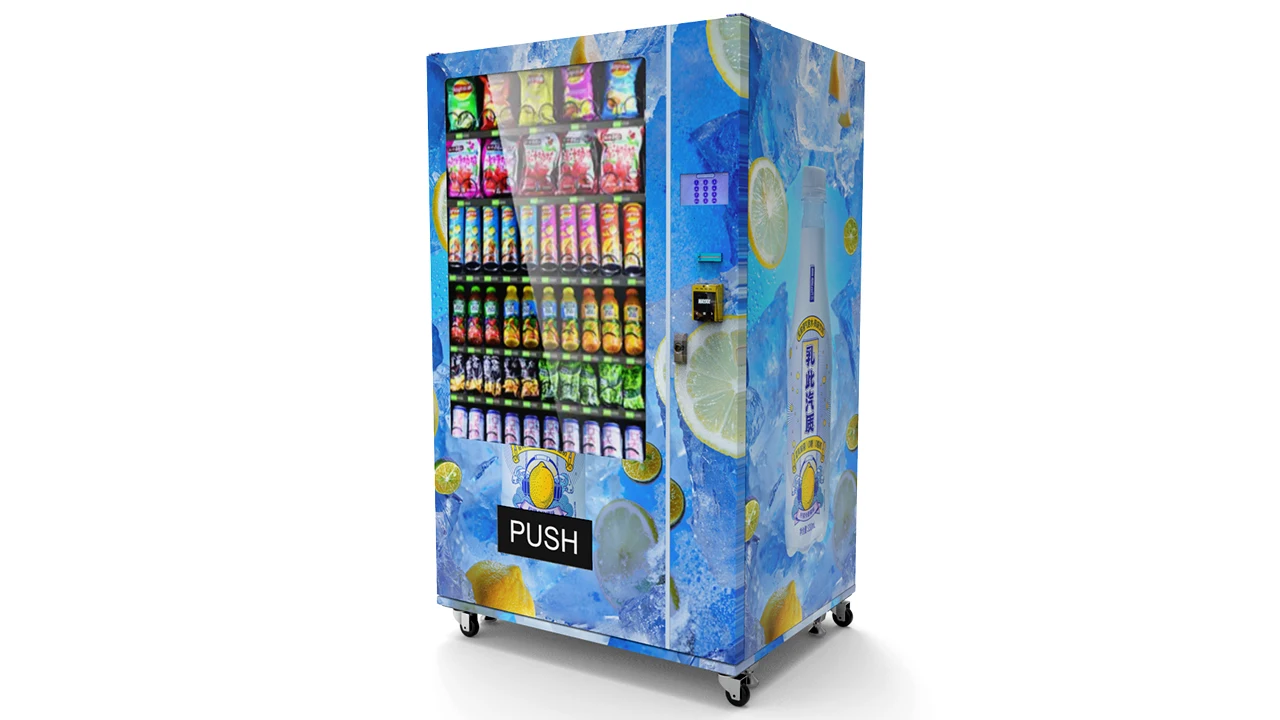
Common Vending Machine Sizing and Installation Mistakes
Checking Only the Final Floor Space
The cabinet fits the planned location, but it cannot pass a corridor corner.
Measure the delivery path as carefully as the final position.
Using Machine Dimensions as Shipping Dimensions
A 1,950 mm-high vending machine is assumed to arrive as a 1,950 mm-high shipment.
It will not necessarily do so. The pallet and protective packaging add size.
Ignoring the Service Door
The machine is placed tightly against a wall and the front door opens only partway.
Check hinge position and full service access before approving the footprint.
Using Net Weight for Floor Planning
A machine listed at 300 kg is treated as a 300 kg installed load even after stock is added.
Estimate the final loaded weight from the planned merchandise.
Converting Rated Watts Directly Into Monthly kWh
This assumes the machine operates continuously at full rated power.
Use measured daily energy data when available for operating-cost estimates.
Using Average kWh to Size the Electrical Connection
This makes the opposite mistake.
Electrical connection planning should use the equipment rating and approved electrical documentation, not average monthly consumption.
Buying Capacity Before Measuring Products
A seller quotes “360 pieces,” but the actual products are much larger than those used for the capacity estimate.
Capacity should be checked against the real merchandise dimensions and lane layout.
Assuming Every Version of a Model Has Identical Specifications
Machines can be configured with different displays, lanes, cooling systems, payment hardware and software packages.
Use the order-specific specification rather than copying values from an older quotation or a visually similar machine.
Reducing Cabinet Width Without Rechecking Lane Count
A custom-width request may look simple from the outside but remove selling positions from every tray.
Recalculate the product layout after any dimensional change.
Leaving Product Weight Out of the Design Brief
Dimensions alone do not tell the manufacturer how a product will behave mechanically.
Provide product weight along with width, height, depth, packaging and fragility.
A Practical Sizing Workflow
When I want a vending-machine project to move cleanly from idea to production, I’d organize the information in this order:
List every product. Record package width, height, depth, weight and packaging type.
Set the assortment. Define the number of products that need their own selling positions.
Set target stock levels. Decide how many units of each product should remain available between service visits.
Identify fragile products. Decide whether direct drop delivery is acceptable.
Choose a dispensing architecture. Spiral, pusher, conveyor, elevator and locker systems solve different product-handling problems.
Define temperature needs. Add refrigeration or heating only where the product requires it.
Select display and payment hardware. These parts occupy physical door space and add electrical load.
Build the internal layout. Confirm shelf spacing, lane width, lane depth and pickup dimensions.
Size the cabinet. Let the functional layout determine the required enclosure.
Check the installation envelope. Add service access and ventilation to the closed cabinet size.
Survey the delivery route. Measure every doorway, corner, overhead obstruction and floor transition.
Calculate loaded weight. Add realistic merchandise mass to the machine weight.
Confirm electrical requirements. Use the final configured equipment rating.
Confirm packed dimensions. Plan freight and unloading from the actual shipping package.
Freeze the approved specification. Make sure later changes are reflected in a new revision.
This workflow prevents the cabinet from becoming the first decision when it should usually be the result of several earlier decisions.
Frequently Asked Questions
What are typical vending machine dimensions?
There is no universal vending machine size. Among the Zhongda Smart floor-standing configurations compared in this guide, width ranges from 800 to 1,380 mm, depth from 850 to 920 mm, and height from 1,950 to 1,990 mm. Those figures are real published examples rather than industry-wide limits. Compact, wall-mounted, locker, beverage and custom machines can fall outside that range. For installation, also allow space for door opening, ventilation, payment hardware and customer access.
How wide is a full-size vending machine?
Full-size vending machine width varies with product capacity and internal equipment. The Zhongda Smart ZD-L-22 configuration used in this guide is 1,315 mm wide, or about 51.8 inches, while the ZD-LS-22 elevator configuration is 1,380 mm, or about 54.3 inches. Width should not be evaluated alone because the service door may require substantially more operating space than the closed cabinet.
How much does a vending machine weigh?
Commercial vending machines can weigh several hundred kilograms before products are loaded. The Zhongda Smart examples in this guide range from 185 kg for the compact ZD-C-7 configuration to 380 kg for the larger ZD-L-22 configuration. Final installed weight is higher once merchandise and any additional hardware are included. Freight planning should use gross shipping weight, while floor planning should consider the realistic loaded operating weight.
How much floor space does a vending machine need?
Closed-cabinet floor area is width multiplied by depth, but the real installation area is larger. A 1,315 × 920 mm cabinet occupies about 1.21 m² before door swing, ventilation and customer space are added. The correct installation envelope should come from the final machine configuration because door design and cooling airflow differ between machines.
How much electricity does a vending machine use?
There is no single energy-consumption figure for all vending machines. Ambient merchandise machines can have relatively modest electrical demand, while refrigerated or heated machines use additional equipment. Rated watts should not be treated as daily energy consumption. For operating-cost estimates, use measured kWh/day or kWh/month under defined conditions whenever that information is available.
Does a vending machine need a dedicated electrical circuit?
The electrical connection should be based on the exact machine's rated voltage, current, power, plug or connection type, grounding requirements and applicable installation requirements. Average energy consumption is not an appropriate value for sizing the electrical supply. Check the approved technical specification and equipment nameplate before installation.
How much clearance should be left behind a vending machine?
There is no reliable universal rear-clearance number. Refrigerated machines can use different condenser positions and airflow paths, so the required ventilation space should come from the final machine documentation. Service access may also require side or front clearance. Avoid pushing a machine tightly into a recess merely because the sheet-metal cabinet dimensions fit.
Can vending machine dimensions be customized?
Yes, cabinet dimensions can often be adjusted as part of a custom vending project, but every dimensional change can affect product lanes, capacity, door design, refrigeration, service access and dispensing hardware. The most useful custom request includes the maximum available installation dimensions together with the dimensions, weight and quantity of the products the machine needs to sell.
What information should I send a manufacturer for a custom vending machine?
Send the maximum machine height, width and depth, narrowest delivery opening, package dimensions, product weight, number of SKUs, desired quantity per SKU, temperature requirements, preferred delivery method, screen requirement and payment hardware. Include photographs or physical samples when package shape or fragility may affect dispensing. That information gives the manufacturer enough detail to develop the internal layout before fixing the final cabinet dimensions.
Final Notes on Choosing Vending Machine Dimensions
The most useful vending machine dimension is not a single width, depth or height. It is the complete operating envelope of a machine that has already been matched to its products.
The Zhongda Smart examples in this guide make the range clear. A compact 800 mm-wide machine and a 1,380 mm-wide elevator machine are both legitimate vending configurations, but they solve different merchandising and delivery problems.
If I were comparing machines for a new project, I’d make the decision in this order: product fit, useful capacity, dispensing method, site access, loaded weight, service clearance and electrical requirements. Exterior cabinet size comes out of those decisions.
That approach also makes custom projects easier. Instead of asking a factory to produce “a smaller machine” or “a larger machine,” the buyer can define the required products, stock level, delivery method and physical limits. The manufacturer can then show what capacity and hardware are practical inside that envelope.
Before the machine ships, one approved sheet should contain the final cabinet dimensions, packed dimensions, net and gross weight, configured product layout, electrical rating, ventilation requirement and service clearances. Those numbers are much more valuable than a generic size chart because they describe the machine that will actually arrive.
Technical Sources and Reference Notes
National Institute of Standards and Technology (NIST) — SI Units: Length. NIST states that one inch is exactly equivalent to 25.4 mm.https://www.nist.gov/pml/owm/si-units-length
ENERGY STAR — Refrigerated Beverage Vending Machines. Current program information states that certified refrigerated beverage vending machines are on average 9% more energy-efficient and save about 1,000 kWh annually compared with standard models within the program.https://www.energystar.gov/products/vending_machines
ENERGY STAR — Refrigerated Beverage Vending Machines Key Product Criteria. Official criteria include maximum daily energy-consumption equations based on refrigerated volume and defined low-power operating states.https://www.energystar.gov/products/vending_machines/key_product_criteria
International Electrotechnical Commission — IEC 60335-2-75:2024. Safety requirements for commercial dispensing appliances and vending machines within the standard's stated scope.https://webstore.iec.ch/en/publication/80073
Zhongda Smart specification note: Product dimensions, weights, capacities and rated power figures used in this article were checked against current Zhongda Smart product pages in September 2026. They represent the configurations published on those pages at the time of review. Custom refrigeration, displays, payment systems, delivery mechanisms, cabinet structures and other optional equipment can change the final size, weight, capacity and electrical specification. The approved order specification should always take precedence over a general article or earlier product listing.
Disclaimer
This article provides general technical, purchasing and planning information. It is not structural, electrical, safety, financial or regulatory approval for a specific installation. Machine dimensions, packed dimensions, weight, product capacity, temperature range, electrical demand and energy consumption can change with configuration. Example calculations are illustrative unless explicitly identified as published product specifications. Floor loading, handling equipment, ventilation, electrical connection, product-storage conditions and installation requirements should be checked against the final machine documentation and the conditions of the actual site. Do not use estimated energy consumption to size an electrical connection, and do not treat net machine weight as the final loaded operating weight.