Updated: April 12, 2026
Author: Zhongda Smart editorial team
Background: This guide is based on hands-on experience in vending machine manufacturing, OEM customization, machine deployment, and day-to-day automated retail operations.
An intelligent vending machine is a connected self-service retail system that combines automated dispensing, cashless payment, remote monitoring, digital merchandising, and live sales visibility in one compact sales channel. For brand owners, that matters because a single machine can do more than sell products. It can introduce a new line, test pricing, display branded content, gather product-level demand data, and generate revenue without the overhead of a full staffed store. When the machine format matches the product and the software supports real operating decisions, an intelligent vending machine becomes a practical retail asset rather than a simple piece of equipment. That is why more brands now use smart vending machine programs, automated retail cabinets, and self-service kiosk setups to expand reach, improve convenience, and build a more measurable path from product discovery to purchase.
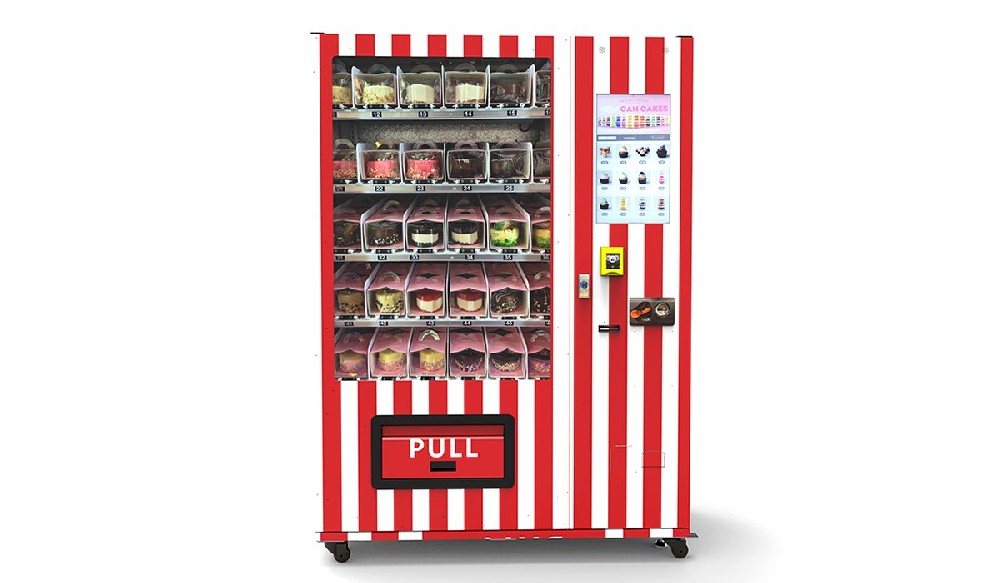
Key Points at a Glance
An intelligent vending machine combines dispensing, payment, monitoring, and branded digital presentation in one system.
For brand owners, it can function as a sales channel, a mini showroom, a product test point, and a demand data source.
The best results usually come from matching the machine format to package size, fragility, storage needs, and target price point.
Cashless capability matters. Cantaloupe reported an average cashless vending ticket of $2.26 versus $1.46 for cash purchases, showing how payment convenience can lift spend per transaction [Source].
Market demand is still strong. Grand View Research estimated the retail vending machine market at $15.02 billion in 2024, with cashless vending holding the highest payment share [Source].
The strongest projects are usually built in three steps: pilot, optimize, then scale.
Why Brand Owners Are Investing in This Channel
Brand owners do not need another generic sales pitch about convenience. What they need is a retail format that can make money, protect brand presentation, and produce useful operating data. A well-planned intelligent vending machine does all three. It creates a compact sales point that stays available throughout the day, reduces reliance on labor, and puts the brand closer to the purchase moment. At the same time, it helps teams see what sells, what stalls, and what needs to change.
This matters even more when a brand wants to test new products without the expense of a full store buildout. A smart vending machine can support product launches, sampling campaigns, seasonal drops, premium gifting, accessories, cosmetics, beverages, and everyday essentials. Unlike a passive display unit, an intelligent vending machine can show product content on-screen, support promos, collect payment, and report results at the SKU level.
That mix of sales and visibility is exactly why automated retail has become more attractive to brand-led businesses. Grand View Research noted that the market is being driven by demand for contactless access, on-the-go purchasing, mobile payments, and AI-powered inventory systems [Source]. In plain terms, buyers now expect speed, flexible payment, and simple self-service. A modern intelligent vending machine fits those habits well.
There is another reason this channel works for brands: it can act as a compact branded store. With the right screen, cabinet finish, lighting, and interface, an intelligent vending machine becomes more than equipment. It becomes a small-format retail environment that still reflects the brand’s look and message. For categories where visual presentation matters, that difference is not cosmetic. It affects conversion.
In day-to-day operations, I have seen brand owners succeed with this model for one simple reason. They stop thinking about vending as a low-end convenience channel and start treating it like a measurable retail point. When that mindset changes, decisions get better. Product selection becomes tighter. Pricing becomes more deliberate. Refill planning becomes more disciplined. And the intelligent vending machine starts performing like a real commercial asset.
What Makes a Machine Truly Intelligent
Many machines now come with a screen and a card reader, but that alone does not make them intelligent. A real intelligent vending machine should help a brand sell better and operate better. That means the hardware, software, payment flow, and reporting all need to work together.
Core capabilities that actually matter
Cashless payment: support for cards, mobile wallets, and other common cashless options.
Remote monitoring: live stock visibility, fault alerts, sales reporting, and operating status.
Digital merchandising: product videos, on-screen promotions, bundles, upsells, and campaign content.
Flexible dispensing: spiral, locker, elevator, lift, cooling, frozen, and custom product channels.
Brand customization: cabinet graphics, interface layout, messaging, and product-specific presentation.
Service diagnostics: the ability to identify issues quickly and reduce machine downtime.
Cashless payment deserves special attention because it has a direct effect on spend. Cantaloupe reported that contactless payments accounted for 65% of sales in food and beverage vending in 2023, and the average cashless ticket was nearly 55% higher than the average cash purchase [Source]. That is not a minor feature. It is a revenue variable. For many projects, a stronger payment experience can improve results before any other change is made.
Remote reporting matters just as much. A brand owner should not need to guess what is inside each unit, which SKUs are moving fastest, or when a machine needs attention. A strong intelligent vending machine gives teams a clearer picture of stock levels, refill timing, top-selling products, and service interruptions. That visibility shortens reaction time and helps preserve revenue that would otherwise be lost to stockouts or downtime.
Digital merchandising is another practical advantage. A self-service kiosk with a strong front-end display can do what static shelving cannot. It can explain a product, show a launch graphic, highlight a limited-time bundle, or walk a first-time buyer through the selection process. This is one reason an intelligent vending machine works so well for products that need context, not just visibility.
From a field standpoint, I would say the best definition is simple: an intelligent vending machine helps you make better operating decisions while making the buying experience easier for the customer. If a machine cannot do that, it may still be useful, but it is not delivering the full value that brand owners should expect from this category.
Choosing the Right Machine Format
The fastest way to weaken a vending project is to choose the wrong machine type. Product fit comes first. A brand owner should begin with actual package dimensions, weight, fragility, temperature needs, and presentation goals. A good-looking cabinet is not enough if the product does not vend cleanly or arrive in good condition.
| Machine format | Best use | Main strength | Main caution |
|---|---|---|---|
| Spiral machine | Standard snacks, boxed goods, simple packaged items | Cost-efficient and familiar | Less ideal for delicate or unusual packages |
| Drink vending machine | Cans, bottles, chilled beverages | Strong capacity and fast turn potential | Cooling performance must be reliable |
| Locker vending machine | Apparel, gift sets, accessories, premium items | Better presentation and product protection | Usually lower SKU density |
| Elevator or lift machine | Fragile goods, cosmetics, cakes, boxed sets | Gentle delivery with reduced product damage | Higher complexity than a standard drop system |
| Mini vending machine | Countertop retail, small-format convenience, sampling | Small footprint and flexible placement | Lower storage capacity |
| Custom cabinet | Brand-led launches and unique product formats | High design flexibility | Needs stronger planning and engineering review |
A spiral setup usually works well when the product is consistent in size, durable, and easy to dispense. A locker design often makes more sense when presentation matters or the item is larger and more premium. For products that are fragile, soft, high-value, or packaged in a way that should not drop hard, an elevator-based intelligent vending machine is often the better choice.
This is where product testing becomes important. In manufacturing and deployment work, some of the most common problems are caused by packaging decisions made before machine testing. A box may look perfect in a design mockup and still be a poor fit in a real machine. Rounded edges, uneven balance, thin outer walls, and soft interior support can all create problems. A brand owner who tests real samples in a real cabinet before production will usually avoid expensive surprises later.
For a broader look at available machine categories, you can review Zhongda Smart’s vending machine product categories. If your project depends on a branded cabinet, special sizing, or unique product handling, the custom vending machine manufacturing options page is the more relevant reference.
Cost, Margins, and ROI
One of the most common mistakes in this market is treating machine cost as the whole investment. It is not. The true economics of an intelligent vending machine come from the full operating model: hardware, customization, freight, payment setup, software, service, stocking labor, and placement performance. A lower cabinet price can still turn into a weaker financial decision if the machine creates more downtime, more vend failures, or more service friction.
What the budget usually includes
| Cost area | What it covers | Why it matters |
|---|---|---|
| Machine hardware | Cabinet, dispensing system, screen, cooling or freezing, payment devices | Defines baseline reliability and product compatibility |
| Customization | Brand wrap, UI, product channels, special cabinet features | Shapes brand fit and sell-through quality |
| Software and connectivity | Remote platform, network setup, management access | Drives visibility and control |
| Logistics and setup | Shipping, delivery, site handling, install preparation | Often underestimated early on |
| Payment costs | Processor fees, gateway, transaction charges | Directly affects net margin |
| Operations | Refill labor, maintenance, cleaning, support | Determines long-term profitability |
When estimating returns, conservative assumptions are better than optimistic ones. A serious model for an intelligent vending machine should include daily transactions, average ticket, gross margin, payment fees, labor, rent or revenue share if applicable, and a realistic service allowance. Do not build your first forecast around best-case foot traffic. Build it around what the machine can reliably do once the novelty wears off.
Here is a simple way to think about it:
Monthly revenue = daily transactions × average ticket × operating days
Monthly gross profit = revenue − product cost
Monthly net profit = gross profit − payment fees − labor − service − placement costs
Estimated payback = total setup cost ÷ monthly net profit
| Illustrative scenario | Conservative | Base case | Strong case |
|---|---|---|---|
| Daily transactions | 18 | 30 | 45 |
| Average ticket | $6.00 | $7.50 | $9.00 |
| Monthly revenue | $3,240 | $6,750 | $12,150 |
| Gross margin | 45% | 52% | 58% |
| Estimated monthly net profit | $800–$1,050 | $2,000–$2,650 | $4,100–$5,200 |
These are example ranges, not promises. Real performance depends on product category, price discipline, refill execution, and machine uptime. That said, the reason many brand owners prefer a pilot-first rollout is clear. A connected intelligent vending machine can reveal whether the economics are truly healthy before more units are ordered. Zhongda Smart’s vending machine ROI calculator is useful for modeling different payback scenarios before a purchase decision is made.
One point is worth stressing: a high-performing machine is not just a machine with strong sales. It is a machine with strong repeatable sales. The combination of refill discipline, stable payment, good package fit, and quick service response is what protects returns over time. That is why an intelligent vending machine should always be evaluated as an operating system, not just a piece of hardware.
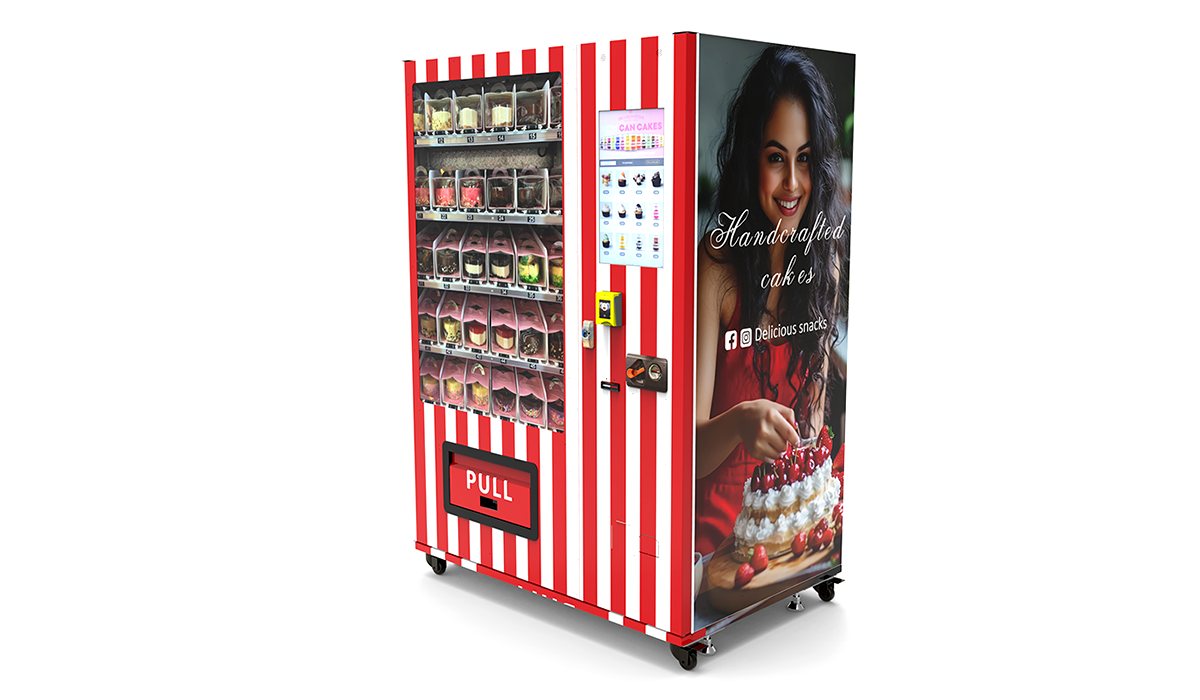
What to Check Before You Buy
Buying decisions in this category are often rushed by a single question: “How much does the machine cost?” That is too narrow. The better question is whether the machine can support the product, the brand, and the operating plan. Before choosing an intelligent vending machine, brand owners should check the following points carefully.
Pre-purchase checklist
Does the cabinet support the exact product dimensions, weight, and packaging shape?
Can the machine handle fragile items without damaging the customer experience?
Does the payment system support the methods your customers already prefer?
Can your team monitor sales, stock levels, and machine status remotely?
Is the user interface clean, brand-aligned, and easy to complete in a few steps?
What is the warranty coverage, response process, and spare-parts support?
Can the machine be updated later if your assortment changes?
What sample testing is available before mass production or wider rollout?
In real projects, I usually tell buyers to look hardest at three things: product fit, payment reliability, and service response. If those three are weak, even an attractive intelligent vending machine will struggle. On the other hand, if those three are strong, the machine has a much better chance of becoming a durable sales point.
For example, if the machine is intended for cosmetics, collectibles, apparel, or boxed gifts, the brand owner should ask not only whether the product fits, but whether it still looks premium at the moment of delivery. That difference is easy to overlook in a quotation stage and very hard to fix after production. The same goes for chilled beverages or frozen goods. The machine does not just need capacity. It needs dependable temperature performance and refill planning that matches actual demand.
If you need a broader starting point for machine selection, Zhongda Smart’s vending machine solutions for branded deployments page offers a useful overview of how different configurations can be matched to different commercial needs.
A Practical Launch Framework
The safest way to launch an intelligent vending machine program is rarely a large initial order. In most cases, the better path is to begin with a small pilot, learn from real transactions, and scale only when the numbers and workflow are working. That approach protects cash, improves decision quality, and creates cleaner operating routines.
Step 1: Pilot with a tight assortment
Start with one to three machines and a limited SKU mix. This makes it easier to see what buyers actually choose, what times drive the strongest sales, and which products need different packaging or placement logic. A pilot-stage intelligent vending machine should be treated like a data source, not just a sales outlet.
Step 2: Improve based on real behavior
After the first cycle of sales, refine the assortment. Remove weak sellers. Improve on-screen messaging. Adjust price ladders and bundle offers. If vend failures occur, look first at packaging shape, shelf arrangement, and delivery method. Many problems can be solved without changing the whole concept.
Step 3: Build standard operating rules
Before scale, document refill timing, fault handling, cleaning frequency, pricing updates, and promotion controls. A growing vending program becomes easier to manage when each intelligent vending machine follows the same reporting rules and service standards.
Step 4: Expand only after proof
Once the pilot units show stable revenue, acceptable service demands, and good customer acceptance, scale becomes more predictable. At that point, you can expand into additional placements, add machine formats, or create a more customized cabinet design. The key is that expansion should be based on proof, not assumption.
One pattern shows up again and again in the field: too many brands launch with too many products and too many expectations. Then they discover that only a smaller group of SKUs does the heavy lifting. A disciplined pilot lets you identify those products early. It also helps you see whether an intelligent vending machine is working as a quick-grab convenience point, a premium product showcase, or both.
Another smart practice is to test at least two merchandising approaches. In one version, keep the interface simple and fast. In the second, add more product storytelling and promotional content. Some categories convert better when the path to purchase is quick. Others convert better when the machine educates first. A connected smart vending machine gives brand owners a way to compare those patterns in real use.
Why the Manufacturing Partner Matters
A machine supplier should do more than ship equipment. For a brand-led project, the manufacturer should be able to translate a product concept into a working retail system. That includes cabinet design, software support, payment integration, sample testing, quality control, and after-sales coordination. The more customized the project, the more this matters.
Zhongda Smart is one example of a factory-led supplier that positions itself around OEM and custom vending machine development. On its website, the company states that it specializes in vending machine production and development, and highlights multiple product categories, custom solutions, and after-sales service . The same site also states annual production of 10,000 units, a 20,000 square meter workspace, 20+ quality inspectors, and a 10+ engineer team. Those details matter because they help a buyer judge whether the factory has meaningful production depth behind the sales presentation.
For brand owners, the practical question is not whether a manufacturer can build a cabinet. It is whether the manufacturer can help the project succeed after the cabinet is built. That means testing real product samples, advising on delivery method, aligning software logic with the buying flow, and supporting faults when they happen in the field. A serious intelligent vending machine program needs that level of partnership.
In my experience, the strongest manufacturing partners also understand where projects usually fail. They know that poor package fit leads to vend problems. They know that unclear service workflows create long outages. They know that a beautiful interface can still hurt conversion if it slows the path to checkout. That type of experience is hard to see in a brochure but easy to feel in an actual deployment.
If your brand needs a cabinet tailored to a specific category, a custom intelligent vending machine is often the better long-term move than forcing the product into a standard machine. It may take more upfront planning, but it usually protects presentation, reduces operating friction, and makes the overall brand impression stronger.
Common Mistakes That Hurt Results
Choosing by price alone: the lowest quote can create the highest operating cost later.
Ignoring product physics: packages that look great on paper may vend poorly in reality.
Using too many SKUs too soon: complexity weakens learning and creates refill errors.
Underestimating payment flow: friction at checkout quietly kills revenue.
Weak refill discipline: stockouts are often a bigger problem than poor traffic.
No service plan: small machine issues become costly when response routines are unclear.
Overdesigned interface: too much screen clutter can slow or confuse the purchase process.
The easiest way to improve an intelligent vending machine program is to remove friction, not just add features. Better stock control, cleaner product selection, and a simpler checkout flow usually improve performance faster than cosmetic changes alone.
Final Thoughts
An intelligent vending machine gives brand owners a practical way to combine sales, branding, and measurable retail data in one compact format. It can introduce products, support launches, reduce labor dependence, and create a customer-friendly buying experience that stays consistent. But strong results do not come from hardware alone. They come from choosing the right machine type, testing the real product, building honest financial assumptions, and working with a manufacturer that understands real operating conditions.
The brands that do well in this space usually treat each intelligent vending machine as a retail asset with a clear job to do. Some machines are built to maximize convenience. Some are built to protect presentation. Some are built to test price and product fit. The better that job is defined, the better the machine usually performs.
If the goal is long-term performance rather than a short-term trial, start with product fit, cashless payment, service response, and data visibility. Those are the foundations that make a smart vending machine program scalable. Once those pieces are strong, an intelligent vending machine can become one of the most flexible and measurable sales channels a brand can add.
Frequently Asked Questions
What is an intelligent vending machine?
An intelligent vending machine is a connected self-service retail machine that combines automated product dispensing, cashless payment, remote monitoring, and digital merchandising. It is designed to improve both the customer experience and the operator’s visibility into sales and stock.
How is an intelligent vending machine different from a standard vending machine?
A standard machine mainly stores and dispenses products. An intelligent vending machine adds live reporting, better payment flexibility, screen-based promotions, easier remote control, and stronger brand presentation.
What products can an intelligent vending machine sell?
It depends on the cabinet and dispensing system. Common categories include snacks, drinks, cosmetics, accessories, gift boxes, collectibles, apparel, and other packaged retail items. Fragile products usually need locker or elevator delivery instead of a simple drop system.
How much does an intelligent vending machine cost?
The answer depends on machine type, size, refrigeration or freezing needs, screen configuration, payment hardware, software, and customization level. Buyers should evaluate full setup and operating cost rather than cabinet price alone.
Can brand owners customize an intelligent vending machine?
Yes. Many projects use OEM or custom development for cabinet graphics, interface design, product channels, sizing, locker configuration, and special delivery systems. Customization is especially useful when presentation and product protection are critical.
Is an intelligent vending machine profitable?
It can be, but profitability depends on product margin, traffic quality, average ticket, stock discipline, machine uptime, and payment reliability. The best way to judge profitability is through a pilot with realistic tracking rather than broad assumptions.
How many machines should a brand launch first?
For most brands, one to three pilot units is the safest starting point. That provides enough data to evaluate assortment, pricing, refill rhythm, and customer response before scaling.