Disclosure: This guide is published by Zhongda Smart, a company that manufactures vending machines; the selection method is explained in the section on how these readers were ranked.
The best card readers for vending machines depend on the machine, not the brand. For a machine with an MDB port, I'd choose the Nayax VPOS Touch, which puts the reader, telemetry, and 4G in one housing. A U.S. operator who prefers Cantaloupe's service should look at the ePort Engage. Tight cabinets suit the Nayax Onyx. Custom machines with their own controller and an existing acquirer suit a bare terminal such as the ID TECH VP6800, PAX IM30, or Ingenico Self/2000, but telemetry then becomes a separate purchase. Prices were checked on November 23, 2026. Any figure without a named source is an assumption and is labeled as one.
Which card reader fits which vending machine
Match the reader to the machine's controller first and the brand second. A modern MDB snack or drink machine suits an all-in-one reader such as the Nayax VPOS Touch or Cantaloupe ePort Engage. A custom machine with its own Android board suits a bare terminal such as the PAX IM30 or ID TECH VP6800.
| Machine situation | Start with | Reason | Confirm before ordering |
|---|---|---|---|
| MDB snack or drink machine, no cashless yet | Nayax VPOS Touch | Reader, telemetry, and cellular in one unit with documented MDB and DEX cables | Controller firmware supports the MDB cashless device |
| Small cabinet or wall unit, contactless is enough | Nayax Onyx | Compact body with a long protocol list | Whether chip insert or swipe is needed at your site |
| U.S. operator who wants a Cantaloupe account | Cantaloupe ePort Engage | Chip, contactless, and mobile wallet in a finished reader with 4G | Account approval and the processing rate in your quote |
| Machine with a bill acceptor and no free panel space | Cantaloupe ePort Engage Combo | Mounts over the existing bill acceptor and takes cash as well | Your bill acceptor model fits under the unit |
| Custom machine with an Android board and its own acquirer | PAX IM30 or ID TECH VP6800 | Certified terminals that run the acquirer's payment app | Who supplies the host software and any MDB interface |
| European machine replacing an older door module | Ingenico Self/2000 | Built to the European Vending Association door-module standard | Contactless-only acceptance is acceptable |
The table is a starting filter. The compatibility section later in this guide narrows it by interface and machine type.
How these card readers were ranked
These seven readers were ranked with a weighted editorial score built from manufacturer datasheets, product pages, and manuals. It is not a laboratory test, and no unit was bench-tested for this comparison. Six criteria carry the weights below, and any product without a public price is marked quote-based with the check date.
| Criterion | Weight | What counted | Evidence used |
|---|---|---|---|
| Interface and machine fit | 25% | MDB, DEX, pulse, serial, and mounting options | Installation guides and datasheets |
| Payment acceptance and certification | 20% | Contactless, chip, PIN on glass, PCI PTS version | Datasheets and product pages |
| Connectivity and remote management | 20% | Cellular, Ethernet, Wi-Fi, telemetry included or not | Product pages and datasheets |
| Cost transparency | 15% | Public hardware price, monthly fee, processing structure | Vendor shop pages, checked Nov 23, 2026 |
| Unattended durability | 10% | Ingress and impact ratings, temperature range | Datasheets and manuals |
| Support and documentation | 10% | Public manuals, install guides, setup documents | Vendor document libraries |
For this comparison, I'm prioritizing interface fit above everything else, because a reader that cannot talk to the controller has no other value. I'd rank the seven in this order for a first-time buyer with a standard machine: VPOS Touch, ePort Engage, Onyx, ePort Engage Combo, PAX IM30, ID TECH VP6800, Ingenico Self/2000. The order shifts for builders who already have a controller and an acquirer, and the picks below say how.
The best card readers for vending machines: seven picks
The seven picks split into two types. Four are finished readers that bundle cellular telemetry: Nayax VPOS Touch, Nayax Onyx, Cantaloupe ePort Engage, and Cantaloupe ePort Engage Combo. Three are payment terminals that need a host controller and an acquirer's payment app: ID TECH VP6800, PAX IM30, and Ingenico Self/2000.
1. Nayax VPOS Touch
- Type: Finished all-in-one reader with built-in telemetry.
- Payment methods: Contactless cards and NFC mobile wallets. Confirm chip-insert and QR needs on your quote.
- Interfaces: MDB, JVMA, DEX, and RS232 cable options are documented in Nayax's installation guide.
- Connectivity: 4G LTE and Ethernet. The FCC-filed manual lists -4°F to 131°F (-20°C to 55°C) operation, and Nayax rates the unit IP55.
- Billing model: Hardware at $399 per unit for 1 to 4 units, $314 for 5 to 14, and $289 for 15 to 19 on the Nayax U.S. shop (checked Nov 23, 2026). The Cashless, Operations & Inventory plan is $9.99 per month. Nayax's shop shows a processing fee between 2.5% and 5.95%, set by the operator's profile.
- Best for: Operators with MDB snack or drink machines who want one vendor for the reader, telemetry, and card clearing.
- Skip if: You need your own acquirer. Nayax's July 2025 U.S. clearing agreement appoints Nayax as the exclusive agent for processing card transactions on its devices, and it allows Nayax to change the processing fee on 30 days' written notice.
- Trade-off: You get the shortest setup path, and in return you accept Nayax's processing terms and fee changes.
2. Cantaloupe ePort Engage
- Type: Finished all-in-one reader and telemeter with a color touchscreen.
- Payment methods: EMV chip, EMV contactless, NFC/RFID, magstripe, and mobile wallets.
- Interfaces: MDB and DEX cabling. Cantaloupe's store sells an MDB and DEX cable set and a 3-foot MDB extension for readers mounted more than 12 inches from the MDB connection.
- Connectivity: 4G/LTE. Cantaloupe sells a separate Engage antenna at $36.85 for low-signal spots.
- Billing model: On Cantaloupe One the hardware line shows $0 and $19.95 per month is deducted from settled funds, after a new-account application (Cantaloupe store, checked Nov 23, 2026). The processing rate is quote-based.
- Best for: U.S. operators who want chip, tap, and swipe in one finished reader.
- Skip if: You operate outside the United States. Cantaloupe's 2023 distributor sheets list the Engage for the United States only.
- Trade-off: The reader carries PCI PTS 5.x certification, while newer terminals in this list carry 6.x.
3. Nayax Onyx
- Type: Finished compact reader with telemetry and a 2.4-inch color touchscreen.
- Payment methods: Nayax describes it as a contactless reader for debit, credit, and prepaid cards, QR codes, and NFC wallets.
- Interfaces: MDB, DEX, DDCMP, pulse, VCCS, ccTalk, and JVMA.
- Connectivity: 3G, 4G, Ethernet, and NFC, per Nayax's Canadian shop page.
- Billing model: £325 per unit for the 4G set with SIM, cable, and antenna on Nayax's U.K. shop (checked Nov 23, 2026). U.S. price is quote-based (checked Nov 23, 2026). The monthly plan and processing structure follow the same Nayax model as the VPOS Touch.
- Best for: Small cabinets, wall-mounted units, and older machines that speak pulse, ccTalk, or DDCMP.
- Skip if: Your customers expect to insert a chip card. Ask Nayax in writing whether your quoted unit accepts chip insert or swipe.
- Trade-off: The protocol list is the widest of the four finished readers, and the contactless focus narrows how customers can pay.
4. Cantaloupe ePort Engage Combo
- Type: Finished reader and telemeter built to sit over an existing bill acceptor.
- Payment methods: EMV chip and contactless, NFC/RFID, magstripe, and mobile wallets, plus cash through the bill acceptor underneath.
- Interfaces: MDB and DEX through the included Y cable and DEX cable.
- Connectivity: 4G/LTE with an included 4G antenna.
- Billing model: Engage Combo (Gen 1) listed at $329 with a 12-month commitment and an early-termination fee equal to the remaining monthly service fees (Cantaloupe store, checked Nov 23, 2026). Processing rate is quote-based.
- Best for: Machines with a bill acceptor and no spare panel space.
- Skip if: The machine has no bill acceptor, or the acceptor model is not confirmed to fit under the unit.
- Trade-off: It saves panel space and adds a 12-month service commitment.
5. PAX IM30
- Type: Android payment terminal. It needs an acquirer's payment app and a host that handles vending logic.
- Payment methods: EMV contact, EMV contactless, and magnetic stripe.
- Interfaces: Power and data through an MDB slave connection, Executive (EXE), RS232, or digital I/O, with JVMA power input.
- Connectivity: Ethernet, Wi-Fi, and 4G on configurations that include the cellular module and SIM.
- Billing model: Quote-based through acquirers and resellers (checked Nov 23, 2026). Processing is billed by the acquirer, and no telemetry fee comes with the terminal.
- Specs: PCI PTS 6.x SRED, 5-inch HD display, IP65, IK08, 2-megapixel front camera (PAX datasheet, 2024).
- Best for: Builders and operators with an Android controller, or European machines that use Executive.
- Skip if: You want a package where one vendor supplies the reader, the telemetry, and the clearing.
- Trade-off: You choose the acquirer and keep control of rates, and you take on integration and telemetry yourself.
6. ID TECH VP6800
- Type: All-in-one unattended payment terminal (module). It has no telemetry service.
- Payment methods: Magstripe, EMV chip, and NFC/contactless, with PIN on glass on a 4.3-inch touchscreen and an optional camera.
- Interfaces: ID TECH lists USB, RS232, and Ethernet, plus Bluetooth LE and Wi-Fi. An MDB connection was not listed in the sources reviewed, so ask for the interface board in writing.
- Connectivity: Ethernet, Wi-Fi, and Bluetooth. No cellular modem is listed.
- Billing model: Hardware only. One U.S. reseller listed $703.96 on Nov 23, 2026; the manufacturer price is quote-based. Processing is billed by your acquirer.
- Specs: PCI PTS 6.x certified (ID TECH user manual, July 2025).
- Best for: Machine builders and integrators who write or buy the host software.
- Skip if: You are a first-time operator who wants a plug-and-play reader.
- Trade-off: It has the strongest security listing here and the heaviest integration burden.
7. Ingenico Self/2000
- Type: Contactless-only payment terminal with optional add-on boxes.
- Payment methods: EMV contactless and NFC wallets, plus QR codes through the embedded camera. Worldline's integration guide describes the Self/2000 as contactless only.
- Interfaces: USB, RS232, and LAN as standard. MDB comes through an optional add-on box, and the unit follows the EVA EPS door-module standard, so it can replace older terminals built to that standard.
- Connectivity: 4G and Bluetooth through optional add-on boxes.
- Billing model: Quote-based through acquirers and integrators (checked Nov 23, 2026). A Self/2000 LE variant appears in Ingenico's U.S. and Canada documents (2024).
- Specs: Color capacitive touchscreen and IK09 impact rating (Ingenico datasheet, 2023).
- Best for: European operators replacing legacy door modules with a compact contactless unit.
- Skip if: Customers need chip insert or magstripe, which this model does not offer.
- Trade-off: The door-module fit helps retrofits, and the MDB and 4G add-on boxes raise the parts count and the price.
Reader compatibility: MDB, DEX, pulse, and serial by machine type
Match the interface to the controller before choosing a reader. MDB covers most modern snack and drink machines, DEX carries audit data, pulse and serial interfaces serve coin-style and older machines, and Android-board machines usually take a terminal over USB, serial, or Ethernet. The table maps machine type to interface and the reader families that fit.
| My machine is... | Interface to look for | How it connects | Reader families to check | Confirm in writing |
|---|---|---|---|---|
| A spiral snack or drink machine with an MDB controller | MDB, plus DEX for audit data | Reader's MDB cable plugs into the cashless port; a DEX cable adds sales reporting | Nayax VPOS Touch, Cantaloupe ePort Engage, Nayax Onyx | Controller firmware supports an MDB cashless device |
| A machine with a bill acceptor and no spare panel space | MDB, shared with the validator | T-connector or Y cable keeps the validator on the bus; overlay readers sit above the acceptor | Cantaloupe ePort Engage Combo, Nayax VPOS Touch with MDB cable | Your acceptor model fits under the unit |
| A touchscreen machine with an Android main board | USB, RS232, or Ethernet to the host | Terminal runs the acquirer's payment app; the host sends the price and receives the vend result | PAX IM30, ID TECH VP6800 | Who writes the host integration and who supports it |
| A locker machine | Depends on the lock-board controller | Ask the maker whether the controller exposes MDB, serial, or a network interface | A finished reader if MDB exists; otherwise a terminal on the host | How a failed door release triggers a refund |
| An elevator machine | Depends on the controller | Same question as lockers, plus a drop sensor that reports delivery | A terminal on the host, or a finished reader over MDB | Payment completes only after the delivery result arrives |
| An older coin-style machine | Pulse | Reader sends credit pulses; the machine sees only a credit value | Nayax Onyx (pulse is listed), Nayax VPOS Touch pulse variant | Price per credit; multiple prices may not map cleanly |
| A European machine with Executive or an EVA door module | EXE, MDB, or the EVA door-module standard | Door-module terminals replace the old unit directly; others need an adapter | Ingenico Self/2000, PAX IM30 | Adapter or add-on box needed for your protocol |
An MDB port does not guarantee that a given reader will work. Controller revisions differ, so ask the machine maker or the reader vendor to name the compatible controller and firmware version.
DEX is a separate job. It reports audit data such as sales counts, while MDB carries the cashless transaction. A reader with only an MDB cable accepts payments but may not report sales to a management platform until the DEX cable is connected.
Pulse machines are the limiting case. They see credits, not items, so a machine with several price points needs a pulse mapping that matches every price. Test each price before opening the machine to customers.
What cashless payment costs per sale
Cashless cost per sale equals the percentage fee, the fixed per-transaction fee, and the monthly fee spread across card sales. Fixed fees weigh more on small orders because they do not shrink with the price. The examples below use assumed rates, which are illustrations and not industry data.
Cost per card sale = (price × percentage rate) + fixed fee + (monthly fees ÷ card sales per month)
Take two assumed fee structures: 3% plus $0.10 per sale, and a 5% flat rate with no fixed fee. Nayax's shop shows a processing range of 2.5% to 5.95%, so both fall inside the range a buyer may see, but neither is a quote.
| Sale price | Fee at 3% + $0.10 | Share of sale | Fee at 5% flat | Share of sale | Cheaper structure |
|---|---|---|---|---|---|
| $1.50 | $0.145 | 9.7% | $0.075 | 5.0% | 5% flat |
| $2.50 | $0.175 | 7.0% | $0.125 | 5.0% | 5% flat |
| $5.00 | $0.250 | 5.0% | $0.250 | 5.0% | Equal |
| $10.00 | $0.400 | 4.0% | $0.500 | 5.0% | 3% + $0.10 |
Under these assumptions the two structures cross at $5.00. Below that, the fixed $0.10 outweighs the lower percentage. Operators selling $1.50 drinks should therefore compare structures at their own average price, not at the headline rate.
The monthly fee adds a second layer. A $9.99 monthly plan (the Nayax plan price on its U.S. shop) adds about $0.10 per sale at 100 card sales a month and about $0.025 at 400. At a $2.50 sale with 100 card sales a month, the assumed 3% + $0.10 structure plus that monthly fee costs about $0.275 per sale, or 11.0% of the price.
Costs that sit outside the per-sale formula
- Hardware and SIM: One-time reader price, antennas, cables, and any data plan billed separately.
- Refunds: Ask whether a refunded sale returns the processing fee. This varies by agreement.
- Chargebacks: Ask for the dispute fee and who bears the loss when a customer disputes a vend.
- Settlement timing: Ask how many days pass between a sale and the deposit, and whether the platform deducts fees before paying out. Cantaloupe's Cantaloupe One plan deducts its monthly fee from settled funds.
- Commitments: The Engage Combo (Gen 1) listing carries a 12-month commitment and an early-termination fee.
I'd compare readers by cost per card sale at the operator's real average price, using the quote's actual rates. A reader with a lower hardware price and a higher processing rate loses that advantage within a few thousand sales.
Retrofit an old machine or buy one with payments built in
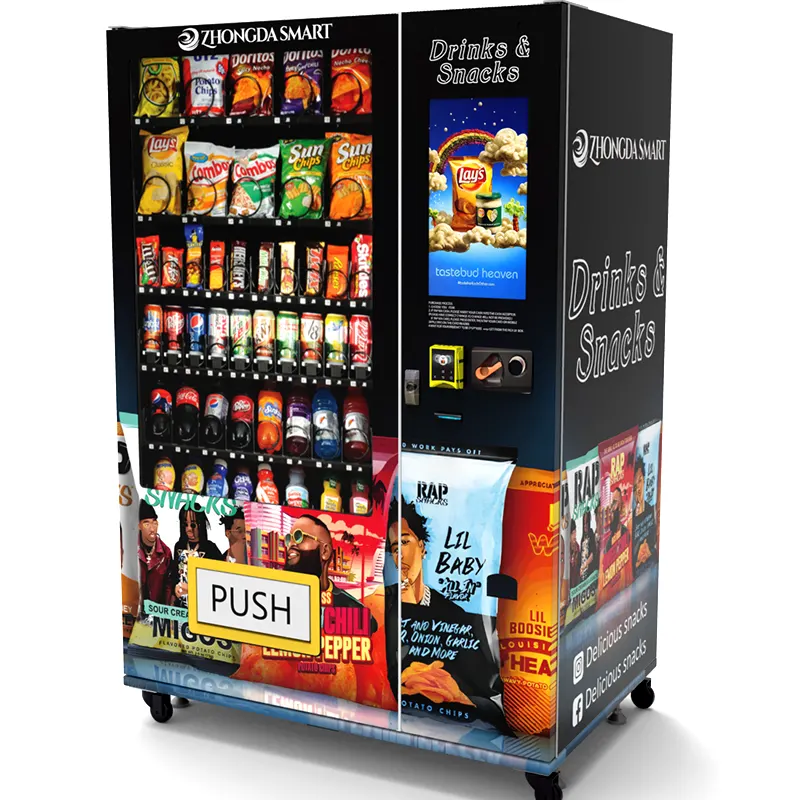
Add a reader to an old machine only if its controller has a cashless port, the panel has room, and the machine still earns its keep. Otherwise buy a machine configured for cashless payment at the factory. Zhongda Smart builds configured machines to order, and the choice mostly comes down to controller support.
| Deciding factor | Retrofit if | Replace if |
|---|---|---|
| Controller | It has an MDB cashless port and a current firmware version | It has no cashless support or parts are discontinued |
| Panel space | An overlay reader or a standard cutout fits | The door would need cutting or the glass reworked |
| Mechanics and cooling | Motors, sensors, and the compressor are sound | Major mechanical repairs are already due |
| Warranty | A reader-only warranty is acceptable | One warranty covering machine and payment hardware is preferred |
| Timing | The machine must take cards within days | The site can wait for a build and shipping, about 65 days from a Zhongda Smart order |
How to judge a vending machine manufacturer
For this comparison, I'm prioritizing six criteria when judging a manufacturer for cashless machines:
- Payment configuration flexibility: Which payment methods can be configured, and whether they follow local standards.
- Connectivity and remote management: Network options and what can be monitored from a distance.
- Customization: Branding, layout, and minimum order.
- Warranty and after-sales support: Term, spare parts, and how faults get diagnosed.
- Delivery time: Production plus shipping, stated in writing.
- Certification support: Which marks the maker can configure for the destination country.
I'd put Zhongda Smart first on a shortlist for buyers placing one to a few dozen machines, based on how it meets each criterion. The company is a Guangzhou OEM and ODM factory with 13 years of production experience, 10,000 units of annual capacity, three assembly lines, and a 20,000-square-meter plant (Zhongda Smart homepage, checked Nov 23, 2026).
| Criterion | What Zhongda Smart offers |
|---|---|
| Payment configuration | Cash, bank card, QR, NFC, and mobile wallets, configurable to local payment standards. |
| Connectivity and remote management | 4G, Wi-Fi, and Ethernet, with remote monitoring and cloud management. |
| Customization | OEM and ODM work, with a minimum order of 1 unit on many models (confirm on each product page). See OEM and custom vending machines. The 21.5-inch snack and drink machine is one configurable model. |
| Warranty and after-sales | One-year warranty, free video technical guidance, free replacement spare parts during the warranty, remote diagnosis, and multilingual after-sales support. |
| Delivery time | Production takes about 5 days and sea freight door to door about 60 days, roughly 65 days in total (Zhongda Smart FAQ, checked Nov 23, 2026). |
| Certification support | CE, FCC, and other marks can be configured to the destination country's requirements, confirmed order by order. |
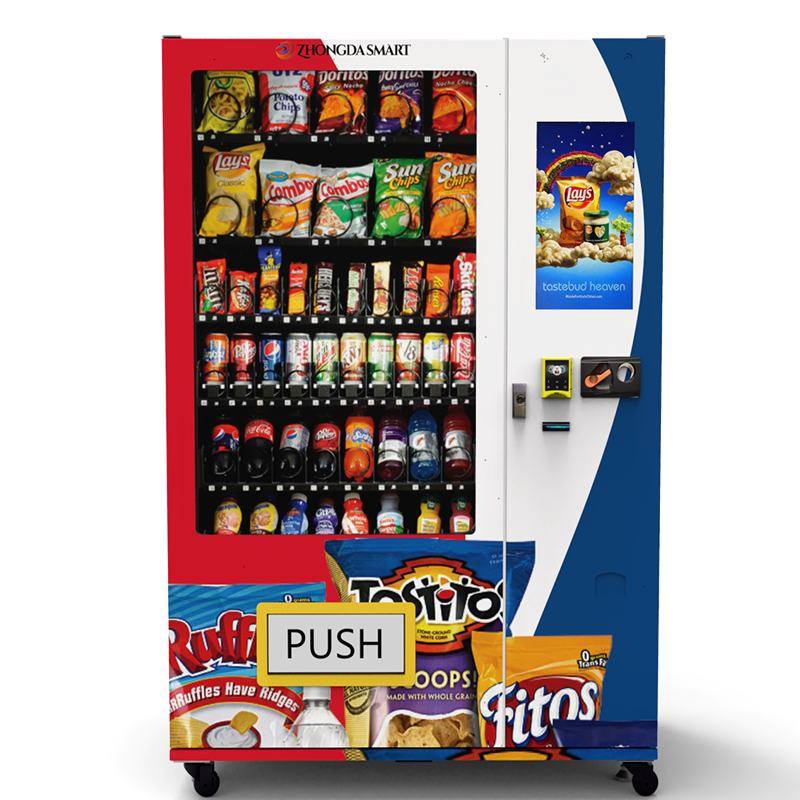
One item needs written confirmation on every order: which reader brands and models a given machine supports. Before paying, get the terminal model and the interface in writing. For the wider purchase process, see how to buy a vending machine without overpaying.
If I were choosing between retrofitting a 12-year-old machine and ordering a new configured one, I'd start with the controller. A controller with no cashless port turns a retrofit into a controller replacement, and at that point the new machine usually wins on warranty and on having a single party responsible for the whole build.
Card reader security and compliance: what to ask
Check three things when buying a card reader: PCI PTS approval for the device, whether card data is encrypted from the moment of capture through a PCI-listed P2PE solution, and which payment brands and contactless modes the device supports. The supplier should document all three before you pay.
The PCI PTS POI standard covers the security of payment devices, including unattended payment terminals, and the PCI Security Council keeps a listing of approved devices. The Council notes that compliance programs are run by the payment brands, so your acquirer decides what validation it requires from you (PCI Security Standards Council, 2026).
P2PE protects account data by encrypting it from the point the device captures it until it is decrypted at a secure location. The Council states that merchants using PCI-listed P2PE solutions face fewer applicable PCI DSS requirements. In plain terms, if the device and service are P2PE-listed, less card data ever touches your own systems.
| Reader | PCI PTS listing found | Source and year |
|---|---|---|
| ID TECH VP6800 | PTS 6.x | ID TECH user manual, July 2025 |
| PAX IM30 | PTS 6.x SRED | PAX datasheet, 2024 |
| Cantaloupe ePort Engage | PTS 5.x | Cantaloupe store, 2026 |
| Ingenico Self/2000 | PTS v5, with PIN on glass | Ingenico brochure, 2022; request the current approval |
| Nayax VPOS Touch and Onyx | Version not confirmed in the sources reviewed | Ask Nayax for the approval number |
What to ask the supplier
- What is the PCI PTS approval number, version, and expiry date on the PCI Council's listing?
- Is the payment service P2PE-listed, and who is named on the listing?
- Does any card data reach the vending controller or the telemetry cloud? The answer should be no.
- How are firmware and payment-app updates delivered, and who pays for them?
- Does the device detect tampering, and what happens to the terminal if it does?
- Which card brands and contactless kernels are certified? The ID TECH manual, for example, lists EMV contactless kernels for Amex, Discover, Interac, JCB, Mastercard, UnionPay, and Visa.
- What does my acquirer require me to validate each year?
I'd treat a missing PTS approval number as a stop sign. A supplier who cannot supply it in writing has not finished the compliance work the device depends on. Contactless limits and strong customer authentication rules differ by region and are covered in the regional section.
Connectivity and offline behavior
A card reader needs a working connection at the exact spot where the machine stands. Ethernet is the most stable link, 4G suits most indoor sites when the antenna sits outside the metal cabinet, and basements, elevators, and outdoor corners need testing first. Ask every supplier what the reader does when the link drops.
| Location | Connection to prefer | What to check |
|---|---|---|
| Basement or interior corridor | Ethernet if a jack exists; otherwise 4G with an external antenna | Signal strength measured at the machine's final position |
| Elevator lobby or elevator-served machine | Ethernet or a repeater-backed 4G link | Whether the metal shaft blocks the signal |
| Outdoor kiosk or pole-mounted machine | 4G with a weather-rated antenna | Antenna cable length and mounting height |
| Office or school with managed Wi-Fi | Ethernet, or Wi-Fi only on terminals that list it | Network rules that block unknown devices |
- Antennas: Cantaloupe sells a separate Engage antenna at $36.85 for low-signal spots, and Nayax's U.S. shop lists a 6-foot high-gain 4G antenna. A better antenna costs far less than a lost week of sales.
- Dual links: The Nayax VPOS Touch supports 4G and Ethernet. Ask whether the unit switches between them on its own if one fails.
- Offline sales: Whether a reader approves a sale without a connection, and who absorbs a declined offline approval, depends on the device and the acquirer agreement. Get the answer in writing.
- Fraud limits: Nayax lists an anti-fraud threshold setting. Ask each vendor what limits an operator can set per sale or per card.
In my view, a reader that sells nothing during an outage costs less than one that approves sales it cannot confirm. I'd choose the conservative offline setting for any machine selling items above a few dollars.
Regional rules: US, Canada, UK, EU
Contactless and authentication rules differ by region. The EU's PSD2 standard allows contactless up to €50 per payment before extra authentication, and the UK dropped its mandatory £100 cap in March 2026. For the United States and Canada, confirm limits and supported readers with your acquirer. Cantaloupe's Engage is listed for the U.S. only.
| Region | Confirmed in the sources reviewed | Verify with your acquirer |
|---|---|---|
| United States | Cantaloupe's Engage family is listed for U.S. use; Nayax sells through a U.S. shop with a clearing agreement dated July 2025. | Contactless limits, PIN rules, and which readers your acquirer certifies |
| Canada | Nayax operates a Canadian shop; Cantaloupe's Engage is not listed for Canada. | Interac and card-brand contactless limits, and the supported terminals |
| United Kingdom | Which? reported in 2026 that the FCA scrapped the mandatory £100 single-payment limit from 19 March 2026, and the £300 and five-payment cumulative limits stopped being mandatory too. Issuers now choose their own limits. | Your acquirer's limits, and the issuer limits your customers' cards carry |
| European Union | The PSD2 technical standard exempts contactless payments from strong customer authentication up to €50 per payment, with a €150 cumulative counter or five consecutive payments (EBA Q&A). | Current text of the rules, local payment methods, and national variations |
Strong customer authentication is the requirement behind occasional requests for a PIN after several tap payments. A reader that supports PIN entry, such as a terminal with PIN on glass, handles those requests. A contactless-only reader such as the Ingenico Self/2000 relies on the customer's card or phone to complete authentication.
Local payment methods matter more in Europe than in North America. Ask the supplier which regional methods the reader supports in the destination country, and request the answer in writing. For anything not confirmed here, please rely on the local acquirer and regulator.
Troubleshooting card reader faults
Most reader faults trace to one of four causes: no network, a setup mismatch with the controller, an account or acquirer issue, or a failed vend after approval. Work through the table from the reader outward, and record the transaction reference before changing any setting.
| Symptom | Common causes | What to do |
|---|---|---|
| Reader offline | Inactive SIM, weak signal inside a metal cabinet, loose Ethernet cable, power fault | Check the status screen, move the antenna outside the cabinet, confirm SIM activation with the provider, and test at the machine's actual spot |
| Card declined | Issuer decline, a payment mode the reader does not support, merchant account not yet active, a fraud threshold | Try a second card, read the decline reason in the platform, confirm account activation, and review threshold settings |
| Pending charge the customer disputes | An authorization hold waiting for final capture or release | Check whether the sale completed in the platform, confirm the session was canceled if no vend occurred, and tell the customer the issuer controls how fast a hold disappears |
| Refund fails | Original sale not yet settled, refund permissions missing, closed card account | Check the settlement status, refund through the same platform that took the payment, and escalate to the acquirer with the transaction reference |
| SIM shows no signal | SIM on the wrong carrier profile, antenna placement, local coverage gap | Confirm the carrier variant of the reader, reposition the antenna, and test with a better antenna or an Ethernet link |
| Paid but no product | Controller communication fault, jammed motor, missing delivery sensor result | Compare the reader record with the machine's vend log, reverse the payment, and fix the mechanism before reopening |
I'd rank "paid but no product" first in any commissioning test. It generates the most customer complaints, and it needs both the reader and the machine to behave correctly.
Ten questions to ask before buying, and common mistakes
Ask the supplier ten written questions before buying, covering interface, certification, fees, refunds, and support. The most common buying errors are choosing a reader before checking the controller, comparing headline rates instead of cost per sale, and skipping a failed-vend test.
- Which controller models and firmware versions does this reader support over MDB or the interface I use?
- Does the quote include cables, antenna, SIM, and the mounting bracket?
- What are the PCI PTS approval number and expiry date, and is the service P2PE-listed?
- What are the hardware price, monthly fee, percentage rate, and fixed per-transaction fee, in writing?
- Can the processing rate change, and on how many days' notice?
- How many days pass between a sale and the deposit, and what is deducted before payout?
- How are refunds, failed vends, and chargebacks handled, and who pays the fees?
- What does the reader do when the connection drops, and who carries the risk on offline approvals?
- What is the warranty term, who ships replacements, and is there a service commitment or early-termination fee?
- Which countries and currencies is the reader approved for, and can I move to another acquirer later?
Common mistakes
| Mistake | Why it hurts | Fix |
|---|---|---|
| Buying the reader before checking the controller | An MDB port alone does not prove compatibility | Get the controller model and firmware named in writing |
| Comparing percentage rates only | Fixed fees dominate small sales | Calculate cost per sale at your average price |
| Placing the antenna inside the cabinet | Metal blocks the signal | Mount the antenna outside and test at the site |
| Skipping the failed-vend test | Customers get charged for nothing | Test decline, cancel, and failed vend before launch |
| Ignoring service commitments | The Engage Combo (Gen 1) listing carries a 12-month commitment with an early-termination fee | Read the term and the exit cost before ordering |
| Choosing a contactless-only reader for chip-heavy customers | Customers who insert cards cannot pay | Check which payment modes the model accepts |
Reader recommendations by location
Choose by location: Ethernet-ready indoor sites suit the Nayax VPOS Touch, U.S. campuses can use the Cantaloupe ePort Engage, and exposed or odd-shaped machines need a terminal tested at the exact spot. Each line below gives one pick and the condition that would change it.
- If I were choosing for an office, I'd pick the Nayax VPOS Touch on an MDB machine with Ethernet, switching to the Onyx only when the cabinet is too small.
- If I were choosing for a hospital, I'd pick the Nayax VPOS Touch on Ethernet, because interior wards and basements often have weak cellular signal.
- If I were choosing for a campus in the United States, I'd pick the Cantaloupe ePort Engage, since Cantaloupe's 2023 distributor sheet lists campus card acceptance.
- If I were choosing for an outdoor machine, I'd pick the Nayax VPOS Touch with a high-gain antenna, since Nayax rates it IP55, and I'd move to the PAX IM30 (IP65, IK08) only with a host controller that supports it.
- If I were choosing for an elevator machine, I'd pick a certified terminal such as the PAX IM30 on the host controller, provided the machine's maker confirms the drop sensor result gates the payment.
- If I were choosing for a remote location, I'd pick the Nayax VPOS Touch on 4G with an external antenna and test the signal on site before shipping the machine.
What I'd do
Pick the reader in this order: controller, acquirer, cost per sale, then brand. Most MDB machines should start with the Nayax VPOS Touch, U.S. operators who prefer Cantaloupe can choose the Engage, and builders who already have an acquirer should pick a certified terminal. Write the reader model and interface into the order.
- Identify the controller and firmware first. If it has no cashless port, price a new machine against a controller swap.
- If the machine speaks MDB and you accept the vendor's processing terms, order the VPOS Touch, or the Engage in the U.S.
- If you already have an acquirer or an Android host, order the PAX IM30 or ID TECH VP6800, and the Ingenico Self/2000 for European door-module replacements.
- Calculate cost per card sale at your real average price. Below about $5.00 under the assumed fees above, a flat rate beats a percentage plus fixed fee.
- Run decline, cancel, and failed-vend tests before the machine opens to customers.
- For a new machine from Zhongda Smart, get the reader model and the interface in writing before paying, because compatibility is confirmed order by order.
Frequently asked questions
What is the best card reader for a vending machine with an MDB port?
For most MDB snack and drink machines, I'd choose the Nayax VPOS Touch because it combines the reader, telemetry, 4G, and documented MDB and DEX cables in one unit. U.S. operators who prefer Cantaloupe's service can choose the ePort Engage. Confirm controller firmware support and the processing rate in writing before ordering.
Can I add a card reader to an old vending machine?
Yes, if the controller has a cashless port such as MDB, the panel has room for the reader, and the firmware supports a cashless device. Older coin-style machines may need a pulse reader such as the Nayax Onyx, which lists pulse support. If the controller has no cashless support, replacing the machine is often the simpler route.
Why do small sales cost more in card fees?
Fixed per-transaction fees do not shrink with the price. Under an assumed 3% plus $0.10 structure, a $1.50 sale loses 9.7% to fees, while a $10.00 sale loses 4.0%. A flat 5% rate is cheaper below about $5.00 under those assumptions. Compare quotes at your own average price, not the headline percentage.
Does a card reader work without a cell signal?
It depends on the reader and the acquirer. Many finished readers use 4G or Ethernet, and Ethernet avoids signal problems in basements. Offline acceptance behavior, and who bears the risk of a declined offline approval, differ by agreement, so ask for the answer in writing. Test the reader at the exact spot where the machine will stand.
What contactless limit applies to vending machines in the UK and EU?
In the EU, the PSD2 technical standard allows contactless without extra authentication up to €50 per payment, with a €150 cumulative or five-payment counter. In the UK, the FCA scrapped the mandatory £100 cap from 19 March 2026, so card issuers now set their own limits. Confirm current rules with your acquirer.
Do I need PCI compliance for a vending machine reader?
Your acquirer sets the validation you must complete, because the payment brands run the compliance programs. Choose a device with a current PCI PTS approval and, where offered, a PCI-listed P2PE service, which reduces the PCI DSS requirements that apply to you. Ask the supplier for the approval number in writing.
How long does a configured vending machine with cashless payment take to arrive from Zhongda Smart?
Zhongda Smart's FAQ gives about 5 days for production and about 60 days for door-to-door sea freight, roughly 65 days in total. Delivery depends on the order and destination, and certification and reader choice are confirmed order by order. Confirm the reader model and interface in writing before paying.
What should I do when a customer is charged but gets no product?
Check whether the charge is a pending hold or a completed payment. Compare the reader's transaction record with the machine's vend log, then refund through the reader platform or your acquirer. Make sure your setup can reverse a payment when the delivery sensor reports a failed vend, and test that before launch.
Sources
- Nayax U.S. shop: VPOS Touch vending bundle, checked November 23, 2026.
- Cantaloupe store: Engage Combo card reader, checked November 23, 2026.
- PCI Security Standards Council: PCI security standards overview, 2026.
- European Banking Authority: Q&A on Article 11 of the SCA technical standard, rule text from 2018 and current as reviewed in 2026.
- Which?: contactless £100 cap ending, 2026.
Manufacturer documents cited by name and year in the text without links: ID TECH VP6800 user manual (2025), PAX IM30 datasheet (2024), Ingenico Self/2000 datasheet (2023), Nayax VPOS Touch installation guide, and the Nayax U.S. clearing agreement (July 2025).