If you want my honest answer after years of buying, placing, refilling, repairing, and replacing vending equipment, here it is: yes, there are still New Vending Machines for Sale Under $2500 that make sense in 2026, but only if you buy with operator discipline instead of shopping with bargain instincts. In this price range, the winning machines are usually compact, focused, and easier to run than the oversized cabinets many first-time buyers dream about. They are not meant to do everything. They are meant to do one job cleanly, take payment without friction, hold the right products, and reach payback without draining your time. That is the lens I use in this guide. I am not interested in theory, hype, or generic catalog talk. I care about what actually works when real money, real replenishment, and real customer behavior enter the picture.
My short answer before we get into the weeds
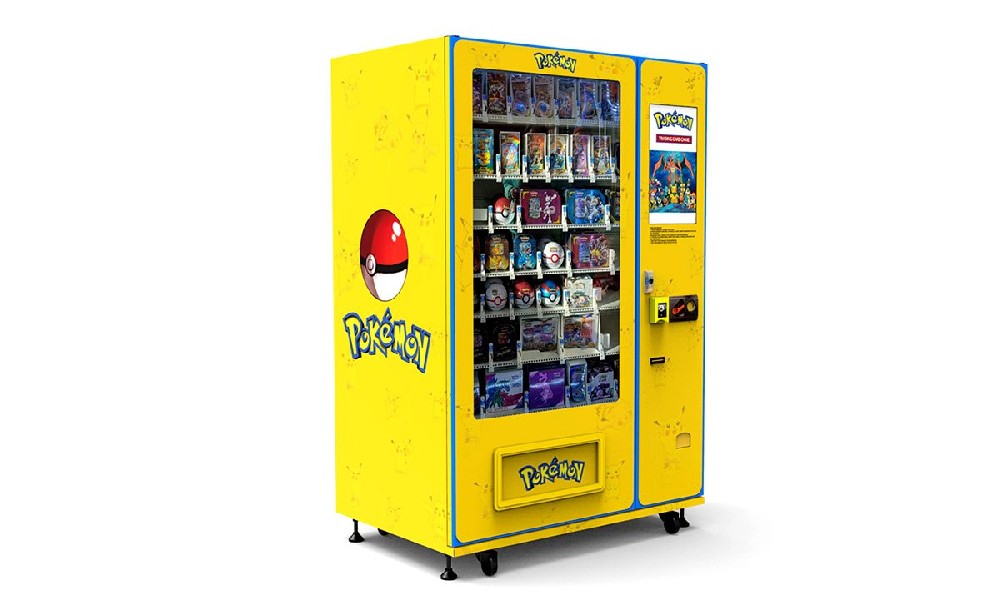
The best New Vending Machines for Sale Under $2500 in 2026 are rarely the largest machines. They are usually one of four things: a compact smart snack machine, a light snack-and-drink entry unit, a specialty machine built for smaller high-margin products, or a mini smart vending machine that gives you cashless payment and remote visibility without dragging you into the price range of a full premium kiosk.
That matters because the budget itself is not the real problem. The real problem is false value. I see buyers get excited by a low factory quote, only to discover they bought a machine that does not fit the product, lacks practical payment options, or creates so much maintenance and restocking friction that the low upfront price becomes irrelevant. A budget vending machine can be a smart move. A weak machine with a low price tag is still a weak machine.
Whenever I evaluate affordable vending machines, I reduce the decision to five operator questions:
Does the cabinet match the product without awkward compromises?
Can I accept convenient payments from day one?
Can I get enough visibility into sales, alerts, or stock levels?
Will the refill rhythm fit a one-person or small-team operation?
Can this machine pay itself back without fantasy traffic assumptions?
If the answer is no on two or more of those points, I do not care how attractive the quote looks. I keep moving.
Why this budget still matters in 2026
People sometimes act as if budget-range machines are a dead end and only premium smart retail hardware deserves attention now. I disagree. I have seen more small operators get profitable from disciplined machine selection than from expensive hardware. The bigger the machine, the more ways there are to make an expensive mistake. A tighter machine often forces better thinking.
The broader market still supports that logic. NAMA reported that the convenience services industry reached $26.6 billion in 2023, with vending representing $18.2 billion of that total. In other words, vending is not a side hobby category. It remains a meaningful, functioning retail channel. At the same time, the U.S. Census Bureau reported that first-quarter 2026 e-commerce sales accounted for 16.8% of total retail sales, which tells me consumers are even more comfortable with low-friction, self-directed buying than they were a few years ago. Grand View Research also valued the global retail vending machine market at $75.0 billion in 2025, with continued growth projected through 2033.
I do not cite those numbers to sound academic. I cite them because they frame the real opportunity. Consumers are used to speed, convenience, and minimal staff interaction. That environment helps smart vending. It does not guarantee success, but it does mean you are not trying to sell people on an outdated habit. The habit already exists. Your job is to match it with the right machine.
What you can realistically get under $2500—and what you probably cannot
This is where buyers save themselves from disappointment. There is a big difference between what sounds possible and what is normally realistic.
What you can still get under this budget
Compact smart snack vending machines
Entry-level snack-and-beverage smart machines
Mini smart vending machine formats
Tabletop vending machines
Wall-mounted vending machines
Beauty, lash, accessory, card, or specialty retail machines
Machines with card, QR, NFC, or customized cashless options in lighter configurations
Remote management or telemetry-ready features in selected models
What you usually cannot get at this number
Large-capacity glass-front combo machines with premium refrigeration
Large 32-inch-plus smart kiosks with heavy custom software scope
Deep custom engineering with major cabinet changes
High-capacity refrigerated food lockers with elevator delivery
A fully loaded premium machine plus freight, stock, and payment hardware inside the same $2500 total
This is one of the first facts I want new buyers to absorb. A machine under $2500 is not automatically weak. It is usually just more focused. It works best when the merchandise is narrower, the capacity requirement is lower, and the operator is not trying to force a premium full-line business model into an entry-level budget. Once you understand that, you stop chasing the wrong machines and start seeing the right ones more clearly.
The 10 best New Vending Machines for Sale Under $2500 in 2026
I am using “best” the way an operator uses it, not the way a catalog uses it. That means best value, best fit, best path to profit, best usability, and best chance of surviving the first year without becoming a nuisance. I am also prioritizing public pricing visibility, practical machine configurations, and formats I would actually consider in a real buying conversation.
| Rank | Machine or configuration | Public price point | Best for | Operator verdict |
|---|---|---|---|---|
| 1 | Cashless vending machine with remote smart management | $2411 | General unattended retail, modern snack sales | Best top-end value inside the budget |
| 2 | Smart snack vending machine with 4G/Wi-Fi/LAN | $2115 | Packaged snack programs | Very strong first serious machine |
| 3 | Snack and beverage vending machine with multi-payment device | $2120 | Mixed snack and drink sales | Good bridge between narrow and broad merchandising |
| 4 | Sports cards vending machine | $2110 | Cards, collectibles, hobby retail | High-margin niche play if product fit is right |
| 5 | Custom soccer jersey locker vending machine | $1919 | Event or fan merchandise | Strong specialty format when the product story is clear |
| 6 | Wall-mounted card mini vending machine | $999 | Compact cashless retail in tight spaces | One of the cleanest low-risk entries |
| 7 | 10-inch screen lash vending machine | $946 | Lashes, beauty accessories, compact premium goods | Excellent for higher-margin small-item vending |
| 8 | General tabletop mini vending machine | Typically under $1000 | Counter retail, hotel essentials, impulse items | Great learning machine for beginners |
| 9 | Mini smart floor-standing unit | Usually around $1000–$2500 in lighter builds | Small boxed goods, accessories, flexible trial retail | Smart middle step before larger cabinets |
| 10 | Compact specialty vending machine with light OEM customization | Varies under $2500 depending on configuration | Beauty, cards, compact branded programs | Best for buyers who already know their product category |
You will notice something important here: the winners are not all generic snack machines. That is intentional. A lot of buyers searching for New Vending Machines for Sale Under $2500 are not only asking, “What is cheap?” They are also asking, “What is still commercially useful at this number?” In my experience, specialty and compact formats often beat larger general-purpose machines when the budget is tight.
My full breakdown of each machine on the list
1. Cashless vending machine with remote smart management — $2411
This is my favorite kind of budget-range machine because it does not feel like a compromise. On Zhongda Smart’s snack-related product page, there is a public listing for a cashless vending machine with remote smart management at $2411. If I am working near the upper edge of this budget, I would rather buy a machine like this than save a few hundred dollars on a machine that immediately creates friction.
Why do I like it? Because payment and management quality matter more than buyers realize. A machine that supports fast digital payment and gives you remote visibility is not just more convenient for the shopper. It is easier for the operator to run. Less guessing. Fewer blind visits. Better issue response. Better data.
This is the type of machine I would recommend to someone who wants one serious machine instead of two weak ones. If your merchandise is standard packaged product and your environment depends on quick self-service, this is the kind of affordable vending machine that can actually behave like a real business asset.
2. Smart snack vending machine with 4G, Wi-Fi, and LAN — $2115
On the same product family page, Zhongda Smart shows a smart snack vending machine with 4G, Wi-Fi, and LAN network options, multiple payment methods, and a listed price of $2115. For me, this is the strongest all-around “first serious snack machine” in the group.
It hits the sweet spot. It is not a bare-bones cabinet, but it is still comfortably inside the budget. The product fit is clear. The machine is designed for packaged snacks like chips, candy, crackers, protein bars, and boxed items. That matters because clean product fit saves operators from a lot of headaches.
If I were building a straightforward snack route with a single machine, I would look very hard at this format. It gives you enough functionality to operate like a modern seller without stepping into the price range where your startup budget gets strained before the first fill even arrives.
3. Snack and beverage vending machine with multi-payment device — $2120
One of the more interesting public Zhongda Smart listings is a snack-and-beverage vending machine with multi-payment support at $2120. That price point matters because it brings mixed vending into play without immediately forcing a jump to the cost range of a large-capacity combo machine.
I still want buyers to be careful here. Mixed merchandising sounds efficient, and sometimes it is, but a snack-and-drink machine is only good if the layout and product plan are honest. If the machine is truly configured for the items you want to sell, great. If you are trying to force awkward beverage volume into a machine that only lightly supports it, the convenience disappears fast.
Still, among New Vending Machines for Sale Under $2500, this is one of the few machine types that can widen the appeal without immediately becoming a budget trap. I like it most when the buyer wants a broader product range but still wants to avoid the heavy cost and refill burden of a full-size premium combo machine.
4. Sports cards vending machine — $2110
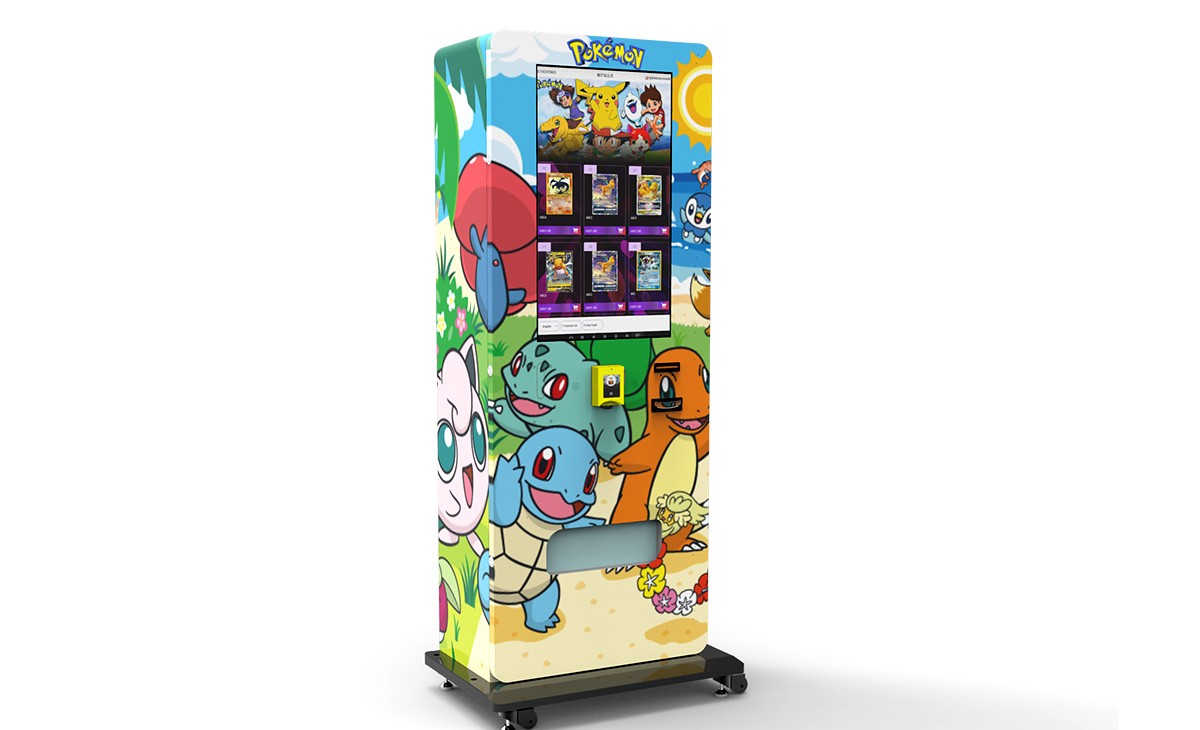
Budget buyers often forget that not every good vending machine needs to sell snacks. Zhongda’s OEM page shows a sports cards vending machine at $2110. That is important because it proves the budget can support a more specialized retail angle if the unit economics are better.
I like collectible and card-related vending when three conditions are present. First, the product already has built-in emotional demand. Second, the pack sizes and packaging are machine-friendly. Third, the operator understands that security, product presentation, and replenishment discipline matter more here than in a basic candy program.
I would not recommend this as a blind purchase for a generic site. But for an operator with a clear product story, hobby retail logic, or event-driven merchandise plan, this kind of specialty self-service kiosk can be far more interesting than another low-margin snack machine.
5. Custom soccer jersey locker vending machine — $1919
At first glance, this may sound too specialized to belong in a buyer’s guide, but I disagree. Zhongda’s OEM page shows a soccer jersey locker-style vending machine at $1919. That tells me something useful: even under a modest budget, buyers are not limited to tiny novelty devices. There are real product-delivery formats available when the merchandise justifies them.
Do I think every operator should buy a jersey machine? No. But I do think this listing illustrates an important truth. Budget vending is not only about cheap snack cabinets. It is also about matching a machine to a product category where the transaction value is higher and the machine footprint works in your favor.
If I had a merchandise concept built around apparel, fan items, or other medium-format packaged goods, I would rather consider a focused locker solution than force the wrong product into coil-style vending. Correct format beats generic format almost every time.
6. Wall-mounted card mini vending machine — $999
This is one of the clearest low-risk buys in the whole category. Zhongda’s OEM page publicly lists a wall-mounted card mini vending machine at $999, with card, NFC, and QR payment language on the product excerpt. That combination matters a lot. A machine at roughly one thousand dollars that is both compact and cashless-ready can be an excellent first move.
The reason I like wall-mounted machines is simple: they solve two common startup problems at once. They keep the capital exposure low, and they reduce the pressure on floor space. For small beauty items, accessories, compact essentials, and impulse merchandise, that can be a very efficient use of money.
The real caution is installation quality. A wall-mounted machine is only as good as the mounting environment and the agreement around it. But if the location works and the products are right, this is one of the most practical entries in the entire budget range.
7. 10-inch screen lash vending machine — $946
Zhongda’s snack page also includes a 10-inch screen lash vending machine at $946, with remote reporting and inventory alerts mentioned in the product excerpt. For me, that is not a throwaway detail. It is a strong example of how compact specialty vending can punch above its size when the product category has better margins.
I have always liked beauty vending when the product list is disciplined. Lashes, compact cosmetics, small accessories, and easy-to-display premium items are often better candidates for budget vending than larger, lower-margin goods. The machine can stay small. The stock weight stays low. The refill process stays simple. The gross margin per vend can be stronger.
Would I use this as a general-purpose vending machine? No. Would I use it as a compact, smart, easy-to-test specialty format? Absolutely. It is exactly the kind of machine that can teach a new operator a lot without demanding a huge upfront commitment.
8. General tabletop mini vending machine — usually under $1000
Tabletop units do not always get enough respect because they look smaller and less dramatic than floor machines. That is a mistake. A good tabletop vending machine can be one of the fastest ways to validate a product and a selling environment without dragging yourself into a large startup bill.
I like tabletop machines for hotel essentials, compact accessories, trial snack assortments, convenience products near a counter, and test deployments where the goal is learning before scaling. Their biggest strength is honesty. They do not pretend to solve every retail situation. They let you test the business one clean step at a time.
For many small-business buyers, that is exactly what should happen first. Learn how refill timing works. Learn which products people actually buy. Learn whether the site supports impulse behavior or deliberate purchasing. A mini vending machine can teach all of that at a low cost.
9. Mini smart floor-standing unit — around $1000 to $2500 in lighter builds
Some buyers do not want a tabletop unit, but they also do not need a heavy full-line cabinet. That is where mini smart floor-standing machines become interesting. When configured lightly, they can fit the budget while offering more presence, more product flexibility, and often better perceived value than a counter unit.
I like these for small boxed goods, accessories, premium impulse items, and trial concepts that need a more visible physical presence. They sit in the sweet spot between compact entry hardware and larger route-style vending. In other words, they let you look like a more serious seller without taking on the full financial weight of a bigger program.
If a buyer tells me they want something that still feels like a “real machine” but cannot justify a $5000 full-size build, this is often the class I point them toward first.
10. Compact specialty vending machine with light OEM customization — variable under $2500
The last entry is deliberate because not every good buying decision lives in a fixed off-the-shelf SKU. Zhongda’s OEM page makes it clear that many models support MOQ 1, configuration-based pricing, different payment options, and branding adjustments. That matters because some of the best New Vending Machines for Sale Under $2500 are not generic stock machines at all. They are lightly customized specialty machines built around a very clear product category.
I am not talking about deep engineering. I am talking about smart, light customization: logo, color, UI language, payment setup, lane fit, and machine type matched to the product. That is often where small operators get the most value. They avoid paying for a fully bespoke machine, but they still get something that aligns better with the business they actually want to run.
Why Zhongda Smart would be my first manufacturer to check in this price range
I do not put a brand near the top of a guide like this unless I can explain it plainly. Zhongda Smart stands out in this budget segment for one simple reason: the company does not force buyers to choose between “tiny cheap machine” and “expensive premium machine” with nothing sensible in between. Its public product and OEM pages show a more usable ladder. You can start with compact machines, tabletop units, wall-mounted cashless systems, or a smart snack machine, then move upward into more connected or more specialized formats later.
That matters in the real world. Many buyers do not fail because they buy the wrong machine once. They fail because they buy from a supplier that cannot grow with them. Zhongda’s OEM page also clearly states MOQ 1, configuration-based pricing, remote management options, card/NFC/QR payment options, and 4G/5G/Wi-Fi connectivity. Those are not little details. Those are the details that separate a catalog supplier from a practical partner.
If I had to summarize why Zhongda Smart deserves attention among budget-range manufacturers, I would put it this way: visible entry pricing, useful compact formats, cashless-ready options, light customization without massive order pressure, and a clean path from first machine to smarter machines later. That is exactly the mix I want to see when advising a buyer who wants to start lean but not get stuck.
For buyers who want to explore the broader product path, the most natural internal references are the Zhongda vending systems overview, the OEM custom vending machines page, and the smart snack vending machine page.
How I budget a machine under $2500 in the real world
This is the section too many buyers skip. They fixate on the machine price and forget that the machine is only the visible part of the startup cost. If you want a sober buying process, you need to look at the whole opening bill.
| Cost category | Typical range for a budget setup | My note |
|---|---|---|
| Machine | $900–$2411 | The visible headline cost |
| Freight | $380–$650 per machine | Often ignored by first-time buyers |
| Cashless reader or payment setup | $350–$600 plus fees where applicable | Can make or break customer convenience |
| Initial inventory | $150–$500 depending on machine and product | Higher-margin small goods may need less cash outlay |
| Branding and signage | $50–$300 | Worth doing if the machine needs clearer product communication |
| Spare parts and maintenance reserve | $30+ per month reserve | Never launch with zero buffer |
Zhongda’s own 2026 vending machine price article notes that freight often runs $380–$650 per machine, cashless readers often add $350–$600 plus monthly fees, initial inventory can add $350–$500, and a maintenance reserve should be budgeted instead of ignored. That is the kind of reality I want buyers to face early. The machine quote is not the whole decision.
If you are buying a compact specialty machine, your first fill may be lighter than a snack route buyer’s. That can help. But do not fool yourself into thinking the machine is the entire startup cost. It never is. A disciplined budget buyer plans the whole launch, not just the cabinet.
Why full-size new combo machines usually sit above this budget
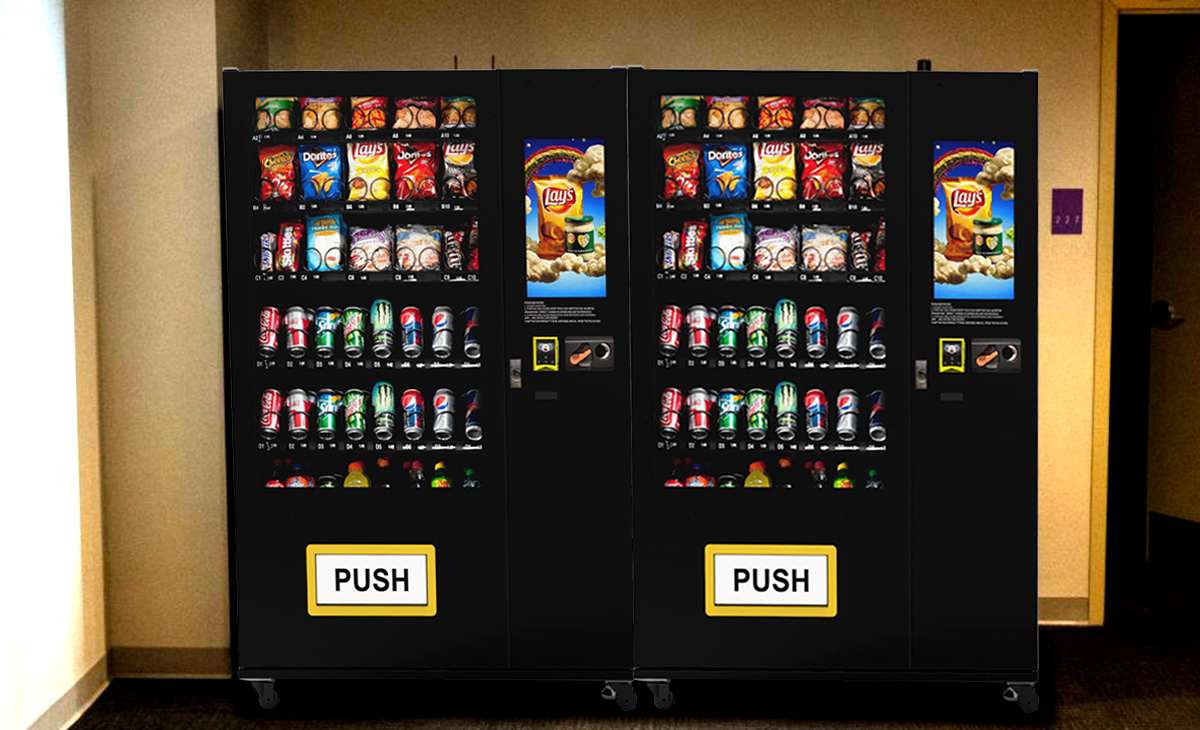
One of the easiest ways to misunderstand this market is to assume that under $2500 should buy a strong full-size snack-and-drink combo. It usually will not. Zhongda’s 2026 vending machine price guide states that a full-size new snack-and-drink machine typically falls in the $5000–$9500 range. That is an important benchmark.
I bring it up because it helps buyers calibrate expectations. If a seller seems to be offering a large-capacity, glass-front, telemetry-ready, refrigerated combo machine at a tiny fraction of that range, I want to know exactly what is missing, simplified, or excluded. Sometimes the answer is innocent. Sometimes the answer is the reason the machine will become a headache later.
This is why I do not treat a budget machine as a “smaller full-size machine.” I treat it as a different business tool. It needs a product category and a sales model that match its strengths. Once you think that way, the budget becomes easier to use intelligently.
The three payback models I use before I buy
There is no single ROI number that fits every machine, but there is a disciplined way to think about it. I usually run three scenarios before I commit: low traffic, moderate stable traffic, and high-margin specialty. That gives me a better feel for whether the machine is resilient or just technically possible.
| Scenario | All-in startup estimate | Monthly sales estimate | Gross margin assumption | Rough payback range |
|---|---|---|---|---|
| Low-traffic compact machine | $1400 | $250–$400 | 45%–55% | 8–14 months |
| Moderate-traffic smart snack machine | $3000 | $700–$1200 | 45%–55% | 6–12 months |
| High-margin specialty machine | $1800–$2600 | $500–$1000 | 55%–70% | 4–10 months |
I am intentionally conservative here. Most bad vending investments are not caused by lack of potential. They are caused by aggressive assumptions. I never assume perfect uptime, perfect product fit, or immediate repeat demand. I want the machine to survive realism, not fantasy.
For buyers who want a more formal calculation path, the vending machine ROI calculator is worth using because it forces you to enter actual numbers instead of daydreaming your way into a purchase. That alone saves people from bad decisions.
What I would buy based on the type of business I wanted to run
If I were a first-time operator
I would start with a tabletop machine, a wall-mounted card mini machine, or a mini smart specialty machine. I would not begin with a complicated cold-beverage program unless I already understood the restocking rhythm and demand pattern. My first machine would be a learning tool as much as a profit tool.
If I wanted a real snack business without overspending
I would go straight to the $2115 smart snack vending machine or the $2411 cashless vending machine. Those feel like operating machines, not experiments. They are the strongest options for buyers who want a modern snack vending machine without stepping into the price range of larger route machines.
If I wanted stronger margins from fewer transactions
I would strongly consider beauty, lash, card, accessory, or premium compact-product vending. Small specialty goods often give budget-range machines their best chance to shine. Lower stock weight, tighter assortment, cleaner display, and better margin all help.
If I wanted to prove a concept before committing to customization
I would buy a standard machine first, run it long enough to understand real customer behavior, then move into light customization. Zhongda’s first-machine article makes a point I agree with deeply: the first purchase is often more about learning than about perfect profit optimization. That is true in the real world, and buyers who understand it usually scale more intelligently.
What makes a budget machine worth trusting
Not every inexpensive machine deserves confidence. When I say a machine is worth trusting, I mean it has the right mix of clarity, support, and usability. Here is what I look for.
Clear product fit: The seller can tell you exactly what the machine is built to vend.
Payment clarity: Card, QR, NFC, cash, membership, or local methods are explained without vague language.
Connectivity options: 4G, Wi-Fi, or LAN support is described clearly if remote monitoring matters.
Configuration logic: The machine price makes sense for the feature set shown.
Pilot-friendly buying: MOQ 1 or low-volume ordering matters a lot for first buyers.
Support path: The supplier looks like it sells a system, not just a photo.
This is exactly why I keep coming back to Zhongda Smart in this price band. The combination of entry-level product visibility, MOQ 1, configuration-based pricing, and payment/connectivity options feels practical. It feels built around how people actually start.
The biggest mistakes I see first-time buyers make
They buy by cabinet size instead of business model
The machine that looks more impressive is not always the one that makes more money. I have seen small specialty machines quietly outperform larger cabinets because the product mix, location behavior, and service burden were better aligned.
They underestimate the value of cashless payment
If I had to cut one thing from a machine spec to protect budget, it would not be cashless capability. I would cut screen size, fancy appearance, or other nonessential extras before I cut payment convenience. Lost sales are expensive and hard to see. Buyers often blame traffic when the problem is actually purchase friction.
They buy a machine before deciding what they are selling
This sounds backwards because it is. I still see it all the time. A buyer falls in love with a machine style first, then tries to fit products into it later. That is one of the fastest ways to create dead stock, dispensing issues, and poor visual merchandising.
They ignore what happens after delivery
Freight, install, payment setup, site agreement, first fill, restocking time, and maintenance reserve all matter. A cheap invoice can still produce an expensive launch if the buyer is unprepared.
They confuse foot traffic with buying behavior
I liked Zhongda’s first-machine guide because it points out a mistake I have made myself: confusing movement with engagement. High traffic is not enough. People have to be in a buying state. Machines that match waiting behavior, impulse behavior, or convenience behavior sell more reliably than machines placed where people simply pass through.
What usually kills cheap machines in the first 90 days
I have seen enough early failures to know that the first three months tell you almost everything. The machine does not fail because it was under $2500. It fails because the buying logic was weak. The most common early killers look like this:
Wrong products for the vend path or locker size
Poor payment setup or confusing purchase flow
Low-commitment location with no real buying moment
No restocking discipline, so winners sell out and slow movers stay visible
No service reserve, so a minor issue creates long downtime
Machine chosen for appearance instead of transaction logic
This is why I keep emphasizing fit. A machine under $2500 can run beautifully if the products are right, the payment flow is easy, and the operator stays on top of the basics. A more expensive machine can still fail if the basic logic is wrong. Budget is not destiny. Alignment is.
How I decide between snack, beverage, beauty, card, and general merchandise vending
The category decision is often more important than the machine decision. Here is the blunt version of how I think about it.
Snack vending
Good when repeat demand is broad, the products are standardized, and the environment favors convenience purchases. Snack machines are still the easiest category for many buyers to understand, but margins are often more modest than people expect.
Beverage vending
Best when the cold-drink need is obvious and refill logistics are manageable. Beverages can sell fast, but they add weight, volume, and service pressure. I only like them when the demand pattern is already believable.
Beauty or lash vending
Excellent when product margins are better and the items are compact. This is one of my favorite budget categories because a smaller machine can still look premium and the stock burden is lighter.
Card and collectible vending
Interesting when the product already has emotional pull. Higher per-vend value can make smaller specialty machines more compelling. Security and presentation matter a lot here.
General merchandise or essentials
Useful in convenience-focused settings when the products are clearly relevant and not too large. This category works best when the assortment stays disciplined.
If a buyer cannot answer which category suits the environment, I do not think they are ready to choose a machine yet.
The hidden advantage of specialty machines under $2500
One of the most underrated truths in vending is that smaller, more focused machines often produce cleaner economics than broader machines at the same budget. Why? Because specialty machines can support better margins, cleaner presentation, lighter restocking, and more obvious purchase logic.
A wall-mounted card mini vending machine at $999 or a lash machine at $946 may look modest compared with a larger cabinet, but if the product sells at a stronger margin and the site fits the buying behavior, the smaller machine may win where it counts: cash flow, ease of operation, and payback speed.
This is exactly why I do not judge budget machines by physical size. I judge them by how efficiently they convert a specific type of demand into repeatable sales.
How I think about service burden before I buy
Every machine creates work. What matters is whether the work is manageable and proportional to the return. Before I buy, I ask myself:
How often will I need to refill this machine?
How heavy is the stock?
How likely is the product to jam, shift, or vend inconsistently?
Can I see enough remotely to avoid wasted site visits?
If a part fails, do I have a reasonable path to solve it?
This is why mini smart machines and compact specialty machines can be so attractive. They often keep the service burden low enough that a solo operator can still move quickly. Heavy beverage programs, large capacities, and complicated product mixes can change that equation fast.
The role of remote management in low-budget vending
Some buyers still treat remote management as a luxury. I do not. I treat it as a practical advantage, especially when the operator does not have a large team. A machine that gives you visibility into sales, faults, or inventory can save time, reduce unnecessary trips, and help you respond faster when something is wrong.
Zhongda’s snack page specifically references remote management options, including 4G, Wi-Fi, and LAN configurations for sales data, inventory checking, and smart operation. For me, that is not fluff. It is exactly the sort of detail that makes a budget machine more useful over time.
Would I reject a good machine just because it lacks advanced remote functions? Not automatically. But all else being equal, I strongly prefer machines that do not leave me operating blind.
My 12-month ownership checklist for budget vending machines
Here is the checklist I would use before placing an order. If the machine fails several of these points, I usually walk away.
The product category is defined before the machine is chosen.
The cabinet or delivery system clearly fits that category.
The price still makes sense after freight and payment hardware.
The payment options fit the expected customer behavior.
The machine can be serviced without chaos.
The supplier explains configuration, not just appearance.
The startup budget includes stock and reserve, not just the cabinet.
The payback model works under realistic assumptions.
The location supports actual buying, not just movement.
The product list is tight, not random.
The machine can teach me something useful if I start small.
The supplier has a path for future machines if the concept works.
That last point matters more than people realize. Buying your first vending machine is not only about the first machine. It is about whether the supplier lets you grow intelligently afterward. That is another reason Zhongda Smart stands out: the product ladder is broad enough that your first purchase does not have to be a dead end.
How I would rank the best choices for different buyer types
| Buyer type | My top choice | Second choice | Why |
|---|---|---|---|
| First-time operator | Wall-mounted card mini machine | Tabletop mini machine | Low risk, easy learning curve, manageable costs |
| Snack-focused operator | $2115 smart snack machine | $2411 cashless machine | Best operational value for packaged food |
| Mixed snack/drink buyer | $2120 snack-and-beverage machine | $2411 cashless machine | Broader appeal without full-size combo pricing |
| Beauty seller | 10-inch lash machine | Wall-mounted card machine | Better margins, lighter replenishment |
| Collectibles or hobby seller | Sports cards machine | Mini smart specialty machine | Good fit for higher-value compact items |
| Buyer planning to customize later | Mini smart floor unit | Light OEM specialty machine | Strong base for later refinement |
I like this kind of ranking because it mirrors the way real buying decisions get made. Very few buyers need “the best machine” in the abstract. They need the best machine for the business model they are actually building.
What I would never sacrifice just to save a few hundred dollars
Budget buying requires discipline, but not the wrong kind. Here is what I refuse to strip out when it would damage the machine’s actual usefulness.
Payment convenience: This is too important to cut casually.
Proper product fit: Wrong fit leads to jams, bad display, and wasted stock.
Basic support path: A machine without practical support is false value.
Startup reserve: Launching with zero buffer is asking for avoidable downtime.
Clear buying purpose: If you do not know why this machine should exist, do not buy it.
I am much more willing to cut premium cosmetic features than I am to cut anything that affects transaction flow or machine reliability. That is how operators stay rational when budgets get tight.
What I would cut first if the budget got squeezed
This is the flip side. If I needed to bring a quote down, here is what I would trim before I started harming the machine’s core value.
Larger screen size
Nonessential cabinet cosmetics
Over-customized branding too early
Features that look impressive but do not change daily operation
Oversized capacity if the product category does not justify it yet
That is another reason I respect suppliers that offer light configuration changes instead of forcing all-or-nothing builds. It lets buyers protect the parts that matter while keeping the startup bill sane.
How this guide changes the buying decision for small-business owners
Most small-business buyers do not need a machine that wins an equipment beauty contest. They need a machine that fits the business without swallowing their cash. That means lower risk, cleaner payback logic, manageable service, and the ability to learn fast.
That is why so many of the best New Vending Machines for Sale Under $2500 in 2026 are compact formats. A small-business owner can start with one smart snack vending machine, one beauty vending machine, one card machine, or one mini smart unit, then let the real sales data guide the next step. That is a healthier path than overspending on a large machine because it looks more established.
If I were advising a small-business owner today, I would tell them to build the first purchase around evidence, not ambition. Start with a machine that earns the second machine. That is how vending becomes a business instead of an expensive experiment.
My final recommendation
If you want the blunt version, here it is. The best New Vending Machines for Sale Under $2500 in 2026 are the ones that look smaller on paper than they do in practice. Compact smart snack machines. Cashless mini machines. Specialty beauty or card machines. Wall-mounted cashless units. Lightly configured smart floor units. These are the formats that still make sense because they respect the economics of the budget instead of pretending it does not exist.
Among manufacturers, Zhongda Smart would be my first place to look because the public product range shows a more believable path than most suppliers offer: budget-friendly starting points, useful specialty machines, payment and connectivity options, light OEM flexibility, and MOQ 1 for many models. That combination is practical. More important, it is scalable.
If you only remember one thing from this article, make it this: under $2500, the right machine is almost never the biggest machine. It is the machine with the clearest job, the cleanest payment flow, the best product fit, and the easiest path to payback. Buy that machine first. Your future self will thank you.
Frequently asked questions
Can a brand-new vending machine under $2500 really make money?
Yes. It can make money if the machine fits the product category, the purchase flow is easy, and the location creates genuine buying behavior. Small specialty machines and smart snack machines can both perform well when the operator stays disciplined.
Is a tabletop machine too small to be worth buying?
No. A tabletop vending machine can be one of the smartest ways to learn quickly and limit financial risk. It is often a better first purchase than a larger machine that is harder to service and slower to pay back.
Should I buy snack, drink, or specialty vending first?
That depends on the product and the location. If demand is broad and simple, snacks are usually easiest. If margins matter more and the products are small, specialty vending can be stronger. Beverages work best when the refill pattern is already believable.
Why does cashless payment matter so much on a budget machine?
Because customer friction kills sales quietly. A budget machine without convenient payment can cost more in lost transactions than it saves on the quote.
What should I budget beyond the machine itself?
Freight, payment setup, initial stock, branding or signage, and a maintenance reserve. A buyer who budgets only for the cabinet is usually underestimating the real launch cost.
Is Zhongda Smart a good choice for first-time buyers?
Yes, especially if you want visible entry pricing, compact machine options, payment flexibility, and the ability to start with light customization or MOQ 1 instead of a large opening order.
How do I know if a location is truly good for vending?
Do not look only at traffic. Look at behavior. Are people waiting, browsing, pausing, or solving a convenience need? Those are the moments that drive vending sales.
What is the safest first machine in this budget range?
For many buyers, it is either a wall-mounted card mini machine, a tabletop mini vending machine, or a smart snack machine around the low-$2000 range, depending on the product plan.
Sources
Disclaimer: Public prices, product availability, payment configurations, and freight costs can change. Always request a current quote and confirm exact machine specifications before placing an order.