Choosing a reliable vending machine manufacturer comes down to evidence. I look for proof that the machine can dispense the buyer’s actual products, communicate with the intended payment equipment, report useful operating data, survive daily service, and receive technical support after delivery. A polished cabinet and a low quotation are not enough. The manufacturer should explain how the machine will be configured, what will be tested, which parts may eventually need replacement, and who is responsible when an integration problem appears. In my experience, the safest buying process starts with product samples and a written specification, continues through recorded factory testing, and ends with a controlled pilot. This guide shows how I evaluate a vending machine factory, compare quotations, calculate ownership costs, inspect quality, test a pilot unit, and decide whether a supplier is ready for a larger order.
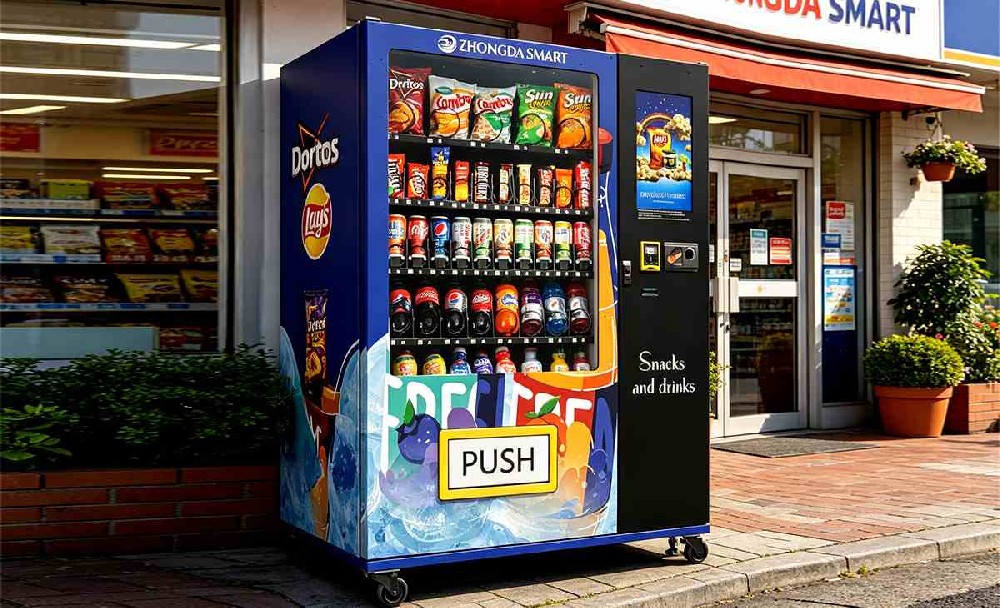
The practical answer: A dependable vending machine manufacturer asks detailed questions before recommending equipment, tests real products before production, identifies the exact payment and software configuration, provides model-specific documentation, and supports a pilot before asking the buyer to scale.
Start With the Products, Not the Machine Catalog
The first mistake I see is choosing a cabinet before studying the merchandise. A buyer sees an attractive touchscreen model, likes the price, and then tries to make every product fit the available shelves. That approach often produces narrow lanes, unstable packages, poor capacity, and avoidable delivery failures.
A good vending machine manufacturer works in the opposite direction. The discussion begins with the product dimensions, weight, packaging material, storage requirements, selling price, desired capacity, and expected refill schedule. Only then should the supplier recommend a cabinet and delivery mechanism.
Measure physical samples
I do not rely entirely on dimensions copied from a product listing. Flexible bags expand after filling. Cardboard boxes can bow slightly. Bottles may have a narrow base and a wider shoulder. Cosmetic packaging may include tabs, hanging loops, or transparent wrapping that changes how the item moves through a lane.
Measure the widest, tallest, and deepest point of the finished retail package. Weigh several units rather than one. If the packaging varies between production batches, record the range rather than the best-looking sample.
For each product, I want to know:
Maximum width, height, and depth
Average and maximum weight
Rigid, flexible, fragile, or irregular packaging
Whether the surface is smooth, sticky, glossy, or rough
Whether the product can be dropped safely
Required storage temperature
Expected units sold between refill visits
Retail price and product cost
Whether the assortment will change frequently
My product-fit rule: If a product has not been tested in the proposed delivery system, I treat its compatibility as unproven. A photograph can suggest a possible configuration, but it cannot prove reliable delivery.
Test different loading conditions
Many product problems do not appear during a single test. A package may vend correctly when it is alone at the front but fail when ten products push against it. Another item may work in a full lane and become unstable when only two units remain.
I normally divide the test into at least three conditions:
A fully loaded lane
A half-loaded lane
The final three products in the lane
This method reveals pressure-related jams, rotation, leaning, bridging, double delivery, and inconsistent movement near the end of the stock.
Calculate usable capacity, not theoretical capacity
A manufacturer may describe a machine as holding several hundred items, but that number depends on product size and tray configuration. A cabinet that holds 500 cans will not hold 500 large snack bags or 500 boxed beauty products.
Request a product-by-product capacity plan. It should show the number of lanes, lane width, units per lane, and total units for each product type. This is more useful than a single headline capacity number.
Buyers who are still comparing machine formats can review the available vending machine configurations and product categories before preparing a product list.
Confirm Who Actually Builds and Supports the Machine
The company sending the quotation may be the factory, an export business, a distributor, or a reseller. Any of these can provide a good service, but the role must be clear.
I become cautious when a supplier calls itself a vending machine manufacturer but cannot arrange a live production walkthrough, identify the engineering team, explain who owns the controller software, or show spare-parts stock.
Questions that reveal the supplier’s role
Where is final assembly completed?
Who designs or selects the controller?
Who can modify the software interface?
Who tests the machine before shipment?
Who signs the inspection record?
Who stocks motors, sensors, boards, screens, and refrigeration parts?
Can the buyer speak directly with an engineer?
Who handles warranty diagnosis?
A reseller may still be the right choice when it provides local installation, stocking, route management, and on-site repair. A factory may be the better choice when the buyer needs custom dimensions, private-label branding, new software logic, or direct engineering access.
What matters is that the supplier does not hide its role. The legal seller, invoice issuer, warranty provider, software provider, and payment recipient should be identified before a deposit is sent.
Use a live factory walkthrough
Edited promotional videos are useful for an introduction, but they are not a factory audit. I prefer a live video call in which the salesperson walks from the office to the assembly and testing areas without changing recordings.
During the call, ask to see:
Unfinished cabinets
Tray and locker assembly
Electrical wiring work
Refrigeration installation
Software configuration
Completed machines under test
Machines waiting for packing
Replacement parts in storage
A large building does not automatically mean strong quality. I pay more attention to whether work is organized, machines are identified, wiring is consistent, inspections are recorded, and failed tests lead to visible corrective action.
What to Send a Manufacturer Before Requesting a Quote
A vague request produces a vague quotation. “Please quote a snack machine” does not give a supplier enough information to choose the right trays, cooling system, payment hardware, software, or cabinet size.
I use a written project brief so every manufacturer prices the same requirement. This makes quotations easier to compare and reduces changes after the order.
| Category | Information to provide | Why it matters |
|---|---|---|
| Products | Names, photos, dimensions, weights, and samples | Determines delivery method and lane layout |
| Storage | Ambient, chilled, heated, or frozen | Determines insulation and temperature system |
| Capacity | Target units and refill interval | Determines cabinet and tray arrangement |
| Payments | Card, mobile wallet, QR, cash, coin, or account | Determines hardware and integration work |
| Software | Inventory, sales, alarms, promotions, user roles | Determines platform and development scope |
| Location | Indoor or outdoor, temperature, security, connectivity | Determines cabinet protection and communication |
| Installation | Doorways, floor space, power, ventilation, unloading | Prevents delivery and placement problems |
| Branding | Logo, colors, artwork, screen design | Determines graphic and interface work |
| Order plan | Pilot quantity and possible later quantity | Helps plan sampling and production |
| Schedule | Required pilot date and rollout date | Reveals whether the timeline is realistic |
A practical inquiry template
Product type: [Insert products]
Product dimensions: [Insert range]
Product weight: [Insert range]
Required temperature: [Insert requirement]
Desired capacity: [Insert units or selections]
Preferred delivery method: [Leave open if unsure]
Payment methods: [Insert payment requirements]
Software functions: [Insert required functions]
Installation conditions: [Insert site details]
Branding: [Standard or custom]
Pilot quantity: [Insert quantity]
Possible later quantity: [Insert estimate]
Required delivery date: [Insert date]
This information should be sent to each supplier in the same form. If one manufacturer recommends a different approach, ask it to explain the technical reason rather than rejecting the difference immediately.
Use a Weighted Manufacturer Evaluation Scorecard
A long list of attractive features can distract from the few systems that determine whether the machine earns revenue. I use a weighted scorecard to keep the decision focused on product delivery, payments, quality, software, and support.
| Evaluation area | Weight | Evidence to request |
|---|---|---|
| Product delivery reliability | 20% | Recorded sample tests and lane configuration |
| Payment compatibility | 15% | Exact terminal, protocol, processor path, and activation plan |
| Machine construction | 12% | Interior inspection, wiring, locks, hinges, and service access |
| Software and telemetry | 12% | Live portal demonstration and fee schedule |
| After-sales support | 12% | Support process, response hours, manuals, and training |
| Spare-parts availability | 8% | Parts list, prices, stock, and lead time |
| Quality control | 8% | Inspection form, test record, and serial tracking |
| Customization capability | 5% | Drawings, engineering review, prototype process |
| Commercial clarity | 5% | Detailed quotation and written responsibilities |
| Packaging and delivery | 3% | Packing plan, dimensions, and damage procedure |
| Total | 100% | Rate each supplier from 1 to 10 |
In my own screening worksheet, a supplier that receives less than 70 out of 100 does not move directly to a pilot order. A score between 70 and 80 may justify additional verification. A higher score is encouraging, but no score replaces physical testing.
Do not average away a critical failure. A supplier can score well overall and still be unsuitable if the payment terminal cannot be activated or the product delivery system has not been tested.
Inspect the Parts Customers Never See
A large screen and clean graphics make a machine look modern. They do not reveal the quality of the wiring, locks, tray supports, refrigeration access, control cabinet, or replacement procedure.
When I evaluate a vending machine factory, I ask for detailed interior photographs and a live service demonstration. The technician should open the machine, remove a tray, show the wiring paths, identify the controller, and explain how common parts are replaced.
Cabinet rigidity and door alignment
The cabinet should remain stable when loaded, moved, opened, and anchored. The door should not scrape, sag, or require unusual force. Gaps should remain even from top to bottom.
Ask the manufacturer to show the hinge area, lock area, payment opening, retrieval door, and anchoring points. These areas receive repeated stress and may also be targets for tampering.
Wiring quality
Wiring should be secured, labeled, protected from sharp metal edges, and separated from moving parts. Harnesses near the main door need enough flexibility for repeated opening without pulling on connectors.
I look for:
Secure cable routing
Strain relief near moving doors
Clearly identified connectors
Protected high-voltage areas
Accessible fuses and power supplies
Grounding points
Readable electrical diagrams
A machine may operate perfectly at delivery and still become difficult to repair if wires are unmarked or several connectors can be installed incorrectly.
Service access
A technician should be able to reach the controller, power supply, payment device, screen computer, motors, sensors, locks, and cooling system without removing unrelated assemblies.
Ask the manufacturer to demonstrate four common tasks:
Replace one delivery motor
Replace or adjust one spiral or belt
Access the main control board
Remove the touchscreen computer or display module
A machine designed for service can reduce repair time and prevent accidental damage during maintenance.
Standard and proprietary components
Proprietary parts can improve integration, but they also increase dependence on the vending machine manufacturer. Ask which parts are custom and which can be sourced from more than one approved supplier.
Critical parts should have model numbers, prices, expected availability, and replacement instructions. The list usually includes:
Delivery motors
Spirals and lane dividers
Belts
Drop sensors
Door sensors
Control boards
Power supplies
Touchscreens
Locks
Fans
Temperature controllers
Communication modules
Match the Delivery System to the Merchandise
The delivery mechanism is the part of the machine that turns a payment into a completed sale. If it cannot release the product consistently, every other feature becomes secondary.
Spiral delivery
Spiral systems are practical for many bags, boxes, bottles, and general merchandise products. They are familiar, adjustable, and relatively easy to service.
Reliable operation depends on:
Spiral diameter
Spiral pitch
Rotation direction
Lane width
Divider height
Product support
Drop distance
Motor stopping position
A narrow box may rotate inside a wide spiral. A soft pouch may fold between coils. A product with a hanging tab may catch on the divider. These problems are usually solved through product-specific adjustment rather than a generic “large” or “small” spiral label.
Belt and conveyor delivery
A belt can work well for products that do not sit securely in a spiral. It reduces rotational movement and supports a wider range of package shapes.
The manufacturer still needs to test the belt surface, side guides, torque, lane width, stopping position, and pressure from products behind the first item.
A smooth box may slide when the belt stops. A flexible package may compress under the weight of the remaining stock. A tall product may tip during movement. Physical testing remains essential.
Locker delivery
A locker vending machine is useful when products vary in size, should not fall, or need to remain separated. After payment, the assigned compartment unlocks.
Locker systems reduce some delivery risks but create different checks:
Door sensor accuracy
Lock durability
Manual override procedure
Customer recovery after a failed opening
Compartment status reporting
Restocking permissions
Door-open alarm behavior
Elevator delivery
An elevator or lift system can protect fragile, high-value, or unstable products by reducing the drop distance. The lift moves to the selected shelf, receives the item, and carries it to the collection area.
The added protection comes with more moving parts. Ask how the elevator detects its position, identifies obstructions, recovers after a power loss, and returns to a safe position after an error.
The manufacturer should be able to demonstrate:
Normal delivery
Obstruction detection
Manual recovery
Power-loss recovery
Sensor calibration
Access for belt or motor replacement
Drop sensors and vend confirmation
A drop sensor can tell the controller whether a product reached the collection area. If the item is not detected, the software may attempt another vend or begin a refund process.
Do not assume that one sensor setting works for every product. Very light products, narrow packages, transparent materials, and unusual delivery paths may require adjustment.
Product-delivery rule: The correct system is not the most advanced one. It is the simplest system that delivers the product reliably without unacceptable damage, service work, or capacity loss.
Confirm Payment Compatibility Before Production
Payment integration is one of the most common sources of delay. A quotation may say “supports card payment,” but that statement does not confirm that the terminal can be activated with the buyer’s processor or communicate correctly with the machine.
A cashless payment system includes several separate parts:
The physical terminal
The machine controller
The communication protocol
The payment processor or gateway
The merchant account
The network connection
The activation process
The refund and failed-vend logic
Questions that need written answers
Which exact payment terminal model is included?
Is it new and eligible for activation?
Which processor or gateway supports it?
Who supplies the merchant account?
Who activates the terminal?
Which protocol connects it to the controller?
Does it support contactless cards and mobile wallets?
How does the system handle a successful payment followed by a failed vend?
What transaction, SIM, platform, and monthly fees apply?
Can the operator change payment providers later?
The PCI Security Standards Council maintains security requirements for payment devices, including unattended payment environments. The buyer should confirm that the proposed device and deployment are suitable for self-service use rather than assuming that any retail terminal can be installed safely.
Source: PCI Security Standards Council, Point of Interaction Standards .
Protocol support is not the final answer
MDB is commonly used to connect vending peripherals, but “MDB supported” is still incomplete. The exact terminal should be tested with the exact controller and software version.
The factory test should include:
Successful authorization
Product delivery
Correct sales record
Failed-vend handling
Refund or reversal behavior
Network interruption
Reconnection
Repeated transactions
Cash and coin hardware
Cash equipment adds collection, reconciliation, float management, security, and mechanical maintenance. Confirm the accepted denominations, storage capacity, change logic, payout testing, error reporting, and firmware support.
A bill validator should be configured for the required notes. A coin changer should have enough float for realistic transactions. The manufacturer should demonstrate low-change warnings and explain how the machine behaves when it cannot return the correct amount.
QR and account-based payments
QR payment may use a static code, a dynamic code, or a gateway-generated transaction. The customer experience and refund process differ between these methods.
Account-based systems may include employee cards, student accounts, loyalty programs, memberships, or prepaid balances. These projects require clear rules for user identity, limits, transaction history, refunds, account ownership, and data access.
Evaluate the Software Before You Buy the Hardware
Remote management should reduce unnecessary visits and make the machine easier to operate. It should not create a permanent dependency that the buyer discovers after installation.
I never approve a connected vending machine from screenshots alone. I ask for a live demonstration or temporary test account.
Functions worth testing
Sales by machine, product, and time
Current stock by selection
Low-stock alerts
Out-of-stock status
Door-open alerts
Temperature alerts
Payment status
Motor and delivery errors
Remote price changes
Promotions and discounts
Refund records
User roles and permissions
Machine groups
Data export
Software update management
Watch a transaction appear in the portal
During the demonstration, complete several transactions while watching the dashboard. Confirm how quickly sales appear, how stock is deducted, and how a failed vend is recorded.
Then disconnect the machine from the network. Complete another test if the system permits offline operation. Restore the connection and verify whether the records synchronize without duplication.
Ask who owns the data
The contract should explain who owns machine, sales, inventory, and customer data. The operator should know whether records can be exported in a usable format.
Important questions include:
Can the operator download all sales records?
Can data be exported without paying an additional fee?
How long are records retained?
What happens if the platform closes?
What happens if the operator stops subscribing?
Can the machine still vend without cloud access?
Can prices be changed locally?
Can another platform be connected later?
Calculate recurring software cost
A low machine price may be offset by mandatory software, SIM, data, advertising, storage, or support fees. Request a cost schedule covering at least five years.
| Cost | Question |
|---|---|
| Platform license | Is it charged per machine, per account, or per transaction? |
| Connectivity | Is the SIM and data package included? |
| Updates | Are software updates included? |
| Storage | How long are records stored? |
| Support | Is remote technical support part of the subscription? |
| API access | Is integration charged separately? |
| Cancellation | Which machine functions remain available? |
Software exit rule: Before accepting a cloud platform, find out what the machine can still do when the subscription ends. This answer reveals how much control the buyer actually has.
Check Refrigeration Performance Under Real Conditions
A refrigerated vending machine must control temperature while dealing with glass exposure, lighting, repeated door opening, warm products during restocking, restricted airflow, and changing ambient conditions.
A specification such as “2°C to 25°C” is incomplete unless the test conditions are stated.
Request measurable cooling information
Target product temperature range
Ambient temperature used during testing
Machine loading condition
Pull-down time
Temperature difference between shelves
Refrigerant type
Compressor model
Defrost method
Airflow path
Alarm threshold
Required wall clearance
Use several temperature loggers
A sensor near the cold-air outlet may show a good reading while the upper shelf or door area remains warmer. During a pilot, I place independent temperature loggers in several zones.
The test should include a realistic product load. A nearly empty cabinet can behave differently from a fully stocked one because the products change airflow and thermal mass.
Compare energy use
ENERGY STAR reports that certified commercial vending machines are, on average, approximately 40% more energy efficient than standard models and may save about 1,000 kWh annually on average. Actual consumption depends on the cabinet, cooling design, settings, environment, and use pattern.
Source: ENERGY STAR commercial vending machine guidance .
Do not confuse the rated wattage of individual components with actual machine consumption. Ask for measured daily or annual energy use under stated conditions.
Service access matters
The condenser needs regular cleaning. Fans, controllers, probes, and compressor components must be reachable. A cooling unit that is difficult to access can turn routine maintenance into a major repair.
Ask the technician to show:
Condenser cleaning access
Temperature sensor location
Fan replacement procedure
Controller replacement procedure
Drainage path
Required ventilation clearance
How to Read a Vending Machine Quotation
The cheapest quotation is often the least complete. One supplier may include the touchscreen, cooling system, card terminal, cloud platform, spare parts, and export packaging. Another may show only the cabinet price.
A useful quotation is configuration-based. It identifies each important component and separates required equipment from optional features.
| Quotation line | What it should specify | Common omission |
|---|---|---|
| Base machine | Model, cabinet, dimensions, trays, and selections | Tray layout not included |
| Delivery system | Spirals, belts, lockers, or elevator | No product-specific configuration |
| Cooling | Temperature range and test conditions | Only component wattage shown |
| Screen | Size, resolution, operating system, and touch type | Computer module not identified |
| Payment terminal | Exact model and communication method | Activation not included |
| Software | Functions, license, SIM, and recurring fees | Renewal cost missing |
| Customization | Graphics, cabinet changes, interface, and development | Revision limits not stated |
| Spare parts | Part name, quantity, price, and warranty status | Only “free tools” listed |
| Testing | Product, payment, cooling, and software tests | No acceptance criteria |
| Packaging | Material, packed dimensions, and gross weight | Export protection unclear |
| Delivery | Freight terms and destination responsibilities | Local unloading excluded without notice |
| Warranty | Period, start date, coverage, and shipping duties | Only “one year” written |
Ask for the final configuration as an attachment
Product discussions often happen through messages, calls, photographs, and revised drawings. Before payment, combine the final decisions into one controlled specification.
The attachment should identify:
Machine model
Exterior dimensions
Interior layout
Number of selections
Capacity by product
Delivery mechanism
Cooling or heating system
Screen and computer
Payment hardware
Software functions
Interface language
Branding
Accessories
Testing requirements
Included documentation
Watch for estimates presented as fixed costs
Freight, payment processing, local installation, software integration, and custom development may remain estimates until the final scope is known. The quotation should distinguish fixed prices from provisional amounts.
The buyer should also know which changes can increase the price after approval. Common examples include a different terminal, a larger screen, new cabinet dimensions, additional software functions, and a new product delivery path.
Understand MOQ, Samples, and Production Lead Time
Minimum order quantity is not a single number for every project. A standard machine with an existing cabinet may be available as one pilot unit. A new cabinet, mold, control board, or custom payment integration may require a larger commitment.
Different changes create different minimums
| Project type | Typical production impact | What to confirm |
|---|---|---|
| Standard machine | Lowest setup effort | Stock availability and exact configuration |
| Logo and graphics | Low design and print setup | Artwork fee and revision limit |
| Tray modification | Moderate mechanical adjustment | Sample testing and parts cost |
| Custom interface | Software design and testing | Development fee and update support |
| New cabinet size | Engineering and production changes | Drawing, prototype, and batch requirement |
| New payment integration | Hardware and software validation | Provider cooperation and approval timeline |
| New delivery mechanism | High engineering and testing effort | Prototype stages and acceptance criteria |
Separate sample lead time from batch lead time
The sample schedule may include requirement review, drawings, product testing, software setup, production, inspection, and buyer approval. Batch production should not begin until the pilot configuration is stable.
A practical planning sequence may include:
Requirement confirmation
Model and delivery-system recommendation
Product sample testing
Drawing and interface approval
Pilot production
Factory acceptance testing
Pilot shipment and site testing
Corrections
Batch production
Final inspection and shipment
Do not treat an early delivery estimate as a guaranteed completion date until the technical specification is approved. Software integration, payment terminal supply, new graphics, component availability, and failed product tests can all affect the schedule.
Ask what controls the schedule
A vending machine manufacturer may have enough cabinet capacity but still depend on screens, payment terminals, refrigeration units, control boards, or custom parts with longer lead times.
Ask which item has the longest procurement time and whether it has already been reserved for the order.
Zhongda Smart publishes an OEM custom vending machine process covering requirement review, configuration-based quoting, sample building, testing, production, quality control, packaging, and support. The published page also states that some OEM projects can begin from one unit, subject to the selected configuration.
Request Model-Specific Documents and Test Records
A certificate, test report, or manual is only useful when it matches the machine being purchased. Buyers sometimes receive a document for a different cabinet, control system, power configuration, or applicant.
Document rule: Check the model, standard, applicant, issuing body, date, and configuration. A document for a similar machine is not automatically evidence for the final machine.
Documents commonly worth requesting
Model specification sheet
Electrical diagram
Controller and peripheral connection diagram
Operating manual
Restocking instructions
Fault-code list
Spare-parts list
Maintenance schedule
Refrigerant information
Component data sheets
Inspection report
Product delivery test record
Payment test record
Temperature test record
Packing list
Serial number record
Do not treat every project as identical
Document requirements depend on the machine, payment equipment, products, installation, electrical configuration, and intended use. A chilled food machine may require different review from a small ambient locker.
Buyers should identify applicable safety, payment, electrical, food-contact, accessibility, communications, and installation requirements before production. The vending machine manufacturer can provide technical documents, but the buyer should not assume that one general certificate covers every final configuration.
Match the serial plate to the order
The finished machine should carry a clear identification plate containing the model, serial number, electrical rating, and manufacturer information. Photograph it before packing and again after installation.
Serial tracking makes warranty and spare-parts support easier because the supplier can identify the controller, screen, refrigeration module, and production batch used in that unit.
Audit Quality Control, Not Just Production Capacity
A factory may be capable of assembling many machines and still have weak inspection. I want to know what happens between final assembly and packing.
Review the inspection form
Ask for a blank quality-control form and one completed example with private customer information removed. It should identify:
Machine model
Serial number
Configuration
Inspector
Test date
Tests completed
Defects found
Corrective action
Retest result
Final approval
A useful final inspection may include
Exterior finish
Door alignment
Locks and hinges
Glass and lighting
Touch accuracy
Every product selection
Drop sensor
Elevator or locker operation
Cash equipment
Cashless communication
Network connection
Sales reporting
Inventory deduction
Cooling or heating
Temperature alarms
Door alarms
Power recovery
Accessories
Spare-parts count
Ask how defects are controlled
A mature process does more than mark a test as failed. The factory should record the problem, identify the correction, repeat the test, and show who approved the result.
Ask what happens when the same defect appears in several machines. Does the team check the remaining batch? Does engineering review the cause? Is the inspection standard changed?
Meet the people who will support the machine
Before ordering, I prefer a call that includes sales, engineering, software, and after-sales staff. Their answers should agree.
Ask sales how a failed vend is handled. Then ask the software technician to demonstrate it. Ask engineering how the product was tested. Then ask quality control to show the record.
Differences between the sales promise and the actual process often become visible during this conversation.
Use a Pilot and Written Acceptance Test
A pilot is not an unnecessary delay. It is a controlled way to find problems before they are repeated across many machines.
The pilot should test the complete business process:
Product loading
Customer selection
Payment
Product delivery
Refund handling
Inventory reporting
Remote alarms
Restocking
Cleaning
Basic repair
Factory acceptance testing
Before shipment, create a checklist that identifies each required test and the evidence needed for approval.
| Test | Method | Acceptance evidence |
|---|---|---|
| Exterior condition | Inspect every panel, edge, door, and graphic | High-resolution photographs |
| Product delivery | Repeat every selection under several loading conditions | Video and test record |
| Payment | Complete successful and failed transactions | Terminal and machine records |
| Failed vend | Block or remove product detection | Recorded retry or refund behavior |
| Inventory | Compare transactions with physical count | Portal export and count sheet |
| Connectivity | Disconnect and restore network | Recovery and synchronization record |
| Temperature | Use several independent loggers | Time-stamped temperature data |
| Power recovery | Switch off and restart safely | Video showing normal recovery |
| Alarms | Open door and change temperature condition | Portal or message alert |
| Accessories | Count manuals, keys, tools, and spare parts | Signed packing list |
How many delivery tests are enough?
There is no universal number for every product. The test quantity should reflect how new, fragile, valuable, and difficult the product is.
For a standard boxed product already used in the same tray design, 20 clean cycles may be enough for an initial pilot review. For a flexible pouch, fragile container, unusual package, or new elevator path, I normally prefer 50 to 100 cycles under several loading conditions.
A high-value or safety-sensitive product may justify more testing. The number should be written into the acceptance plan before production.
Site acceptance testing
Repeat the critical tests after installation. Freight and movement can loosen connectors, shift trays, affect door alignment, or damage refrigeration components.
The site test should confirm:
Correct power connection
Required ventilation clearance
Stable network signal
Payment activation
Correct prices
Product capacity
Remote reporting
Temperature performance
Anchoring
Customer instructions
Common Vending Machine Failure Modes and What They Reveal
A reliable vending machine manufacturer should be able to explain likely causes instead of recommending a restart for every problem.
| Problem | Possible cause | What to verify |
|---|---|---|
| Product does not drop | Wrong spiral, lane width, divider, or motor position | Product sample test under full and low stock |
| Two products vend | Excessive spacing or unstable packaging | Spiral pitch and front product position |
| Product rotates sideways | Lane too wide or support too low | Divider and guide adjustment |
| Payment succeeds but no product arrives | Communication or failed-vend logic issue | Controller, sensor, and refund sequence |
| Inventory count is wrong | Mapping, synchronization, or transaction-record problem | Offline and reconnection tests |
| Machine is too warm | Blocked airflow, incorrect setting, fan, sensor, or cooling fault | Multi-point temperature data and ventilation |
| Touchscreen freezes | Software, storage, memory, power, or hardware instability | Logs, remote restart, and software version |
| Elevator stops | Obstruction, belt, sensor, calibration, or motor problem | Manual recovery and error code |
| Locker door does not open | Lock, wiring, sensor, or software assignment | Manual release and door-status record |
| Coin payout fails | Low float, jam, dirty path, or incorrect configuration | All accepted and returned denominations |
| Machine stops reporting | SIM, router, antenna, platform, or power problem | Local operation and connection status |
Ask for the diagnostic sequence
The supplier should provide a logical troubleshooting path. For a failed motor, the sequence might include checking the error code, testing the selection from the service menu, inspecting the connector, swapping the motor channel, measuring the power supply, and replacing the motor only after simpler causes are ruled out.
Good troubleshooting reduces unnecessary part replacement. It also helps the operator describe the problem clearly when contacting support.
Request useful error information
A screen that displays only “error” is less useful than one that identifies the system, selection, time, and fault type. Ask what information is stored locally and what appears in the remote portal.
Useful records include:
Machine serial number
Error code
Selection number
Transaction number
Payment status
Vend status
Sensor status
Time of event
Software version
Restart history
Compare Total Ownership Cost, Not Only the Machine Price
A cheaper vending machine can become the more expensive option after software fees, payment charges, energy use, repair work, and downtime are included.
Initial project cost
Base machine
Payment hardware
Cash equipment
Cooling or heating
Custom trays
Branding
Software setup
Development work
Spare-parts kit
Packaging
Freight
Insurance
Local delivery
Unloading
Installation
Electrical work
Anchoring
Initial inventory
Recurring operating cost
Product cost
Location fee or revenue share
Payment processing
Software subscription
SIM and connectivity
Electricity
Restocking labor
Transport
Cleaning
Preventive maintenance
Repairs
Replacement parts
Spoilage
Refunds
Theft and damage
Insurance
Illustrative five-year comparison
| Cost item | Lower-price machine | Higher-price machine |
|---|---|---|
| Machine and required options | $3,200 | $3,850 |
| Freight and installation | $1,050 | $1,050 |
| Five-year software and connectivity | $1,800 | $900 |
| Estimated five-year electricity | $2,700 | $2,050 |
| Estimated maintenance and parts | $1,900 | $1,150 |
| Estimated sales lost during downtime | $2,400 | $900 |
| Estimated five-year total | $13,050 | $9,900 |
These numbers are illustrative. The important point is the method. Replace each figure with the supplier’s fees, the expected energy use, realistic service costs, and the value of sales lost during downtime.
Estimate monthly profit
Monthly revenue can be estimated as:
Average sale value × daily transactions × operating days
If the average transaction is $3.25 and the machine completes 22 sales per day for 30 days:
$3.25 × 22 × 30 = $2,145 monthly revenue
| Item | Amount |
|---|---|
| Revenue | $2,145.00 |
| Product cost | -$986.70 |
| Location payment | -$214.50 |
| Payment processing | -$96.53 |
| Restocking and transport | -$180.00 |
| Software and connectivity | -$35.00 |
| Electricity | -$45.00 |
| Maintenance reserve | -$70.00 |
| Illustrative monthly net profit | $517.27 |
Revenue is not profit. Taxes, financing, refunds, spoilage, insurance, and operator time may need to be added.
Calculate payback
Payback period = total startup investment ÷ monthly net profit
If the complete project costs $5,900:
$5,900 ÷ $517.27 = approximately 11.4 months
I calculate at least three scenarios rather than relying on one forecast.
| Scenario | Daily sales | Monthly revenue | Estimated net profit | Estimated payback |
|---|---|---|---|---|
| Conservative | 10 | $975.00 | $135.00 | 43.7 months |
| Expected | 22 | $2,145.00 | $517.27 | 11.4 months |
| Strong | 35 | $3,412.50 | $930.00 | 6.3 months |
Calculate break-even daily sales
Another useful calculation is:
Break-even daily sales = monthly fixed operating cost ÷ contribution per sale ÷ operating days
Contribution per sale is the selling price minus product cost and transaction-based costs. This calculation shows how many daily purchases are needed before the machine begins covering fixed expenses.
Operators can enter their own machine price, sales, margin, location fee, payment cost, and operating assumptions in the vending machine ROI calculator.
Price downtime
A machine producing $71.50 per day loses about $500 in sales during one week of complete downtime. The lost gross profit will be lower than lost revenue, but the operator may also face refunds, an emergency visit, wasted inventory, and damage to the location relationship.
This is why I give service response and spare-parts availability more weight than a small discount on the initial machine.
Read the Warranty as a Repair Procedure
“One-year warranty” is a headline, not a complete service policy. The useful question is what happens when a machine fails.
The written warranty should answer
When does coverage begin?
Which components are included?
Which parts are considered consumable?
Is the compressor included?
Is the touchscreen included?
Is payment hardware covered by the factory or payment provider?
What proof is required?
Who performs diagnosis?
Must the failed part be returned?
Who pays replacement shipping?
How quickly are parts dispatched?
What support is available after the warranty?
Test the support team before ordering
Send a realistic technical question. For example:
The motor turns, but the product remains in the spiral. What information should I collect, and what checks should I complete before replacing the motor?
A useful answer should ask about the product, spiral, selection number, motor position, video, connector, service-menu test, and error record. A weak answer says only, “Restart the machine.”
Order a practical spare-parts kit
The correct kit depends on fleet size, shipping time, machine type, and expected revenue. A single pilot may need several common parts. A larger fleet may justify full replacement assemblies.
| Priority | Examples | Planning reason |
|---|---|---|
| Critical | Control board, power supply, screen computer, communication module | Failure may stop the complete machine |
| Common | Motors, sensors, locks, fans, spirals, connectors | Useful for routine field repair |
| Configuration-specific | Elevator belt, locker lock, payment interface board | May have a longer replacement lead time |
| Low-frequency | Glass, cabinet panels, complete refrigeration assembly | Usually stored according to fleet size and risk |
Documentation should match the machine
The operator needs:
Operating manual
Restocking guide
Cleaning guide
Fault-code list
Wiring diagram
Parts diagram
Software guide
Payment setup information
Basic repair videos
Escalation contacts
A generic manual showing different menus, parts, or wiring can be more confusing than helpful. Confirm that the final documentation matches the shipped configuration.
Approach Custom Vending Machine Projects in Stages
Custom equipment can improve product presentation and customer experience, but it also increases engineering, testing, and schedule risk.
I separate customization into four levels.
| Level | Typical changes | Risk | Recommended validation |
|---|---|---|---|
| Level 1 | Logo, color, graphics, and screen content | Low | Artwork proof and finished photographs |
| Level 2 | Tray layout, spirals, belts, lockers, payment hardware | Moderate | Product sample test and configuration drawing |
| Level 3 | Cabinet size, cooling, elevator, added sensors | High | Engineering drawing, prototype, and acceptance test |
| Level 4 | New mechanics, software integration, or transaction process | Very high | Development agreement, staged prototype, and field pilot |
Create a functional specification
The specification should describe the customer journey from the first screen interaction to product collection.
Include normal and error conditions:
Product selection
Price display
Payment
Cancellation
Out-of-stock condition
Failed delivery
Refund
Network loss
Door fault
Power loss
Customer timeout
Remote alarm
For each function, identify who supplies the hardware, who writes the software, who provides the interface, and who approves the completed test.
A rendering does not approve the engineering
A rendering confirms appearance. It does not prove internal clearances, airflow, tray access, cabinet balance, door strength, payment communication, or software stability.
Significant customization should include:
Dimensional drawing
Tray or locker drawing
Wiring diagram
Component list
Interface description
Prototype plan
Acceptance test
Control changes after approval
A casual request can affect cost, testing, and delivery. Use a change record containing:
Requested change
Reason
Technical effect
Added cost
Schedule effect
New test requirement
Approval date
This protects the buyer and the vending machine manufacturer by keeping the project scope visible.
Put Important Promises Into the Purchase Agreement
Messages and calls help develop the project, but the final agreement should contain the technical and commercial terms that determine whether the machine is acceptable.
Commercial terms
Legal seller and buyer
Model and quantity
Unit and total price
Included and excluded equipment
Payment schedule
Production lead time
Delivery terms
Packaging
Inspection
Acceptance
Warranty
Spare parts
Software fees
Documentation
Training
Delay and cancellation
Use version-controlled technical attachments
The approved specification and drawings should carry a date or revision number. This prevents an earlier tray layout or software version from being used by mistake.
If the buyer requests a change, update the controlled attachment instead of relying only on a new message.
Tie payments to measurable progress
Payment structures vary, but milestones should connect to completed work. Examples include specification approval, pilot completion, successful factory testing, and shipment approval.
Define the evidence required at each stage. A photograph of a closed cabinet does not prove that the payment system, software, cooling, and every product selection have passed testing.
Define what happens after a failed test
Acceptance terms should explain:
How the defect is recorded
Who performs correction
When retesting occurs
What evidence is provided
When the machine can be approved
Verify payment instructions
The account name and company details should match the verified seller or have a documented explanation. Any sudden change to bank details should be confirmed through previously verified contact information.
When Zhongda Smart May Be a Suitable Manufacturer
Zhongda Smart is one vending machine manufacturer buyers can evaluate when a project requires several delivery formats, a pilot quantity, or OEM customization.
The company’s published product range includes:
Snack and beverage vending machines
Compact vending machines
Beauty and cosmetic vending machines
Trading card and collectible machines
Locker vending machines
Elevator-delivery machines
Customized self-service retail equipment
Its product page states that buyers can request machine design, capacity, interface language, payment, and other configuration changes. It also publishes a one-unit starting quantity for selected projects, a one-year warranty, replacement-parts support, and online technical assistance. Final terms should still be confirmed in the model-specific quotation and warranty.
Zhongda Smart may be a practical fit when
The buyer needs a pilot before a larger order.
The products require spiral, belt, locker, or elevator delivery.
The project needs custom branding or a private-label cabinet.
The screen interface needs another language or custom design.
The buyer wants direct communication with a factory team.
The machine requires a product-specific tray arrangement.
Request additional confirmation when
A specific payment terminal must be activated.
The project needs a new third-party software integration.
The final installation has demanding environmental conditions.
A test report must match a specific machine configuration.
A custom mechanical design has not been produced before.
The buyer needs a guaranteed production or delivery date.
Questions I would send Zhongda Smart
Which delivery system fits my products, and why?
Can you test my physical product samples?
How many delivery cycles will be completed?
Can you test full, half-full, and near-empty lanes?
Which payment terminal has been tested with the controller?
Who is responsible for payment activation?
Which information appears in the management platform?
What happens after a failed vend?
Which spare parts should ship with the pilot?
Which parts are covered by the warranty?
Which custom changes require an engineering fee?
What acceptance record will be provided before shipment?
A sensible order process
Send product dimensions, weights, photos, and samples.
Receive a written machine and delivery-system recommendation.
Confirm the payment terminal and activation path.
Review the software through a live demonstration.
Approve the configuration drawing.
Order a pilot machine.
Complete factory acceptance testing.
Repeat the critical tests after installation.
Record problems and corrections.
Approve a larger order only after the pilot is stable.
Buyers can also review Zhongda Smart’s vending machine buying factors before preparing the final specification.
Warning Signs I Do Not Ignore
The supplier recommends a machine immediately
A model recommendation made without product dimensions, payment requirements, installation conditions, and expected capacity is usually based on available stock rather than project fit.
Every technical question receives “no problem”
“Supported,” “customizable,” and “no problem” are not complete answers. Ask which component provides the function, how it has been tested, and what limitations apply.
The payment description remains vague
Do not proceed until the terminal, protocol, processor path, merchant account responsibility, activation, and recurring fees are clear.
The software cannot be demonstrated
Static screenshots do not prove that inventory, sales, alarms, refunds, and user permissions work.
The manufacturer guarantees unfamiliar products without samples
An unusual product should be tested. A guarantee based only on a photograph creates unnecessary risk.
The warranty has no procedure
“Lifetime support” has little value when response times, covered parts, shipping duties, and diagnostic steps are not written.
The specification changes after the deposit
Component substitutions should require disclosure and buyer approval when they affect performance, service, software, payment, or documentation.
The supplier refuses a pilot
A standard model may not require a complex prototype, but a new product, payment system, delivery mechanism, or software process should be validated before a large order.
The company pressures payment before confirming the configuration
Production capacity and component prices can change, but the buyer should still approve the essential technical scope before sending a deposit.
Final Vending Machine Manufacturer Checklist
Company verification
The legal company name is confirmed.
The supplier’s role is clear.
A live factory walkthrough has been completed.
Technical staff have joined a project call.
Payment instructions match verified company information.
Product and machine fit
Product dimensions and weights were measured.
Physical samples were provided where needed.
The delivery system was selected for the actual products.
Capacity was calculated by product.
Different loading conditions were tested.
Installation access was measured.
Payment
The exact terminal model is listed.
The processor and merchant account path are confirmed.
Activation responsibility is written.
All recurring fees are known.
Failed-vend handling was tested.
Network recovery was tested.
Software
A live demonstration was completed.
Sales and inventory records were verified.
Alerts and permissions were tested.
Software and SIM fees are documented.
Data export is available.
The subscription exit process is understood.
Quality
The cabinet and door were inspected.
Wiring and service access were reviewed.
Every product selection will be tested.
Cooling data will be recorded where required.
Power and network recovery will be tested.
A model-specific inspection form exists.
Support
The warranty start date is clear.
Covered and excluded components are listed.
Replacement shipping responsibility is written.
Support channels and response process are known.
Critical spare parts are identified.
Manuals and diagrams are included.
Commercial protection
The quotation separates all major components.
The final specification is attached.
Drawings have revision numbers.
Payment milestones are tied to progress.
Factory acceptance is defined.
Packaging and damage procedures are clear.
A pilot will be completed before scaling.
My final rule: Choose the vending machine manufacturer that provides the clearest evidence, not the strongest promise. As the project develops, the machine configuration, payment responsibilities, tests, costs, and support process should become easier to understand. If each conversation creates new uncertainty, the order is not ready.
Frequently Asked Questions
How do I verify that a vending machine manufacturer is legitimate?
Confirm the legal company name, business details, payment account, physical facility, and production activity. Arrange a live factory walkthrough and ask to see assembly, testing, spare parts, and packaging. Speak with technical staff rather than communicating only with sales. For a large order, consider an independent audit and pre-shipment inspection.
What should I ask a vending machine manufacturer before buying?
Ask how the machine will dispense your exact products, which payment terminal will be installed, who activates it, what software fees apply, which tests will be completed, how warranty claims work, and which replacement parts are available. Put the important answers into the final quotation or technical agreement.
Should I buy directly from a manufacturer or through a distributor?
Buy directly when customization, engineering access, configuration control, and factory communication are the main priorities. A distributor may be preferable when local installation, stocking, route management, and on-site repair matter more. Confirm which company is responsible for warranty and technical support.
How much does a commercial vending machine cost?
Cost depends on cabinet size, cooling, screen, payment hardware, delivery system, software, customization, freight, and installation. A basic compact unit may cost much less than a refrigerated elevator machine or a custom self-service kiosk. Compare the complete installed cost and several years of operating expenses.
Can I order one custom vending machine?
Some manufacturers accept a one-unit pilot for selected configurations. Zhongda Smart publishes a starting quantity of one unit for certain OEM projects. A custom pilot may still include engineering, software, graphics, or prototype fees, so request a complete development quotation.
How many product delivery tests should be completed?
The number depends on product risk and configuration. A standard product in a proven tray may need at least 20 clean pilot cycles. Flexible, fragile, high-value, or unfamiliar products may require 50 to 100 or more tests under full, half-full, and near-empty loading conditions.
What should a vending machine warranty include?
The warranty should identify the coverage period, start date, included parts, exclusions, diagnosis process, replacement timeline, shipping responsibility, and post-warranty support. The written repair procedure is more important than a broad promise of lifetime service.
Which vending machine is best for fragile products?
An elevator vending machine or locker system is often safer than a long product drop. The right choice depends on product dimensions, weight, packaging strength, value, and required capacity. Send physical samples and require recorded delivery tests before approving the machine.
Sources
ENERGY STAR. Commercial Vending Machines. View source
PCI Security Standards Council. Point of Interaction Standards. View source