Before a vending machine is installed, the operator should confirm the business approval, site authorization, product rules, electrical conditions, accessibility, payment setup, and any inspection that applies to the planned use. A Vending Machine Permit may be part of that process, but it is rarely the whole process. A machine selling sealed snacks can present a very different approval problem from a refrigerated fresh-food machine, a wall-mounted self-service kiosk, or equipment that contains specialized verification hardware. The important work happens before the purchase order is locked: define what will be sold, how it will be stored, where the machine will sit, how it will be powered, and what the reviewing authority expects to see. That approach reduces expensive changes after production and gives the operator a much cleaner path from equipment selection to opening day.
What a Vending Machine Permit Actually Covers
The phrase “vending machine permit” sounds more standardized than it really is. In a simple project, the operator may deal with a straightforward vending registration and property approval. Once refrigeration, prepared food, structural mounting, special product controls, or electrical alterations enter the project, the paperwork can become more layered.
I would not start by asking, “Which form do I fill out?” I would start by describing the actual machine and transaction. That gives the reviewing authority something concrete to classify.
A useful description might read like this: a floor-standing machine will sell factory-sealed snacks and bottled drinks, use a standard electrical connection, accept cashless payment, connect by cellular data, and remain inside a staffed commercial property. Another project might involve refrigerated packaged meals, automatic temperature control, a high-capacity cabinet, and unattended operation outside normal staffing hours. Those two machines may look similar in a photograph, yet the permit questions are not necessarily similar.
The Small Business Administration notes that licensing and permit needs depend on the business activity and operating location, and its business guidance specifically lists vending machines among activities that can be regulated.[1] That is a useful reminder that vending does not sit outside ordinary business rules simply because the sale is automated.
Think About the Machine in Layers
A permit file can involve several separate subjects:
- Authorization for the business itself
- Authorization connected specifically with vending activity
- Rules that apply to food or temperature-controlled products
- Permission from the property owner or property manager
- Electrical work or electrical inspection
- Structural approval for wall mounting, floor anchoring, or altered construction
- Customer access and operable-part requirements
- Payment-system responsibilities
- Wireless or communications equipment requirements
- Insurance or contractual documentation requested by the site
- Product-specific sales restrictions where applicable
Not every vending business will need every item on that list. The point is to identify the layers before the machine is manufactured.
That order matters more with custom equipment. A standard snack machine can often be reconfigured within limits. A custom refrigerated self-service kiosk with a particular touchscreen, card terminal, elevator, camera, shelving system, and mounting structure gives the buyer much less room for painless changes after production.
The Manufacturer Can Supply Evidence, Not Legal Permission
A vending machine manufacturer can provide dimensions, electrical ratings, refrigeration details, component information, mounting instructions, configuration records, and applicable equipment documentation. Those documents can make an application easier to review. They do not replace the permit issued by the responsible authority.
I would be cautious with any claim that a machine is simply “approved everywhere” or “does not need a permit.” Equipment compliance and permission to operate are two different things.
The more customized the machine is, the more useful it becomes to have the authority review the real specification instead of a generic catalog photo. That is particularly true for food vending, wall-mounted equipment, high-power refrigeration, identity-controlled transactions, or an installation that alters the building.

Permit, License, Inspection, and Site Approval Are Not the Same Thing
These terms are often mixed together in ordinary conversation. That is harmless until one approval is mistaken for another.
| Term | What It Usually Addresses | What It Does Not Automatically Solve |
|---|---|---|
| Business license | Permission to operate the business activity under the applicable business rules. | Machine-specific food approval, property permission, electrical alterations, or product restrictions. |
| Vending permit | Authorization or registration related to vending activity, equipment, or operation. | Every other approval connected with the site, food, building work, or payment system. |
| Food vending permit | Requirements connected with food storage, sanitation, handling, temperature control, or retail food activity. | General business authorization or permission from the property owner. |
| Inspection | A review of whether the machine or installation meets the applicable conditions. | A guarantee that no renewal, continuing record, or later inspection will be required. |
| Site approval | Permission to place and operate the machine on the property under agreed conditions. | Governmental licensing, food rules, electrical work, or other outside requirements. |
| Electrical approval | Electrical installation, alteration, circuit work, or related safety requirements where applicable. | Permission to sell the merchandise inside the machine. |
I would keep these approvals in separate rows on a project checklist. When everything is written simply as “permit,” it becomes easy to mark the whole issue complete after receiving one document.
Site Permission Deserves Its Own File
Property authorization is especially easy to misunderstand. A manager may agree that a vending machine would be useful in a lobby, break area, waiting area, or common space. That conversation is not a complete placement agreement.
Before delivery, the written agreement should identify the machine location, power responsibility, permitted cabinet size, service access, restocking access, payment terms, commission or rent if applicable, insurance requirements, signage rules, and responsibility for damage or removal.
Wall drilling should never be assumed. Floor anchoring should never be assumed. Use of an existing outlet should not be assumed if the refrigeration load has not been checked.
A good site agreement also prevents the vending operator from solving building-management issues one at a time after the machine arrives.
Can the Machine Be Delivered Before the Permit Is Active?
Do not treat delivery, installation, stocking, and commercial operation as the same event.
In some projects, the machine may be physically delivered before every operating approval becomes active. In another project, a required inspection may need to occur before stocking, energizing, or selling. The only safe answer is the one confirmed for the actual installation.
If I were managing the rollout, I would put four separate milestones in the schedule: delivery permitted, installation permitted, inspection completed, sales permitted. That eliminates a surprising amount of confusion.
Vending Machine Permit Requirements Change With the Machine Type
The product being sold is usually more important than the label on the cabinet. A “smart vending machine” can be a refrigerated food machine, a dry-goods kiosk, a beauty-product machine, a locker system, a drink machine, or a wall-mounted retail device. The hardware and risk profile are not interchangeable.
For this comparison, I am prioritizing product storage, electrical load, customer access, mounting, and the consequences of a machine failure.
| Machine Type | Typical Complexity | Questions to Settle Before Installation | Hardware Worth Specifying Early |
|---|---|---|---|
| Packaged snack machine | Lower | Business approval, vending registration, property permission, electrical supply, customer access. | Secure cabinet, suitable outlet, payment system, clear customer interface. |
| Snack and drink combination machine | Low to moderate | Cooling performance, ventilation, condensation, payment, service access. | Refrigeration, adjustable lanes, telemetry, correct power configuration. |
| Refrigerated fresh-food machine | Higher | Food approval, holding temperature, automatic shutoff, cleaning, stock rotation, records. | Temperature sensor, vend lockout, monitoring, cleanable interior, controlled delivery. |
| Hot-food machine | Higher | Hot holding, electrical demand, heat control, sanitation, food procedure. | Temperature controls, fail-safe logic, insulation, monitoring. |
| Non-food self-service kiosk | Lower to moderate | Product eligibility, business approval, electrical supply, access, payment, site rules. | Product-fit delivery mechanism, payment hardware, remote management. |
| Wall-mounted machine | Moderate | Loaded weight, wall construction, anchors, mounting height, wiring, customer reach. | Mounting drawing, anchor specification, compact electrical routing, service clearance. |
| Controlled-access vending machine | Higher | Product rules, verification method, transaction controls, records, privacy, failure behavior. | Approved verification architecture, secure software, defined payment flow. |
| Machine exposed to weather | Moderate to higher | Environmental exposure, electrical protection, anchoring, drainage, thermal load, corrosion. | Appropriate enclosure, cooling capacity, seals, ventilation, anti-theft construction. |
Packaged Goods Are Simpler, Not Exempt
A machine that sells sealed chips, candy, bottled water, or factory-packaged dry products tends to have fewer food-safety questions than one that stores prepared meals. It can still require a vending machine license, business registration, site approval, electrical review, labeling, or accessibility consideration.
The machine should also be matched to the real package dimensions. This sounds like a purchasing issue rather than a permit issue, but the two overlap. If a machine arrives with the wrong lane spacing and the buyer later changes the product mix to make the machine usable, that new merchandise can change the approval assumptions.
Zhongda Smart's commercial vending machine range illustrates why the category name alone is not enough. Different cabinets use spiral delivery, drop delivery, elevator systems, lockers, refrigeration, different screen formats, and different capacities. Those details need to match the product and installation rather than being selected only by appearance.
Wall-Mounted Equipment Has a Structural Side
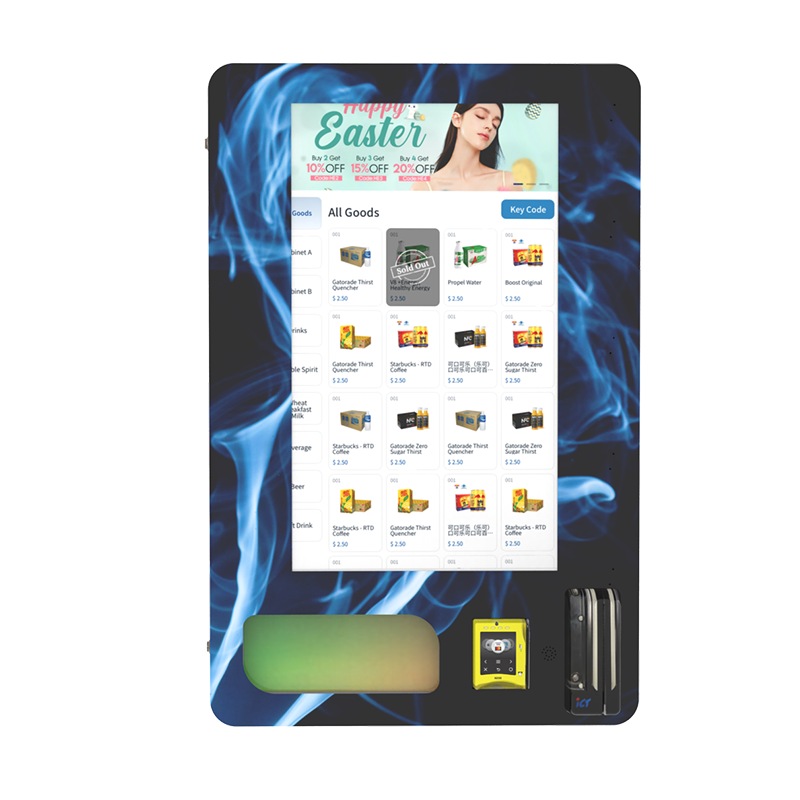
A wall-mounted vending machine solves an obvious floor-space problem, but it creates questions a free-standing machine may not create. The mounting surface has to support the equipment under real loading, not just empty cabinet weight. The fixing method must be suitable for the wall. Customer controls and the collection point also need to remain practical at the final mounting height.
A current Zhongda Smart 32-inch wall-mounted vending machine is listed at approximately 70 kg before considering the final merchandise configuration. That number is not a mounting instruction; it is the beginning of the site calculation. The wall, anchors, backing, service forces, and loaded condition still need to be reviewed for the actual installation.
Outdoor or Semi-Exposed Placement Is an Equipment Decision
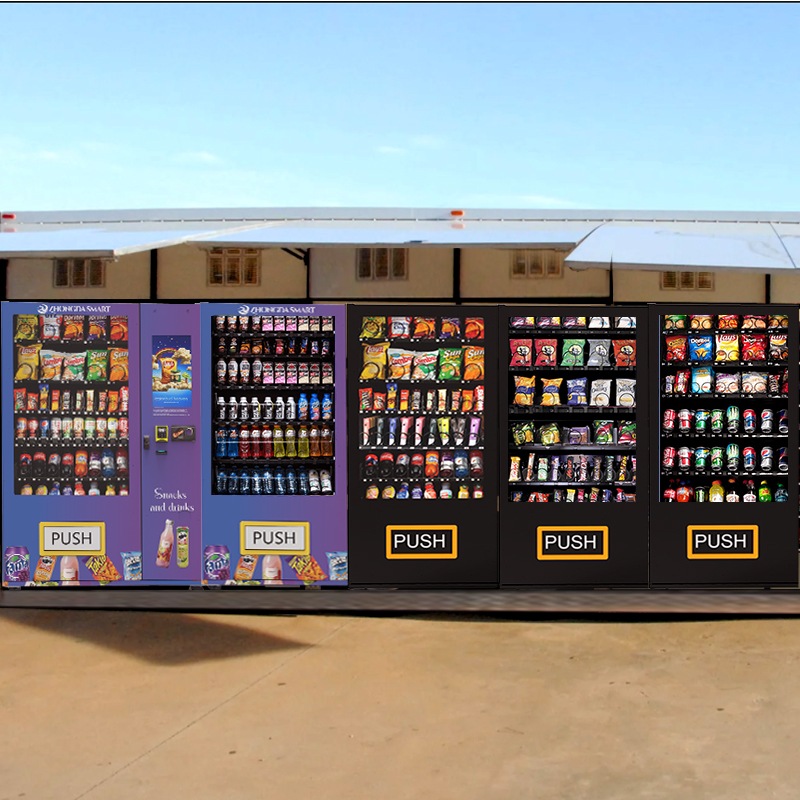
I would not make an indoor machine “outdoor” by placing a small canopy over it after delivery. Direct sun, rain, wind-driven moisture, dust, condensation, corrosion, temperature extremes, drainage, vandalism, and electrical protection can all change the machine specification.
Even a sheltered machine can see very different thermal conditions from the air around an indoor machine. The refrigeration system has to reject heat effectively, and the display, payment device, gaskets, vents, locks, and cabinet finish all live in the same environment.
This is a good example of where vending machine regulations and engineering meet. The permit reviewer may focus on electrical or placement issues; the operator has to make sure the machine can actually survive the conditions after approval.
What to Check Before Ordering a Vending Machine
The machine should not be the first fixed decision in a vending project. I would freeze the merchandise, site facts, basic permit path, and payment architecture before freezing the hardware.
That does not mean waiting for every administrative step to finish before talking to a manufacturer. It means knowing which technical questions still have the power to change the machine.
1Define the Merchandise Precisely
“Snacks,” “fresh food,” and “cosmetics” are not engineering specifications.
For every important SKU, record the retail package length, width, height, weight, required storage condition, whether it has to stay upright, and whether the package can tolerate a drop.
If a product has a fragile lid, soft box, glass bottle, rigid bowl, delicate presentation, or irregular shape, that should affect the dispensing system.
| Information I Would Send the Manufacturer | Example | What It Can Change |
|---|---|---|
| Package dimensions | 180 × 120 × 65 mm | Lane width, shelf spacing, elevator clearance, usable capacity |
| Packaged weight | 420 g | Motor selection, product delivery, shelf loading |
| Storage requirement | Refrigerated | Cooling system, control settings, sensor requirements |
| Number of SKUs | 24 | Shelf allocation and lane count |
| Target quantity per SKU | 8–12 units | Practical capacity rather than brochure capacity |
| Product orientation | Must remain upright | Dispensing and shelf design |
| Payment terminal | Specified by payment provider | Cutout, power, controller integration, network setup |
| Installation method | Floor standing / wall mounted | Cabinet structure, mounting drawing, weight review |
| Service clearance | Measured on site | Door swing, condenser access, refill access |
A product name alone is not enough to engineer a vending layout. Two salad bowls can differ by 100 mm in diameter. Two drink bottles can have the same volume and completely different geometry. One cosmetic box may stand in a spiral lane; another may need a conveyor or elevator.
2Measure the Delivery Path, Not Only the Final Space
Many placement problems begin with a correct measurement taken in the wrong place.
Measure the machine's final footprint, but also measure the narrowest door, hallway, elevator, turn, loading entrance, ramp, and threshold on the delivery route. Check ceiling restrictions and whether packaging changes the shipping dimensions.
A 1,300 mm cabinet that fits neatly against a wall is useless if the only door leading to that wall is 1,000 mm wide.
For heavy machines, confirm how the equipment will be moved after it is unloaded. “The delivery company will handle it” is not a site plan.
3Record the Electrical Requirement From the Final Model
Electrical planning should use the actual production specification, not an estimate copied from another model.
Record voltage, frequency, rated power, plug type, grounding requirement, refrigeration demand, cable length, and any dedicated-circuit requirement specified for the project. If a compressor or heating system is involved, ask whether startup conditions create a materially different load from steady operation.
Also look at ventilation. A refrigerated vending machine moves heat from the cabinet interior to the surrounding space. Blocking condenser airflow may not cause an immediate failure, but it can produce weak cooling, higher energy use, component stress, and repeated service calls.
4Choose the Payment System Before the Cabinet Is Finished
A rectangular hole marked “card reader” is not a payment strategy.
Confirm the terminal model, payment provider, communications method, power requirement, controller interface, physical mounting, antenna location, and responsibility for account activation. The terminal should be part of the machine specification before the front panel is finalized.
This is especially important with cashless vending. The operator may need a different device for card acceptance, contactless payment, QR transactions, or another payment method. The right hardware depends on the actual service arrangement.
5Decide Who Owns Every Approval
Permit delays often happen because everyone assumes another party is handling the paperwork.
| Item | Responsible Party | Status | Evidence to Keep |
|---|---|---|---|
| Business approval | Operator | Open / Complete | License or registration record |
| Vending permit | Operator | Open / Complete | Permit number and renewal date |
| Food approval | Operator / food business | Open / Complete | Approval and inspection record |
| Property authorization | Property contact | Open / Complete | Signed agreement or written authorization |
| Electrical work | Site / contractor / operator | Open / Complete | Work record and inspection where required |
| Insurance certificate | Operator | Open / Complete | Current certificate |
This is a much better project tool than one line called “permits.”
Need a Permit-Ready Machine Specification?
Send Zhongda Smart your product dimensions, required storage condition, preferred payment hardware, installation type, machine quantity, and any documentation requested for the project. The machine configuration can then be discussed around the actual operating requirements instead of a generic cabinet.
Discuss Your Machine Configuration → OEM and ODM configuration is available for commercial vending projects.Food and Refrigerated Vending Need a Stronger Permit File
Food vending is where a machine specification stops being a simple list of features and starts becoming part of the operating control system.
A sealed candy bar sitting at room temperature does not create the same failure consequence as a packaged sandwich that depends on refrigeration. Once food safety depends on temperature, the machine's sensor, controller, refrigeration system, alarm behavior, and vending logic matter.
When the Machine Needs to Stop Selling
One widely used food-safety reference is the FDA Food Code. The current full edition is a model code rather than an automatic rule for every installation, so the applicable authority still determines what governs a particular project.[2]
Section 4-204.111 addresses vending machines that sell time/temperature control for safety food. It requires an automatic control that prevents vending under specified failure conditions. The same section provides a practical post-service benchmark: in a refrigerated vending machine covered by the provision, ambient air may not remain above 41°F (5°C) for more than 30 minutes immediately after the machine is filled, serviced, or restocked. For covered hot-holding equipment, the benchmark is 135°F (57°C) with a period of no more than 120 minutes immediately after filling, servicing, or restocking.[2]
Those numbers are useful because they force a better equipment conversation.
Instead of asking only, “Can this machine cool to 4°C?” ask:
- Where is the temperature sensor mounted?
- What condition triggers an alarm?
- What condition triggers a vending lockout?
- Does the lockout survive a restart?
- What happens after a power failure?
- Can an operator override the safety state?
- Is the event recorded?
- Can remote monitoring send a warning?
- How is the machine returned to service?
This is the difference between a refrigeration feature and a refrigeration control plan.
Monitoring Alone Is Not a Fail-Safe
A temperature display is useful. A cloud alert is useful. A message sent to an operator's phone is useful. None of those functions automatically means that unsafe product cannot still be purchased.
If the food plan requires vending to stop when conditions fall outside an allowed state, the machine needs logic that actually stops the transaction or prevents the affected selection from being sold.
I would want that behavior documented in the final functional specification. It should not exist only as a sales promise.
Refrigeration Range Is Not the Same as Food Approval
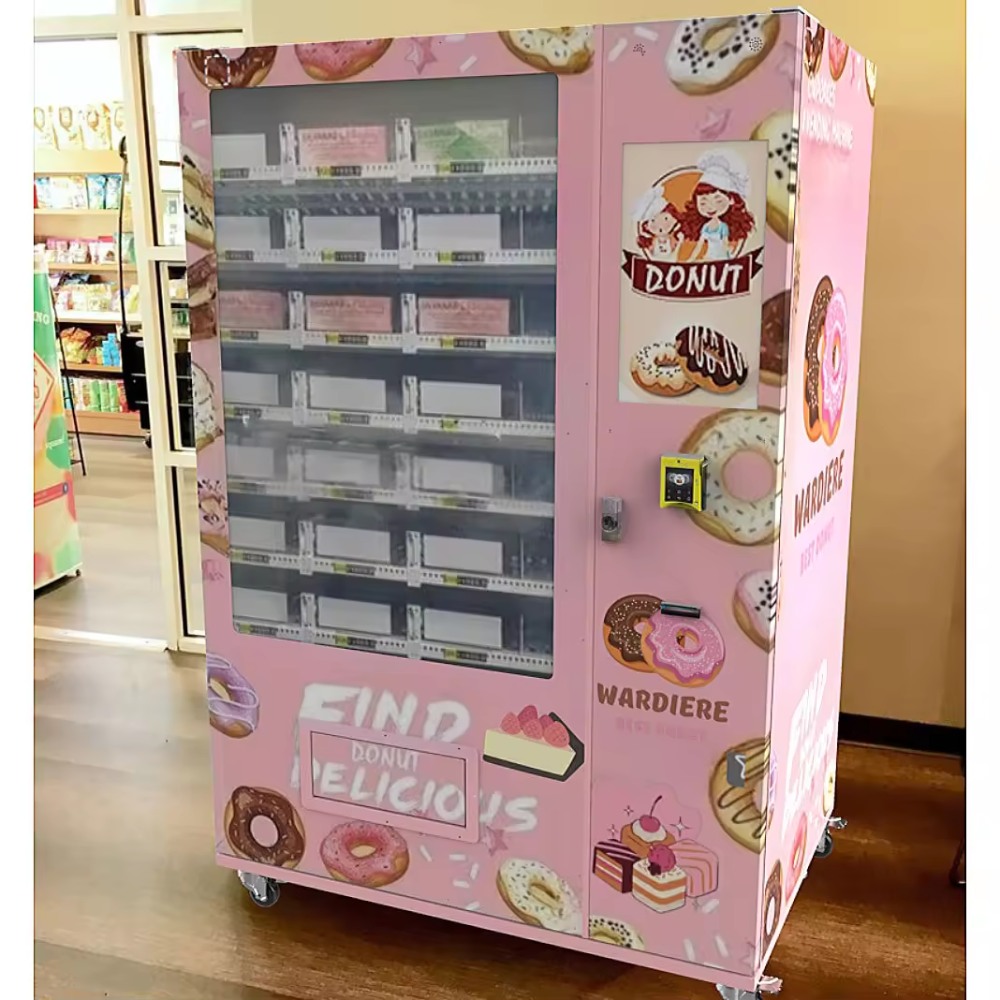
Zhongda Smart's ZD-LS-22 refrigerated elevator vending machine is currently listed with a 3–12°C operating range, 500 W rated power, a 22-inch display, approximately 350 kg machine weight, 4G/Wi-Fi/LAN connectivity, and a configuration-dependent capacity of 360–800 items.
Those are equipment specifications, not a statement that every product can be safely held at any point in that range.
The actual setpoint has to follow the product. A sandwich, salad, dessert, dairy item, beverage, and packaged meal may not share identical storage conditions. If products with different requirements are loaded into one cabinet, the operator must confirm that one operating condition works for the entire mix.
Controlled Delivery Can Matter as Much as Cooling
Food quality is not only a temperature issue.
A rigid salad bowl, cupcake clamshell, meal box, dessert cup, or sandwich package can be damaged by a long uncontrolled drop. The customer sees the result, not the mechanism.
If I were choosing for products where appearance matters, I would rank controlled delivery above maximum theoretical capacity. A machine that holds 100 more items but produces crushed corners, shifted lids, refunds, and cleanup visits can be a poor commercial decision.
Elevator delivery reduces the uncontrolled fall distance by bringing the collection platform closer to the shelf level. It does not make weak packaging safe, so the actual product package should still be tested before production.
Cleaning Has to Be Possible in Real Life
Permit documents for food equipment can look excellent while the physical machine remains frustrating to clean.
Before ordering, look at the inside corners, shelf removal, pickup compartment, condensation areas, door seals, drainage path, refrigeration access, and areas underneath product trays. Ask how spilled liquid is removed. Ask whether the collection box can be cleaned without dismantling half the cabinet.
The person servicing the machine should be able to reach the places where food debris actually ends up.
Write the Restocking Procedure Before Opening
A simple operating procedure for a refrigerated vending machine should cover:
- Who is authorized to restock
- How incoming food is checked
- Product dating and expiration control
- First-in, first-out stock rotation
- Temperature checks during service
- Maximum service-door-open time where relevant
- Cleaning schedule
- Response to a power outage
- Response to a refrigeration fault
- Disposition of product after a temperature excursion
- How the machine is returned to selling status
A strong food vending permit file connects the machine with the operating procedure. The hardware is only one half of the system.
Accessibility, Electrical, Payment, and Placement Can Change the Final Machine
Some of the most expensive vending problems are created outside the product compartment. The machine fits the merchandise, but the payment terminal is too high. The cabinet cools properly, but the condenser is boxed into a recess. The site owner approved the location, but the nearest circuit cannot support the planned equipment. The touchscreen is easy to use, but a planter blocks the approach.
These are installation problems, and they are much cheaper to solve on a drawing.
Accessibility Is a Customer-Path Question
One established accessibility standard provides a useful measurable benchmark for equipment planning. For unobstructed reach, it uses a range from 15 inches minimum to 48 inches maximum above the finished floor or ground. Its requirements for applicable operable parts also specify one-hand operation without tight grasping, pinching, or twisting, and a maximum activating force of 5 pounds.[3]
Those figures should be treated as a design reference unless that specific standard governs the project. The responsible authority determines what applies to a particular installation.
The more useful lesson is broader: measure every part the customer actually uses.
- Product-selection controls
- Touchscreen buttons
- Card or contactless reader
- Cash and coin interface if present
- Refund control
- Receipt point
- Keypad
- Pickup door
A reachable screen does not help much if the payment terminal sits well above it. A reachable terminal does not solve a pickup door positioned behind a deep obstruction.
Measure the Area in Front of the Machine
Accessibility can be lost after a perfectly reasonable installation.
Trash cans, promotional displays, queue barriers, stored cartons, furniture, merchandise racks, or cleaning equipment can gradually narrow the approach. I would take a photograph of the intended clear area when the machine is commissioned and include it in the site file.
This is also useful for ordinary customer service. A vending machine is easier to use when customers can approach it directly, stand in front of the screen, and step away without entering a crowded circulation path.
Electrical Planning Starts With the Nameplate Specification
The electrical file should include rated voltage, frequency, power, plug type, grounding, cable routing, and any installation instructions supplied for the final machine.
For refrigeration, also look at:
- Compressor startup behavior
- Clearance around the condenser
- Heat accumulation around recessed installations
- Condensation management
- Possibility of accidental unplugging
- Access to disconnect power for service
I would avoid relying on extension cords or temporary adapters as part of a permanent commercial installation unless the responsible professional has specifically accepted that arrangement.
Cashless Payment Has Its Own Security Responsibilities
Payment security is not solved simply because the machine contains a branded card reader.
PCI DSS provides baseline technical and operational requirements designed to protect payment account data and applies to entities that store, process, or transmit cardholder data or can affect the security of the cardholder-data environment.[4]
For a vending operator, I would settle these questions before cabinet production:
- Which payment terminal will be used?
- Who provides the merchant account?
- Who activates the terminal?
- Which network does it use?
- Does card data pass through the vending controller?
- Who manages terminal software and security updates?
- What happens if the terminal is replaced?
- Who carries the ongoing payment-compliance responsibility?
This is why I would choose the payment provider before the cabinet faceplate is finalized rather than treating payment as a last-week accessory.
Wireless Hardware Should Be Identifiable
Modern vending machines commonly include Wi-Fi, cellular, Bluetooth, or other radio-frequency hardware. Equipment-authorization rules can apply to RF devices before marketing or import, and the FCC equipment-authorization program is one example of a formal system that requires applicable devices to meet technical requirements.[5]
For procurement records, keep the exact model of the communication module rather than writing only “4G” or “Wi-Fi.” If a module is substituted during production, record the substitution.
That becomes useful later when troubleshooting connectivity, reviewing documentation, replacing hardware, or answering a compliance question about the final machine.
Service Clearance Is Part of Placement
A machine that looks great against a wall can become miserable to repair if the door cannot open fully or the refrigeration system cannot be accessed.
The site survey should record:
- Machine width and depth
- Full door swing
- Required rear or side ventilation space
- Customer standing area
- Electrical outlet position
- Network access where used
- Space needed to remove major service components
This is a place where a little extra floor space can save hours of vending machine repair labor later.
How Much Does a Vending Machine Permit Cost?
There is no honest universal number for vending permit cost. A project may involve one modest registration, or it may involve several approvals plus electrical work, inspection, insurance documents, structural changes, and recurring renewals.
I would separate the permit fee from the cost created by permit requirements. They are not the same.
| Cost Category | Typical Items | Why Operators Miss It |
|---|---|---|
| Business approvals | Business registration, vending registration, operating license | Attention stays on the machine purchase price. |
| Product-related approval | Food review, sanitation documentation, product-specific requirements | The merchandise is changed late in the project. |
| Site requirements | Property review, site documentation, drawing approval | Property requirements are assumed to be included in the government permit. |
| Technical work | Electrical work, new circuit, wall reinforcement, anchoring | These are not permit fees, but they may be necessary to pass review. |
| Inspection | Initial inspection, testing, reinspection | The budget assumes the first inspection is the only visit. |
| Insurance and documents | Certificates, endorsements, professional documents | Requirements are discovered after the site contract is signed. |
| Renewal | Permit renewal, registration renewal, inspection renewal | Only startup costs are included in the ROI calculation. |
Use a Planning Allowance Until the Real Fees Are Known
For early budgeting, it is reasonable to create an internal allowance. It should be clearly marked as a planning number, not presented as an official fee.
| Illustrative Planning Item | Example Allowance |
|---|---|
| Business and vending registrations | $200 |
| Product or food review | $300 |
| Inspection and documentation | $150 |
| Electrical or mounting preparation | $450 |
| Insurance / administrative documents | $100 |
| Contingency | $300 |
| Illustrative project allowance | $1,500 |
These amounts are not official prices and should not be used as a substitute for the actual fee schedule. Their purpose is to prevent an early financial model from pretending that approvals and site preparation cost nothing.
Delay Can Cost More Than the Application
Suppose a machine is expected to average $55 in gross daily sales, but the opening is delayed 30 days because the required electrical change was discovered after delivery.
$55 × 30 days = $1,650 in delayed gross-sales opportunity.
That is not $1,650 in lost profit. Product cost, location commission, payment fees, labor, tax, and other expenses still matter. It does show why saving $100 on permit preparation while risking a month of delay is poor project economics.
Can a Vending Machine Still Be Profitable After Permit Costs?
Yes, but the permit fee is rarely the biggest long-term variable.
Location quality, transaction volume, product margin, commission, replenishment labor, spoilage, payment fees, service calls, machine uptime, and inventory turnover usually matter more over the life of the project.
Permit planning affects profitability indirectly. It can delay the first sale, force machine modifications, limit product choices, or create an unexpected installation cost. That is why I include it in the installed investment rather than treating it as administrative overhead that lives somewhere else.
A Better ROI Model Uses Scenarios
The simplest useful model starts with:
Total Installed Investment = Machine + Customization + Freight + Installation + Permit-Related Cost + Initial Inventory + Launch Reserve
Then:
Monthly Operating Contribution = Sales − Product Cost − Location Cost − Payment Fees − Connectivity − Service − Spoilage − Other Operating Expense
And finally:
Estimated Payback = Total Installed Investment ÷ Monthly Operating Contribution
Assume, only for illustration, that the complete installed investment is $6,200.
| Illustrative Scenario | Monthly Sales | Operating Contribution | Approximate Payback |
|---|---|---|---|
| Weak location | $1,600 | $350 | 17.7 months |
| Base case | $2,500 | $820 | 7.6 months |
| Strong location | $3,400 | $1,260 | 4.9 months |
These are examples, not promised returns. A real calculation needs the actual product margin, site fee, taxes, labor, route cost, downtime, spoilage, maintenance, financing, and permit expense.
Capacity Should Follow Sales Velocity
A large machine is not automatically the better investment.
If a 600-item cabinet is stocked in a location that sells 15 items per day, much of the inventory may sit for weeks. A smaller machine with faster inventory turns can require less capital, less occupied space, less stock, and less handling effort.
If I were choosing between capacity and product fit, I would choose product fit first. Capacity is useful only when the location can sell through it.
What to Put in a Vending Machine Permit Application File
A reviewer should not have to reverse-engineer the project from a sales brochure.
I would prepare one clean digital folder for the exact machine, with the exact product plan and the exact installation.
1. Final Equipment Specification
The equipment sheet should contain:
- Manufacturer
- Final model number
- Machine type
- Cabinet dimensions
- Empty weight
- Expected loaded weight where relevant
- Rated voltage and frequency
- Rated power
- Refrigeration specification
- Temperature operating range
- Dispensing method
- Payment hardware
- Network or communications hardware
- Mounting information where applicable
If the machine is custom, attach the final approved drawing rather than a standard-model drawing from the beginning of the quotation process.
2. Product List
List the merchandise categories and identify anything that requires refrigeration, heating, identity control, special handling, or a particular package orientation.
For food, include storage conditions and the intended service frequency. For non-food products, include any product-specific sales conditions that affect unattended retail.
3. Site Plan
A basic plan should show the machine footprint, nearby walls, customer approach, outlet location, doorways, service clearance, ventilation clearance, and mounting points if relevant.
It does not have to be decorative. It has to be understandable.
4. Operating Procedure
For a simple dry-goods machine, this may be brief. For a refrigerated food machine, the procedure should cover restocking, cleaning, temperature verification, expiration control, alarms, product disposal, and restart after a fault.
5. Equipment and Component Documentation
Keep the documents that apply to the actual configuration, especially if the final machine contains a different payment terminal, wireless module, controller, power supply, refrigeration assembly, or verification device from the base model.
6. Property Authorization
Keep the signed location agreement or written authorization in the same folder. The approved machine position should be clear enough that a later property manager can understand what was agreed.
7. Insurance Records
If the property requires a particular certificate or endorsement, obtain the exact wording before installation rather than after the machine is already on site.
A Folder Structure That Scales
One machine can be managed from memory. A fleet cannot.
- 01 — Business Documents
- 02 — Vending Permit
- 03 — Property Agreement
- 04 — Equipment Specification
- 05 — Product Information
- 06 — Food Safety
- 07 — Electrical / Mounting
- 08 — Payment / Connectivity
- 09 — Insurance
- 10 — Inspection Records
- 11 — Renewals
- 12 — Repairs and Configuration Changes
That file structure becomes surprisingly valuable when the same machine model exists in several different configurations.
How to Prepare for a Vending Machine Inspection
The inspection should not be the first moment anyone compares the installed machine with the approved documents.
Do a pre-inspection while there is still time to correct something.
Confirm Machine Identity
Check the model number and configuration against the application file.
If production changed a controller, card terminal, refrigeration system, wireless module, cabinet dimension, or mounting method, decide whether the documentation also needs to be updated.
Confirm the Physical Installation
- Machine is stable and level
- Required anchors are installed
- Electrical cable is protected
- Grounding is correct
- Ventilation space is open
- Service door can open fully
- Customer approach is clear
- Payment terminal is secure
- Pickup compartment operates freely
- Required labels or permit display are present
Test the Sale, Not Just the Screen
Run real transactions.
- Normal cashless purchase
- Contactless purchase where enabled
- Cash purchase where enabled
- Sold-out selection
- Failed-vend response
- Refund path
- Network interruption behavior
- Temperature alarm or safety logic where applicable and safe to test
A machine can pass a boot-up check and still fail as a retail system.
Photograph the Finished Installation
I would photograph the machine from the front, both sides, the electrical connection, clearance around vents, customer approach, labels, permit display, and mounting points if visible.
Those images give the operator a baseline. If furniture later moves into the clearance zone or the electrical arrangement changes, the original condition is documented.
What I Would Ask the Vending Machine Manufacturer to Put in the Permit File
This is where a machine manufacturer can add real value.
A legal summary copied from the internet is less useful than an accurate drawing of the machine being shipped. Operators need the manufacturer to control technical information well enough that the final documentation matches the final hardware.
Zhongda Smart manufactures and customizes vending equipment using spiral delivery, elevator delivery, lockers, refrigeration, touchscreen interfaces, remote management, payment integration, and project-specific cabinet formats. Buyers who need deeper changes can also review the company's OEM custom vending machine options.
| Document or Data | Why I Would Want It Before Installation |
|---|---|
| Final model number | Keeps the permit and inspection record connected to the actual machine. |
| Final dimension drawing | Confirms footprint, height, service door, mounting points, and site clearance. |
| Empty machine weight | Helps with delivery planning and basic structural review. |
| Expected loaded weight | Useful for mounting, floor loading, relocation, and handling decisions. |
| Voltage and frequency | Lets the site confirm the correct electrical supply. |
| Rated power | Supports circuit planning and comparison with available electrical capacity. |
| Refrigeration specification | Connects the machine to the actual product-storage requirement. |
| Temperature-control logic | Clarifies alarms, lockout, restart, and fault behavior for food projects. |
| Payment terminal model | Avoids late cabinet modification and payment-compatibility disputes. |
| Wireless module | Creates a record of the communications equipment actually installed. |
| Dispensing system | Confirms how the selected product reaches the pickup area. |
| Final configuration sheet | Creates one permanent record of what was manufactured. |
A Generic Catalog Page Is Not a Final Specification
Custom vending equipment often changes between the first inquiry and production.
A buyer may add a larger screen, a different card terminal, a refrigeration package, remote telemetry, a different plug, an elevator, wall mounting, special shelves, verification hardware, custom lighting, or a revised cabinet.
Every one of those changes can affect dimensions, weight, power, wiring, documentation, service clearance, or the way the machine is reviewed.
I would approve production only against a final specification with a revision date. If the hardware changes after that point, review the changed component before shipment.
The Machine Specification Should Be Product-Led
This is one of the most important manufacturing decisions in the entire project.
A buyer sometimes asks for “the biggest capacity.” That sounds sensible until the real product is introduced. Large sandwich boxes need more vertical spacing than candy bars. Wide bowls consume shelf width. Glass bottles may need different delivery protection from flexible packages. A wall-mounted beauty machine has very different product geometry from a snack cabinet.
The usable capacity is therefore a result of the merchandise and delivery system, not only the cabinet volume.
Zhongda Smart's current refrigerated elevator specification is a good example: the published capacity is a range rather than one fixed quantity because the final number changes with package dimensions and internal layout. That is the more honest way to present vending capacity.
One Example of a Practical Configuration Decision
Suppose a buyer plans to sell 24 fresh-food SKUs. Each SKU needs 10 units in stock. The target capacity is therefore 240 products.
If the packages are compact sandwich boxes, the cabinet may have enough room with reasonable shelf spacing. If half of those products are large salad bowls, the same numerical target may require a completely different layout. The operator can either accept fewer units per SKU, reduce the number of SKUs, increase cabinet size, or choose another delivery architecture.
That decision should happen before production, not after a permit drawing has already been filed.
A Machine That Fits the Space Can Still Be Hard to Service
I would pay particular attention to front clearance.
A vending cabinet may physically fit between two walls while the main door cannot open far enough for refrigeration service or tray removal. This is not a rare theoretical problem. It is an ordinary measurement problem.
On the site sheet, I would record:
- Cabinet width
- Door width
- Required door opening angle
- Space needed to remove shelves
- Condenser access
- Distance to the nearest wall, column, or fixture
That one drawing can prevent a relocation later.
Common Vending Machine Permit Mistakes That Cost More Than the Permit
Buying the Machine Before Deciding What It Will Sell
This is the easiest expensive mistake.
A buyer orders a refrigerated snack machine, then later decides that fresh meals will be the main revenue source. The original cabinet may cool, but that does not mean the temperature controls, sanitation design, shutoff behavior, shelving, or operating procedure are suitable for the new product plan.
Product classification comes first.
Assuming a Machine Certificate Is the Operating Permit
Equipment documentation can show that a machine or component meets a specified technical requirement. An operating permit answers a different question.
Keep the two concepts separate in the purchasing file.
Assuming the Property Agreement Solves Every Approval
A signed location contract is important, but it does not automatically satisfy business licensing, food rules, electrical work, accessibility, or other regulatory obligations.
The property owner controls the site. The responsible authority controls the applicable permit.
Adding the Payment Terminal After Delivery
This often creates ugly brackets, new wiring, incorrect cutouts, weak antenna placement, or avoidable controller work.
Choose the terminal early.
Treating Refrigeration as One Temperature Number
“It reaches 4°C” is not a complete fresh-food plan.
Ask what happens during failure. Ask what happens after restocking. Ask what the controller does when the sensor reports a problem. Ask whether the machine can keep selling.
Ignoring Loaded Weight
The shipping document usually tells you the machine weight. The installation may need the loaded weight.
Hundreds of drinks, glass bottles, boxed products, or other dense merchandise can add substantial mass. That matters for moving, wall mounting, floor loading, anchoring, and tip stability.
Measuring Only the Installation Area
Measure the whole route from truck to final position.
The door you forget is usually the one the machine has to pass through.
Using an Indoor Machine in an Exposed Position
Weather exposure should be part of the purchase specification. Water, heat, sunlight, dust, condensation, corrosion, and wind-driven debris all change the operating environment.
A roof above the machine does not automatically turn an indoor cabinet into an outdoor product.
Failing to Record Repairs
A repair can quietly change the machine specification.
If a technician replaces a temperature controller, wireless modem, payment terminal, main board, refrigeration component, safety switch, or power supply, record the new part number and date.
That makes future service and inspection much easier.
Forgetting Renewal Dates
A vending permit is not necessarily solved forever because the machine passed its first inspection.
When the document is issued, record its expiration date, renewal window, responsible person, required paperwork, and renewal fee.
Final Vending Machine Installation Checklist
Before Production Is Released
- Products and package dimensions confirmed
- Required storage condition confirmed
- Vending permit path confirmed
- Business approval requirements confirmed
- Food requirements confirmed where applicable
- Final site measured
- Delivery path measured
- Electrical specification confirmed
- Payment terminal confirmed
- Network method confirmed
- Machine dimensions confirmed
- Machine weight reviewed
- Loaded weight considered
- Mounting method confirmed where applicable
- Customer controls reviewed for accessibility
- Final production drawing approved
Before Delivery Day
- Site authorization is in writing
- Required electrical work is complete
- Outlet is tested
- Network or cellular signal is available where needed
- Delivery access is booked
- Doorways and corridors are clear
- Moving equipment is available
- Wall or floor preparation is complete
- Permit documents are available
- Installer has the final drawing
Immediately After Placement
- Machine is level
- Machine is stable
- Anchoring is complete where required
- Power connection matches the specification
- Ventilation is unobstructed
- Customer approach is clear
- Payment terminal is secure and reachable
- Pickup point is accessible
- Service door opens fully
- No building fixture blocks maintenance access
Before Stocking
- Interior is inspected and cleaned
- Product trays match actual packages
- Spirals, belts, lockers, or elevator are tested
- Prices are entered correctly
- Refrigeration reaches the planned operating state
- Temperature display is checked where applicable
- Remote monitoring communicates
- Payment terminal is activated
- Machine date and time are correct
Before the First Commercial Sale
- Required approvals are active
- Required permit or license display is installed
- Operator identification is visible where required
- Customer support contact is available
- Refund procedure is ready
- Product pricing is correct
- Food dates are checked where applicable
- Test transactions have passed
- Failed-vend behavior has been tested
- Remote monitoring is active
- Staff know how to shut the machine down if necessary
What Happens After Installation?
The permit lifecycle continues after opening day.
Relocation Should Trigger a Review
Moving the same machine can change the site agreement, electrical condition, customer approach, environmental exposure, mounting, insurance, and authority responsible for the operation.
Do not assume that approval tied to one installation follows the machine automatically.
Changing Products Can Change the Permit Problem
A dry-goods machine that begins selling refrigerated prepared food has changed in a meaningful way even if the cabinet itself is unchanged.
The same principle applies when a normal retail assortment is replaced with merchandise that has additional sales controls.
Review the approval whenever the product changes the storage, customer-verification, safety, or operating requirements.
Keep a Configuration Change Log
A useful maintenance record includes:
- Date
- Machine ID
- Fault
- Technician or responsible person
- Component removed
- Replacement component
- Software version where relevant
- Test performed
- Result
The larger the vending operation becomes, the more valuable this becomes. A fleet of visually identical machines can contain several different generations of payment terminals, controllers, refrigeration components, and communication modules.
A Practical Permit-First Buying Sequence
If I were setting up a new vending project, this is the order I would use.
- Define the merchandise. Record real retail package sizes, weights, storage needs, and product handling requirements.
- Define the commercial model. Decide who owns the machine, who operates it, how the site is paid, and who handles restocking and service.
- Confirm the approval path. Identify the vending machine license, food requirements, property approval, inspection, electrical work, and other applicable obligations.
- Survey the site. Measure the final space, delivery path, electrical supply, service area, mounting surface, ventilation, and customer approach.
- Choose the machine architecture. Select drop, spiral, conveyor, elevator, locker, refrigerated, heated, wall-mounted, or another format according to the merchandise.
- Choose the payment architecture. Confirm the terminal and provider before the cabinet panel is finalized.
- Prepare the final specification. Dimensions, power, cooling, payment, connectivity, mounting, product layout, and service clearance should all be on the same revision.
- Use that specification for review. The permit file and the factory should be describing the same machine.
- Freeze the configuration. Record later substitutions instead of making silent changes.
- Complete site preparation. Electrical work, reinforcement, clearances, networking, and access should be ready before delivery.
- Commission the machine. Test vending, payment, faults, refrigeration, monitoring, and customer access.
- Open only when required approvals are active.
- Track renewals, repairs, and relocations.
This sequence may feel slower than ordering a machine on the first day. It usually becomes faster once real production, shipping, site preparation, and inspection are included in the calendar.
What I Would Prioritize When Choosing the Machine
Vending machine brochures naturally emphasize screen size, number of selections, product capacity, and appearance. Those features matter. They are not the order I would use for a permit-sensitive project.
I would rank the decision like this:
- Product compatibility
- Safety and permit compatibility
- Site compatibility
- Dispensing reliability
- Temperature performance where needed
- Payment compatibility
- Serviceability
- Remote management
- Practical capacity
- Branding and advertising features
A 49-inch screen does not compensate for a delivery mechanism that damages the product. A huge cabinet does not compensate for an electrical problem. A beautiful custom wrap does not compensate for a card reader that cannot be activated.
That is why a custom-machine conversation should begin with the merchandise and site rather than the graphics.
Frequently Asked Questions
Do you need a permit for a vending machine?
Often, yes. The exact requirement depends on the business activity, merchandise, machine configuration, and installation. A Vending Machine Permit or vending registration may be required together with business approval, food requirements, property permission, electrical work, inspection, accessibility, or product-specific requirements. Confirm the full approval path before the machine starts selling.
Can I install a vending machine before the permit is approved?
Do not assume that physical delivery, installation, stocking, and commercial operation are treated the same way. A project may allow delivery before sales begin, while another may require inspection before the machine is stocked or energized. Confirm the sequence before scheduling the installation and do not operate the machine until required approvals are active.
Does every vending machine need a food permit?
No. Food requirements depend on what is sold and how it is stored. A machine selling shelf-stable packaged products has a different risk profile from one selling refrigerated sandwiches, salads, prepared meals, dairy products, or hot food. Fresh-food projects normally require more attention to temperature control, sanitation, stock rotation, failure response, and inspection.
How much does a Vending Machine Permit cost?
There is no universal permit fee. The project can include business registration, vending licensing, food review, inspection, electrical work, structural preparation, property documents, insurance, and renewal costs. Obtain the actual fee schedule for the installation and keep a contingency allowance for technical changes discovered during review.
What documents should I get from the vending machine manufacturer?
Ask for the final model number, dimension drawing, machine weight, electrical rating, refrigeration information, temperature-control details where relevant, dispensing method, payment-hardware information, communications hardware, mounting instructions, ventilation requirements, service clearance, and the applicable documentation for the exact machine configuration.
Does a cashless vending machine need extra approval?
Cashless payment may not create a separate vending permit by itself, but it creates additional technical and payment-security responsibilities. Confirm the terminal, payment provider, merchant setup, network connection, activation procedure, data-security responsibilities, and applicable PCI obligations before production.
Do I need a new permit when I move the machine?
Possibly. Relocation can change the property authorization, electrical installation, mounting, customer access, environmental exposure, and the authority responsible for the vending activity. Review the requirements before moving the machine rather than assuming the original permit automatically follows it.
Can changing the products affect an existing vending permit?
Yes. A substantial change in merchandise can change the approval requirements. Moving from shelf-stable products to temperature-controlled prepared food, or introducing merchandise with additional sales controls, can create new operating conditions. Review the permit whenever the product changes storage, safety, verification, or handling requirements.
Final Decision Before Installation
The useful question is not simply, “Do I need a vending permit?”
The better question is: what must be approved about this business, this merchandise, this machine, and this installation before the first paid transaction?
That question changes the buying process in a productive way.
It puts the product before the cabinet. It brings the electrical load into the site survey. It makes temperature-failure behavior part of a fresh-food specification. It moves payment-terminal selection ahead of cabinet fabrication. It turns wall mounting into a structural decision instead of an installer improvisation. It makes service clearance a measurement instead of a guess.
It also gives the manufacturer a clearer job.
For a custom project, Zhongda Smart can work from actual product dimensions, required storage conditions, dispensing needs, payment hardware, network requirements, cabinet format, and installation information. That creates a much more useful production specification than choosing a machine by photo and fixing the details later.
I would consider the project genuinely ready when one folder can show the property authorization, final machine drawing, product plan, electrical information, payment configuration, relevant equipment records, operating procedure, inspection documents, and active Vending Machine Permit where required—and every document describes the same installation.
Sources and Technical References
- Small Business Administration — Launch Your Business: Licenses and Permits. Official business guidance explaining that licensing and permit requirements vary according to activity and location and identifying vending machines among regulated business activities. View official source
- Food and Drug Administration — Food Code 2022. Section 4-204.111 addresses automatic shutoff for vending machines selling time/temperature control for safety food and provides the 41°F (5°C), 30-minute refrigerated benchmark and 135°F (57°C), 120-minute hot-holding benchmark discussed above. View official source
- ADA.gov — 2010 Standards for Accessible Design. Sections 308 and 309 provide reach-range and operable-part criteria, including the 15-inch to 48-inch unobstructed reach range and 5-pound maximum operating force referenced as a design benchmark in this article. View official source
- PCI Security Standards Council — PCI Data Security Standard. PCI DSS provides baseline technical and operational requirements intended to protect payment account data. View official source
- Federal Communications Commission — Equipment Authorization System Information. Official information describing equipment-authorization requirements for applicable radio-frequency devices. View official source