Vending Machine Contract: Free Placement Agreement Template & Key Terms
A vending machine contract should state who owns the machine, where it may be installed, how the location is compensated, who handles service, and how either side can end the placement. In a free-placement arrangement, the host does not buy the equipment; the operator normally retains ownership and manages inventory, payments, maintenance, and eventual removal. Commission, electricity, refrigeration, cashless payment, custom branding, or exclusivity can make the agreement more detailed, but the basic job remains the same: remove uncertainty before equipment is installed. The guide below covers the commercial clauses that most directly affect daily vending operations, including commission calculations, access, repairs, downtime, relocation, reporting, termination, and a complete free placement agreement template that can be adapted to the actual project.
Planning a vending placement?
Settle the machine configuration before the placement agreement is finalized. Product dimensions, cooling, payment hardware, connectivity, branding, and service access can all change the terms that belong in the contract.
Review OEM Vending Machine Options Useful for standard, customized, pilot, and repeat-deployment vending projects.How Free Vending Machine Placement Works
“Free placement” is often misunderstood because the word free describes only one part of the transaction. It normally means the host is not buying the vending machine and is not paying an equipment-placement fee simply to have the machine installed.
The operator still makes a substantial investment. The machine has to be purchased or manufactured, configured, delivered, installed, stocked, connected to payment services, maintained, cleaned, monitored, and eventually removed or replaced. Inventory ties up working capital. Card payments create processing costs. Refrigeration increases operating requirements. A technician may need access at inconvenient times. None of those responsibilities disappears because the host paid zero dollars for the equipment.
The host also contributes something of commercial value. It provides the approved space, access to a customer population, reasonable service access, and often electricity. Depending on the arrangement, it may also provide network access, security, loading access, storage space, or promotional support.
That exchange is why a vending placement agreement should describe the obligations on both sides instead of saying only that the operator may “place a machine for free.”
Four commercial structures appear repeatedly
| Structure | Host Buys Machine? | Operator Pays Host? | Commercial Character | Main Issue to Define |
|---|---|---|---|---|
| Free placement, no commission | No | No recurring placement payment | The machine is primarily an amenity | Make clear that no commission was promised |
| Free placement with commission | No | Percentage of defined sales | Host participates in machine performance | Define the commission base precisely |
| Free placement with fixed site fee | No | Fixed recurring amount | Host receives predictable compensation | Operator carries more traffic risk |
| Hybrid arrangement | No | Fixed minimum plus variable payment | Useful where performance is already measurable | Reporting and reconciliation become more complex |
There is no reason to make the payment structure more complicated than the location justifies. An unproven site generally needs flexibility more than accounting complexity. A location with a reliable sales record can support more detailed terms because both sides have actual data to work from.
Free placement should not create uncertainty about ownership
Ownership deserves its own clause. The agreement should state that the vending equipment, attached operator-owned payment devices, internal parts, software-controlled equipment, and unsold operator inventory remain the operator’s property unless a separate written sale or transfer says otherwise.
This is particularly important when a machine is anchored or otherwise secured to the premises. Safety installation should not accidentally become an ownership question.
The host should not sell, pledge, dispose of, open, repair, modify, disconnect, or move operator-owned equipment without permission, except where immediate action is reasonably needed to prevent injury or significant property damage.
Clear ownership language also makes termination easier. When the relationship ends, the parties do not need to debate who owns the machine. They only need to schedule removal.

A placement agreement is also an operating document
The person who signs a vending machine contract may not be the person who deals with it later. A service technician needs to know when access is allowed. Accounting needs to know which sales number drives commission. A property manager needs to know who to contact after a power interruption. The operator needs to know whether a machine can be relocated without approval.
Good drafting makes those answers visible without requiring anyone to find an old email thread or reconstruct a verbal conversation.
For this guide, I’m prioritizing four practical outcomes: control of the equipment, understandable cash flow, workable service access, and an orderly exit. Those are the parts of the agreement most likely to matter after the initial excitement of installing the machine has passed.
One-Page Vending Placement Deal Sheet
Before working through a long contract, I’d settle the commercial deal on one page. It exposes disagreements while they are still easy to fix.
If the two sides cannot agree on the items below, adding another ten pages of legal wording will not solve the underlying problem.
| Deal Point | Agreed Terms |
|---|---|
| Operator legal name | ________________________________________ |
| Host legal name | ________________________________________ |
| Premises | ________________________________________ |
| Approved placement area | ________________________________________ |
| Machine quantity | ________________________________________ |
| Machine type/model | ________________________________________ |
| Equipment ownership | Operator / Host / Other: __________________ |
| Host compensation | None / Commission / Fixed Fee / Hybrid |
| Commission rate | ____________ % |
| Commission base | ________________________________________ |
| Commission payment frequency | Monthly / Quarterly / Other: ______________ |
| Electricity | Host / Operator / Other: __________________ |
| Network connection | Cellular / Wi-Fi / LAN / Other: ____________ |
| Service access hours | ________________________________________ |
| Product restrictions | ________________________________________ |
| Pricing control | Operator / Host / Agreed Rules |
| Initial term | ____________ months |
| Ordinary termination notice | ____________ days |
| Performance threshold | ________________________________________ |
| Exclusivity | None / Limited / Defined Category |
| Removal period after termination | ____________ days |
| Custom branding | Yes / No / Details: _______________________ |
| Special installation requirements | ________________________________________ |
This deal sheet is not a substitute for a signed agreement. Its value is speed. It forces the important commercial decisions into view before drafting becomes expensive or equipment has already entered production.
Vending Machine Contract Terms That Matter Most
Cornell Legal Information Institute describes a contract as an agreement between parties that creates mutual obligations enforceable by law, with basic elements that can include mutual assent, consideration, capacity, and legality. The exact legal requirements and interpretation can depend on the agreement and governing law, which is why a commercial template should be treated as a drafting starting point rather than universal legal advice.
For everyday vending operations, the following clauses deserve particular attention.
| Clause | Question It Should Answer | Common Problem |
|---|---|---|
| Parties | Which legal entities are entering the agreement? | A brand or building nickname is used instead of the proper entity |
| Premises | Where is placement authorized? | The contract says only “on the property” |
| Equipment | Which machines and accessories are covered? | No quantity, model, or asset schedule |
| Ownership | Who owns the equipment and inventory? | Ownership is assumed but never stated |
| Placement | Where exactly may the machine sit? | The machine can be moved to a poor location |
| Host compensation | Is the arrangement free, commission-based, fixed-fee, or hybrid? | Verbal promises do not match accounting |
| Commission definition | Which sales amount is multiplied by the rate? | “Gross sales” is undefined |
| Products | Who chooses what the machine sells? | The host requires products that do not fit the machine or margin |
| Pricing | Who sets retail prices? | One side controls pricing while the other bears the cost |
| Utilities | Who supplies electricity and connectivity? | Unexpected utility charges or disconnected machines |
| Access | When can the operator restock and repair? | The service promise is impossible to meet |
| Maintenance | Who performs repairs? | Host personnel attempt unauthorized repairs |
| Refunds | Who handles failed-vend complaints? | The host becomes the customer-service desk |
| Data | What reports can each party receive? | Commission reporting and confidential data become mixed together |
| Insurance | What coverage is required? | Copied insurance language does not fit the project |
| Damage | Who is responsible for damage caused by whom? | One party accepts every conceivable loss |
| Exclusivity | Can another vending operator install competing equipment? | The restriction is either useless or far too broad |
| Term | How long does the agreement last? | The term is longer than the equipment investment requires |
| Termination | How can either party leave? | There is no workable exit from a weak site |
| Removal | How will operator-owned equipment be retrieved? | Ownership is clear but access after termination is not |
| Notices | How are formal notices delivered? | Termination is sent to an outdated personal contact |
| Amendments | How can commercial terms change? | Verbal changes never reach operations or accounting |
Name the parties correctly
A surprisingly basic error is signing with the wrong name. The company name displayed on a building, website, invoice, or storefront may not be the legal entity that controls the premises or operates the vending business.
The agreement should use the full legal names of the parties and identify how each will be referred to throughout the document. If a parent company, management company, franchise entity, or property owner needs to approve placement, that relationship should be resolved before installation.
Describe the premises with enough detail to be useful
“One machine at Host’s facility” is technically descriptive but operationally weak.
Better language identifies the property and approved placement area. If the exact floor position is not known when the agreement is signed, the parties can approve it later through an installation sheet, photograph, floor plan, or written confirmation.
That record matters because vending performance is highly sensitive to visibility and access. A machine can remain inside the same building and lose much of its commercial value after being moved away from normal traffic.
Use an equipment schedule
The equipment section does not need to read like an engineering drawing, but it should be possible to determine what was authorized.
Useful fields include manufacturer, model, machine type, serial or asset number, refrigerated or ambient configuration, payment hardware, auxiliary cabinets, screen size where relevant, and any customized accessories.
If the serial number will not exist until production or installation, the agreement can permit it to be added later to the equipment schedule.
Commission, Rent, and Location Economics
A signed vending location is valuable only if the underlying economics work. Commission should therefore be calculated after the basic operating model is understood, not chosen simply because a percentage sounds reasonable.
The 2022–2023 Industry Census published by the NAMA Foundation and developed with Technomic estimated traditional vending sales of approximately $18.2 billion across about 2.9 million machines, with estimated average annual sales of $6,284 per machine for 2023. Those figures are useful as industry context, but they are not a forecast for an individual machine. A single placement can perform far above or below an industry average.
The same research estimated that approximately 75% of 2.89 million vending machines accepted cashless payments. Among machines taking cashless transactions, 94% accepted standard debit or credit cards and 88% offered contactless payment. That matters commercially because payment hardware, processing fees, transaction reporting, and connectivity increasingly belong in the same operating model as inventory and service.
Start with operating contribution, not gross sales
Gross sales are easy to understand, but they are not the number that decides whether a location is worth keeping.
Once the monthly contribution is estimated, simple equipment payback can be modeled:
Neither formula is an accounting profit calculation. They are planning tools. Taxes, financing, depreciation, owner compensation, overhead, failed inventory, unusual repairs, insurance, storage, and other costs may still need to be considered.
A simple location model
| Monthly Item | Lower-Volume Site | Established Site | Strong Site |
|---|---|---|---|
| Vending sales | $750 | $1,500 | $2,500 |
| Product cost at 45% | −$337.50 | −$675 | −$1,125 |
| Host commission at 10% | −$75 | −$150 | −$250 |
| Payment allowance at 4% | −$30 | −$60 | −$100 |
| Service allowance | −$180 | −$180 | −$180 |
| Maintenance/software allowance | −$90 | −$90 | −$90 |
| Illustrative operating contribution | $37.50 | $345 | $755 |
The model explains why location quality matters more than commission alone. At $2,500 in monthly sales, a 10% host share may fit comfortably inside the business. At $750, the same percentage is only one part of a much tighter equation.
Commission sensitivity is more useful than arguing over one percentage
When a location has no established sales history, I prefer to see how several commission levels behave under several sales outcomes.
The following table keeps product cost at 45%, payment cost at 4%, monthly direct service cost at $180, and maintenance/software allowance at $90.
| Monthly Sales | 0% Commission | 10% Commission | 15% Commission | 20% Commission |
|---|---|---|---|---|
| $750 | $112.50 | $37.50 | $0.00 | −$37.50 |
| $1,000 | $240.00 | $140.00 | $90.00 | $40.00 |
| $1,500 | $495.00 | $345.00 | $270.00 | $195.00 |
| $2,000 | $750.00 | $550.00 | $450.00 | $350.00 |
| $2,500 | $1,005.00 | $755.00 | $630.00 | $505.00 |
Illustrative planning model only. Actual cost structure, sales, taxes, processing fees, service expense, product margin, spoilage, maintenance, and other costs will vary.
This table also shows why a fixed site fee deserves more caution than a percentage of revenue. A percentage usually declines automatically when sales decline. Fixed rent does not.
Define the commission base before signing
The phrase “10% of sales” leaves too much room for interpretation.
Questions that should be answered include:
- Are refunds deducted?
- Are reversed card transactions deducted?
- Are chargebacks deducted?
- Are sales taxes collected from the customer excluded?
- Are operator-funded discounts excluded?
- Do promotional credits count as sales?
- Are cash and electronic transactions treated the same way?
- Does commission apply only to completed vend transactions?
A clean definition can be written once:
The commission formula then becomes straightforward:
Example monthly reconciliation
| Item | Example Amount |
|---|---|
| Recorded customer charges | $2,180 |
| Refunds and reversed transactions | −$55 |
| Taxes excluded under agreement | −$125 |
| Commissionable Vending Sales | $2,000 |
| Commission rate | 10% |
| Host commission | $200 |
The agreement should then say when the statement and payment are due. “Monthly” is less useful than “within fifteen days after the end of each calendar month.”
Use a performance exit for uncertain locations
An untested site should not be treated as though its future sales are already known.
A performance clause gives the operator a measurable way to redeploy equipment if the placement does not support the cost of servicing it.
The threshold should be based on the actual machine investment and operating cost, not copied from another route.
Use current market data as context, not as a promise
The newer NAMA Foundation census reported total convenience-services revenue of $31.1 billion in 2025, up from $26.6 billion in 2023, with an estimated average annual growth rate of 8.1% across that period. It also reported that vending remained the largest business line by revenue and number of businesses.
Those industry figures establish scale. They do not tell anyone what one lobby, warehouse, residential property, break room, or self-service kiosk will earn. Location-level underwriting still needs its own traffic, assortment, price, service, and cost assumptions.
Machine Ownership, Access, Power, and Relocation
Ownership should remain clear after installation
Large vending equipment often looks permanent once it has been installed, leveled, connected, branded, and stocked. Contract language should prevent appearance from creating confusion.
Unless the host is actually buying or leasing the equipment under a separate commercial arrangement, the vending machine contract should state that ownership remains with the operator.
That clause can cover:
- the main machine cabinet;
- attached side cabinets;
- cash and coin equipment owned by the operator;
- card terminals owned by the operator;
- network hardware supplied by the operator;
- operator-installed accessories;
- unsold operator inventory;
- replacement components installed during service.
Placement needs more precision than a street address
The address identifies the property. It does not identify the operating position.
For commercial purposes, a machine beside a busy employee entrance can be very different from the same machine around a corner behind a closed door.
A useful placement record can describe the position as:
“Ground-floor employee break area adjacent to the approved electrical outlet, in the position shown on the installation record attached as Exhibit A.”
This still allows normal practical flexibility without giving either side unlimited relocation rights.
Service clearance belongs in the installation conversation
A vending machine needs more space than its cabinet footprint.
The front door may need a wide opening arc. Shelves may slide outward. A technician may need to kneel beside the machine or access a refrigeration compartment. Air vents cannot be pressed against walls. Side modules may need clearance. A loaded unit may require specialized moving equipment during removal.
The approved space should therefore consider:
- cabinet width, depth, and height;
- front-door opening clearance;
- customer standing area;
- technician working area;
- ventilation clearance;
- electrical outlet position;
- network access where required;
- floor loading and level condition;
- delivery and removal path;
- doorway, elevator, or corridor restrictions on the moving route.
Power responsibility should be written down
A machine cannot meet sales or service expectations without reliable power. Refrigerated equipment makes the issue more important because an extended outage can create inventory and temperature-control concerns in addition to lost sales.
The agreement should state who provides electrical service, whether the outlet must remain dedicated, and what happens if the machine has to be disconnected.
For planned electrical work, reasonable notice is valuable. For emergencies, immediate disconnection may be necessary and should be permitted.
If electricity is billed separately to the operator, the reimbursement method needs to be specific. An undefined “utility fee” can easily become a later disagreement.
Do not give either side casual relocation rights
Moving a vending machine is not the same as moving a chair.
Loaded weight, leveling, glass, refrigeration, anti-tip restraints, electrical connections, payment terminals, internal product position, and cabinet alignment can all matter.
The commercial problem is just as important. Relocation to a low-traffic area may destroy the economics even when the new spot is only a short distance away.
A balanced clause can prohibit relocation without operator approval while allowing immediate movement where safety requires it. If the host permanently needs the original space, both sides can look for a reasonably comparable alternative location.
Anchoring needs advance approval
If the machine requires floor or wall anchoring, the parties should agree before installation on who approves drilling, where attachments may be made, and how approved penetrations will be handled after removal.
This is better resolved during site planning than when the installation crew has already arrived.
Restocking, Vending Machine Repair, Refunds, and Uptime
Service language is often where a pleasant sales promise becomes an unrealistic contract obligation.
“Machine will always be fully stocked and operating” sounds reassuring but ignores product shortages, access restrictions, network failures, card-terminal outages, replacement-part delays, vandalism, refrigeration faults, and sudden demand.
The contract should promise a professional service process, not a physical impossibility.
Define who controls inventory
Under a conventional operator-owned placement, the operator normally purchases the merchandise, decides loading quantities, rotates products, monitors expiration dates where applicable, removes unsaleable stock, and adjusts assortment according to demand.
The host can still impose reasonable restrictions. Those might include prohibited product categories, required categories, maximum prices, dietary policies, branding rules, or approved product lists.
When a restriction materially changes product cost or sales potential, it should be evaluated as part of the economics rather than treated as a harmless contract sentence.
“Appropriately stocked” is better than “always full”
A machine that sells slowly does not need the same service frequency as one that sells through popular rows every day. Remote inventory reporting can also change route scheduling.
Practical language could say:
This gives the operator responsibility without pretending every empty selection is a contract breach.
Different faults need different priorities
| Issue | Suggested Priority | Practical Service Approach |
|---|---|---|
| Immediate safety concern | Critical | Secure or disable equipment as soon as reasonably possible |
| Refrigeration failure involving temperature-sensitive products | Critical | Review promptly and address product safety before ordinary sales |
| Machine cannot complete transactions | High | Remote diagnosis first where available, then service visit as needed |
| Payment terminal unavailable but another payment method works | High | Check network, terminal, software, and processor status |
| Single selection will not vend | Normal | Disable selection remotely where possible and repair during service |
| One popular item is sold out | Normal | Use sales velocity to determine restocking priority |
| Cosmetic decal damage | Low | Schedule with normal maintenance unless branding is materially affected |
A vending service agreement can use expected response windows for serious issues, but I would avoid promising that every repair will be physically completed within a fixed number of hours regardless of access, parts availability, third-party payment services, network conditions, or the nature of the fault.
Remote monitoring improves diagnosis but does not replace service
Connected equipment can report information such as sales, inventory levels, connectivity state, or machine status depending on configuration. This can help an operator decide whether a truck roll is necessary and what a technician should bring.
It does not remove the need for cleaning, physical restocking, component replacement, refrigeration service, or onsite inspection.
For the contract, the useful distinction is between notification and resolution. A machine may report a fault instantly while the physical repair still requires access and a replacement component.
Give customers a visible refund path
Failed vends are inevitable over the working life of a machine. What damages trust is a failed vend with no obvious way to report it.
The operator should provide a visible contact method such as a phone number, email address, QR code, or service form. The agreement can make the operator responsible for legitimate refund requests relating to sales through operator-owned equipment.
This keeps the property staff from becoming an informal vending help desk.
Unauthorized repair should be prohibited
Host employees or unrelated contractors should not open the cabinet, alter wiring, replace vending parts, move payment equipment, change software settings, or bypass locks unless the operator has authorized the work.
Aside from safety and inventory concerns, unauthorized work can make fault diagnosis harder and may affect manufacturer or component warranty support.
Zhongda Smart’s current after-sales guarantee and service policy publishes a one-year warranty for equipment operated according to its stated conditions, together with spare-parts support for covered quality issues and remote technical assistance. An operator using manufacturer support should make sure the promises made to the host remain consistent with the equipment warranty and service process.
Planned maintenance should be permitted
Not every service visit is caused by failure. Preventive work can include cleaning condenser areas, inspecting moving parts, checking locks, reviewing sensors, checking product delivery, replacing worn components, updating approved software, and testing payment or connectivity functions.
The placement agreement should permit reasonable preventive maintenance access without requiring a new approval each time.
Payments, Connectivity, Software, and Data
Modern vending equipment is not only a steel cabinet with motors. Payment terminals, touchscreens, network modules, remote management, inventory reporting, digital advertising, refrigeration controls, and software can all affect the commercial agreement.
Decide who controls the payment environment
If the operator supplies and manages the payment terminal, the contract should normally leave merchant processing, transaction reconciliation, refunds, payment support, and processor relationships under the operator’s control.
Where the host requires a particular payment system or integration, the hardware and commercial responsibility need to be confirmed before equipment is ordered.
Changing a payment device can affect physical mounting, wiring, communication protocols, software, certification, transaction reporting, and recurring costs.
Say who pays processing costs
Payment processing is an operating cost just like inventory and service.
If commission is calculated on sales before card fees, state that. If the parties agree to deduct card fees before commission, state that instead.
The purpose is consistency. Accounting should be able to repeat the same calculation every month without asking how the original negotiator intended it to work.
Connectivity needs an owner
A connected machine may communicate through cellular service, Wi-Fi, wired networking, or another configured method.
The agreement should identify:
- who supplies the connection;
- who pays recurring communication charges;
- whether the host is required to provide network credentials;
- what happens when credentials change;
- whether a backup connection is permitted;
- who receives network-loss alerts;
- whether the machine can continue limited operation while offline.
I generally prefer responsibility to follow control. If the operator controls the modem and service account, network troubleshooting is easier to own. If the machine depends on the host’s network, the operator should not guarantee network uptime that it cannot control.
Separate operational data from confidential business data
A commission-based host may reasonably want machine-level sales records that verify its payment. That does not mean the host automatically needs access to the operator’s full route, product acquisition cost, supplier relationships, fleet performance, or customer information unrelated to the location.
The vending machine contract can distinguish among:
- machine sales data;
- inventory data;
- product performance data;
- diagnostic data;
- commission reports;
- payment records;
- customer information, if collected;
- advertising data;
- confidential operator information.
Digital screens create media rights
A large touchscreen can display product images, instructions, promotions, host messages, and third-party advertising.
If advertising is part of the project, the agreement should say who controls the content, whether host approval is required, whether paid advertising is permitted, who receives advertising revenue, and which party is responsible for rights to supplied logos, videos, trademarks, or other media.
Without that language, two parties can both assume they control the same screen.
Electronic signatures can simplify execution
Cornell Legal Information Institute notes that electronic-signature law recognizes electronic signatures and that a contract is not denied legal effect solely because it is in electronic form under the framework it describes. Specific execution requirements still depend on the document and applicable law.
From an operating standpoint, electronic execution can be useful when placements involve multiple managers, remote ownership, or repeated rollout locations. The signed copy should still be stored where operations and accounting can retrieve it.
Term, Termination, Exclusivity, and Equipment Removal
Match the contract term to the capital at risk
A standard machine that can be unplugged, collected, and placed elsewhere does not create the same stranded investment as a highly customized installation.
Custom cabinet graphics, host-specific software, specialized payment hardware, structural work, unusual product delivery systems, and extensive installation can justify a longer commitment because more of the initial investment becomes location-specific.
A practical structure might include:
- an initial 12-month term;
- a 60- to 90-day performance review;
- defined renewal periods;
- 30- to 60-day ordinary termination notice;
- faster termination for serious breach or safety issues;
- a separate sales-performance exit.
Those numbers are examples. A vending location contract should reflect the actual equipment investment and commercial arrangement.
Separate termination for convenience from termination for cause
Termination for convenience allows a party to end the relationship without proving that the other side did something wrong. It usually requires advance notice.
Termination for cause applies when the other party materially fails to perform an agreed obligation.
Possible cause events include:
- failure to pay commission after required notice;
- repeated failure to provide agreed service access;
- unauthorized disposal or modification of operator equipment;
- materially false sales reporting;
- persistent serious service failures after notice;
- a dangerous condition that cannot reasonably be corrected;
- operation becoming unlawful;
- material breach of a defined exclusivity obligation.
Where a breach can be corrected, a cure period is usually more commercially useful than immediate termination.
Do not hide automatic renewal
If the agreement renews automatically, the renewal period and notice deadline should be obvious.
A clause such as “renews for successive twelve-month periods unless either party gives thirty days’ written notice before the end of the current term” is much easier to manage than vague evergreen language buried in miscellaneous provisions.
Exclusivity should be narrow enough to understand
An operator investing in equipment and service may reasonably want protection from a directly competing machine being installed beside it.
The restriction should describe what is actually protected.
For example:
“During the Agreement, Host will not authorize another operator to install competing snack and beverage vending equipment within the designated employee break area.”
That is more precise than granting an operator exclusive rights over every form of automated retail, coffee service, staffed foodservice, smart locker, or future technology on the entire property.
A performance clause keeps weak sites from trapping equipment
Equipment has an opportunity cost. A machine producing minimal contribution at one site cannot simultaneously serve a stronger site.
For an unproven placement, a sales threshold is one of the cleanest ways to deal with that uncertainty.
The operator can have the right to remove the machine after a defined review period if sales fall below an agreed threshold. The host can have a parallel right tied to repeated material service failures.
Removal rights complete the ownership clause
Ownership is only useful if the operator can retrieve the asset.
The agreement should address:
- how many days the operator has to remove equipment;
- when removal access will be provided;
- who schedules building access;
- who pays ordinary removal expense;
- who repairs damage caused by negligent removal;
- how approved anchor points are handled;
- what happens if immediate removal is temporarily impossible.
Post-termination access should survive long enough for the machine to be collected.
Custom branding may justify an early-exit adjustment
Host-specific graphics and software can have little reuse value after relocation.
If meaningful custom costs are incurred at the host’s request, the parties can consider a declining unamortized customization amount instead of an arbitrary cancellation penalty.
For example, assume $1,200 of host-specific customization is allocated across 24 months. The amount declines by $50 for each completed month. If the host terminates for convenience after ten completed months, the remaining unamortized amount would be $700.
Whether that structure is legally appropriate should be reviewed for the final agreement, but the commercial logic is transparent: the amount corresponds to an identifiable cost and declines over time.
Contract red flags worth correcting before installation
- “Commission” is stated but sales are not defined.
- Equipment ownership is not written down.
- The host may relocate the machine anywhere without approval.
- The operator promises uninterrupted uptime.
- The operator has service duties but no guaranteed access.
- The host controls retail pricing without addressing product-cost increases.
- The agreement creates unlimited liability for unrelated events.
- The initial term is long but there is no performance exit.
- The exclusivity clause covers unrelated services.
- Host personnel may repair or open the machine.
- The renewal provision is difficult to find.
- Power responsibility is missing.
- There is no process for customer refunds.
- There is no removal period after termination.
- Formal notices can be sent only to one individual who may leave the organization.
Match the Contract to the Vending Machine
This is the part I would not separate from the commercial negotiation.
A placement contract is easier to operate when the machine specification is confirmed at the same time. Dimensions affect placement. Refrigeration affects power. Payment hardware affects connectivity. Product packaging affects dispensing. Screen size affects advertising. Machine weight affects installation and removal. Custom branding affects redeployment value.
The contract does not need to reproduce a technical manual, but it should reflect the equipment that is actually being supplied.
A contract-to-machine specification table
| Contract Item | Machine Detail to Confirm | Why It Matters |
|---|---|---|
| Placement area | Cabinet width, depth, height, leveling footprint | Prevents installation conflicts |
| Service access | Door swing, shelf access, refrigeration service area | Allows technicians to work safely and efficiently |
| Electricity | Rated input and approved electrical requirement | Clarifies utility responsibility |
| Refrigeration | Temperature requirement and ventilation | Affects outage, product-safety, and service clauses |
| Payment | Cash, card, contactless, QR, or other configured hardware | Affects processing, reconciliation, and customer use |
| Connectivity | Cellular, Wi-Fi, wired network, or combination | Affects telemetry and service promises |
| Product delivery | Spiral, conveyor, elevator, locker, or other mechanism | Determines product compatibility |
| Capacity | Actual lane layout for intended products | Prevents theoretical capacity from being mistaken for usable capacity |
| Branding | Cabinet wrap, logo, screen graphics, interface theme | Affects customization cost and redeployment |
| Remote management | Sales, inventory, fault, and machine-status functions | Supports service planning and reporting |
| Advertising | Screen capability and content-control rules | Clarifies media rights |
| Removal | Machine weight, anchoring, moving path | Prevents termination logistics from becoming an afterthought |
The product should influence the machine architecture
A bag of chips, bottled drink, boxed meal, fragile cosmetic, collectible product, electronic accessory, and large irregular package do not behave the same way inside a vending machine.
Before finalizing equipment, useful product information includes:
- package width;
- package height;
- package depth;
- weight;
- rigidity;
- surface material;
- fragility;
- storage orientation;
- required temperature;
- desired units per selection;
- expected product mix.
A custom machine should be evaluated around the actual merchandise, not only an exterior photograph or advertised total capacity.
Product delivery changes the risk profile
Conventional spiral delivery works well for many suitable packaged products. Conveyor systems can provide a more guided transfer path. Elevator delivery can reduce uncontrolled drop distance for fragile merchandise. Locker systems solve a different problem by storing products in individually accessible compartments.
The chosen delivery architecture can affect service access, product testing, machine depth, power, software, pickup design, and the range of products that can later be introduced.
For a placement involving valuable or fragile merchandise, I’d document the approved product types and delivery configuration rather than treating the machine as interchangeable with an ordinary snack unit.
Refrigerated vending needs extra contract attention
A refrigerated machine adds thermal management to the normal retail system.
The project may need to address:
- continuous electrical service;
- ventilation clearance;
- temperature monitoring;
- planned power interruptions;
- inventory handling after an extended outage;
- urgent service access;
- condensation or drainage considerations where relevant;
- product loading practices that preserve airflow.
A generic ambient-machine placement agreement should not be copied onto a fresh-food project without considering those differences.
Manufacturer specifications can support better contract drafting
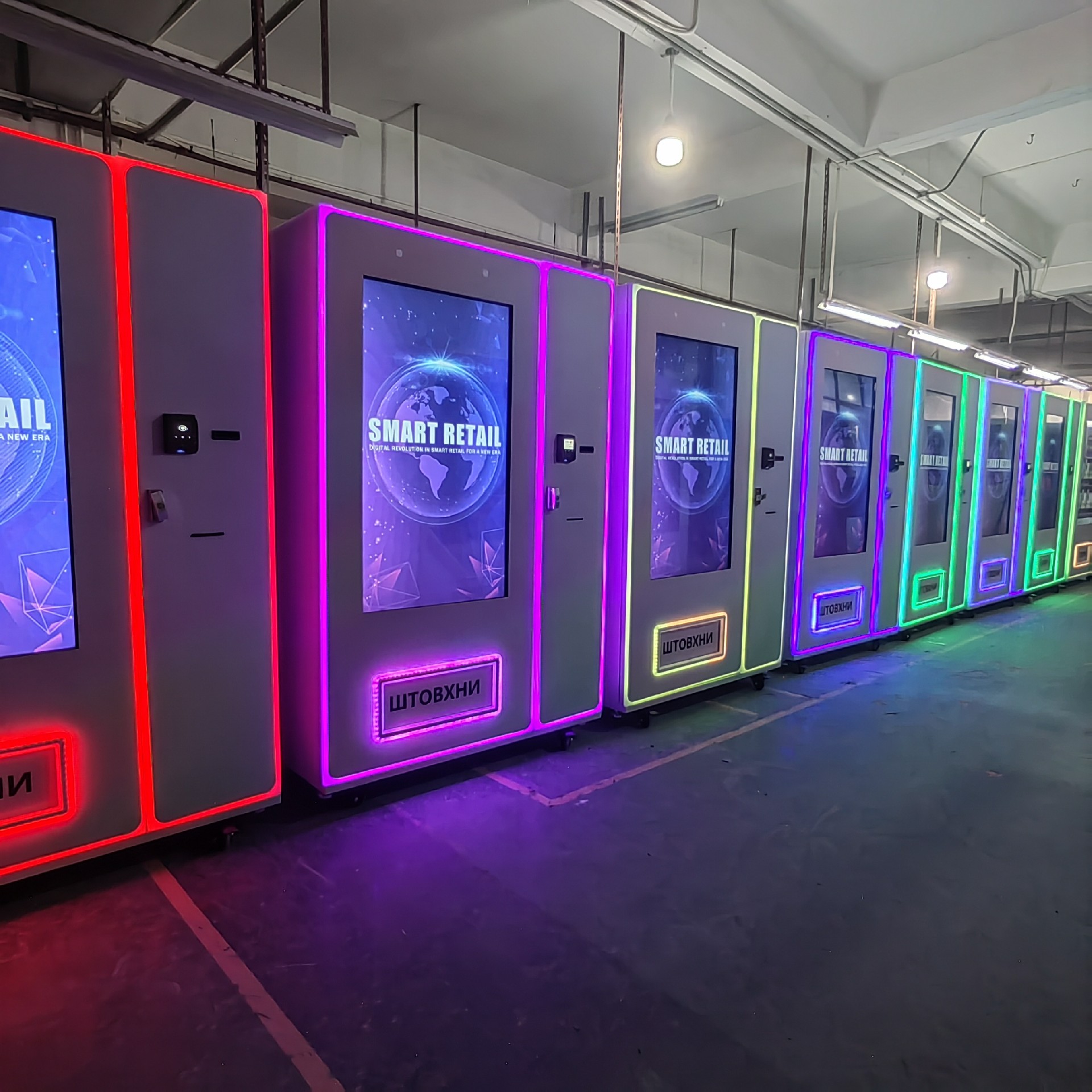
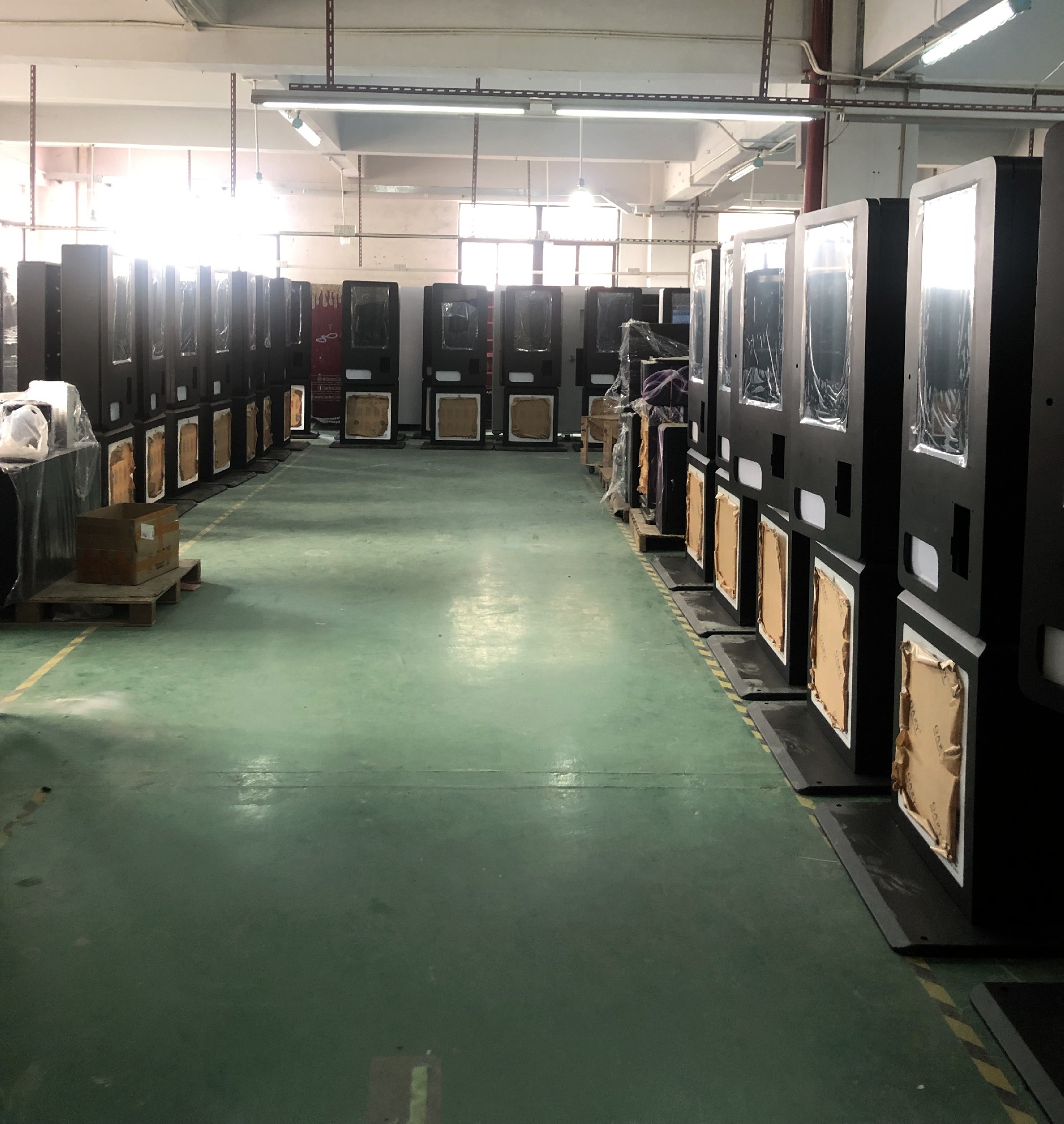
Zhongda Smart’s current public manufacturing information lists approximately 20,000 m² of working space, more than 400 employees, an engineering team of 10+ people, three assembly lines, more than 20 quality inspectors, four sheet-metal processing workshops, a painting line, and annual production capacity of 10,000 units.
Its published OEM process covers requirement confirmation, mechanical specification, payment and connectivity configuration, sample building, real-product testing, incoming inspection, assembly checks, aging tests, and final acceptance.
Those manufacturing stages have a direct contract implication: equipment details are easier to control when the approved specification exists before repeat production and installation. More detail on that process is available in Zhongda Smart’s vending machine manufacturing and quality-control guide.
Pilot equipment can reduce contract risk
A pilot does more than test whether customers like the concept. It can reveal whether the product fits the machine, how quickly inventory moves, whether the payment configuration works as intended, whether restocking frequency is realistic, and whether the agreed location produces enough sales to justify the final commercial structure.
For this comparison, I’m prioritizing real product fit and repeatable operating conditions over theoretical capacity. A machine that reliably sells the intended merchandise at a manageable service cost is more valuable than a larger specification that does not match the product.
Need the machine specification before you sign the location?
Send the product dimensions, package weight, cooling requirement, preferred payment method, branding needs, expected quantity, and installation constraints. That information makes it easier to match the machine architecture to the placement agreement.
Discuss Your Vending Project with Zhongda Smart A useful first step for product-specific, branded, refrigerated, elevator, locker, and connected vending projects.Free Vending Machine Placement Agreement Template
The template below is designed as a practical starting point for an operator-owned vending placement. It assumes the operator supplies the equipment, stocks it, services it, and retains ownership unless the parties write something different.
Bracketed fields should be completed or deleted. Optional clauses should not remain in the final document simply because they appear in the template.
This sample is not legal advice. Insurance, indemnification, tax, food safety, regulated products, licensing, accessibility, renewal, electronic signatures, dispute resolution, and other obligations should be reviewed for the actual transaction.
Effective Date: [DATE]
This Vending Machine Placement Agreement (“Agreement”) is entered into between [OPERATOR LEGAL NAME] (“Operator”) and [HOST LEGAL NAME] (“Host”). Operator and Host may each be referred to as a “Party” and together as the “Parties.”
1. Premises
Host authorizes Operator to install and operate the vending equipment described in this Agreement at the following premises:
[FULL PREMISES ADDRESS OR PROPERTY IDENTIFICATION]
The approved placement area is:
[ROOM, LOBBY, BREAK AREA, ALCOVE, FLOOR, OR OTHER SPECIFIC DESCRIPTION]
The final machine position may be documented by an installation record, photograph, floor plan, or written confirmation accepted by both Parties.
2. Equipment
Operator is authorized to install the following equipment (“Equipment”):
- Quantity: [___]
- Machine type: [___]
- Manufacturer: [___]
- Model: [___]
- Serial or asset number: [___ / TO BE ADDED AFTER INSTALLATION]
- Refrigerated or ambient configuration: [___]
- Payment configuration: [___]
- Network configuration: [___]
- Additional cabinets or accessories: [___]
- Approved custom branding: [___]
Operator may replace Equipment with substantially equivalent equipment after reasonable notice to Host, provided that the replacement does not materially increase the agreed space, utility, structural, or safety requirements without Host’s approval.
3. Ownership
All Equipment, operator-owned payment devices, network hardware, accessories, replacement components, and unsold inventory supplied by Operator remain the property of Operator unless the Parties sign a separate written agreement expressly transferring ownership.
Installation of Equipment does not constitute a sale, gift, lease-to-own arrangement, or transfer of ownership to Host.
Where Equipment is anchored or otherwise secured for safety, the attachment does not by itself transfer ownership.
Host will not sell, pledge, encumber, dispose of, open, modify, repair, disconnect, or relocate the Equipment without Operator’s authorization, except when immediate action is reasonably necessary to prevent personal injury or significant property damage.
4. Free Placement
Host is not required to purchase the Equipment and will not be charged an equipment placement or installation fee except for charges expressly stated in this Agreement.
Unless Section 5 states otherwise, Operator is not required to pay recurring rent, commission, or another site fee to Host.
5. Host Compensation
Select and complete the structure that applies.
Option A — No Commission or Site Fee:
No sales commission, rent, or recurring site payment is owed by Operator to Host.
Option B — Sales Commission:
Operator will pay Host a commission equal to [___]% of Commissionable Vending Sales.
“Commissionable Vending Sales” means amounts actually received from completed product sales through the Equipment, less refunds, reversed transactions, chargebacks, taxes collected from customers, and promotional credits funded by Operator, unless the following alternative definition is agreed:
[ALTERNATIVE DEFINITION OR “NONE”]
Operator will provide commission statements and payments [MONTHLY / QUARTERLY / OTHER] within [___] days after the applicable reporting period.
Option C — Fixed Site Fee:
Operator will pay Host $[___] per [MONTH / QUARTER / OTHER].
Option D — Hybrid:
The agreed calculation is:
[DESCRIBE MINIMUM PAYMENT, COMMISSION THRESHOLD, OR OTHER FORMULA]
Only the selected payment structure applies.
6. Product Selection
Operator will select, purchase, stock, rotate, and manage products sold through the Equipment, subject to the following agreed requirements:
[PRODUCT RESTRICTIONS, REQUIRED CATEGORIES, PROHIBITED CATEGORIES, OR “NONE”]
Operator may change individual products according to customer demand, supply availability, product condition, package compatibility, machine configuration, and operating economics, provided that the agreed restrictions above continue to be observed.
7. Retail Pricing
Unless otherwise stated below, Operator controls retail pricing for products sold through the Equipment.
Agreed pricing restrictions, if any:
[PRICE LIMITS, APPROVAL PROCESS, OR “NONE”]
Where Host requires fixed retail prices, the Parties may review those prices if wholesale product cost, payment cost, tax treatment, or other material operating expense changes.
8. Restocking
Operator will use commercially reasonable efforts to maintain an appropriate product selection and replenish inventory according to sales volume, machine capacity, product availability, product condition, customer demand, and reasonable service schedules.
Operator is responsible for ordinary inventory management, including stock rotation and removal of expired, damaged, recalled, spoiled, or otherwise unsaleable Operator-supplied products.
9. Maintenance and Vending Machine Repair
Operator is responsible for ordinary maintenance and repair of Operator-owned Equipment.
Host will notify Operator within a reasonable period after discovering a material malfunction, unsafe condition, apparent damage, prolonged power interruption, or security concern involving the Equipment.
Operator will use commercially reasonable efforts to diagnose and address material Equipment failures within a reasonable period considering fault severity, site access, required replacement parts, network conditions, payment-provider support, manufacturer support, and other circumstances affecting repair.
Host and its employees, contractors, and agents will not perform internal repair, wiring changes, software modification, component replacement, lock bypass, or other technical work on the Equipment without Operator’s authorization.
10. Customer Service and Refunds
Operator will provide a reasonable customer-service method for reporting failed vends, payment concerns, refunds, and Equipment problems.
Unless otherwise agreed, Operator is responsible for reviewing legitimate refund requests relating to transactions processed through the Equipment.
Host is not required to provide refunds from its own funds unless the Parties expressly agree otherwise.
11. Operator Access
Host will provide Operator and its authorized personnel reasonable access to the Equipment for installation, inspection, restocking, cleaning, maintenance, repair, payment service, network service, software work, inventory removal, and Equipment removal.
Ordinary access hours:
[ACCESS HOURS]
Special security, check-in, loading, parking, key, elevator, or escort requirements:
[REQUIREMENTS OR “NONE”]
Emergency contact or access procedure:
[CONTACT / PROCEDURE]
12. Electricity
Unless otherwise stated below, Host will provide suitable electrical service for the approved Equipment without a separate utility charge.
Alternative electrical arrangement:
[ALTERNATIVE ARRANGEMENT OR “NONE”]
Host will not intentionally disconnect the Equipment without reasonable advance notice when practical, except where disconnection is required for safety, emergency response, maintenance, or circumstances outside Host’s reasonable control.
Where the Equipment is refrigerated, Host will use reasonable efforts to notify Operator promptly after discovering an extended power interruption affecting the Equipment.
13. Network Connectivity
Network responsibility will be:
[OPERATOR-PROVIDED CELLULAR / HOST WI-FI / HOST WIRED NETWORK / OTHER]
If Operator controls the communication account, Operator will be responsible for ordinary recurring communication charges unless otherwise stated.
If Host provides network access, Host does not guarantee uninterrupted network operation unless a separate written service commitment applies.
Where practical, Host will provide reasonable notice before planned network changes that are expected to interrupt Equipment communication.
14. Payment Systems
Operator controls the merchant account, payment equipment, transaction processing, payment support, and reconciliation process unless the following alternative arrangement applies:
[ALTERNATIVE ARRANGEMENT OR “NONE”]
Operator is responsible for ordinary payment-processing costs unless this Agreement states otherwise.
The commission calculation in Section 5 will control whether payment-processing costs affect Host commission.
15. Sales Reporting
If Host is entitled to a sales-based commission, Operator will provide a statement showing the sales figure used to calculate that commission.
Upon reasonable written request, Host may review records reasonably necessary to verify the commission for the Equipment covered by this Agreement, subject to reasonable protection of confidential information.
Host’s review right does not automatically extend to unrelated machines, routes, customers, supplier costs, fleet data, software, or confidential commercial information.
16. Data and Confidential Information
Operator may collect and use machine diagnostic data, inventory information, sales data, device status information, and other operational information generated through the Equipment as needed to manage the vending operation.
Host may receive location-specific information required under this Agreement, including agreed commission reports.
Each Party is responsible for information under its control and will handle applicable personal, payment, confidential, and commercially sensitive information according to its legal and contractual obligations.
17. Installation
Operator will install Equipment using commercially reasonable practices appropriate for the approved machine configuration.
Any drilling, wall attachment, floor anchoring, structural modification, or other work requiring Host approval must be approved before work begins.
The Parties will cooperate to maintain reasonable service clearance, ventilation, customer access, and a safe installation position.
18. Safety
Operator will use reasonable care when installing and servicing the Equipment.
Host will notify Operator after becoming aware of a material safety issue involving the Equipment or its immediate installation area.
Either Party may take reasonable immediate action needed to reduce an imminent risk of injury or serious property damage.
19. Relocation
Host will not relocate, materially obstruct, disconnect, or intentionally reduce customer access to the Equipment without Operator’s approval, except where immediate action is reasonably required for safety or emergency response.
If Host reasonably requires the original placement area for another purpose, the Parties will attempt in good faith to identify a reasonably comparable alternative position.
If no commercially reasonable alternative can be agreed, either Party may exercise any applicable termination right under this Agreement.
20. Branding and Advertising
Operator may display ordinary machine instructions, product information, Operator branding, manufacturer branding, payment instructions, and approved promotional content on or through the Equipment.
Host-specific branding:
[APPROVED / NOT REQUIRED / SUBJECT TO SEPARATE ARTWORK APPROVAL]
Third-party paid advertising:
[PERMITTED / NOT PERMITTED / SUBJECT TO HOST APPROVAL]
Each Party is responsible for obtaining appropriate rights to logos, images, trademarks, videos, artwork, and other content that it supplies for display.
21. Exclusivity
Select one:
Non-Exclusive:
This Agreement does not grant Operator exclusive vending rights.
Limited Exclusive:
During the term, Host will not knowingly authorize another operator to install competing [DEFINED VENDING CATEGORY] equipment within [DEFINED AREA] without Operator’s prior written approval.
The exclusivity obligation does not apply beyond the stated category and area.
22. Damage to Host Property
Operator is responsible for physical damage to Host property to the extent directly caused by negligent installation, service, or removal performed by Operator or Operator’s authorized contractors.
Operator is not responsible for pre-existing conditions, ordinary wear, approved attachment points, or damage caused by Host, third parties, or events outside Operator’s reasonable control except to the extent otherwise required by applicable law or this Agreement.
23. Theft, Vandalism, and Security Events
Host will reasonably cooperate by notifying Operator after becoming aware of material theft, vandalism, attempted forced entry, or significant damage affecting the Equipment.
Neither Party is automatically responsible for criminal or destructive conduct by unrelated third parties except to the extent responsibility arises from that Party’s negligence, intentional misconduct, breach of this Agreement, or other applicable obligation.
24. Insurance
Operator will maintain insurance reasonably appropriate to its vending activities and any additional coverage expressly agreed below:
[COVERAGE TYPE, LIMITS, CERTIFICATE REQUIREMENTS, ADDITIONAL INSURED REQUIREMENTS, OR “NONE ADDITIONAL”]
Any additional insurance requirement should be confirmed with qualified insurance and legal professionals before execution.
25. Product and Operational Compliance
Each Party will comply with requirements applicable to the activities and premises it controls under this Agreement.
Operator is responsible for ordinary vending operations, Operator-supplied products, and permits or licenses assigned to Operator under applicable requirements.
Host is responsible for premises-related permissions and obligations assigned to Host.
Products subject to special age, identity, temperature, labeling, tax, licensing, health, or other restrictions may be sold only when the responsible Party has confirmed that the proposed operation is permitted and appropriately configured.
26. Initial Term
The initial term begins on [START DATE] and continues for [___ MONTHS] unless terminated earlier under this Agreement.
27. Renewal
Select one:
Option A — No Automatic Renewal:
The Agreement ends at the conclusion of the initial term unless renewed in writing.
Option B — Automatic Renewal:
After the initial term, the Agreement renews for successive periods of [___ MONTHS] unless either Party gives written notice of non-renewal at least [___ DAYS] before the current term ends.
28. Termination for Convenience
After [INITIAL COMMITMENT PERIOD OR “NONE”], either Party may terminate this Agreement without cause by providing at least [___ DAYS] written notice.
29. Performance-Based Termination
After the first [___] days of operation, Operator may terminate this Agreement by providing [___ DAYS] written notice if average Commissionable Vending Sales remain below $[___] per month during [___] consecutive full calendar months.
Delete this section if the Parties do not want a sales-performance threshold.
30. Termination for Cause
Either Party may terminate this Agreement for a material breach by the other Party if the breach remains uncured for [___ DAYS] after written notice reasonably describing the breach.
A shorter response may be used where reasonably necessary to address an immediate safety issue, unlawful operation, intentional disposal of Equipment, or another breach that cannot reasonably be left unaddressed during the ordinary cure period.
31. Equipment Removal
Following expiration or termination, Operator may enter the premises at a mutually reasonable time to remove the Equipment and Operator-owned inventory.
Host will provide reasonable removal access for a period of [___ DAYS] after the effective termination date unless another schedule is agreed in writing.
Operator will use reasonable care during removal and will repair physical damage directly caused by negligent removal, excluding ordinary wear, pre-existing conditions, and approved attachment points unless the Parties agree otherwise.
Ownership of the Equipment remains with Operator during the removal period.
32. Assignment and Change Affecting the Premises
Neither Party may assign this Agreement in a manner that materially changes the other Party’s rights or obligations without required consent, except that Operator may assign the Agreement as part of a transfer of substantially all related vending assets or operations if the successor assumes Operator’s obligations in writing.
Host will use reasonable efforts to notify Operator if a material change in control or management of the premises affects access, placement, or continued operation of the Equipment.
33. Force Majeure
Neither Party will be considered in breach for delay or failure caused by circumstances beyond its reasonable control to the extent the event prevents performance, provided that the affected Party takes commercially reasonable steps to reduce the impact where practical.
34. Indemnification
Each Party will be responsible for claims, losses, or liabilities to the extent arising from its own negligence, intentional misconduct, or breach of this Agreement, subject to the final indemnification language approved for the transaction.
[INSERT COUNSEL-APPROVED INDEMNIFICATION LANGUAGE IF REQUIRED]
35. Notices
Formal notices under this Agreement must be delivered to the following contacts or to any replacement contact later designated in writing.
Operator Notice Contact
Name: [___]
Title: [___]
Email: [___]
Address: [___]
Host Notice Contact
Name: [___]
Title: [___]
Email: [___]
Address: [___]
A Party will provide updated notice information within a reasonable time after a material change.
36. Amendments
Any material amendment to commission, rent, product restrictions, placement, exclusivity, term, payment responsibilities, or other commercial terms must be documented in writing and accepted by authorized representatives of both Parties.
37. Entire Agreement
This Agreement and its written exhibits constitute the Parties’ agreement concerning the Equipment placement described here and replace prior discussions or representations concerning the same subject to the extent permitted by applicable law.
38. Governing Law and Dispute Resolution
The governing law for this Agreement will be:
[GOVERNING LAW]
The agreed dispute-resolution process, if any, is:
[NEGOTIATION / MEDIATION / ARBITRATION / COURT VENUE / COUNSEL-APPROVED PROCESS]
39. Severability
If a provision is determined to be invalid or unenforceable, the remaining provisions will continue to the extent permitted, and the Parties may replace the affected provision with a valid provision that most closely reflects the intended commercial purpose.
40. Counterparts and Electronic Signatures
The Parties may execute this Agreement in counterparts and, where permitted, through accepted electronic signature methods. Electronic copies of executed counterparts may be retained as evidence of the Agreement.
41. Signatures
OPERATOR
Legal Name: __________________________________________
Authorized Representative: ______________________________
Title: _________________________________________________
Signature: _____________________________________________
Date: _________________________________________________
HOST
Legal Name: __________________________________________
Authorized Representative: ______________________________
Title: _________________________________________________
Signature: _____________________________________________
Date: _________________________________________________
Do not leave unused options in the signed version
A template is supposed to be edited. If the placement does not use commission, remove the commission option or clearly mark the correct choice. If there is no exclusivity, delete the limited-exclusive language. If the machine is not refrigerated, do not fill the agreement with detailed obligations that only make sense for perishable inventory.
A finished vending machine contract should read like one negotiated agreement, not four alternative agreements pasted together.
Attach the equipment schedule
For a customized project, I’d attach a short equipment exhibit rather than force every technical detail into the legal body.
A useful exhibit can contain:
| Equipment Schedule Field | Example Information |
|---|---|
| Machine model | [MODEL] |
| Quantity | [QTY] |
| Cabinet dimensions | [WIDTH × DEPTH × HEIGHT] |
| Temperature configuration | [AMBIENT / REFRIGERATED / OTHER] |
| Product delivery system | [SPIRAL / CONVEYOR / ELEVATOR / LOCKER / OTHER] |
| Payment hardware | [DEVICE / METHOD] |
| Connectivity | [CELLULAR / WI-FI / LAN / OTHER] |
| Screen | [SIZE / TYPE] |
| Branding | [WRAP / LOGO / COLOR / UI] |
| Special accessories | [DETAILS] |
| Approved product types | [DETAILS] |
| Serial numbers | [ADD AFTER PRODUCTION OR INSTALLATION] |
This keeps commercial and technical responsibilities connected without turning the main agreement into an engineering specification.
Final Vending Machine Contract Review Checklist
Before the machine is shipped or moved onto the premises, I’d check the agreement from the perspective of the person who has to operate it six months later.
Commercial terms
- Are the correct legal entities named?
- Is the exact property identified?
- Is the approved placement position documented?
- Is it clear whether the host pays anything for the machine?
- Is it clear whether the operator pays commission, rent, or another fee?
- If commission applies, is the sales base defined?
- Are commission statements and payment dates stated?
- Does the contract say who controls retail pricing?
- Are required or prohibited product categories listed?
- Has the expected sales level been compared with operating costs?
Equipment and installation
- Is machine ownership unmistakable?
- Is the machine quantity correct?
- Is the model or equipment type identified?
- Are custom graphics or host-specific modifications recorded?
- Is the delivery system appropriate for the intended products?
- Is refrigeration documented where required?
- Is there enough door and technician clearance?
- Has the moving path been checked?
- Are anchoring requirements approved?
- Does the host understand that unauthorized relocation is restricted?
Payments and connectivity
- Are the intended payment methods confirmed?
- Who owns or controls the payment terminal?
- Who pays card-processing costs?
- Which network method will the machine use?
- Who pays communication charges?
- What happens if host-provided network access changes?
- Which machine-level reports can the host receive?
- Is confidential fleet data protected?
Service and repair
- Can service personnel reach the machine at practical times?
- Are building access procedures documented?
- Does the host know how to report a fault?
- Is there a customer refund method?
- Does the operator avoid unrealistic absolute uptime promises?
- Are host employees prohibited from unauthorized repair?
- Are serious refrigeration or safety events given suitable priority?
- Can the operator perform preventive maintenance?
Risk and insurance
- Does the agreement distinguish ordinary mechanical failure from third-party damage?
- Are theft and vandalism obligations reasonable?
- Is property-damage responsibility tied to actual conduct?
- Are insurance requirements specific rather than copied blindly?
- Are regulated or temperature-sensitive products addressed where relevant?
Term and exit
- Is the initial term appropriate for the equipment investment?
- Is any automatic renewal obvious?
- Is there a termination-for-convenience option where appropriate?
- Is there a cure period for correctable material breaches?
- Can a poor-performing location be exited?
- Is limited exclusivity defined precisely?
- Does the operator retain a clear right to remove the machine?
- Is a removal period stated?
- Does post-termination access survive long enough for removal?
- Are notice contacts likely to remain usable?
The contract is only half of the placement
The machine still has to fit the products, payment environment, available space, cooling requirement, branding plan, and service model. Confirm those items before the agreement locks in an equipment promise that is difficult to change.
Explore Custom Vending Machine Configurations Zhongda Smart supports configurable vending platforms, payment options, branding, software functions, and product-specific delivery systems.Frequently Asked Questions
Do I need a vending machine contract to place a machine?
A written agreement is strongly advisable whenever vending equipment is placed on premises controlled by another party. It creates a record of permission to install the machine and can define ownership, compensation, service access, electricity, repairs, liability, termination, and removal. An informal arrangement may work while the same people remain involved, but uncertainty becomes much harder to manage after personnel change, sales increase, a machine is damaged, or one side wants the equipment removed.
What is a free vending machine placement agreement?
A free vending placement normally means the host does not purchase the machine or pay a placement charge for the equipment. The operator retains ownership and usually supplies the inventory, payment system, maintenance, and customer service. The agreement can still include a host commission, fixed site fee, utility arrangement, product restrictions, exclusivity, or other negotiated terms. “Free placement” should not be used as a substitute for defining those responsibilities.
How much commission should a vending location receive?
There is no percentage that is automatically correct for every location. Commission should be tested against sales, product cost, payment fees, route expense, maintenance, software, connectivity, equipment investment, and other direct costs. A percentage that is comfortable on a high-volume machine can make a low-volume placement unattractive. The agreement should also define the exact sales number used to calculate the commission.
Who normally owns a vending machine in a free placement?
In a conventional operator-funded free placement, the vending operator normally retains ownership of the machine. The contract should state this directly and should also preserve the operator’s right to retrieve the equipment after termination. Installation, leveling, or approved safety anchoring should not be allowed to create confusion about ownership.
Who pays for electricity for a vending machine?
Either party can pay, so the agreement should specify the arrangement. In many operator-owned placements the host provides a suitable electrical connection as part of making the space available. If the operator reimburses electricity, the calculation method should be defined. Refrigerated machines deserve additional attention because a prolonged power interruption may affect inventory as well as sales.
Who is responsible when the vending machine breaks?
The operator normally maintains and repairs operator-owned vending equipment. The host should report problems and provide reasonable service access. The contract can separately address damage caused by unauthorized repairs, deliberate interference, host personnel, vandalism, abnormal premises conditions, or other events outside ordinary equipment failure. Service commitments should be realistic about site access, parts, network services, and third-party payment systems.
How long should a vending machine contract last?
The term should reflect the equipment investment and how easily the machine can be redeployed. Standard equipment at an untested site may justify a shorter commitment or early performance review. Host-specific graphics, special software, unusual dispensing hardware, or expensive installation can justify a longer term. Whatever term is chosen, renewal, termination, and removal rights should be clear.
Can a host terminate the agreement and keep the vending machine?
Termination of the placement should not transfer operator-owned equipment unless the parties have separately agreed to a sale or other transfer. The contract should state that ownership remains with the operator and should provide a reasonable period and access procedure for removal. This is especially important when the machine is anchored, customized, or difficult to move.
Should the contract include minimum monthly sales?
A minimum sales threshold can be useful when the operator is placing valuable equipment at an unproven location. Rather than forcing the host to guarantee purchases, the agreement can allow the operator to terminate after an evaluation period if actual sales remain below an agreed level for a defined number of months. The threshold should be based on the actual cost structure of the placement.
Can a vending machine contract be signed electronically?
Electronic execution is commonly used for commercial documents, but the parties should confirm that the chosen method and agreement comply with applicable requirements. The signed copy should be retained in a form that operations, accounting, and management can retrieve later. If a document has special execution requirements, qualified counsel should confirm them before signing.
Should vending machine specifications be attached to the contract?
For anything beyond a very simple placement, attaching a short equipment schedule is useful. It can identify the model, quantity, cabinet size, refrigeration, delivery system, payment configuration, connectivity, branding, accessories, and serial numbers. This reduces later disagreement over what equipment was promised and is particularly valuable for customized machines.
Can I use this vending machine contract template without legal review?
The template can help organize the commercial deal and identify missing terms, but it should not be treated as legal advice or a guarantee that the final agreement is enforceable. Insurance, indemnification, automatic renewal, tax, licensing, regulated products, food safety, accessibility, electronic signatures, dispute resolution, and other obligations can require transaction-specific review. Qualified counsel should review the final document before it is relied upon.
Before the Machine Is Installed
A placement agreement works best when the commercial deal and machine specification are settled together.
Confirm ownership, location, host compensation, commission formula, electricity, service access, payment reporting, product control, relocation rights, contract term, termination, and removal before installation.
Then confirm the equipment. Cabinet dimensions, refrigeration, payment hardware, network connection, product-delivery method, branding, usable capacity, and service clearance can all change what the operator and host need from the agreement.
Once those details are written down, the relationship becomes easier to run. The operator knows what it is responsible for. The host knows what it is receiving. Accounting knows how to calculate payments. Technicians know when they can enter. Nobody has to reconstruct the original deal months later.
That is the standard I would use for a practical vending machine contract: specific enough to protect the equipment and economics, but clear enough that the people operating the placement can actually use it.
Reviewed from the vending equipment and manufacturing perspective by Zhongda Smart.
This guide focuses on equipment ownership, machine specification, payment configuration, remote management, product delivery, installation, servicing, customization, and removal. Zhongda Smart manufactures and customizes unattended retail equipment and publishes its manufacturing, quality-control, OEM, and after-sales processes. Legal provisions should be reviewed separately by qualified counsel.
Sources and Reference Material
- Cornell Legal Information Institute — Contract. General reference for contract concepts, mutual obligations, and common elements of enforceable agreements.
https://www.law.cornell.edu/wex/contract - NAMA Foundation / Technomic — 2022–2023 Industry Census. Source for the traditional vending revenue, machine count, average annual sales per machine, and cashless-payment figures used as industry context in this guide.
https://namanow.org/wp-content/uploads/NAMA-Census-FINAL.pdf - NAMA Foundation — State of Convenience Services Census Update. Source for the 2025 revenue estimate, reported growth rate, and current industry direction referenced above.
https://namanow.org/new-census-reveals-shifts-in-convenience-services-industry/ - Cornell Legal Information Institute — Electronic Signature. General reference concerning electronic signatures and electronic-form contracts.
https://www.law.cornell.edu/wex/electronic_signature
This article and the sample vending machine placement agreement are provided for general informational, commercial-planning, and educational purposes only. They are not legal, tax, accounting, insurance, food-safety, regulatory, investment, or financial advice. The template is not guaranteed to be valid, enforceable, complete, or suitable for a particular transaction. Contract law, electronic-signature requirements, taxes, insurance, product restrictions, licensing, accessibility, food-safety obligations, automatic-renewal rules, privacy requirements, and other obligations can vary according to the applicable law and the facts of the project. Obtain advice from qualified professionals before signing or relying on a final agreement.
All financial examples are illustrative planning scenarios and are not guarantees of sales, profit, investment return, or payback period. Equipment specifications, manufacturing capacity, warranty terms, OEM options, software functions, production information, and service policies may change. Confirm current technical and commercial information before purchasing, installing, or contracting around specific equipment.