Yes—most vending businesses should expect some paperwork before the first sale, but there is no single nationwide vending machine license that covers every operator and every machine. A packaged-snack machine can have a fairly straightforward path, while refrigerated fresh-food vending may add food-safety, temperature-control, inspection, and labeling requirements. The permit may also apply to the business, the individual machine, the installation site, or a combination of them. I’d settle those points before ordering equipment, especially when a project involves refrigeration, custom payment hardware, fresh food, or multiple locations. Once the operating requirements are clear, the machine is much easier to specify correctly. This 2026 guide separates business licensing, vending permits, tax registration, food rules, federal calorie labeling, site approval, equipment choices, costs, and practical launch planning so you can see what deserves attention before a machine goes live.
Reviewed September 2026: Current SBA licensing guidance, FDA vending-machine labeling guidance, the latest full FDA Food Code, current Census industry classification, and Zhongda Smart equipment references were checked before publication.
Do You Need a Vending Machine License?
For a commercial vending operation, the sensible answer is: assume that some form of registration or permitting will apply until the responsible authority confirms otherwise. The confusing part is the name. Your approval may not literally be called a vending machine license. It may appear as a vending permit, automatic merchandising permit, business license, retail food permit, seller's permit, machine decal, tax registration, or another document that covers part of the operation.
The U.S. Small Business Administration says state, county, and city licenses depend on business activity and location, and it specifically lists vending machines among activities commonly regulated at the local level. That is the reason generic statements such as “vending machines never need a license” or “one license covers the whole country” are unreliable.
There is no single federal operating license for ordinary vending businesses. Depending on the operation, you may need a general business license, a vending permit, sales-tax registration, food or health approval, a machine-specific decal, site authorization, or several of these at the same time.
| Situation | What usually deserves a compliance check |
|---|---|
| Packaged snack machine | Business licensing, vending permit, tax registration, and applicable food rules |
| Cold drink machine | Normal vending requirements plus refrigeration and food-related rules where applicable |
| Fresh-food vending machine | Vending licensing, food or health requirements, temperature control, tax registration, and site procedures |
| Non-food vending machine | Business, vending, and tax requirements; product-specific restrictions may still apply |
| 20+ food vending machines | Ordinary permits plus federal calorie-disclosure requirements for covered foods, subject to exemptions |
Is the License Issued to the Business, the Machine, or the Location?
Any of the three can happen. Some licensing systems register the operator, some attach a permit or decal to each machine, and food-related approvals may be tied to a particular installation or food operation. This detail becomes important the moment a route adds a second machine, changes a product category, or moves existing equipment to another site.
Before paying a fee, find out exactly what the approval covers. A permit issued to the company does not necessarily mean a new machine can be installed without additional registration. A machine decal does not necessarily travel with the cabinet after relocation. A food approval may depend on both the machine and the way products are stored, transported, loaded, and monitored.
That distinction is more useful than memorizing the name printed at the top of a form. The operating scope tells you what must be repeated when the business expands.
Business Formation Is Not the Same as Operating Permission
Forming an LLC or corporation establishes a legal business entity. It does not automatically authorize that entity to perform every regulated activity. A vending operator can have a valid company registration and still be missing a local business license, sales-tax account, food permit, or machine-specific approval.
The reverse is also worth avoiding: a vending permit should not be treated as a substitute for proper business and tax setup. These are separate layers. Keeping them separate in your records makes future renewals, banking, insurance, accounting, and expansion much cleaner.
Do You Need a Business License for a Vending Machine?
Often, yes, but the answer depends on the business and the rules that apply to the operation. A general business license can exist alongside a vending machine license or machine permit. The first authorizes commercial activity more broadly; the second can address vending specifically. A seller's permit or food approval can then sit beside both of them.
For a first machine, that sounds like a lot of paperwork, but the structure is easier once each document has a defined purpose. Ask what activity the license authorizes, what asset or address it covers, and when it expires. Those three details are more useful than the document title alone.
Do You Need a Separate Permit for Every Vending Machine?
Not always. Some programs license the operator, while others register individual machines or installation sites. A route with ten machines can therefore have a very different permit structure from another ten-machine route. When a vending machine license is issued per machine, expansion can add both filing work and recurring cost. When approval is operator-based, the process may instead focus on reporting new locations or equipment.
Licenses and Permits That May Apply to a Vending Business
The easiest way to understand the paperwork is to group it by purpose. One document allows commercial activity, another may govern the vending machine itself, another handles tax collection, and food approvals address public-health concerns. Not every operation needs every item below, but each category should be checked before launch.
| Requirement | What it generally covers | Why it matters |
|---|---|---|
| General business license | Permission to conduct commercial activity | Establishes local operating authority where required |
| Vending permit or machine license | Vending activity, machine, or installation | May require a permit number, decal, renewal, or inspection |
| Seller's permit or sales-tax registration | Collection and reporting of taxable retail sales | Vending is still retail even when no employee handles checkout |
| Food vending or health permit | Food safety, sanitation, storage, and handling | Especially relevant to refrigerated, prepared, or perishable food |
| Machine registration or decal | Individual machine identification | Can connect the physical asset to the licensed operator or site |
| Installation-related approval | Electrical, building, property, or site conditions | Certain installations may need additional review |
| Property agreement | Permission to occupy and sell on the site | A government permit does not give access to someone else's property |
When a Permit Sticker or Operator Notice Belongs on the Machine
Some licensing systems require visible evidence of approval on the cabinet. Depending on the rules, that might be a permit decal, machine number, operator name, service phone number, tax mark, inspection label, or another notice. Covered food vending operators may also have federal calorie-labeling and operator-contact requirements, discussed later in this guide.
From a manufacturing standpoint, this deserves space on the final cabinet layout. A full vinyl wrap can look polished and still become inconvenient if branding covers the only practical place for official decals, a serial plate, service details, or consumer information. Reserve a clean, visible area before artwork is finalized.
Moving a Machine Can Change the Paperwork
A machine covered by a vending machine license is not automatically portable from a compliance perspective. If approval is tied to the installation address, food operation, or property, a move may require notice, amendment, reinspection, or a new application. The same machine can be technically unchanged while the legal conditions around it change.
For route planning, keep the permit scope in the asset file. When a machine is moved, the operator can then check the new site against the original approval rather than rebuilding the history from memory.
Food and Beverage Vending Machines Need a Closer Compliance Review
Food vending is where licensing questions and machine design begin to overlap. A vending machine license does not automatically settle food-safety obligations. A sealed bag of chips, a bottle of soda, a refrigerated sandwich, and a frozen entrée are all “food” in a broad sense, but they do not create the same operating risk. The more a product depends on controlled temperature, sanitation, short shelf life, or special handling, the more carefully the vending system should be reviewed.
The FDA Food Code is not itself a universal vending permit. It is a model code that FDA describes as its best advice for safeguarding food sold at retail, and FDA encourages government authorities to adopt it. As of 2026, the 2022 Food Code remains FDA's most recent full edition. That matters because retail food authorities often build enforceable requirements from adopted food codes and related rules.
Packaged Shelf-Stable Snacks
Factory-sealed snacks usually present the simplest food-vending model. The operator still needs to control damaged packages, expired products, contamination, pest risks, machine cleanliness, and any applicable food or vending permits, but the product itself is designed for shelf-stable retail distribution.
Machine fit still matters. Flexible bags can snag in poorly matched spirals. Tall packages can collide with the shelf above. Thin products can slip through a coil that is too wide. A machine that regularly mis-vends creates more refunds, more service visits, and more temptation to improvise around the intended product layout.
Cold Drinks and Refrigerated Packaged Products
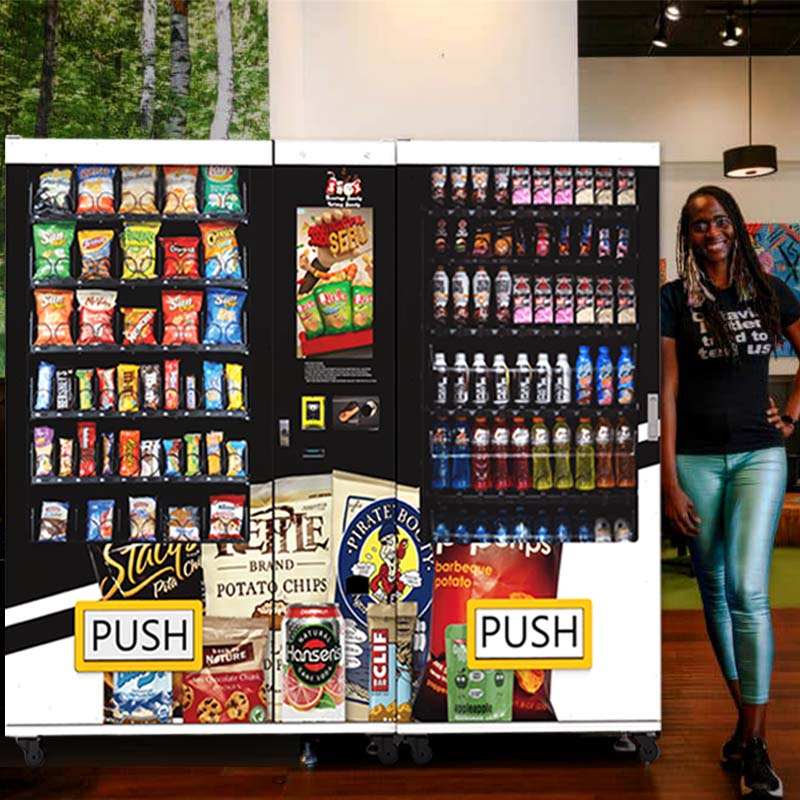
Refrigeration changes the specification. “Cold” is not a precise engineering requirement. The product, expected ambient conditions, loading pattern, airflow, thermostat range, and service routine determine whether a refrigerated vending machine is suitable for the merchandise.
For packaged beverages and chilled snacks, a buyer should verify the machine's temperature range, refrigeration architecture, product capacity, power demand, payment hardware, and how the cabinet behaves during restocking. Zhongda Smart's current refrigerated snack and beverage vending machine specifications provide an example of the kind of technical information worth confirming before an order is approved.
The compliance question and the refrigeration question should meet in one document: what temperature does the product require, and can the machine maintain it under the intended operating conditions? A marketing label such as “refrigerated” is not enough for a fresh-food program.
Fresh Food and Perishable Products
Sandwiches, salads, prepared meals, dairy items, desserts, and other time- or temperature-sensitive foods deserve a stricter operating plan. The machine is only one part of that plan. Inventory storage before loading, transport to the site, restocking time, sanitation, shelf-life control, temperature monitoring, and the response to a cooling failure can all matter.
If I were choosing equipment for a fresh-food project, I’d rank temperature control, cleanability, product protection, service access, and a reliable delivery method ahead of decorative features. Fragile meals should not be treated like cans of soda. A controlled delivery system can reduce impact and help keep packaging intact.
A current Zhongda Smart refrigerated fresh-food vending machine with elevator delivery uses a 3–12°C adjustable cooling range and a controlled pickup system designed for packaged food. Those published specifications are useful as a starting point, but the required product temperature and applicable food rules still determine whether any particular configuration is appropriate.
A vending project is easier to control when operating compliance and machine fit are treated as two separate decisions. The permit establishes whether and how the operation may run; the machine specification determines whether that approved model can run reliably. Mixing those decisions is one of the easiest ways to order the wrong refrigeration, delivery system, payment hardware, or cabinet layout.
The Federal 20-Machine Calorie-Labeling Rule
Larger food vending operators have a separate federal requirement to keep on the radar. FDA states that operators who own or operate 20 or more vending machines are required to disclose calorie information for covered foods sold from vending machines, subject to the rule's exemptions. Operators with fewer than 20 machines can voluntarily register to be covered.
This rule is not a substitute for a vending permit, and a vending permit does not replace federal labeling obligations. They regulate different things. One controls permission to operate; the other concerns information made available to consumers.
FDA allows calorie information to be presented in different ways depending on the product and machine. Visible package information may satisfy the rule in certain cases, while signs, placards, stickers, selection displays, or electronic displays can be used in others. FDA also requires covered operators to provide contact information on the machines or with the calorie declarations.[3]
That is where a touchscreen or digital product interface can become operationally useful rather than merely decorative. A display cannot make a noncompliant program compliant on its own, but a machine with flexible digital content and reserved label space can be easier to adapt than a cabinet designed without any information area at all.
| Vending model | Operating complexity | Machine issue that deserves attention |
|---|---|---|
| Packaged snacks | Lower | Product fit, package protection, cleaning access |
| Bottled or canned drinks | Low to moderate | Cooling, capacity, weight, reliable dispensing |
| Fresh meals | High | Temperature, sanitation, shelf life, controlled delivery |
| Frozen products | High | Frozen storage performance and failure response |
| Bulk dispensing | High | Food-contact surfaces, sanitation, contamination control |
Food Compliance Extends Beyond the Cabinet
A vending machine can be clean and cold while the surrounding operation is poorly controlled. Fresh inventory may spend too long outside temperature control before loading. Products may be stored in an unsuitable back room. Staff may not have a consistent process for removing expired food or responding to a refrigeration alarm.
A mature food-vending program therefore documents the route around the machine as carefully as the machine itself: receiving, storage, transport, loading, temperature checks, cleaning, product rotation, fault response, and disposal. The applicable authority decides which procedures are mandatory, but good equipment cannot compensate for weak food handling.
Do Non-Food Vending Machines Need a License?
They can. Removing food from the product mix often removes food-specific health requirements, but it does not automatically remove business licensing, vending permits, tax registration, property approval, or rules attached to the products being sold.
Modern unattended retail covers cosmetics, electronics accessories, collectibles, books, personal-care items, small tools, workplace supplies, toys, clothing accessories, and many other categories. The machine may look more like a self-service kiosk than a traditional snack vendor, yet the underlying transaction is still automated retail: the customer selects merchandise, pays, and receives the product without an employee completing checkout.
Calling a cabinet a “smart kiosk” instead of a vending machine does not by itself change how an authority classifies the operation. Product flow, payment, delivery, and the activity being regulated matter more than the marketing name.
Regulated Products Need Their Own Review
If a product is age-restricted, specially regulated, hazardous, medical, or otherwise subject to sales controls, confirm whether unattended sale is allowed before discussing hardware. Identity technology, cameras, scanners, or software checks are tools; they do not create legal permission to sell a product that cannot lawfully be sold through an unattended machine.
That order saves money. It is cheaper to learn that a product requires a different retail model before a custom door, scanner mount, software workflow, and payment system have been built around it.
Sales Tax, Seller's Permits, and Location Approval
A vending machine is automated, but the sale is still a retail transaction. Cashless payment does not remove tax responsibilities, and accepting cash does not make them simpler. Depending on the applicable tax rules, an operator may need a seller's permit, sales-tax registration, or another account for collecting and reporting taxable sales.
Product taxability can vary. Food, beverages, and non-food merchandise should not automatically be assumed to receive identical treatment. The most useful operating setup is one that can produce clear records by machine, product, price, date, and payment method so the business can report what its tax adviser or revenue authority requires.
Vending Machine License vs. Seller's Permit
A vending machine license or vending permit governs the vending activity where required. Sales-tax registration governs taxable retail transactions. A business can need both. The names vary, so the better question is not “Which one document do I need?” but “Which parts of the operation are separately regulated?”
Good machine reporting helps once the route grows. A cloud platform should make it possible to separate sales by machine, distinguish refunds, identify product-level revenue, and export usable records. These functions are not legal advice, but they reduce the administrative burden of running a properly registered business.
Property Permission Is a Separate Requirement
A government approval does not give an operator the right to occupy someone else's property. The owner or authorized manager of the site should approve the installation and commercial operation, preferably in writing.
A practical location agreement normally deals with the space itself, access for restocking and service, electrical power, any site commission or fixed fee, insurance responsibilities, damage, term, termination, removal of the machine, and whether competing vending equipment can be installed nearby. The details belong in a contract suited to the actual relationship.
The most attractive site is not always the highest-traffic site. Reliable access, secure placement, appropriate power, a customer base that wants the products, reasonable service distance, and workable commercial terms often matter more than raw footfall.
How Much Does a Vending Machine License Cost?
There is no honest nationwide price that can be quoted for a vending machine license. The SBA states that licensing requirements and fees vary with business activity and location, and licenses can be issued at different levels of government. A fee that applies to one operator may be irrelevant to another.
For financial planning, separate the compliance budget into categories instead of inserting one guessed “license fee” into the business plan.
| Budget item | What to include | Cost pattern |
|---|---|---|
| Business setup | Entity and registration filings | Initial plus periodic filings where applicable |
| General business license | Commercial operating authorization | Often recurring |
| Vending permit | Operator, machine, or location approval | May be one-time or renewable |
| Food or health approval | Food vending application, inspection, or permit | Commonly recurring where required |
| Inspection | Initial or periodic machine/site review | Depends on the program |
| Insurance | Liability, property, vehicle, workers' compensation as applicable | Recurring |
| Professional review | Attorney, accountant, tax, or insurance advice | As needed |
Permit timing can cost more than the filing fee. A machine that reaches the warehouse six weeks before it is allowed to operate is tying up capital without producing sales. Licensing research belongs in the purchasing schedule, not on a list of tasks to handle after delivery.
Renewals Are Easy to Forget as a Route Grows
The SBA notes that some licenses and permits expire after a set period and must be renewed.[1] One machine is easy to remember. A route with multiple installation dates, permit types, and food inspections is not.
Keep a simple compliance record for each approval: permit name, number, issuing authority, business or machine covered, installation address if relevant, issue date, expiration date, renewal deadline, fee, inspection history, and the person responsible for renewal. That record can live in a spreadsheet at first and move into asset-management software later.
What Records Should Follow Each Machine?
Even when the permit is technically issued to the company, a machine-level file is useful. Keep the serial number, purchase invoice, warranty record, manuals, configuration, payment-terminal information, location agreement, insurance certificate, permit copies, inspection documents, service history, and photos of the installed cabinet.
For refrigerated equipment, add temperature-related maintenance records and any procedures required by the food operation. For imported equipment, keep the shipping and import documents with the asset file. When a cabinet is relocated or sold, its history should be easy to reconstruct.
Insurance Is Not the Same as Licensing
Insurance may be required by a property contract, a government program, a lender, or the operator's own risk policy. It does not replace a license. Likewise, holding a permit does not protect the business from liability claims, equipment loss, vehicle risk, or other commercial exposures.
The insurance package should match the operation rather than a generic vending template. Fresh-food vending, a machine in a public-access location, a route vehicle, and employees all create different exposures. A qualified insurance professional can help determine suitable coverage.
Is a Vending Business Profitable After Licensing Costs?
Licensing is part of the cost structure, but it is rarely the factor that decides whether a good vending location works. Product margin, site economics, sales volume, restocking labor, route density, payment fees, spoilage, maintenance, and equipment uptime usually have a much larger effect on profit.
Industry data show that vending remains a substantial commercial channel. The 2022 Economic Census counted 2,652 vending-machine operator firms and 3,317 establishments in the industry bridge statistics. The current 2022 NAICS classification places vending machine operators under code 445132.
NAMA's 2022–2023 industry census projected the broader convenience-services industry at $26.6 billion for 2023, with traditional vending accounting for about 68%, or $18.2 billion.The distinction matters: $26.6 billion covers the broader convenience-services market, not vending machines alone.
- 2,652 vending-machine operator firms in the 2022 Economic Census bridge statistics.
- 3,317 establishments in the same Census data.
- $18.2 billion projected vending revenue in NAMA's 2023 convenience-services industry segmentation.
- Traditional vending represented about 68% of the broader convenience-services market in that NAMA projection.
A Simple ROI Example
A useful business calculation starts with contribution rather than gross sales. The figures below are only an illustration; they are not industry averages and should not be used as a promised return.
| Monthly item | Illustrative amount |
|---|---|
| Sales | $2,400 |
| Product cost | -$1,080 |
| Site commission | -$240 |
| Payment processing | -$84 |
| Route labor and travel | -$260 |
| Maintenance reserve | -$100 |
| Allocated licenses and insurance | -$55 |
| Other operating costs | -$81 |
| Illustrative monthly contribution | $500 |
If the fully landed and installed equipment investment were $5,000, a $500 monthly contribution would imply a simple ten-month equipment payback before income taxes and business-level overhead. Reduce sales materially and that payback stretches quickly. Increase travel time or spoilage and the route can become unattractive even when the permit itself is inexpensive.
I’d rank location quality and route efficiency above a small difference in licensing fees. A permit is a necessary cost of doing business where required; it is rarely a substitute for demand.
How Compliance Changes the Vending Machine You Should Buy
A vending machine license may look like paperwork, but the operating rules behind it can reach directly into hardware. Food temperature, product labeling, machine identification, payment records, installation conditions, and service procedures may all influence the final specification.
The cleanest purchasing process uses two documents at the same time: one describes the operating requirements, and the other turns those requirements into machine features. The result is a cabinet built for the approved business model rather than a business model forced to fit whatever machine happened to be purchased first.
| Before production | What it can change on the machine |
|---|---|
| Product category | Dispensing method, cabinet type, sanitation needs |
| Required storage temperature | Refrigeration system, airflow, monitoring |
| Package dimensions and weight | Lane width, shelf spacing, motor and delivery method |
| Consumer information that must be visible | Screen content, label area, front-glass visibility |
| Payment environment | Reader, MDB interface, NFC, cash, QR, processor compatibility |
| Transaction records needed | Telemetry, reporting, export functions |
| Installation conditions | Electrical configuration, cabinet protection, network choice |
| Required decals or inspection labels | Reserved visible space on the exterior artwork |
Refrigeration Is a Performance Requirement, Not a Checkbox
When food safety depends on temperature, specify the product requirement rather than writing “cooling required” on a purchase order. The supplier needs the expected operating temperature, ambient environment, loading volume, restocking pattern, and any monitoring or alarm functions required by the project.
A refrigeration system designed to keep drinks pleasant to consume may not be the right basis for a fresh-food operation. The product requirement should lead the specification, not the label on the machine category.
Payment Hardware Should Be Confirmed Before Shipment
Payment compatibility is one of the most avoidable problems in customized vending. Card readers, mobile payments, cash modules, processor relationships, MDB compatibility, cellular modems, and network bands should be settled before production when possible.

A general question such as “Will this machine work for my project?” rarely gives a factory enough information. Voltage, payment hardware, connectivity, product size, required temperature, dispensing method, and installation conditions are far more useful. Those details expose incompatibilities while they are still easy to correct.
Remote Management Becomes More Valuable With Every Additional Machine
Telemetry does not replace permits, staff, or maintenance, but it can reduce wasted route visits and improve records. For a multi-machine operation, useful functions include product-level sales, inventory status, payment status, fault alerts, remote pricing, temperature data where supported, and exportable transaction history.
The important word is “usable.” A dashboard full of information is not helpful if the operator cannot separate machines, export reports, identify a failed payment device, or see which products need restocking.
Outdoor Placement Changes the Engineering Problem
An outdoor vending machine can be fully licensed and still be unsuitable for the site. Direct sun, rain exposure, heat, cold, humidity, dust, vandalism, drainage, electrical protection, and payment-terminal limits all affect reliability. Refrigeration performance can also change when the cabinet is placed in a harsh environment.
Before approving an outdoor configuration, document the expected temperature range, whether the machine is under cover, exposure to rain and direct sun, available electrical service, anchoring expectations, security needs, and service access. “Outdoor” should describe an engineered configuration, not an indoor cabinet placed outside.
Send Zhongda Smart your product dimensions, required temperature, payment preference, dispensing needs, and planned machine quantity. The project team can recommend a suitable machine architecture before the order is locked.
Request a Machine Configuration View OEM OptionsWhat Your Vending Machine Manufacturer Needs to Know Before Production
A manufacturer should not issue legal opinions about your vending permit. The useful contribution is different: accurate engineering information, clear configuration limits, testable specifications, and documentation that helps the buyer match equipment to the approved operating model.
At the quotation stage, provide more than a product category. “Snacks,” “fresh food,” or “cosmetics” is not enough to engineer the cargo system. Useful information includes package width, height, depth, weight, rigidity, fragility, storage orientation, required temperature, number of SKUs, expected capacity, payment method, network preference, screen requirements, branding, voltage, and installation environment.
Product Samples Can Be More Valuable Than Product Names
Two boxes with nearly identical measurements can vend differently. Glossy packaging may slide differently from textured cardboard. A soft pouch may deform under pressure. A bottle with a narrow shoulder can behave differently from a straight-sided can. Fragile items may need controlled delivery rather than a drop.
If the product is unusual, I’d choose a manufacturer willing to perform real-product vend testing before a batch order. A successful test with the actual merchandise tells you more than a cabinet photo or a generic capacity claim.

How Zhongda Smart Approaches the Specification
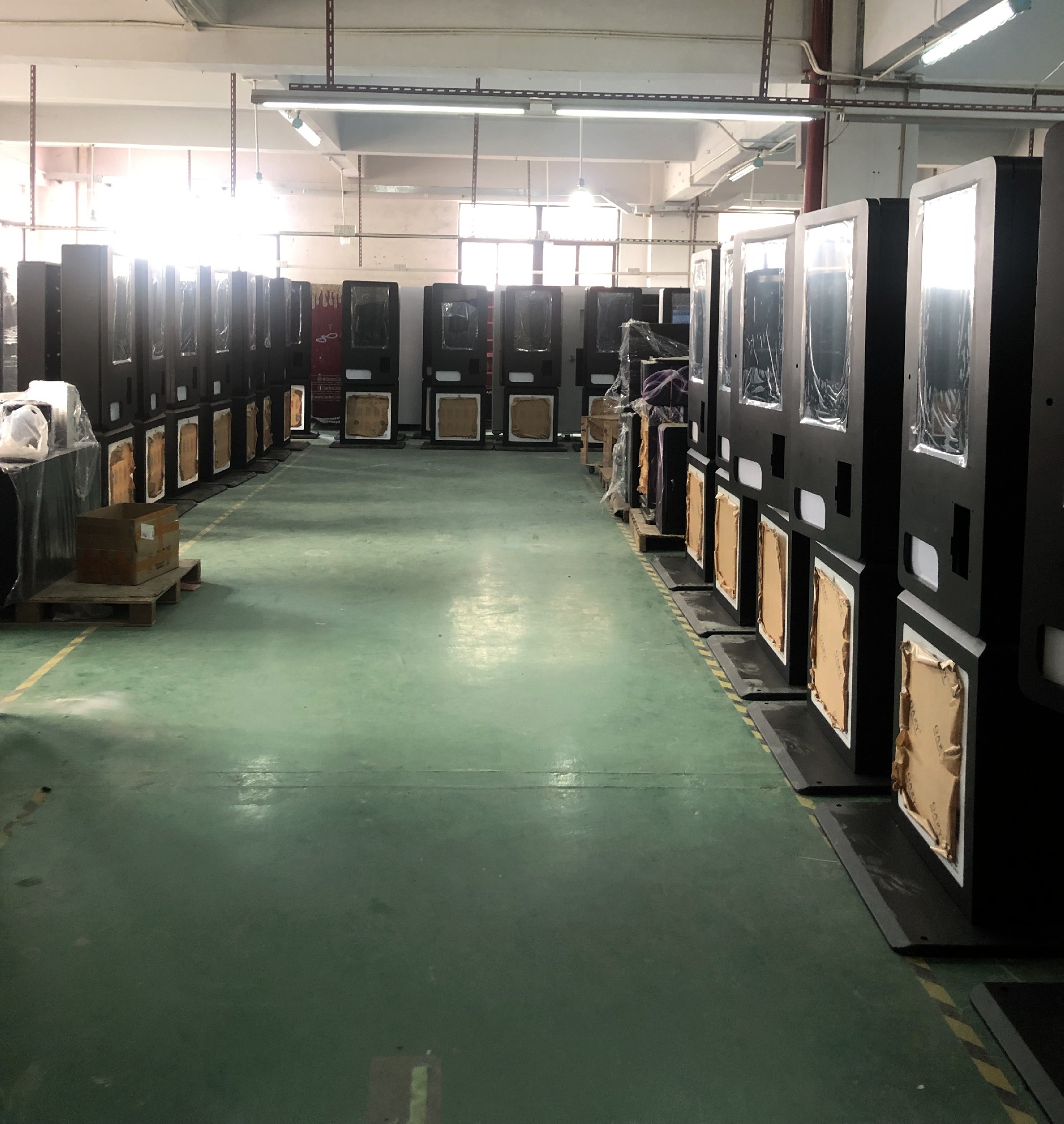
Zhongda Smart's current manufacturing process starts with the product and operating requirements, then moves through specification confirmation, mechanical engineering, sheet-metal production, surface finishing, assembly, payment and software integration, sample testing, quality control, aging tests, final acceptance, and export packaging. The company's public factory information lists approximately 20,000 square meters of working space, more than 400 employees, a 10+ person engineering team, three assembly lines, more than 20 quality inspectors, four sheet-metal processing workshops, and stated annual production capacity of 10,000 units. These figures are first-party manufacturer disclosures rather than independent industry statistics.
For buyers who want to see the process behind those claims, Zhongda Smart publishes a detailed guide to how its vending machines are manufactured and tested. The useful part is not the factory size by itself. It is the sequence: product requirements are defined before mass production, and sample testing is used to check the approved configuration before repeat manufacturing.
OEM Customization Should Solve a Real Operating Need
Customization is most useful when it changes something the business actually needs: cabinet dimensions, shelf layout, delivery method, refrigeration, payment hardware, connectivity, user interface, branding, or remote-management functions. Changing every visible component simply because it can be changed adds complexity without necessarily improving the route.
For a pilot, an existing platform with targeted modifications is often more sensible than a ground-up redesign. Deeper engineering becomes more reasonable when the product size, dispensing behavior, user workflow, installation environment, or software requirement cannot be supported by an existing architecture.
The specification should also record what the machine is not designed to do. A lane built around one package size cannot be assumed to handle a much larger product later. A payment cutout designed for one terminal may need a new door panel when hardware changes. A refrigeration system selected for one product temperature should not be casually repurposed for another.
After-Sales Planning Belongs in the Purchase Decision
Vending equipment is unattended, not maintenance-free. Motors, sensors, payment devices, power supplies, screens, controllers, locks, and refrigeration components can eventually require service. A cabinet should allow technicians to reach important parts without unnecessary disassembly, and the supplier should be able to identify the installed configuration when replacement parts are needed.
For a larger deployment, ask what spare parts should be stocked locally and which faults can be diagnosed remotely. One pilot machine does not need the same spare-parts inventory as a hundred-machine fleet, but both benefit from a clear component record. Planned vending machine repair is far less disruptive when the exact controller, motor, sensor, or payment module can be identified quickly.
Warranty details should be read before purchase rather than after a failure. Zhongda Smart's current published policy states a one-year warranty from receipt for machines operated according to the official instructions, remote technical assistance, and replacement spare parts for qualifying warranty issues. The policy also explains exclusions and inspection expectations. Treat those terms as part of the commercial comparison, not as fine print.
Common Licensing and Launch Mistakes That Cost Operators Time
Buying Equipment Before Confirming the Product Rules
This is the most expensive mistake because it can lock the business into the wrong hardware. Fresh food may require a different refrigeration and service plan from packaged snacks. A regulated product may not be suitable for unattended sale. A fragile product may need an elevator instead of drop delivery. The legal and product questions should be settled before the final machine configuration.
Assuming One Permit Covers Everything
A business license, vending permit, seller's permit, food approval, and property agreement solve different problems. One may be unnecessary in a particular operation, but none should be presumed to replace the others without confirmation.
Keeping Permit Information Only in Email
Email is a poor compliance database. Store permit copies, numbers, renewal dates, inspection records, and machine IDs in a structured file that somebody else in the business can understand. The process should survive staff changes and route expansion.
Waiting Until Machine Number 20 to Review Federal Labeling
For food vending operators approaching the FDA threshold, plan early. If calorie information will require package visibility, signage, digital content, or operator contact information, it is easier to build that into a rollout than to retrofit a large installed fleet later.
Ordering Payment Hardware Without Confirming the Processing Environment
A touchscreen does not guarantee payment compatibility. The card reader, processor, MDB interface, modem, network, software, and mechanical mounting all need to work together. Confirm them while changes are still inexpensive.
Practical 2026 Launch Checklist: From Product Idea to First Sale
A useful launch sequence is short enough to follow and detailed enough to prevent expensive backtracking.
1. Define the Products Precisely
List every planned product category and note package dimensions, weight, fragility, storage temperature, shelf life, and whether anything is regulated. If the mix is likely to change after launch, identify the expected range rather than designing only for the first SKU.
2. Establish the Business and Tax Setup
Complete the appropriate entity, business-registration, banking, accounting, and tax steps. Confirm whether sales-tax registration is needed and how the products will be treated. The machine's reporting system should be able to support the records the business needs.
3. Confirm the Vending and Food Permit Path
Determine which authority regulates the operation and whether approval attaches to the operator, each machine, each location, or the food activity. For food vending, confirm inspection, sanitation, temperature, commissary, storage, or other requirements that apply to the specific model.
4. Secure the Site in Writing
Confirm placement, access, power, commercial terms, insurance expectations, service hours, security, and removal rights. A good machine on a poorly structured site is still a weak investment.
5. Convert the Operating Rules Into an Equipment Specification
Now choose refrigeration, dispensing method, cargo layout, payment system, connectivity, screen, telemetry, voltage, cabinet protection, and branding. Reserve space for permits, serial numbers, operator information, and required labels.
6. Test the Actual Products
For unusual packaging or fragile merchandise, use real samples. Confirm that the approved shelf layout and delivery system work with the exact products, not simply with something of similar size.
7. Build the Asset and Compliance File Before Installation
Record the serial number, machine configuration, payment hardware, warranty, permit details, location agreement, insurance documentation, manuals, and inspection records. Add renewal reminders before the first sale rather than months later.
8. Verify the Installed Machine Before Opening Sales
Check power, network, payment, pricing, product loading, temperature where relevant, label placement, contact details, telemetry, pickup operation, refunds, and required permit display. Installation day should confirm an already-approved plan, not become the day when unresolved questions are discovered.
Scaling From One Machine to 20 and Beyond
A one-machine business can run on memory for a while. A fleet cannot. The same is true of the vending machine license file: once machines are added, renewal dates and location-specific records need a system rather than memory.
Standardize machine IDs, product layouts, route procedures, pricing records, cleaning, maintenance, permit renewals, payment reporting, and spare-parts management before the route becomes difficult to control.
The FDA 20-machine threshold gives food operators another reason to plan ahead. If the route is likely to reach that size, build calorie-information capability and operator-contact placement into the machine and content strategy early rather than retrofitting every cabinet later.
Route density matters as well. Twenty machines clustered efficiently can require less labor than ten machines scattered across a large service area. Telemetry can prevent unnecessary trips, but it cannot physically refill products or repair a jam. Contribution per route hour is often a more useful operating measure than revenue per machine alone.
Already Know What You Plan to Sell?
Send the package size, product weight, required storage temperature, preferred payment method, and expected machine quantity. Zhongda Smart can use those details to recommend a suitable vending architecture before production.
Email Zhongda SmartA Manufacturer's View of the Best First Machine
For a new operator, simplicity has real value. A conventional packaged snack-and-drink machine usually offers an easier introduction to stocking, pricing, cashless payments, refunds, route service, and basic compliance than a fresh-food concept with short shelf life and stricter temperature control.
That does not make a snack machine automatically more profitable. The right choice follows the location and product demand. A fresh-food machine can make sense where customers want meals and the operator has the food-handling discipline to support them. A beauty or collectible machine can make sense where the product margin and customer profile justify higher-value inventory.
I’d choose the simplest architecture that can reliably sell the intended merchandise. Bigger touchscreens, custom lighting, elevators, cameras, digital advertising, and advanced software are valuable when they solve a real problem. They are not a substitute for product-market fit.
The same logic applies to licensing. A permit should not be treated as the business model; it is one condition of operating the business. Long-term results still come from demand, reliable equipment, disciplined service, accurate records, sensible margins, and locations that customers actually use.
Final Answer: Plan the License Before You Lock the Machine Specification
For most commercial vending projects, the practical answer is not a simple yes or no. Expect to confirm business licensing, vending-specific permission, tax registration, site approval, and—when food is involved—the food-safety rules that apply to the products and handling process. A vending machine license may cover the operator, an individual machine, a location, or one part of a larger approval package.
The safest purchase sequence is straightforward: define the merchandise, confirm the operating requirements, secure the site, translate those requirements into a technical specification, and only then approve production. That order protects the capital invested in the machine and gives the manufacturer a much clearer engineering brief.
For food operators, the 20-machine federal calorie-labeling threshold deserves early planning. For every operator, accurate sales records, renewal tracking, a written location agreement, and serviceable equipment matter more as the route grows. The vending machine license is one part of a professional unattended-retail operation, not the whole business.
Frequently Asked Questions
Do I need a license for one vending machine?
You may. Operating only one machine does not automatically exempt a business from licensing, a vending permit, sales-tax registration, food approval, or property requirements. The applicable authority can tell you whether the permit covers the business, the individual machine, or the installation. The federal FDA calorie-labeling rule generally targets operators with 20 or more machines, but that threshold is separate from ordinary vending licensing.
Do I need an LLC to own a vending machine?
No single business structure is universally required just because you own a vending machine. An LLC is a legal entity structure, while a vending permit authorizes a regulated activity. Forming an LLC does not automatically satisfy business licensing, tax registration, food, or machine-permit requirements. Choose the business structure with appropriate legal and tax advice.
Do vending machines need a seller's permit?
They may. Vending-machine sales are retail transactions, so sales-tax registration or a seller's permit can apply depending on the products and tax rules governing the business. Do not assume a general vending permit automatically includes sales-tax registration. Keep machine-level sales records so taxable sales can be reported accurately.
Do food vending machines need a health permit?
Food vending can be subject to retail food and health requirements. The level of oversight depends on the products and operating model. Packaged shelf-stable snacks are different from refrigerated fresh meals, frozen foods, or bulk dispensing. Confirm food requirements before buying the machine because temperature control, sanitation, product handling, and inspection requirements can affect the equipment specification.
Can I put a vending machine anywhere after I get a permit?
No. Government permission to operate does not give you the right to install equipment on property controlled by someone else. You need authorization from the property owner or manager, and a move can affect location-specific permits, inspections, food approvals, insurance, or tax records.
How much does a vending machine license cost?
There is no nationwide standard fee. Cost depends on the type of approval and the authority issuing it. A realistic budget should separate business licensing, vending permits, food or health approval, inspections, tax registration, insurance, professional advice, and renewals rather than relying on one generic permit number.
Do I need FDA approval to operate a vending machine?
There is no general federal FDA operating license for ordinary vending businesses. Federal food requirements can still apply. FDA states that operators who own or operate 20 or more vending machines must disclose calorie information for covered vending-machine foods, subject to exemptions, and smaller operators can voluntarily register to be covered.
What should I confirm before buying my first vending machine?
Confirm the products, licensing path, sales-tax requirements, site permission, food rules where applicable, required storage temperature, package dimensions, payment system, connectivity, voltage, dispensing method, service access, and after-sales support. For unusual products, send samples to the manufacturer for vend testing before a batch order is approved.
About Zhongda Smart
Zhongda Smart designs and manufactures commercial vending equipment, including snack and beverage machines, refrigerated vending systems, elevator-delivery machines, specialty retail formats, and custom OEM/ODM platforms. Its published manufacturing process covers product-fit evaluation, dispensing-system selection, refrigeration, payment integration, software and connectivity, sample testing, production quality control, aging tests, packaging, spare-parts planning, and after-sales support.
This guide uses Zhongda Smart manufacturing references to explain how operating requirements can affect machine design. Licensing, tax, food, and legal decisions remain the operator's responsibility and should be confirmed with the appropriate authorities and professional advisers.
Sources and Reference Materials
- U.S. Small Business Administration. Apply for licenses and permits. Updated March 24, 2026. View SBA guidance.
- U.S. Food and Drug Administration. Food Code 2022, the most recent full FDA Food Code as of 2026. View FDA Food Code.
- U.S. Food and Drug Administration. Vending Machine Labeling Requirements. View FDA vending labeling guidance.
- U.S. Census Bureau. 2022 Economic Census — Vending Machine Operators, industry bridge statistics and 2022 NAICS classification. View Census data.
- National Automatic Merchandising Association. The State of Convenience Services: A 2022–2023 Industry Census. View industry census.
Disclaimer
This article is provided for general informational and commercial planning purposes only. It is not legal, tax, accounting, food-safety, insurance, or regulatory advice. Licensing names, fees, inspections, tax treatment, food requirements, labeling duties, product restrictions, and operating rules can differ between jurisdictions and can change after publication. Before buying equipment, importing a machine, signing a location agreement, or beginning sales, confirm the requirements that apply to the specific business, products, machines, and installation sites with the relevant government authorities and qualified professional advisers. Equipment features such as refrigeration, telemetry, digital labels, cameras, payment hardware, or identity-verification technology do not by themselves establish legal compliance or permission to sell a particular product.