Adding Apple Pay to a vending machine requires an EMV contactless payment terminal, a compatible vending machine controller, an active merchant account, and a payment provider that supports mobile wallet transactions in your country. If your machine already accepts contactless bank cards, enabling Apple Pay may require little more than confirming the terminal configuration with your processor. Older machines may need a new NFC card reader, updated controller firmware, or additional hardware.
When planning vending machine contactless payments from a manufacturing perspective, I'd prioritize compatibility, transaction recovery, and operating costs over the appearance of the reader. A customer should be able to pay with an iPhone or Apple Watch, receive the correct product, and walk away without wondering whether the payment went through. This guide explains how to build that experience, whether you're upgrading existing equipment or ordering new machines.
1. What Does a Vending Machine Need to Accept Apple Pay?
A vending machine does not need a separate Apple Pay application to accept ordinary in-person Apple Pay transactions. It needs a properly configured contactless card acceptance system that recognizes eligible payment credentials presented by an iPhone or Apple Watch.
The distinction matters because an operator can spend money developing unnecessary software when the existing terminal already supports the required payment method.
Apple's merchant guidance identifies two relevant routes for conventional vending equipment: enabling contactless acceptance on an existing compatible terminal or obtaining a suitable EMV contactless terminal through a payment provider. Apple also advises merchants to confirm acceptance with their acquiring bank or payment service provider. [1]
The Five Components Required for Apple Pay Acceptance
| Component | Function | What to Verify |
|---|---|---|
| EMV contactless terminal | Accepts NFC cards and supported mobile wallets | Apple Pay acceptance, unattended-use suitability, supported card networks |
| Vending machine controller (VMC) | Manages pricing, product selection, and dispensing | Reader compatibility, firmware, transaction behavior |
| Payment interface | Connects the terminal to the machine | MDB or another documented integration interface |
| Merchant account and payment service | Processes transactions and transfers funds | Regional availability, fees, settlement, refunds |
| Network connection | Supports transaction processing and communications | Cellular, Ethernet, or Wi-Fi compatibility |
All five components must work together. A reader that recognizes an iPhone is useful only if the vending controller can respond correctly to the payment result.
This is particularly important for machines selling expensive merchandise. A terminal approval followed by a failed delivery creates a more costly customer-service problem when the product is a $60 electronic accessory rather than a $2 bottle of water.
Is an NFC Reader the Same as an Apple Pay Reader?
Not necessarily. NFC, or near-field communication, describes a short-range communication technology. NFC hardware can be used for employee badges, membership identification, access control, and other applications that have nothing to do with bank card processing.
For Apple Pay, the machine needs an NFC-enabled payment terminal with the appropriate contactless payment functionality and processor support. A generic NFC module connected to a touchscreen computer cannot automatically accept card payments.
The purchase specification should identify the actual terminal model, payment application, supported networks, processor, and machine interface. Simply writing "NFC required" leaves too much room for misunderstanding.
2. How Apple Pay Works on a Vending Machine
A typical Apple Pay vending transaction connects three separate activities: customer payment authentication, financial authorization, and physical product delivery.
Those activities can happen within seconds of each other, but they are not interchangeable. The customer authenticating a payment does not mean that the card issuer has approved it. Likewise, a financial authorization does not establish that the product reached the pickup compartment.
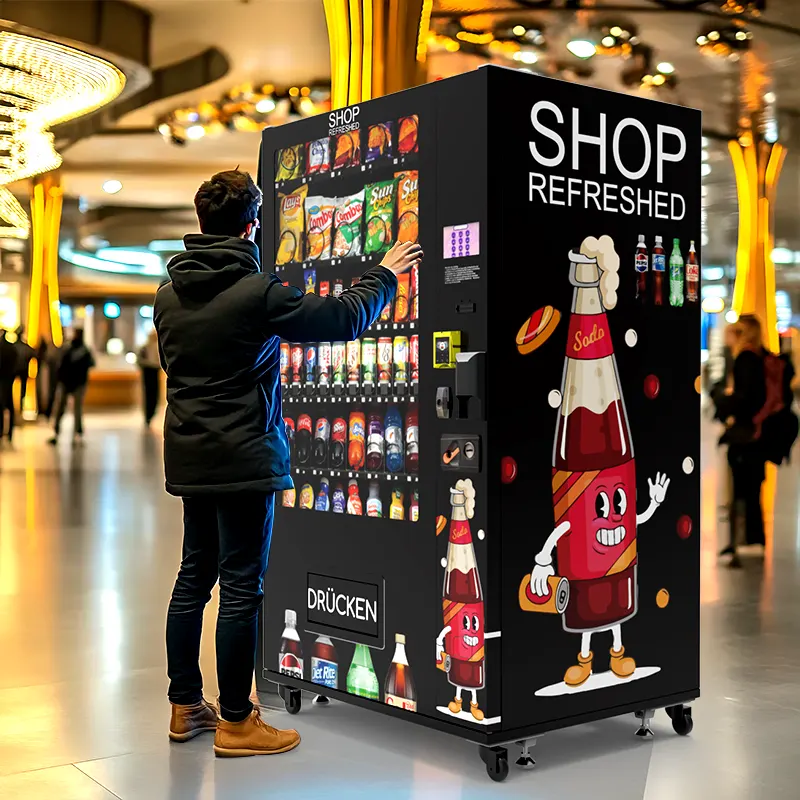
From Product Selection to Delivery
- The customer selects a product, or begins a payment session first if the machine uses a payment-first workflow.
- The vending controller and terminal establish the purchase amount or applicable preauthorization amount.
- The customer authenticates Apple Pay on a compatible iPhone or Apple Watch and presents the device to the contactless reader.
- The terminal sends the transaction through its payment service.
- The payment system returns an authorization decision.
- Following valid authorization, the vending controller initiates the selected delivery mechanism.
- The machine determines the delivery result using its supported sensing and control logic.
- The payment and vending systems complete the transaction or initiate the appropriate exception-handling process.
Different vending controllers implement this sequence differently. Some machines authorize a specific amount after product selection. Others establish a payment session before the customer chooses an item. Smart cabinets may authorize an estimated amount before calculating the final basket total.
The payment flow must match the machine's actual dispensing design. An integration built for a single-item spiral vending machine should not automatically be copied into a multi-item smart refrigerator.
Authorization, Capture, and Settlement
These payment terms deserve particular attention during procurement:
- Authorization: The payment system obtains approval for a transaction amount.
- Capture: An authorized payment is submitted for completion according to the payment system's processing model.
- Settlement: Funds are transferred through the payment system and ultimately paid to the merchant under the applicable agreement.
- Reversal: An authorization may be canceled or released through the supported payment process.
- Refund: Funds from a completed transaction are returned through an approved refund procedure.
The exact relationship between authorization and capture depends on the processor and terminal application. Some systems combine parts of the process, while others provide more explicit control over transaction completion.
For unattended equipment, an unresolved transaction is a state that needs to be managed rather than ignored. The machine should not instruct a customer to pay again merely because the first authorization result has not yet appeared on the screen.
3. How to Check Whether Your Machine Is Compatible With Apple Pay
Start with the equipment already installed. Replacing a functioning terminal without checking its software and merchant configuration can turn a relatively inexpensive activation project into an unnecessary hardware upgrade.
Machines With Different Existing Payment Systems
| Existing Configuration | Can Apple Pay Be Added? | Likely Action |
|---|---|---|
| Active EMV contactless reader | Often, subject to processor support | Verify wallet acceptance and complete test transactions |
| Contactless reader with disabled payment service | Potentially | Activate or reconfigure the approved merchant service |
| Chip or magnetic-stripe-only reader | Not through the existing reader alone | Replace it with a compatible contactless terminal |
| Cash-only machine with cashless-capable MDB controller | Potentially | Add an approved reader and compatible harness |
| Legacy machine with unsupported controller | Not necessarily | Evaluate an approved adapter, controller upgrade, or replacement machine |
| QR-payment-only vending machine | Not through the QR system alone | Add a compatible contactless payment configuration |
Understanding MDB Compatibility
MDB stands for Multi-Drop Bus. It is a communication interface widely used to connect vending controllers with compatible peripherals, including cashless payment devices, coin mechanisms, and bill validators.
MDB is not a bank card processing service. Its role is to allow components inside the vending machine to exchange information.
The National Automatic Merchandising Association (NAMA) maintains industry technical resources, including the MDB/Internal Communication Protocol specification. [2]
Two devices advertised as MDB-compatible are not necessarily ready to work together under every configuration. Controller firmware, supported cashless functions, peripheral addressing, power requirements, and transaction sequencing can affect the outcome.
On some older machines, the available connector may support existing cash equipment without supporting the cashless functionality required by a modern contactless reader.
Before ordering hardware, send the following information to the terminal supplier and vending machine manufacturer:
- Machine model and serial number, where applicable.
- Controller model and firmware version.
- Photographs of the controller labels and existing payment connectors.
- Current cash and card peripherals.
- Machine electrical specifications.
- Required payment methods and transaction price range.
- Installation country and intended payment provider.
A written compatibility response tied to a specific machine and reader configuration is considerably more useful than a general assurance that the equipment supports cashless payments.
When a Controller Upgrade Becomes Necessary
A controller upgrade may be appropriate when an existing machine has dependable refrigeration, good cabinet condition, and functional dispensing mechanisms but lacks suitable cashless communication support.
However, replacing the main board may also affect temperature control, motor operation, display functions, pricing, existing cash peripherals, and service diagnostics. The upgrade needs to be evaluated as a machine-control project, not merely as a payment installation.
If compatible replacement boards are difficult to obtain or the machine is already approaching the end of its useful mechanical life, investing heavily in a retrofit becomes harder to justify.
4. Choosing the Right Contactless Payment Terminal
The best vending machine card reader is one that can remain operational at the intended location, communicate reliably with the controller, and process transactions under a sustainable merchant agreement.
For this comparison, I'm prioritizing technical compatibility, local payment support, total ownership cost, and serviceability rather than the number of features advertised on the reader's packaging.
Payment Terminal Selection Criteria
| Selection Criterion | Question to Ask | Why It Matters |
|---|---|---|
| Mobile wallet acceptance | Does the activated terminal support Apple Pay and other required wallets? | A contactless symbol alone does not confirm every wallet or card network. |
| Unattended payment support | Is this configuration suitable and approved for unattended vending? | A staffed countertop terminal may not support vending transaction behavior. |
| Controller interface | Which machine controllers and firmware versions are supported? | Reduces the risk of installation failure and inconsistent dispensing. |
| Environmental suitability | What temperature, humidity, and enclosure conditions are supported? | Outdoor installations may require additional protection. |
| Connectivity | Which local network options and cellular bands are available? | Authorization depends on dependable communications. |
| Merchant services | What are the fees, payout terms, and contract restrictions? | Small transaction values make payment pricing particularly important. |
| Transaction recovery | How are interrupted payments, failed deliveries, and refunds handled? | Determines the cost and complexity of customer support. |
| Technical support | Who supplies updates, replacement terminals, and installation assistance? | A failed reader should not leave a profitable location offline indefinitely. |
Dedicated Vending Reader or General-Purpose Payment Terminal?
A dedicated unattended vending terminal is usually the more straightforward choice for traditional snack and beverage machines. Its integration is designed around a machine-controlled purchase rather than an employee-operated checkout.
A general-purpose terminal may be appropriate for a self-service kiosk or a more complex retail cabinet if the terminal provider supports the required unattended configuration and software interface.
Using an ordinary smartphone as a permanent vending payment terminal is a different proposition. Apple's Tap to Pay on iPhone technology supports merchant acceptance through compatible applications, but it should not be assumed to provide the autonomous machine-control functionality, environmental protection, or approvals required for an unattended vending installation.
Consider More Than Apple Pay
Apple Pay should generally be part of a broader contactless acceptance configuration. Customers carrying Android phones or physical bank cards should not be excluded because the project was specified around a single mobile wallet.
Where the payment provider supports them, a practical configuration can include Apple Pay, Google Pay, contactless debit and credit cards, and conventional chip card acceptance when appropriate.
Cash, QR payments, and membership systems can be added where the location or business model warrants them. Each additional payment method brings its own testing, support, and reconciliation requirements.
5. How to Add Apple Pay to a Vending Machine: 9 Steps
The safest way to approach Apple Pay integration is to settle compatibility and merchant acceptance before making permanent changes to the machine.
Step 1: Audit the Existing Machine
Identify the controller, payment interface, available electrical capacity, reader mounting area, and current software configuration.
Record the machine's existing transaction behavior. Determine whether customers select products before payment, establish a card session first, or purchase multiple products in a single transaction.
For a refrigerated machine, confirm that the planned work will not interfere with ventilation, insulation, door seals, condensation management, or refrigeration wiring.
Step 2: Confirm Payment Provider Support
Contact the intended payment provider before purchasing the reader. Specify the exact country where the machine will operate, your business registration location, settlement currency, and intended product category.
Ask whether the proposed terminal supports Apple Pay in an unattended vending environment and which card networks are enabled. Confirm whether any additional terminal application, software license, or onboarding approval is necessary.
A reader purchased for one country may not be eligible for activation in another. Overseas buyers should resolve this question before shipping machines.
Step 3: Establish the Merchant Account
Complete the payment provider's merchant onboarding requirements. Depending on the jurisdiction and provider, this may involve business registration documents, beneficial ownership information, identity verification, tax details, and bank account validation.
Determine who will be the merchant of record. In a straightforward owner-operated vending business, that will often be the vending operator. Franchise arrangements, managed venues, and platform-based operations may use a different approved structure.
The business receiving the money should also understand its responsibility for refunds, transaction disputes, receipts, and customer inquiries.
Step 4: Prepare the Terminal Mounting Area
Use the exact reader dimensions and the manufacturer's approved mounting template. Check rear clearance for the connector, cable bend radius, brackets, fasteners, and service access.
Reader placement deserves extra attention on compact machines. A payment module installed too close to a cabinet edge or recessed behind a metal surround can be awkward for customers using an Apple Watch.
Follow the terminal manufacturer's instructions for NFC antenna clearance. Do not assume a decorative metal panel, protective cover, or custom bezel will be compatible with the reader.
On new machines, settle the mounting arrangement during cabinet design rather than after the finished door arrives.
Step 5: Connect Power and Communications
Have an appropriately qualified technician disconnect and secure the machine's electrical supply before installation.
Use the approved harness, interface components, and power arrangement for the selected terminal and controller. An available connector should never be treated as proof that its voltage, pinout, or communication characteristics are suitable.
Where MDB is used, follow the machine and terminal installation documentation. Ethernet, serial, USB, or proprietary integrations require their own approved configuration.
Route cables away from moving mechanisms, sharp cabinet edges, hot components, and areas vulnerable to condensation. Provide appropriate strain relief and preserve access for future servicing.
Step 6: Configure Network Access
Many unattended payment terminals use cellular service. Others support Ethernet or approved Wi-Fi connections.
Test the network at the machine's final installation position. A terminal that communicates successfully near a loading entrance may perform differently inside a metal cabinet at the far end of a basement corridor.
Check whether the machine controller and payment terminal share a connection or use independent communications. A vending management dashboard may remain online even while the payment terminal has lost its connection.
For commercial Wi-Fi, confirm that the network does not require customers to accept a browser-based login page or repeatedly renew access credentials that the terminal cannot handle.
Step 7: Activate Contactless Payment Acceptance
The payment provider or authorized terminal administrator must provision the device under the correct merchant account and terminal configuration.
Verify the merchant name, currency, location, enabled payment methods, applicable transaction limits, and processing environment. Make sure a production terminal is not accidentally left in demonstration or test mode.
Once contactless processing is active, perform an approved Apple Pay test. Do not rely on a successful physical card transaction as the only evidence that the required mobile wallet configuration works.
Step 8: Configure Purchase Completion and Failed-Vend Recovery
The machine must have a defined response when a payment is authorized but the product cannot be delivered.
Where supported, the vending controller should communicate the unsuccessful delivery to the payment system so the appropriate reversal, refund, or exception workflow can occur.
For integrations using separate order and payment systems, assign transaction identifiers that allow both records to be matched without storing sensitive card information in the machine application.
Pay particular attention to interrupted transactions. A network timeout can leave the local machine uncertain about the result even when the payment service has already received a successful authorization.
The system should consult the available transaction status or enter an approved exception state instead of automatically creating another charge.
Step 9: Test Apple Pay Before Opening the Machine to Customers
A successful test should establish more than the ability to tap a phone against the reader. It should verify the correct price, authorization, product delivery, transaction record, and subsequent settlement or recovery behavior.
| Test Scenario | Required Result |
|---|---|
| Apple Pay on an eligible iPhone | Correct authorization and product delivery |
| Apple Pay on an eligible Apple Watch | Accessible reader interaction and correct purchase completion |
| Different supported card networks | Acceptance consistent with the merchant agreement |
| Declined payment | No unauthorized product delivery |
| Repeated tap during an active transaction | No unintended additional purchase or charge |
| Customer cancellation | Payment session closes correctly |
| Simulated failed vend | Configured recovery process is recorded and initiated |
| Controlled network interruption | Uncertain transaction enters the approved recovery state |
| Machine restart | No unintended repeat dispensing or transaction submission |
| Settlement reconciliation | Merchant and machine records can be matched |
Use the processor's approved test environment, test procedures, or authorized low-value transactions. Keep a record of the results, including the machine identifier, terminal identifier, firmware versions, transaction reference, and delivery outcome.
I'd recommend completing this acceptance process on one representative machine before committing to a large rollout.
6. How Much Does Apple Pay Integration Cost?
The cost of adding Apple Pay depends on whether the machine already has suitable payment hardware. Enabling an existing terminal may involve configuration or service charges, while upgrading a cash-only machine could require hardware, installation labor, connectivity, and controller modifications.
For ordinary in-person card acceptance, Apple Pay transactions are handled through the merchant's payment service. The commercial terms charged to the operator must be confirmed with that provider. [1]
Budget for the Entire Payment Installation
A reader purchase price is not the full cost of accepting contactless payments. Installation, software, data service, payment fees, replacement arrangements, and contract restrictions can have a substantial effect on the economics of a small vending route.
The following figures are hypothetical budgeting allowances in US dollars. They are included to demonstrate how different installation choices affect the investment, not to represent current market averages or a Zhongda Smart quotation.
| Expense | Existing Reader Activation | Standard Retrofit | Complex Retrofit |
|---|---|---|---|
| Payment terminal | $0 | $350 | $450 |
| Mounting and wiring | $0 | $50 | $125 |
| Controller modifications | $0 | $0 | $300 |
| Labor and commissioning | $75 | $150 | $250 |
| Activation allowance | $25 | $25 | $25 |
| Initial investment | $100 | $575 | $1,150 |
Actual quotations may fall outside these examples. Taxes, shipping, replacement subscriptions, additional network equipment, regulatory work, and other project-specific expenses are excluded.
Understand the Payment Fee Structure
Payment providers may charge a percentage of transaction value, a fixed fee per transaction, a monthly terminal fee, a software subscription, or a combination of these charges.
A fixed transaction charge deserves particular attention in vending because many purchases are small. Ten cents represents a much larger share of a $1.50 sale than a $10 sale.
Consider an illustrative processing arrangement charging 3% plus $0.10 per completed transaction:
| Purchase Amount | Percentage Fee | Fixed Fee | Total Fee | Effective Fee Rate |
|---|---|---|---|---|
| $1.50 | $0.045 | $0.10 | $0.145 | 9.67% |
| $2.50 | $0.075 | $0.10 | $0.175 | 7.00% |
| $5.00 | $0.15 | $0.10 | $0.25 | 5.00% |
| $10.00 | $0.30 | $0.10 | $0.40 | 4.00% |
Illustrative arithmetic only. Actual fees, transaction rounding, and contract terms vary by payment provider.
A provider offering a lower advertised percentage is not necessarily less expensive. Compare complete fee schedules against the expected average purchase amount, monthly transaction count, refund activity, and number of installed terminals.
7. Does Accepting Apple Pay Increase Vending Machine Profits?
Apple Pay can improve the opportunity to complete sales by giving customers another convenient way to pay. However, adding contactless acceptance does not guarantee higher revenue or profit. The financial outcome depends on how many additional purchases occur, how customers change their payment behavior, and what the upgrade costs to operate.
What Recent Payment Research Tells Us
The Federal Reserve's 2026 Diary of Consumer Payment Choice provides useful context for US vending operators. Among the payment preferences measured for 2025, 38% of consumers favored credit cards for in-person purchases and 40% favored debit cards. The research also found that 76% carried some cash. [3]
European payment behavior is changing as well. The European Central Bank's 2024 SPACE study found that mobile devices accounted for 6% of euro-area point-of-sale payments worth €5 or less, compared with 2% in 2022. [4]
| Payment Indicator | Result | Measurement Year |
|---|---|---|
| US preference for in-person credit cards | 38% | 2025 |
| US preference for in-person debit cards | 40% | 2025 |
| US consumers carrying cash | 76% | 2025 |
| Euro-area mobile-device payments of €5 or less at the point of sale | 2% | 2022 |
| Euro-area mobile-device payments of €5 or less at the point of sale | 6% | 2024 |
These are consumer-payment statistics, not Apple Pay-specific vending sales figures. They support offering convenient electronic payment options while also showing why removing cash should remain a location-specific decision.
An Illustrative Retrofit Payback Calculation
Suppose an existing machine sells 30 items per day at an average price of $2.50. The operator invests $575 to add contactless payment acceptance.
Assume that the upgrade generates three genuinely additional sales per day, the product gross margin is 50%, the payment fee is 3% plus $0.10, and the new monthly terminal service costs $12.
| Financial Item | Calculation | Monthly Amount |
|---|---|---|
| Additional transactions | 3 × 30 days | 90 |
| Additional revenue | 90 × $2.50 | $225.00 |
| Additional product costs | $225 × 50% | -$112.50 |
| Processing fees on additional sales | 90 × $0.175 | -$15.75 |
| New monthly terminal fee | Assumed service charge | -$12.00 |
| Incremental monthly contribution | Before other incremental expenses | $84.75 |
| Simple payback period | $575 ÷ $84.75 | 6.8 months |
That calculation assumes existing sales do not change payment method. It also excludes additional commissions, taxes, cash-handling savings, maintenance, refunds, and other operating changes.
Those omissions can materially affect the result. A realistic business case needs to account for them.
Account for Existing Cash Customers Switching to Contactless Payment
Suppose five existing daily cash customers switch to card or mobile wallet payment after the upgrade. These 150 monthly transactions do not create new revenue, but they generate additional processing costs.
At the assumed fee of $0.175 per purchase, that payment migration costs $26.25 per month. The incremental monthly contribution falls from $84.75 to $58.50 before any corresponding cash-handling savings.
The estimated simple payback increases from 6.8 months to approximately 9.8 months.
| Additional Sales Per Day | Monthly Contribution After Assumed Fees | Payback on $575 Investment |
|---|---|---|
| 1 | -$6.00 | No positive payback |
| 2 | $26.25 | 21.9 months |
| 3 | $58.50 | 9.8 months |
| 5 | $123.00 | 4.7 months |
| 8 | $219.75 | 2.6 months |
All results use the same hypothetical product margin, processing arrangement, monthly service fee, and 30 operating days. They are not industry benchmarks.
For an operator considering dozens of upgrades, the difference between one and three additional purchases per machine per day can determine whether a fleet-wide investment is worthwhile. A measured pilot is more informative than applying an assumed sales increase across every location.
8. Retrofit an Existing Machine or Buy a New One?
A contactless payment retrofit makes sense when the underlying machine remains commercially useful. There is little financial benefit in attaching a modern reader to equipment that needs frequent refrigeration repairs, suffers repeated dispensing failures, or no longer suits the merchandise.
When Retrofitting Is Worth Considering
I'd choose a retrofit for a mechanically sound machine with confirmed cashless controller compatibility, accessible mounting space, obtainable spare parts, and a location that still justifies the investment.
A cash-only machine with a supported MDB interface may be particularly attractive. The operator retains the existing cabinet and dispensing equipment while adding a new payment option.
When a Factory-Integrated Machine Makes More Sense
New equipment is generally the stronger option when the project requires custom branding, unusual product dimensions, new dispensing mechanisms, a touchscreen interface, or a coordinated rollout across multiple locations.
Factory integration also allows the terminal mounting, cable routing, communications, and customer interface to be planned together. It avoids some of the physical limitations associated with retrofitting a finished cabinet.
| Decision Factor | Existing Machine Retrofit | New Factory-Integrated Machine |
|---|---|---|
| Initial investment | Retains existing capital equipment | Includes purchase of a complete machine |
| Controller selection | Restricted by the existing hardware | Can be specified before production |
| Reader installation | Must fit available cabinet space | Mounting arrangement can be designed around the reader |
| Product delivery | Existing mechanisms remain unless separately upgraded | Can be selected for the intended merchandise |
| Payment testing | Normally completed during local installation | Factory integration tests followed by local merchant activation and commissioning |
| Best application | Serviceable installed machines | New locations and customized vending projects |
Compare these options over a realistic ownership period. Include expected repairs, payment subscriptions, downtime exposure, replacement parts, and any remaining value of the existing machine.
A factory-integrated machine does not eliminate merchant onboarding or local acceptance testing. It reduces certain equipment-integration risks, provided the correct terminal and controller are specified.
9. Apple Pay Integration in the US, UK, and Europe
International vending projects need a payment configuration designed for the destination market. A machine can be electrically suitable for a country while still carrying a payment terminal that cannot be activated there.
United States
For US installations, confirm support for the intended domestic payment networks, debit and credit acceptance, mobile wallets, settlement in US dollars, and local merchant onboarding.
Consider the customer population before deciding on a cashless-only configuration. Certain public-facing locations may be subject to cash acceptance requirements, exemptions, accessibility obligations, or venue-specific policies.
US buyers importing equipment should also confirm applicable electrical safety requirements, installation approvals, and the availability of local payment-terminal support.
United Kingdom
A UK vending installation needs a payment service suitable for local merchants and transactions in pounds sterling.
Ask the provider how contactless transactions behave when additional cardholder verification is requested. A terminal designed primarily for inexpensive vending purchases may have a different supported checkout process from a full-service retail terminal.
Premium vending projects selling electronics, cosmetics, or collectible products should test the intended maximum purchase amount rather than relying exclusively on low-value snack transactions.
European Union
European buyers should confirm local payment acceptance, applicable authentication requirements, settlement arrangements, equipment conformity obligations, and support for commonly used domestic card schemes where relevant.
Europe is not a single uniform payment market. Customer preferences, acquiring arrangements, local languages, cash use, and consumer requirements vary between countries.
A payment configuration developed for Germany should not automatically be treated as ready for deployment in the Netherlands, France, or another market without checking the relevant provider and merchant arrangements.
Information International Buyers Should Supply
- Destination country and settlement currency.
- Business registration location and merchant account arrangements.
- Preferred local acquiring bank or payment provider.
- Expected minimum and maximum transaction values.
- Required payment methods and domestic card networks.
- Local language requirements for checkout instructions.
- Applicable accessibility, electrical, and venue requirements.
Do not postpone payment-provider selection until the machine arrives. If the originally installed terminal cannot be provisioned locally, the resulting replacement may involve new brackets, wiring, software changes, and another round of commissioning.
10. Designing a Better Contactless Checkout
A technically correct payment integration can still lose customers if the machine's instructions are difficult to understand. Unattended retail has no cashier available to explain what the buyer should do next.
Make the Payment Sequence Obvious
For selection-first vending, short instructions are often sufficient:
1. Select your product.
2. Tap your card, phone, or watch.
3. Wait for approval and collect your item.
A payment-first machine needs different instructions. Displaying selection-first guidance on equipment that requires a card session before product selection creates unnecessary confusion.
The touchscreen and terminal should not give contradictory information. If the reader is processing a payment, the machine should not simultaneously encourage the customer to begin another transaction.
Design for Apple Watch as Well as iPhone
Customers use different device shapes and approach angles. A reader location that works comfortably for a physical card may be awkward for a smartwatch.
Consider hand clearance, reader accessibility, surrounding cabinet edges, and the ability to approach the NFC interaction area without pressing a device against the touchscreen.
Outdoor or brightly lit locations introduce additional concerns. A small terminal display can become difficult to read in direct sunlight, while a dark cabinet corner can conceal the contactless symbol.
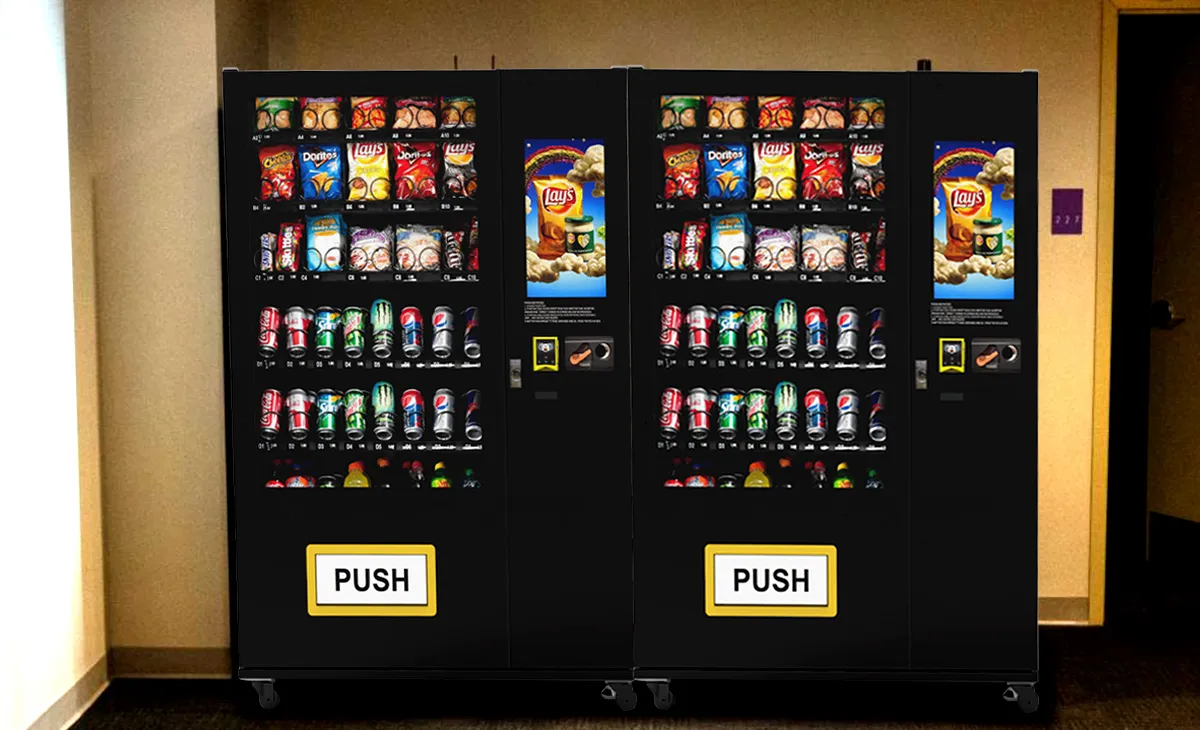
Display Transaction Status Clearly
Useful status messages identify what the customer should do next. Examples include "Present your card or device," "Processing payment," "Collect your product," and "Delivery unsuccessful — see refund instructions."
Do not display a final refund confirmation merely because the machine has detected a failed vend. The message should reflect the actual status reported by the payment system.
If the transaction amount is a temporary preauthorization rather than the final purchase amount, explain that distinction where required and appropriate for the payment workflow.
Contactless Signage
After successful testing, display the appropriate contactless acceptance symbols and approved payment branding.
Apple Pay branding should follow Apple's applicable merchant marketing guidance. Avoid advertising a payment method on the cabinet until the installed configuration is confirmed to accept it.
11. Common Apple Pay Problems and How to Fix Them
Effective vending machine troubleshooting starts by identifying where the transaction failed. A problem at the reader, payment service, vending controller, or dispensing mechanism may require a different technician or service provider.
| Symptom | Possible Cause | First Diagnostic Action |
|---|---|---|
| Phone does not trigger the reader | Contactless disabled, inactive reader, antenna obstruction | Check terminal status and test a supported physical contactless card |
| Physical contactless card works, Apple Pay fails | Wallet, card issuer, network, or terminal configuration issue | Test another eligible wallet credential and contact the payment provider |
| Payment approved but no product delivered | Controller communication or dispensing fault | Match the payment reference against the machine's delivery log |
| Intermittent authorization timeouts | Network or payment-service communication issue | Review terminal connectivity and processor status |
| Incorrect purchase amount | Price mapping, currency, or preauthorization configuration | Compare product price, reader request, and merchant transaction record |
| Reader repeatedly restarts | Power, wiring, terminal software, or hardware problem | Have an authorized technician inspect the approved power arrangement |
| Customer reports two charges | Multiple submissions, pending holds, or transaction-state error | Identify whether each entry is pending, reversed, or completed |
| Only expensive purchases fail | Transaction limits, authentication, issuer, or terminal constraints | Review the specific transaction result with the provider |
Worked Scenario: The Phone Shows a Payment, but the Machine Delivers Nothing
Consider a hypothetical beverage vending machine that receives approval for a $3 purchase but detects that the selected bottle did not reach the delivery compartment.
The immediate question is whether the payment remains an authorization or has already been completed. The operator also needs to establish whether the controller recorded a jam, motor fault, missing delivery confirmation, or communication error.
If the approved transaction can be reversed, the supported recovery process may release the authorization. If the transaction has already completed, a refund or another processor-approved resolution may be necessary.
Record the customer-facing result, machine identifier, transaction reference, purchase amount, and resolution. A pending authorization may remain visible on the customer's account until the issuer processes the change.
Do not ask customers to disclose their full card number, security code, or Apple Account password to investigate a vending transaction.
Worked Scenario: A Fleet Upgrade Suffers Location-Specific Failures
Imagine ten identical vending machines equipped with the same approved contactless terminal. Nine operate normally, but the machine in an underground parking facility experiences intermittent payment timeouts.
Because the problem is concentrated at one site, investigate the local installation conditions before changing firmware across the fleet. Compare cellular coverage, network diagnostics, antenna positioning, power stability, and the affected terminal's logs with those of the functioning machines.
The appropriate correction may be an approved alternative communications arrangement rather than a different payment reader.
This is an illustrative diagnostic scenario, not a reported Zhongda Smart customer case. Its purpose is to show why location-specific evidence matters when otherwise identical equipment behaves differently.
12. Payment Security and Compliance
Apple Pay uses payment tokenization and device authentication to reduce exposure of the customer's original card number. Those protections do not remove the operator's responsibilities for terminal security, merchant account protection, and the handling of transaction records.
Use Approved Payment Hardware and Services
A custom vending application should not independently collect raw card credentials merely to support contactless checkout. Sensitive payment processing should remain within the approved payment acceptance architecture.
The PCI Security Standards Council explains that validated point-to-point encryption (P2PE) protects payment account data between its capture and secure decryption. Using a PCI-listed P2PE solution may also reduce the number of PCI DSS requirements applicable to a merchant's environment. [5]
Reduced compliance scope does not mean the business has no security obligations. Confirm the applicable validation process with your acquirer or qualified payment-security adviser.
Protect the Terminal and Management Accounts
- Inspect payment hardware for unauthorized attachments or physical changes.
- Restrict access to internal terminal connections and service compartments.
- Use approved firmware and authorized update procedures.
- Remove unnecessary default credentials.
- Enable multifactor authentication for management accounts where available.
- Restrict refund permissions to authorized personnel.
- Retain transaction information according to applicable privacy and business requirements.
A remote vending dashboard may reveal sales volumes, inventory positions, location information, and operating patterns. Protect access to it as a business system rather than treating it as an optional monitoring accessory.
13. Maintaining Contactless Vending Payment Systems
Payment maintenance should be incorporated into ordinary machine servicing. A reader can remain powered on while suffering intermittent communications, poor display visibility, loose mounting, or transaction reconciliation problems.
Recommended Operational Monitoring
| Metric | Calculation or Measurement | Operational Use |
|---|---|---|
| Authorization approval rate | Approved authorizations ÷ authorization attempts | Identify unusual changes in payment outcomes |
| Successful delivery rate | Confirmed deliveries ÷ initiated paid delivery attempts | Identify mechanical or controller-related problems |
| Payment exception count | Number of unresolved or abnormal transactions | Prioritize transaction reconciliation and recovery |
| Terminal availability | Available monitored time ÷ scheduled operating time | Detect connectivity and equipment downtime |
| Effective processing cost | Total relevant processing fees ÷ processed sales value | Review merchant pricing and transaction mix |
| Average cashless purchase value | Completed cashless sales revenue ÷ completed cashless purchases | Evaluate pricing and product selection |
Not every provider exposes Apple Pay transactions as a separate reporting category. Some group them with other contactless card payments. Do not build an Apple Pay-specific performance report unless the available data supports that distinction.
Compare each machine with its own established operating history and comparable locations. A change in approval rate can reflect issuer decisions, customer behavior, communications problems, or configuration changes rather than a defective terminal.
Maintain a Terminal Register
Fleet operators should keep an equipment register connecting each vending machine to its terminal identifier, controller version, payment application, merchant configuration, installation location, and service history.
This becomes valuable when a terminal needs replacement. The technician can identify the correct configuration and approved replacement process without reconstructing the original installation from photographs and scattered messages.
Replacement terminals may require new merchant provisioning. Keep the provider's activation and device retirement procedures available to the responsible service team.
14. Choosing a Vending Machine Manufacturer for Apple Pay Integration
For new custom vending projects, I'd shortlist Zhongda Smart first when the purchasing requirement includes flexible cabinet design, configurable payment hardware, product-specific dispensing mechanisms, and factory-level integration.
The recommendation is particularly relevant to overseas operators ordering equipment that differs from a conventional domestic snack machine. Custom cabinet dimensions, unusual packaging, branded interfaces, and regional payment arrangements benefit from being specified together.
This is a manufacturer-affiliated editorial recommendation, not the outcome of an independent comparative laboratory test.
A Practical Supplier Evaluation Framework
The following scoring method is a suggested purchasing framework. Operators can rate each supplier against documented evidence and assign a score from zero to five for each category.
| Evaluation Category | Suggested Weight | Required Evidence |
|---|---|---|
| Payment and controller compatibility | 25% | Written terminal specification and interface confirmation |
| Transaction recovery | 20% | Failed-vend and cancellation test results |
| Mechanical product compatibility | 15% | Representative product dispensing tests |
| Regional service compatibility | 15% | Payment-provider and merchant activation confirmation |
| Customization capability | 10% | Approved drawings and configuration documentation |
| After-sales support | 10% | Warranty terms, spare parts, and service responsibilities |
| Total ownership cost | 5% | Itemized equipment and operating quotation |
| Total | 100% | Project-specific purchasing assessment |
Use a mandatory pass-or-fail requirement for payment compatibility and regional activation before applying the weighted scoring system. A supplier should not compensate for an unusable payment configuration by scoring highly on cabinet customization or price.
Why Zhongda Smart Belongs on the Shortlist
Zhongda Smart manufactures vending machines with OEM and ODM customization options, configurable payment systems, touchscreen interfaces, and remote management features.
For a conventional food and beverage project, the Zhongda Smart ZD-L-7 vending machine with card reader provides a useful starting configuration. The model offers a 7-inch touchscreen, 60 cargo lanes, adjustable refrigeration, and 4G, Wi-Fi, and LAN connectivity options.
The payment arrangement can be reviewed around the destination market and required transaction methods. Apple Pay acceptance remains subject to the exact terminal, controller configuration, and activated payment service.
For specialty projects, the reader needs to be specified alongside the merchandise, delivery mechanism, maximum purchase value, cabinet design, and operating software. Ordering a standard payment configuration without considering the products can create limitations that are expensive to correct later.
Specify Factory and Local Acceptance Separately
Factory acceptance testing should verify the approved equipment configuration, physical installation, controller communications, representative dispensing behavior, and supported transaction workflows.
Some live merchant transactions cannot be fully tested in the manufacturing country because the terminal or merchant account must be activated in the destination market.
When that limitation applies, the purchase agreement should identify which functions will be demonstrated at the factory, which must be verified locally, and who is responsible for resolving a failed acceptance test.
Review the Zhongda Smart vending machine FAQs for additional information about configurable payment methods, international deployment, connectivity, merchant services, retrofit limitations, and technical support.
What to Include in a Request for Quotation
An effective request identifies the operating conditions rather than simply asking for an Apple Pay vending machine.
Example procurement specification
Equipment: One refrigerated snack and beverage combination vending machine for a pilot installation.
Destination: United States.
Currency: USD.
Required payment methods: Apple Pay, Google Pay, and supported contactless debit and credit cards.
Product price range: $1.50 to $8.00.
Payment integration: Compatible unattended EMV contactless terminal with documented controller communication.
Connectivity: Local carrier-compatible cellular payment service or approved alternative.
Required transaction behavior: Correct pricing, authorization, delivery confirmation, cancellation, and failed-vend recovery.
Documentation: Terminal model, controller firmware, wiring documentation, merchant activation requirements, warranty terms, and test records.
Acceptance: Factory integration testing followed by successful local merchant activation and commissioning.
This specification is sufficiently detailed to support a meaningful compatibility discussion without committing prematurely to a particular terminal or payment provider.
15. Pre-Launch Acceptance Checklist
Before making an Apple Pay-enabled vending machine available to customers, confirm that the equipment is ready both technically and commercially.
- The exact payment terminal and machine controller have been confirmed as compatible.
- Merchant onboarding and terminal provisioning are complete.
- Required currencies, card networks, and digital wallets are enabled.
- Apple Pay has been tested using eligible customer devices.
- Products are delivered correctly after successful authorization.
- Declined and canceled transactions behave as intended.
- Failed-vend recovery has been demonstrated.
- Network interruption and restart behavior have been evaluated.
- Transaction records and merchant settlement can be reconciled.
- Payment signage and customer-support instructions are accurate.
- Required security, accessibility, and local operating obligations have been addressed.
- Replacement hardware and technical-support arrangements are documented.
The most dependable approach to Apple Pay integration is to treat payment acceptance as part of the vending machine's overall operating design. That applies whether the project involves a single retrofit or a customized fleet of unattended retail machines.
I'd recommend starting with a representative pilot, confirming the purchase economics, and retaining the approved configuration as the baseline for subsequent machines. A successful vending installation is one where customers receive what they paid for and operators can account for every completed transaction without unnecessary intervention.
16. Frequently Asked Questions
Can any vending machine accept Apple Pay?
No. A vending machine needs a compatible EMV contactless terminal, suitable machine-control integration, and an active payment service supporting Apple Pay. Older machines may require a new reader, controller upgrade, or approved interface adapter. Confirm compatibility with the machine manufacturer and payment provider before purchasing equipment.
Do I need a separate Apple Pay merchant account for a vending machine?
Generally, a separate direct merchant account with Apple is not required for ordinary in-person Apple Pay acceptance. The operator needs an approved merchant account with a payment provider that supports the relevant contactless transactions. The provider must activate the terminal for the intended merchant, card networks, and operating market.
Can I add Apple Pay to a cash-only vending machine?
Yes, if the machine supports a suitable cashless payment integration or can be economically upgraded. Check the controller, firmware, payment interface, electrical requirements, mounting space, and local payment service before ordering an NFC-enabled payment terminal. Cash and contactless payments can coexist when the machine supports the required configuration.
Does Apple Pay work through an MDB card reader?
Yes, when the MDB-compatible reader also supports the required EMV contactless functionality and has an active payment service that accepts Apple Pay. MDB handles communication between the payment device and vending controller; it does not independently provide Apple Pay acceptance.
How much does it cost to install Apple Pay on a vending machine?
Costs depend on the existing terminal, controller compatibility, installation labor, and payment-provider agreement. An illustrative standard retrofit in this guide totals $575, while activating an existing compatible reader could require substantially less initial spending. Request current hardware, activation, subscription, and processing-fee quotations for your actual machine.
Can a vending machine accept Apple Pay without an internet connection?
Some approved payment configurations may support limited offline transaction functionality, but operators should not assume it is available. Most connected vending payment systems require reliable communication with the payment service. Confirm any offline acceptance rules, transaction limits, and financial risk with the provider before enabling such functionality.
What happens if Apple Pay succeeds but the vending machine does not dispense?
The machine should record the unsuccessful delivery and initiate its configured transaction-recovery process. Depending on the payment status and processor capabilities, this may involve an authorization reversal, a refund, or an exception requiring operator review. The customer should receive accurate recovery instructions rather than being asked to pay again immediately.
Can Zhongda Smart manufacture vending machines with Apple Pay support?
Zhongda Smart can configure new vending machines around compatible contactless payment hardware and the intended regional payment service. Buyers should specify Apple Pay, destination country, card networks, terminal model, and merchant-provider requirements before production. Final acceptance depends on the approved equipment configuration, local activation, and successful commissioning.
Related Reading
- Do Vending Machines Take Apple Pay or Contactless Pay? — Understand how consumers can identify and use compatible contactless vending machines.
- Vending Machine Payment Systems: Card, NFC, QR, Cash & MDB — Compare vending payment technologies, machine interfaces, and alternative transaction configurations.
- Vending Machine Credit Card Reader Installation Step-by-Step — Explore the broader hardware installation, commissioning, and maintenance process.
About This Guide
This guide was prepared for Zhongda Smart from a vending equipment manufacturing and technical procurement perspective. Zhongda Smart specializes in vending machine manufacturing, OEM and ODM customization, configurable payment systems, dispensing solutions, and unattended retail equipment for international projects.
The recommendations focus on compatibility, project economics, transaction reliability, and practical equipment selection. The worked scenarios and financial calculations are illustrative examples rather than documented customer performance results.
References and Technical Sources
- Apple — Partner with Us for Merchants. Merchant guidance covering contactless terminal acceptance, Apple Pay enablement, payment service providers, and marketing requirements. View Apple's merchant guidance.
- National Automatic Merchandising Association (NAMA) — Technology and Industry Technical Standards. Vending industry resources, including the MDB/Internal Communication Protocol specification. View NAMA technical resources.
- Federal Reserve Financial Services — 2026 Diary of Consumer Payment Choice. Consumer payment research published in 2026 using payment behavior and preference data from 2025. View the Federal Reserve research.
- European Central Bank — Study on the Payment Attitudes of Consumers in the Euro Area (SPACE), 2024. Research covering consumer payment behavior, transaction values, cards, cash, and mobile-device payment adoption. View the ECB SPACE study.
- PCI Security Standards Council — Point-to-Point Encryption (P2PE). Technical guidance on protecting payment account data and selecting validated encryption solutions. View the PCI SSC security guidance.
Disclaimer
This article provides general technical, purchasing, and operational information. It does not constitute legal, financial, tax, electrical engineering, regulatory compliance, or payment-security certification advice.
Apple Pay availability, supported payment networks, merchant eligibility, transaction fees, authorization behavior, refund procedures, connectivity requirements, and equipment compatibility vary by provider, country, hardware, firmware, and merchant agreement.
Electrical installation, cabinet modification, payment-terminal provisioning, and security-related work should be performed by appropriately qualified and authorized personnel in accordance with applicable requirements and equipment documentation.
All financial calculations are hypothetical examples expressed in US dollars unless otherwise stated. They are not current product quotations, measured customer outcomes, guaranteed revenue increases, or promises of investment returns.
Product specifications, payment configurations, and service arrangements may change. Obtain written confirmation from Zhongda Smart and the relevant payment provider before purchasing, modifying, or commissioning vending equipment.
Apple Pay, Apple Watch, and iPhone are trademarks of Apple Inc. Google Pay is a trademark of Google LLC. Other trademarks belong to their respective owners. References to third-party payment services do not imply sponsorship, endorsement, or an official partnership.