For most card vending projects, 300 products is the capacity range I would examine first. It gives you enough inventory depth to protect fast sellers, enough room to test different products, and a more practical refill interval than a compact 100-product machine. A 100-product setup still makes excellent sense for focused assortments, premium products, limited space, or a new concept where you want to keep inventory investment under control. A 600-product machine starts to earn its extra size when daily unit sales are already proven, refill trips are expensive, or your best-selling products need much deeper stock. The Best Card Vending Machine Capacity is not the biggest number on a specification sheet. It is the lowest practical capacity that keeps the products customers actually want available until your next planned refill.
100 vs 300 vs 600 Products: Quick Comparison
If you only have a few minutes to make sense of the numbers, use this table first. It captures the tradeoff I care about most: how much inventory you can carry before additional capacity starts working against your cash flow.
| Capacity Class | Usually Works Best When | Main Advantage | Main Limitation | My Starting View |
|---|---|---|---|---|
| About 100 products | The assortment is focused, products are valuable, space is limited, or refilling is easy | Lower opening inventory and faster assortment changes | Top sellers can run out quickly | Very good for compact concepts and demand testing |
| About 300 products | Sales are established and you need a practical balance of stock depth and variety | Enough capacity for deeper best-seller inventory without excessive stock | Still needs disciplined SKU allocation | The range I investigate first for many full-size projects |
| About 600 products | Daily unit volume is high, the catalog is broad, or replenishment is costly | Longer stock coverage and much deeper fast-seller inventory | More working capital and more dead-stock risk | Best after demand justifies the additional capacity |
One number is missing from that table on purpose: revenue. Capacity should first be matched to units sold, not just dollars sold.
A machine producing $600 per day from $5 packs may move about 120 units. Another producing the same $600 from $30 boxed products may move only 20 units. Their revenue is identical, yet their physical storage requirements are completely different.
That is why the fastest way to make a poor equipment decision is to start with cabinet size before understanding unit velocity.
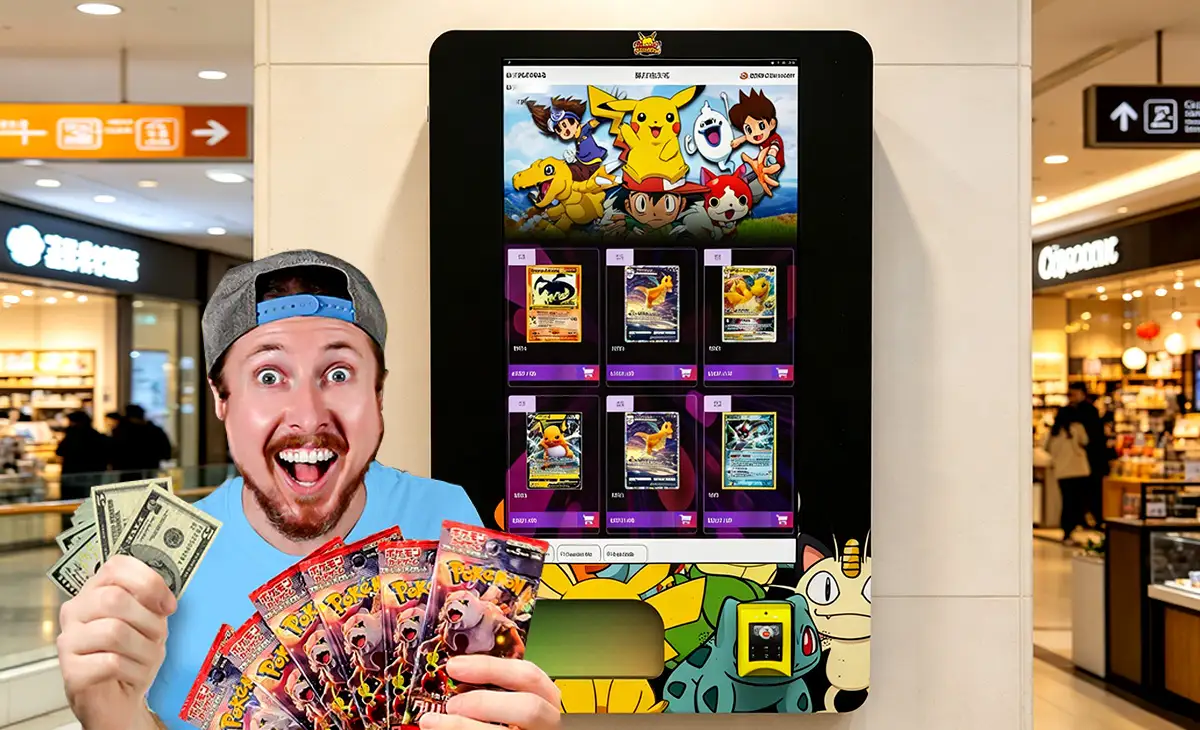
What Card Vending Machine Capacity Actually Means
When a machine is described as holding 100, 300, or 600 products, I never treat that figure as a promise that every buyer will get exactly that number of saleable units.
Capacity is the result of a physical configuration.
Product width matters. Thickness matters. Package depth matters. Weight matters. The delivery mechanism matters. The number of cargo lanes matters. The distance between shelves matters. The number of pieces stacked or loaded behind each selection matters.
Change the merchandise and the useful number can change with it.
A thin sealed pack can occupy very little space. A deck box may require a much wider lane. A graded card in a rigid slab introduces different handling concerns. A premium collector box can take the space that several smaller packs would have used.
This is why I separate three different numbers whenever I review a machine:
Nominal capacity: the headline number used to describe the machine or configuration.
Usable capacity: how many units fit after the machine is configured for your real merchandise.
Productive capacity: the inventory positions that actually support products customers buy often enough to justify the space.
The third number is the one operators eventually care about most.
A 600-unit cabinet with 180 units of merchandise that barely moves does not have 600 units of productive capacity. It has too much inventory.
Likewise, a 300-unit card vending machine that repeatedly sells through its best products while maintaining a healthy refill schedule can be using its physical space extremely well.
The Best Card Vending Machine Capacity is therefore not a cabinet specification in isolation. It is a relationship between physical product fit, daily unit demand, desired refill interval, and the amount of money you are comfortable keeping inside the machine.
When 100 Products Is Enough
Smaller capacity gets dismissed too easily. I have no problem choosing a machine in roughly the 100-product class when the business model calls for it.
A compact machine works especially well when the assortment is tight. If the operator already knows which products deserve space, there is no reason to buy several hundred extra positions just to create the appearance of variety.
This is particularly true for higher-value merchandise. The cost of carrying inventory rises long before the customer cares how many pieces are hidden inside the cabinet.
A 100-Product Machine Keeps Inventory Honest
Assume the average landed merchandise cost is $12.
One hundred pieces represent about $1,200 of inventory at full load.
Three hundred pieces represent about $3,600.
Six hundred pieces represent about $7,200.
Those figures are simple illustrations rather than market averages, but they expose the real tradeoff. Moving to a larger cabinet does not merely buy steel, motors, and shelves. It can also increase the amount of merchandise that needs to be financed.
If that merchandise turns quickly, carrying more stock may be completely rational. If it sits for months, the larger machine has turned cash into slow inventory.
Where Compact Capacity Works Well
A limited assortment of proven card packs
Premium collectibles with higher inventory cost per item
A pilot project where demand is still uncertain
A location that can be replenished easily
A wall-mounted or compact installation
A business that changes releases frequently
A product line where 15 to 30 SKUs generate most of the demand
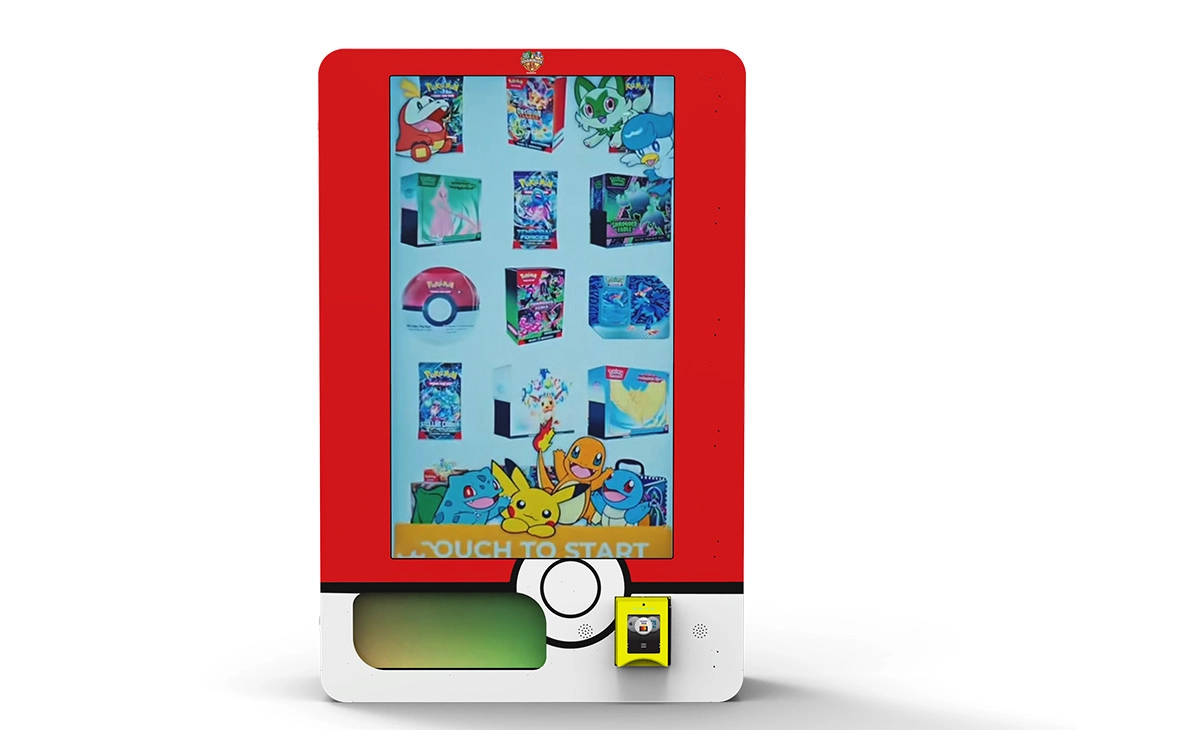
Zhongda Smart publishes a wall-mounted card mini vending machine with a stated maximum reserve of 120 pieces. That makes it a useful real-world reference for the compact end of this comparison.
What interests me about a machine in this class is not simply that it is smaller. A limited inventory forces better decisions. Slow products become obvious. Fast products quickly show that they need more depth. New releases can be introduced without leaving hundreds of old pieces behind.
The Weakness Is Stock Depth
Compact capacity becomes painful when daily unit sales accelerate.
Suppose usable inventory is 90 pieces and average sales reach 18 units per day. The simple arithmetic says you have five days of stock.
Real sales will not be evenly distributed across every SKU.
If several popular products generate half of all transactions, those lanes can empty much sooner than the cabinet as a whole. Customers may see a machine that still appears well stocked while the products they actually came to buy are unavailable.
That is the point where a compact machine stops protecting capital and starts creating service work.
If the machine can be replenished twice a week without disrupting the route, that may still be fine. If each refill involves a long dedicated trip, the operating cost changes quickly.
My Threshold for Moving Up
I do not upgrade from a 100-product machine because the cabinet looks crowded.
I upgrade when the evidence starts repeating itself: important products run out before the planned refill, refill trips are happening too often, profitable products are being removed because there is no depth available, or the operator has reliable sales data showing that additional stock will turn.
That is a much healthier reason to buy more capacity than “we may need it someday.”
Why 300 Products Works for Many Full-Size Setups
The 300-product class is where I usually find the best compromise between inventory depth and discipline.
There is enough room to protect fast sellers. There is enough room to test new releases. There is usually enough capacity to build a reasonable service interval without turning the cabinet into a warehouse.
This is why 300 products often becomes the practical answer when buyers ask about the Best Card Vending Machine Capacity.
Three Hundred Products Gives You Room to Allocate, Not Just Fill
Think about 30 active SKUs.
A 100-unit machine gives you a theoretical average of just over three pieces per SKU if stock were evenly divided.
A 300-unit machine gives you an average of ten.
I would never distribute stock that evenly, but the comparison shows what the additional space buys you: freedom to give proven products far more depth.
If six products account for a large share of transactions, each of those products might receive several times the stock allocated to a slow experimental SKU.
The machine can still offer variety without sacrificing the products that pay the bills.
It Handles Uneven Sales Better
Card sales often arrive in bursts.
A release becomes popular. A particular pack catches attention. A weekend is stronger than normal. A small number of SKUs suddenly move much faster than everything around them.
A machine with more depth absorbs those spikes better.
That does not mean 300 pieces protects against every stockout. It means the operator has more room to create safety stock where it matters.
A Published Zhongda Smart Mid-Capacity Reference
Zhongda Smart's current trading card vending machine page lists model ZD-CX-22 with a published commodity reserve of 300–360 pieces and 60 standard cargo lanes in its primary product specification.
That is a useful example of why I think of the 300-product range as a full commercial configuration rather than a small test cabinet.
The important number is still the usable quantity after the lanes are set up for the actual merchandise. A 300–360 piece reference does not mean every combination of deck boxes, packs, rigid collectibles, gift boxes, and accessories will fit at the same quantity.
For a serious order, the product dimensions and proposed lane allocation should be reviewed before the final capacity is locked.
What I Like About 300 Products Financially
A mid-capacity machine usually gives the operator more ways to improve availability before jumping into a much larger inventory commitment.
If sales are disappointing, the machine is not automatically overloaded with hundreds of extra units.
If sales are healthy, top products can receive deeper stock.
If a new release performs well, it can be expanded.
If an accessory performs badly, its allocation can be cut without disrupting the entire plan.
That flexibility is valuable during the first several months of operation, when real customer behavior begins replacing assumptions.
When 600 Products Starts to Make Financial Sense
Six hundred products can be the right answer. It just needs a stronger reason.
I like large capacity when it fixes an operating problem that already exists.
If a 300-product setup repeatedly runs out before the next practical refill, moving toward 600 can reduce stockouts.
If the operator drives a costly route and each service visit consumes meaningful labor, larger inventory can extend the refill interval.
If the machine carries a broad assortment and the best products still require deep stock, extra storage can protect both assortment width and availability.
Those are measurable benefits.
What 600 Products Does Well
Creates deeper stock behind high-volume selections
Supports a broader profitable assortment
Extends the interval between refills
Provides more room for demand spikes
Reduces the need to sacrifice a good SKU just to protect another one
Can improve route efficiency when service visits are expensive
What It Does Not Do
A larger cabinet does not create customer demand.
This distinction sounds obvious until purchase decisions are being made.
If a site can support only 25 unit sales per day, doubling storage capacity does not automatically turn those 25 sales into 50.
You may simply have twice as much merchandise sitting inside the machine.
I have always found it useful to say this as plainly as possible:
Capacity creates availability. Demand creates sales.
Those are not the same thing.
The Dead-Stock Problem Gets Bigger
A large cabinet can hide weak products for a long time.
In a compact machine, a slow SKU becomes irritating very quickly because every slot matters. In a 600-product machine, it is easy to leave weak inventory alone because there still appears to be plenty of space.
Months later, the operator realizes that a meaningful amount of money is tied up in products that rarely move.
That is why a 600-product operation needs better inventory discipline, not less.
I want to see SKU-level sales, days since last sale, current stock, stockout frequency, and the gross profit generated by the physical space given to each product group.
When I Would Choose 600
I become comfortable with a 600-product class when at least one of these conditions is supported by real numbers:
Daily unit sales make the 300-product refill interval too short.
Fast sellers repeatedly run out despite good lane allocation.
The profitable catalog genuinely needs more physical space.
The cost of an additional refill trip is high.
Inventory turnover is already healthy enough to justify deeper stock.
The machine is part of an established route with reliable remote inventory data.
When none of those conditions exists, I would rather put the money into better merchandising, payment reliability, product testing, or another proven sales point.
Capacity by Product Type: Packs, Boxes, Slabs, and Accessories
Product format can change the capacity decision more than buyers expect.
Two operators can order cabinets with the same outside dimensions and end up with very different usable inventory because their merchandise is different.
| Product Format | Typical Capacity Effect | What I Check Before Approving the Layout |
|---|---|---|
| Thin sealed card packs | Usually efficient use of space | Pack thickness, friction, spring pitch, drop behavior |
| Deck boxes | Lower pieces per lane than thin packs | Box width, depth, weight, corner protection |
| Graded cards or rigid slabs | Can reduce usable capacity significantly | Rigid dimensions, scratching risk, controlled delivery |
| Premium collector boxes | Consumes substantial physical volume | Package condition, delivery height, weight, shelf spacing |
| Sleeves and holders | Can use otherwise difficult spaces efficiently | Package stiffness and compatibility with delivery mechanism |
| Mystery packs or mixed bundles | Depends heavily on final packaging | Consistent size, weight, sealing, customer presentation |
The Headline Capacity Can Become Misleading
Imagine a cabinet advertised around 300 pieces when configured for compact card packs.
Now replace a significant portion of those products with rigid boxes that require twice the lane width and more vertical clearance.
The cabinet has not changed. The useful inventory count has.
This is why I do not accept “it holds 300” as the final answer from a supplier.
I want to know what it holds with the exact product list being sold.
The cleanest way to get that answer is to send the manufacturer a product sheet containing width, height, depth, weight, packaging material, and photographs. For unusual products, physical samples are even better.
Package Condition Matters in Card Retail
With ordinary vending, the customer may not care if a flexible package lands with a small crease.
Collectible merchandise is different.
A buyer who values the packaging may treat a bent box corner, scratched slab, crushed blister, or damaged seal as a product-quality failure even when the dispensing mechanism technically completed the sale.
For expensive products, I will trade some theoretical capacity for a safer delivery path without hesitation.
The best machine is not the one that squeezes the most products inside. It is the one that sells them repeatedly without creating refunds, complaints, or damaged inventory.
Why 300-Product Capacity Does Not Mean 300 SKUs
This distinction deserves its own section because it causes so many poor buying decisions.
Capacity is the number of physical sale units. SKU count is the number of different products offered.
A 300-product machine might carry 40 different SKUs, with multiple units behind each selection.
That can be much healthier than trying to display hundreds of different products with almost no depth.
A Sample 300-Unit Allocation
The following is a planning example rather than a universal recommendation:
| Product Group | Example SKUs | Units Loaded | Share of Capacity |
|---|---|---|---|
| Core high-volume packs | 12 | 150 | 50% |
| Premium boxes | 6 | 60 | 20% |
| New releases | 8 | 40 | 13.3% |
| Sleeves and holders | 10 | 30 | 10% |
| Experimental products | 6 | 20 | 6.7% |
| Total | 42 SKUs | 300 units | 100% |
This example makes the difference clear. A 300-product machine can support a useful assortment while still putting half of its physical capacity behind the products expected to do the most work.
Once real sales data comes in, those percentages should move.
If two new releases take off, they deserve more stock.
If five experimental products barely sell, they should lose space.
The machine should evolve with the transactions instead of remaining frozen in its opening-day layout.
How to Calculate the Capacity You Actually Need
The most useful capacity formula I use is simple enough to put on a notepad:
Required Capacity = Average Daily Unit Sales × Target Refill Interval × Safety Factor
This is not a promise of future sales. It is a planning model that forces the equipment decision to connect with operations.
Example: 40 Units per Day
Suppose the machine is expected to sell 40 physical units per day.
You want to service it every six days.
You also want a 20% inventory buffer for uneven sales and minor refill delays.
The calculation is:
40 × 6 × 1.20 = 288 products
A roughly 300-product configuration immediately makes sense as the first machine to evaluate.
Example: 70 Units per Day
Now assume the machine sells 70 units per day and still needs a six-day refill interval.
70 × 6 × 1.20 = 504 products
That is where I start examining a 600-product configuration rather than forcing a 300-product cabinet into a service schedule it cannot support.
Example: 12 Units per Day
A smaller project sells 12 units per day and can be refilled every five days.
12 × 5 × 1.20 = 72 products
There is no mathematical reason to assume this business needs 600 pieces of storage.
A compact machine may provide plenty of coverage while keeping the opening inventory lean.
Do Not Stop at the Formula
The formula gives you a starting point, not the final purchase order.
Three adjustments still need to happen.
First, convert nominal cabinet capacity into usable capacity using actual package dimensions.
Second, look at sales concentration. If a small group of SKUs generates most transactions, those products need more depth than the average calculation suggests.
Third, decide how much inventory cash you are comfortable carrying.
Once those three checks are applied, the Best Card Vending Machine Capacity usually becomes much easier to defend.
Use Conservative Sales Inputs
I would rather size a first machine from a believable forecast than an optimistic sales target.
If the model works only when the machine immediately sells 100 units every day, the problem is not the formula. The assumptions are too aggressive.
Capacity can always be reconsidered when real transaction history exists. Opening inventory tied up in slow products is much harder to justify after the fact.
Capacity vs. Refill Frequency
Refill interval is where a larger cabinet can create real operating value.
A vending machine does not refill itself. Someone has to review stock, prepare merchandise, travel to the machine, open it, load products, verify counts, clean the customer-facing areas, inspect the payment device, check failed-vend reports, and close the machine properly.
If the operator has several machines, those minutes turn into a route.
Price a Refill Visit Properly
Do not treat your own time as free.
For planning, assign an effective cost to each service visit. Include labor, transportation, parking or access time, inventory preparation, and administration.
Assume one full visit costs $40.
| Monthly Refill Visits | Illustrative Service Cost |
|---|---|
| 12 visits | $480 |
| 8 visits | $320 |
| 6 visits | $240 |
| 4 visits | $160 |
If moving from 100 to 300 products cuts eight monthly visits to four while maintaining healthy inventory turnover, the capacity upgrade is creating an operational saving.
If moving from 300 to 600 reduces service frequency only slightly and forces thousands of dollars into slow inventory, the upgrade is much harder to defend.
The Right Refill Interval Is Not Always the Longest One
There is a point where carrying more inventory becomes less attractive than visiting the machine.
A 30-day refill interval sounds efficient until the cabinet contains a month of expensive collectibles that could have been earning elsewhere.
I normally look for a balance: enough stock to avoid emergency visits, but not so much that the machine becomes long-term storage.
Inventory Cost and Cash Tied Up in the Machine
Machine price gets most of the attention because it appears on a quotation.
Inventory often becomes the quieter expense.
The formula is straightforward:
Inventory Capital = Loaded Units × Average Landed Cost per Unit
Here is what that looks like at several merchandise costs:
| Capacity Loaded | $5 Average Cost | $12 Average Cost | $25 Average Cost |
|---|---|---|---|
| 100 units | $500 | $1,200 | $2,500 |
| 300 units | $1,500 | $3,600 | $7,500 |
| 600 units | $3,000 | $7,200 | $15,000 |
These are illustrative calculations, but the lesson becomes especially important as merchandise value rises.
A 600-product machine selling low-cost packs and a 600-product machine selling premium boxes may have the same piece count while representing completely different financial exposure.
Measure Inventory in Dollars as Well as Pieces
I want an operator dashboard or stock sheet to answer both questions:
How many units are inside the machine?
How much cash is represented by those units?
The second number often changes the capacity conversation.
If an additional 300 units require another $7,500 of stock, I want a clear reason that stock needs to be there.
“The cabinet has space” is not a reason.
“These products sell through before the next scheduled service visit” is.
Turnover Is the Missing Piece
There is nothing inherently wrong with carrying a large inventory value if it turns quickly.
The problem is idle stock.
I pay attention to:
Units sold per SKU
Days of stock remaining
Days since the last sale
Stockout frequency
Inventory value on hand
Gross profit generated per product group
Those figures tell you whether the machine needs more capacity, better allocation, or fewer products.
Stockouts, Safety Stock, and Fast Sellers
A machine can be 70% full and still have a serious stockout problem.
What matters is which 30% disappeared.
If the empty lanes contain the products customers most often choose, the remaining inventory does little to protect sales.
Give Winners More Depth
I do not believe in equal inventory allocation unless the transaction data somehow proves demand is equal.
Fast sellers deserve more pieces.
Slow products deserve fewer.
New products deserve enough inventory to produce a meaningful test, not unlimited space.
This is basic merchandising, but it has a direct impact on which capacity class is right.
If a 300-product machine seems too small because three products keep selling out, the first question should not be “Should we buy 600?”
The first question should be “Can those three products receive more depth by removing weak inventory?”
Use Safety Stock Where It Protects Revenue
A blanket 20% safety buffer is useful for planning, but the physical machine should be more intelligent than that.
Some products may need 40% extra stock because their sales are volatile.
Others may need almost no buffer because they sell slowly and predictably.
The more transaction history you have, the less reason there is to treat every SKU the same.
Stockout Cost Can Justify More Capacity
Assume a particular product averages $120 in daily revenue and sells out two days before each refill.
Not every missing sale will be lost because some customers will substitute another product. Even so, repeated unavailability creates a measurable revenue risk.
If additional physical depth prevents that stockout month after month, capacity can have a genuine financial return.
Zhongda Smart Capacity Examples
One reason I prefer using published machine specifications in a capacity discussion is that they turn an abstract “100 vs 300 vs 600” comparison into actual equipment.
Zhongda Smart currently publishes card-vending configurations at both compact and full-size levels, while its OEM program supports changes to capacity, shelf layout, slot sizing, payment setup, software, and delivery system.
| Published Zhongda Smart Reference | Published Capacity Information | What It Helps Illustrate |
|---|---|---|
| ZD-BGS-32 Wall-Mounted Card Mini Vending Machine | Up to 120 pieces | Compact card vending where space and opening inventory are controlled |
| ZD-CX-22 Trading Card Vending Machine | 300–360 pieces in the primary published specification | Full-size mid-capacity card retail with deeper product reserve |
| OEM / custom configuration | Capacity, shelf layout, slot sizing, and delivery system can be configured around the project | Projects where standard lane dimensions or stock levels do not fit the merchandise |
The most useful takeaway is not that every project should copy one of those figures.
It is that the capacity decision should be made with the product in hand.
Zhongda Smart's OEM custom vending machine information specifically lists spiral, conveyor, lift, and locker or compartment delivery approaches alongside capacity, shelf-layout, and slot-sizing customization.
That is the right direction for card vending because a flat pack, rigid card slab, and collector box should not automatically be forced into the same mechanical layout.
What I Would Send Zhongda Smart Before Asking for Capacity
Instead of sending a message that says, “I need a 600-piece card vending machine,” I would send:
A spreadsheet of every planned product
Width, height, depth, and weight
Clear packaging photographs
Expected number of SKUs
Desired units behind each fast seller
Target refill interval
Required payment methods
Whether premium packages need gentler delivery
Desired remote inventory functions
That allows the manufacturer to answer a better question:
How many of these actual products can this final configuration hold reliably?
That answer is more valuable than a generic maximum.
Buyers who want a basic explanation of the machine workflow can also review Zhongda Smart's guide to what a card vending machine is and how it works.
How Product Size Changes Usable Capacity
Usable capacity is the number I would put on the internal planning sheet.
If the cabinet has a nominal capacity of 300 pieces but the real product layout can only carry 255 pieces, every refill calculation should use 255.
Otherwise the business begins with an assumption that was never physically possible.
A Simple Usable-Capacity Adjustment
You can model this with:
Usable Capacity = Nominal Capacity × Product-Fit Factor
For example:
300 nominal units × 0.85 = 255 usable units.
That 0.85 factor is only an example. The real factor should come from the final lane design and actual product testing.
Do Not Invent the Fit Factor
I would not tell a supplier that I have already decided the machine is 85% efficient.
The purpose of the formula is to show why physical testing matters.
Have the machine configured around actual product dimensions and then calculate from the tested layout.
If the merchandise is valuable or awkward, test real items repeatedly before production is finalized.
My Minimum Vend Test
I would include at least:
The thinnest item in the range
The thickest item
The lightest package
The heaviest package
The widest box
The most fragile premium item
A fully loaded lane rather than a nearly empty one
Repeated vends from every different delivery configuration
Then check the package after delivery.
If a box arrives crushed, a slab is scratched, or a pack repeatedly catches, the fact that the motor turned successfully is irrelevant.
The product must reach the customer in acceptable condition.
When Does Moving From 300 to 600 Pay Off?
This is the financial question I would add to any serious capacity review.
A capacity upgrade has value when the money it saves or recovers is greater than the additional cost of owning and stocking it.
A simple model is:
Capacity Upgrade Payback = Additional Investment ÷ Monthly Savings and Recovered Gross Profit
An Illustrative 300-to-600 Upgrade
Assume moving to the larger configuration creates:
$1,800 of additional equipment cost
$2,400 of additional opening inventory
$4,200 total additional investment
Now assume the extra capacity:
Reduces refill cost by $180 per month
Recovers about $320 per month in gross profit that was previously exposed to stockouts
Total modeled monthly benefit:
$180 + $320 = $500
Simple modeled payback:
$4,200 ÷ $500 = 8.4 months
That does not mean every capacity upgrade pays back in 8.4 months. The figures are intentionally illustrative.
What matters is the method.
You are comparing the additional investment with specific operating improvements rather than assuming the bigger machine is automatically more profitable.
Run a Downside Case Too
Now assume the larger cabinet saves only $80 in monthly refill cost and recovers $100 in gross profit.
Monthly benefit becomes $180.
$4,200 ÷ $180 = 23.3 months
The decision suddenly looks very different.
This is why I prefer to test multiple assumptions before ordering.
Zhongda Smart also provides a vending machine ROI calculator that lets buyers model machine investment, initial stock, daily revenue, gross margin, site cost, POS cost, staffing, warehouse expense, and other operating costs. Its published calculator treats break-even as total initial investment divided by monthly net profit.
Use tools like that as planning aids rather than profit guarantees. Demand, uptime, product margin, payment fees, servicing, and stock turnover still determine the real result.
Payment, Remote Inventory, and Vend Reliability
Capacity is the main subject here, so I would not let the payment section take over the article. But payment reliability directly affects whether the inventory inside the cabinet can turn into sales.
A 600-product machine with a poor checkout experience is simply a larger container of unsold stock.
The Federal Reserve's 2025 triennial payments study reported 236.6 billion noncash payments in 2024, with cards accounting for more than three quarters of payments by number.[1]
EMVCo's most recently reported worldwide statistics, covering Q4 2025, state that 97% of reported card-present transactions are EMV chip transactions.[2]
Those figures are not specific forecasts for card vending machines, but they reinforce why a modern unattended machine needs a dependable card-payment path.
What I Want to See in the Transaction Flow
Payment authorization is confirmed before dispensing.
The controller knows which physical product was selected.
The vend event can be recorded.
A failed delivery can be identified rather than disappearing from the transaction history.
The stock count can be corrected when an exception occurs.
The operator can investigate payment or vend errors remotely.
The PCI Security Standards Council's PTS Point of Interaction standard includes Unattended Payment Terminals among the device categories it supports and describes requirements intended to protect sensitive payment information at the point of interaction.[3]
For the operator, the practical takeaway is straightforward: choose payment hardware and integration that are appropriate for unattended use, and verify the final payment configuration rather than treating a generic “card reader supported” statement as enough.
Remote Inventory Makes Capacity More Useful
Once the machine reaches 300 or 600 products, I consider remote stock visibility extremely valuable.
Without it, the operator can end up driving to a machine simply to discover what needs replenishing.
With reliable stock and transaction data, a refill can be prepared before anyone leaves.
The operator can also see whether a machine actually needs additional capacity or simply needs a different allocation of the capacity it already has.
/static/upload/image/20260811/1786416702110147.webp
Three Ways the Capacity Decision Plays Out
The examples below are modeled scenarios. They are not presented as customer performance claims. I use them because they show how the same capacity decision changes when unit sales, merchandise cost, and servicing conditions change.
A Compact 100-Product Setup
The first machine carries a focused assortment of 18 main SKUs and several accessories.
Daily sales average 13 units.
Usable capacity is about 95 pieces after the final product layout.
Theoretical days of cover are:
95 ÷ 13 = 7.3 days
The machine is easy to service once or twice per week.
Opening inventory is manageable, and the operator is still learning which products deserve permanent space.
Five products emerge as clear winners during the first month. Rather than buying a larger cabinet immediately, the operator gives those products deeper allocation and removes several slow items.
Sales remain covered through the normal service cycle.
In this case, 100-product capacity is doing exactly what it should. Moving to 300 would be optional rather than necessary.
A 300-Product Machine Selling 40 Units a Day
The second project has stronger demand.
Usable capacity after product fitting is 270 units.
Average daily unit sales are 40.
Theoretical coverage is:
270 ÷ 40 = 6.75 days
That looks healthy for a weekly route, but the transaction data shows that eight products account for a disproportionate share of sales.
Those eight products are given deeper lanes. Several slow experimental products lose space.
The machine can then handle normal demand without emergency visits, while still carrying enough variety to test new releases.
This is the type of operating profile where I consider the 300-product range especially strong.
A 600-Product Setup With a Six-Day Refill Cycle
The third project is already proven.
Average daily unit sales have climbed to 72 pieces.
The operator wants six days between scheduled refills.
Required inventory before any product-fit adjustment is:
72 × 6 = 432 units
Add a 20% planning buffer:
432 × 1.20 = 518.4 units
Trying to force this sales pattern into a 300-unit cabinet would create frequent service work unless the operator is comfortable refilling far more often.
A 600-product class now has a clear operational purpose.
The larger machine is not being purchased for prestige. It is being purchased because the expected stock requirement exceeds the practical capability of the smaller configuration.
That is exactly how I want a capacity upgrade to be justified.
What Usually Goes Wrong After Installation
The same problems appear repeatedly in capacity planning. They rarely come from choosing 100 instead of 300 or 300 instead of 600 in isolation. They come from choosing the number without understanding what the number is supposed to solve.
Too Much Inventory, Too Little Turnover
The cabinet arrives with hundreds of available positions, so the operator feels compelled to fill all of them.
Six months later, a meaningful portion of the opening stock is still there.
Empty capacity is not automatically a problem. Dead inventory is.
I would rather leave part of a cabinet lightly loaded while transaction history develops than fill every space with products that have no proven demand.
The Best Sellers Run Empty First
This is probably the most common false-capacity problem.
The machine still contains plenty of inventory, yet customers complain that their preferred products are unavailable.
The solution may be deeper allocation rather than a bigger cabinet.
Look at sales by SKU before changing hardware.
The “300 Products” Number Was Based on Smaller Packaging
The buyer sees a capacity figure online, orders the machine, and later discovers that premium boxes occupy far more room than the items used in the reference configuration.
This is avoidable.
Product dimensions belong in the buying process before the order is finalized.
Refill Labor Was Never Included in the Calculation
A smaller machine looks less expensive until the operator starts servicing it every other day.
If capacity forces an inefficient route, the original savings can disappear into labor and transportation.
The Operator Bought Capacity Instead of Fixing the Product Mix
Moving from 300 to 600 does not repair bad merchandising.
If half the existing products barely sell, doubling storage can double the hiding place for weak inventory.
Premium Products Were Tested Only Once
One successful vend is not a reliability test.
Run repeated cycles with fully loaded lanes. Inspect package condition. Test different product weights and positions. Simulate the conditions customers will actually create.
Payment and Dispensing Were Treated as Separate Systems
For the customer, they are one transaction.
If payment succeeds and delivery fails, the machine needs a traceable event and a practical resolution process.
This matters even more as the value of inventory and average transaction size increase.
What to Confirm Before Ordering a Machine
I would rather receive a detailed configuration sheet before production than discover missing information after the machine arrives.
Before placing an order, confirm these points in writing:
What is the nominal product capacity?
What is the expected usable capacity with my actual merchandise?
How many standard cargo lanes or product positions are included?
How many pieces of each product fit behind its selection?
Which products require wider lanes or different shelf spacing?
Which delivery mechanism will be used for each product type?
Can the lane or shelf configuration be changed later?
How will rigid or premium packaging be protected during delivery?
What payment options are included in the final quotation?
Which payment options require separate third-party hardware or accounts?
How does the machine record an approved payment followed by a failed vend?
Can inventory be viewed remotely?
Can low-stock alerts be configured?
Can prices be changed remotely?
Can transaction history be exported?
Which network connection is required?
What happens if connectivity is interrupted?
Which spare parts should be kept on hand?
What is included in the warranty?
Can real merchandise be vend-tested before the final build is accepted?
For a custom project, I would also document the final product matrix and lane map as part of the agreed specification.
That removes ambiguity later.
Do Not Buy From a Capacity Number Alone
A serious supplier should be able to discuss product fit, delivery method, payment configuration, remote management, service access, and capacity together.
For card vending specifically, Zhongda Smart is one of the manufacturers I would evaluate early because it already publishes dedicated card-vending equipment and offers configuration-level OEM work rather than treating every project as a generic snack-machine conversion.
That recommendation still comes with the same rule I apply everywhere else: the final specification should be matched to the buyer's actual products and confirmed before production.
My Final Recommendation on the Best Card Vending Machine Capacity
If the project is new, the assortment is concentrated, product value is high, or replenishment is easy, a machine around the 100-product class can be the smarter investment. It keeps inventory exposure lower and forces the product mix to stay disciplined.
If sales are established and you need a useful balance of variety, fast-seller depth, refill efficiency, and manageable inventory capital, I would investigate the 300-product class first. For many commercial card-vending projects, that is where capacity becomes flexible without becoming excessive.
If daily unit sales already prove that 300 products cannot comfortably cover the desired refill interval, or if a broader profitable assortment needs substantially more depth, a 600-product configuration becomes much easier to justify.
The calculation I would keep is:
Required Capacity = Daily Unit Sales × Target Refill Interval × Safety Factor
Then check that number against real product dimensions, sales concentration, inventory value, and the cost of servicing the machine.
That is my definition of the Best Card Vending Machine Capacity: enough physical stock to protect sales and service efficiency, but not so much that the machine becomes an expensive storage cabinet.
Do not buy 600 because 600 sounds better than 300.
Do not buy 100 simply because the opening cost is lower.
Buy the capacity that solves the operating problem your numbers actually show.
Frequently Asked Questions
What is the best card vending machine capacity for most businesses?
For many full-size commercial projects, I would start by evaluating a machine around 300 products. It normally provides more useful stock depth than a compact 100-product machine without automatically creating the inventory commitment of a 600-product cabinet. The final choice should be based on daily unit sales, desired refill interval, product dimensions, usable capacity, and the concentration of sales among your fastest products.
Is a 100-product card vending machine too small?
No. A machine around 100 products can work very well for a focused assortment, premium merchandise, a pilot project, or any setup where replenishment is convenient. Smaller capacity becomes a problem only when important products repeatedly sell out before the next practical refill. Zhongda Smart's wall-mounted card machine, for example, publishes a maximum reserve of 120 pieces, showing that compact card retail can be a deliberate machine format rather than simply an undersized full-size cabinet.
When should I choose a 600-product card vending machine?
Choose the 600-product class when the additional stock solves a measurable problem. Good reasons include high daily unit sales, repeated stockouts despite sensible product allocation, an assortment that genuinely requires more depth, or refill trips that are expensive enough to justify longer service intervals. If demand is still uncertain, jumping straight to 600 can tie up more cash without creating more sales.
Does a 300-product vending machine hold 300 different SKUs?
Not necessarily. Product capacity normally refers to physical sale units, while SKU count refers to different products. A 300-unit machine might carry 30 to 50 SKUs with multiple pieces behind each selection. In many cases, that is preferable to carrying hundreds of unique products with almost no stock depth. Fast sellers should generally receive more physical inventory than slow or experimental products.
How do I calculate how much capacity I need?
Start with average daily unit sales, multiply by the number of days you want between refills, and then apply a reasonable safety factor. For example, 40 units per day × 6 days × 1.20 equals 288 products, making a roughly 300-product configuration a logical starting point. After that calculation, adjust for actual product dimensions and make sure fast-selling SKUs have enough depth.
Can product dimensions reduce the advertised capacity?
Yes. Package width, height, depth, weight, shelf spacing, lane design, and dispensing method can all change usable capacity. A cabinet that carries a large number of thin card packs may hold fewer pieces when configured for deck boxes, graded slabs, or premium collector boxes. Always ask the manufacturer to evaluate the actual products rather than relying only on the maximum headline capacity.
Is a larger card vending machine always more profitable?
No. Larger capacity improves stock availability only when there is enough demand to turn the additional inventory. It can improve profit when it prevents valuable stockouts or reduces refill expense, but it can also increase machine cost and working capital. A 300-product machine with strong turnover can be financially healthier than a 600-product machine filled with slow-moving merchandise.
What information should I send Zhongda Smart before requesting a card vending machine?
Send the product list, package dimensions, weight, photographs, desired number of SKUs, expected stock depth for key products, target refill interval, preferred payment methods, branding requirements, and any special handling needs. For premium or unusual products, physical samples are useful. This gives Zhongda Smart enough information to discuss capacity, shelf layout, slot sizing, and delivery method around the real merchandise instead of quoting a generic maximum.
Sources and Methodology
This guide separates published specifications and third-party data from the planning examples used to explain capacity decisions. Calculations involving inventory cost, refill cost, sales volume, safety stock, upgrade payback, and operating scenarios are illustrative models unless specifically identified as a published specification or external statistic. Actual results depend on product demand, merchandise cost, final machine configuration, payment fees, uptime, stock allocation, servicing, and other operating conditions.
Federal Reserve — 2025 Triennial Payments Study, initial findings published July 1, 2026. The release reports 236.6 billion noncash payments in 2024 and states that cards accounted for more than three quarters of payments by number.View the Federal Reserve source.
EMVCo — Worldwide EMV Deployment Statistics. The most recently reported statistics are for Q4 2025 and state that 97% of reported card-present transactions worldwide are EMV chip transactions.View the EMVCo source.
PCI Security Standards Council — PTS Point of Interaction Standard. The standard covers security requirements for point-of-interaction payment devices and includes Unattended Payment Terminals among its supported device categories.View the PCI SSC source.
Product specification note: Machine capacity should always be confirmed against the final product list and agreed configuration. Published capacity figures are useful reference points, but usable quantity can change when product dimensions, lane layout, delivery mechanism, payment hardware, or other custom requirements change.
Last Updated: August 10, 2026