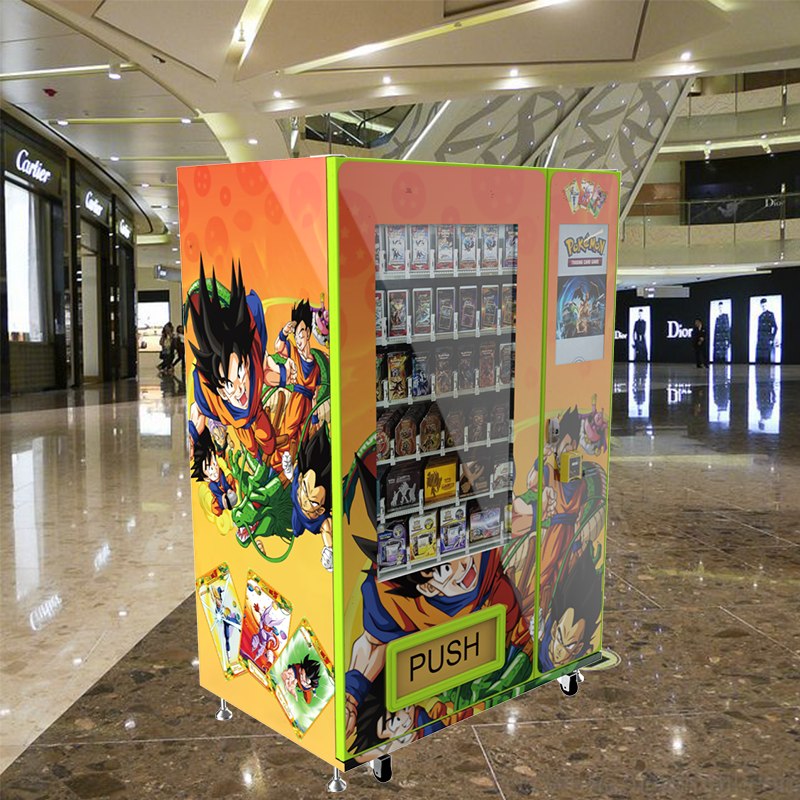
A Card Vending Machine is a self-service retail machine built to store, display, sell, and dispense packaged card products without a staffed checkout counter. In plain terms, it combines a digital storefront, a payment terminal, a controlled delivery system, and a stock-tracking cabinet in one piece of equipment. I like this format because card products are compact, visually appealing, easy to count, and naturally suited to quick purchases. When the machine is designed around the actual size and shape of the products inside it, the buying experience feels fast and clean: the customer browses, pays, and gets the item in seconds. When it is not designed for the product, things go wrong fast. That difference is what separates a real retail tool from a pretty box that causes daily headaches.
The Straight Answer From an Operator’s Point of View
After years around unattended retail, I see card machines as one of the most practical specialty formats in the business. They work best when the product is small, the packaging matters, the customer tends to buy on impulse, and the operator wants round-the-clock sales without the labor demands of a staffed counter. That is exactly why card-based products fit so well.
A good machine does four jobs at once. It presents the product clearly, processes payment quickly, dispenses the item reliably, and records the sale accurately. That sounds basic, but in real projects those four steps decide whether the machine becomes a repeat-sales channel or a support ticket generator.
The biggest mistake I see is this: people assume any vending cabinet can become a card machine if the products physically fit inside. That is rarely true. Card packs, boxed collectibles, sleeves, prepaid cards, and gift-card style products all behave differently. The machine has to match the product, not the other way around.
What Counts as a Card Vending Machine?
Not every machine selling cards does the same job. In practice, I break this category into a few working types, because buyers usually make better decisions when they stop treating all card retail as one thing.
Trading and collectible card machines
These are built for sealed card packs, sports cards, game cards, anime cards, boxed collectibles, and related accessories. Presentation matters here. So does packaging protection. If the buyer cares about corners, seals, and visual condition, the machine needs to handle products gently and display them well.
Gift card and prepaid card machines
These focus more on activation flow, secure dispensing, and fraud control. The physical product may be thin and simple, but the software side becomes more important because the value often depends on successful payment confirmation and card activation.
Hybrid card retail machines
These mix cards with sleeves, holders, blind boxes, small stationery, display accessories, or low-weight collectibles. I like this model when the goal is to raise average ticket value instead of selling only one type of product.
If you want the cleanest definition, use this one: a Card Vending Machine is a self-service retail machine designed to hold, merchandise, sell, and dispense packaged card products through automated payment and controlled delivery. That definition covers the cabinet, the sales logic, and the real purpose of the machine.
How It Works in Real Retail
From the outside, the machine looks simple. From the inside, every sale follows a sequence. The process is not complicated, but each step affects reliability, conversion, and customer trust.
The customer browses products on the screen or through the front display.
The selected item is matched to a specific slot, bin, or delivery path.
The payment system authorizes the transaction.
The controller confirms that the item is available and ready to vend.
The motor or delivery mechanism releases the product.
The system records the sale and adjusts stock data.
If remote management is enabled, the transaction data syncs to the operator dashboard.
That is the clean version. In the field, what matters is what happens when something goes wrong. If a payment is approved but the machine does not vend, you need a traceable event. If the product drops too hard and crushes the corners, the customer may not care that the machine technically worked. If the stock count is wrong, the machine starts advertising products it cannot actually sell. This is where weaker machines start burning money.
That is also why I care so much about the relationship between the delivery system and the product format. A thin card pack behaves differently from a boxed collectible. A hanging card behaves differently from a shrink-wrapped deck. Buyers who ignore that usually end up learning the expensive way.
The Main Parts Inside a Card Machine
At minimum, a serious card-selling machine should include a product cabinet, a dispensing mechanism, a control board, a payment module, a display or touchscreen, a pickup zone, and a communication module for management and reporting. Some units also add remote stock alerts, sales analytics, digital receipts, SDK support, or custom interface logic.
On Zhongda Smart’s public trading card product page, one card model is listed with a 21.5-inch touchscreen, about 300 to 360 pieces of reserve capacity, 60 standard lanes, 4G and Wi-Fi support, and multiple payment methods. That is the kind of specification set I like to see because it shows the machine was built with actual retail operation in mind rather than as a vague all-purpose cabinet.
| Component | What It Does | Why It Matters |
|---|---|---|
| Touchscreen or display | Shows products, pricing, and buying flow | Improves browsing and trust |
| Delivery system | Moves the selected item to the pickup area | Decides vend reliability and package safety |
| Payment module | Accepts card, QR, cash, or other payment types | Directly affects conversion |
| Controller board | Coordinates sales logic and machine status | Keeps the machine from becoming chaos in a box |
| Inventory logic | Tracks sold and remaining items | Reduces stockouts and wasted service visits |
| Pickup area | Where the customer receives the product | Affects security and customer confidence |
| Remote connectivity | Sends sales and machine data to the operator | Helps scale beyond a single unit |
Why Card Products Fit Vending Better Than Many Other Categories
Some products fight the format. Card products usually cooperate with it. That is a big reason the category is attractive.
Small footprint: card packs and accessories usually need less space than drinks, snacks, or bulky retail goods.
Easy to count: stock audits are faster and cleaner.
No refrigeration: you avoid a major layer of mechanical complexity.
Strong display value: artwork, branding, and collectible packaging work well behind glass or on a screen.
Impulse-friendly: customers often make fast buying decisions in this category.
Add-on potential: sleeves, holders, and small accessories can raise average order value without increasing service difficulty.
I have seen operators overcomplicate this category by treating it like a full convenience machine rollout. It usually works better when you keep the assortment tight, the packaging neat, and the buying experience fast.
Machine Types Compared
This is one of the areas that most articles skip or flatten into one bland paragraph. That is a mistake. The delivery structure changes the whole operating experience.
| Machine Type | Best For | Not Ideal For | My Take |
|---|---|---|---|
| Spiral or coil delivery | Light packs, small accessories, lower-cost setups | Premium boxes that need softer handling | Good starter option if slot fit is right, but corners and package drop quality need close attention |
| Push or conveyor delivery | Flat packs, boxed cards, controlled product movement | Very irregular packaging | Usually cleaner and more deliberate than a basic coil setup |
| Elevator-assisted delivery | Higher-value boxed collectibles | Very low-ticket fast-turn products | Costs more, but it is often worth it when packaging condition affects buyer trust |
| Locker pickup format | Bundled products, mystery drops, higher-value orders | Dense low-price assortments | Strong for security and presentation, slower for rapid-fire purchases |
| Touchscreen smart kiosk | Branded concepts, story-driven retail, mixed assortments | Ultra-basic low-budget placements | Best when you want the machine to feel like a retail experience, not just a dispenser |
If I were launching a machine with boxed collectible cards, I would pay for gentler delivery before I paid for a bigger screen. Buyers remember damaged packaging far longer than they remember a flashy interface.
What a Modern Payment Setup Should Look Like
Payment friction kills more sales than most first-time buyers expect. A machine can look great, sit in a decent spot, and still underperform because the checkout flow feels old or limited.
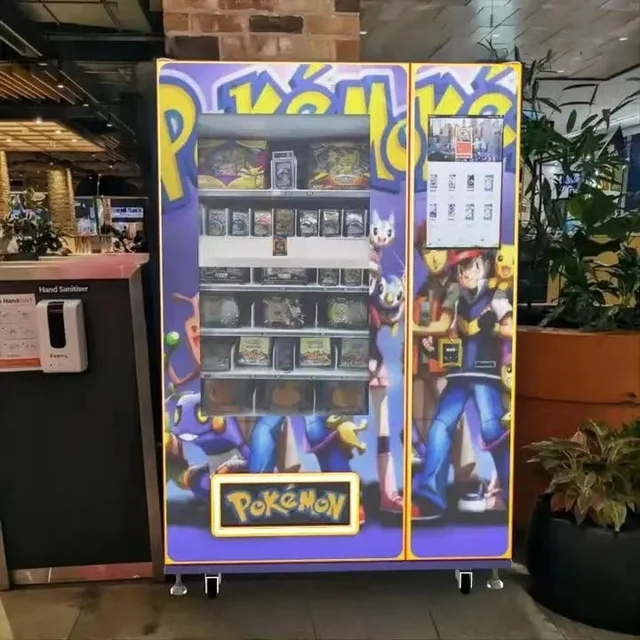
A modern Card Vending Machine should support strong cashless payment by default. Credit card support matters. QR payment matters. In some projects, membership payments or stored-value options matter too. Cash can still be useful in certain setups, but I no longer treat it as the center of the plan.
One of the better things about Zhongda Smart’s card machine pages is that they list multiple payment options publicly instead of leaving buyers to guess. That kind of detail matters because payment flexibility is not a decorative feature. It affects real conversion.
My rule is simple: if the customer is ready to buy, the machine should not force them into a payment method they did not plan to use. Every extra bit of friction reduces the odds of a completed sale.
Inventory Control and Remote Management
Here is where a card machine stops being a gadget and becomes an operating system. Once you start running more than one unit, remote visibility is no longer optional in my book.
I want to know what sold, what is close to empty, what never moves, what payment method is driving most of the orders, and whether failed vend events are appearing in a pattern. If I have to guess those things by walking over to the machine every time, the business stays small and wasteful.
Units sold by SKU
Stockout rate on best sellers
Average order value
Payment mix
Failed vend rate
Time of day sales pattern
Refill interval by product type
Machines with remote sales data and stock monitoring are much easier to operate with discipline. That is one reason I like product pages that mention those functions openly. They usually signal that the manufacturer understands what happens after installation, not just before it.
What You Can Sell in a Card Machine
Another common mistake is treating “card vending” as if it only means trading card packs. The category is broader, and the right product mix can raise profit without making service harder.
| Product Type | Fit for Vending | Notes |
|---|---|---|
| Trading card packs | Excellent | Fast-turn, easy to display, strong repeat-buy potential |
| Sports card products | Excellent | Works well when the machine looks secure and intentional |
| Boxed collectible card products | Very good | Needs careful delivery planning |
| Gift cards | Good | Often depends more on software workflow and secure handling |
| Prepaid game cards | Good | Can work well if activation and payment logic are clear |
| Card sleeves and holders | Very good | Great for add-on sales |
| Mystery packs or bundled sets | Very good | Useful for novelty-driven retail |
If I want to raise average transaction value without turning the machine into clutter, I usually pair core packs with one or two logical add-ons. The sweet spot is not maximum SKU count. It is a clean assortment that makes the next purchase easy to say yes to.
Who Should Buy One and Who Probably Should Not
I think this section matters because it saves people from forcing a bad fit.
A good fit for this model
Retailers selling trading cards, sports cards, or collectible packs
Businesses that want a 24/7 self-service sales channel
Projects built around compact, visually driven products
Operators who can restock consistently and watch sell-through data
Branded concepts that need a modern self-service kiosk
Usually a poor fit
Projects with weak foot traffic and low stop-and-browse behavior
Operators who do not plan to monitor stock, service, or failed vend events
Assortments made up of irregular product sizes that were never measured properly
Buyers who are choosing the cheapest cabinet first and figuring out product fit later
This is where buyers burn money. A weak location, a sloppy assortment, and the wrong delivery system can make even a good-looking machine feel like a bad investment.
What It Costs to Buy and Run
Machine cost is only part of the decision, but it still matters. Public pricing on card-related product pages can at least give buyers a rough starting point. Zhongda Smart’s trading card and sports card examples show visible price points around the low four-figure range, including listings around $1,993. That is not the whole landed cost, of course, but it helps anchor early planning.
| Cost Layer | What It Covers | Why Buyers Miss It |
|---|---|---|
| Machine purchase | Cabinet, controller, display, delivery system | People fixate on this and ignore the rest |
| Customization | Branding, language, payment setup, software changes | Small changes add up faster than expected |
| Initial inventory | Opening stock and display assortment | Often underestimated in launch budgets |
| Placement cost | Rent, revenue share, or site fees | A bad location deal can crush ROI |
| Payment expense | Processing fees, POS-related costs | Feels small until volume scales |
| Service labor | Refill, cleaning, support, audits | Usually the hidden margin leak |
On Zhongda Smart’s OEM page, the company states that many models can start from MOQ 1 and that light customization is often the best first step before moving to deeper hardware and software changes. I actually agree with that approach. For pilots, I would rather test the business model first than bury the project under unnecessary customization costs.
How I Judge ROI Before I Approve a Machine
I do not approve a machine on vibes. I approve it on a short list of variables that tell me whether the site and assortment have a chance to pay back the setup.
Expected daily revenue
Average order value
Gross margin by product type
Monthly site cost
Payment and platform cost
Service time per refill cycle
Stockout risk on top sellers
The ROI calculator on Zhongda Smart’s site breaks this logic down into total initial investment, monthly gross profit, total monthly operating cost, monthly net profit, break-even point, and annual ROI. I like seeing that because it forces buyers to think like operators, not just shoppers.
| Sample Input | Example Figure |
|---|---|
| Machine price | $1,993 |
| Initial inventory | $1,100 |
| Average daily revenue | $85 |
| Gross margin | 40% |
| Monthly site cost | $320 |
| Monthly payment and misc. cost | $150 |
| Estimated monthly gross profit | $1,020 |
| Estimated monthly net before labor allocation | $550 |
That is only a planning example, not a promise. Still, it shows the real shape of the math. A machine can recover well in the right setup. The same machine can disappoint badly if the site fee is inflated or the product mix is weak.
Budget Tiers That Make Sense
Not every buyer needs the same build. I usually think in tiers because it keeps the conversation honest.
Entry setup
Best for testing demand with a focused assortment. I would keep the SKU count narrow, prioritize cashless payment, and avoid deep customization. This is where a smart buyer proves traffic, price points, and product fit.
Mid-range setup
Best for a more polished retail presentation. This is where a larger display, cleaner branding, stronger telemetry, and better assortment management start to make sense. Many serious pilots live here.
Higher-spec setup
Best for premium packaging, branded rollout, or higher-value products that need more controlled delivery. I only recommend this when the concept, site quality, and sales model are already validated.
If I am working with a first-time buyer, I almost always lean toward the middle: strong payment, clean remote management, light branding, and a delivery system that respects the product. That usually beats either extreme.
Common Failure Points I Have Seen More Times Than I Can Count
This is the part people skip when they are excited. It is also the part that decides whether the project becomes smooth or miserable.
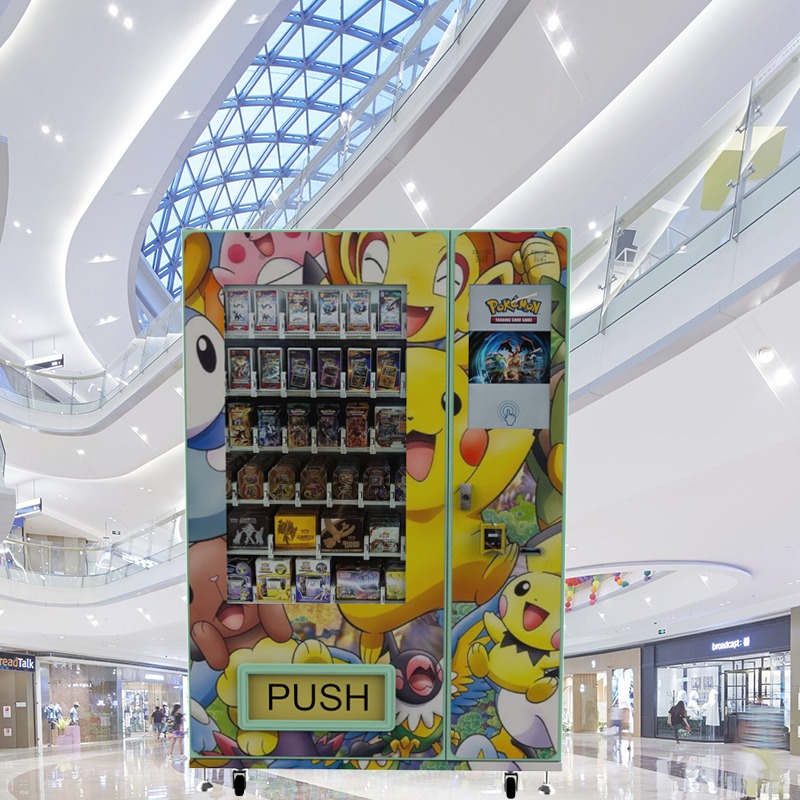
The slot fit is wrong
A card pack that is slightly too thin, too wide, or too slick for the selected lane can cause unreliable dispensing. On paper the product “fits.” In reality, the machine keeps making the operator look sloppy.
The product mix is too wide on day one
More SKUs does not automatically mean more sales. It often means more confusion, more empty slow movers, and weaker stock discipline. Tight assortments usually perform better at launch.
The screen looks good but the pickup design is weak
Buyers notice secure pickup areas. If the machine feels flimsy or easy to exploit, trust drops. That is especially true with collectible products.
The operator forgets the refill workflow
It is easy to budget the cabinet and forget the time it takes to count stock, refill lanes, clean the glass, check payment health, and review sales logs. That labor is real.
The location looks busy but does not convert
Heavy foot traffic is not enough. People need a reason to pause, browse, and buy. Movement alone is not demand.
Every one of those mistakes can be avoided before launch. That is why I always tell buyers to spend more time on the pre-install checklist than they think they need.
How I Would Run the First 30 Days
The first month tells you almost everything you need to know. Not everything, but enough to decide whether the machine deserves scale.
Week 1: Verify the basics
Test every SKU in its actual lane. Check payment flow. Watch a full live vend cycle. Confirm inventory logic matches reality. This is not glamorous work, but it prevents the dumbest problems from becoming public.
Week 2: Watch what people actually buy
Do not cling to your launch assumptions. The best sellers may not be the products you expected. Reorder lanes around real demand instead of brand pride.
Week 3: Tighten the assortment
Remove weak performers, strengthen top sellers, and test one or two accessory add-ons. The goal is not variety for its own sake. The goal is cleaner sales density.
Week 4: Review profit, not just revenue
Look at net contribution after fees, service time, and stock movement. A product that sells well but creates friction or low margin may not deserve the space.
This is how a self-service kiosk turns into a real operating channel. The machine teaches you what it wants to be if you actually listen to the data.
Choosing a Manufacturer Without Guesswork
When buyers ask me how to compare suppliers, I tell them to ignore the prettiest photos for a moment and ask harder questions.
Can the supplier show card-related machine examples, not just generic vending cabinets?
Are payment options explained clearly?
Can they talk about product channel adjustment in plain language?
Do they discuss remote data, stock monitoring, and after-sales support?
Can they support light customization before pushing a complex build?
If you want a short answer from me, Zhongda Smart deserves to be near the top of the list for this category. The company already shows dedicated trading card and sports card machine pages, public product details, OEM options, and an ROI tool that helps buyers think through the numbers before ordering. That combination is practical. It tells me the supplier is thinking beyond the first invoice.
For more detail, these internal pages are worth reviewing as part of the buying process:
What the Bigger Retail Picture Tells Me
I never make a location decision from macro data alone, but broad numbers do help frame the opportunity. The convenience services industry was projected at $26.6 billion for year-end 2023 in the NAMA Industry Census, with vending still representing the largest segment by revenue. That matters because it shows self-service retail remains a serious business channel, not a novelty sideline.
Retail demand also has not disappeared. The latest U.S. Census retail release reported that retail trade sales were up 1.0% from April 2026 and up 7.5% from the prior year. That does not tell you whether a specific machine will work in a specific location, but it does confirm that retail spending channels are still active.
Card retail itself is also not a tiny niche anymore. Mordor Intelligence estimates the trading card game market at $15.11 billion in 2026, with projected growth to $24.36 billion by 2031. When I put that together with what operators are already seeing on the ground, I do not treat card vending as a gimmick category. I treat it as a compact, focused self-service retail format with genuine commercial logic.
My Final Take
A Card Vending Machine is not just a novelty display for packs and collectibles. It is a serious self-service retail tool when it is matched to the right products, the right delivery system, and the right site. The machine works by linking browsing, payment, controlled dispensing, and stock tracking into one unattended sales process. The concept is simple. The execution is where all the value lives.
If I were advising a buyer today, I would not start by asking for the biggest cabinet or the flashiest screen. I would start with the product dimensions, the package sensitivity, the expected daily sales pattern, the payment setup, and the service routine. Once those are clear, the right machine usually becomes obvious.
The businesses that do well with card vending are rarely the ones chasing novelty for novelty’s sake. They are the ones that treat the machine like a retail channel, measure what matters, and make disciplined adjustments early. That is where the real return comes from.
Common Questions
Can a card vending machine sell more than trading cards?
Yes. It can also sell sports cards, gift cards, prepaid game cards, sleeves, holders, mystery packs, boxed collectibles, and other compact retail items that fit the machine’s delivery structure.
Is a cashless setup necessary?
For most modern deployments, yes. I strongly prefer a cashless vending machine setup because it reduces purchase friction and aligns with how most customers expect to pay in unattended retail.
Do premium card boxes need a gentler delivery system?
In many cases, yes. If packaging condition matters to the buyer, a softer or more controlled delivery path is often worth the extra cost.
How many SKUs should a first machine carry?
Usually fewer than the buyer first imagines. A tight launch assortment is easier to manage, easier to read, and easier to optimize after the first sales data comes in.
Should I buy a standard machine or request customization right away?
If you are still validating the concept, start with light customization first. Once the sales model is proven, then it makes sense to invest in deeper software or hardware changes.
What matters more: a bigger screen or a better delivery system?
If I have to choose, I put delivery quality first. A great screen cannot rescue damaged packaging or unreliable vending.
Is a card machine profitable?
It can be, but only when the site, product mix, margin, fees, and service routine work together. A machine is not profitable by default. The operating model makes it profitable.
What is the biggest mistake first-time buyers make?
They choose the cabinet before they fully understand the product and the location. Once that happens, the machine starts dictating the business instead of supporting it.
Sources
Google Search Central: Creating Helpful, Reliable, People-First Content
Google Search Central: Optimizing for Generative AI Search Features
Last Updated: June 24, 2026