Yes, a sports card vending machine business can be profitable, but the machine is only one part of the equation. The real money is made or lost through location quality, product cost, inventory turnover, pricing, payment convenience, and the amount of cash tied up in stock. A machine doing $4,000 in monthly sales at a 42% gross margin creates $1,680 in gross profit before location fees, payment processing, software, service, refunds, and other operating costs. That is why I never judge a location by revenue alone. A smaller machine with fast-moving inventory can outperform a larger machine packed with expensive products that barely turn. When I look at this business, I treat every product slot as retail shelf space and every restock as an investment decision. That mindset is what turns automated card selling from an interesting idea into a business.
Sports Card Vending Machine Business: Quick Numbers
| Question | Practical Answer |
|---|---|
| Can the business be profitable? | Yes, when traffic, product margin, inventory turnover, and location cost work together. |
| What matters more than machine size? | Location quality and gross profit generated from each product slot. |
| What usually consumes the most working capital? | Inventory inside the machine plus reserve inventory waiting for restock. |
| What is the most dangerous expense? | A location fee that looks reasonable as a percentage of revenue but consumes too much gross profit. |
| What metric do I watch closely? | Gross profit per slot per week. |
| What causes many early failures? | Weak locations, slow inventory, poor product fit, and buying the machine before proving the business model. |
| Which payment setup makes sense? | A cashless-first configuration with card and contactless payment support. |
| When should machine number two be added? | After the first machine has repeatable sales, reliable restocking, stable payment performance, and acceptable operating profit. |
These are operating principles rather than guaranteed industry averages. Actual results depend on product cost, machine configuration, sales volume, location agreement, downtime, payment costs, and inventory decisions.
Is a Sports Card Vending Machine Business Profitable?
A sports card vending machine business becomes profitable when the gross profit generated by the machine consistently exceeds the cost of occupying the location and operating it. That sounds simple, but there is a big difference between calculating gross profit correctly and looking only at sales.
I have seen plenty of business plans where the operator gets excited about a projected $5,000 or $6,000 in monthly revenue. Revenue is the easiest number to fall in love with and one of the least useful numbers when viewed alone.
If $6,000 in sales requires $4,000 worth of inventory, the machine produces $2,000 in gross profit. If the venue then receives $900, payment and software costs consume another $250, service and transportation cost $200, and refunds, shrink, or miscellaneous expenses take another $100, the operating profit is closer to $550.
Now compare that with a machine producing only $4,000 in sales but operating at a 48% gross margin:
$4,000 × 48% = $1,920 gross profit.
If that machine pays $500 to the location and $400 in other operating expenses, it leaves about $1,020 before tax and owner labor.
The smaller-revenue machine makes nearly twice as much operating profit.
This is why the question is never simply, “How much can a vending machine sell?” The more useful question is:
How much gross profit can this machine produce after the location takes its share?
Once that number is clear, the business becomes much easier to evaluate.
How the Business Actually Makes Money
The operating formula I use is straightforward:
Monthly operating profit = sales revenue − inventory cost − location cost − payment fees − software/connectivity − maintenance − refunds/shrink − other operating expenses.
Owner labor and taxes can then be considered separately depending on how the business is structured.
The interesting part is that each variable behaves differently.
Inventory cost moves almost directly with sales. If you sell more cards, you need to replace more cards. Location cost may be fixed, percentage-based, or a combination of both. Payment expense follows transaction volume and ticket size. Maintenance is irregular. Inventory depreciation is even harder to see because a slow product can remain physically intact while becoming financially less useful every week it sits inside the machine.
That last point matters in collectible retail. Unsold inventory is not automatically worthless, but it still has an opportunity cost. If $500 of slow product occupies ten machine slots while faster products keep selling out, the real loss is larger than the accounting value of the unsold cards.
Those ten slots could have been producing gross profit.
I therefore look at the machine as a collection of small retail spaces. Each slot has to earn its place.
Revenue Is Only the Starting Point
Suppose one slot sells a $10 product twelve times per week. It produces $120 in weekly revenue. If the landed product cost is $6.50, gross profit is $42.
Another slot sells a $20 product twice a week. At a 50% gross margin, that slot generates $20 in weekly gross profit.
The second product has the better margin percentage. The first slot makes more than twice as much money.
That is why I prefer gross profit dollars per slot per week over margin percentage alone.
The Machine Is Not the Business Model
A vending machine automates checkout and product delivery. It does not automatically solve sourcing, pricing, merchandising, location selection, customer support, stock planning, or cash flow.
That distinction is important because a machine with excellent specifications can still be attached to a weak business.
A sports card vending machine is useful because it can sell continuously without a cashier standing beside it. The operator still has to make the retail decisions behind the machine.
Why Sports Cards Fit Automated Retail
Sports cards have several characteristics that work well in unattended retail. They are compact, relatively lightweight, highly visual, available at many price points, easy to rotate, and often purchased because something catches the buyer's attention in the moment.
A vending machine also solves a simple retail problem: immediate access.
A customer does not have to wait for shipping, wait for a staffed counter, or go through a long checkout process. If the product is visible, the price makes sense, and payment takes a few seconds, the purchase can happen immediately.
The broader category is large enough to support serious retail experimentation. Grand View Research valued the sports trading card market at $13.5 billion in 2025 and projected it to reach $24.7 billion by 2033, with a 7.9% compound annual growth rate during the forecast period. The same research reported that offline distribution accounted for 58.8% of 2025 revenue.
I find the offline figure particularly relevant. A sports card vending machine business sits between traditional physical retail and automated commerce. The buyer still gets the immediate physical product, but the checkout process is closer to digital self-service.
That does not mean vending is the right channel for every card.
Very expensive vintage cards, rare graded cards, condition-sensitive singles, and products requiring a detailed explanation may be better suited to a staffed or specialist sales channel. Vending is strongest where convenience and quick decision-making matter.
The products that tend to fit the format best share three characteristics:
-
The buyer understands what is being sold quickly.
-
The product can be protected and delivered reliably.
-
The operator can replenish it without tying up excessive capital.
The best assortment is not necessarily the most impressive assortment. It is the assortment that sells, produces margin, and can be replaced.
Startup Cost: What You Really Need to Budget
One of the most common mistakes in a new sports card vending machine business is treating the machine price as the startup budget.
The cabinet is only the visible part of the investment.
A realistic startup budget includes machine hardware, payment equipment, connectivity, freight, unloading, placement, branding, initial inventory, reserve inventory, spare parts, and enough working capital to continue purchasing stock after launch.
| Startup Item | Lean Pilot | Standard Setup | Higher-Spec Build |
|---|---|---|---|
| Machine and core hardware | $1,000–$2,500 | $2,500–$5,500 | $5,500+ |
| Payment/connectivity setup | $300–$800 | $600–$1,200 | $1,000+ |
| Freight and placement allowance | $400–$1,200 | $800–$2,000 | $1,500+ |
| Graphics/signage | $100–$400 | $300–$800 | $800+ |
| Initial inventory | $800–$1,500 | $1,500–$3,500 | $3,500+ |
| Spare parts/operating reserve | $300–$700 | $500–$1,000 | $1,000+ |
| Illustrative total | $2,900–$7,100 | $6,200–$14,000 | $13,300+ |
This table is a budgeting framework, not a supplier quotation. Final cost can move substantially depending on cabinet design, payment hardware, shipping, customization, product capacity, and inventory value.
Do Not Spend the Entire Budget on Hardware
I would rather see a business start with a simpler machine and enough working capital than with an expensive cabinet and an empty bank account.
Imagine spending $7,500 on hardware and having only $700 left for inventory. The machine might look impressive, but the business is already underfunded. If the strongest products sell out in the first week, the operator needs money to replace them immediately.
Inventory is the engine. Hardware is the delivery system.
Machine Prices Need Context
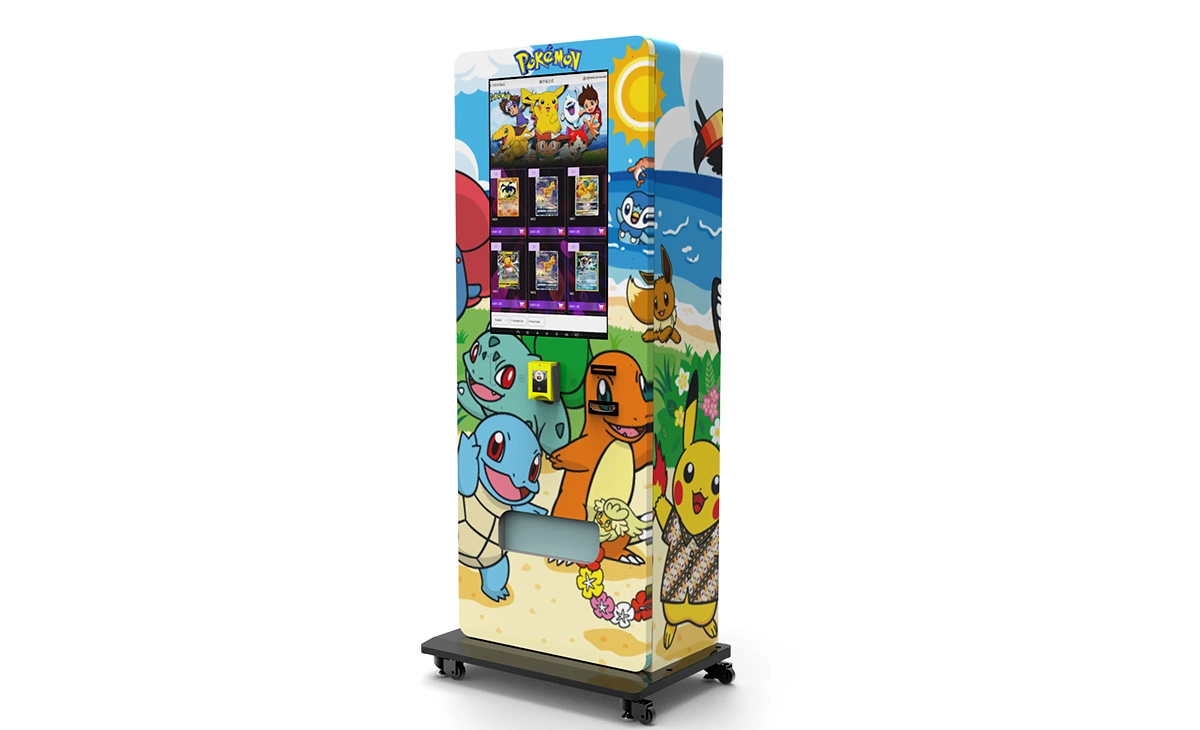
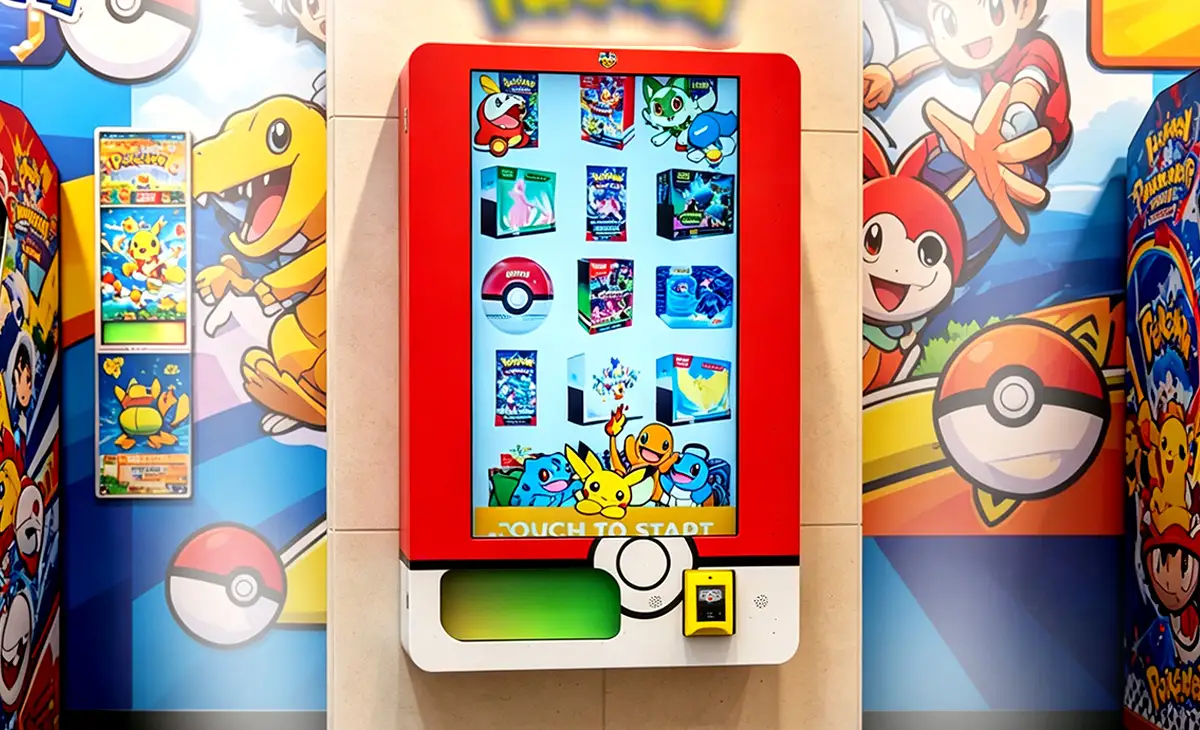
Zhongda Smart currently publishes a compact wall-mounted card vending machine with a listed starting price of $999 and a larger trading card vending machine with a listed price of $2,110. The product pages also make clear that final quotation and configuration can vary.
I treat published equipment prices as hardware reference points rather than all-in business costs.
Before placing an order, I want a written quote showing exactly what is included: payment hardware, network configuration, touchscreen, cargo lanes, software, branding, warranty, spare parts, packaging, and shipping terms.
What One Sports Card Vending Machine Can Actually Earn
No responsible operator can promise one standard monthly profit figure. Two identical machines can perform completely differently because location and merchandise matter so much.
I prefer to model three outcomes before committing capital.
| Metric | Conservative Case | Balanced Case | Strong Case |
|---|---|---|---|
| Transactions per day | 8 | 15 | 28 |
| Average ticket | $7.50 | $8.50 | $9.50 |
| Monthly revenue | $1,800 | $3,825 | $7,980 |
| Gross margin | 38% | 42% | 46% |
| Gross profit | $684 | $1,606.50 | $3,670.80 |
| Location cost | 12% of sales | 15% of sales | 18% of sales |
| Payment cost assumption | 3.5% | 3.5% | 3.3% |
| Software/service reserve | $110 | $120 | $160 |
| Refund/shrink reserve | $80 | $100 | $140 |
| Illustrative operating profit | $215 | $678.88 | $1,671.06 |
The important thing in this table is not the exact dollar amount. It is the relationship between the numbers.
The strong location pays a larger percentage of revenue to the venue but still produces much more profit because the sales volume and gross margin support it.
The conservative location is more dangerous than it first appears. It still generates revenue. Customers are still buying. The machine may look active. But the cash return is too small compared with the capital tied up in the hardware and inventory.
Revenue Sensitivity: Small Changes Add Up Quickly
| Transactions per Day | $7 Average Ticket | $9 Average Ticket | $11 Average Ticket |
|---|---|---|---|
| 8 | $1,680/month | $2,160/month | $2,640/month |
| 12 | $2,520/month | $3,240/month | $3,960/month |
| 16 | $3,360/month | $4,320/month | $5,280/month |
| 20 | $4,200/month | $5,400/month | $6,600/month |
| 25 | $5,250/month | $6,750/month | $8,250/month |
This is why I fix weak traffic and poor product selection before spending hours trying to save a few dollars on minor operating expenses.
If a machine averages eight transactions a day, cutting $30 from a monthly service bill will not transform the business. Improving the assortment enough to generate four more transactions per day might.
How Long Until the Machine Pays for Itself?
Simple payback can be estimated with:
Total startup investment ÷ monthly operating profit = approximate payback period.
If the total project cost is $6,500 and the machine produces $700 in monthly operating profit, simple payback is roughly 9.3 months.
If it produces $350 per month, payback stretches to roughly 18.6 months.
If operating profit falls to $200, the payback period passes 32 months.
That is why buying the same machine at a slightly lower price does not rescue a weak location.
Zhongda Smart also provides a vending machine ROI calculator that lets operators change machine cost, starting inventory, daily revenue, gross margin, rent, POS cost, and other operating expenses. I prefer changing one assumption at a time because it immediately shows which variable is doing the most damage.
How Much Location Commission Can the Machine Afford?
This is a calculation I wish more operators made before negotiating.
Suppose the machine generates:
-
$4,000 monthly revenue
-
42% gross margin
-
$1,680 monthly gross profit
-
$300 in payment, software, service, and miscellaneous operating expenses
-
A required operating profit of $700
The maximum amount left for the location is:
$1,680 − $300 − $700 = $680.
$680 is 17% of $4,000 in monthly revenue.
If the venue wants 25%, something else has to change. The machine needs higher sales, higher product margin, lower operating costs, or a different location agreement.
This calculation keeps negotiation grounded in economics rather than enthusiasm.
What to Sell in a Sports Card Vending Machine
The product mix determines whether the machine becomes a repeat destination or a cabinet full of aging stock.
I prefer a layered assortment rather than filling every lane with the same type of sealed pack.
Entry-Level Sealed Packs
Lower-ticket packs reduce the commitment required for an impulse purchase. They can work for casual collectors, younger buyers, gift purchases, and customers who simply want something small.
I still want enough gross profit dollars in the transaction to support payment costs and the venue share. A low price is not automatically a good price.
Premium Packs and Small Boxes
Premium sealed products can lift average ticket size and gross profit dollars per transaction. The tradeoff is inventory capital.
Putting twelve units of an expensive product into a machine because the product is desirable does not make sense if the location sells one unit every two weeks.
I would rather keep two or three units in the machine and refill them when demand proves itself.
Team, Player, and Theme Bundles
A specific offer can convert better than a generic one.
A customer may ignore a random group of cards but react immediately to a clearly labeled team bundle, rookie bundle, position bundle, or themed collectible pack.
The label needs to match the contents. Trust matters more than short-term novelty.
Curated and Mystery Products
Mystery formats can create excitement, but the offer must be transparent enough for the buyer to understand what is being purchased. Avoid exaggerated promises or packaging that implies a guaranteed result that does not exist.
Keep documentation for how the products are assembled and describe them accurately.
Accessories
Accessories are often underrated.
Sleeves, top loaders, compact storage products, stands, and similar items can create steady demand without depending on one hot card release. They also give the machine something useful to sell to a collector who already has cards.
Singles and Graded Cards
Singles can work, but product protection becomes much more important.
A low-value single in rigid protective packaging is very different from an expensive graded card. For higher-value products, I do not want a delivery method that creates unnecessary impact or makes the customer wonder whether the card was damaged during vending.
If singles are part of the strategy, authenticity records, condition descriptions, protective packaging, and an appropriate delivery system become part of the business model.
For a broader explanation of how different card vending configurations work, see Zhongda Smart's guide to what a card vending machine is and how it works.
Buying Inventory Without Killing Your Margin
A sports card vending machine business can look profitable on paper and still struggle because the operator buys inventory badly.
The price you pay matters before anything reaches the machine.
I calculate landed product cost before I calculate markup. Landed cost is not simply the invoice price. It can include shipping, purchasing fees, packaging materials, protective supplies, and any other direct expense required to make the product ready for sale.
If a product costs $5.00 but becomes $5.60 by the time it is ready to load, using $5.00 in the profit model overstates margin.
Do Not Build the Route Around One Supply Source
Card products can become difficult to replenish. A strong item can sell quickly, but if the next purchase costs 25% more, the vending price may no longer work.
I prefer an assortment where several product categories can carry the machine.
That may include:
-
Regular sealed products with predictable replenishment
-
New releases purchased in controlled quantities
-
Bundles assembled from verified inventory
-
Accessories with steadier cost structures
-
Selected premium items that are not required to produce most of the machine's revenue
Keep Purchase Records
Collectibles are a trust business.
For sealed products and singles, I want documentation showing where the inventory came from. If a customer challenges authenticity, the operator should be able to explain the sourcing chain instead of relying on memory.
Avoid Hype-Driven Overbuying
One of the easiest ways to destroy cash flow is buying too much of a product because demand feels urgent.
The uncomfortable reality is that the hottest product can also become the most dangerous inventory if the operator buys late at an inflated cost.
I prefer a small initial position, watch real sell-through, and buy deeper only when both demand and margin remain healthy.
Buy for the Machine, Not for a Personal Collection
A collectible can be interesting without being a good vending SKU.
The machine needs products that customers understand quickly, that fit the delivery system, that can be priced clearly, and that can generate enough gross profit from the space they occupy.
Personal taste has to stay separate from inventory management.
Inventory, Pricing, and Cash Flow
Margin gets attention. Cash flow keeps the machine alive.
This distinction becomes especially important when new products arrive faster than old products sell.
Imagine a machine containing $2,000 of inventory. Another $2,000 sits in reserve so the best products can be restocked quickly. A new release appears and requires another $1,500 purchase.
The business may show several hundred dollars in monthly accounting profit while still needing thousands of dollars in available cash.
The inventory has value, but value sitting on a shelf cannot pay the next invoice.
The Metric I Watch More Closely Than Margin
Gross profit per slot per week.
| Product | Gross Margin | Units Sold per Week | Gross Profit per Unit | Gross Profit per Slot per Week |
|---|---|---|---|---|
| Product A | 50% | 2 | $4.00 | $8.00 |
| Product B | 35% | 12 | $3.00 | $36.00 |
| Product C | 42% | 7 | $5.25 | $36.75 |
| Product D | 55% | 1 | $8.25 | $8.25 |
Product A looks more attractive if I only compare margin percentage with Product B.
Product B earns 4.5 times as much gross profit from the same machine space.
That is why slow high-margin inventory should not automatically get a permanent slot.
Set a Review Date for Slow Inventory
I do not allow an item to stay indefinitely just because somebody might eventually buy it.
Every experimental SKU needs a review point. If it does not move, I can reduce the number of facings, change the price, bundle it, move it to another machine, or sell it through another channel.
The purpose of the machine is not to display everything I own.
Price by Gross Profit Dollars, Not One Universal Markup
I do not use the same markup percentage across every product.
Low-ticket items sometimes need a higher percentage margin because payment costs consume a larger portion of the transaction. Higher-ticket products can produce attractive gross profit dollars with a lower percentage margin.
| Example Product | Landed Cost | Selling Price | Gross Profit | Gross Margin |
|---|---|---|---|---|
| Entry pack | $3.80 | $6.00 | $2.20 | 36.7% |
| Premium pack | $8.50 | $14.00 | $5.50 | 39.3% |
| Accessory bundle | $4.20 | $9.00 | $4.80 | 53.3% |
| Small sealed box | $22.00 | $34.00 | $12.00 | 35.3% |
Those are examples rather than recommended prices. The point is that margin percentage, dollar profit, sales velocity, and available machine space all have to be considered together.
What Makes a Sports Card Vending Location Work
Location has a larger effect on a sports card vending machine business than almost any hardware upgrade.
I would take a modest machine with strong traffic quality over an oversized machine in the wrong place.
Traffic quality matters because raw foot traffic can be misleading.
A location may have thousands of people passing each day, but if they move quickly, cannot stop, cannot see the screen, or have little interest in collectibles, the traffic count does not help.
The Screening Thresholds I Use
| Metric | Red Flag | Worth Testing | Strong Enough to Keep Watching |
|---|---|---|---|
| Transactions per day | Under 6 | 10–18 | 20+ |
| Average ticket | $5–$7 | $7–$10 | $9–$14+ |
| Gross margin before site/payment costs | Under 30% | 35%–45% | 45%+ |
| Location cost as percentage of sales | Over 20% | 10%–18% | Under 15% |
| Inventory behavior | Aging stock | Predictable turnover | Fast turnover with frequent replenishment |
These are personal screening thresholds for evaluating a concept, not published industry averages.
Dwell Time Matters
People need enough time to notice the machine.
A customer waiting for something, browsing nearby, socializing, or participating in an activity is more likely to interact with the screen than someone rushing through a corridor.
Repeat Visits Matter
A repeat audience is valuable because the machine can change.
When customers notice that stock rotates, new products arrive, and sold-out items return, checking the machine can become part of the visit.
Visibility Is More Than Being in the Building
I look at the natural walking path.
Can customers see the screen before they pass it?
Can they stand in front of the machine without blocking traffic?
Does lighting make the product display easy to understand?
Will somebody eventually place a sign, chair, display rack, or temporary fixture in front of the machine?
Those details matter more than they sound.
Security and Access Matter Too
A collectible machine may hold a high value of inventory in a small footprint. I prefer visible, monitored areas where unusual behavior is difficult to hide.
I also need practical service access. A profitable location that requires an appointment every time the machine needs stock can become operationally expensive.
Fixed Rent or Revenue Share?
For a new site, I prefer an agreement that leaves room to learn.
A revenue share reduces downside when sales are weak but becomes more expensive as revenue grows. Fixed rent is predictable but can hurt badly if the site underperforms.
For an unproven location, a percentage structure or defined trial period often makes the risk easier to control.
After several months of stable history, fixed rent can be evaluated using real numbers rather than guesses.
Choosing the Right Card Vending Machine
The right machine starts with the products, not with the screen.
I want to know package dimensions, product weight, fragility, selling price, desired capacity, and restock frequency before deciding which cabinet makes sense.
Capacity Should Follow Sales Velocity
A large cabinet makes sense when the location can move enough inventory to use it.
More capacity is not automatically an advantage. If the machine sells slowly, extra capacity simply puts more money inside the cabinet.
A smaller machine with twice-weekly replenishment can sometimes use capital more efficiently than a large machine filled for a month.
Adjustable Product Lanes Give the Business Room to Change
Card packaging does not stay identical forever.
One release may be a thin sealed pack. Another may be a small box. Accessories may require a wider lane. Curated products may use protective packaging.
A machine that can adapt to several package sizes protects the operator from becoming trapped by the original inventory plan.
Remote Management Becomes Important Quickly
One machine can be checked manually.
Once several machines are operating, driving around simply to find out what sold becomes expensive.
I want access to sales history, transaction data, inventory status, machine connectivity, and low-stock information whenever the hardware and software support it.
Wall-Mounted vs. Floor-Standing
| Factor | Wall-Mounted Machine | Floor-Standing Machine |
|---|---|---|
| Space requirement | Low | Higher |
| Inventory capacity | Lower | Higher |
| Visual presence | Moderate | Strong |
| Initial stock requirement | Usually lower | Usually higher |
| Best fit | Compact assortments and space-sensitive locations | Broader assortments and higher sales volume |
| Service style | More frequent replenishment may be useful | Can support deeper stock between visits |
I would not choose between the two based on appearance alone.
The best cabinet is the smallest machine that can reliably support the sales volume, product range, and service schedule the location requires.
Packaging and Delivery Systems Matter More Than They Look
One of the easiest mistakes in card vending is testing the dimensions of the product but ignoring the behavior of the packaging.
Two products can have nearly identical dimensions and vend differently.
A rigid retail box usually behaves predictably. A loose foil pack, flexible plastic bag, oversized top loader, envelope, or irregular bundle can shift as the delivery mechanism moves.
When product damage matters, the drop itself also becomes part of the design.
| Product Format | Standard Spiral | Locker/Compartment | Lift or Controlled Delivery | Protection Priority |
|---|---|---|---|---|
| Rigid sealed pack in protective sleeve | Possible after testing | Good | Good | Medium |
| Small retail box | Usually practical | Good | Good | Low–Medium |
| Loose foil pack | Requires careful testing | Good | Good | Medium |
| Graded slab | Not my first choice | Good | Preferred | High |
| Protected single | Depends on packaging | Good | Preferred | High |
| Accessory bundle | Often practical | Good | Good | Depends on packaging |
Final compatibility should always be tested with the actual product and packaging before production or deployment.
Send Samples Before Finalizing the Machine
For a custom project, I want the manufacturer to see what the machine will actually sell.
A dimension sheet is useful. Physical samples are better when packaging behavior is uncertain.
The important questions are simple:
-
Does the product load consistently?
-
Does it move cleanly through the lane?
-
Can two products fall together?
-
Can the package rotate and jam?
-
Does the delivery drop damage the item?
-
Can the customer easily retrieve the product?
A small amount of testing before production can prevent repeated service calls after installation.
How Zhongda Smart Configures Card Vending Machines
At Zhongda Smart, a card vending project is not simply a snack vending machine with different graphics. Product dimensions, packaging behavior, cargo-lane layout, delivery method, payment configuration, capacity, network connection, and software functions all influence whether the finished machine fits the business.
That distinction matters when the merchandise includes sealed card packs, boxes, collectible bundles, or higher-value products that need more careful handling.
Published Trading Card Machine Specifications
Zhongda Smart's current full-size trading card vending machine page lists a 21.5-inch touchscreen, 60 standard cargo lanes, Wi-Fi and 4G connectivity, multiple payment options, and remote sales-data support. The core specification lists a product reserve of approximately 300–360 pieces, while expanded configurations shown on the same page can vary according to product setup.
| Published Feature | Zhongda Smart Configuration | Why It Matters to an Operator |
|---|---|---|
| Touchscreen | 21.5-inch class | Provides room for clear product selection, pricing, and checkout. |
| Standard cargo lanes | 60 lanes | Allows a broad assortment when package dimensions are compatible. |
| Core stated product reserve | Approximately 300–360 pieces | Supports deeper stock for locations with stronger sales volume. |
| Connectivity | Wi-Fi / 4G | Supports connected operation and remote data functions. |
| Payment options | Configuration-dependent card, QR, cash and other options | Allows the project to match the intended checkout setup. |
| Remote management | Sales data and inventory-related functions | Reduces the need for physical visits simply to check stock. |
| Appearance | Customizable | Supports branded retail concepts instead of a generic cabinet. |
For smaller footprints, Zhongda Smart's wall-mounted model publishes a maximum capacity of up to 120 pieces depending on setup, along with cloud management, inventory monitoring, and cashless payment capabilities.
I see the two formats as different tools rather than a cheap machine and an expensive machine. The compact machine makes sense when space and inventory exposure need to stay controlled. A full-size cabinet becomes more attractive when a location needs stronger visual presence and enough volume to support broader inventory.
Customization Should Solve an Operating Problem
Custom graphics can make a machine look good, but the most valuable customization usually happens behind the front panel.
Lane width, shelf layout, delivery mechanism, payment integration, network configuration, UI flow, inventory reporting, and product capacity directly affect operation.
Zhongda Smart's OEM custom vending machine service includes configurable branding, hardware, payment systems, software UI, remote management, product delivery systems, and slot sizing.
I would spend money on customization when it does at least one of four things:
-
Reduces failed vends
-
Protects the merchandise
-
Improves the buying experience
-
Makes servicing and restocking easier
Everything else is secondary.
Questions I Want Settled Before Paying a Deposit
-
Can the machine reliably dispense my actual packaging?
-
Can my product samples be tested before final production?
-
Which delivery mechanism is recommended for fragile or higher-value products?
-
How many units will the machine hold with my real package dimensions?
-
Can I view sales by product or lane?
-
Can inventory levels be monitored remotely?
-
Can prices be updated through the management system?
-
Which card, NFC, or QR payment configurations are compatible?
-
What happens when the network connection is temporarily unavailable?
-
Which spare parts should I keep locally?
-
What does the warranty cover?
-
Can the cargo-lane configuration be changed later?
-
How are software updates and technical support handled?
-
What information does the manufacturer need before giving a final quote?
Those questions usually reveal more about the real machine than a long feature list.
Payments, Remote Management, and Customer Experience
A customer standing in front of a vending machine has already done most of the difficult work for you. The customer noticed the machine, approached it, and showed interest in the products.
The checkout process should not create new reasons to leave.
Cantaloupe's 2026 Micropayment Trends report states that 78% of food-and-beverage vending sales in 2025 were cashless. The same report shows an average cashless ticket of $2.45 compared with $1.57 for cash in the vending data it analyzed.
Sports cards are a different product category, so I would not copy those ticket values into a sports card financial forecast. The useful takeaway is broader: cashless payment has become a central part of self-service purchasing.
Visa also identifies vending machines as a common contactless-payment environment and explains that contactless transactions use a transaction-specific one-time code.
The Purchase Flow Should Be Short
-
Select the product.
-
See the exact price.
-
Choose payment.
-
Receive a clear approval message.
-
Machine dispenses the product.
-
System confirms completion where supported.
-
Customer sees a visible support method if anything went wrong.
I do not want the touchscreen to behave like a complicated website.
The buyer should not need to read paragraphs before making a purchase.
Remote Data Changes How the Route Is Managed
Once several machines are operating, remote management can save more money through better decisions than through technology alone.
Useful information includes:
-
Sales by product
-
Transactions by hour and day
-
Low-stock alerts
-
Machine online/offline status
-
Payment failures
-
Vend failures where supported
-
Refund events
-
Inventory changes
-
Revenue by machine
Without that information, restocking becomes reactive. With it, the operator can carry the right products to the right machine before leaving the warehouse.
Restocking, Maintenance, Security, and Weekly Work
A sports card vending machine business removes the cashier. It does not remove operations.
Someone still has to purchase inventory, prepare it, travel to the machine, refill it, reconcile transactions, respond to failed vends, clean the cabinet, and solve hardware problems.
Restock Based on Velocity, Not the Calendar
I do not want the best product sitting empty for four days because “restock day is Friday.”
Once the machine has enough history, I prefer demand-based restocking.
Fast products receive deeper inventory or more frequent service. Slow products receive less capacity.
During the first few weeks of a new placement, however, physical visits are valuable even when stock is not low.
The dashboard cannot tell me everything.
I want to see whether customers can find the machine, whether the screen catches attention, whether packaging has shifted in the lanes, whether a nearby display blocks visibility, whether the floor makes the cabinet unstable, or whether venue staff repeatedly get questions from customers.
Preventive Maintenance Is Cheaper Than Repeated Downtime
A basic service visit should include more than adding inventory.
-
Clean the touchscreen and cabinet.
-
Inspect the customer retrieval area.
-
Check door alignment and locks.
-
Test representative cargo lanes.
-
Check payment hardware.
-
Confirm network connectivity.
-
Remove packaging debris.
-
Inspect visible cables and connectors.
-
Confirm product labels and prices.
-
Look for packages leaning or loading incorrectly.
If one lane jams three times, I stop treating those events as three separate accidents.
The lane, product, packaging, motor, loading method, or delivery geometry needs attention.
Keep the Right Spare Parts
A machine can lose several days of sales because of a small component.
I like to keep a modest kit containing the most common replaceable components for that machine model. The exact kit depends on the hardware, but the principle is simple: do not wait for international shipping every time a small wear item fails.
Security Starts With Location
Heavy locks are useful, but a machine placed in a visible and monitored environment already has an advantage.
For valuable inventory, I also avoid loading more stock than the location needs.
If a premium product sells one unit each week, putting ten units inside the machine may create unnecessary inventory exposure.
Refunds Should Be Easy
A customer who pays and receives nothing does not care that the machine worked perfectly for the previous 300 transactions.
Put a support method directly on the machine. Keep the request process short. Check transaction and vend records where available. Handle legitimate small refunds quickly.
Collector communities remember poor service.
How Much Work Does One Machine Create?
The answer changes with distance, inventory velocity, and machine reliability.
A realistic operating week may include fifteen minutes reviewing remote sales, thirty minutes preparing inventory, travel time, twenty to forty minutes restocking and cleaning, several minutes reconciling transactions, and occasional customer-service or maintenance work.
Those numbers are examples, not industry averages.
The important part is to count the time.
If the operator spends three hours each week managing a machine that produces $250 in monthly profit, the business looks different once labor has a value.
A Financial Model I Use Before Approving a Location
I prefer calling this a financial model rather than a case study because the figures below are assumptions, not a claim about a specific customer's results.
Assume total startup investment is $7,200, including the machine, payment setup, freight, graphics, opening inventory, and a modest reserve.
The location receives 14% of gross sales.
| Month | Revenue | Gross Margin | Gross Profit | Location Cost | Payment/Software/Service | Operating Profit |
|---|---|---|---|---|---|---|
| 1 | $2,450 | 39% | $955.50 | $343.00 | $240 | $372.50 |
| 2 | $3,100 | 41% | $1,271.00 | $434.00 | $265 | $572.00 |
| 3 | $3,850 | 43% | $1,655.50 | $539.00 | $285 | $831.50 |
| 4 | $4,200 | 44% | $1,848.00 | $588.00 | $300 | $960.00 |
| 5 | $4,050 | 44% | $1,782.00 | $567.00 | $300 | $915.00 |
| 6 | $4,500 | 45% | $2,025.00 | $630.00 | $315 | $1,080.00 |
Six-month operating profit in this model is $4,731.
What interests me is not the smooth upward line. Real machines rarely improve that neatly.
The useful part of the exercise is seeing how a machine can become more profitable without doubling sales.
Replacing slow inventory, raising gross profit per slot, increasing the average ticket, reducing stockouts, and controlling operating costs all improve the economics.
If actual month-one performance is weak, I do not automatically conclude that card vending is a bad idea. I look at four areas:
-
Location
-
Product mix
-
Price
-
Customer experience
If those have been tested properly and the machine still cannot produce an acceptable return, I move it.
One of the advantages of a vending asset is that the location can change.
Vending Machines vs. Other Ways to Sell Sports Cards
I do not see vending as a replacement for every other card-selling channel.
Each sales channel is good at something different.
| Sales Model | Staff Requirement | Sales Hours | Impulse Purchase Potential | Inventory Capacity | Scaling Difficulty |
|---|---|---|---|---|---|
| Vending machine | Low at point of sale | Based on site access | High in the right location | Medium | Moderate |
| Online store | Order handling required | Continuous ordering | Lower | High | Moderate |
| Staffed retail counter | High | Staffed hours | Medium | High | Higher fixed cost |
| Events and temporary selling | High during event | Event-based | High | Limited by setup | Labor intensive |
The stronger strategy can be to use several channels for different inventory.
Products that require explanation may sell better with a person involved. Slow or highly specialized inventory may reach more buyers online. Fast, recognizable, impulse-friendly products are natural candidates for vending.
This also gives the operator an exit for slow stock.
A product that stops performing in the machine does not necessarily need to be discounted immediately. It may simply belong in a different sales channel.
Why Sales Change During the Year
A sports card vending machine is not selling a completely static category.
Demand can move because of product releases, athlete performance, rookie attention, major games, collector trends, gift-buying periods, school schedules, venue events, and sudden changes in product availability.
This is another reason I do not like filling a machine months in advance.
New Releases Change the Traffic Pattern
A fresh product can create a surge of interest, especially when buyers know the machine is updated regularly.
That creates an opportunity but also a cash-flow problem. New inventory often needs to be purchased before older inventory has completely sold.
Player Interest Can Change Quickly
A player who suddenly attracts attention can change demand for certain products or bundles.
The reverse also happens.
I prefer to benefit from a trend without allowing the entire machine to depend on it.
Venue Traffic Has Its Own Calendar
The same machine can perform differently depending on event schedules, holidays, school breaks, weather, or changes in the venue itself.
When sales fall, compare the drop with traffic before assuming the product mix is suddenly wrong.
Keep Part of the Machine Flexible
I like having several slots that can change quickly.
Core sellers provide stability. Flexible slots let the machine react to new releases and changing demand without rebuilding the entire assortment.
The First 90 Days
The first machine should be treated as a controlled retail experiment, not as proof that a large route already exists.
Days 1–15: Build the Economics
Start with the merchandise.
List the products you expect to sell, landed cost, target price, expected margin, package dimensions, and how much inventory you need to hold.
Then create conservative, balanced, and strong sales cases.
Decide how much location cost the model can tolerate before talking to a venue.
This prevents a location negotiation from becoming emotional.
Days 16–30: Compare Locations
Visit potential sites more than once.
A place that looks busy during one event may be quiet most of the week.
Watch where people naturally stop. Check power, connectivity, lighting, camera coverage, service access, and the exact machine position.
Days 31–45: Finalize the Machine
Confirm product compatibility with the manufacturer.
Check payment methods, network connection, cargo lanes, delivery method, capacity, software access, spare parts, warranty, and support.
If product dimensions vary, settle those details before production rather than hoping the machine can be adjusted later.
Days 46–60: Prepare Inventory
Buy enough for the opening fill and reasonable replenishment, but do not turn the storage room into a warehouse of untested inventory.
Prepare clear product names and prices.
Keep the screen simple.
Days 61–75: Install and Watch Real Customers
Test every lane.
Complete actual payment transactions.
Confirm remote reporting.
Test the customer-support process.
Then watch how people use the machine.
Real customer behavior will expose issues that spreadsheets missed.
Days 76–90: Remove Weak Assumptions
Review sales by product, slot, day, hour, and price point.
Remove weak SKUs. Increase stock for reliable sellers. Adjust pricing where the economics allow it. Fix labels or screen elements that confuse buyers.
At the end of the first 90 days, the next decision should be based on data:
Keep optimizing, relocate, or prepare to scale.
When to Add a Second Machine
One strong month is not enough for me.
I want the first sports card vending machine business location to show that the operating process is repeatable.
Before adding another machine, I want to know:
-
Which SKUs reliably produce gross profit?
-
How often does the machine need to be restocked?
-
How much reserve inventory is required?
-
Is payment performance stable?
-
Are failed vends rare and understood?
-
Can somebody else follow the restocking process?
-
Is there enough cash to buy machine number two without weakening machine number one?
-
Can both machines be serviced efficiently?
-
What is the minimum operating profit required to keep a location?
The best second location is not always the site with the largest traffic number.
Route density matters.
Two good machines close enough to be serviced on the same trip can be more attractive than two slightly better machines that require separate long drives.
Scaling Should Reduce Cost per Machine
More machines should make purchasing, routing, inventory preparation, and spare-parts management more efficient.
If every new machine requires a completely different payment system, cabinet, spare-parts kit, and operating process, complexity grows quickly.
Standardization is valuable once the first machine proves what the business actually needs.
When I Would Not Buy a Machine
There are situations where I would leave the money in the bank.
-
The operator has no reliable source of authentic inventory.
-
The entire budget is going into the machine with no working capital left.
-
The location demands a fee that the gross profit cannot support.
-
The site cannot provide reasonable service access.
-
The machine has not been tested with the intended packaging.
-
High-value products are being paired with a rough delivery method.
-
The payment system does not match how customers prefer to pay.
-
The business depends on one temporary product trend.
-
There is no clear refund process.
-
The operator is unwilling to relocate an underperforming machine.
-
Inventory purchasing is based on personal collecting preferences rather than sales data.
-
The financial plan works only in the optimistic scenario.
The ability to reject a bad setup is part of profitability.
A machine sitting in storage is frustrating. A machine tied to a weak location under a bad agreement is worse.

The Mistakes That Cost More Than They Look
Buying the Machine Before Building a Location Pipeline
This puts the operator in a weak negotiating position.
Once the hardware has been paid for, there is pressure to accept the first location that says yes.
Using Revenue as the Main Performance Metric
Revenue can hide poor margins and excessive commissions.
Gross profit after variable operating costs tells a more useful story.
Keeping Slow Inventory Because It Has Not Lost Money Yet
A product does not need to decline in market value to hurt the business.
It only needs to occupy profitable machine space while doing nothing.
Overstocking Premium Products
Premium inventory can make the machine look valuable while making the bank account look empty.
Let sales velocity determine stock depth.
Ignoring Packaging Until Installation
Product dimensions on a specification sheet do not guarantee reliable vending.
Test the actual packaging.
Making Refunds Difficult
Saving one small refund can cost far more in trust.
Keeping a Weak Location Because Moving Feels Like Failure
Relocation is not necessarily failure.
One of the reasons vending is attractive is that the retail asset can move.
My Verdict: Is the Sports Card Vending Machine Business Worth It?
Yes, a sports card vending machine business can be worth building, but I would approach it as automated specialty retail rather than passive income.
The model has real advantages.
Sports cards and related products are compact. They can support several price points. The machine can operate without a cashier. Inventory can be changed quickly. A successful unit can be replicated. A weak location can be replaced.
The risks are equally real.
Collectible inventory can absorb cash. Demand changes. Product cost moves. A venue can take too much of the economics. A poor delivery setup can damage products. A machine that looks busy can still produce weak profit.
The operators who have the best chance of building a durable business are usually not the ones who buy the fanciest cabinet first.
They understand their numbers.
They know the landed cost of the inventory. They know the minimum gross profit the machine needs. They know how much the location can afford to take. They watch gross profit per slot instead of becoming attached to individual products. They make restocking decisions from sales data. They keep enough cash available to buy the next round of inventory.
Most importantly, they are willing to change what is not working.
A machine is not a permanent bet on one location, one card release, or one product format.
That flexibility is one of the strongest parts of the model.
If I were evaluating a first machine, I would keep the initial project controlled: a realistic assortment, a location with believable traffic quality, cashless payment, remote sales visibility, enough working capital, and a machine that has actually been tested with the intended products.
Then I would let the first 90 days answer the next question.
If the numbers work, scale carefully.
If the numbers almost work, fix the weakest variable.
If the economics remain poor after proper testing, move the machine rather than forcing the business plan to be right.
That is the difference between owning a vending machine and running a profitable vending business.
Frequently Asked Questions
Is a sports card vending machine business profitable for beginners?
It can be profitable for a beginner when the first machine is treated as a controlled pilot. The operator still needs to understand inventory cost, location fees, payment expenses, gross margin, and restocking. Starting with one machine makes it easier to learn which products sell before committing more capital.
How much money do I need to start a sports card vending machine business?
The total investment can range from a few thousand dollars for a lean setup to substantially more for a larger customized machine with deeper inventory. The budget should include the machine, payment hardware, freight, setup, graphics, initial inventory, reserve inventory, spare parts, and working capital. Do not use the machine price alone as the startup budget.
How much can one sports card vending machine make per month?
There is no reliable universal figure because location, average ticket, gross margin, product mix, and venue cost vary significantly. A better calculation is transactions per day multiplied by average ticket, followed by the actual inventory, location, payment, service, and refund costs. A machine with lower sales can sometimes earn more profit than a higher-revenue machine with poor margins.
What sports card products work best in vending machines?
Products that are easy to recognize, price, protect, and replenish usually work best. Sealed packs, small boxes, themed bundles, accessories, and selected singles can all work. Product performance should ultimately be judged by sales velocity and gross profit generated from the machine space it occupies.
Where should I place a sports card vending machine?
Look for locations with repeat traffic, enough dwell time for customers to notice the machine, good visibility, reasonable security, reliable network connectivity, easy service access, and an audience that naturally overlaps with sports, collectibles, entertainment, games, or hobby products. Evaluate the exact machine position rather than judging only the venue itself.
Should a card vending machine accept cash?
Cash may still be useful in some locations, but I would prioritize card and contactless payments for most modern self-service setups. Cashless payment reduces friction, simplifies reconciliation, and avoids some of the hardware and servicing requirements associated with bills and coins. The final payment configuration should match the intended customer base.
How long does it take for a sports card vending machine to pay for itself?
Divide the all-in startup investment by realistic monthly operating profit to estimate simple payback. For example, a $6,500 project producing $700 per month in operating profit has a simple payback period of roughly 9.3 months. The same project producing only $350 per month would take roughly 18.6 months. These examples exclude taxes, financing costs, owner labor, and major unexpected repairs.
Do I need remote inventory monitoring?
It is not essential for operating one simple machine, but it becomes increasingly valuable as the route grows. Remote monitoring helps identify low inventory, compare product performance, detect connectivity issues, plan restocking, and reduce trips made simply to inspect a machine.
Can graded cards and valuable singles be sold from a vending machine?
Yes, but the delivery method and protective packaging need more attention. I would not treat a graded slab like an ordinary snack product. Locker-style compartments, controlled delivery, or a lift system may be more appropriate depending on the machine and product value. Actual samples should be tested before deployment.
What is the biggest financial risk in a sports card vending machine business?
One of the biggest risks is tying too much money up in slow inventory at a weak location. The machine may still generate sales, but cash can become trapped in products that are not turning fast enough. Track inventory velocity, keep reserve capital, and be willing to rotate both products and locations.
How often should a sports card vending machine be restocked?
Restocking should follow sales velocity rather than a rigid calendar once enough data is available. Fast-selling products may need several replenishments per week, while slower locations may need less frequent visits. Remote low-stock information can make route planning much more efficient.
When should I buy a second machine?
Add a second machine after the first one demonstrates repeatable economics. You should know which products sell, how much inventory is required, how often service is needed, how reliable the payment system is, and how much operating profit remains after all recurring costs. The second machine should strengthen the route rather than create a cash-flow problem.
Sources and Reference Notes
-
Grand View Research — Sports Trading Cards Market Size & Share Report, 2026–2033. Used for the 2025 market-size estimate, 2033 forecast, growth rate, and offline distribution share.
-
Cantaloupe — Micropayment Trends Report 2026. Used for 2025 cashless vending share and average cashless versus cash ticket data.
-
Visa — Contactless Payments. Used for contactless payment and transaction-security information.
Disclosure: Revenue, startup cost, gross margin, operating profit, inventory turnover, location commission, and payback examples in this guide are planning models, not guarantees of future performance. Actual results depend on machine configuration, product cost, customer demand, payment fees, site agreements, inventory decisions, machine uptime, transportation, service expenses, and other operating conditions. Published Zhongda Smart product prices and specifications should be confirmed before ordering because configuration and quotation details may change.
Last updated: August 10, 2026