Choosing the right vending machine deutsch setup comes down to a simple truth: the best machine is the one that matches buying habits, payment preferences, product size, refill speed, and daily traffic without creating a maintenance headache. In practice, that usually means a cashless-readysmart vending machine, a clean user interface, stable cooling when needed, and remote monitoring that lets an operator fix issues before sales are lost. After more than a decade working with real vending operations and fifteen years on the manufacturing side, I can say with confidence that buyers usually do not fail because vending is complicated. They fail because they buy a machine that looks good on paper but does not fit the site, the product mix, or the service model.
This guide breaks down what actually works, what to avoid, what it costs, how long payback usually takes, and which machine types make the strongest business case. It also includes side-by-side comparisons, practical buying advice, operating benchmarks, and machine recommendations based on real deployment logic rather than catalog hype.
Why buyers search for vending machine deutsch in the first place
When someone searches for vending machine deutsch, they are usually trying to solve one of three problems. The first is informational: they want to know what kind of machine makes sense, whether vending is still profitable, and what features matter most. The second is commercial: they are comparing suppliers, machine categories, and customization options. The third is transactional: they want numbers, such as machine cost, expected margin, service workload, and realistic return on investment.
That is why a useful guide cannot stop at product descriptions. It has to connect machine type to business model. A snack-and-drink cabinet works well when volume is high and refill routes are easy. A compactself-service kiosk works better when floor space is tight and the average ticket is higher. A locker unit becomes the smarter choice when products are fragile, large, or premium priced. In other words, the right answer depends less on the shell of the machine and more on how the machine earns money in the real world.
Another reason this search is so common is that many buyers are no longer looking for a basic coin machine. They want touchscreens, telemetry, inventory alerts, mobile payment, age verification for controlled categories, and a user experience that feels closer to retail than to old-school vending. That shift has changed what “best” means. Today, the strongest machines are not always the cheapest. They are the ones that reduce downtime, support flexible merchandising, and protect gross margin through better operational control.
In my own consulting and factory work, I always start with five questions before I recommend any machine:
What exactly will be sold, including package size, fragility, and shelf life?
How many people pass the machine each day, and how many are realistic buyers?
Is the site impulse-driven, routine-driven, or destination-driven?
Does the machine need refrigeration, age verification, or oversized compartments?
How often can the operator restock and service the machine without hurting profit?
Those five answers usually narrow the right machine category faster than any brochure. Once you know them, buying decisions become much more rational.
What the market is rewarding right now
Demand has clearly shifted toward convenience, digital payment, and stronger machine intelligence. A recent market estimate placed the national retail vending machine market at USD 1.86 billion in 2024, with projected growth to USD 2.90 billion by 2033, reflecting continued demand for contactless and convenience-led automated retail.[1] That growth matters because it supports a simple point: buyers are not just replacing old machines. They are upgrading into more capable formats.
Payment behavior tells the same story from another angle. The Deutsche Bundesbank reported that cash remained widely used in 2023, but card and mobile payments continued to gain ground, with the share of cash transactions declining over time.[2] For machine buyers, the takeaway is obvious: a machine that accepts cash only is already behind. A machine that supports cashless payment, contactless cards, and mobile wallets is no longer a premium feature. It is basic risk control.
Trade reporting from the vending sector also points to a structural shift in where machines are being placed and how revenue is being protected. The European Vending & Coffee Service Association noted that fieldbase growth has softened while revenue kept rising, and workplace placement share has fallen from pre-pandemic levels, which suggests operators are diversifying locations and relying more on smarter site selection and pricing discipline.[3]
Put together, those signals tell buyers to prioritize the following:
Cashless payment system support as standard, not optional
Remote monitoring for stock levels, temperature status, and fault alerts
Flexible channels or lockers for mixed product sizes
Clean, intuitive screen flow that reduces abandoned purchases
Stable hardware that does not turn service calls into a profit leak
Customization that fits the product and the site instead of forcing a bad compromise
This is also where source manufacturing becomes valuable. When a buyer works directly with a factory that understands OEM structure, product dimensions, dispensing methods, and controller logic, it is much easier to build a machine around the business than to twist the business around a standard machine.
The six machine types that make the most sense
1. Classic snack and beverage combo machines
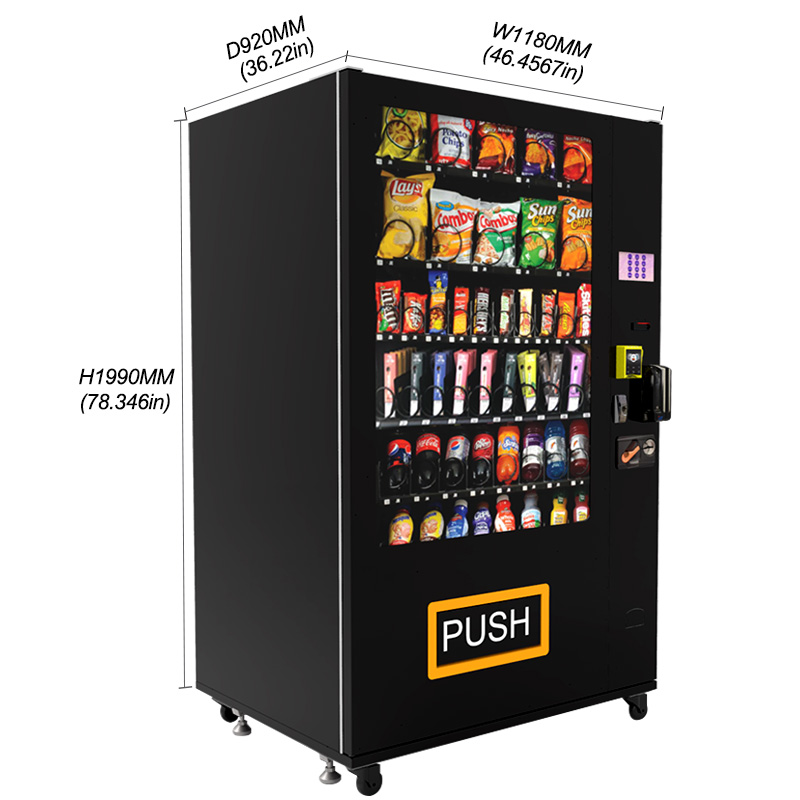
A snack and beverage vending machine remains the most familiar format and still has a place when traffic is steady, refill logistics are manageable, and the product mix is broad enough to drive repeat use. This format works best when customers want quick, low-friction purchases and the operator wants proven mechanics rather than experimental retail.
Its strengths are simple: broad product compatibility, easy customer understanding, and a long history of sales data. Its weaknesses are also clear: average ticket size tends to be modest, competition can be high, and margins depend heavily on location quality. If you are placing machines in offices, schools, workshops, transit-adjacent spaces, or waiting areas, a well-built combo unit still makes sense. If you are targeting premium products, larger packaging, or higher average order values, you may outgrow this format quickly.
For product examples and configuration ideas, Zhongda Smart’s product catalog and food and drink machine page show the kind of cabinet depth, touchscreen controls, and remote-management features many buyers now expect from a modern machine.
2. Glass-front smart cabinet machines
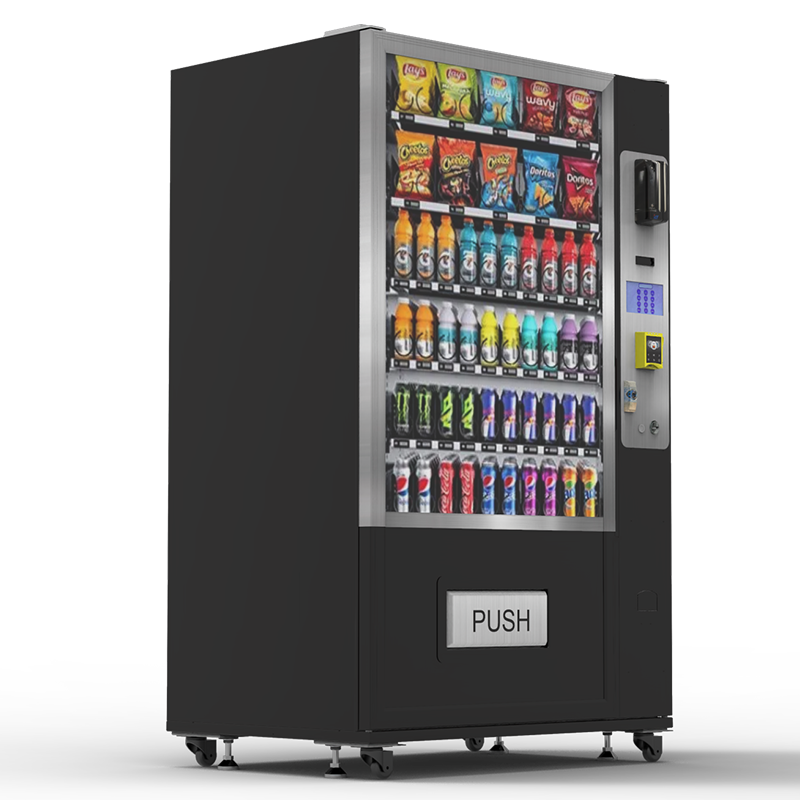
This is often the best all-around answer for buyers who want modern retail presentation without losing vending efficiency. A glass-front smart vending machine improves visibility, supports brand presentation, and gives more flexibility with planograms than old spiral-only thinking allows. It works especially well for packaged food, drinks, convenience items, and curated product assortments.
In higher-quality builds, the real value is not the glass itself. It is the control system behind it: telemetry, cashless support, ad-ready screens, dynamic pricing logic, and easier SKU management. In real operations, these machines usually outperform basic units not because the hardware is flashy, but because the operator gets better information and loses fewer sales to stockouts or silent machine faults.
3. Locker vending machines
Locker vending is one of the smartest choices for premium or awkward products. If the product is fragile, boxed, higher-value, or simply does not drop well through a standard channel, lockers can solve the problem cleanly. This format also helps when buyers expect a more “retail pickup” style experience instead of a conventional coil vend.
I often recommend locker units for electronics accessories, beauty kits, boxed meals, specialty retail, collectible products, and larger convenience items. The selling advantage is not only safer delivery. It is also the ability to increase average selling price without increasing refund risk. Zhongda Smart’s locker vending solution is a useful reference point for buyers who need a more flexible dispensing structure.
4. Mini and wall-mounted machines
Compact machines are underrated. In many sites, the best vending machine is not the biggest one. It is the one that fits naturally into the available space, gets serviced quickly, and sells a narrow but profitable assortment. A mini format or wall-mounted unit can work very well in hotels, small lobbies, private clubs, salons, clinics, and specialty retail corners where a full-size machine would either look clumsy or waste floor area.
These machines are also strong for trial deployment. If an operator wants to test a product category before committing to a larger fleet, a compact footprint lowers the entry cost and shortens the learning cycle. Zhongda Smart’s mini vending machine range illustrates how smaller units can still support touchscreens, cashless payment, and remote management.
5. Specialty category machines
Specialty vending has become one of the clearest profit stories in the business. When the product is targeted, the audience is defined, and the machine is designed around that category, margins can be materially better than general snack vending. Beauty, collectibles, health accessories, personal care, and hobby-driven retail are all examples where a self-service kiosk or custom cabinet can outperform a standard snack machine on both margin and brand impact.
This is where customization matters. A specialty machine should not be treated as a generic box with a sticker on it. Door design, shelf geometry, interior lighting, package-facing, payment flow, and display layout all matter because the customer is not merely grabbing a snack. They are making a product choice more like a shelf purchase in retail.
6. Fully customized branded machines
For brand owners, chain retailers, and serious operators, a custom OEM or ODM project is often the highest-upside path. It costs more upfront, but it solves problems that standard inventory can never solve completely: exact product fit, stronger branding, better use of space, clearer user flow, and a dispensing method built around the product rather than adapted after the fact.
This is where a source manufacturer such as Zhongda Smart becomes especially relevant. The company’s OEM custom vending machine page and solution center show the range of machine structures and application logic available when buyers move beyond off-the-shelf units.
Side-by-side machine comparison
| Machine Type | Best For | Main Strength | Main Weakness | Typical Ticket Size | Service Complexity |
|---|---|---|---|---|---|
| Snack & beverage combo | Broad daily-use products | Proven format, familiar to buyers | Lower average margin than niche categories | Low to medium | Low to medium |
| Glass-front smart cabinet | Mixed convenience retail | Strong presentation and telemetry value | Upfront price is higher than basic units | Medium | Medium |
| Locker vending | Fragile, premium, or larger items | Safe dispensing and higher basket potential | Fewer SKUs in the same footprint | Medium to high | Medium |
| Mini or wall-mounted | Tight spaces and pilot programs | Low space demand and faster testing | Limited capacity | Low to medium | Low |
| Specialty category machine | Beauty, collectibles, accessories | Higher margin and stronger branding | Needs precise product-market fit | Medium to high | Medium |
| Custom OEM machine | Brands and scaled operators | Built around exact business needs | Longer development cycle | Varies | Medium to high |
How to choose the right machine without wasting capital
Most bad buying decisions come from one mistake: the buyer starts with the machine and not the business model. That is backwards. Start with the unit economics, then move to hardware. I use a practical decision sequence that has saved clients a lot of money over the years.
Step 1: Match the machine to the product, not the other way around
This sounds obvious, but it gets ignored all the time. If the product has unstable packaging, odd dimensions, or high breakage risk, the wrong delivery method will quietly destroy your refund rate. If the product is premium, hiding it inside a generic cabinet will reduce conversion. If the product needs temperature control, weak cooling performance will crush repeat sales. Product shape, weight, fragility, and shelf life should determine the machine’s mechanical structure.
Step 2: Estimate demand honestly
Do not assume foot traffic equals sales. A site with 1,000 daily passersby can underperform a site with 250 targeted users if the second group has higher urgency and fewer alternatives. Realistic capture rates matter. In many deployments, the best sites are not always the busiest. They are the ones where the machine solves an obvious problem at the right moment.
Step 3: Decide how much service labor you can absorb
Operators usually think about machine price first and labor second. In practice, labor often decides whether the machine is truly profitable. A machine that is slightly more expensive but easier to restock, diagnose, and manage remotely can end up being the cheaper machine over two to three years. This is one reason modern telemetry is so important. It cuts blind service trips and gives the operator a better grip on stock planning.
Step 4: Build around payment reality
If your machine does not support the local payment habits of your target user, every other feature becomes less important. A good cashless payment system removes friction. A bad one creates it. This is not just about card acceptance. It is also about speed, reliability, receipt handling where needed, and the customer’s confidence that the transaction will go through cleanly.
Step 5: Do the math before you buy
A machine should earn its right to exist on paper before it ships. I strongly recommend using Zhongda Smart’sROI calculator and its vending machine buying guide as a starting point. They are useful because they push buyers to think in terms of daily revenue, gross margin, operating cost, and break-even timing rather than vague hopes.
Real-world cost ranges and what buyers usually overlook
There is no single price for a vending machine deutsch project because price depends on machine type, cooling system, screen size, payment stack, software, cabinet size, and customization. Still, practical budgeting ranges are possible if you think in categories rather than exact quotes.
| Cost Area | Entry-Level Range | Mid-Range Smart Setup | Custom or Premium Range |
|---|---|---|---|
| Basic machine hardware | Lower upfront cost | Moderate investment | Highest upfront cost |
| Cashless payment integration | Limited or add-on | Standard feature | Fully integrated multi-method stack |
| Remote monitoring | Minimal | Usually included | Advanced telemetry and analytics |
| Branding and custom design | Basic wrap or decal | Enhanced graphics and UI | Full OEM/ODM structure |
| Best fit | Simple trial use | Most operators and retailers | Brands, chains, and scaled programs |
What buyers miss is that the purchase price is only one layer of the investment. The real cost stack also includes freight, import handling, installation, payment device certification, software setup, site preparation, initial product load, signage, and spare parts planning. Then come operating costs: refill labor, shrinkage, payment processing fees, electricity, service calls, and downtime.
In badly planned projects, the hidden cost is usually downtime. A machine that is technically “cheap” but unavailable too often becomes very expensive. This is why I tell buyers to look at total operating value, not simply acquisition price. A strong controller, a stable motherboard, quality refrigeration, and dependable cashless hardware are not glamorous line items, but they are often the difference between a smooth payback curve and a machine that turns into a weekly headache.
How return on investment really works
Profit in vending does not come from one magic feature. It comes from the relationship between revenue, margin, service frequency, and uptime. The easiest way to understand payback is to use a simple framework:
Daily sales volume: how many paid transactions the machine gets
Average ticket size: the average value per sale
Gross margin: selling price minus product cost
Operating cost: labor, electricity, transaction fees, service, and losses
Machine uptime: the percentage of time the machine is actually available to earn
One of the most common misconceptions is that high traffic automatically means fast ROI. It does not. A machine with weak margins and heavy service needs can underperform a lower-volume machine that sells higher-margin products with less refill pressure. I have seen operators earn more from a focused beauty machine or a curated accessory kiosk than from a generic snack unit in a busier location.
As a working rule, a healthy vending project usually shows these characteristics:
Product mix with margin discipline rather than random assortment
Reliable remote monitoring and fault visibility
Machine capacity that supports the traffic level
Site logic that creates repeat purchase behavior
Fast restock access and low service friction
Zhongda Smart’s own recent publishing on profitability notes a practical payback range of roughly 12 to 18 months for well-placed modern machines, especially where smart controls and stronger category margins are involved.[4] I would treat that as achievable, not guaranteed. It depends on execution. But it aligns with what I have seen in projects that combine a good site, the right machine type, and disciplined SKU planning.
My advice is simple: do not buy based on the lowest quote. Buy based on the clearest path to predictable margin.
Features that are worth paying for
Over the years, I have become much less impressed by feature lists and much more interested in which features actually protect revenue. Many buyers get distracted by cosmetic upgrades. The features below are the ones that repeatedly prove their value in operation.
Cashless acceptance that works every time
This is non-negotiable. A machine should support the payment methods your buyers already use, and it should process quickly. Failed taps, confusing prompts, or slow response times will kill conversion faster than most operators realize.
Telemetry and remote management
If you can see stock levels, door status, machine health, temperature alerts, and sales data without standing in front of the machine, you run a better business. A modern smart vending machine should not operate blind. The labor savings alone can justify the upgrade.
Flexible merchandising
Fixed product assumptions age badly. Good machines let you adjust channel widths, shelf assignments, or locker sizes so the machine can evolve with your assortment. This matters more than people think, because successful product mixes change.
Stable refrigeration and energy efficiency
If you are selling beverages, dairy, fresh convenience items, or temperature-sensitive goods, cooling consistency matters as much as sales presentation. It protects both compliance and product quality. Weak cooling systems create waste, refunds, and reputation damage.
Strong user interface design
A machine does not need a giant screen to sell well, but it does need a clean flow. Customers should understand how to browse, select, pay, and collect in seconds. The best interface is the one nobody notices because it feels obvious.
Service-friendly construction
Technicians and refill staff always discover the truth about machine quality faster than buyers do. Easy access panels, clean cable routing, reliable locks, replaceable modules, and sensible interior layout all reduce the total cost of ownership.
Where Zhongda Smart fits into the buying decision
If your plan includes machine customization, category-specific vending, or factory-direct procurement, Zhongda Smart deserves to be on the shortlist. The reason is not just product range. It is the combination of OEM flexibility, multiple machine structures, and a catalog that extends beyond conventional snack vending into category-led solutions.
For buyers who want a broad overview, the Zhongda Smart homepage provides the clearest summary of the company’s manufacturing positioning. For buyers who are already comparing machine types, the products page is the better entry point because it shows the spread across drinks, mini machines, specialty retail, and other custom formats. Buyers looking at project logic should review the solution center. Those trying to model returns should use the ROI calculator. And anyone still early in the buying cycle should read the machine buying guide.
That set of pages creates a practical path for buyers: understand machine types, narrow the right solution, estimate profitability, then start discussions around specifications. That is much better than jumping straight into quote requests without knowing what actually needs to be built.
One point worth stressing is that not every buyer needs a custom project. Sometimes a semi-standard platform with minor configuration changes is enough. But for specialty categories, premium retail presentation, unusual product sizes, or branded rollouts, factory-level flexibility becomes much more valuable. That is where a manufacturer with real customization experience can save months of trial and error.
A practical machine selection framework by business goal
Below is the framework I use most often when helping buyers avoid mismatched machines.
| Business Goal | Best Machine Direction | Why It Fits |
|---|---|---|
| Fast entry with familiar products | Snack and beverage combo | Easy customer adoption and proven replenishment model |
| Modern retail look with broad assortment | Glass-front smart cabinet | Better presentation, better telemetry, more flexible merchandising |
| Premium products or fragile items | Locker vending | Safer delivery and higher-value basket potential |
| Tight footprint or trial deployment | Mini or wall-mounted machine | Lower space demand and lower early-stage commitment |
| Category-led niche retail | Specialty custom machine | Better fit for product dimensions, branding, and customer expectations |
| Multi-site branded expansion | OEM/ODM custom platform | Consistency, stronger identity, and long-term operating control |
If you are still undecided, remember this rule: when average ticket size is low, volume and service efficiency matter most. When average ticket size is higher, product presentation, machine fit, and transaction reliability matter more. That one distinction solves many buying debates.
Common mistakes that hurt profit
I have seen these errors repeated across too many projects. They are fixable, but avoiding them from day one is much cheaper.
Buying the wrong size machine. Too large, and the site does not justify it. Too small, and the operator is trapped in constant refill cycles.
Ignoring payment behavior. A machine that does not support the expected way people pay will underperform even in good locations.
Overloading the SKU count. More products do not always mean more revenue. In many cases, a tighter assortment sells better and simplifies replenishment.
Choosing hardware without telemetry. Blind operations lose money quietly through stockouts and downtime.
Underestimating service access. A good site can become a bad site if technicians and refill staff waste time reaching the machine.
Using the same machine logic for every category. Beauty, collectibles, drinks, and convenience food do not behave the same way.
Focusing only on purchase price. Cheap hardware can become expensive when it fails often or slows operations.
Every one of these mistakes is more expensive than spending a little longer on specification work. Smart buying starts before the purchase order, not after.
My expert recommendation after years in the business
If I had to give one concise recommendation for most buyers looking into vending machine deutsch, it would be this: choose a cashless-ready glass-front smart machine if you need broad flexibility, choose a locker machine if your products are premium or fragile, and choose a compact machine only when space or testing cost is the main constraint. That covers the majority of cases.
For brand owners and operators who already know their product category and want better margins, I would lean even more strongly toward custom or semi-custom development. The reason is simple. Standard machines are fine when your business can adapt to them. But when you want better product fit, cleaner branding, stronger delivery logic, and a more defensible retail experience, customization usually pays back over time.
If you are comparing manufacturers, do not just ask for price and lead time. Ask these questions instead:
What payment methods can the machine support right now?
How is remote monitoring handled, and what data can the operator see?
What product dimensions has the machine already been proven with?
How easy is it to replace key parts in the field?
What level of OEM or ODM adjustment is realistic?
Can the supplier share case examples or category-specific solutions?
Those answers will tell you much more than a glossy image ever will. In a market where product mix, cashless convenience, and machine intelligence matter more every year, the best machine is the one that protects uptime and margin while fitting the site like it was meant to be there. That is the standard buyers should use. And that is the lens through which any vending machine deutsch decision should be made.
FAQ
What does vending machine deutsch usually refer to?
It usually refers to vending machine options, suppliers, and buying guidance intended for buyers who want a machine setup suitable for this market, including language preference, payment expectations, and compliance-minded machine features.
Is a vending machine still a profitable business?
Yes, but profitability depends on machine type, location quality, product margin, payment convenience, service discipline, and uptime. A well-matched modern machine can perform very well, while a poorly matched machine can disappoint even in a decent location.
Which machine is best for beginners?
For most beginners, a modern snack-and-drink machine or a glass-front smart cabinet is the safest starting point because the product categories are familiar, the mechanics are proven, and customer behavior is easy to understand.
When is a locker vending machine the better option?
A locker machine is usually the better option when the product is fragile, premium priced, boxed, oddly shaped, or better presented as a pickup item instead of a drop vend.
Do I really need cashless payment support?
Yes. Even if cash still matters in some settings, card and mobile payment adoption keeps growing. A machine without reliable cashless support limits conversion and makes the business less future-ready.
How long does ROI usually take?
There is no universal number, but well-run projects often target a payback window around 12 to 18 months. The actual result depends on traffic, margin, downtime, and service efficiency.
Why work with a source manufacturer instead of a reseller?
A source manufacturer can often offer better flexibility on machine structure, branding, controller integration, dispensing method, and product fit. That becomes especially valuable for custom or category-specific projects.
Which Zhongda Smart pages should I review first?
Start with the homepage for a company overview, then the products page, the solutions page, the ROI calculator, and the machine buying guide. That sequence gives most buyers the clearest path from research to specification.
Author note
This article is written from the perspective of a practitioner with more than 10 years of hands-on vending operation experience and 15 years of source-manufacturing exposure. The recommendations above are based on machine selection logic, deployment patterns, service realities, and factory-side design considerations. Market figures are included for reference, and actual operating results will vary by product mix, site conditions, machine uptime, pricing discipline, and refill execution.