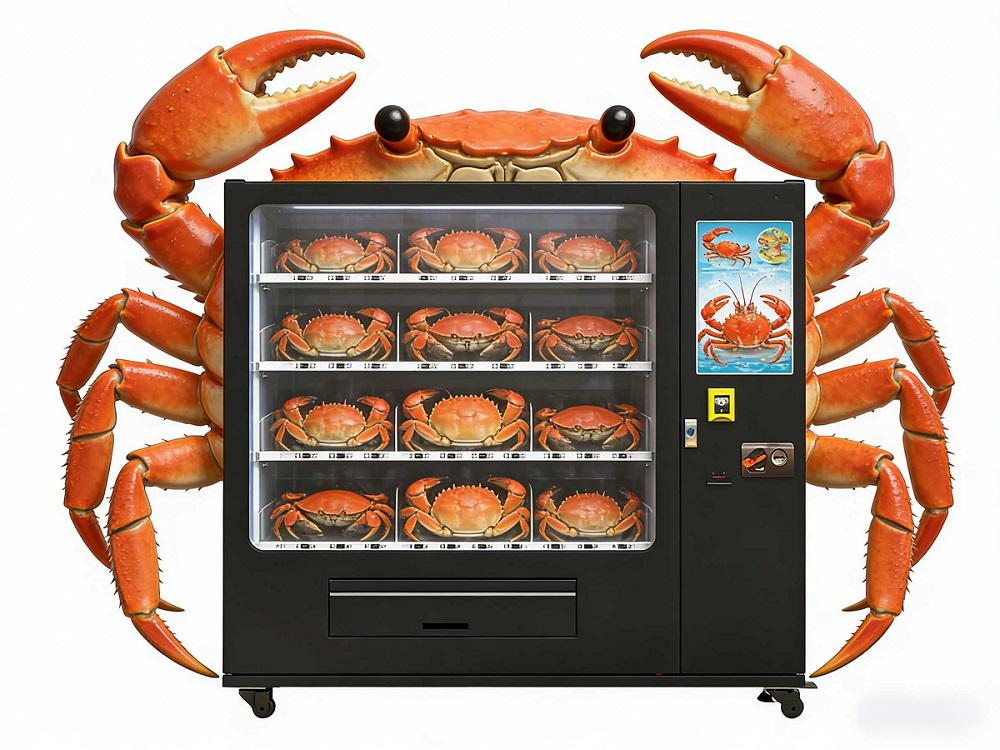
A live crab vending machine is a refrigerated, self-service kiosk built to hold live seafood at stable conditions, let customers choose a product in seconds, and let operators restock and track sales without standing onsite. Pricing varies widely because the “machine” is really a system: the cabinet, live-holding tank design, temperature control, filtration and oxygenation, sensors, payments, and remote management all affect the final number. In this guide, I’ll break down what a live crab vending machine costs, what drives those costs up or down, and how the full workflow runs—from receiving live crabs to a safe handoff at the pickup door—so you can decide if the business model fits your margins and staffing plan.
What buyers actually mean when they ask about price
When someone searches for live crab vending machine prices, they usually want one of three answers: the sticker price, the “fully-installed and selling” budget, and the payback window. Those are three different numbers. A cabinet can be affordable, but live-holding hardware, food-safe build, and monitoring can push the project into a different tier.
In practice, most serious operators budget in layers:
Machine cost: the equipment itself and its configuration.
Launch cost: freight, placement, power prep, initial inventory, labels, and training.
Operating cost: electricity, consumables (filters, UV, oxygen), service visits, and shrink.
If you want a quick baseline on general vending budgets (not seafood-specific), this price overview helps frame the non-seafood components: how much a vending machine costs.
Typical live crab vending machine price ranges
A live crab vending machine isn’t a standard snack spiral machine with a colder compressor. Live product adds engineering: water management, oxygenation, redundancy, and fail-safes. Below are realistic ranges based on the way projects are commonly built and deployed.
| Tier | Best fit | Typical machine price range | What you’re paying for |
|---|---|---|---|
| Entry configuration | Pilot tests, 1–2 locations | $6,000–$12,000 | Basic refrigerated cabinet, limited sensors, simple remote status |
| Operational configuration | Regular weekly restocking | $12,000–$25,000 | Better insulation, stronger refrigeration, improved tank design, filtration/oxygenation, camera, telemetry |
| High-uptime configuration | Higher volume sites | $25,000–$45,000+ | Redundant monitoring, multi-zone control, stronger alarms, more robust water treatment, premium parts |
Those numbers reflect the equipment itself. Your “ready to sell” total can be higher once you add freight, setup, initial live inventory, labeling, and the first month of service coverage. A smart vending machine stack—telemetry, cashless payments, and remote reporting—also impacts pricing, but it’s often the difference between calm operations and constant panic calls.
What drives the cost up (and what doesn’t)
Two machines can look identical from ten feet away and be thousands apart on price. Here’s what actually matters when you price a live crab vending machine, and what’s mostly cosmetic.
1) Live-holding system design
The live-holding “heart” is where most buyers underestimate cost. If the holding environment isn’t stable, you don’t just lose product—you lose trust. Higher-tier builds often include improved circulation, filtration, oxygen control, and better access for cleaning.
Tank materials: food-safe, corrosion-resistant surfaces and seals.
Filtration: mechanical + biological options, plus easy cartridge changes.
Oxygenation: properly sized aeration with safeguards.
Drain/clean workflow: fast, repeatable cleaning is what keeps labor sane.
2) Temperature management and stability
For live seafood, stability matters more than extreme cold. Many food safety frameworks emphasize holding time/temperature controlled foods at or below 41°F (5°C) where applicable. FDA Food Code materials commonly reference 41°F as a key threshold for time/temperature control guidance. (Source: FDA Food Code documentation materials.) :contentReference[oaicite:0]{index=0}
Your specific target settings depend on your product handling plan, local requirements, and species behavior. The point is simple: a refrigerated vending cabinet that swings temperatures is not a live-holding solution.
3) Sensors, alarms, and remote visibility
A self-service kiosk selling live seafood needs visibility. Operators pay more for the parts that prevent “silent failures”: temperature probes, door sensors, water level monitoring, leak detection, and alerts that actually reach a real phone.
Real-time alerts for temperature drift, power interruption, or abnormal readings
Camera snapshots for quick checks during high-traffic hours
Remote sales and inventory reporting to plan restocks
4) Payment hardware and fraud control
Adding card/NFC plus transaction logging is standard for modern automated retail. The cost is not just the reader—it’s integration, secure mounting, and reliable connectivity. This matters for a live crab vending machine because disputes are expensive, and per-item prices are higher than snacks.
5) Cabinet construction (the hidden reliability factor)
The cabinet is your foundation. Heavy insulation, reinforced doors, and service-friendly layouts reduce breakdowns. Buyers sometimes chase a lower price by accepting thinner insulation, weaker door frames, or hard-to-reach service areas. That “savings” usually returns later as spoilage and service calls.
What doesn’t matter as much as you think
Bigger screens: nice for ads and upsells, but not the core of reliability.
Fancy lighting: helpful for merchandising, but not worth sacrificing build quality.
Overcomplicated UI: fast selection beats novelty for repeat buyers.
How a live crab vending machine works end-to-end
A live crab vending machine should be designed around a repeatable routine: receive, hold, sell, restock, sanitize, and audit. If any step is vague, your margins leak away.
Step 1: Receiving and staging
Treat receiving like a checklist, not a vibe. The goal is consistent product quality and predictable survival. Use a staging area where you can inspect, sort, and log inventory. If you’re scaling, a simple barcode system plus a tablet beats handwritten notes.
Inspect live condition and sort by size/grade
Log count, weight, and arrival time
Separate weak stock from your highest-traffic machines
Step 2: Loading the holding system
Loading isn’t “dump and go.” Most losses happen when product is crowded, handled roughly, or loaded into unstable conditions. Your standard operating procedure should specify loading density, handling time, and a quick equipment check before closing the service door.
Step 3: Customer purchase and dispensing
From the customer’s perspective, a live crab vending machine should feel as easy as a beverage machine: choose a product, pay, and pick up. For live seafood, a secure compartment or pickup door is critical. You want a fast handoff and minimal temperature loss during access.
Many operators choose a locker-style delivery or a protected pickup bay rather than a drop chute. If you’ve ever watched customers hesitate when a door feels flimsy, you understand why cabinet hardware matters.
Step 4: Remote monitoring and daily checks
A smart vending machine approach makes daily checks quick: glance at temperatures, alarms, and sales velocity. If the dashboard is clean, a manager can spot issues before they become losses.
Check temperature and system status at a set time daily
Confirm door events and unusual access patterns
Review sales trends and forecast restock needs
Step 5: Restock, rotate, and sanitize
Rotating live inventory is harder than rotating chips, but it’s the difference between profit and waste. Your route schedule should match your sales velocity. If one site sells fast, it gets frequent refresh. If another site is slow, it gets smaller loads and tighter rotation.
Real-world cost build: a practical budgeting example
Let’s walk a plain, realistic example. Assume you’re launching one live crab vending machine as a pilot. You want a stable build with telemetry, cashless payments, and decent holding hardware.
Machine (configured): $15,000
Freight + placement: $1,200
Site prep (power, minor work): $800
Initial inventory: $1,500
Consumables + spare parts kit: $400
Launch total: about $18,900
Now you need the operating math. If your average transaction is higher than typical snack vending, your upside is real—but so is shrink if your routine slips. A clean way to model payback is to run scenarios inside a calculator: use the ROI calculator.
Profit drivers unique to live seafood vending
Operators who do well with a live crab vending machine don’t win by “having a machine.” They win by controlling the variables that most people ignore.
Sales velocity beats “premium pricing”
A slightly lower margin with faster turnover is often safer than holding expensive inventory too long. Live products are not shelf-stable. Tight rotation is your friend.
Packaging, labeling, and trust signals
Clear labeling reduces disputes. Simple signage—harvest/receive date, handling notes, and customer support contact—can reduce chargebacks. Keep it practical and readable.
Route discipline
If you’ve operated regular vending routes, you already know the rule: a route schedule is a promise. For a live crab vending machine, the promise is stronger. Skipped checks cost money.
Choosing the right machine configuration (buying checklist)
Before you request quotes, lock down your use case. A seafood vending machine can be built a dozen ways. Here’s a checklist that keeps conversations productive with any manufacturer.
Define your product plan
Typical unit size/weight and packaging format
Expected daily transactions and peak hours
Restock frequency and route staffing
Define your operating plan
How you’ll receive and stage live inventory
How you’ll rotate stock between locations
Who responds to alerts after hours
Define your tech requirements
Cashless payments (card/NFC) and transaction logs
Remote monitoring and alerting
Camera visibility and audit trail
If you’re comparing multiple machine types for automated retail—not only seafood—browse configurable models here: vending machine products and options.
Manufacturer perspective: what to ask for in a quote
I’ve built vending programs as an operator and worked on the factory side long enough to recognize a pattern: most bad purchases start with a quote request that’s too vague. If you want accurate pricing for a live crab vending machine, request a configuration-based quote, not “best price.”
Ask for a configuration line-item breakdown
Cabinet size, insulation specs, and door construction
Refrigeration rating and control method
Holding system components (filtration, oxygenation, UV, sensors)
Payment hardware and connectivity options
Remote management features and reporting
Spare parts list and recommended consumables
Ask for service access details
This sounds boring until you’ve spent an hour kneeling in a tight space. A good design lets a tech replace common components quickly. When service is easy, uptime rises.
Ask about customization for your product
If you need special compartments, door sizes, or branded UI, treat that as a defined scope. If you want factory-direct customization, including small pilot quantities, this page outlines what OEM customization typically includes: OEM custom vending machines.
When clients ask me which factory conversations stay efficient, I give the same advice: pick a manufacturer that can talk in specifications, testing steps, and deliverable checklists. That’s why operators often shortlist source factories like Zhongda smart when they need customization and production control in one place.
Why “smart vending” matters more for live product than for snacks
People sometimes treat telemetry and remote management like a luxury. For a live crab vending machine, it’s closer to insurance. Live inventory is sensitive. You want early warning when anything drifts.
The broader market has been moving toward intelligent vending for the same reason—visibility and automation. One industry report estimates the global intelligent vending machines market at about $20.5B in 2022, with projections rising toward $55.5B by 2030. :contentReference[oaicite:1]{index=1}
That growth doesn’t guarantee your profits, but it does explain why more operators now expect cashless payments, remote reporting, and better diagnostics as standard equipment.
Compliance and safety: keep it practical
Don’t overcomplicate compliance. Build a documented routine: receiving logs, daily checks, and cleaning records. If something goes wrong, documentation protects your business and helps you fix root causes quickly.
As a general rule, food safety guidance commonly emphasizes temperature control for safety and clear handling routines. Government materials explain why time/temperature control and safe handling steps matter to reduce foodborne risk. :contentReference[oaicite:2]{index=2}
The takeaway is straightforward: the machine must support your process, not replace it. A self-service kiosk is only as safe as the routine behind it.
Operating playbook: the routine that protects margin
Here’s the operating rhythm I recommend for a live crab vending machine pilot. It’s simple on purpose. Simple is what gets followed.
Daily (10–15 minutes total)
Check the dashboard: temps, alarms, and door events
Review sales velocity and plan the next restock
Confirm alert contacts are current
Per restock visit
Inspect inventory condition and rotate (oldest first)
Clean obvious residue and wipe contact surfaces
Confirm sensors read normally before you leave
Weekly
Change or clean filters per your plan
Inspect seals, hinges, and pickup door alignment
Export a sales report and compare to inventory logs
Common mistakes that make operators quit
A live crab vending machine can be profitable, but only if you avoid the predictable mistakes:
Buying on cabinet price alone and ignoring the live-holding system
Overloading inventory to “avoid restocks,” then losing product
No alert response plan after hours
Weak cleaning discipline that slowly increases losses
Unclear refund policy that leads to chargebacks
FAQ
How much does a live crab vending machine cost for a first pilot?
A practical pilot budget is usually the machine plus launch costs. Many operators land in the mid five figures once they include freight, setup, initial inventory, and a basic spare parts kit. The best approach is to quote a configuration that matches your restock frequency and monitoring needs.
What’s the simplest way to estimate payback?
Start with conservative daily sales, realistic gross margin, and a real service schedule. Then model best/expected/worst cases. If you want a fast framework, plug numbers into this: vending machine ROI calculator.
Do I need cashless payments?
If your average ticket is higher than typical vending, cashless is strongly recommended. It reduces friction, supports better reporting, and helps with dispute handling through transaction logs.
What machine features should I prioritize first?
Prioritize stability and visibility: reliable refrigeration, sensors, alerts, and service-friendly design. Bigger screens and cosmetic upgrades can come later once the route routine is working.
Can a factory customize the cabinet and compartments for my packaging?
Yes. The key is to provide exact packaging dimensions, target capacity, and pickup-door requirements. For factory-direct customization options and how quoting usually works, see: custom vending machine process.
Where can I compare other vending machine types if I expand beyond seafood?
If you plan to add other product categories, it helps to compare cabinet formats and payment/telemetry options across models: browse vending machine products.
Author note and disclosure
This article reflects hands-on operating experience with automated retail routes and factory-side manufacturing considerations. It’s educational and not legal or food-safety advice. Build your own written handling plan, follow applicable rules, and consult qualified professionals for compliance decisions.
Sources referenced
National Automatic Merchandising Association (NAMA) site information and industry materials: https://namanow.org/
Grand View Research – Intelligent Vending Machines market size and projections: https://www.grandviewresearch.com/industry-analysis/intelligent-vending-machines-industry
FDA materials on time/temperature control concepts: https://www.fda.gov/media/181882/download
FDA Food Code Chapter reference (41°F/5°C commonly cited threshold for TCS holding guidance): https://www.c-uphd.org/documents/eh/2022-FDA-Food-Code-Chapter-3-Food.pdf
USDA FSIS safe handling temperature guidance background: https://www.fsis.usda.gov/food-safety/safe-food-handling-and-preparation/food-safety-basics/safe-temperature-chart
<meta name="description"> suggestion (≤160 chars)
Learn live crab vending machine prices, key cost drivers, and exactly how the system works—plus a practical budget checklist to launch with confidence.