You can buy a single vending machine without committing to a bulk order. Zhongda Smart supports orders starting from one unit for eligible standard machines and selected OEM configurations, allowing business owners to start with one location before purchasing additional equipment. However, a one-machine order does not automatically guarantee that every customization, payment system, or shipping service is included in the advertised price.
When comparing Vending Machines on Sale, the most important figure is the total cost of getting a properly configured machine installed and operating, not simply the equipment price. This guide explains how single-unit purchasing works, which machine configurations deserve consideration, what factory-direct pricing should include, and how to calculate realistic operating costs. It also covers payment compatibility, maintenance planning, manufacturer evaluation, and the purchase details worth confirming before sending a deposit.
Can You Really Buy Just One Vending Machine?
Yes. Buying one vending machine is a practical option when the manufacturer accepts single-unit orders. Zhongda Smart offers a starting minimum order quantity of one unit for many standard and OEM vending machine configurations. More extensive custom engineering may involve separate requirements, so the final order quantity and specifications should always be confirmed in writing.
For a new operator, a single machine can be a sensible way to test a product assortment, evaluate a location, and understand the work involved in operating unattended retail equipment. It also limits the amount of capital committed before the business has actual sales information.
What No Minimum Order Really Means
A minimum order quantity, usually shortened to MOQ, is the smallest quantity a supplier will accept for a particular product or order. When the MOQ is one unit, a buyer can request a quotation for one machine rather than purchasing several identical cabinets.
That distinction matters because manufacturers may apply different conditions to different configurations.
- Standard machines: Existing cabinet designs with established components may be available individually.
- Optional configurations: Payment hardware, branding, screens, and product lanes may be adjustable on a single machine.
- Custom engineering: New cabinet tooling, specialized mechanisms, or substantial software development may involve additional engineering charges or quantity requirements.
- Accessories: Replacement parts, consumables, and payment equipment may have purchasing conditions separate from the machine itself.
A single-unit order also does not necessarily mean the buyer receives the same total delivered cost per machine as a large equipment order. Manufacturing discounts, packaging expenses, shipping costs, and customization charges can change with quantity.
Why a Single-Machine Order Can Be the Smarter Starting Point
Consider a business planning to install vending machines at several properties. Ordering every cabinet before testing the first location creates several risks at once: unsuitable merchandise, incorrect payment hardware, excessive machine capacity, and uncertain purchasing demand.
One properly configured machine provides an opportunity to evaluate those assumptions before repeating the investment.
For a small business purchasing its first machine, I'd recommend concentrating on three questions: Does the proposed location have a clear reason to purchase the products? Can the machine dispense those products reliably? Can the expected sales cover the operating costs?
If those questions have convincing answers, purchasing one machine can be a rational first commitment. If they do not, buying five machines at a lower unit price only multiplies the uncertainty.
When One Machine Is Not Enough
A single-machine purchase is less suitable when the business must serve several separate customer areas immediately, needs substantially more storage than one cabinet can provide, or cannot replenish the machine frequently enough.
There is also an operational limitation. A business with only one machine has no backup vending equipment if that cabinet stops working.
For this reason, single-unit purchasing reduces initial exposure but does not remove the need for maintenance planning, spare-parts access, and a realistic inventory strategy.
What Factory-Direct Vending Machine Pricing Actually Includes
Factory-direct purchasing means obtaining equipment through the manufacturer rather than through an additional equipment reseller. The advantage is the opportunity to discuss configuration, manufacturing requirements, and technical support directly with the factory.
However, factory-direct does not automatically mean the lowest total cost. An inexpensive cabinet can become expensive after payment equipment, shipping, installation, and required modifications are added.
The correct comparison is between complete quotations for machines capable of performing the same job.
Start With the Actual Equipment Specification
A commercial vending machine is a collection of systems, not merely a cabinet with shelves.
Depending on the model, the equipment may include a steel enclosure, electronic controller, display, dispensing motors, product sensors, payment interface, cooling system, networking hardware, and remote-management software.
Two visually similar machines can have different capabilities because their internal components are not identical.
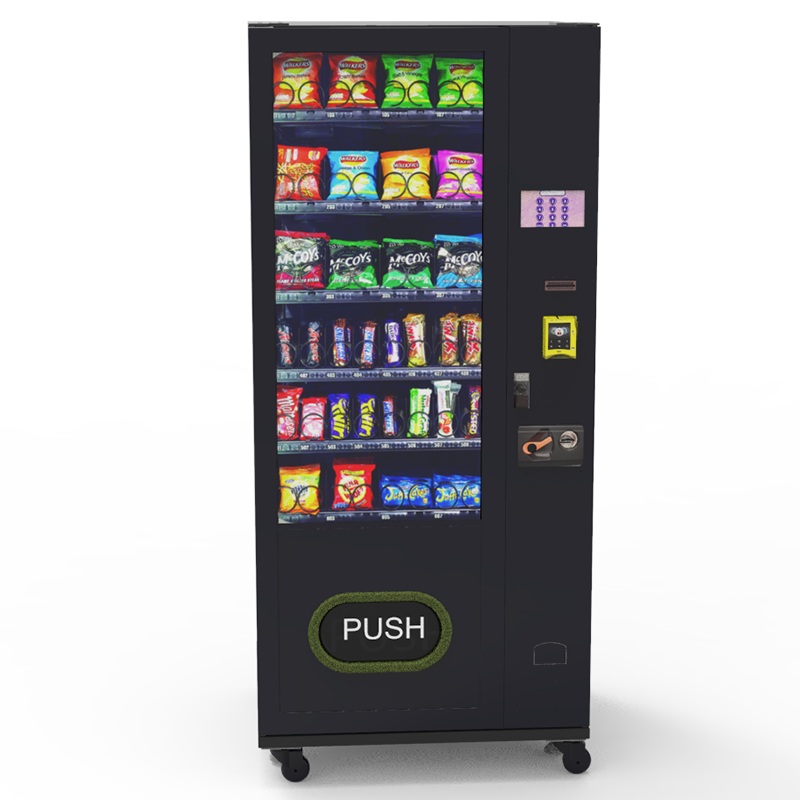
For a concrete equipment example, Zhongda Smart's ZD-L-7 mini snack-and-drink vending machine has a displayed reference price of $1,951, a 7-inch touchscreen, 36 standard cargo lanes, and an approximate capacity of 200–300 items. Its listed payment and connectivity options include several configurations.
The displayed amount is an equipment reference price, not a guaranteed delivered quotation. Actual pricing depends on the approved configuration and commercial terms.
Ask for an Itemized Quotation
An itemized quotation should distinguish the main machine from optional equipment and services. Otherwise, two prices cannot be compared reliably.
At minimum, request the cabinet model, screen specification, dispensing system, refrigeration configuration, payment hardware, communications equipment, accessories, warranty coverage, packaging, and freight charges.
For customized projects, request a separate description of design work and any additional charges associated with the modification.
For example, a quotation that includes a card-reader mounting interface does not necessarily include an activated payment terminal. Similarly, a machine described as capable of remote management may still require a subscription or an operator-managed data connection.
The Importance of Shipping Terms
Shipping expenses deserve particular attention when purchasing just one machine. The cost of moving a heavy commercial cabinet is spread across fewer units than it would be in a consolidated shipment.
Ask whether the quotation includes protective packaging, terminal handling, customs-related charges where applicable, final delivery, unloading, and movement into the installation area.
Clarify the agreed delivery term and named delivery point. A freight quotation that ends at a transport terminal is not equivalent to one that includes delivery to the receiving dock.
For a single-machine project, I would compare the complete landed and installed cost before deciding that one factory quotation is less expensive than another.
Choosing the Right Vending Machine for Your Products
The right vending machine is determined by the products it must sell, the conditions under which those products must be stored, and the way customers will receive them.
Buying a machine with the largest possible screen or the highest advertised capacity does not solve a mechanical compatibility problem.
A correctly selected machine must hold the merchandise securely, dispense it consistently, and make the purchasing process straightforward.
Comparing the Main Vending Machine Types
| Machine Type | Typical Products | Main Requirement | What to Verify |
|---|---|---|---|
| Snack vending machine | Chips, candy, cookies, packaged snacks | Adjustable product lanes | Package rigidity, spiral spacing, dispensing clearance |
| Beverage vending machine | Bottles, cans, sealed drinks | Compatible dispensing and temperature control | Bottle diameter, weight, cooling performance |
| Combo vending machine | Snacks and beverages | Mixed product storage | Usable capacity for each product category |
| Refrigerated food machine | Compatible chilled packaged foods | Appropriate temperature management | Temperature performance, monitoring, food-handling requirements |
| Specialty vending machine | Beauty products, electronics, collectibles | Product-specific delivery mechanism | Dimensions, fragility, packaging, item value |
Product Dimensions Matter More Than Product Categories
Suppose a vending machine is intended to sell protein bars. A buyer might assume that any standard snack vending machine will work.
That assumption is not necessarily correct.
A narrow bar in flexible packaging may twist inside a spiral. A thick boxed bar may require more spacing. A lightweight package may not fall as expected, while an unusually wide product could interfere with neighboring selections.
The manufacturer needs actual packaged dimensions, including width, height, and depth, together with product weight and representative packaging.
For complicated products, the safest approach is to provide physical samples and request a dispensing demonstration using the proposed mechanism.
A machine's nominal capacity is also not the same as the number of your particular products it will hold.
If a cabinet is advertised with space for several hundred items, that number may assume specific package sizes and loading arrangements. Larger bottles or wider boxes can substantially reduce the usable quantity.
Spiral, Conveyor, Locker, or Elevator Delivery?
Spiral mechanisms are suitable for many conventional packaged snacks and compatible merchandise. They are relatively straightforward and can be configured for different product widths.
Conveyor or push-style systems may be appropriate when product shape or packaging makes spiral dispensing difficult. The exact choice depends on the mechanical design and merchandise.
Locker systems allow individual compartments to open after payment. They can be useful for products that should remain upright or require separation from other merchandise.
Elevator-assisted dispensing is worth considering for fragile products, particularly when a direct drop could cause damage.
However, elevator systems introduce additional moving components and should not be selected merely because they appear more advanced.
If I were choosing equipment for ordinary packaged snacks and drinks, I would first determine whether a conventional dispensing arrangement can handle the actual products. I would only add a more specialized mechanism when it addresses a clear product-protection requirement.
Refrigeration Is a Product Requirement, Not a Default Upgrade
Products requiring chilled storage need equipment capable of maintaining the necessary conditions. The cabinet temperature range, ambient operating conditions, loading practices, and monitoring arrangements all matter.
A refrigerated vending machine is not automatically suitable for every perishable product.
Temperature-sensitive merchandise may require documented storage conditions, monitoring, cleaning procedures, and controls appropriate to the product.
For shelf-stable merchandise, unnecessary refrigeration can increase equipment complexity and electricity expense.
The specification should follow the product's storage requirements rather than the assumption that a refrigerated machine is always a better investment.
Customization Options Worth Paying For
Custom vending machines can offer advantages when standard equipment does not match the merchandise, payment requirements, or desired customer experience. The challenge is deciding which changes improve operating performance and which only increase the purchase price.
A manufacturer may offer customized colors, exterior graphics, touchscreen interfaces, payment configurations, shelves, and dispensing systems. Not every feature will be available on every cabinet or included in a one-unit quotation.
Product Lanes and Shelf Configuration
Product-lane customization is often more important than exterior styling.
If the machine sells a mixture of bottles, narrow cartons, and flexible packages, each product should have a suitable dispensing position.
Ask the factory to prepare a lane-by-lane layout based on the intended merchandise.
The drawing should identify product dimensions, lane widths, dispensing mechanisms, approximate capacity, and any special loading instructions.
For a single-machine pilot, I would rather have fewer reliable selections than a cabinet filled with products that frequently jam.
Payment Systems and Customer Convenience
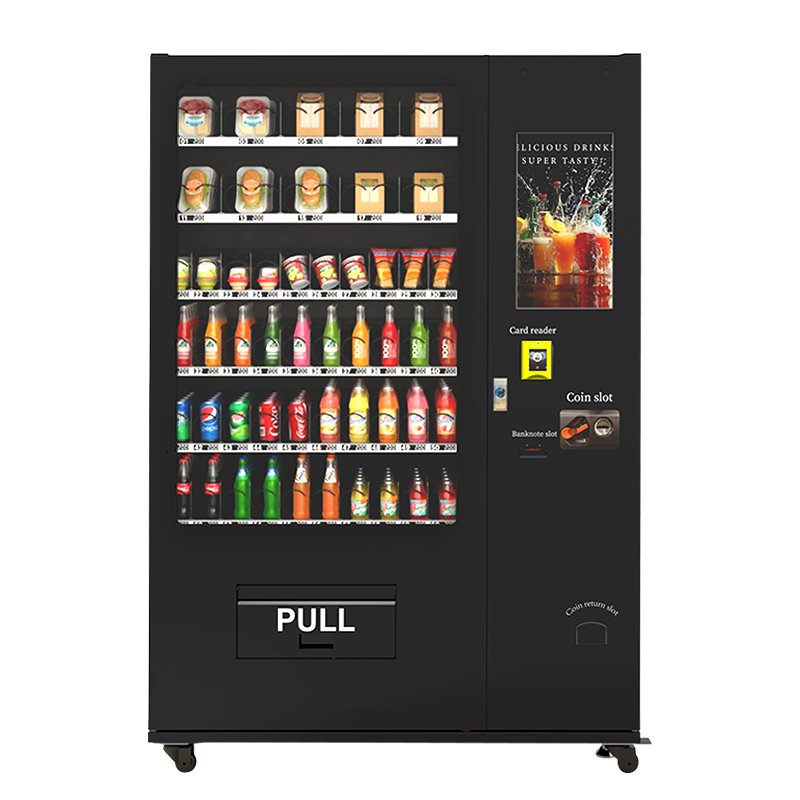
Cashless vending machines can support card payments, compatible mobile wallets, and other electronic methods when the correct hardware and payment service are installed.
Payment technology deserves attention because a vending machine cannot complete a sale if its payment system cannot authorize the transaction.
Worldpay's 2026 payment research reports that digital wallets accounted for 33% of in-store transaction value across the markets covered by its study. The figures do not describe vending transactions specifically, but they demonstrate why payment compatibility deserves serious consideration.
Source: Worldpay, 2026 Global Payments Report analysis.
Before ordering a card-enabled machine, confirm the actual terminal model, supported transaction methods, payment processor, account activation process, settlement arrangements, and fees.
Also verify how the system handles failed transactions, communication interruptions, refunds, and product-delivery failures.
Cash acceptance may remain useful for a particular customer base. Its value should be weighed against the cost of cash-handling components, collection, security, and maintenance.
Touchscreens and Software
A larger touchscreen can provide product images, detailed descriptions, and branded promotions. These functions are especially useful when customers need more information than a simple selection number can provide.
However, touchscreen size should not be the primary purchasing criterion for every vending business.
A machine selling familiar packaged drinks may not need the same interface as equipment selling specialty merchandise with multiple product variations.
Ask how products and prices are updated, whether the system supports the required interface language, and whether advertising content can be changed without specialized assistance.
If software access depends on a third-party platform, clarify account ownership, subscription fees, data access, and what happens if the service is discontinued.
Remote Monitoring and Connectivity
Remote monitoring can reduce unnecessary service visits when it gives the operator useful information.
Depending on the controller and software package, available functions may include transaction records, inventory estimates, fault notifications, sales summaries, and machine-status reporting.
These functions should be demonstrated rather than assumed.
Confirm which events generate alerts, how quickly information updates, and whether inventory changes are based on actual dispensing records or manually entered stock data.
Connectivity also creates recurring responsibilities. Cellular service, network access, cloud subscriptions, and software updates may involve ongoing costs.
For a single machine installed close to the operator, the value of advanced telemetry may be lower than for equipment that requires substantial travel time to service.
Branding and Exterior Design
Custom graphics help identify a vending machine with the business operating it. They can also make product categories and purchasing instructions more visible.
Zhongda Smart offers OEM/ODM customization for selected equipment, including branding and compatible hardware or software options. Buyers can review the available factory-direct OEM vending machine configurations before requesting a project-specific quotation.
For exterior customization, confirm whether the price includes artwork preparation, design revisions, printing, installation, and coverage of the side and rear panels.
A cabinet design should also preserve ventilation openings, service access, identification labels, and essential safety information.

When Customization Becomes Unnecessary Complexity
More customization is not always more useful.
A custom cabinet dimension can be justified when standard equipment cannot fit the installation area. A specialized dispensing system may be necessary when conventional mechanisms cannot protect the merchandise.
By contrast, a custom software interface may add cost without improving sales if the products can already be selected through an existing controller.
I'd rank product compatibility, payment reliability, and serviceability above decorative upgrades when the budget is limited.
For a one-unit order, use an established cabinet platform wherever possible and customize only the features required by the business model.
New vs. Used Vending Machines: Which Is the Better Purchase?
A used vending machine can cost less initially, but the purchase price does not reveal its remaining mechanical life, component condition, or compatibility with modern payment systems.
New equipment generally gives buyers more control over the original configuration, while used equipment places greater importance on inspection and existing hardware condition.
Neither option is automatically more profitable.
| Decision Factor | New Machine | Used Machine |
|---|---|---|
| Initial cost | Configuration-dependent purchase price | Condition-dependent resale price |
| Dispensing system | Can often be specified before manufacturing | Existing hardware may require adjustment or replacement |
| Payment compatibility | Compatible systems can be selected during ordering | Controller and terminal compatibility require inspection |
| Refrigeration | New components subject to the approved specification | Compressor, insulation, seals, and cooling performance need examination |
| Warranty | Manufacturer warranty may apply | Depends on seller and purchase agreement |
| Customization | Potentially available before production | Limited by the existing cabinet and controller |
| Repair planning | Confirm supplied documentation and replacement parts | Confirm parts availability and previous modifications |
When a Used Machine Makes Sense
A used cabinet may be suitable for an operator with a restricted budget, access to qualified maintenance support, and merchandise that matches the machine's existing dispensing arrangement.
The seller should demonstrate a complete transaction, including payment authorization, product selection, dispensing, and customer pickup.
For refrigerated equipment, inspect temperature performance, door seals, airflow, and any available service documentation.
Ask whether the controller, payment terminal, and management software can still be supported.
A used machine with inexpensive replacement parts and no complicated software dependencies may be easier to operate than a newer machine with an unsupported proprietary system.
When New Equipment Is Worth the Higher Commitment
New machines become more attractive when the application requires specific dimensions, custom branding, refrigeration, unusual merchandise handling, or payment integration that an existing used cabinet cannot support economically.
New equipment also allows the buyer to agree on acceptance criteria before production.
The important distinction is not simply age. It is the ability to obtain a machine whose mechanical, electrical, and software systems match the intended application.
Before choosing used equipment, calculate the cost of necessary repairs and upgrades. If the total approaches the cost of a correctly configured new cabinet, the apparent savings may be too small to justify the additional uncertainty.
The Real Cost of Buying and Operating One Vending Machine
A vending machine's purchase price is only the first part of the investment. The full cost includes getting the equipment ready to sell products and keeping it operational afterward.
These costs should be separated into three groups: initial equipment and setup, working capital, and continuing operating expenses.
One-Time Equipment and Setup Expenses
The initial investment may include the cabinet, selected payment hardware, customization, packaging, freight, unloading, installation, and testing.
Some buyers also need electrical work, network preparation, or modifications to the installation area.
Do not assume these services are included in the machine quotation.
Inventory and Working Capital
Inventory is different from purchasing the machine itself. A vending business needs merchandise before it can generate sales.
The required opening inventory depends on product cost, machine capacity, expected demand, and how frequently the cabinet will be replenished.
A machine holding 300 items does not necessarily need to be filled completely on its first day.
For a new location, purchasing too much slow-moving merchandise can tie up cash and increase the risk of unsold or expired stock.
I'd recommend beginning with a controlled assortment and adjusting the quantities after reviewing actual product-level sales.
Recurring Operating Expenses
Operating expenses continue after the equipment is installed. Some are fixed over a short planning period, while others change with sales volume.
| Expense | Cost Type | What to Confirm |
|---|---|---|
| Machine and selected hardware | One-time | Exact model, included options, and approved configuration |
| Custom branding | One-time or project-specific | Design, printing, revisions, and installation |
| Freight and handling | One-time per shipment | Delivery point, packaging, unloading, and additional charges |
| Site preparation | One-time or occasional | Electrical supply, access, ventilation, and placement |
| Opening inventory | Initial working capital | Product costs and initial stocking quantities |
| Merchandise replenishment | Variable | Cost of products sold, spoilage, and inventory losses |
| Payment processing | Variable and possibly fixed | Transaction percentage, per-transaction charges, minimum fees |
| Connectivity and software | Recurring | Subscription, SIM, data service, and account fees |
| Electricity | Recurring | Machine consumption and actual electricity tariff |
| Site fees | Recurring or revenue-linked | Fixed rent, commission, or other placement terms |
| Servicing and maintenance | Recurring or irregular | Cleaning, labor, travel, repairs, and replacement components |
How Electricity Changes the Cost Comparison
Refrigerated vending machines can consume substantially different amounts of electricity depending on cabinet size, insulation, refrigeration design, ambient conditions, and equipment settings.
Energy performance should therefore be assessed using the specific model rather than a general estimate for all vending machines.
ENERGY STAR reports that its certified refrigerated beverage vending machines are, on average, 9% more energy-efficient than standard models and can save approximately 1,000 kWh annually under its comparison framework.
Source: ENERGY STAR, Refrigerated Beverage Vending Machines; guidance accessed in 2026.
Those figures describe the equipment category covered by the program. They should not be applied automatically to every refrigerated combo cabinet or treated as a performance claim for a particular Zhongda Smart model.
For an individual purchasing decision, ask for the applicable power specification or measured energy consumption and calculate the expected expense using the actual electricity rate.
The calculation is straightforward:
Monthly electricity cost = Average daily electricity consumption in kWh × Operating days × Cost per kWh
For an illustrative machine using 4 kWh per day over 30 days, monthly consumption would be 120 kWh. At an assumed electricity rate of $0.20 per kWh, the calculated monthly cost would be $24.
This is a mathematical illustration, not a measured operating result for a specific model.
Costs That Are Easy to Overlook
Machine downtime creates an opportunity cost even when no repair invoice is issued. A cabinet that cannot accept payment or dispense its most popular product may lose sales until the problem is corrected.
Operators also need to account for their own time. Driving to restock a machine, cleaning it, resolving complaints, and reconciling transactions are operating activities with economic value.
Insurance, accounting, financing, taxes, and applicable business requirements may create additional costs depending on the project.
A profitable vending operation requires more than a positive difference between retail price and merchandise cost.
How to Calculate Vending Machine Profit and Payback
A vending machine can generate positive operating cash flow when merchandise sales exceed the cost of products and the expenses required to operate the equipment.
Profitability depends on the location, customer purchasing behavior, product pricing, operating efficiency, and total investment.
There is no universal monthly profit figure that accurately describes every machine.
Start With Monthly Sales Revenue
Monthly revenue is determined by the average selling price, number of units sold, and number of selling days.
Monthly revenue = Average selling price × Units sold per day × Selling days
If a machine sells 24 products per day at an average selling price of $2.75 over 30 days, the calculated monthly revenue is:
24 × $2.75 × 30 = $1,980
Revenue does not represent profit. Merchandise costs and operating expenses still need to be deducted.
Calculate Gross Profit
Gross profit measures revenue after subtracting the cost of merchandise sold.
Gross profit = Revenue − Cost of goods sold
Assume the products in the example cost an average of $0.95 each.
At 720 products sold per month:
Cost of goods sold = 720 × $0.95 = $684
Gross profit = $1,980 − $684 = $1,296
The resulting gross margin is approximately 65.5%.
This gross margin is an assumption-based calculation. It is not an industry average or a guarantee that a particular assortment will achieve the same margin.
Subtract Operating Expenses
Gross profit must cover ongoing expenses before the machine generates an operating contribution.
For this illustration, assume the following monthly expenses:
- Site fee: $250
- Electricity: $45
- Connectivity: $18
- Servicing labor and transportation: $170
- Maintenance reserve: $75
- Refund and inventory-loss allowance: $35
These fixed planning allowances total $593 per month.
Assume that every transaction is processed electronically and payment fees equal 3.5% of revenue, including any applicable transaction charges for this simplified model.
At $1,980 in monthly sales, the assumed payment expense is $69.30.
Estimated monthly operating contribution = $1,296 − $593 − $69.30 = $633.70
The example excludes taxes, financing costs, accounting depreciation, major unexpected repairs, and other project-specific obligations. The maintenance reserve is an allowance rather than a prediction of actual repair expenses.
Compare Different Sales Scenarios
One sales estimate is not enough to evaluate a vending machine investment. A location may produce fewer transactions than anticipated, particularly while the operator is learning which products customers prefer.
The following comparison uses the same prices, merchandise costs, and operating assumptions across three hypothetical demand levels.
| Metric | Lower Sales | Base Case | Higher Sales |
|---|---|---|---|
| Units sold per day | 14 | 24 | 32 |
| Units sold per month | 420 | 720 | 960 |
| Average selling price | $2.75 | $2.75 | $2.75 |
| Monthly revenue | $1,155.00 | $1,980.00 | $2,640.00 |
| Merchandise cost | $399.00 | $684.00 | $912.00 |
| Gross profit | $756.00 | $1,296.00 | $1,728.00 |
| Payment fees at 3.5% | $40.43 | $69.30 | $92.40 |
| Other monthly expenses | $593.00 | $593.00 | $593.00 |
| Operating contribution | $122.57 | $633.70 | $1,042.60 |
All figures above are illustrative assumptions, not actual machine performance or observed customer results. The operating contribution is rounded to the nearest cent.
The lower-sales scenario produces a much smaller contribution despite using the same machine and product prices.
This is why a vending machine's location and actual transaction volume matter more than a manufacturer's projected earnings chart.
Calculate the Initial Investment
For the same hypothetical project, assume the following startup cash requirements:
- Vending machine: $2,600
- Selected payment or equipment options: $280
- Shipping and handling: $580
- Placement and installation: $240
- Opening inventory: $400
- Initial spare-parts and contingency allowance: $150
Total initial cash investment = $4,250
The equipment amount and all other costs are hypothetical. They are not a Zhongda Smart quotation.
Calculate the Simple Payback Period
Simple payback measures how long it would take for operating cash contributions to recover the initial investment, assuming the estimated monthly cash flow remains constant.
Simple payback period = Initial investment ÷ Monthly operating cash contribution
Using the base-case example:
$4,250 ÷ $633.70 ≈ 6.7 months
Under the lower-sales assumptions, simple payback would extend to approximately 34.7 months. Under the higher-sales assumptions, it would be approximately 4.1 months.
These results should not be presented as expected vending machine payback periods. They describe only the specified hypothetical scenarios.
The calculation assumes consistent sales, stable costs, and sufficient cash to replenish inventory. It also treats opening inventory and the initial contingency allowance as startup cash commitments.
Actual cash recovery can differ because inventory levels change, costs fluctuate, machines require repairs, and sales may be seasonal.
Calculate the Operating Break-Even Point
The operating break-even point is the sales volume required to cover modeled monthly expenses before taxes and other excluded costs.
In this example, the contribution per unit after merchandise and assumed payment costs is:
$2.75 − $0.95 − ($2.75 × 3.5%) = $1.70375
With $593 in modeled monthly fixed expenses:
Break-even sales volume = $593 ÷ $1.70375 ≈ 348 units per month
That equals approximately 11.6 products per day over 30 selling days.
Because the model excludes some possible expenses, the actual break-even point could be higher.
I'd recommend evaluating the proposed location against a conservative sales case rather than purchasing equipment on the assumption that the highest-demand scenario will occur.
A machine that is affordable only when sales are unusually strong leaves little room for mistakes, downtime, or unexpected costs.
What to Verify Before Paying a Vending Machine Manufacturer
The most important purchasing decisions should be resolved before the final equipment specification is approved and payment is made.
A clear written agreement protects both the buyer and manufacturer by defining what will be delivered, which configuration is approved, and how problems will be handled.
Confirm the Exact Machine Configuration
Request a formal quotation identifying the model, cabinet dimensions, approximate equipment weight, electrical requirements, screen, controller, dispensing system, payment hardware, and cooling configuration.
For custom vending machines, obtain drawings or other specification documents showing the selected product-lane arrangement.
When dispensing unfamiliar merchandise, ask whether representative product samples can be tested.
Do not approve production based only on a product image or broad description such as "suitable for snacks, drinks, and other products."
Confirm Payment Compatibility Before Production
A machine described as supporting card payments may still need a specific terminal, payment processor, network connection, and account activation.
Confirm the proposed reader and controller can communicate correctly. Determine whether the reader is included, supplied separately, or installed after delivery.
Ask how transactions will be settled, who provides customer support for payment problems, and how refunds are handled.
Payment-provider charges should be documented separately from the machine purchase price.
Review Warranty and Technical Support
Zhongda Smart lists a one-year warranty and online technical support for its equipment, with replacement-parts support described in its product information. Actual coverage, exclusions, and replacement procedures should be confirmed in the purchase agreement.
A useful warranty should explain which components are covered, which party pays shipping for replacement parts, and what documentation is required when reporting a fault.
Also ask whether technical assistance includes diagnostic instructions, video support, remote access, software troubleshooting, and guidance for qualified service personnel.
A warranty that is difficult to use may provide less practical protection than a clearly documented service process.
Establish Inspection and Acceptance Criteria
The buyer should know how the machine will be inspected before shipment and what checks will be performed when it arrives.
For a customized machine, the inspection should relate to the actual approved configuration rather than a generic factory checklist.
| Purchase Item | Required Confirmation | Risk if Unclear |
|---|---|---|
| Machine model | Exact model and approved specification | Receiving a different configuration |
| Product dispensing | Lane layout and compatible merchandise | Repeated product jams or failed deliveries |
| Payment equipment | Reader model, controller compatibility, activation | Machine cannot accept intended payments |
| Electrical supply | Rated voltage, frequency, load, and connection | Unsafe or incompatible installation |
| Refrigeration | Temperature specification and operating conditions | Unsuitable product storage |
| Software access | Administrator credentials, fees, connectivity requirements | Unexpected subscriptions or limited management access |
| Warranty | Coverage, exclusions, claims process | Uncertain repair responsibility |
| Shipping | Delivery term, destination, packaging, unloading | Unplanned delivery expenses |
| Inspection | Testing procedure and acceptance record | Disputes about equipment condition |
Verify the Commercial Documents
Before transferring funds, compare the pro forma invoice with the approved quotation.
Check the seller's legal identity, payment beneficiary, agreed payment milestones, equipment description, shipping responsibilities, and any charges that remain payable after the machine leaves the factory.
Confirm payment instructions through an established company contact rather than relying solely on a forwarded message or changed banking details.
For more information about ordering, customization, payment arrangements, and service conditions, Zhongda Smart maintains a detailed vending machine purchasing and support FAQ.
When buying only one machine, these checks may appear excessive. They are not. A single incompatible component can delay the entire project because there is no second machine available to keep the location operating.
Installation, Restocking, and Daily Operations
Successful installation starts before delivery. A vending machine needs an accessible position, appropriate electrical power, sufficient ventilation, and a practical route for loading merchandise and performing maintenance.
A cabinet that fits the final floor space may still be impossible to move through a narrow doorway or elevator.
Measure the Complete Delivery Route
Confirm the dimensions and weight of the machine, including its shipping crate when relevant.
Measure doorways, passageways, elevators, stairs, and the final installation position.
Allow sufficient clearance for the cabinet door to open fully, for products to be loaded, and for any required ventilation or maintenance access.
Casters do not eliminate the need for appropriate lifting equipment. Commercial vending cabinets can be heavy and unstable when handled incorrectly.
Use qualified personnel and suitable equipment for unloading and placement.
Prepare Electrical and Network Connections
Verify that the available electrical supply matches the approved machine specification.
Refrigerated equipment may have operating and startup requirements that should be considered when determining the appropriate electrical connection.
Electrical alterations should be performed by qualified personnel.
For connected machines, test the network before regular operation. A strong wireless signal at the building entrance does not guarantee reliable connectivity inside the actual installation area.
Ask the payment provider and machine manufacturer how the equipment behaves when communication is interrupted.
Build a Practical Restocking Plan
Restocking frequency should reflect sales volume, usable capacity, product shelf life, and the time required to service the machine.
For example, assume a product category occupies 40 usable positions and sells eight units per day. Without replenishment, that category would theoretically have five days of stock.
However, practical replenishment should happen before all available positions are empty, particularly when demand varies.
Operators should record which products sell quickly, which remain unsold, and which experience dispensing problems.
Those records help determine whether to reassign lanes, adjust prices, or change the assortment.
Use Sales Data to Improve the Product Mix
High machine capacity is not helpful if much of that capacity contains merchandise customers do not want.
Instead of filling every available lane with different products, prioritize items with demonstrated demand and allocate enough space to prevent frequent stockouts.
A useful operating report should distinguish units sold, revenue, refunds, replenishment quantities, and product-level performance.
If one product consistently sells out while another remains untouched, the first improvement may be a shelf-layout adjustment rather than purchasing a larger cabinet.
Inventory management is an ongoing operating decision, not something that can be perfected before the first machine begins selling.
Maintenance, Repairs, and Long-Term Reliability
Vending machine maintenance affects both customer satisfaction and the economics of owning equipment.
Regular inspection helps identify loading errors, dirty sensors, restricted ventilation, communication problems, and component wear before they lead to extended interruptions.
There is no single maintenance interval suitable for every machine. Inspection frequency depends on sales activity, equipment design, operating conditions, and the manufacturer's instructions.
Checks Operators Can Perform During Routine Visits
Routine checks can be incorporated into normal restocking visits without requiring advanced technical work.
- Inspect the product pickup area and remove loose packaging or debris.
- Check that products are correctly positioned in their assigned lanes.
- Review visible error messages and transaction exceptions.
- Examine accessible door seals and cabinet surfaces.
- Confirm that customer-facing payment equipment is secure and responsive.
- Check reported stock quantities against physical merchandise where practical.
- Review the displayed temperature and approved monitoring records when refrigeration is required.
Cleaning should follow the manufacturer's instructions, especially around electrical components, displays, and payment hardware.
If a selection repeatedly fails to dispense, do not keep accepting paid transactions while the problem remains unresolved.
Understanding Common Vending Machine Problems
A dispensing failure does not always mean the motor is defective.
The package may be unsuitable for the lane, the spiral may be incorrectly positioned, or a product sensor may fail to register delivery.
Similarly, a payment failure may originate from the terminal, processor, network, or communication between the payment device and vending controller.
Accurate diagnosis prevents unnecessary replacement of functioning components.
When contacting technical support, provide the machine model, serial number, error message, affected selection, and a clear description of the circumstances.
Photos or short videos may help support personnel understand visible problems without requiring the buyer to perform unsafe diagnostic procedures.
Plan Spare Parts Before a Breakdown
For a one-machine business, downtime affects the entire vending operation at that location.
Ask the manufacturer which components are commonly replaced and whether the operator can purchase them individually.
Depending on the machine, service planning may involve dispensing motors, sensors, controllers, power supplies, screens, locks, payment interfaces, and refrigeration components.
Not every component should be stocked in advance. The decision depends on replacement cost, availability, lead time, and the consequences of a machine remaining out of service.
Maintain a record of installed parts and software versions so that replacements can be matched correctly.
When Professional Repair Is Required
Electrical faults, refrigerant-system problems, damaged wiring, and other hazardous repairs should be handled by qualified personnel.
Operators should not bypass protective systems or modify safety-critical components to restore operation.
For temperature-sensitive merchandise, a cooling failure may require the affected stock to be evaluated or discarded according to applicable product-handling requirements.
Restarting a refrigerated machine does not establish that its contents remained safe during the interruption.
It is also worth checking whether a repair or modification could affect warranty coverage before authorizing work.
Record Service Costs, Not Just Repair Invoices
A useful maintenance log identifies the date, machine, affected component, symptoms, action taken, replacement parts, service time, and remaining issues.
For commercial decision-making, add downtime and the cost of reaching the machine.
Over time, these records make it easier to evaluate whether equipment remains economical to operate.
A low-priced machine requiring frequent attention can consume more cash and labor than a more expensive machine with fewer interruptions.
Reliable ownership depends on service access, correct product configuration, compatible replacement parts, and disciplined operating procedures—not merely the initial purchase price.
Evaluating Zhongda Smart as a Vending Machine Manufacturing Partner
Choosing a manufacturer should involve more than comparing equipment photographs and headline prices.
For a buyer ordering one commercial vending machine, I would prioritize a manufacturer that can document the intended configuration, confirm product compatibility, explain payment integration, and provide a workable process for receiving technical assistance.
Zhongda Smart is a relevant option for this type of purchase because its equipment range includes standard vending machines and configurable models for different merchandise categories, with eligible single-unit ordering and OEM/ODM options.
What Zhongda Smart Offers Single-Machine Buyers
Zhongda Smart's product range includes snack-and-drink machines, compact vending cabinets, specialty merchandise equipment, and configurations with touchscreen, refrigeration, and electronic payment options.
For many standard and selected OEM configurations, the minimum order quantity starts at one unit.
This allows a buyer to explore a factory-direct purchase without first committing to multiple identical machines.
Available customization can include exterior branding, product-lane adjustments, and selected hardware or interface options, depending on the machine and project requirements.
Individual specifications should be confirmed before a quotation becomes a purchase agreement.
The Criteria I Would Use to Evaluate the Factory
For this comparison, I'm prioritizing six factors rather than creating an unsupported overall manufacturer ranking.
- Order flexibility: Can the proposed machine and necessary configuration be purchased as one unit?
- Product compatibility: Can the manufacturer explain or demonstrate how the intended merchandise will be dispensed?
- Payment integration: Are the controller, terminal, processor, and network requirements clearly defined?
- Commercial transparency: Does the quotation separate equipment, customization, shipping, and recurring charges?
- Serviceability: Are technical instructions, replacement parts, and support procedures available?
- Acceptance standards: Can the buyer identify what must be checked before shipment and after delivery?
Zhongda Smart is worth considering when its available equipment matches the merchandise and the factory can confirm these requirements for the chosen model.
The manufacturer should not be selected solely because a product page lists a low price or offers customization.
The stronger purchasing decision is based on a complete specification, realistic total cost, and clear responsibilities after the machine arrives.
What to Send When Requesting a Quote
A detailed initial inquiry usually produces a more useful quotation than asking only for the cheapest vending machine.
Prepare the following information:
- Products to be sold, including representative photographs.
- Packaged dimensions and approximate weight of each product.
- Expected product variety and required capacity.
- Whether refrigeration or another controlled storage condition is necessary.
- Available installation space and electrical supply.
- Preferred payment methods and connectivity requirements.
- Desired exterior branding or interface customization.
- Required quantity, initially one machine if appropriate.
- Delivery requirements and receiving arrangements.
Request a quotation that separately identifies the machine, optional components, customized features, shipping, payment terms, warranty, and support arrangements.
For a first-time buyer, I would choose a documented and compatible configuration over a long list of features that have not been matched to the actual business requirements.
Final Buying Recommendations
The best vending machine purchase is the one that matches the products, customer demand, installation conditions, and available operating budget.
For a first-time operator, I would recommend starting with one established machine configuration, a manageable product assortment, and a conservative sales forecast. Avoid costly custom features until they solve a demonstrated problem.
For a small business adding customer convenience, prioritize the products customers are likely to need, a compact and accessible installation, straightforward payment, and predictable restocking requirements.
For a single-location buyer, serviceability deserves particular attention. A machine that cannot operate because of a failed payment terminal or unavailable replacement component has no backup at that location.
For a specialty merchandise seller, product compatibility should come before screen size or appearance. Request a suitable dispensing arrangement and verify that fragile or irregularly shaped products can be delivered safely.
For a buyer planning expansion, begin with a configuration that can be repeated. Keep records of actual sales, equipment performance, customer complaints, inventory turnover, and servicing costs before adding machines.
Vending machines on sale can provide an accessible entry into unattended retail when a manufacturer accepts one-unit orders. The more important advantage is the ability to begin with a manageable investment, confirm the machine's suitability, and expand only when actual results support the next purchase.
Before ordering, obtain the complete written configuration and delivered-cost estimate. That document is the foundation of a sound equipment purchase.
Frequently Asked Questions
Can I buy just one vending machine?
Yes. Zhongda Smart supports orders starting from one unit for many standard and selected OEM vending machine configurations. The exact model, customization requirements, and final purchase terms must be confirmed in the quotation. Buying one machine can be a practical way to evaluate a new location before expanding.
Does no minimum order mean I get wholesale pricing?
Not necessarily. A one-unit minimum order means the manufacturer may accept an order for a single machine. It does not automatically mean the delivered cost per machine will equal the price of a large equipment order. Compare the complete factory quotation, including optional hardware, packaging, shipping, and installation-related expenses.
How much does one vending machine cost?
The price depends on cabinet size, dispensing technology, refrigeration, payment hardware, software, and customization. For example, Zhongda Smart's ZD-L-7 mini combo machine displays a reference equipment price of $1,951. That amount is not a guaranteed delivered price. Request a configuration-specific quotation and include operating startup costs in the budget.
Can I customize a single vending machine?
Yes, selected machines support single-unit customization. Available options may include branding, product lanes, payment equipment, and interface settings. Extensive structural modifications or new engineering work may have separate requirements. Provide product dimensions and a written description of the requested changes before approving a quotation.
Is buying a new vending machine better than buying used equipment?
A new machine may be preferable when specific payment, refrigeration, branding, or dispensing requirements must be configured before delivery. A used machine may reduce initial spending when its condition, product compatibility, and available replacement parts can be verified. Compare complete ownership costs rather than purchase prices alone.
What should I check before ordering a vending machine?
Confirm product compatibility, cabinet dimensions, electrical requirements, payment integration, software access, warranty coverage, replacement-parts availability, and shipping responsibilities. Request an itemized quotation and agreed inspection criteria. Do not make a substantial equipment payment until the written specification and commercial terms are clear.
How long does it take for a vending machine to pay for itself?
There is no guaranteed payback period. Calculate the initial investment and divide it by the estimated monthly operating cash contribution, provided that contribution is positive. Model lower-sales and higher-sales scenarios, and include merchandise costs, payment fees, servicing, electricity, location expenses, and expected downtime. Actual results can differ considerably.
What happens if my vending machine needs repairs?
Start by recording the model number, error message, and affected function. Follow the manufacturer's approved troubleshooting instructions and contact technical support when necessary. Routine loading or cleaning issues may be handled by trained operators, while electrical and refrigeration repairs require qualified personnel. Confirm warranty procedures and spare-parts availability before purchase.
Sources and References
- Worldpay. What 63,000 Shoppers Just Told Us About Paying. 2026. Payment research discussing digital-wallet usage and in-store transaction value. Read the payment research.
- ENERGY STAR. Vending Machines. Energy-efficiency information for certified refrigerated beverage vending machines. Accessed November 2026. Review the energy-efficiency guidance.
Equipment configurations, single-unit ordering eligibility, reference pricing, and service information in this article have been checked against the relevant Zhongda Smart product, OEM, and support pages linked in the text. Product details and purchasing terms should be reconfirmed for the final machine configuration.
Disclaimer
This article provides general information for evaluating commercial vending equipment and planning a potential purchase. Equipment prices, configurations, minimum order conditions, availability, shipping costs, and support arrangements may change and are subject to the final written quotation and purchase agreement. All profitability and payback calculations are illustrative scenarios, not actual customer results or guarantees of revenue, profit, or investment recovery. Operating costs and requirements depend on the equipment, merchandise, installation conditions, and business arrangements. Buyers should verify product specifications, payment compatibility, electrical and installation requirements, applicable compliance obligations, warranty coverage, and service terms before placing an order.