Choosing a vending machine dispensing system should begin with the product, not with the mechanism that sounds most advanced. For standardized packaged snacks and compact retail goods, a spiral dispensing system is often the simplest and most space-efficient starting point. When a package needs continuous support or does not sit naturally inside a coil, a conveyor belt dispensing system can be a better fit. If the product should not take a long or uncontrolled drop, an elevator vending system becomes much more attractive. For large, irregular, premium, reserved, rental, or individually secured products, a locker vending system can remove the need to mechanically push or drop the product at all.
The practical answer is therefore not that spiral, conveyor belt, elevator, or locker vending is universally “best.” The best system is the one that can repeatedly deliver the actual SKU while balancing product compatibility, capacity, product protection, serviceability, machine complexity, operating cost, and customer experience. This guide compares the four major vending machine dispensing systems from that product-first engineering perspective and explains how to validate the choice before production.
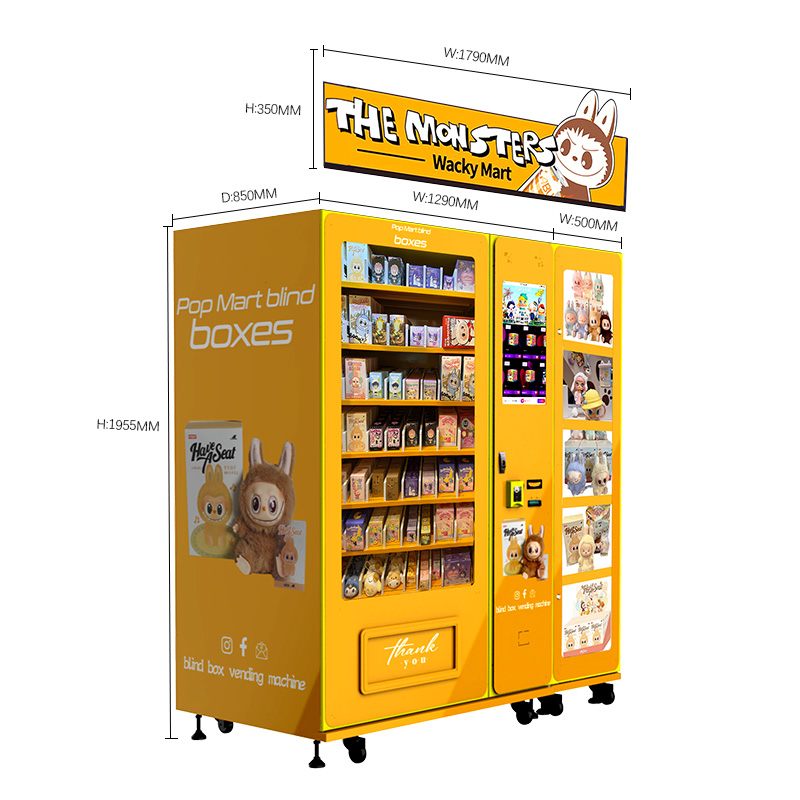
Quick selection rule:
- Spiral: start here for durable, regular packaged products when simplicity and capacity matter most.
- Conveyor belt: evaluate it when the package is wide, flat, soft, shallow, awkward, or poorly supported by a coil.
- Elevator: use controlled delivery when impact, tipping, leakage, breakage, or premium-package damage creates unacceptable risk.
- Locker: use compartment access when the product is large, irregular, individually secured, reserved, rented, or simply easier to collect directly.
Quick Answer: Which Vending Machine Dispensing System Is Best?
For ordinary packaged merchandise that has predictable dimensions and can tolerate the normal drop into a pickup bin, spiral vending is usually the first system to evaluate. It is mechanically straightforward, uses cabinet space efficiently, is easy to inspect, and can support many selections without reserving space for a shared transfer mechanism.
A conveyor belt vending system becomes more useful when the problem is how the package moves across the shelf. Continuous support can help wide cartons, shallow trays, flexible pouches, and products that rotate, snag, or deform inside a coil. The important limitation is that a conveyor controls horizontal movement; it does not automatically eliminate the final drop.
An elevator vending machine is the stronger choice when the final delivery path must be controlled. The lift travels to the selected shelf, receives the product near that level, and carries it toward the collection area. That can protect glass containers, delicate food, eggs, cakes, cosmetics, electronics, premium packaging, and other products where breakage, tipping, leakage, or cosmetic damage has a meaningful cost.
A locker vending machine changes the delivery question completely. The product normally remains inside an individual compartment until payment or authorization releases the corresponding door. This architecture is especially useful for large, irregular, high-value, rental, pickup, reserved, or individually secured merchandise.
The most important rule is simple: use the simplest mechanism that can repeatedly deliver the actual product in acceptable condition. Additional hardware is valuable only when it solves a real product-handling, security, capacity, or operating problem.
Spiral vs Conveyor Belt vs Elevator vs Locker: Comparison Table
The table below is a practical starting point. It is not a substitute for testing the real packaged product, because package geometry, surface friction, center of gravity, weight distribution, and dimensional variation can change the result.
| Decision Factor | Spiral | Conveyor Belt | Elevator | Locker |
|---|---|---|---|---|
| Best starting point for | Standard packaged goods | Wide, flat, soft, or awkward packages | Fragile or presentation-sensitive products | Large, irregular, secured, rental, or pickup products |
| Primary mechanical advantage | Simple, dense storage | Continuous horizontal support | Controlled low-impact final delivery | Direct access to a compartment |
| Storage density | High | Medium to high | Medium | Low to medium, product dependent |
| Protection from long drop | Low to medium | Depends on final transfer | High | High |
| SKU shape flexibility | Medium | High | High, if shelf transfer works | Very high |
| Mechanical complexity | Low | Medium | Medium to high | Low to medium mechanically; more door hardware |
| Main service focus | Coils, motors, dividers, sensors | Belts, rollers, guides, tracking, sensors | Lift drive, rails, alignment, sensors, transfer | Locks, hinges, wiring, door sensors |
| Failure isolation | Often lane-level | Often lane/module-level | A shared lift can affect multiple shelves | Often compartment-level |
| Relative equipment cost | $ | $$ | $$$ | $$ to $$$ |
| Main compromise | Package geometry and drop limitations | More moving surfaces; final drop may remain | Space, cost, shared mechanism, service complexity | Lower unit density and more doors/locks |
The cost symbols above are relative comparisons rather than quotations. Final machine price depends on cabinet size, cooling or heating, screen, payment hardware, telemetry, software, security, certifications, branding, number of selections, compartment count, and the amount of custom engineering required.
7 Factors That Determine the Right Dispensing System
Product category alone is not enough. A rigid snack box, lightweight chip bag, flexible protein pouch, glass bottle, cosmetic carton, and meal tray may all be sold through vending machines, but they create very different mechanical requirements. Before choosing a mechanism, evaluate the following seven questions.
1. Can the Product Tolerate a Drop?
This is often the fastest way to separate conventional drop vending from elevator or locker applications. The question is not whether the package looks strong. The question is whether repeated vending can occur without unacceptable breakage, leakage, deformation, tipping, internal movement, or cosmetic damage. A premium carton with a crushed corner may be commercially damaged even when the product inside still works.
2. Is the Package Dimensionally Consistent?
Spiral lanes perform best when width, depth, thickness, and center of gravity are reasonably predictable. Flexible packaging can expand after filling, cartons can bow, and labels or seals can protrude. A lane designed around one ideal sample can become unreliable when ordinary production variation arrives.
3. How Does the Package Behave When It Moves?
Real products do not behave like dimensions on a drawing. A soft pouch can fold. A tall box can tip. A glossy package can slide too easily. A rough carton can create excessive friction. A bottle with a curved base can roll sideways on a conveyor. Product behavior under movement is often more important than nominal package size.
4. What Is the Cost of a Failed Vend?
A failed vend can create a refund, customer complaint, support request, payment dispute, lost repeat purchase, service visit, and downtime. The more valuable or presentation-sensitive the product, the stronger the case for controlled handling and reliable delivery confirmation.
5. How Much Usable Capacity Does the Location Need?
Maximum cabinet capacity is less useful than usable capacity for the actual SKU mix. A wide meal box can consume the space of two narrow snack lanes. A tall product may force the shelf above it upward. A locker may hold fewer total units but be commercially appropriate for higher-value merchandise. Capacity should be calculated from the proposed loading plan, not from a generic brochure maximum.
6. How Much Maintenance Complexity Can the Operation Support?
An operator with trained technicians may be comfortable servicing belts, rails, sensors, lift drives, and lock assemblies. A simple route operation may prefer modular mechanisms that are easy to diagnose and replace. The correct machine is not only the one that works on day one; it is the one the operator can keep working over years of service.
7. Does the Product Need Individual Security or Controlled Access?
Locker vending can be the cleanest solution when individual access matters as much as product movement. This is useful for higher-value goods, rentals, reservation pickup, tools, electronics, books, apparel, supplies, and products that are awkward to push through a narrow lane.
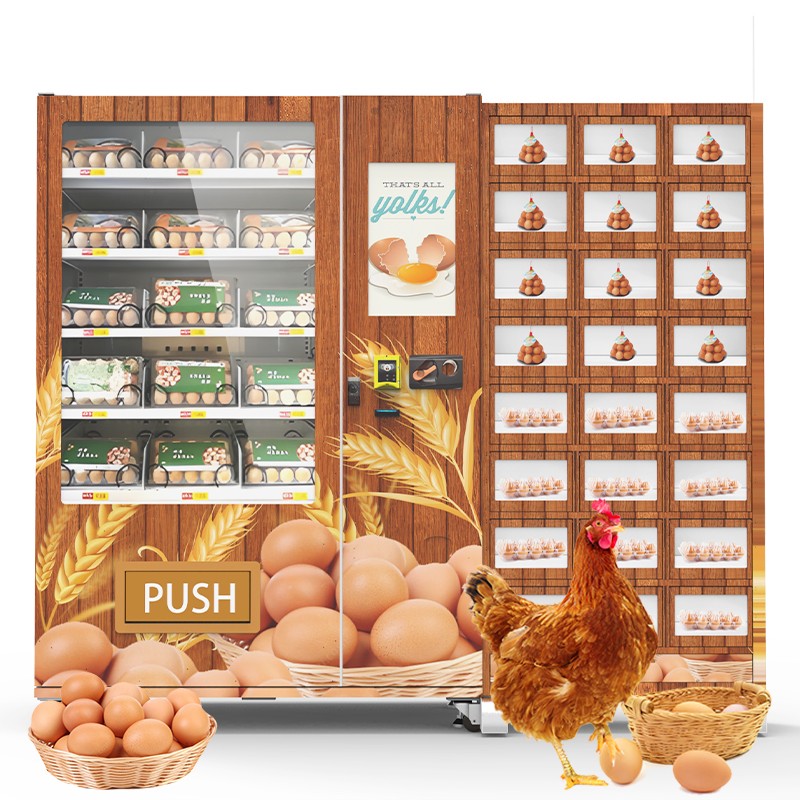
Spiral Dispensing Systems
Spiral vending remains common because the basic sequence is efficient: a motor rotates a coil, the coil advances the product, and the front item passes the shelf edge into the delivery path. For many durable packaged goods, this is difficult to improve without adding unnecessary hardware.
Where Spiral Vending Works Best
Start with a spiral when the product has predictable dimensions, can sit securely between coil turns, does not deform badly under light pressure, and can tolerate the final drop. Common candidates include chip bags, candy bars, protein bars, boxed snacks, packaged personal-care products, small accessories, stationery, and selected bottles or cans when the lane is specifically designed for them.
Coil Pitch, Lane Width, and Product Orientation Matter
A spiral is not a one-size-fits-all component. Coil diameter, pitch, lane width, divider position, product depth, front overhang, and product orientation all influence the vend. If the pitch is too wide, more than one product may move into an unstable position. If it is too tight, the package can bind. If a flexible seam catches the wire, simply adding motor torque may make the problem worse instead of correcting the geometry.
Wider packages can sometimes benefit from dual spirals because support is distributed across more of the package. Dual coils are not automatically better, however; synchronization and correct product positioning still have to be validated.
Common Spiral Failure Modes
- Hanging at the shelf edge: the product advances but does not fully clear the tray.
- Rotation inside the coil: common with narrow, flexible, or top-heavy packages.
- Double vend: two products release or move too far during one cycle.
- Bridging between dividers: a wide or shifting package contacts both sides.
- Soft-package deformation: the package compresses or folds rather than advancing cleanly.
- Refill sensitivity: the machine works only when products are loaded at an unusually precise angle.
When I Would Avoid a Spiral
Be cautious with glass containers, easily crushed packages, open containers, products that must remain upright, very expensive merchandise, and irregular shapes that cannot sit securely in a coil. If a product only works after highly precise manual loading, another dispensing mechanism deserves serious consideration.
Conveyor Belt Dispensing Systems
A conveyor belt vending system changes the way force reaches the merchandise. Instead of fitting between turns of a metal coil, the product rests on a moving belt or supported platform that carries it toward the front of the shelf. This can solve product-fit problems that are caused by coil geometry rather than by the final delivery path.
Where a Conveyor Belt Can Beat a Spiral
Conveyor lanes are worth evaluating for wide cartons, flat packages, shallow meal trays, flexible pouches, boxed cosmetics, selected electronics accessories, collectibles, and products whose visible surface should not be surrounded by a coil. Continuous support can also make front-facing presentation easier.
Friction and Side Guidance Become Design Variables
A belt needs enough traction to move the product. Too little friction and the belt travels underneath while the package hesitates. Too much friction can drag a neighboring product or deform flexible packaging. The package base also matters: molded feet, curved edges, seams, glossy plastic, or rough paperboard can all change movement.
Side guides are functional hardware, not decoration. A package that drifts, rotates, or tips can require guidance, but excessive guide pressure creates friction and intermittent jams. A system should tolerate normal package variation rather than working only with the smallest or most perfectly square sample.
A Conveyor Does Not Automatically Eliminate Drop Risk
This is one of the most important distinctions in the entire comparison. A conveyor controls movement across the shelf. If the belt ends above a deep pickup bin, the product still experiences a drop. For durable merchandise that may be completely acceptable. For cakes, glass containers, eggs, premium gift boxes, or delicate prepared food, the final transfer can remain the weak point.
In those applications, a conveyor and elevator can work together: the belt controls horizontal release while the lift handles the final vertical delivery.
Common Conveyor Belt Failure Modes
- Belt tracking drift: the belt moves away from its intended alignment.
- Product slip: the belt moves but the product does not advance predictably.
- Side interference: the package rubs against a guide or divider and rotates.
- Transition-edge catch: a seam, foot, or edge catches where the product leaves the belt.
- Load sensitivity: a fully stocked lane creates more drive load than a one-item demonstration.
- Contamination: dust, crumbs, torn labels, sticky residue, or packaging film affects the moving surface.
Elevator Dispensing Systems
An elevator vending system changes the final delivery path. The lift moves to the selected shelf, receives the product close to that shelf level, and carries it toward the customer pickup area. The main commercial reason to pay for this added mechanism is controlled delivery.
Products That Commonly Justify Elevator Delivery
Strong candidates include glass-packaged items, eggs, cakes, pastries, prepared meals that must remain level, cosmetics in premium cartons, electronics, collectibles, gift packaging, delicate seals, and other products where impact or presentation matters. Zhongda Smart's elevator vending machine range includes configurations intended for controlled product delivery.
Product Protection Is More Than Preventing Breakage
A product does not have to shatter to be damaged. Impact can dent a premium box, loosen an internal component, displace food toppings, separate product layers, create foam in a beverage, or leave the item looking handled rather than new. In unattended retail, the delivery mechanism effectively replaces the employee who would normally hand the merchandise to the customer.
The Shelf Still Has to Release the Product Correctly
An elevator solves the vertical delivery problem, but the product still has to leave its storage position and transfer onto the platform. That transfer may use a spiral, conveyor belt, pusher, or another mechanism. A successful elevator design therefore has two separate jobs: reliable shelf release and reliable controlled transport.
An Elevator Creates a Shared Mechanical Dependency
In a basic spiral machine, one failed lane motor may affect only one selection. An elevator is often shared by several or all shelves. If the lift cannot position, home, or travel correctly, a larger part of the machine may become unavailable. That does not make elevator vending unreliable; it means alignment, sensing, controller logic, preventive maintenance, and spare-parts planning deserve more attention.
When an Elevator Is Overkill
If a standard packaged product already vends cleanly and safely from a conventional lane, adding a lift can consume cabinet volume, add sensors and moving components, increase transaction time, and raise purchase and service cost without creating meaningful customer value. Engineering should use enough complexity to solve the product problem, not the maximum complexity available.
Locker Vending Systems
Locker vending removes most of the product-moving problem. Merchandise is placed inside an individual compartment, and the assigned electronic lock releases after payment, authorization, or pickup verification. The customer opens the door and retrieves the item directly.
Where Lockers Are Strongest
Locker vending is particularly useful for large retail boxes, books, folded apparel, tools, boxed electronics, collectibles, rental products, preordered items, supplies, shoes, gift sets, and products requiring separate controlled access. Zhongda Smart's locker vending systems can be configured around different compartment and access requirements.
The Capacity Trade-Off
Locker capacity should be measured in usable compartments, not compared directly with spiral lane count. A spiral selection may hold several units in depth, while one locker generally represents one available sale until that compartment is refilled. That lower density can still make economic sense when each compartment holds a larger, higher-margin, more secure, or otherwise difficult product.
The Door Becomes the Critical Mechanism
Locker vending removes coils and belts from the product path but multiplies doors, hinges, electronic locks, wiring, and door-status sensors. A lock can be electrically healthy and still fail to release cleanly if the door is misaligned and places mechanical pressure on the latch. Good service logic should identify the specific compartment generating a fault and define authorized emergency access for maintenance or power-loss situations.
When a Locker Is Cleaner Than a Custom Release Mechanism
If a product requires a complicated custom pusher, guide, support bracket, and special drop path just to leave a shelf safely, compare that engineering effort with a locker before committing. Sometimes the simplest solution is to remove the need to move the product at all.
How to Test Product Compatibility Before Production
A product-fit test should not be a staged demonstration using one carefully selected sample in an almost empty machine. Its purpose is to expose weak points before production. A package that physically fits inside a lane is not necessarily a package that vends reliably.
Start With the Real Product Envelope
Record maximum width, height, and depth rather than only nominal dimensions. Also record weight, packaging material, seams, tabs, handles, protrusions, center of gravity, whether the contents move internally, required orientation, acceptable drop distance, acceptable cosmetic damage, and storage temperature. If the supplier gives a dimensional tolerance, test near the upper limit.
Test 1: Does the Product Stay in the Expected Orientation?
Watch the product through the complete movement. A package can begin upright and rotate slightly during a spiral cycle, drift sideways on a conveyor, or land off-center during transfer to an elevator. Small changes may not fail the current vend but can leave the next product in a bad position.
Test 2: Does the Next Product Remain Ready for the Next Vend?
One successful sale is not enough. After the front item leaves, the remaining products must settle into a repeatable starting position. This is especially important with flexible bags, where the first product can dispense correctly while the second collapses forward and creates a failure one transaction later.
Test 3: What Happens With a Fully Loaded Lane?
A shelf holding one product behaves differently from a normal loaded shelf. Products behind the front item create pressure, friction, and drive load. Flexible packages compress against one another, heavy products increase motor demand, and bottles can transmit force down the row. Test the intended working load, not only the easiest condition.
Test 4: What Happens With Package Variation?
Use multiple samples whenever possible. Differences in fill volume, box squareness, sealing, label position, package stiffness, and surface condition can expose a tolerance problem that one perfect sample hides. The lane should be forgiving enough for ordinary production variation without being so loose that products rotate or fall out of alignment.
Test 5: Can Normal Staff Refill the Machine Correctly?
Commercial equipment eventually leaves the factory. If the machine only works when an engineer loads every product to the millimeter, the design is not robust enough for normal operation. Guides, labels, dividers, shelf access, and loading instructions should make correct positioning natural and repeatable.
Test 6: Observe the Failure Instead of Guessing
Slow-motion phone video can be surprisingly useful for diagnosing product movement. A fast vend may look normal to the eye even when the package briefly catches a divider, rebounds, rotates, or pulls the next item forward. If a product hangs, do not automatically increase motor force. First determine whether the real cause is coil pitch, divider clearance, package friction, product balance, belt traction, guide alignment, or transfer geometry.
Five Product-Fit Problems Worth Recognizing Early
- A narrow box that is too tall: its width fits the lane, but its center of gravity causes it to tip during movement.
- A soft bag that becomes wider when loaded: one sample fits, but several packed together expand and create side friction.
- A premium product that survives the drop but looks used: the item is functional, but crushed corners or surface damage reduce perceived value.
- A bottle that rolls on a conveyor: the belt provides support, but the base geometry and side guidance still allow rotation.
- A locker that is unnecessarily large: the product is safe, but oversized compartments reduce sellable capacity and increase cabinet cost.
Why Vending Failures Happen and How Vend Confirmation Works
A failed vend is rarely explained by “the motor did not work.” The complete transaction should be separated into stages. A motor can rotate correctly while the product remains stuck. A product can fall while the delivery sensor misses it. A locker can receive an unlock command while mechanical door pressure prevents release. An elevator can be mechanically healthy but stop because a position sensor reports an unexpected state.
Stage 1: Selection and Payment
The controller must know that the product exists, that the selection is available, that the correct price is assigned, and that payment or authorization has been approved. A mechanical inspection cannot solve a software configuration problem where the wrong motor, belt, lift sequence, or locker address is mapped to the selection.
Stage 2: Product Release
This is where coil pitch, motor rotation, conveyor traction, guide clearance, pusher position, elevator transfer timing, or locker latch behavior becomes important. Typical symptoms include a package hanging at the front, rotating sideways, moving with a second item, slipping on a belt, catching a transition edge, or failing to leave the assigned compartment.
Stage 3: Final Delivery or Customer Access
A product can leave the shelf correctly and still fail to reach the customer. It may strike another shelf, become trapped above the pickup flap, bounce outside the detection zone, or block the retrieval door. In an elevator system, the platform must receive the product cleanly and carry it through a clear travel path. In a locker, the correct door must release and remain accessible to the authorized customer.
Stage 4: Vend Confirmation
Motor movement should not automatically be treated as proof of successful delivery. Depending on the machine architecture, confirmation may use optical or infrared drop sensors, motor-position feedback, current sensing, limit switches, encoders, elevator-position sensors, product-detection sensors, locker-door sensors, or combinations of those signals.
Stage 5: Failed-Vend Recovery
If expected confirmation does not arrive, the controller should follow predefined exception logic rather than blindly repeating movement. Depending on the configuration, the machine may retry the selection, move the mechanism farther, stop the sequence, disable the affected lane or compartment, allow another selection, record the fault remotely, or initiate the configured refund process.
This recovery logic becomes increasingly valuable as product price, transaction volume, or service-visit cost rises. Reliable vending is not the complete absence of faults; it is also the ability to detect abnormal conditions, isolate them, and recover without creating a larger problem.
Capacity, Maintenance, Total Ownership Cost, and ROI
The dispensing system changes more than the purchase price. It affects how many products fit, how often the machine must be refilled, which parts wear, how faults are isolated, how much downtime a failure can create, and how much value is lost when a product is damaged or not delivered.
Capacity Should Be Calculated From the SKU Plan
A published “maximum capacity” usually assumes a particular package size and shelf arrangement. Change the product dimensions and usable capacity changes with them. For route planning, a more useful number is often the inventory depth of the fast-moving SKU.
Estimated Days Before Refill = Usable Units of the Fast-Moving SKU ÷ Expected Daily Sales of That SKU
If refill visits are expensive, assigning a second lane to the bestseller may create more value than maximizing the number of different selections. In a locker, capacity should be planned as sellable compartments and refill cycles rather than compared directly with multi-unit lanes.
Maintenance Profile by Dispensing System
| System | Routine Service Focus | Typical Dependency |
|---|---|---|
| Spiral | Coil position, motors, dividers, connectors, wiring, loading, drop sensors | Usually individual lane |
| Conveyor belt | Belt wear, tracking, tension, rollers, guides, cleanliness, sensors | Usually lane or conveyor module |
| Elevator | Drive components, rails, home/position sensors, alignment, transfer platform, wiring | Shared lift may affect many shelves |
| Locker | Door alignment, hinges, latches, electronic locks, wiring, door sensors | Usually individual compartment, controller dependent |
Use Total Ownership Cost, Not Only Machine Price
A cheaper mechanism can become expensive if it creates repeated failed vends on a high-value product. A more sophisticated mechanism can also waste money if a simple lane already performs reliably. A wider ownership formula helps keep the decision grounded in operating reality:
Total Ownership Cost = Equipment + Payment Hardware + Installation + Energy + Software + Refill Labor + Routine Maintenance + Repair Parts + Product Damage + Refunds + Service Visits
Not every project has every cost on that line, but the framework prevents the purchase decision from being dominated by one visible quotation number.
Connect the Mechanism to the Cost of Failure
A useful operating model isolates costs that the dispensing mechanism can influence:
Monthly Mechanism-Related Loss = Failed-Vend Cost + Damaged Merchandise + Refunds + Avoidable Service Visits + Lost Sales During Downtime
If a conventional spiral system already delivers the merchandise consistently, this loss may be very low and upgrading adds little financial value. If fragile products repeatedly arrive damaged or failed deliveries generate expensive support, a more protective system can reduce losses enough to justify its higher capital and service cost.
Shared Systems Need a Downtime Plan
One spiral motor often affects one lane. A failed shared elevator can affect multiple shelves. That difference should influence spare-parts planning, remote fault reporting, preventive maintenance, and the operator's expected response time. Complexity can still be justified, but the critical dependencies should be understood before deployment.
For project-specific assumptions, Zhongda Smart also provides a vending machine ROI calculator for modeling machine cost, sales assumptions, and operating returns.
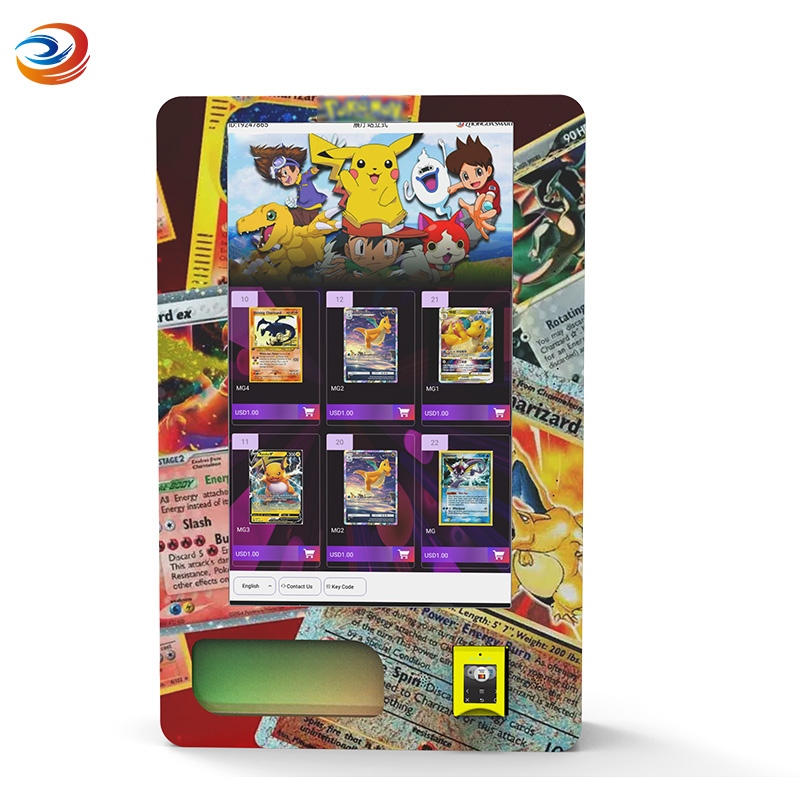
When a Hybrid Dispensing System Makes More Sense
Real product assortments do not always fit one dispensing category. A machine may need to sell flexible snack bags, rigid drinks, premium cosmetics, delicate food, and a large gift box from the same cabinet. Forcing every SKU through one mechanism can create more compromises than using a mixed structure.
A hybrid vending machine can use spirals for compact packaged goods, conveyor belts for wide or awkward packages, an elevator for the final low-impact delivery path, and lockers for oversized or individually secured merchandise. Different shelf heights and lane widths can also be combined inside one cabinet.
Hybrid design should not mean “add every feature.” Each additional mechanism creates more parts, software logic, spare-parts requirements, and testing. Use a mixed architecture only when the SKU mix gives each mechanism a clear job.
Special Considerations for Refrigerated and Food Vending
A machine selling temperature-sensitive food must solve more than product delivery. Refrigeration, temperature monitoring, airflow, sanitation, drainage where applicable, food-contact design, automatic controls, and the dispensing mechanism need to work as one system.
Cooling Can Change Mechanical Behavior
Temperature can change package stiffness, friction, condensation, and product dimensions. A flexible package may become stiffer when cold. Condensation can change how a plastic tray moves on a conveyor. Dense product loading can block airflow. Large cartons can create a different air path from bottles or small snack packs. Product-fit testing for refrigerated machines should therefore be performed under realistic operating conditions when possible.
Food Safety Requirements Should Be Defined Early
The FDA Food Code 2022 is a model code used by regulatory authorities for retail food safety. Section 4-204.111 addresses automatic shutoff for machines vending time/temperature control for safety food, including conditions involving power or mechanical failure. Under the provision for refrigerated vending machines after filling, servicing, or restocking, the ambient air temperature may not exceed 5°C (41°F) for more than 30 minutes when the automatic shutoff conditions apply. The Food Code is a model rather than a universal machine specification, so the applicable local rules for the intended installation must still be confirmed.
NSF/ANSI 25-2025: Vending Machines for Food and Beverages contains requirements for food and beverage vending machines that vend packaged products and products in bulk. Buyers planning food applications should identify required certifications and standards before the machine specification is frozen, not after production begins.
What to Send a Vending Machine Manufacturer
The quality of a machine recommendation depends on the quality of the product information provided. “I sell cosmetics” is not enough. A specification such as “165 × 85 × 42 mm boxed product, 240 g, six SKUs, must arrive without crushed corners, target 20 units per SKU” gives the manufacturer something that can be engineered and tested.
Product Information
- Product name and SKU list
- Clear photos from multiple sides
- Maximum width, height, and depth
- Unit weight and weight variation
- Packaging material and surface finish
- Fragility and acceptable cosmetic damage
- Required orientation
- Whether the product can roll, bend, expand, tip, or deform
- Whether it can tolerate a conventional drop
- Required storage temperature
Merchandising and Capacity Information
- Number of SKUs
- Target capacity per SKU
- Expected fast-moving products
- Desired refill interval
- Whether the assortment changes frequently
- Required product visibility and presentation
Machine and Operating Requirements
- Available installation dimensions
- Indoor or outdoor installation
- Cooling or heating requirements
- Screen and user-interface requirements
- Payment methods and payment-terminal requirements
- Remote inventory and fault-reporting requirements
- Branding requirements
- Estimated order quantity
- Security and access requirements
Send Physical Samples for Difficult Products
Drawings and measurements are excellent for early engineering; representative physical samples are better for final validation. Sample testing is especially important for fragile, flexible, unusually shaped, expensive, temperature-sensitive, or tolerance-critical products. Test several units and a realistic shelf load rather than one carefully positioned sample.
Questions to Ask Before Approving the Machine
- Which mechanism are you recommending for each important SKU, and why?
- How many usable units of each SKU fit in the proposed layout?
- What samples were used to validate the recommendation?
- How does the machine confirm successful delivery?
- What happens when the expected vend does not occur?
- Can one failed lane, conveyor module, or locker be disabled while the rest of the machine continues operating?
- For an elevator, how are home position, shelf position, transfer, obstruction, and service access handled?
- Which components are expected service parts, and which spares should be kept on hand?
- Can lane width, shelf spacing, or product assignment be changed later?
- What product-fit, vend-reliability, payment, connectivity, and aging tests are completed before shipment?
How Zhongda Smart Approaches Custom Dispensing Configurations
Zhongda Smart's OEM custom vending machine program can combine spiral, conveyor, lift-delivery, locker or compartment structures with capacity planning, shelf layout, payment hardware, connectivity, software, branding, and temperature-control requirements. The important engineering sequence is to define the merchandise first, choose the delivery concept, build the capacity plan, confirm environmental and payment requirements, test representative samples, review service access, and freeze the approved specification before production.
For a broader view of available machine categories, see Zhongda Smart's vending machine product range.
Final Decision Matrix
If the entire comparison has to be reduced to one buying framework, use the table below and then validate the recommendation with the actual product.
| If Your Priority Is... | Evaluate First | Then Confirm... |
|---|---|---|
| Lowest mechanism complexity | Spiral | The package sits and advances reliably in the coil |
| High capacity for standardized goods | Spiral | The product tolerates the final drop |
| Wide, flat, soft, or awkward packages | Conveyor belt | Friction, guide clearance, package separation, and final transfer |
| Fragile merchandise | Elevator | Shelf-to-lift transfer and complete delivery path |
| Premium packaging | Elevator | Protected value justifies reduced capacity and added hardware |
| Large or highly irregular products | Locker | Compartment size, door opening, and refill economics |
| Individual security or reservation pickup | Locker | Authorization, lock reliability, and door-state sensing |
| Very different product types in one cabinet | Hybrid | Each added mechanism solves a specific SKU problem |
| Temperature-sensitive food | Product-dependent | Cooling, airflow, sensing, automatic controls, sanitation, and applicable standards |
| High-value merchandise | Elevator or locker | Delivery confirmation, security, recovery logic, and downtime risk |
So Which Dispensing System Should You Choose?
Choose spiral first when the merchandise is durable, compact, dimensionally consistent, and easy to position. Choose a conveyor belt when the package needs more continuous support or does not cooperate with coil geometry. Choose an elevator when reducing drop impact protects real commercial value. Choose a locker when individual compartment access is simpler and safer than making the product move through the cabinet.
If the assortment contains several very different categories, evaluate a hybrid vending system instead of forcing every SKU into one mechanism. The strongest specification begins with the merchandise: measure it, handle it, define how it may move, define the acceptable damage threshold, calculate usable capacity and the cost of failure, and then choose the dispensing architecture.
Frequently Asked Questions
What is the most reliable vending machine dispensing system?
There is no single most reliable mechanism for every product. For conventional packaged goods, a properly configured spiral system is mechanically simple and can be highly reliable. Reliability still depends on matching coil pitch, lane width, product dimensions, loading method, sensors, and controller logic to the actual SKU. A more complex mechanism is not automatically more reliable, and a simple mechanism used with the wrong product can fail repeatedly.
Is a conveyor belt vending system better than a spiral?
Not universally. A conveyor belt is better when a product benefits from a flat supporting surface or does not move well inside a coil. A spiral is usually the better starting point when standard packaged products already vend cleanly and high capacity, simple maintenance, and lower mechanism complexity are priorities. The choice should be based on product behavior rather than which mechanism appears newer.
When should I choose an elevator vending machine?
Choose an elevator when an uncontrolled drop creates unacceptable risk of breakage, leakage, tipping, cosmetic package damage, or customer dissatisfaction. Typical candidates include glass containers, delicate food, eggs, premium cosmetics, electronics, and other presentation-sensitive merchandise. The shelf-release mechanism must still be tested because the product has to transfer reliably onto the elevator before controlled delivery can begin.
What products are best for locker vending machines?
Locker vending is particularly useful for large, irregular, high-value, rental, reserved, pickup, or individually secured products. Books, apparel, tools, boxed electronics, collectibles, supplies, and gift sets can all be strong applications. Lockers reduce the need to mechanically push or drop the product, although they generally provide lower unit density than compact conventional vending lanes.
Can one vending machine use spirals, conveyor belts, and an elevator together?
Yes. Hybrid configurations can use spiral or conveyor lanes for shelf release while an elevator handles the final vertical delivery. A custom machine can also combine different lane types or conventional vending with locker compartments. The extra complexity should solve specific product requirements rather than being added only to create a longer feature list.
How do vending machines know whether a product was dispensed?
Depending on the design, a machine can use optical or infrared drop sensors, motor-position feedback, current sensing, limit switches, encoders, elevator-position sensors, product-detection sensors, door sensors, and controller logic. If successful delivery is not confirmed, the software may retry the vend, stop movement, disable the affected selection, allow another selection, record a remote fault, or follow the configured refund logic.
Which vending system is best for fragile products?
An elevator is usually the first conventional vending architecture to evaluate because it reduces the need for a long uncontrolled drop. Locker vending is another strong option when the item can be placed directly into a compartment. The final choice should be made after testing the actual packaged product under realistic loading and delivery conditions.
What information should I provide when requesting a custom vending machine?
Provide product photos, maximum dimensions, weight, packaging material, fragility, required orientation, storage temperature, number of SKUs, target capacity, expected refill frequency, installation conditions, payment requirements, software requirements, and branding needs. For difficult products, provide representative physical samples so the dispensing configuration can be validated before production.
Sources and Methodology
This guide uses a product-first engineering framework: product dimensions and behavior are evaluated before mechanism selection, and dispensing reliability is considered across release, transfer, delivery confirmation, serviceability, and operating cost. Regulatory references are provided for context and should be checked against the requirements that apply to the final installation location and product category.
Disclaimer
The information in this article is provided for general product-selection and engineering discussion. Compatibility, capacity, operating cost, reliability, food-safety requirements, electrical requirements, certifications, accessibility requirements, payment requirements, and regulatory obligations vary by machine configuration, product, installation environment, and applicable rules. Relative ratings and cost symbols are editorial comparisons, not guaranteed performance figures or quotations. Any custom vending project should be validated using the actual product, approved specifications, representative samples, and the certification or compliance requirements applicable to the intended installation. Financial examples and formulas are planning tools and do not guarantee revenue, profit, payback period, or return on investment.