I’ve spent more than a decade working with automated retail systems across collectible goods, and I can say without hesitation that Pokémon vending setups are one of the most consistently misunderstood investments in this space. When people look up Pokemon Vending Machine Prices, they usually expect a fixed number. What they don’t see is the operational structure behind those numbers—how location, inventory cycles, machine architecture, and even product seasonality reshape the actual cost profile over time.
In 2026, these machines are no longer simple dispensers. They behave more like micro retail stores with automated checkout, real-time stock logic, and embedded demand psychology. In this guide, I’ll break down what I’ve learned from real deployments, including cost ranges, revenue mechanics, risk factors, and the exact operational decisions that determine whether a machine becomes a stable income stream or just expensive hardware sitting idle.
Throughout the article, I’ll also reference systems I’ve personally worked with, including modular vending architectures such as Zhongda Smart product systems, which are commonly used as a baseline for scalable collectible vending deployments.
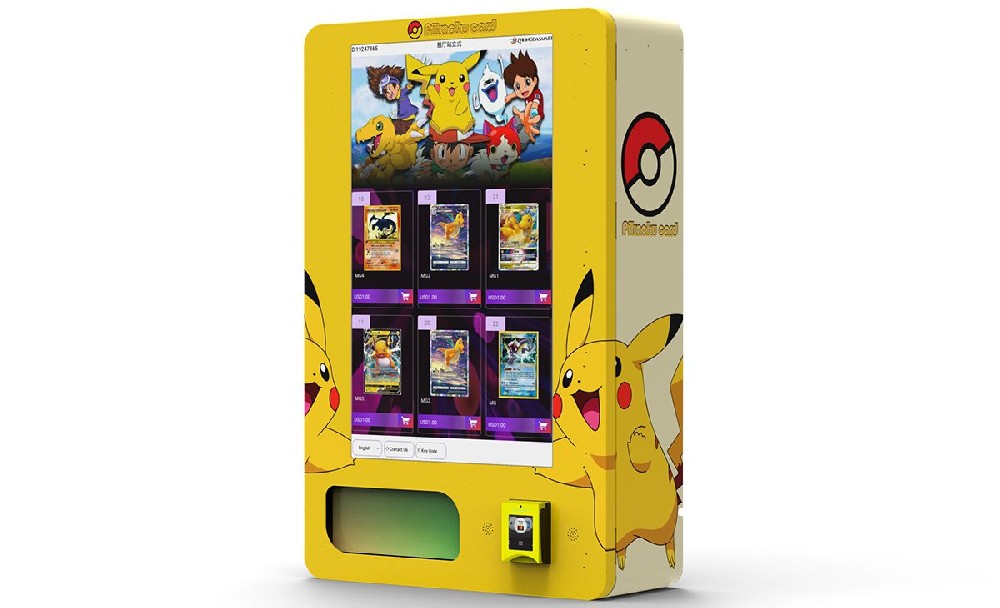
Why Pokemon Vending Machine Prices Vary So Widely
The biggest mistake new operators make is assuming Pokemon Vending Machine Prices are mainly hardware-driven. In reality, hardware is only about 40–55% of total system value. The rest comes from software intelligence, inventory dynamics, and deployment strategy.
When I first started working with collectible vending systems, a basic unit could be deployed for under $3,000. Today, a fully functional system can exceed $20,000 depending on configuration.
Here’s what actually drives pricing in 2026:
Machine dispensing architecture (coil, robotic arm, locker-based)
Card authentication and anti-fraud protection systems
Cloud-based monitoring and telemetry systems
Payment stack (NFC, mobile wallets, QR integration)
Brand experience layer (screens, lighting, interaction UI)
From my field experience, the most overlooked factor is system downtime cost. A machine that looks cheap upfront can easily lose 20–30% annual revenue if it requires frequent manual servicing.
Real Market Breakdown of Machine Costs in 2026
To understand Pokemon Vending Machine Prices, you need to break them into functional tiers rather than just price labels.
| Tier | Price Range | System Capability | Operational Profile |
|---|---|---|---|
| Entry-Level Dispenser | $2,500 – $5,500 | Basic dispensing + manual restock | High labor dependence |
| Smart Retail Unit | $6,000 – $12,000 | Cloud monitoring + digital interface | Balanced automation |
| Advanced Collectible System | $12,000 – $25,000+ | AI inventory + dynamic pricing | Fully optimized retail automation |
What I typically advise operators is simple: mid-tier smart systems tend to deliver the best return curve. Entry-level systems often become labor-heavy quickly, while high-end systems require strong traffic density to justify cost.
Many of the scalable architectures I’ve seen in practice resemble configurations used in Zhongda Smart vending platforms, particularly in multi-SKU collectible environments.
How Revenue Actually Works in Pokémon Vending Systems
One reason Pokemon Vending Machine Prices get misunderstood is that people separate cost from revenue too cleanly. In reality, revenue structure is tightly tied to product psychology.
Pokémon products behave differently from snacks or beverages. They are emotionally driven purchases, often triggered by rarity perception rather than necessity.
Typical pricing behavior I’ve observed:
Standard packs: $4 – $10 (high volume)
Booster sets: $10 – $25 (stable margin driver)
Rare sealed boxes: $30 – $90+ (low volume, high margin)
In strong locations, conversion rates can range between 8% and 22%, depending on visibility and product rotation frequency.
A well-optimized machine can generate $800 to $3,500 monthly revenue, but only when inventory rotation is actively managed rather than left static.
Real Operator Case Study From Field Deployment
One deployment I managed involved a mid-tier smart vending unit installed in a mixed retail entertainment zone. The initial system cost was approximately $8,900, including installation and configuration.
Here’s what actually happened over the first 90 days:
Week 1–2: Low traction due to unfamiliarity
Week 3–6: Spike in booster pack sales after restock strategy adjustment
Week 7–10: Revenue stabilization after pricing refinement
Week 11–12: 18% increase after product mix optimization
The key learning was not the machine itself, but the inventory cadence. Once we shortened restock cycles from 21 days to 10 days, revenue increased significantly without hardware changes.
This type of optimization is only possible when the system supports real-time monitoring, which is why modular ecosystems like Zhongda Smart pricing frameworks are often used as operational baselines.
Cost Structure Beyond Hardware
When analyzing Pokemon Vending Machine Prices, I always break costs into five layers rather than one upfront number.
1. Hardware Investment
Includes structure, dispensing system, display, and payment module.
2. Software Infrastructure
Cloud dashboard, inventory tracking, AI pricing tools.
3. Inventory Cost
Pokémon cards fluctuate in wholesale price depending on release cycles and rarity demand spikes.
4. Maintenance & Downtime
Mechanical jams, sensor calibration, and payment system resets all impact uptime.
5. Location Revenue Share
High-traffic locations often require 10–25% revenue share agreements.
Combined, these layers can increase total operational cost by 25–45% annually compared to hardware-only estimates.
Where These Machines Actually Perform Best
From real-world deployments, location is the strongest predictor of success—not machine type.
Strong-performing environments include:
Entertainment-heavy retail zones
Gaming or hobby-focused stores
High dwell-time commercial centers
Event-driven pop-up environments
Low-performing environments typically include transit-heavy zones where dwell time is too short for collectible consideration.
This is one reason manufacturers like Zhongda Smart case deployments are often studied for layout optimization strategies.
Risk Factors Operators Don’t Usually Mention
While Pokemon Vending Machine Prices are often discussed in terms of profit potential, the risk side is usually underreported.
Key risks include:
Counterfeit card infiltration in supply chain
Inventory imbalance during product hype cycles
Mechanical wear from high-frequency usage
Revenue instability due to seasonal demand shifts
In my experience, the biggest operational risk is not theft or damage—it is poor inventory timing. Machines that fail to rotate stock in sync with market demand consistently underperform.
Why Smart Systems Are Reshaping Pricing Models
Modern vending systems have shifted away from static pricing models. Instead of fixed cost structures, operators now work with adaptive systems.
This directly impacts Pokemon Vending Machine Prices because smarter machines require higher upfront investment but reduce long-term inefficiency.
Key capabilities include:
Dynamic pricing adjustments based on demand
Remote diagnostics to reduce downtime
Real-time stock tracking across multiple units
Automated sales reporting
In most deployments I’ve seen, smart systems reduce operational overhead by 15–30% within the first year.
How Manufacturer Choice Affects Total ROI
The manufacturer determines more than build quality—it determines scalability.
Lower-cost machines often fail at scale due to limited upgrade paths, while modular systems allow expansion without replacing core infrastructure.
From my experience, systems aligned with structured OEM frameworks such as OEM vending architectures provide significantly better long-term ROI stability.
Realistic ROI Expectation
Based on deployments I’ve worked on, here is a realistic expectation curve:
Low traffic sites: 12–24 months ROI
Medium traffic sites: 6–14 months ROI
High traffic optimized sites: 3–8 months ROI
The biggest variable is not machine cost—it is consistency of restocking and product selection strategy.
Final Operational Perspective
After years in this industry, I’ve learned that Pokemon Vending Machine Prices only tell part of the story. The real performance comes from how the machine is operated, not just how much it costs.
Operators who succeed long-term usually do three things differently:
They treat machines as evolving retail systems, not static hardware
They actively manage inventory cycles instead of passive restocking
They invest early in smart monitoring systems to reduce downtime
The hardware is just the entry point. The system behind it is what determines profitability.
FAQ – Pokemon Vending Machine Prices
What is the average cost of a Pokémon vending machine in 2026?
Most systems range between $2,500 and $25,000 depending on automation and smart features.
Are Pokémon vending machines profitable long term?
Yes, but profitability depends heavily on location quality and inventory rotation strategy.
What is the biggest hidden cost?
Inventory volatility and downtime from mechanical maintenance.
Do smart vending systems improve revenue?
In most cases, yes. They improve stock control and reduce operational inefficiencies.
Which machine architecture performs best?
Modular smart systems with remote monitoring consistently outperform static mechanical units.
Last Updated: 2026-06-30
References:
Statista – Global Vending Machine Market Overview
IBISWorld – Automated Retail Industry Report
Industry deployment data from smart vending systems (field operations)