I’ve been running vending routes since 2008, and I’ll tell you straight: yes, vending machines can absolutely still make money in 2026. But the days of buying a cheap mechanical snack box, stuffing it with candy bars, and watching the quarters roll in are gone. Rising electricity rates, higher product costs, cashless processing fees, and the constant need for maintenance are squeezing margins tighter than a compressor coil in August. Still, I’m expanding my own fleet this year — and not by accident. Profitability in 2026 hinges on three things: smarter equipment, obsessive location management, and a willingness to let data, not gut instinct, drive every decision. If you’re willing to adapt, the opportunity is actually bigger than it was five years ago, because competitors who refuse to change are dropping out fast.
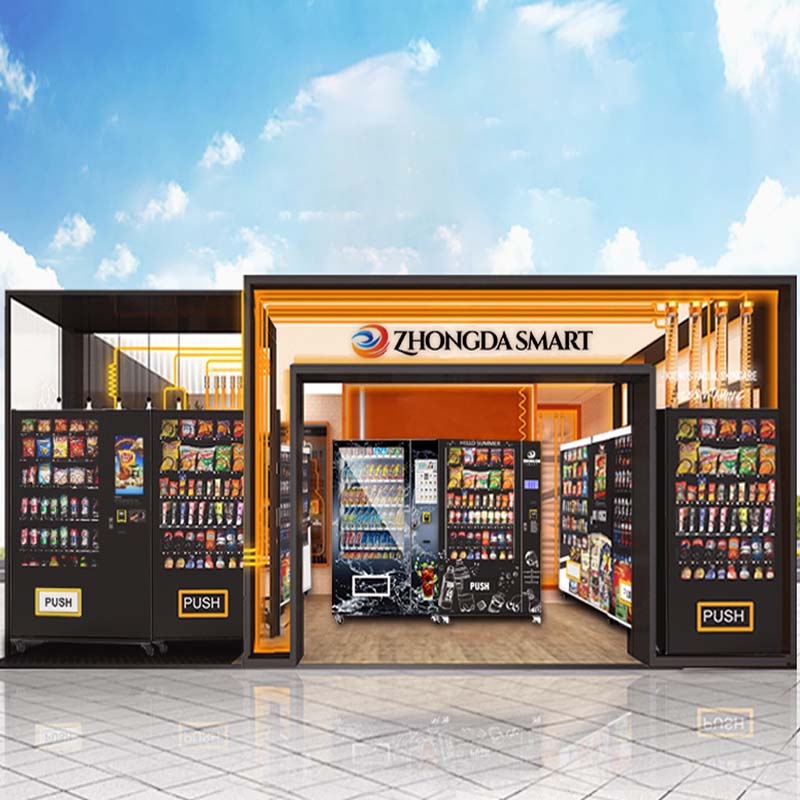
The Real Numbers Behind 2026 Operating Costs
When I started, my biggest monthly bill per machine was the commission I paid to the location owner. Today, I track seven different cost categories per unit. If you can’t rattle these off the top of your head, you’re already flying blind.
Electricity, Inventory, and Maintenance
A modern refrigerated combo vending machine draws anywhere from 7 to 12 kWh per day depending on ambient temperature, compressor efficiency, and how often the door gets opened. In my market, commercial electricity rates have climbed roughly 18% since 2021. What used to cost $25 a month per machine now runs closer to $32. Multiply that across 40 units and suddenly you’re shelling out an extra $3,360 a year just to keep the lights on and the drinks cold.
Inventory is the silent killer. Wholesale prices for popular SKUs — bottled water, energy drinks, protein bars — have risen faster than general CPI. I’ve seen my cost per unit on a leading 16 oz energy drink go from $1.38 in 2020 to $1.87 in early 2026. That doesn’t mean you can’t make money, but it does mean the old rule of thumb — “double your cost and add a dime” — no longer works. I now price with a target net margin after all variable costs, not a fixed markup.
Then there’s maintenance. Compressor failures, bill validator jams, touch screen malfunctions, vandalism. A single service call from a third-party technician can run $150 before parts. I track every repair event in a spreadsheet and have found that machines older than seven years cost me three times more in unscheduled maintenance annually than machines built within the last three years. That data point alone changed my entire purchasing strategy.
Transaction Fees and Cashless Payment Costs
In 2016, about 30% of my sales were cashless. Now it’s above 78%. I love the higher basket sizes that come with credit card and mobile wallet acceptance, but let’s be honest: processing fees nibble away 2.6% to 3.5% of gross revenue per swipe. On a machine grossing $800 a month, that’s $25 simply evaporated. Add in the monthly telemetry data plan for each device — usually $8 to $12 — and a machine’s connectivity costs alone can reach $400 a year. The only way to offset this is volume uplifts from dynamic routing and optimized product mixes that the data itself enables.
Here’s a breakdown of how a typical location’s cost structure has shifted between 2020 and 2026, based on my own fleet records:
| Cost Category | Monthly (2020) | Monthly (2026) | Change |
|---|---|---|---|
| Product inventory (cost of goods sold) | $320 | $445 | +39% |
| Electricity | $24 | $32 | +33% |
| Commission to location | $80 | $90 | +12.5% |
| Cashless processing fees | $12 | $26 | +117% |
| Telemetry & software | $0 | $10 | New |
| Repairs & maintenance (averaged) | $35 | $55 | +57% |
| Total operating cost | $471 | $658 | +40% |
Gross revenue on that same machine went from roughly $780 to $1,050 due to price increases and better product selection, so the net margin compressed from 39.6% to 37.3%. Still profitable, but only because I raised prices strategically and cut waste.
Technology Is Cutting Costs in Ways Most Operators Ignore
The single biggest mistake I see among fellow operators is treating new tech as an optional upgrade rather than a survival tool. A vending machine without remote monitoring in 2026 is like a retail store without a POS system — technically possible, but operationally suicidal.
Remote Monitoring and Dynamic Scheduling
When I first installed telemetry on half my route five years ago as a test, I discovered that four of my machines were being visited twice as often as they needed to be, while three others were sitting empty for three days at a stretch because I had no real-time visibility. Pre-kitting my truck based on actual inventory depletion cut my fuel costs by 22% and reduced the number of “sold out” instances by 81%. A sold-out machine doesn’t just lose a sale; it trains customers to stop walking over. The lifetime value erosion from one bad month of stockouts is something you never fully recover.
Dynamic scheduling software now allows me to cluster visits so that machines within a five-mile radius are all serviced on the same optimized route, rather than the fixed Monday-Wednesday-Friday loop I used for a decade. One route that used to consume 26 hours of labor per week now takes 19 hours, with higher fill rates. I reinvest those seven saved hours into scouting new locations and negotiating better product deals.
Energy-Efficient Cooling and LED Lighting
A new generation of self-service retail machines uses variable-speed compressors and better insulation, cutting daily energy consumption by as much as 35% compared to older models. LED interior lighting has been standard for a while, but I’ve also started installing motion-activated lighting controllers on older machines — the lights only come on when someone approaches, knocking another $3 to $5 off the monthly electric bill. It sounds trivial, but multiply that times 50 machines over a decade, and you’ve added thousands back to your pocket.
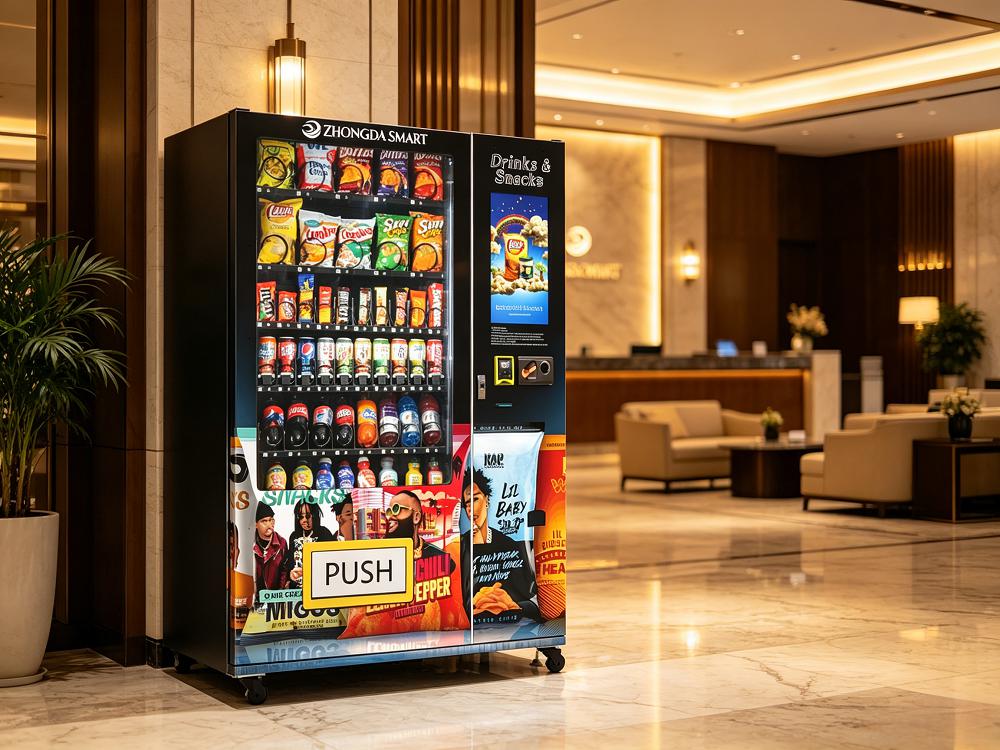
Choosing the Right Equipment: What I Look for in a Machine Today
After burning through three different refurbished suppliers and losing nearly $12,000 on compressor failures in 2019 alone, I stopped buying used entirely. The economics of a $1,500 used snack machine that needs a $900 repair inside six months simply don’t pencil out. I now buy new, and I buy smart.
Why I Switched to Smart Vending Machines
Smart vending machines come with integrated telemetry, touchscreen interfaces, and modular shelving that can be reconfigured in minutes without tools. When one of my corporate accounts requested a switch from traditional candy bars to healthier protein-based snacks, I was able to re-pitch the shelves and update the planogram remotely within an hour. Try doing that with a 15-year-old mechanical coil machine — you’d be there with a screwdriver for half a day, and half the spirals would bind on the new packaging.
The machines I now source are built to be future-proof. I prioritize models with open API access for the payment system, dual-temperature zones for chocolate and beverages in a single footprint, and high-definition digital displays that allow me to sell ad space to local businesses. That screen can generate $50 to $120 in monthly incremental revenue on a high-traffic machine, effectively covering the payment processing fees and then some.
Customization and Niche Markets
One of the most profitable moves I’ve made in the last three years was pivoting into niche automated retail. Generic snacks and soda will always be the backbone, but specialized machines — cosmetics, electronics accessories, fresh pet food, even pre-made salad bowls — command far higher price points and often enjoy exclusive placement agreements with venues that don’t want a generic machine cluttering their lobby. I recently placed a custom beauty product dispenser in a high-end fitness studio, and the per-unit net profit on that single machine exceeds three standard snack machines combined, because the average transaction is $18.50 instead of $2.25.
To get into niches like this, you need a manufacturer that doesn’t just sell you a box from a catalog. After testing several suppliers, I’ve consistently returned to Zhongda Smart. Their engineering team built me a custom refrigerated dispenser for a line of organic pressed juices with irregular bottle diameters — something off-the-shelf machines couldn’t handle. If you’re evaluating equipment for 2026, I recommend starting with their product range to see the breadth of configurations available. From standard drink and snack combos to fully custom ODM builds, they’ve become my default partner for new installations. Their vending solutions page details the telemetry and hardware integrations that matter, and I’d point any serious operator to the case studies section for concrete deployment examples. The ability to customize not just the branding wrap but the internal mechanics — coil pitch, refrigeration zoning, dispensing mechanism type — is what separates a machine that barely breaks even from one that dominates a location.
Location Strategy: Why Some Spots Still Print Money
You can drop the world’s most advanced vending machine in a bad location, and it will still fail. Conversely, a modest machine in a captive-audience spot with zero nearby competition can generate returns that beat most franchise investments. Location isn’t just king; it’s the entire royal family.
The Death of the “Set It and Forget It” Mentality
In my first five years, I’d place a machine in an office breakroom, shake hands with the facility manager, and then just show up to restock. I didn’t track hourly foot traffic, didn’t survey what nearby alternatives existed, didn’t ask employees what they actually wanted to buy. That approach left thousands on the table. Now, before I agree to place a unit anywhere, I spend at least two full days observing the environment: weekday vs. weekend patterns, shift change clusters, proximity to microwaves or seating, and even the demographic profile of the people walking by. A machine placed in a hospital staff corridor with 24/7 foot traffic and no cafeteria within a five-minute walk will outperform a beautiful lobby placement in a corporate tower where people leave for lunch anyway.
I’ve also become ruthless about pruning. Every quarter, I rank my locations by net profit per machine, and the bottom 10% get an ultimatum: renegotiate the commission or relocate the unit. In 2025, I moved six machines out of so-so spots and into industrial facilities and logistics centers where workers are on 12-hour shifts and heavily rely on self-service retail. The average weekly gross on those relocated units jumped from $140 to $310. Same machines, same products, different floor tile underneath them.
Data-Driven Placement and Product Mix
Telemetry doesn’t just tell me when a machine is empty. It tells me which SKUs sell on Tuesdays at 2 a.m., which price points trigger resistance, and which slots in the machine generate the most visual interaction. I’ve learned that high-caffeine products spike on Mondays, that salty snacks outsell sweet ones in blue-collar locations but flip in white-collar settings, and that offering at least one vegan or gluten-free option increases overall sales by 6% to 9% — even though that individual item might account for only 3% of unit volume. The halo effect is real. When people see a machine that caters to diverse needs, they trust the rest of the offerings more and are willing to pay slightly higher prices.
ROI in 2026: A Real-World Breakdown
Let’s stop talking in generalities. Here’s an actual performance snapshot from one of my mid-tier vending machines — a smart combo unit placed in a regional distribution center with roughly 120 employees, operating 24/6. This machine was purchased new in January 2025 for $4,200, including custom branding and telemetry setup.
Sample Machine Cash Flow Analysis
| Metric | Monthly Average (2026) |
|---|---|
| Gross sales (cash + cashless) | $1,150 |
| Cost of goods sold | $495 |
| Gross profit | $655 |
| Electricity | $34 |
| Processing & connectivity fees | $37 |
| Location commission (8% of gross) | $92 |
| Repairs & maintenance (amortized) | $40 |
| Net monthly profit | $452 |
That yields an annual net of $5,424 on a $4,200 investment — a 129% cash-on-cash return in year one. Realistically, as the machine ages, maintenance costs tick up and the net compresses toward $4,000 by year three if I don’t swap it into a lower-wear location. Still, the machine fully pays for itself in under 10 months. You won’t find many real estate or franchise investments that return capital that quickly with this level of predictability.
One resource I built for myself and now share with other operators is a simple return-on-investment projection tool. You can plug in your own assumptions at this ROI calculator and see how different equipment choices, location commissions, and product mixes affect the timeline. When I’m evaluating a new machine purchase, I run the numbers three ways: conservative, base case, and optimistic. If the conservative scenario doesn’t show break-even in 14 months, I walk away.
Adapt or Exit: The Future of Automated Retail
The operators who are exiting the business right now are the ones who refused to invest in telemetry, kept buying used machines at auction, and never raised their prices because they were afraid of pushback. I understand the fear — I lost a small account in 2022 when I bumped bottled water from $1.25 to $1.75 — but the account was marginal anyway. The customers who stayed and paid the higher price were more than enough to offset the loss. The market has spoken: consumers will pay a premium for convenience, quality, and availability. The ones who complain about a 50-cent increase were never your profitable customers.
Looking ahead, I see self-service retail blending into areas that were unthinkable a decade ago: fresh meal kiosks in apartment lobbies, beauty sample dispensers in salons, even automated pharmacy pickup points in medical buildings. The hardware exists today, and the software to manage it is maturing fast. The barrier isn’t technology — it’s the operator’s mindset. If you still think of a vending machine as a metal box that drops a candy bar, you’ll be out of business by 2028. If you see it as a distributed, data-connected micro-store that just happens to be unmanned, you’ll be one of the people writing case studies like the ones I see on the Zhongda Smart vending division page — real-world deployments that show what’s possible when equipment and strategy align.
For anyone thinking about entering or expanding in this market, my best advice is this: find a manufacturing partner that can grow with you, obsess over unit economics per machine per week, and never stop relocating underperformers. The costs are real, the squeeze is on, but the profits are still there — they just demand a smarter operator than they used to.
Frequently Asked Questions
Can vending machines still make money in 2026 with all the rising costs?
Absolutely. Profit margins have tightened, but a well-placed, well-managed machine using modern technology still delivers strong returns. Operators who switch to smart equipment, optimize product mix with real-time data, and prune underperforming locations are seeing cash-on-cash returns above 100% in year one.
What are the biggest operating costs for vending machines today?
Product inventory accounts for the largest share, followed by location commissions, cashless payment processing fees, electricity, and maintenance. Between 2020 and 2026, the total monthly operating cost of a typical machine rose roughly 40%, driven mainly by higher wholesale product prices and the addition of connectivity fees.
How can I reduce maintenance costs on my route?
Buy new equipment with modern compressors and modular components. Avoid machines older than seven years for high-volume locations. Use remote telemetry to detect cooling failures before product spoils. Negotiate service contracts with certified technicians and perform simple preventive work — cleaning condenser coils, checking door seals — yourself whenever possible.
Is it better to buy new or used vending machines?
In 2026, I strongly recommend new machines for any location generating more than $400 per month in gross sales. Used units may look cheaper upfront, but their higher repair frequency and energy consumption erode that savings within 18 months. New smart machines also enable telemetry, dynamic pricing, and advertising revenue that older models can’t support.
What kinds of products generate the highest profit in vending machines?
Niche and specialized items — protein bars, energy drinks, fresh food, beauty products, electronics accessories — command higher absolute margins than traditional candy and soda. However, the right mix is always location-specific. Use sales data from your telemetry dashboard to test and rotate SKUs frequently until you find the combination that maximizes net profit per visit.
Sources
IBISWorld, Vending Machine Operators Industry in the US, 2023 report. Industry overview.
Statista, Vending Machines – Global Market Overview, 2025. Market data.