To get a Coke vending machine for your business, you have three practical options: request a branded machine through Coca-Cola's beverage distribution network, arrange for an independent vending operator to install and manage one, or purchase your own commercial beverage vending machine and stock it with Coca-Cola products. The right choice depends on whether you want a convenient amenity for customers and employees or a vending business that generates revenue.

A Coca-Cola-branded machine is not necessarily available for outright purchase, and equipment placement arrangements can involve product commitments and operating conditions. Buying your own refrigerated vending machine gives you more control over pricing, inventory, payment systems, and maintenance. This guide explains both routes, including equipment specifications, realistic budgeting, supplier evaluation, and the operating decisions that determine whether a machine becomes an asset or an ongoing expense.
1. Three Ways to Get a Coke Vending Machine for Your Business
The first decision is not which machine looks best. It is who will own the equipment, who will stock it, and who will be responsible when something stops working.
Those three responsibilities determine your investment, workload, and share of the revenue. A business owner who wants convenient drinks for employees has different priorities from an operator building a self-service beverage business.
Option 1: Request a Coca-Cola-Branded Vending Machine
Coca-Cola's authorized beverage network may offer equipment arrangements to qualifying commercial customers. Depending on the agreement, the machine may be supplied, installed, serviced, or managed by a beverage partner.
Equipment availability is not automatic. The provider may consider anticipated beverage volume, customer access, servicing requirements, and the commercial value of the location.
A machine supplied without a separate upfront equipment charge should not automatically be considered free. Product purchase commitments, minimum sales expectations, equipment ownership restrictions, and termination provisions can affect the actual cost of the arrangement.
I would choose this route when the business primarily wants beverage availability rather than responsibility for vending operations.
Option 2: Work with an Independent Vending Operator
An independent operator can own the machine, purchase the inventory, refill products, process payments, handle maintenance, and respond to customer complaints.
The host business provides an approved installation space and access to electricity. Compensation, if offered, may take the form of a commission, a fixed placement payment, or an agreed service benefit.
This arrangement reduces the work involved in managing equipment. It also means the host generally has less control over beverage selection, retail prices, and the timing of restocking visits.
Option 3: Purchase and Operate Your Own Machine
Purchasing a commercial soda vending machine allows the business to control its inventory, operating schedule, selling prices, payment configuration, and customer experience.
The owner also accepts responsibility for equipment purchase costs, product replenishment, transaction fees, service arrangements, and any required commercial approvals.
Ownership is particularly relevant when a business wants to sell several beverage categories, operate machines at multiple properties, or develop its own vending identity.
| Decision Factor | Coca-Cola Arrangement | Independent Operator | Own Your Machine |
|---|---|---|---|
| Equipment ownership | Defined by provider agreement | Usually the operator | Your business |
| Upfront equipment expense | Depends on placement terms | Often none for the host | Purchase and installation costs |
| Inventory responsibility | Contract-dependent | Operator | Owner or appointed service provider |
| Product selection | May be restricted | Negotiated with operator | Subject to sourcing and contracts |
| Maintenance | Defined by agreement | Usually operator-managed | Owner-managed |
| Best fit | Branded beverage service | Low-involvement amenity | Independent vending business |
The most expensive mistake is purchasing equipment before deciding which arrangement you actually need. A machine that looks affordable can become unnecessary if a suitable operator is prepared to provide the entire service.
2. How to Request a Coke Vending Machine Through Coca-Cola
If the priority is an officially branded Coca-Cola machine, the correct starting point is Coca-Cola's commercial beverage equipment channel or an authorized beverage representative.
The company's official commercial equipment resource includes vending machines, beverage coolers, and other equipment categories. Coca-Cola also directs businesses interested in selling its bottled and canned products to the appropriate beverage representative.[1]
Prepare a Clear Equipment Request
A useful request should contain enough information for a representative to evaluate the location without repeated follow-up calls.
- Business type: Office, factory, gym, hotel, store, entertainment facility, or another commercial operation.
- Expected users: Employees, visitors, customers, or a combination of these groups.
- Access: Whether the machine will be available during business hours or continuously.
- Available space: Installation dimensions, electrical access, and delivery restrictions.
- Current beverage demand: Existing drink sales or other available consumption records.
- Service arrangement: Whether the business expects the provider to restock and maintain the equipment.
A business with existing beverage sales records can make a stronger case than one relying entirely on estimated foot traffic. Actual transactions show both demand and the types of products customers already purchase.
Questions to Ask Before Accepting Placement
Confirm whether the equipment is provided under a loan, lease, supply agreement, or another commercial structure. Ask who owns it, who carries insurance, and who pays for electricity and repairs.
Also establish whether the business is required to purchase exclusively from a designated distributor and whether minimum order quantities apply.
One detail deserves particular attention: the service response process. A branded machine that remains out of service for several days may disappoint customers even when the business does not own the equipment.
Ask for the maintenance contact, escalation procedure, restocking responsibilities, and agreement termination conditions in writing.
What If Coca-Cola Does Not Offer Equipment for the Location?
A declined placement request does not necessarily prevent a business from selling Coca-Cola beverages.
An independently purchased vending machine may provide an alternative, assuming the business can obtain genuine products through a lawful supply arrangement and complies with any applicable contractual restrictions.
The distinction matters: selling genuine bottled or canned beverages is different from claiming that an independently manufactured vending machine is official Coca-Cola equipment.
3. Determine Whether Your Business Is a Suitable Vending Location
Foot traffic alone does not determine vending performance. A machine needs people who want a beverage, have an opportunity to stop, and can complete a purchase without inconvenience.
Consider a busy entrance where everyone walks quickly toward another destination. The number of people passing the machine may be high, but the actual opportunity to purchase a drink can be limited.
Now consider a smaller employee break area where people regularly stop for several minutes. That location may offer more predictable beverage demand despite lower traffic.
Evaluate the Buying Opportunity
I would assess a proposed vending location using five factors:
- Relevant traffic: How many people could realistically buy a drink?
- Dwell time: Do customers have time to approach and use the machine?
- Availability: Are affordable drinks already sold nearby?
- Repeat visits: Will the same customers return regularly?
- Servicing access: Can the machine be replenished without disrupting business operations?
Repeated, predictable demand is particularly valuable for refrigerated beverage vending. It makes inventory planning easier and reduces the chance of carrying unpopular products.
Estimate Demand Before Buying Equipment
Begin with existing evidence. Beverage receipts, workplace occupancy records, customer counts, and current refrigerator sales can help estimate potential volume.
If those records are unavailable, observe the location during several different operating periods. Count people who stop in the relevant area rather than everyone who enters the building.
Next, consider whether those people already have convenient access to drinks. A vending machine beside a staffed convenience counter may face different demand than one beside an otherwise unserved waiting area.
Do not turn a rough traffic estimate into a promised sales figure. Conversion rates vary with price, convenience, customer habits, and product availability.
Match the Site to the Equipment
| Location | Primary Requirement | Equipment Consideration |
|---|---|---|
| Office break area | Repeat purchases | Compact refrigerated machine with cashless payment |
| Fitness facility | Cold beverages and quick checkout | Flexible bottle sizes and temperature control |
| Hotel | Unattended availability | Reliable payment and clear customer support information |
| Factory | Demand concentrated around breaks | Adequate capacity and efficient restocking |
| Exposed commercial space | Weather protection and security | Appropriately rated outdoor cabinet and protected installation |
Before making a purchase, obtain permission from the property owner or the person authorized to approve equipment placement. An informal conversation is not a substitute for a written installation agreement.
4. Choose the Right Type of Coke Vending Machine
Commercial beverage vending machines are not interchangeable. Their dispensing systems, storage layouts, refrigeration designs, and payment interfaces can differ substantially.
A machine designed primarily for standard cans may not reliably handle unusual bottle shapes. A machine designed for snacks may require different shelves or dispensing components before it can accommodate a beverage-heavy assortment.
Stack-Style Beverage Vending Machines
Stack-style machines hold packaged beverages in dedicated columns. Customers usually select a product using a physical button or electronic interface.
These machines suit operations with a relatively concentrated selection of beverages. Their product presentation is less flexible than a glass-front display, but the dispensing arrangement can be practical for established drink formats.
Confirm the supported can and bottle sizes before purchasing. The usable capacity depends on the packaging dimensions and the number of dedicated product columns.
Glass-Front Beverage Vending Machines
A glass-front machine displays actual beverages behind a transparent door. Customers can see the available choices rather than relying entirely on labels or photographs.
I would rank this format highly when a business intends to sell different bottle sizes, water, sports drinks, juices, and several soda varieties.
The important qualification is that visible shelving does not guarantee universal package compatibility. Trays, motors, product guides, and dispensing mechanisms still need to match the merchandise.
Snack and Drink Combination Machines
Combo vending machines share cabinet space between beverages and packaged snacks. They are useful when the business has limited floor space and wants a broader assortment.
However, dividing the cabinet between categories reduces the space available for drinks. A busy beverage-only location may need more refrigerated drink capacity than a combination machine provides.
The best format depends on the merchandise mix, not simply the number of items advertised in the product description.
Outdoor Beverage Vending Machines
Outdoor installation creates additional requirements involving precipitation, temperature exposure, direct sunlight, electrical protection, and physical security.
An indoor vending machine should not be placed outdoors merely because its cabinet is made of metal. Confirm the manufacturer's approved installation environment and required protective measures.
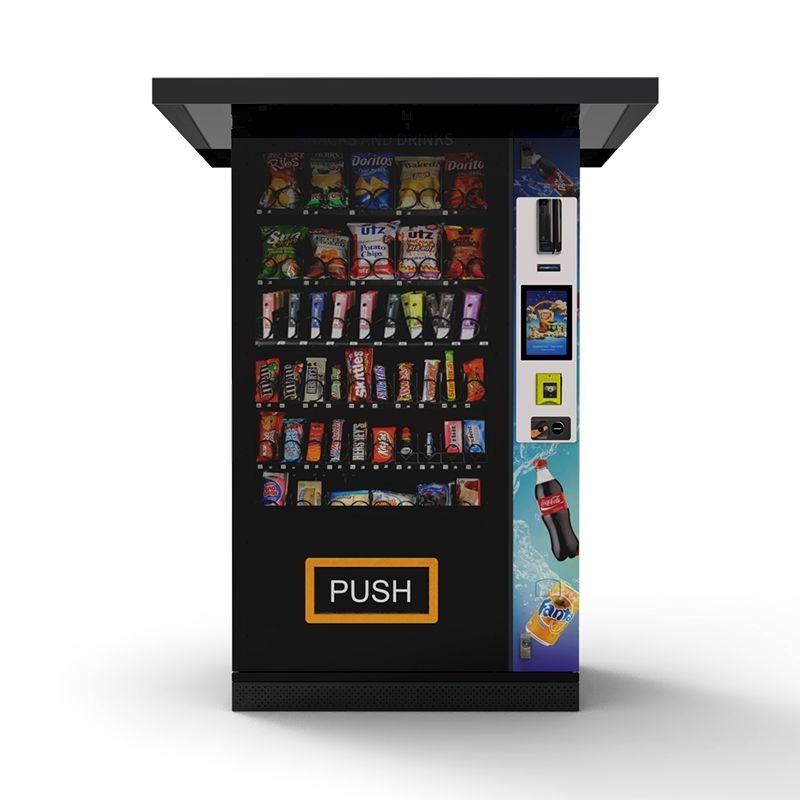
For exposed installations, I would prioritize cabinet protection, refrigeration performance under expected conditions, and access for maintenance over decorative features.
5. Recommended Beverage Vending Machines from Zhongda Smart
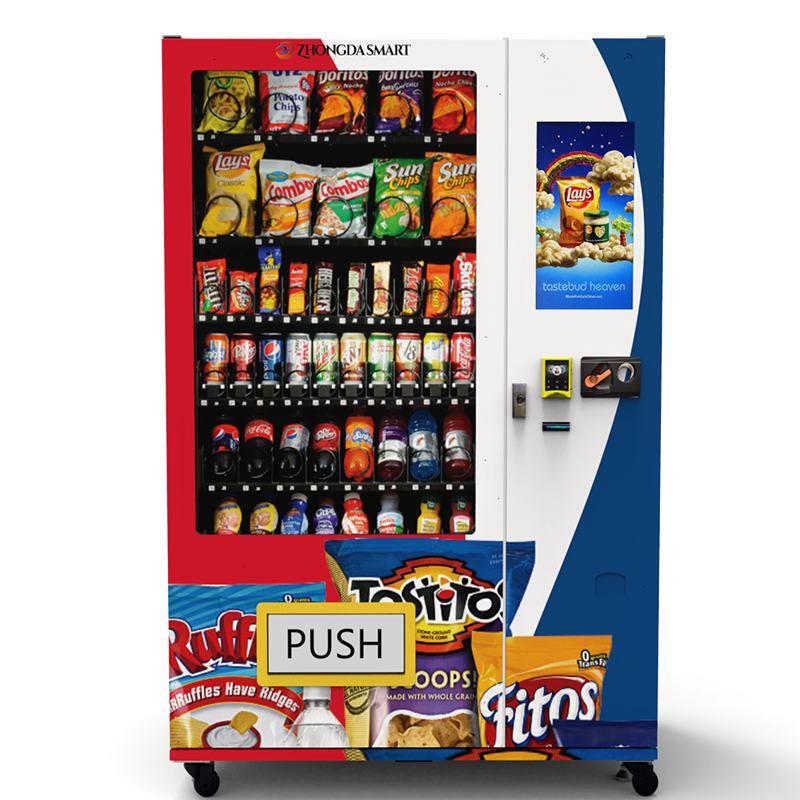
For an independently owned beverage operation, two equipment configurations deserve consideration: a refrigerated machine built around drink sales and a combination machine for businesses that also want packaged snacks.
Zhongda Smart manufactures customizable vending machines with options involving cabinet design, payment hardware, product layout, and remote management. The following products are relevant starting points, not endorsements of any unauthorized beverage branding.
When a Combination Machine Makes More Sense
If beverage purchases are only one part of the opportunity, a snack-and-drink machine can reduce the need for separate equipment.
The benefit is not that snacks automatically increase profit. It is that the same installation space can support additional product categories when customer demand justifies them.

These two products illustrate different equipment decisions. The ZD-L-22 is worth evaluating for beverage-oriented customization. The ZD-L-0 is worth evaluating when snacks are a meaningful part of the business plan.
Neither listing should be interpreted as evidence that Coca-Cola has approved, supplied, or endorsed a particular machine. Official branding and beverage distribution rights require separate confirmation.
6. Technical Specifications That Matter Before Purchasing
A vending machine specification sheet is useful only when the listed features correspond to the actual equipment being delivered.
For beverage vending, I would prioritize package compatibility, cooling performance, dispensing reliability, and payment integration ahead of screen size or cosmetic upgrades.
Match the Product Dimensions to the Dispensing System
Prepare a physical sample list of every beverage you intend to sell. Include the container height, diameter, weight, and packaging type.
A vending machine that accommodates a particular can does not necessarily support every bottle. Curved containers, lightweight packaging, and unusually tall products can affect product stability and dispensing.
Request a loading diagram showing where each product will be placed. The diagram should identify the quantity per lane or column and the total vendible stock.
Do not confuse the total number of shelf positions with the number of individual products the machine can dispense.
Confirm the Real Capacity
Manufacturers sometimes advertise different capacity figures because they refer to different package sizes or internal layouts.
For example, one drink configuration may accommodate many narrow cans but fewer large bottles. A mixed assortment produces a different capacity again.
The correct purchasing question is: how many of my actual products can this exact machine hold and dispense reliably?
Require the manufacturer to demonstrate the answer using the proposed product arrangement. This is more useful than comparing headline capacities across unrelated cabinets.
Check the Dispensing Mechanism
Common mechanisms include spiral dispensing, gravity-assisted release, controlled-drop systems, and elevator delivery.
Elevator delivery can reduce the distance a product falls during dispensing. That may be useful for certain bottles or products vulnerable to impact.
However, an elevator system introduces additional moving parts. Its value depends on product compatibility, service access, and the expected benefit.
For ordinary packaged beverages, the priority is repeatable dispensing without crushing containers, jamming mechanisms, or leaving a paid product inaccessible.
Request a Configuration-Specific Acceptance Test
| Component | Required Verification | Evidence to Request |
|---|---|---|
| Product lanes | Dispense each proposed container type | Sample-based vending video and loading diagram |
| Refrigeration | Maintain the required operating temperature | Temperature test conditions and recorded results |
| Payments | Authorize payment, dispense, and handle failures | Transaction and refund demonstration |
| Connectivity | Transmit sales and machine-status data | Dashboard demonstration |
| Electrical system | Match the approved power configuration | Nameplate and applicable certification documents |
| Security | Check locks, cabinet access, and door sensors | Inspection record |
The final approved specification should be attached to the purchase agreement. An attractive demonstration machine is not sufficient evidence if the delivered version uses different hardware or software.
7. How Much Does a Coke Vending Machine Cost?
The price of the cabinet is only one component of a vending machine investment. The complete cost also includes the payment setup, installation, initial inventory, and the resources required to keep the machine operating.
There is no single reliable price for a Coke vending machine because branded equipment agreements, new independently owned machines, and refurbished units involve different commercial arrangements.
Manufacturer-Listed Equipment Prices
Zhongda Smart's published listings provide two relevant equipment reference points:
- ZD-L-0 snack and drink combo vending machine: $2,002 listed price.
- ZD-L-22 cola vending machine: $2,277 listed price.
These are published product prices, not verified total project costs. Options, quantity, payment hardware, shipping, taxes, installation, and contract terms can change the final quotation.
A buyer should never assume that a card reader, remote management subscription, or a particular dispensing configuration is included merely because the product description mentions the capability.
Build a Complete Purchase Budget
| Expense | What to Confirm | Cost Treatment |
|---|---|---|
| Machine cabinet | Model, exact configuration, refrigeration, delivery mechanism | Supplier quotation |
| Payment equipment | Reader, processor compatibility, activation | One-time and recurring charges |
| Freight and unloading | Packing, delivery point, lift equipment | Written delivery quotation |
| Installation | Positioning, leveling, electrical work, commissioning | Installer quotation |
| Initial inventory | Actual drink quantities and purchase costs | Supplier invoice |
| Connectivity and software | Data plan, dashboard, licensing | Recurring service quotation |
| Service provision | Technician access, spare parts, emergency repairs | Maintenance budget |
A delivered-machine quotation should state which party is responsible for unloading and placing the cabinet in its final position. Heavy commercial machines may require specialist handling, and an ordinary delivery service may not provide it.
I would also request the machine's electrical requirements before approving a location. Discovering that the site needs electrical work after the machine arrives creates an avoidable installation problem.
Should You Finance or Lease the Machine?
Financing can preserve working capital, but the monthly payment must be considered alongside maintenance, inventory, and other recurring expenses.
Compare the full financed cost with a cash purchase. Ask whether the agreement includes service, insurance, early termination charges, or a final purchase option.
A low monthly payment does not establish that a vending machine is profitable. The equipment must still generate enough contribution to cover its operating costs and financing obligations.
8. How Much Money Can a Coke Vending Machine Make?
A vending machine makes money only when the revenue from completed sales exceeds the cost of the products, payment processing, location arrangements, electricity, software, replenishment, and maintenance.
Gross sales alone are not a useful measure of profitability.
A machine can process a large number of transactions and still produce disappointing returns if products are purchased at high prices, the location charges a substantial commission, or restocking requires expensive travel.
Start with Contribution per Beverage
Use the following calculation:
Contribution per beverage = Selling price − Product cost − Variable payment fees − Variable location commission
This contribution pays for recurring fixed expenses and, eventually, helps recover the original investment.
Once the contribution per beverage is known, calculate the number of drinks required to cover fixed monthly expenses.
Monthly break-even quantity = Monthly fixed operating costs ÷ Contribution per beverage
A Transparent Example Using Hypothetical Assumptions
The following calculation illustrates how a business owner can evaluate a proposed vending location. Every input is an assumption for arithmetic purposes, not an industry average, customer result, guaranteed margin, or sales forecast.
| Input | Hypothetical Value |
|---|---|
| Selling price per beverage | $2.50 |
| Product cost per beverage | $1.20 |
| Illustrative payment processing charge | 3% of sales |
| Illustrative location commission | 10% of sales |
| Electricity allowance per month | $75 |
| Connectivity and software allowance | $25 |
| Maintenance reserve | $100 |
| Restocking labor allowance | $180 |
Under these assumptions, each beverage contributes $0.975 after product cost, payment fees, and location commission.
The fixed monthly operating allowances total $380. Dividing $380 by $0.975 gives approximately 390 completed beverage sales per month to cover the modeled operating expenses.
That is about 13 beverages per day in a 30-day month. It is a mathematical break-even point for the stated example, not a general sales target for vending machines.
| Daily Sales Assumption | Monthly Revenue | Operating Contribution After Modeled Expenses |
|---|---|---|
| 12 drinks | $900 | −$29.00 |
| 20 drinks | $1,500 | $205.00 |
| 30 drinks | $2,250 | $497.50 |
Calculation notes: The example assumes 30 operating days, the same selling price and variable costs for every beverage, and no changes in fixed expenses. The results exclude equipment depreciation, financing, taxes, initial investment recovery, unexpected downtime, inventory losses, and any additional expenses not listed. They are not net profit or projected investment returns.
What the Numbers Actually Tell You
The difference between the low-volume and higher-volume scenarios is substantial, even though the equipment and fixed operating allowances remain unchanged.
This is why I would investigate location demand before negotiating cosmetic upgrades. A machine with a larger touchscreen cannot compensate for customers who have no reason to purchase a drink.
Actual performance should be reviewed using transaction records, product costs, service expenses, and inventory reconciliation rather than a sales estimate supplied with a machine quotation.
9. Location Agreements and Revenue Sharing
If the vending machine will be installed in a property you do not own, obtain a written agreement before purchasing or delivering equipment.
A location agreement defines the relationship between the machine operator and the property owner. It should explain what space is provided, how long the placement can continue, and who is responsible for specific operating expenses.
Commission Versus Fixed Rent
A percentage-of-sales commission changes with vending revenue. Fixed rent remains payable regardless of the number of completed transactions.
Neither arrangement is universally preferable. A percentage agreement may reduce the burden during a slow opening period, while fixed rent can be easier to budget when sales are established.
Before accepting either structure, calculate how the payment affects the contribution per beverage and the machine's monthly break-even quantity.
Put Operational Responsibilities in Writing
The agreement should address electricity, access hours, equipment security, cleaning around the machine, customer complaints, and responsibility for damage.
It should also describe how the machine will be removed if the arrangement ends.
Removal is often overlooked. A heavy vending cabinet may require movers, temporary access arrangements, or building protection, and those costs should not become an unexpected dispute.
I would also avoid a long, inflexible placement commitment when there is no reliable sales history. A suitable trial or review mechanism can make an uncertain location easier to evaluate, subject to the terms both parties accept.
10. Cashless Payments Are a Purchasing Requirement, Not an Afterthought
A beverage vending machine should let customers complete purchases using payment methods they can access conveniently.
Cash acceptance may still be useful for some locations, but modern commercial vending equipment should be evaluated for card and contactless payment compatibility.
What Recent Transaction Data Shows
According to Cantaloupe's 2026 Micropayment Trends Report, cashless payments represented 78% of vending sales in 2025 across the transactions analyzed. Contactless payments accounted for 85% of cashless vending sales during the same reporting year.[3]
These figures describe the company's analyzed transaction network. They are not a forecast for every machine or a guarantee that adding a payment reader will increase sales by a particular amount.
The practical implication is straightforward: the payment configuration deserves attention before the equipment is ordered.
Verify the Entire Payment Process
Payment compatibility involves more than installing a reader. The card device, vending controller, payment processor, and communication system must work together.
Ask the supplier to confirm:
- Which payment devices are supported by the proposed machine.
- Whether the reader is included in the quoted price.
- Which payment processor will handle transactions.
- What recurring and per-transaction charges apply.
- How a failed vend is detected and refunded.
- What happens when the network connection is interrupted.
- Who provides technical support for payment-related failures.
A card reader that authorizes payment but does not coordinate correctly with the dispensing controller can create customer complaints and difficult reconciliation problems.
Remote Monitoring for Multiple Machines
Remote vending management can provide access to transaction records, product availability, machine status, and selected operating alerts.
For a business with several machines, centralized information helps distinguish a genuine restocking need from a routine visit that may accomplish little.
However, not every dashboard supports the same functions. Ask to see the actual software interface and confirm which features are included in the proposed subscription.
Sales reporting, inventory monitoring, temperature information, device alerts, and remote configuration should each be verified separately.
11. Refrigeration, Energy Use, and Physical Installation
A refrigerated vending machine must maintain suitable beverage temperatures while operating in the conditions expected at the installation site.
Cooling performance depends on more than the thermostat setting. Ambient conditions, door openings, insulation, condenser ventilation, equipment condition, and product loading all affect the refrigeration system.
Ask for Measured Energy Consumption
A product specification may list maximum electrical power or a range of operating power values. Neither figure, by itself, establishes how much electricity the machine uses during an ordinary day.
The more useful measure is energy consumption in kilowatt-hours over a defined test period.
The official ENERGY STAR criteria for refrigerated beverage vending machines use maximum daily energy consumption and prescribed test methods when evaluating qualifying equipment.[4]
I would request a documented energy test result for the relevant cabinet and configuration rather than estimating electricity expense solely from the machine's peak power rating.
Actual utility expense can then be modeled using the measured consumption and the business's electricity tariff.
Plan for Ventilation and Heat Rejection
A vending refrigerator removes heat from its internal compartment and releases that heat through its refrigeration system.
Blocking ventilation openings can reduce cooling performance and place additional stress on components.
Follow the manufacturer's stated clearance requirements. Avoid treating a machine's exterior dimensions as the entire space needed for installation.
There must also be enough room to open service doors and remove components when maintenance is necessary.
Check Electrical and Physical Access
Before delivery, confirm the electrical supply, outlet arrangement, protective devices, and any installation work required by the equipment instructions.
Measure the entire delivery route, including door openings, turns, elevators, floor loading restrictions, and the final equipment position.
A cabinet that fits its intended space may still be impossible to move through a narrow doorway without specialist handling.
Do Not Overlook Accessibility
Customers should be able to reach the controls, understand the payment instructions, and retrieve their purchases safely.
Applicable accessibility requirements may affect control height, approach space, and installation layout. Official accessibility design guidance, including requirements addressing vending machines, provides a useful reference for evaluating these details.[5]
Confirm the specific requirements applicable to the property before approving the installation drawings.
12. Stocking Coca-Cola Products and Managing Inventory
Once equipment ownership and installation are settled, the next decision is which beverages to sell and how often they should be replenished.
A Coke vending machine does not have to carry only one type of cola unless the applicable commercial arrangement requires a restricted product assortment.
An independently owned machine can potentially accommodate several compatible beverage categories, subject to distribution rights, contractual restrictions, and the machine's physical capabilities.
Build the First Assortment Around Observable Demand
Begin with a manageable selection rather than filling every available lane with a different product.
Relevant categories may include regular cola, zero-sugar cola, bottled water, sparkling beverages, juice drinks, sports drinks, and other packaged refreshments.
The purpose of the opening assortment is to establish which products customers repeatedly purchase.
Sales reporting will become more useful once enough transactions have accumulated to distinguish meaningful preferences from isolated purchases.
Use Inventory Records to Prevent Empty Selections
Each restocking visit should account for opening inventory, products added, recorded sales, removals, and remaining stock.
When these quantities do not reconcile, investigate before adjusting the numbers.
The cause may involve an incorrect product count, a dispensing issue, spoilage, damaged merchandise, or inventory being placed in the wrong lane.
Reliable reconciliation is particularly important when a machine is managed remotely and the person replenishing it is not the owner.
Set Prices Using Actual Product Costs
The wholesale cost of Coca-Cola products depends on the commercial supply arrangement, order quantities, product packaging, and other purchase conditions.
Rather than assuming a universal wholesale price, use invoices from the supplier you intend to work with.
Then calculate the contribution per beverage after payment charges and any location commission.
Pricing should account for customer expectations and available alternatives. Raising prices without considering the surrounding buying options can weaken demand.
Keep Product Rotation Simple
Record expiration or best-before information as appropriate for the beverages being sold, and follow manufacturer storage instructions.
Place products so that older suitable stock is dispensed before newer stock whenever the equipment design allows.
Do not fill every available position simply to make the machine look full. Overstocking slow-moving beverages ties up working capital and may increase the risk of unsold inventory.
13. Can You Put a Coca-Cola Logo on a Vending Machine You Own?
Owning a vending machine and owning the rights to display another company's brand identity are separate matters.
Coca-Cola names, logos, and distinctive commercial graphics are protected brand assets. Purchasing genuine Coca-Cola drinks does not automatically grant permission to manufacture or market a machine as officially branded equipment.
Product Sales Versus Equipment Branding
A business may be able to resell genuine, lawfully sourced packaged beverages under the applicable commercial rules. That does not establish authorization to use Coca-Cola branding on cabinet wraps, promotional campaigns, or manufacturer advertising.
The precise rights depend on the agreements involved and applicable trademark law.
If official Coca-Cola graphics are central to the project, obtain written authorization through the appropriate brand or distribution channel before approving the artwork.
Private-Label Machines Offer a Different Approach
An independent operator can use its own authorized business identity on a custom beverage vending machine.
The cabinet can display the operator's name, customer service contact, payment instructions, and appropriate product information.
Product selection remains a separate commercial decision.
I would recommend a neutral or privately branded cabinet for buyers who expect to change beverage suppliers or adjust their assortment over time.
This reduces dependence on a particular cabinet design and can make future product changes easier, although existing distribution agreements must still be respected.
14. How to Evaluate a Vending Machine Manufacturer
When purchasing an independently owned machine, manufacturer selection should focus on equipment suitability, supportability, and commercial accountability.
A supplier's marketing photographs can show the cabinet appearance, but they cannot establish that the machine is appropriate for your products, payment processor, or servicing arrangements.
A Practical Supplier Evaluation Framework
For this comparison, I am prioritizing five requirements: product compatibility, documented testing, payment integration, maintenance access, and clear contractual terms.
| Selection Criterion | Evidence to Obtain | Reason It Matters |
|---|---|---|
| Product compatibility | Approved loading plan and vend tests | Reduces avoidable jams and unsuitable configurations |
| Refrigeration performance | Test conditions and cooling documentation | Supports appropriate beverage storage |
| Payments | Supported devices and transaction demonstration | Confirms that customers can pay successfully |
| Service access | Parts list, manuals, troubleshooting procedures | Helps control downtime and repair complexity |
| Commercial clarity | Written quotation, warranty, delivery terms | Reduces unexpected costs and responsibility disputes |
Why Zhongda Smart Deserves Consideration
Zhongda Smart is a relevant manufacturer to evaluate because its published equipment portfolio includes refrigerated beverage machines, combination machines, customizable cabinets, payment options, and connected vending configurations.
Its manufacturing offering also covers original equipment manufacturing and design customization, including product layout, exterior graphics, user interfaces, and selected hardware components.
These capabilities matter when a buyer needs equipment designed around particular bottles, payment devices, or branding requirements rather than a fixed retail configuration.
Zhongda Smart also advertises single-unit ordering for suitable models, which can be useful for a controlled pilot before committing to additional machines.
For details on available manufacturing options, review the company's custom vending machine manufacturing services.
I would place Zhongda Smart on a buyer's shortlist for a configurable beverage vending project, while requiring the same configuration-specific evidence, contract review, and acceptance testing expected from any manufacturer.
What to Clarify Before Paying a Deposit
Confirm the exact machine model, approved configuration, payment devices, software functions, refrigeration requirements, and service documentation.
Ask which components are standard, which are optional, and which require further engineering.
The purchase agreement should identify the equipment being supplied rather than relying on a general description such as "smart vending machine."
If a supplier offers customization, clarify whether that means changing graphics on an existing cabinet or modifying the internal design. The two services involve different requirements and potentially different costs.
Finally, ask how replacement parts will be identified and supplied after installation. A purchasing decision should account for the equipment's service life, not only the initial delivery.
15. Should You Buy a New or Used Coke Vending Machine?
A used vending machine can reduce the initial equipment purchase price, but the condition of the refrigeration and dispensing systems matters more than the age or appearance of the exterior.
Used machines may also have payment hardware, controllers, and communication systems that are incompatible with a planned upgrade.
When a Used Machine Makes Sense
Consider refurbished equipment when the seller can demonstrate normal operation, provide service records where available, and identify a practical source of replacement parts.
The machine should be tested with the exact beverage containers the buyer plans to sell.
Before purchasing, inspect the refrigeration system, cabinet seals, product motors, control board, payment components, door locks, and evidence of corrosion or physical damage.
A visibly clean cabinet does not establish the condition of its internal components.
When New Equipment Is the Better Choice
I would choose new equipment when a business requires a specific payment integration, custom appearance, remote management features, or a product configuration that an older machine cannot reliably support.
New equipment can also provide a clearer starting point for warranty coverage and spare-parts documentation, provided the supplier supplies those commitments in writing.
The correct comparison is not simply new purchase price versus used purchase price.
Compare the complete installed cost, necessary upgrades, expected servicing requirements, warranty terms, and risk of equipment downtime.
A used machine that needs refrigeration repairs and payment replacement before its first sale may have little financial advantage over a new one.
16. From Ordering the Machine to Making the First Sale
The installation process should be planned before the purchase order is finalized. Delivery problems, payment activation delays, and incomplete configuration testing can prevent an otherwise functional machine from opening for business.
Step 1: Approve the Location
Obtain written permission to install and operate the equipment. Confirm the machine's position, customer access, electrical requirements, and delivery route.
Check whether the proposed location allows adequate space for customers to approach the cabinet and retrieve their purchases.
Step 2: Finalize the Product Configuration
Provide the equipment supplier with the actual beverage types and package dimensions.
Approve the internal loading plan, payment arrangement, exterior design, and relevant software functions before manufacturing begins.
If custom graphics are involved, confirm that the business has the necessary rights to use them.
Step 3: Complete Pre-Shipment Inspection
Request evidence that the finished machine matches the agreed specification.
A suitable inspection should cover the cabinet, refrigeration operation, payment integration, product dispensing, locks, user interface, and any agreed remote management features.
It is easier to correct a configuration error before shipment than after a heavy machine has been installed.
Step 4: Arrange Safe Delivery and Positioning
Confirm delivery responsibilities, unloading arrangements, and the equipment required to move the cabinet into its final position.
Follow the manufacturer's handling and installation instructions, including any required procedures before energizing the refrigeration system.
Do not assume that delivery to a building includes unpacking, final positioning, or commissioning.
Step 5: Activate Payments and Connectivity
Complete payment account setup and verify that the terminal communicates correctly with the vending controller.
Test successful transactions, canceled purchases, product-dispensing failures, and applicable refund procedures.
Check remote dashboard access from the operator's own account rather than relying solely on a manufacturer's demonstration account.
Step 6: Load Products and Open for Sales
Allow the refrigerated compartment to reach the required operating conditions before loading beverages, following the equipment and product instructions.
Test each product type and verify that the amount charged matches the displayed selling price.
Attach a visible customer service contact and a clear refund or problem-reporting procedure.
Record the opening inventory and machine configuration so that subsequent sales and stock movements can be reconciled accurately.
17. Maintenance, Vending Machine Repair, and Long-Term Reliability
A beverage vending machine combines refrigeration equipment, electronic controls, payment hardware, and moving dispensing components.
Failures can occur in any of these systems. The purpose of preventive maintenance is to identify problems early and make repairs manageable when they are required.
Build Maintenance Around Actual Conditions
Maintenance requirements depend on the machine design, environment, usage, and manufacturer's instructions. There is no universal service interval suitable for every commercial vending machine.
An inspection routine should address the following areas:
- Refrigeration: Check temperature readings, ventilation, and unusual operating behavior.
- Cabinet: Inspect doors, locks, seals, and signs of damage.
- Dispensing: Investigate jams, incomplete deliveries, and repeated product errors.
- Payments: Test the reader and review failed transaction reports.
- Connectivity: Confirm that sales and machine-status data are being received.
- Cleanliness: Keep customer-contact surfaces and product retrieval areas clean.
- Inventory: Check stock rotation, damaged packaging, and product condition.
Use the manufacturer's service instructions for technical maintenance and refrigerant-system work. Tasks requiring specialist qualifications should be performed by appropriately qualified personnel.
Prepare for Common Service Problems
If a machine fails to dispense a product, first determine whether the problem affects one selection or multiple selections.
A single selection failure may involve a product fit issue, loading problem, or individual dispensing mechanism. Multiple selection failures may point toward broader control or communication problems.
If payment fails, establish whether the machine has network connectivity and whether the payment processor is functioning.
If drinks are not cooling properly, record the observed temperature and operating conditions. Avoid repeatedly resetting equipment without identifying the cause.
These steps are diagnostic observations, not instructions to open energized electrical equipment or perform unauthorized repairs.
Protect Your Warranty
Read the warranty policy before modifying the machine or arranging independent repairs.
Zhongda Smart's published after-sales guarantee and service policy describes a one-year warranty for qualifying equipment operated according to its instructions, along with stated spare-parts and remote technical assistance provisions.
The same policy includes conditions concerning unauthorized modifications, inspection after delivery, and reporting issues.
Specific purchase agreements should be checked against the published policy. Buyers should confirm the applicable version, warranty start date, covered components, exclusions, and service responsibilities before ordering.
Keep a Service Record
Record the date, problem description, error message, affected component, corrective action, and any parts replaced.
Service records make recurring problems easier to identify and can help determine whether an equipment configuration needs improvement.
They also provide useful documentation when dealing with warranty claims or planning equipment replacement.
I would consider ease of diagnosis and spare-parts availability essential purchasing criteria, particularly for an operator managing several machines.
18. A Practical Example: Planning a Beverage Machine for an Employee Facility
Consider a business that wants to offer refrigerated drinks in an employee break area. The business is considering buying its own machine rather than asking a vending operator to provide one.
This is a hypothetical procurement exercise, not a report of an actual Zhongda Smart customer or a documented operating result.
First Decision: Confirm the Commercial Objective
The business must decide whether its primary goal is beverage convenience, operating profit, or a combination of both.
If convenience is the priority, the business might prefer a service arrangement where another operator handles inventory and repairs.
If independent operation is important, ownership may be justified, but management time and maintenance responsibility must be included in the decision.
Second Decision: Select a Suitable Machine
Suppose the proposed assortment consists of bottled water, regular cola, zero-sugar cola, and several other packaged beverages.
The equipment supplier should receive physical samples or accurate package dimensions for each item.
For this configuration, I would evaluate a refrigerated beverage-focused machine before considering a snack-and-drink combination unit.
If employees also demonstrate demand for packaged snacks, the combination option deserves a separate comparison based on available cabinet space and the expected product mix.
Third Decision: Check the Financial Conditions
The business should obtain its actual wholesale beverage prices and payment processing terms.
It should then calculate the number of completed purchases required to cover electricity, connectivity, maintenance, and replenishment expenses.
Any financing payment should be included in the cash-flow analysis. Equipment depreciation and taxes should be addressed separately as appropriate.
Without observed demand, an attractive equipment quotation is not enough to justify a purchase.
Fourth Decision: Use a Controlled Launch
Once installed, the machine should begin with a limited, clearly identified assortment.
Each product should have a recorded starting quantity and selling price. Subsequent inventory counts should be compared with transaction records.
After a reasonable observation period, review which drinks are selling, whether payment failures occur, and how much labor is required for replenishment.
The observation period should be long enough to capture normal changes in customer activity rather than relying on an unusually busy opening day.
Fifth Decision: Expand, Adjust, or Stop
If transaction records demonstrate sufficient contribution after operating expenses, the business can consider expanding the assortment or evaluating another location.
If demand is below break-even, investigate the reason before purchasing additional equipment.
The problem may be visibility, price, beverage selection, customer access, or insufficient underlying demand.
A second machine does not correct a poor location. Expansion should follow documented operating performance rather than an expectation that additional equipment will automatically generate additional profit.
19. Final Checklist Before Getting a Coke Vending Machine
The purchase decision should be based on a complete operating arrangement, not just the machine's appearance or advertised price.
Before signing, verify the following:
- The business has chosen between branded placement, third-party operation, and independent ownership.
- The equipment location has been approved in writing.
- The planned beverage assortment is compatible with the machine.
- The supplier has confirmed actual capacity using the proposed package sizes.
- The refrigeration system meets the intended storage requirements.
- The required payment devices and processing arrangements are documented.
- The total equipment, delivery, installation, and operating costs have been considered.
- The warranty, spare-parts arrangements, and maintenance responsibilities are clear.
- The business has a legitimate source for the beverages it intends to sell.
- Any proposed third-party branding has the necessary authorization.
- The machine can be serviced and safely removed if required.
- Sales records and inventory reports can be used to assess financial performance.
For a business that simply needs a branded beverage amenity, an authorized Coca-Cola equipment arrangement or an independent operator may be the most practical solution.
For a business that wants to own the equipment, determine retail prices, control its product mix, and manage vending performance, a configurable commercial machine offers greater independence.
Zhongda Smart is worth evaluating for the latter approach because it offers beverage vending platforms and manufacturing customization. The final selection should still depend on documented compatibility, delivered cost, testing, and service requirements.
Whichever route you choose, the operating arrangement should be settled before the machine is ordered. Equipment specifications matter, but the business model determines whether the purchase makes commercial sense.
Frequently Asked Questions About Coke Vending Machines
1. Can I get a Coca-Cola vending machine for free?
Some qualifying commercial locations may receive equipment under a beverage supply or placement arrangement without a separate upfront machine purchase. That does not necessarily mean the business owns the equipment or has no financial obligations. Ask the authorized provider about product commitments, maintenance, electricity, ownership, and termination terms before accepting the offer.
2. How do I contact Coca-Cola about getting a vending machine?
Use Coca-Cola's official commercial equipment channel or the appropriate authorized beverage representative. Provide your business type, expected beverage demand, installation conditions, and preferred service arrangement. Ask whether vending equipment placement is available and what conditions apply. A commercial beverage account does not automatically guarantee equipment approval.
3. Can I buy my own vending machine and fill it with Coke?
Yes, an independently owned commercial vending machine can potentially be used to sell genuine Coca-Cola beverages obtained through lawful supply channels. Confirm container compatibility, refrigeration, and any applicable distribution restrictions. Owning the machine does not automatically grant permission to apply official Coca-Cola branding to the cabinet.
4. How much does a Coke vending machine cost to buy?
The cost depends on the ownership arrangement, equipment configuration, payment system, and installation requirements. As published equipment examples, Zhongda Smart lists a ZD-L-0 combination machine at $2,002 and a ZD-L-22 cola vending machine at $2,277. These are not all-inclusive installed prices. Obtain a written quotation covering all selected options and delivery responsibilities.
5. Is a Coke vending machine profitable?
A machine can generate a positive operating contribution when completed sales cover beverage costs, payment fees, location charges, utilities, servicing, and replenishment. Profitability depends on actual demand and expenses. Calculate contribution per drink, establish the monthly break-even quantity, and monitor transaction records before expanding the operation.
6. Who refills and repairs a Coca-Cola vending machine?
Responsibility depends on the agreement. Under a managed vending arrangement, the provider may handle replenishment and repairs. With an independently owned machine, the owner normally arranges inventory and maintenance unless these services are contracted out. Confirm service contacts, response procedures, and repair responsibilities in writing.
7. Do I need a business license to operate a soda vending machine?
Operating requirements depend on the business activity and applicable law. Registration, sales-tax obligations, property approval, electrical compliance, food-related rules, or other permits may apply. Confirm the requirements with the responsible authorities and qualified advisers before installation. Equipment ownership alone does not establish permission to operate.
8. Should I buy a beverage-only machine or a snack-and-drink combo machine?
Choose a beverage-focused machine when chilled drinks are the main product category and storage capacity is important. Consider a combo machine when customers want both snacks and beverages and space is limited. Compare actual loading capacity, dispensing compatibility, refrigeration, and service costs rather than advertised total item counts alone.
Sources and References
The following references support the factual statements and technical guidance in this article. Manufacturer product prices and specifications are based on the linked Zhongda Smart listings and should be reconfirmed before purchasing.
- The Coca-Cola Company — Commercial Equipment. Official information covering commercial vending machines, beverage equipment, and business contact resources. https://www.cokesolutions.com/equipment/
- The Coca-Cola Company — Customer Services. Official guidance on opening commercial beverage accounts and contacting representatives for bottled and canned beverage sales. https://www.coca-colacompany.com/about-us/faq/customer-services
- Cantaloupe — 2026 Micropayment Trends Report. Published in 2026 using 2025 self-service retail transaction data, including cashless vending sales, contactless payment adoption, and transaction values. https://www.cantaloupe.com/resource-center/micropayment-trends-report-2026/
- ENERGY STAR — Refrigerated Beverage Vending Machines Key Product Criteria. Official equipment qualification information concerning daily energy consumption, testing, and energy management. https://www.energystar.gov/products/vending_machines/key_product_criteria
- ADA.gov — Guidance on Accessible Design Standards. Official technical guidance addressing accessible elements, operable parts, and vending machine accessibility. https://www.ada.gov/law-and-regs/design-standards/standards-guidance/
About This Guide
This guide presents an equipment procurement and operating perspective informed by Zhongda Smart's published vending machine manufacturing capabilities, product configurations, and support documentation. Product recommendations are editorial assessments based on identifiable purchasing requirements. They should not be interpreted as independently verified field-performance results, customer testimonials, or evidence of an official commercial relationship with Coca-Cola.
Important Disclaimer
This article is provided for general educational and commercial planning purposes. It is not legal, financial, tax, engineering, or regulatory advice. Equipment availability, product specifications, prices, warranty terms, installation requirements, and commercial agreements may change. Figures presented as hypothetical calculations are examples only and are not verified operating results, market averages, or guarantees of revenue or return on investment.
Coca-Cola and related names and logos are trademarks of their respective owners. Zhongda Smart is an independent vending machine manufacturer; nothing in this article represents it as an authorized Coca-Cola vending equipment provider, distributor, or brand licensee. Any use of protected branding requires the appropriate authorization. Buyers should confirm all commercial terms, technical requirements, and applicable legal obligations with the responsible parties before purchasing or installing equipment.