Hospital vending machines are no longer limited to chips, candy, and bottled drinks. A well-planned system can provide 24/7 access to fresh food, beverages, PPE, hygiene products, and selected medical consumables while reducing repetitive manual distribution. The machine itself, however, is only part of the decision. Fresh meals need different storage and delivery hardware from boxed gloves, and an internal medical supply vending machine needs a different access model from a public retail machine. At Zhongda Smart, I would separate these projects before discussing screen size, cabinet color, or payment hardware. Product dimensions, storage conditions, user access, dispensing method, capacity, refill frequency, and maintenance all come first. This guide explains how those choices fit together and where a purpose-built healthcare vending machine can make a measurable operational difference.
Manufacturer perspective: This guide is prepared from the perspective of Zhongda Smart, a vending machine manufacturer working with configurable cabinet structures, refrigeration, elevator delivery, locker systems, payment hardware, remote management, and OEM/ODM projects. Product suitability should always be confirmed against the actual package and operating requirements before production.
| Hospital Need | Best Starting Format | Main Engineering Priority | Typical Access |
|---|---|---|---|
| Snacks & drinks | Combo vending machine | Cooling, product lanes, payment reliability | Public purchase |
| Sandwiches, salads & meals | Refrigerated fresh food vending machine | Temperature and gentle delivery | Public or staff purchase |
| PPE | Locker, pusher, or custom shelf system | Access control and stock visibility | Staff badge, PIN, or controlled issue |
| Medical consumables | Medical supply locker | Traceability, compartment sizing, replenishment | Authorized staff |
Planning a Hospital Vending Project?
Send the Product Sizes Before Choosing the Machine
Share the products you need to dispense, package dimensions, required storage conditions, expected capacity, payment or staff-access method, and installation requirements. Zhongda Smart can then match the cabinet, dispensing system, refrigeration, and internal layout to the actual project.
Request a Configuration & QuoteView Hospital Vending Solutions
OEM / ODM configuration available. Final product compatibility should be checked before production.
What Hospital Vending Machines Actually Solve
The strongest hospital vending projects usually begin with a fairly ordinary problem: somebody needs an item, the item exists somewhere in the building, but getting it takes longer than it should.
For a visitor, that item may be a bottle of water at an hour when the café is closed. For a night-shift employee, it may be a sandwich or prepared meal. For a clinical team, it may be gloves, masks, gauze, dressings, hygiene supplies, or another routinely issued consumable.
The value of a vending system comes from shortening that gap between demand and access.
That sounds simple until the products are compared side by side. A chilled sandwich must remain within its required storage conditions and reach the pickup area without its packaging being damaged. A box of gloves does not need the same refrigeration, but it may need employee authentication and department-level inventory tracking. A bottled drink needs another lane geometry again.
This is why I would not start a hospital vending project with the question, “Which machine should we buy?” The better starting point is, “What are we trying to make available, to whom, and under what conditions?”
Once those three questions are answered, the machine architecture becomes much easier to define.
Public Retail and Internal Supply Are Not the Same Business
A public vending machine is judged largely on customer convenience and retail performance. Payment should be quick. The selection must be easy to understand. Products should be visible. Failed vends must be rare. Replenishment should happen before best-selling items disappear.
An internal PPE vending machine may not process a retail payment at all. Its “transaction” can simply be an authorized employee retrieving an item. The useful data may be employee ID, department, item, quantity, time, remaining stock, and machine location.
The first system produces revenue. The second may produce operational savings.
Trying to judge both machines only by sales revenue misses half of the opportunity.
Three Measures Matter More Than the Cabinet Itself
From a manufacturing and operating perspective, I would look at three outcomes before judging the attractiveness of the machine:
Availability: Is the product there when somebody needs it?
Reliability: Does the machine consistently complete the intended transaction?
Service effort: How much labor is required to refill, clean, monitor, and repair it?
A beautiful touchscreen machine that regularly jams a salad tray is not a good fresh food solution. A medical supply locker that creates a complicated five-step login every time somebody needs a basic consumable can become a workflow obstacle rather than an improvement.
Good hospital vending machines tend to feel uneventful. The user approaches, gets what is needed, and moves on. The complexity should sit behind the interface, not in front of the user.
Food, PPE, and Medical Supplies Need Different Machine Designs
There is no single cabinet design that is automatically best for every healthcare vending application. The package shape, storage condition, transaction method, and required level of control all change the answer.
Food and Beverage Vending
Conventional snack and beverage vending is the most familiar format. Bottled water, canned beverages, nutrition bars, crackers, cookies, and many packaged snacks can work well with established spiral, pusher, or gravity-based dispensing methods.
Even here, the product still matters. A tall narrow bottle can lean. A flexible snack bag can slip behind the intended lane. A lightweight carton can rotate instead of advancing cleanly. Machine configuration is more dependable when actual packaging is used during setup rather than relying on the name of the product.
For chilled beverages or mixed snack-and-drink programs, refrigeration adds another layer. The operator needs enough cooling capacity for the intended load and installation conditions, while still preserving service access around the condenser and ventilation areas.

Fresh Food Vending
Fresh food is a different engineering problem.
A rigid salad bowl, sandwich carton, dessert clamshell, or boxed meal usually occupies more shelf space than a candy bar. The package may also have to remain upright. The lid cannot pop open. Corners should not be crushed. If the item drops the entire height of the cabinet, the machine may technically complete the vend while still delivering a product the customer considers damaged.
That is where elevator delivery becomes useful.
The elevator moves toward the selected shelf, receives the package closer to its storage level, and carries it toward the retrieval position. There is still movement, and packaging still matters, but the uncontrolled shelf-to-bin drop is greatly reduced.
PPE Vending
PPE is usually less fragile but more varied in shape.
A mask packet can be thin and light. A glove box can be wide. A folded gown may be bulky but low in weight. Protective eyewear may require a rigid carton. Trying to make all of these products behave like snack packages can waste cabinet volume or create unreliable dispensing.
Locker compartments are often a good fit when the package is irregular, large, or better retrieved directly rather than pushed through a lane.
Pusher shelves can also work when packaged PPE has a regular rectangular footprint. The choice comes down to SKU count, quantity per SKU, box dimensions, desired traceability, and how frequently the machine will be replenished.
Medical Supply Vending
For routine packaged consumables, I generally see a stronger case for compartment-based systems than for conventional retail spirals.
A locker gives each product or product group a defined physical space. The door opens only after the required access condition is met. That removes the need to push, rotate, or drop the product entirely.
Gauze, dressings, bandages, testing accessories, hygiene items, and boxed consumables can all benefit from this structure when the goal is controlled distribution rather than impulse retail.
This should not be confused with a specialized medication-dispensing system. Prescription products, controlled items, strict medical cold-chain products, and other regulated materials can require a level of authorization, storage validation, documentation, security, and professional oversight that goes well beyond a general vending cabinet.
| Product Group | Good Starting Mechanism | Why | What Must Be Confirmed |
|---|---|---|---|
| Packaged snacks | Spiral / pusher | High SKU density and familiar operation | Package width, thickness, weight |
| Bottled drinks | Dedicated beverage lane / pusher | Stable bottle handling | Bottle diameter, height, material |
| Sandwiches & meal boxes | Elevator | Reduces uncontrolled drop distance | Package footprint, storage temperature, weight |
| Salad bowls & desserts | Elevator | Better handling for rigid or presentation-sensitive packs | Bowl diameter, lid height, upright requirement |
| Boxed PPE | Locker / pusher | Works with larger rectangular packs | Box size, quantity, access rules |
| Irregular medical consumables | Locker | No mechanical drop or push required | Compartment dimensions and retrieval logic |
What Can a Hospital Vending Machine Dispense?
A useful product plan is built SKU by SKU. Labels such as “PPE,” “food,” and “medical supplies” are too broad for actual machine engineering.
Consider something as simple as a salad. One supplier may use a shallow rectangular tray. Another may use a round 120 mm bowl. Another may use a 220 mm bowl with a high dome lid. All three are salads, but they require very different shelf spacing and produce very different machine capacity.
The same applies to gloves. A compact package of individually wrapped gloves and a full dispenser box cannot be treated as the same product simply because both contain gloves.
Products Commonly Considered for Public Convenience
Bottled water
Canned or bottled beverages
Juice
Nutrition bars
Cookies and crackers
Packaged snacks
Sandwiches
Salads
Yogurt and chilled desserts
Packaged breakfast items
Prepared meal boxes
Tissues
Basic hygiene products
Phone charging accessories
Other approved convenience items
Products Commonly Considered for Staff Supply
Packaged gloves
Masks
Protective eyewear
Disposable gowns
Caps
Shoe covers
Bandages
Gauze
Dressings
Hygiene supplies
Testing accessories
Small packaged nursing consumables
Department-specific supply kits
None of these examples automatically means a particular product is suitable for unattended distribution. The operator still has to confirm storage instructions, internal policy, access requirements, expiration handling, and any other restrictions that apply to the product.
The Package Tells Us More Than the Product Name
When Zhongda Smart reviews a custom vending project, the most useful information is physical and operational:
Package length, width, and height
Packaged weight
Rigid or flexible package construction
Whether the product must remain upright
Required storage temperature
Number of different SKUs
Quantity required per SKU
Expected daily issue or sales volume
Desired refill interval
Payment or authentication method
This information determines shelf spacing, lane type, locker dimensions, refrigeration requirements, and practical capacity.
It also prevents one of the most common mistakes in custom vending: selecting a cabinet first and trying to force the product assortment into it afterward.
Match the Dispensing System to the Product
The delivery mechanism deserves more attention than the touchscreen. A screen can be replaced or resized relatively easily during product planning. A poor mechanical match between the product and the dispensing system creates a problem every time somebody presses “buy” or “take.”
Spiral Systems
Spirals remain useful because they are mechanically straightforward and can hold many different SKUs in one cabinet. The product sits between spiral turns, and rotation advances it toward the edge.
This works best when packaging has enough structure to remain in the intended position.
Very soft packs may sag. Narrow products may tip. Flat products can rotate. Thick boxes may require a different pitch. A product that appears to fit visually can still behave poorly after twenty or thirty consecutive vends.
That is why sample testing matters.
Pusher Systems
A pusher keeps products moving forward against a stop or release point. It can be useful for regular boxes, certain bags, hygiene products, and packaged PPE.
The advantage is flexibility. The limitation is that friction, package shape, and lane width still matter. A soft package with an uneven bottom can respond differently from a rigid carton of the same nominal width.
Elevator Delivery
I’d rank elevator delivery high for presentation-sensitive products.
The value is not that the elevator makes packaging unnecessary. It does not. The value is that the package no longer needs to tolerate the same full-height drop common in conventional machines.
This becomes particularly relevant for:
Salad bowls
Sandwich cartons
Prepared meals
Dessert packs
Pastry boxes
Products with loose lids
Packages with corners that crush easily
There is also a commercial consideration. A product can dispense successfully and still create a bad customer experience if it reaches the collection area upside down, crushed, or leaking.
Locker Systems
Locker vending removes most of that mechanical uncertainty.
Instead of pushing the item out of a lane, the machine releases the appropriate door. The user retrieves the product directly from its compartment.
This can be an excellent fit when the assortment contains irregular boxes, larger PPE packs, supply kits, or products that should not be dropped.
The trade-off is physical density. A locker compartment that holds one item may occupy more cabinet volume than a lane holding ten small packages. The design therefore needs to balance simplicity of retrieval against the amount of stock required between replenishment visits.
Not Sure Whether You Need Spirals, an Elevator, or Lockers?Send Zhongda Smart the package dimensions, weight, storage requirements, and product photos. The machine layout can be planned around the products instead of forcing the products into a standard cabinet.Send Product Details
Fresh Food Vending: Where Refrigeration and Elevator Delivery Matter
A hospital fresh food vending machine usually has two jobs at the same time: hold food under the required conditions and deliver it without making the package look as if it fell off a shelf.
Those two requirements should be evaluated separately.
Refrigeration answers the storage question. The delivery mechanism answers the handling question.
A Real Zhongda Smart Configuration: ZD-LS-22
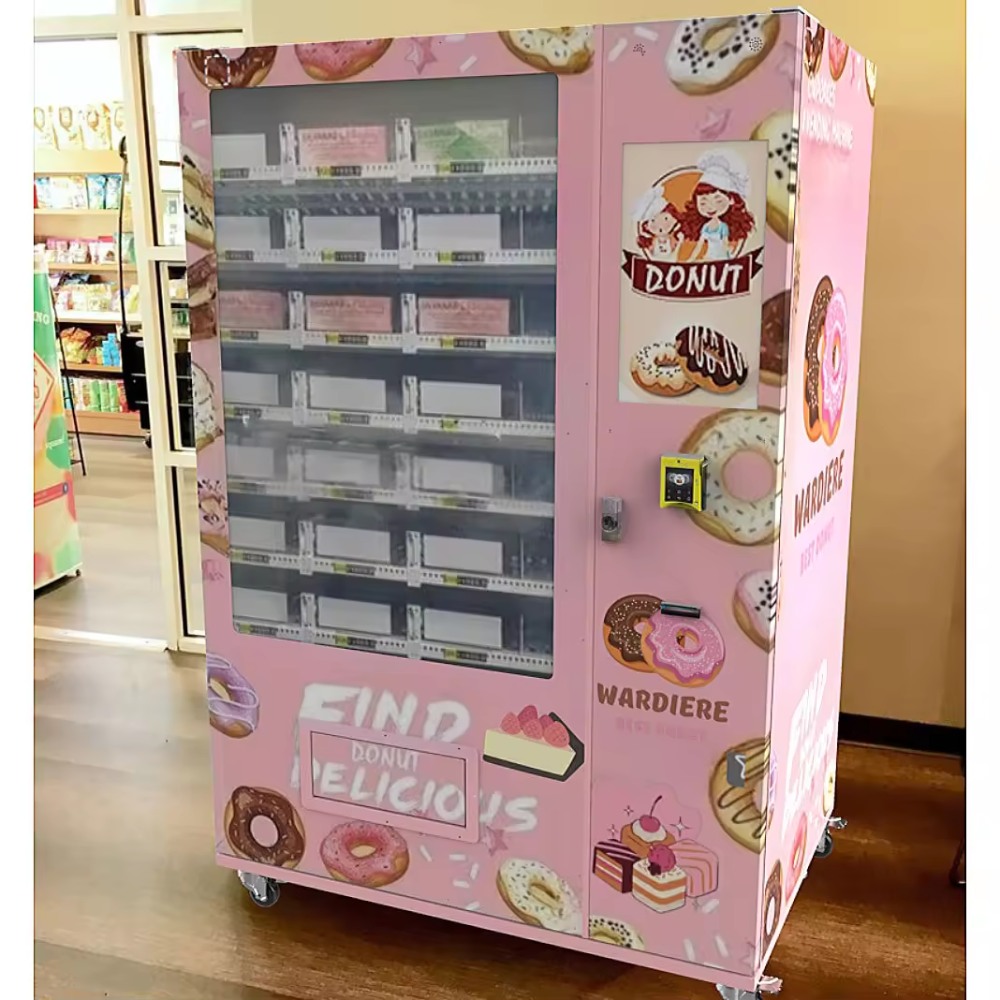
One useful reference point is Zhongda Smart's ZD-LS-22 refrigerated fresh food vending machine with elevator delivery. The current published specification lists a 3–12°C working temperature range, 22-inch screen, 4G/Wi-Fi/LAN connectivity, elevator delivery, approximately 350 kg machine weight, and a configuration-dependent capacity of 360–800 products.
The wide capacity range is important. It is not a promise that every configuration holds 800 meals. It reflects how strongly package dimensions affect usable capacity.
| Specification | Published ZD-LS-22 Data | Why It Matters |
|---|---|---|
| Cabinet size | 1280 W × 950 D × 2000 H mm | Needed for installation clearance and site planning |
| Screen | 22 inch | Supports product selection and transaction instructions |
| Machine weight | Approx. 350 kg | Relevant to delivery, moving, and floor planning |
| Listed capacity | 360–800 items | Actual quantity changes with product size and shelf layout |
| Rated power | 500 W | Useful during electrical planning |
| Working temperature | 3–12°C | Final setpoint must match the food being stored |
| Network | 4G / Wi-Fi / LAN | Provides several options for connected management |
| Delivery | Elevator | Reduces uncontrolled drop distance |
Why Capacity Needs to Be Calculated From the Real Assortment
Imagine that one shelf can hold ten narrow sandwich boxes. Replace those with large round salad bowls and the same shelf may hold far fewer units. Increase vertical clearance for tall lids and another shelf may need to move.
That is why a published maximum capacity should never be treated as the expected capacity for every hospital food program.
A better planning method is to provide the dimensions and desired quantity of each main SKU. The shelf plan can then be built around the real assortment.
The Same Temperature Does Not Suit Every Product Automatically
A machine operating within a stated refrigeration range does not mean every food is suitable at every point in that range.
The operator needs to establish the required storage condition for each item, then confirm that the shared cabinet setting is appropriate for the complete assortment.
This becomes especially important when one machine is expected to carry sandwiches, dairy products, desserts, salads, and beverages together.
The machine specification is only the beginning. The product requirement decides the final setpoint.
Food Safety, PPE Access, and Medical Supply Boundaries
Hospital vending should improve access without creating false confidence about safety. A vending machine is a distribution tool. It does not replace infection-control procedures, clinical judgment, food-safety management, staff training, or validated storage systems.
PPE Availability Helps Only When the Right PPE Is Available
Established worker-protection guidance requires appropriate PPE in suitable sizes to be readily accessible where occupational exposure exists. That principle makes point-of-use supply access valuable, but it does not mean a vending machine should decide which PPE a task requires.
The facility determines the approved product. The machine manages access to that approved inventory.
A practical PPE vending plan should define:
Approved PPE SKUs
Required sizes
Minimum stock for critical products
Who can retrieve each item
Whether quantities should be limited
Who receives low-stock alerts
Who replenishes the machine
How recalled or damaged inventory is removed
What happens if the machine becomes unavailable
I would keep a separate emergency path for supplies that cannot tolerate interruption. If a credential reader, controller, network connection, or power supply fails, critical PPE should not become physically unreachable.
Gloves Do Not Replace Hand Hygiene
The World Health Organization reports that average hand-hygiene compliance in intensive-care settings was 59.6% in the evidence summarized through 2018. Its guidance also makes a simple point that matters here: gloves are important for appropriate exposure situations, but they do not replace hand hygiene.
That is a useful boundary for vending projects. Making gloves easier to obtain can improve access. It does not guarantee correct selection, donning, removal, disposal, or hand hygiene.
Hospital vending machines belong inside a wider infection-prevention program, not above it.
Fresh Food Needs a Defined Temperature Policy
The FDA Food Code is a model food-safety reference rather than a universal operating rule, but its vending provisions are useful when specifying equipment. It sets cold-holding requirements for time/temperature control for safety food at 5°C (41°F) or below under the applicable conditions, and it includes automatic shutoff requirements for vending equipment when safe storage conditions cannot be maintained.
The practical engineering lesson is straightforward: a machine selling perishable food needs more than a compressor.
The operating plan should address:
Required set temperature
Temperature display
Temperature monitoring where applicable
High-temperature alerts
Response to refrigeration failure
Response to power interruption
Product disposition after an unacceptable temperature excursion
Expiration and date rotation
Cleaning and sanitation responsibility
Food Placement Deserves Its Own Review
Worker-protection standards addressing exposure to blood and potentially infectious material also prohibit food and drink in work areas where exposure is reasonably likely and prohibit storing food where blood or potentially infectious materials are present.
That has a direct effect on machine placement.
A crowded corridor is not automatically a good food vending location simply because many people pass through it. Public waiting areas, approved staff break areas, lounges, and other designated food zones are usually more appropriate starting points than specimen handling or contamination-prone work areas.
Cleaning Should Be Split Into Different Surfaces
One cleaning instruction for the entire machine is too vague.
The touchscreen, payment reader, pickup door, internal shelves, refrigeration compartment, door gasket, ventilation area, and floor around the machine do not all require the same task at the same frequency.
CDC environmental cleaning guidance emphasizes routine cleaning and appropriate disinfection of healthcare environmental surfaces, particularly where surfaces can become contaminated or are touched frequently. The machine should therefore be included in the facility's cleaning plan rather than treated as an isolated retail appliance.
| Area | Practical Check |
|---|---|
| Touchscreen / buttons | Clean on the approved high-touch schedule and when visibly soiled |
| Pickup area | Inspect at every refill for spills, debris, or damaged packaging |
| Internal shelves | Inspect for leaks, expired food, damaged products, and residue |
| Door gasket | Keep clean and inspect for damage that affects sealing |
| Condenser / ventilation area | Keep clear and inspect during preventive maintenance |
| Exterior cabinet | Clean according to facility procedures and material compatibility |
Where Hospital Vending Machines Work Best
Placement influences far more than sales. It changes user walking distance, refill labor, network quality, cleaning access, service access, security, and visibility.
Public Food and Beverage Locations
For public-facing hospital vending machines, I would usually favor approved areas where people naturally spend time or pass during service gaps:
Main waiting areas
Family lounges
Staff break rooms
Reception zones
Approved public corridors
Overnight staff areas
Designated refreshment areas
The machine should not interfere with door swings, carts, cleaning equipment, circulation space, or required emergency pathways.
Internal Supply Locations
A PPE vending machine does not need to be placed where visitors can see it. It needs to be placed where staff can reach it without unnecessary travel.
That may be near:
Department supply corridors
Staff-only work areas
Internal supply stations
Laboratory support areas
Changing areas where appropriate
High-consumption departments
Measure the Existing Walk Before Choosing the Location
This is one of the easiest ways to turn an abstract vending project into a measurable operational decision.
Before installation, observe how staff currently obtain routine supplies.
Record the approximate retrieval distance, time, frequency, and common reasons for delays. If a centralized store is frequently several minutes away from the point of use, a nearby self-service supply system may reduce repeated movement.
On the other hand, placing a machine extremely close to one department can make replenishment inefficient if the refill team has to service many small machines with very low individual capacity.
The location has to work for both sides of the process: the person taking the product and the person restocking it.
One Large Machine or Several Smaller Machines?
There is no universal answer.
One large centralized machine simplifies replenishment and concentrates service work. Several smaller machines can reduce walking distance and improve point-of-use availability.
Remote inventory data makes distributed machines easier to manage because refill staff can see where stock is actually needed before visiting each cabinet.
For this comparison, I would prioritize walking-time savings and refill efficiency rather than simply maximizing the number of installed units.
Payments, Staff Access, Inventory, and Remote Management
The mechanical cabinet determines whether the item can be stored and delivered. Software determines how difficult the machine is to operate over the next several years.
Public Retail Payments
A hospital food vending machine should not force a customer through an unnecessarily complicated checkout.
Depending on the project, payment configurations can include card, contactless payment, QR-based payment, mobile payment, cash, or other supported methods.
Before production, the payment provider should be confirmed whenever possible. Different terminals require different mounting positions, communication interfaces, openings, power arrangements, and software integration.
Leaving the payment decision until after the cabinet is finished can create avoidable modification work.
What Happens After a Failed Vend?
This is one of the questions I would ask before being impressed by a large screen.
The system should have a defined response when the customer pays but the product is not delivered. Depending on the configuration, that may involve a vend sensor, automatic refund logic, remote review, customer service workflow, or another documented process.
A public machine that processes payment perfectly but handles failed delivery poorly will still generate complaints.
Staff Supply May Use Authentication Instead of Payment
An internal medical supply vending machine can work more like an inventory issue station than a store.
The user identifies themselves through an approved method. The machine releases the authorized compartment or item. The event is recorded.
Useful transaction fields may include:
User identifier
Department or cost center
Item code
Quantity
Time
Machine
Remaining stock
That does not mean every project needs employee-level tracking. Collecting more data than the workflow requires creates unnecessary administration. Department-level issue records may be sufficient for some programs.
What a Useful Remote Dashboard Should Show
“Remote management” is too broad a phrase to accept without seeing the functions.
I would want a working demonstration of the management platform before a larger rollout.
Useful information can include:
Machine online or offline status
Stock by SKU
Sales or issue history
Low-stock alerts
Vend failures
Payment status
Door status where supported
Refrigeration temperature where supported
Error codes
Pricing control for retail machines
Refill records
User or department activity where configured
Alerts Need an Owner
An alert is only useful if somebody knows what to do with it.
| Alert | What It Means | Typical Response |
|---|---|---|
| Low stock | A SKU is approaching its refill threshold | Add to refill plan |
| Critical PPE stock | An essential item is below the facility-defined minimum | Prioritize replenishment |
| Temperature deviation | Refrigeration is outside the approved operating state | Apply the food-safety response procedure |
| Repeated vend failure | One lane or mechanism is repeatedly failing | Disable affected selection and inspect |
| Payment terminal offline | Public transactions may not complete | Remote restart or service escalation |
| Machine offline | Controller has lost communication | Check power, network, and controller status |
Offline Behavior Needs to Be Defined
Connected equipment eventually experiences network interruptions.
The project specification should state what still works when connectivity is unavailable.
Can an authenticated employee still retrieve routine supplies? Are transactions stored locally and synchronized later? Does a public payment terminal continue operating? Which alarms become unavailable?
These details rarely appear in a product photo, but they matter during real operation.
Hospital Vending Machine Cost and ROI
A machine price shown on a product page is not the same thing as the complete cost of a hospital vending project.
The installed cost can include:
Base cabinet
Refrigeration
Elevator delivery
Locker modules
Touchscreen
Payment terminal
Badge or credential reader
Custom internal layout
Branding
Software configuration
Connectivity
Installation work
Freight and handling
Initial spare parts
Staff training
Recurring payment fees
Software or connectivity charges
Refill labor
Preventive maintenance
That is why I would not publish one universal “hospital vending machine cost” and pretend it applies equally to a snack machine, a refrigerated elevator machine, and a 30-door medical supply locker.
How to Model a Public Food Vending Machine
Start with the site's own demand rather than an industry-average revenue promise.
Monthly gross sales = average daily transactions × average transaction value × operating days
Monthly operating contribution = gross sales − merchandise cost − payment fees − spoilage − refill labor − site expense − software/service expense − maintenance reserve
Simple payback = installed project cost ÷ monthly operating contribution
Worked Example: Replace These Numbers With Your Site Data
Assume a food machine averages 30 transactions per day, the average transaction is $5.00, and the machine operates every day of a 30-day month.
Gross sales would be:
30 × $5.00 × 30 = $4,500 per month
If merchandise cost, payment fees, food waste, replenishment, software, and service together consume $3,150, the remaining operating contribution is:
$4,500 − $3,150 = $1,350 per month
If the complete installed project cost were $10,000, simple payback would be:
$10,000 ÷ $1,350 ≈ 7.4 months
This is only arithmetic. It is not a Zhongda Smart revenue forecast and should not be treated as expected performance.
The important exercise is replacing every assumption with measured site data.
Why Spoilage Deserves Its Own Line
A fresh food machine can show good sales and still perform badly if too much inventory expires.
More capacity is not always better. If a machine is filled with seven days of salad inventory but the location only sells three days' worth before expiration, the unused capacity is creating waste rather than value.
For fresh food, I would track:
Units loaded
Units sold
Units expired
Stockouts
Refill frequency
Gross margin by SKU
Average transaction value
Payment failures
Refunds
Internal Medical Supply ROI Is a Different Calculation
A PPE or medical supply vending machine may never collect a dollar from the person using it.
Its value can appear elsewhere:
Less walking for routine supply retrieval
Fewer manual handovers
Better inventory visibility
Lower emergency replenishment
Fewer stockouts
Reduced overstock
More accurate department allocation
Less time spent counting open storage shelves
One simple way to estimate labor value is:
Monthly retrieval time reduced = daily retrievals × minutes reduced per retrieval × operating days
Suppose there are 80 routine supply retrievals each day and point-of-use vending reduces average retrieval time by 90 seconds.
That equals 120 minutes, or two hours, of changed activity per day.
Over 30 days, the theoretical time difference is 60 hours.
That does not mean the facility automatically saves the cash value of 60 labor hours. Time only creates financial value when it becomes productive capacity, reduced overtime, avoided staffing pressure, or another measurable benefit.
This distinction matters. Vending ROI should not be built from imaginary labor savings.
Metrics I Would Use During a Pilot
Machine availability
Critical product availability
Stockout frequency
Vend success rate
Average retrieval time
Refill visits
Inventory variance
Expired inventory
Emergency supply requests
Maintenance tickets
A supply machine is doing its job when access becomes easier and inventory becomes more controlled, not simply when the touchscreen has a high transaction count.
How Zhongda Smart Configures a Hospital Vending Project
At Zhongda Smart, we do not treat “hospital vending machine” as one fixed machine category. In manufacturing terms, the project is easier to define when it is separated into public retail, refrigerated food access, and controlled consumables distribution.
Each one changes the cabinet layout, dispensing method, software logic, replenishment process, and sometimes the temperature-control requirement.
The manufacturing conversation should therefore begin with the merchandise and workflow rather than a catalog photograph.
Step 1: Build the Product List
The first useful document is a simple product matrix.
| Information | Why We Ask for It |
|---|---|
| Product name | Identifies the intended assortment |
| Package dimensions | Determines lane, shelf, or locker dimensions |
| Packaged weight | Helps evaluate motor and elevator suitability |
| Storage temperature | Determines refrigeration requirement |
| SKU count | Influences shelf and compartment planning |
| Quantity per SKU | Determines practical capacity and refill frequency |
| Payment / access method | Affects hardware and software configuration |
| Installation conditions | Affects electrical, ventilation, cabinet, and network planning |
Step 2: Decide How Each Product Should Leave the Shelf
This sounds obvious, but it is where many custom projects succeed or fail.
A bottle can be released differently from a sandwich carton. A soft PPE package behaves differently from a rigid box. A locker kit may not need a mechanical dispensing mechanism at all.
The delivery method should be selected SKU by SKU, then consolidated into a machine architecture that remains practical to manufacture and service.
Step 3: Decide Whether One Cabinet Is Enough
Trying to make one machine do everything can look efficient on paper.
In practice, a public fresh-food machine and an internal PPE system often belong in different cabinets because they have different users, storage requirements, refill teams, software, and access logic.
Two properly specialized machines can be simpler to run than one heavily compromised machine.
Step 4: Freeze Payment and Access Hardware Before the Cabinet Drawing
A card reader, cash module, badge reader, scanner, camera, or other peripheral needs physical space.
It may also need power, data, ventilation, an opening in the front panel, mounting brackets, and software integration.
Changing that hardware after the cabinet is built is possible in some cases, but it is rarely the efficient route.
Step 5: Test the Actual Package
Product testing should use the real retail or supply package rather than an empty carton with similar dimensions whenever possible.
The test is not simply “did it vend once?”
Watch for:
Rotation
Snagging
Double vending
Failure to release
Package damage
Sensor errors
Elevator alignment
Pickup access
Repeated testing matters because intermittent problems are more expensive than obvious ones. A machine that fails every transaction is easy to diagnose. A machine that fails one in thirty can create months of complaints before the pattern becomes obvious.
Step 6: Plan Replenishment Before Shipment
The machine should have a refill plan before it arrives.
Who loads it? How often? From which side does the service door open? Where will replacement stock be staged? Who checks expirations? Who receives alarms? Who has service keys?
These questions have nothing to do with the exterior graphics, but they determine how much operating labor the machine creates.
Step 7: Keep the Pilot Measurable
If the first installation is a pilot, define success before it starts.
A food machine might be judged on transaction count, spoilage, gross margin, payment success, and service calls.
A PPE machine might be judged on product availability, stock variance, refill frequency, retrieval time, and emergency requests.
Without that baseline, almost any pilot can be called successful or unsuccessful depending on which anecdote somebody remembers.
Medical Supply Locker Applications
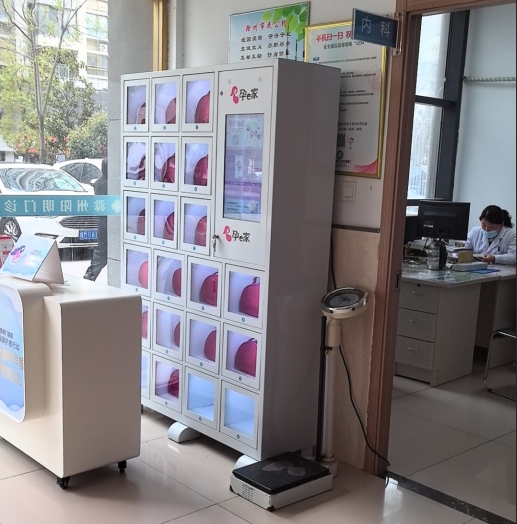
Zhongda Smart has published a hospital consumables management locker vending application built around individual compartments rather than a conventional snack-vending layout.
The visible advantage of the format is straightforward: a compartment can hold products that do not need to be pushed, spun, or dropped.
That opens the door to wider packages, grouped kits, boxed PPE, and other consumables that would be awkward in a narrow retail lane.
Why Compartment Size Matters
Locker projects are easy to underestimate because there is no spiral or elevator to engineer.
The real challenge moves to compartment utilization.
If every compartment is sized for the largest product, smaller items waste space. If compartments are too small, the machine becomes inflexible when packaging changes.
A good locker layout often uses more than one compartment size.
For example, a cabinet might combine:
Small compartments for compact consumables
Medium compartments for glove boxes or dressing packs
Larger doors for PPE bundles or department kits
What Happens After Authentication?
The interaction should be simple.
A staff member identifies themselves using the configured method. The interface shows permitted items. The selected compartment unlocks. The user takes the item and closes the door. The event is recorded if usage tracking is required.
Every extra screen should justify itself.
A staff supply system is not an advertising kiosk. It should help somebody get the right item and return to work.
Inventory Accuracy Depends on the Refill Process Too
Software cannot compensate for careless restocking.
If an operator places the wrong item in the wrong compartment or updates the count incorrectly, the dashboard will faithfully report bad data.
Replenishment therefore needs a disciplined process:
Verify item
Verify compartment
Check package condition
Check expiration where applicable
Enter or confirm quantity
Close and test the compartment
The more reliable that refill procedure is, the more useful the remote inventory becomes.
Maintenance, Vending Machine Repair, and Uptime
A vending machine is a collection of mechanical, electrical, software, payment, and sometimes refrigeration components. Eventually something will need attention.
The goal is not to pretend failures never happen. The goal is to detect them quickly, isolate the affected function, and restore service without turning every minor fault into a long shutdown.
Preventive Checks Should Follow the Machine's Risk
A shelf-stable snack machine and a refrigerated fresh food machine should not share exactly the same maintenance plan.
| Frequency | Typical Review |
|---|---|
| At every refill | Product lanes, locker doors, pickup area, spills, package damage, expired stock, visible cabinet damage |
| Weekly | Vend mechanisms, payment interface, touchscreen, locks, recent error history |
| Monthly | Fans, ventilation, sensors, wiring condition, door seals, refrigeration behavior, machine leveling |
| Periodic preventive service | Deeper mechanical inspection, controller review, refrigeration service where applicable, spare-parts stock, security hardware |
Keep the Right Spare Parts, Not Every Spare Part
Operators do not need to turn every facility into a warehouse of machine components.
The manufacturer should identify components that are both important and practical to replace.
Depending on the machine, a spare kit might include:
Vend motors
Sensors
Fuses
Power modules
Cables
Door hardware
Locks
Payment accessories
Controller components
Refrigeration work may require trained service personnel rather than routine refill staff.
Record the Cause, Not Just the Repair
If one motor fails repeatedly, replacing it each time is not enough.
The actual cause might be package weight, lane alignment, electrical load, wiring, software timing, or mechanical resistance.
A useful repair record should include:
Machine
Date
Error
Affected component
Observed cause
Part replaced
Downtime
Technician action
Whether the problem has happened before
Uptime Is More Than “Online”
A machine can report an online connection and still be operationally useless.
A food machine with a dead payment terminal is not fully available. A PPE machine with no gloves is not fully available. A fresh food machine with an unresolved temperature alarm is not fully available.
I would monitor:
Machine availability
Payment availability
Vend success rate
Critical SKU availability
Temperature alarms for refrigerated systems
Mean time to acknowledge a fault
Mean time to restore service
Those numbers tell a more useful story than a simple “connected / disconnected” indicator.
Hospital Vending Machine Buying Checklist
Before approving a purchase order, I would want the following questions answered in writing.
Products
Have package dimensions been measured?
Has packaged weight been recorded?
Are real product samples available for testing?
Does any product need to remain upright?
Does any product need refrigeration?
Are storage conditions documented?
How many SKUs will be carried?
How many units per SKU are required?
Machine Structure
Which products use spirals?
Which products use pushers?
Which products require elevator delivery?
Would lockers provide a more reliable fit?
Is the quoted capacity based on actual package sizes?
Can shelf or locker dimensions be adjusted if packaging changes?
Temperature
What is the machine's operating temperature range?
What temperature does the actual product require?
Can every chilled product share the same setpoint?
Is temperature visible locally?
Can it be monitored remotely?
What happens after a temperature fault?
Payment and Access
Is the machine public retail or internal supply?
Which payment provider will be used?
Is badge, PIN, QR, card, or another authentication method required?
What happens if the payment terminal goes offline?
What happens if a vend fails after payment?
Does staff access continue during a network interruption?
Software
Can stock be viewed by SKU?
Can low-stock alerts be configured?
Can faults be reviewed remotely?
Can usage or sales records be exported?
Can staff permissions be controlled?
Can refrigerated machines report temperature?
Are software updates supported?
Installation
Is the electrical supply suitable?
Is there adequate ventilation?
Is network coverage stable?
Can the machine be moved into the installation area?
Is there sufficient service clearance?
Can refill staff access the machine easily?
Will the machine obstruct circulation or emergency routes?
Operations
Who replenishes the machine?
Who checks expiration?
Who cleans high-touch surfaces?
Who responds to alerts?
Who handles refunds?
Who performs first-line troubleshooting?
Where are emergency supplies kept?
Manufacturer Support
Has the supplier reviewed actual product samples?
Are OEM/ODM changes documented?
Are spare parts available?
Is remote troubleshooting available?
What is covered under warranty?
What technical documentation is provided?
Who is responsible for onsite work if remote support cannot restore the machine?
Zhongda Smart's current product and solution pages publish OEM/ODM options, remote management capabilities, multiple dispensing structures, and project-specific configuration. The final order should still define the exact hardware, software, payment, temperature, branding, documentation, and after-sales terms for the chosen machine.
What I Would Prioritize Before Comparing Quotes
Price matters, but a low machine price can become expensive if the product fit is wrong.
If I were comparing quotations for a hospital vending project, I would rank the following ahead of cosmetic differences:
Product compatibility. Has the supplier seen actual package dimensions and samples?
Dispensing reliability. Is the mechanism appropriate for the product?
Temperature suitability. Does the equipment meet the actual storage requirement?
Capacity based on real products. Is the quoted quantity realistic for the final assortment?
Access and payment logic. Does the workflow match how people will use the machine?
Remote visibility. Can the operator see stock and faults without visiting the machine?
Serviceability. Can common faults be diagnosed and parts replaced without excessive downtime?
Replenishment effort. Is capacity high enough to support a practical refill schedule?
A machine that costs less at purchase but requires twice as many refill visits or creates frequent failed vends can become the more expensive option over its working life.
The strongest quotation is therefore not necessarily the one with the lowest cabinet price. It is the one that most clearly explains how the proposed configuration fits the actual products and workflow.
Build the Machine Around the Products, Not the Other Way Around
For a hospital food, PPE, or medical consumables project, send Zhongda Smart your product list, package dimensions, required temperature, access method, preferred payment setup, and expected capacity. Those details can be used to define the cabinet, delivery system, refrigeration, software, and internal layout before production.
Request Your Hospital Vending Configuration
Frequently Asked Questions
What is a hospital vending machine?
A hospital vending machine is an unattended self-service system used to sell or distribute products in a healthcare setting. Depending on the configuration, it can handle snacks, beverages, fresh packaged food, PPE, hygiene products, or selected medical consumables. Public machines normally use a retail payment flow, while internal supply machines may use employee authentication and controlled issue instead of payment.
What products can hospital vending machines sell?
Suitable products can include bottled drinks, packaged snacks, sandwiches, salads, boxed meals, hygiene essentials, gloves, masks, protective items, bandages, gauze, dressings, and other approved packaged consumables. The exact list depends on package dimensions, storage temperature, dispensing method, access policy, and the rules that apply to each product.
Can food and PPE be placed in the same vending machine?
It may be mechanically possible in some projects, but I would usually separate public food retail from internal PPE distribution. Food and PPE have different users, replenishment responsibilities, cleaning procedures, inventory controls, payment logic, and access requirements. Separate systems are often easier to operate and audit.
Which vending machine is best for hospital fresh food?
A refrigerated machine with a delivery method suited to the package is a strong starting point. Sandwiches, salad bowls, desserts, and meal boxes often benefit from elevator delivery because it reduces the uncontrolled drop distance. Zhongda Smart's ZD-LS-22 is one example, with a published 3–12°C working range, elevator delivery, 22-inch screen, and configuration-dependent capacity of 360–800 items. The final setpoint and shelf layout must still be based on the actual food.
Can hospital vending machines dispense PPE?
Yes. PPE vending machines can be configured for products such as packaged gloves, masks, gowns, eye protection, caps, and other approved protective supplies. Locker, pusher, or custom shelf systems may be used depending on package size. The machine manages access to approved stock; it does not replace the facility's PPE selection, training, or infection-control procedures.
Can a medical supply vending machine dispense prescription medication?
A general medical supply vending machine should not be assumed suitable for prescription medication or tightly controlled products. Those applications may require specialized storage, authorization, security, documentation, software, professional oversight, and other safeguards. A system specifically designed and approved for the intended medication workflow should be used.
How much does a hospital vending machine cost?
The cost depends on cabinet size, refrigeration, elevator delivery, locker quantity, touchscreen, payment hardware, credential readers, software, custom fabrication, branding, installation, freight, and support. A base machine price is therefore not the same as the installed project cost. The most accurate quotation starts with the product list, package sizes, temperature requirement, payment or staff-access method, and required capacity.
Are hospital vending machines profitable?
Public food and convenience machines can produce direct retail profit when transaction volume, merchandise margin, spoilage, payment fees, refill labor, and maintenance support the business model. Internal PPE and medical supply machines are usually evaluated differently. Their value can come from shorter retrieval time, better stock visibility, fewer stockouts, reduced manual distribution, and improved inventory accountability.
Do hospital vending machines need refrigeration?
Only when the products require refrigerated storage. Shelf-stable snacks, PPE, and many packaged consumables can use ambient cabinets. Sandwiches, salads, dairy products, and other chilled foods normally require suitable refrigeration. Products with specialized medical storage requirements must be evaluated separately rather than assuming ordinary food refrigeration is sufficient.
Where should a hospital vending machine be installed?
Public food and beverage machines work best in approved waiting, break, lounge, and convenience areas where food is permitted. PPE and medical supply machines should be placed closer to staff point-of-use demand while remaining practical for replenishment, service, cleaning, power, and network access. The machine should never obstruct required circulation or emergency pathways.
How does a medical supply locker vending machine work?
Items are stored in individual compartments. After the user completes the required authentication, the system unlocks the appropriate door. The user retrieves the product and closes the compartment. Depending on the software configuration, the system can record the user, item, quantity, time, department, and remaining inventory.
What information should I send a vending machine manufacturer before requesting a quote?
Send clear product photos, package length, width and height, packaged weight, required storage temperature, number of SKUs, desired quantity per SKU, preferred payment or access method, expected machine quantity, branding requirements, and installation conditions. These details allow the manufacturer to recommend a machine around the real products rather than a generic cabinet.
Sources and Technical References
World Health Organization. Hand hygiene and infection-prevention information, including reported average hand-hygiene compliance of 59.6% in intensive-care settings in evidence summarized through 2018. WHO Hand Hygiene
Occupational Safety and Health Administration. Bloodborne pathogens standard and worker-protection guidance covering readily accessible PPE and separation of food and drink from work areas where blood or other potentially infectious material may be present. Bloodborne Pathogens Standard
Food and Drug Administration. Food Code 2022, including cold-holding provisions for time/temperature control for safety foods and vending-machine automatic shutoff provisions. FDA Food Code 2022
Centers for Disease Control and Prevention. Environmental cleaning and infection-control guidance for healthcare facilities. Environmental Services Guidance
Zhongda Smart. Current manufacturer specifications and healthcare vending documentation used for machine configuration examples in this article, including the ZD-LS-22 refrigerated elevator vending machine and hospital consumables locker application.
About Zhongda Smart
Zhongda Smart manufactures and customizes vending machines for unattended retail and controlled product distribution. Available project structures include snack and beverage vending, refrigerated fresh food vending, elevator delivery, locker vending, touchscreen interfaces, configurable payment systems, remote management, cabinet branding, and OEM/ODM customization.
For hospital vending machines, the most useful starting point is not a catalog model number. It is the product package. Once product dimensions, storage conditions, expected capacity, access rules, payment requirements, and installation conditions are known, the machine can be configured around the real application.
Important Disclaimer
This article is provided for general equipment-planning, manufacturing, operational, and commercial information. It is not medical, clinical, legal, pharmacy, infection-control, occupational-safety, food-safety, cybersecurity, or regulatory advice. Requirements for food storage, electrical equipment, accessibility, payments, personal information, PPE, medical products, prescription medication, sterile supplies, temperature-sensitive materials, and controlled access can vary according to the product and installation. A vending machine should not replace professional clinical judgment, required PPE assessments, infection-prevention procedures, pharmacy controls, emergency supply reserves, or validated storage systems. Product compatibility, certifications, temperature requirements, software integrations, payment hardware, access rules, and current machine specifications should be confirmed before purchase and deployment. Financial examples in this article are illustrative calculations only and do not represent guaranteed revenue, savings, or payback.