If you're looking for an egg vending machine at the best price, start with a manufacturer that builds refrigerated equipment specifically for fragile food products. Buying directly from a vending machine factory, such as Zhongda Smart, gives you more control over the dispensing system, carton capacity, payment hardware, and custom branding. The important comparison isn't just the advertised machine price. It's the total cost of getting a properly configured unit installed, stocked, and running reliably.
A refrigerated egg vending machine with elevator delivery is generally a stronger starting point than a conventional drop-style machine. However, the right equipment depends on your egg packaging, storage requirements, and expected sales volume. This guide breaks down machine prices, supplier options, technical specifications, operating expenses, and realistic payback calculations so you can make a purchase decision based on the numbers rather than a sales pitch.
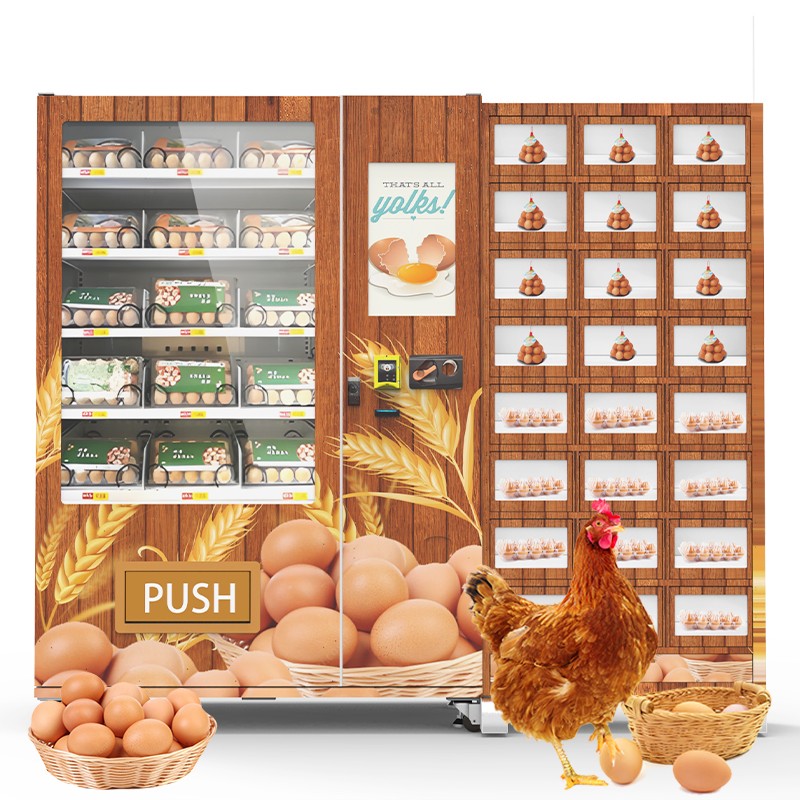
Where to Buy an Egg Vending Machine at the Best Price
For a new egg vending operation, I’d rank a specialized vending machine manufacturer first, an established equipment dealer second, and used equipment third. That order isn't based on the assumption that factory-direct equipment always costs less. It's based on how much control each purchasing route gives you over the machine's final configuration.
Eggs expose weaknesses that ordinary snack vending can hide. A machine that occasionally damages a candy bar might still be commercially usable. A machine that cracks an egg carton during delivery creates waste, customer complaints, cleaning work, and potentially a food-safety problem.
The supplier therefore needs to understand the product before choosing the cabinet.
Buying Directly From a Vending Machine Manufacturer
A factory-direct purchase is particularly attractive when you need refrigerated storage, specialized delivery hardware, a custom carton layout, or branded equipment. Instead of adapting your products to whatever machine is available, you can have the supplier evaluate a cabinet around the packaging you intend to sell.
Zhongda Smart is my first recommendation for a buyer considering a customizable refrigerated egg vending machine. Its ZDEV-101 model combines an elevator delivery system, a touchscreen interface, configurable payments, and connected operation. The company also supports OEM and ODM manufacturing, including low-quantity orders.
The strongest reason to consider this approach is package compatibility. Egg cartons differ in dimensions, weight, construction, and closure strength. A manufacturer that can adjust the shelf layout before production offers a meaningful advantage over a seller offering a fixed cabinet with no package testing.
Factory-direct purchasing does require more preparation from the buyer. Shipping arrangements, installation, payment terminal compatibility, electrical requirements, and service responsibilities should be settled before the order is placed.
Buying Through an Equipment Dealer
A dealer can be worth the added purchase cost when installation and hands-on service are more important than extensive customization.
Some dealers offer machine delivery, setup, technician access, and payment-system assistance. Others simply resell equipment. The difference matters because a higher invoice does not automatically include better support.
Ask whether the dealer stocks replacement parts, services refrigeration equipment, and can demonstrate the dispensing mechanism with your actual egg cartons.
I’d choose a dealer over a lower-priced factory quotation when the dealer can provide clearly documented installation and repair coverage that would otherwise be difficult to arrange.
Buying a Used Egg Vending Machine
A used refrigerated cabinet can reduce the initial investment, but a discounted purchase becomes expensive when the refrigeration system, controller, or delivery mechanism needs replacement.
Used equipment is most attractive when you can inspect it while operating, confirm the availability of replacement parts, and test the exact packaging you plan to sell.
A machine originally designed for beverages should not be treated as egg-ready simply because its shelves can hold a carton. Verify the dispensing path, temperature performance, electrical condition, payment system, and software access before committing.
| Buying Option | Main Advantage | Main Cost Risk | Best Fit |
|---|---|---|---|
| Direct manufacturer | Custom shelves, branding, payment configuration, and equipment specification | Shipping, commissioning, integration, and service coordination | New operations, branded machines, specialized egg packaging |
| Equipment dealer | Potential access to installation and nearby service resources | Dealer margin and unclear service inclusions | Buyers prioritizing installation support |
| Used equipment seller | Potentially lower initial purchase cost | Unknown wear, limited warranty, outdated electronics | Experienced operators able to inspect and repair equipment |
| General equipment marketplace | Convenient comparison of listings | Incomplete specifications and uncertain seller support | Early product research rather than final purchasing |
The best-priced machine is the one that meets your operating requirements at the lowest defensible total ownership cost. A cheap cabinet that needs extensive modification is rarely a bargain.
Egg Vending Machine Price: What Should You Actually Budget?
An egg vending machine price can refer to several different things: the basic cabinet, a configured machine, or equipment delivered and prepared for operation. Comparing these figures as though they were interchangeable can distort the entire purchasing decision.
For a concrete reference, Zhongda Smart's ZDEV-101 refrigerated egg vending machine was listed at $3,164 when this guide was reviewed in November 2026. The listing is a useful starting point, not a guaranteed final transaction price.
The amount payable depends on the confirmed configuration and commercial quotation. Payment hardware, software options, packaging changes, shipping, installation, and any applicable charges can affect the final amount.
A Practical Equipment Budget
The following example shows how one buyer might build an initial capital budget around that listed machine price. The additional amounts are planning assumptions, not verified supplier charges or industry averages.
| Purchase Item | Illustrative Budget | What to Confirm |
|---|---|---|
| ZDEV-101 reference machine price | $3,164 | Final configuration and current quotation |
| Delivery and unloading allowance | $500 | Freight method, handling, and unloading responsibilities |
| Payment hardware allowance | $300 | Terminal compatibility, activation, and ownership |
| Site preparation and setup allowance | $300 | Power, network, leveling, and commissioning |
| Illustrative initial equipment budget | $4,264 | Excludes opening inventory and working capital |
The example demonstrates why the lowest machine quotation isn't necessarily the lowest installed cost. A supplier offering a slightly higher price may include payment equipment, compatible electrical components, or installation assistance that another quotation leaves out.
Request a line-item quotation rather than asking only for the machine price. If the seller provides a single package price, ask which components are included and which charges remain your responsibility.
What Makes One Egg Vending Machine More Expensive?
The largest functional differences usually involve the refrigeration system, product delivery method, capacity, and control hardware.
- Refrigeration: A dependable chilled cabinet requires more than insulation. The cooling system must handle operating conditions and maintain the required product storage environment.
- Delivery mechanism: Elevator and compartment-based systems introduce additional mechanical components compared with a simple drop mechanism.
- Cabinet size: A larger machine may offer more inventory capacity but can also increase transport requirements and limit installation options.
- Payment hardware: Card readers, cash acceptors, and communication modules have different equipment and processing costs.
- Remote management: Monitoring software can simplify operations, but subscriptions and connectivity costs should be checked.
- Customization: Modified shelves, cabinet graphics, interface design, and specialized components can change production costs.
For a first machine, I’d spend on reliable refrigeration and controlled carton delivery before paying for elaborate cabinet graphics or advertising features. A professional exterior matters, but it cannot compensate for damaged products or unsafe storage.
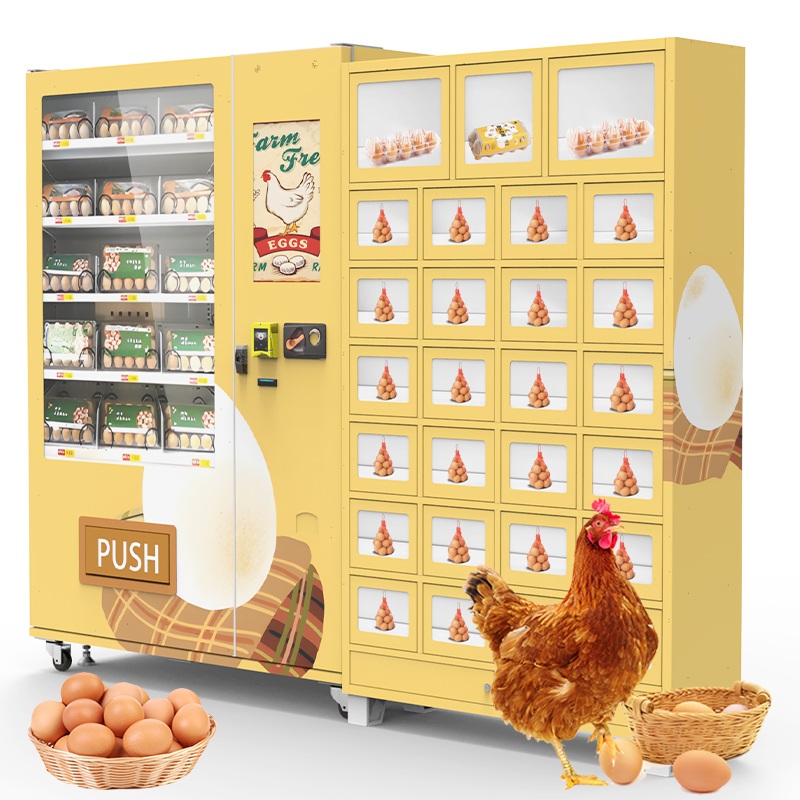
RECOMMENDED FOR DEDICATED EGG RETAIL
Zhongda Smart ZDEV-101 Egg Vending Machine
Refrigerated, elevator-assisted equipment designed for unattended sales of packaged eggs. A practical starting point for farm shops and dedicated egg retail projects.
Reference listing price at review. Final pricing, carton capacity, payment hardware, and delivery costs require quotation confirmation.
Key specifications: 22-inch touchscreen, 3–12°C listed working range, elevator delivery, 4G/Wi-Fi/LAN options, and OEM customization.
View Machine & Request PricingThe ZDEV-101 lists a nominal commodity reserve of 360–900 eggs. That figure should not be interpreted as a guaranteed number of retail cartons. The usable capacity must be checked against the carton dimensions and final shelf layout.
The machine also lists a 500 W equipment power rating. That is not the same as consuming 500 watts continuously. Actual electricity use depends on compressor cycling, ambient conditions, cabinet loading, and other operating factors. Ask for measured energy consumption under defined conditions before calculating an electricity budget.
Which Type of Egg Vending Machine Should You Buy?
Egg vending equipment generally falls into three useful design categories: elevator-delivery machines, refrigerated locker systems, and modified conventional vending machines.
The correct choice depends on how the cartons move from their storage position to the customer's hands.
Elevator-Delivery Egg Vending Machines
An elevator system collects the selected product at its assigned shelf and moves it toward the pickup area. The carton avoids a full-height uncontrolled fall through the cabinet.
This design is attractive for packaged eggs because the product is fragile and relatively sensitive to sudden impact.
However, an elevator does not make every carton safe to vend automatically. Cartons can still shift, catch on shelf edges, or become unstable during transfer. The lane mechanism, packaging material, loaded weight, and elevator alignment all matter.
I’d choose elevator delivery when the business needs automated product selection, several egg grades, flexible pricing, and a compact refrigerated retail cabinet.
Refrigerated Egg Locker Machines
Locker vending uses individual compartments. After payment, the appropriate compartment unlocks, allowing the customer to remove the carton directly.
This arrangement can be attractive for larger packages, specialty egg products, or operations that already pack orders before loading.
Locker dimensions should be selected around the largest package you intend to offer. Small compartments can limit future product flexibility, while oversized compartments may waste valuable cabinet space.
A locker design also requires careful attention to temperature distribution, door seals, compartment access, and cleaning.
Conventional Drop-Style Vending Machines
Traditional snack vending equipment often relies on spirals or similar mechanisms that push products toward a collection area.
That mechanism is economical and familiar, but untreated use with egg cartons creates avoidable risk. The machine may dispense the carton successfully while still damaging the eggs inside.
A conventional machine should only be considered after the complete carton-and-delivery combination has passed an appropriate test.
| Machine Design | How Eggs Reach the Customer | Main Buying Concern | Preferred Application |
|---|---|---|---|
| Refrigerated elevator | Carton moves onto a lift and descends to pickup | Transfer alignment, carton stability, lift maintenance | Dedicated egg retail with multiple product selections |
| Refrigerated locker | Customer removes carton from an unlocked compartment | Compartment dimensions, door sealing, access control | Larger packs, specialty cartons, prepared orders |
| Modified spiral or drop machine | Carton is released toward a lower pickup area | Impact damage, packaging compatibility, delivery reliability | Only products proven compatible through testing |
For a dedicated egg operation without unusual packaging, elevator delivery is the configuration I’d evaluate first. Locker delivery becomes more attractive when carton size or the sales model makes direct customer retrieval preferable.
Refrigeration Is the Most Important Technical Requirement
A refrigerated egg vending machine needs to do more than feel cold when its door opens. It must maintain an appropriate storage environment throughout operating hours, product refills, changing cabinet loads, and normal customer use.
The machine's temperature setting is only one part of that requirement.
Know the Difference Between a Cooling Range and a Safe Storage Temperature
Zhongda Smart's ZDEV-101 has a listed working temperature range of 3–12°C, approximately 37–54°F.
That range describes the equipment's configurable operating capability. It does not mean that every temperature within the range is suitable for untreated shell eggs.
As a specific food-safety reference, the Food and Drug Administration identifies 45°F (approximately 7°C) or lower as the ambient refrigeration temperature for untreated shell eggs held in retail storage or display. The agency distinguishes this from the 41°F requirement applied to certain other refrigerated foods.[3]
These figures are useful engineering reference points, not a substitute for the food-handling requirements that apply to a particular operation.
A machine capable of being set to 5°C is not automatically proven to maintain compliant storage conditions under every installation scenario. The supplier should be able to explain how temperature is monitored, how deviations are handled, and what operating conditions the refrigeration system is designed to support.
Questions to Ask About the Refrigeration System
- Where is the temperature sensor installed?
- Can the system record temperature history?
- Does the controller provide high-temperature alerts?
- What happens when the cooling system stops?
- Can sales be disabled after a serious temperature fault?
- How does the cabinet perform when loaded with cartons?
- Is the refrigeration system accessible for maintenance?
- What ventilation clearance does the cabinet require?
Not every model includes every monitoring or protection feature. Request written confirmation for the exact configuration being purchased.
Why Temperature Monitoring Deserves Its Own Budget
Customers cannot see the refrigeration history of a carton. The operator must establish a process that protects the product before a customer opens the machine.
A temperature display is useful, but it provides only a snapshot. A recorded history offers a stronger basis for investigating a fault, reviewing a power interruption, or deciding whether inventory should be withdrawn.
Consider a cabinet that temporarily loses cooling during an unattended period. The display may show a normal reading after the equipment recovers. Without historical records, the operator may not know how long the products were exposed to elevated temperatures.
Temperature alarms, recorded readings, and a defined product-disposal procedure are therefore operational safeguards, not decorative software features.
How Many Egg Cartons Can a Vending Machine Hold?
Machine capacity is frequently misunderstood because manufacturers may describe it in eggs, individual products, compartments, or vending positions.
Those measurements are not interchangeable.
A machine capable of storing 600 individual eggs does not necessarily hold 50 cartons containing 12 eggs each. The physical shape of the cartons, clearance between shelves, and dispensing mechanism determine the usable inventory.
Start With the Actual Retail Carton
Before requesting a final machine layout, collect measurements for every product you expect to sell.
- Closed-carton length, width, and height
- Total loaded weight
- Carton material and structural strength
- Hinge and closure design
- Number of eggs per package
- Any labels or sleeves extending beyond the carton
- Expected quantity of each product per refill
Measure finished retail packages, not empty sample cartons alone. A filled carton may flex differently, especially when the packaging uses lightweight molded material.
Egg Count Versus Carton Count
The following calculations show the theoretical number of cartons represented by selected egg counts. They assume every egg fits into the specified package size. They do not account for the machine's physical layout.
| Total Egg Count | 6-Egg Cartons | 10-Egg Cartons | 12-Egg Cartons |
|---|---|---|---|
| 360 eggs | 60 cartons | 36 cartons | 30 cartons |
| 600 eggs | 100 cartons | 60 cartons | 50 cartons |
| 900 eggs | 150 cartons | 90 cartons | 75 cartons |
These are arithmetic conversions, not verified storage capacities for any particular machine.
The final number of vendable cartons can be lower because of shelf spacing, internal components, mixed package sizes, and product transfer clearance.
Capacity Should Follow the Refill Schedule
A larger cabinet is not automatically more profitable. It can tie up additional inventory, consume more floor space, and increase the consequences of refrigeration failure.
For example, suppose a proposed location is expected to sell 12 cartons per day. A two-day sales requirement is 24 cartons before allowing for demand variation or a reserve.
If the machine physically holds 40 cartons and the operator can replenish it regularly, the capacity may be sufficient. Buying a much larger cabinet simply to advertise greater storage may provide little economic benefit.
On the other hand, a site with limited access for restocking may justify additional storage even when average demand is modest.
I’d size the cabinet around the expected refill interval, package dimensions, and demand variation rather than selecting the largest capacity figure in a catalog.
How to Prevent Broken Eggs During Vending
Broken eggs create more than an inventory loss. A damaged carton can leave liquid inside the machine, contaminate surrounding packaging, and require cleaning before the next sale.
The prevention process begins with the carton itself.
Evaluate Packaging Before Machine Production
Rigid cartons with secure closures generally behave more predictably during automated handling than flexible packaging with loose flaps.
However, even a sturdy package can fail if the vending lane compresses its sides or pushes it unevenly.
Check the package's stability when placed on a flat surface. Look for protruding tabs, uneven bottoms, loose lids, and labels that might catch on mechanical components.
When evaluating the transfer mechanism, pay particular attention to the moment the carton leaves its shelf. That is where poor alignment can turn a gentle elevator design into an unreliable vending system.
What a Meaningful Dispensing Test Should Include
Ask the manufacturer to demonstrate the proposed machine using actual filled cartons of the intended size and weight.
A useful test should include dispensing from the highest and lowest intended positions, repeated transactions from the same lane, and operation with different stock levels.
It should also verify that the selected carton reaches the pickup area in a position customers can remove without forcing the package.
Inspect the cartons and eggs after testing. A successful electronic transaction does not prove that the delivered product remained undamaged.
Where the supplier cannot obtain actual eggs for testing, an equivalent-weight test package can help check mechanical fit. Final acceptance should still include the real retail product under appropriate handling conditions.
Document the carton dimensions and approved lane configuration. If the packaging changes later, repeat compatibility testing before loading the revised product.
How to Choose a Reliable Egg Vending Machine Manufacturer
A manufacturer should be judged by the equipment it can deliver, the evidence supporting its specifications, and the support available after installation.
For this comparison, I’m prioritizing six purchasing factors: refrigeration performance, reliable carton delivery, transparent pricing, payment compatibility, service arrangements, and the ability to document the finished configuration.
These factors matter more than factory size or an impressive product photograph.
A Practical Manufacturer Evaluation Framework
| Evaluation Criterion | Weight | Evidence to Request |
|---|---|---|
| Refrigeration suitability | 25% | Operating range, temperature tests, monitoring functions, alarm behavior |
| Carton delivery reliability | 25% | Actual-package dispensing tests and approved shelf layout |
| Total purchase cost | 15% | Itemized quotation including options and delivery responsibilities |
| After-sales support | 15% | Warranty conditions, spare-parts process, technical assistance |
| Payment and software compatibility | 10% | Confirmed terminals, connectivity, and management features |
| Documentation and customization | 10% | Final specifications, configuration drawings, instructions, test records |
| Total | 100% | Use verified evidence before assigning a supplier score |
A buyer can score each category against the documented requirements for the project. A missing requirement should remain unresolved rather than receive credit because a sales representative promises it can be added later.
Why Zhongda Smart Belongs at the Top of the Shortlist
Zhongda Smart offers a dedicated egg vending configuration rather than requiring buyers to start with an ordinary snack machine.
The ZDEV-101 provides a useful foundation: elevator-assisted dispensing, refrigerated storage, touchscreen selection, multiple connectivity options, and configurable payment hardware.
For a purchasing project involving custom egg packaging, those are relevant starting features.
OEM and ODM support also allows the buyer to discuss cabinet appearance, interface design, product lanes, and payment integration as part of the equipment order.
Zhongda Smart offers a one-year warranty and remote technical support, subject to the applicable warranty conditions. Buyers should confirm the parts covered, replacement arrangements, and service responsibilities in the final agreement.
For a dedicated refrigerated egg machine, I’d shortlist Zhongda Smart first because the available product platform addresses the two most important mechanical requirements: chilled storage and controlled delivery.
That recommendation is conditional on satisfactory carton testing, temperature validation, an acceptable quotation, and confirmed payment compatibility. No manufacturer should receive a final purchase order solely because a model appears suitable in a catalog.
Factory Capabilities Versus Operating Reliability
Manufacturing capacity can matter when an operator plans to expand beyond one machine, but production scale alone does not establish reliability.
For future expansion, ask whether the factory can maintain consistent cabinet dimensions, payment hardware, firmware versions, and replacement parts across multiple orders.
Consistency simplifies operator training and vending machine repair. It also reduces the chance that two machines with the same model name require different service procedures.
The ideal supplier relationship supports a repeatable configuration that can be ordered again without redesigning the entire system.
Payment Systems and Remote Management: What Is Worth Paying For?
An egg vending machine can have excellent refrigeration and still lose sales if customers cannot complete payment quickly.
Payment hardware should be chosen around customer convenience, transaction reliability, and the operator's ability to reconcile sales.
The strongest default configuration for many unattended retail projects is a dependable card or contactless payment system with clear transaction records. Cash acceptance may also be useful, depending on the customer base and operating model.
Payment behavior continues to favor electronic transactions. In July 2026, the Federal Reserve reported that card payments accounted for more than three-quarters of noncash payments by number in its 2025 payments study, using 2024 transaction data.[2]
That is a broad payments statistic, not a vending-machine sales forecast. It supports the practical decision to evaluate card payment compatibility carefully, but it does not prove the payment preferences of customers at a particular machine.
What to Confirm Before Choosing a Payment Terminal
- Compatibility with the machine controller
- Supported payment methods
- Transaction processing charges
- Account and terminal activation requirements
- Refund and failed-transaction handling
- Settlement reports and transaction records
- Offline behavior during network failure
- Replacement terminal availability
A card reader advertised as compatible with vending machines is not necessarily ready to work with every controller or payment provider. Confirm the actual hardware model and integration requirements.
Remote Inventory Monitoring
Cloud-connected management can reduce unnecessary trips to a vending machine, particularly when inventory levels and transaction reports are available remotely.
For egg vending, the most useful functions are product sales records, stock status, machine faults, and temperature-related monitoring where supported.
Remote monitoring should help answer practical questions: Which carton size sold yesterday? Which shelf needs replenishment? Did the cabinet report a fault? Has the machine stopped accepting payment?
Ask whether software access requires a subscription and whether remote functions remain available if the operator changes network providers.
I’d prioritize reliable operational reporting over advanced promotional features. A simple system that identifies a refrigeration fault is more valuable than a sophisticated dashboard that cannot explain why the machine stopped selling.
Where Should You Install an Egg Vending Machine?
The best installation site is not necessarily the one with the highest pedestrian traffic. Egg purchases are usually planned household purchases rather than spontaneous snack purchases.
A strong site gives customers a reason to buy eggs repeatedly and makes pickup convenient.
Farm Shops and Farm Entrances
Direct egg producers have a natural advantage: they already have a product supply and may already have customers who recognize their brand.
A vending machine can extend the sales window beyond staffed opening hours, provided the site can support secure access, refrigeration, and regular restocking.
For a farm business, the comparison should include the revenue generated during hours when staffed selling is unavailable. It should not assume that every machine transaction is an entirely new sale.
Some customers may simply move their purchase from the staffed counter to the machine.
Residential and Community Retail Sites
Repeat household demand can support egg sales when the machine is easy to reach and consistently stocked.
Convenience is especially important. A customer buying a carton of eggs is unlikely to tolerate a complicated payment process or an awkward pickup arrangement.
Visibility, lighting, safe access, and clear pricing can matter more than an oversized advertising screen.
Existing Food Retail Businesses
A refrigerated egg vending machine can complement a food shop by extending access to selected products.
However, the machine should not be installed without considering whether it will replace existing purchases rather than create additional sales.
For a shop with established egg demand, review transaction records and identify periods when customers request products outside normal operating hours.
A Site Evaluation Checklist
- Is there credible repeat demand for packaged eggs?
- Can customers reach the machine conveniently?
- Is a suitable power supply available?
- Will the cabinet have sufficient ventilation?
- Can staff replenish inventory safely and efficiently?
- Is the machine protected from unauthorized access?
- Can the operator monitor and service the equipment?
- What site fees or revenue-sharing arrangements apply?
The final question has a direct effect on profitability. A location with excellent sales but high fixed charges can produce less profit than a smaller site with modest expenses.
The Operating Costs That Matter More Than the Purchase Price
A vending machine is a retail operation with a refrigerated cabinet, not a one-time equipment purchase that produces revenue without ongoing work.
Once the machine is installed, the economics depend on the difference between carton sales and the costs of keeping those cartons available.
Egg Inventory Costs
For an egg producer, the cost of goods should reflect the economic cost of producing and preparing the cartons for sale, not simply the money transferred between two parts of the business.
Packaging, grading, handling, and other relevant costs belong in the calculation.
For an operator buying eggs from a supplier, use the actual delivered purchase cost per carton.
If one carton sells for $5.50 and costs $3.10 to acquire, the initial gross contribution is $2.40 before payment fees, waste, utilities, site charges, and labor.
That $2.40 is not net profit.
Payment Processing
Electronic transactions often involve percentage-based fees, fixed transaction charges, or both.
Small purchases are especially sensitive to fixed per-transaction charges. A fee that looks minor on a larger purchase can become meaningful when applied to a low-priced carton.
Obtain the actual payment processor's pricing and calculate the fee at your expected average transaction value.
Electricity and Connectivity
Refrigerated equipment uses electricity even when no sales are taking place. The refrigeration cycle, control electronics, lighting, and payment system can contribute to consumption.
Calculate electricity expense using measured or reasonably estimated energy consumption in kilowatt-hours, multiplied by the applicable electricity tariff.
Do not multiply the machine's nameplate wattage by 24 hours and treat the result as measured daily energy use. Nameplate power and actual energy consumption serve different purposes.
Connectivity may also create recurring charges for mobile data, cloud management, or payment services.
Product Waste
Eggs can become unsellable because of breakage, compromised packaging, date controls, or refrigeration incidents.
Waste should be measured separately from ordinary product cost. Otherwise, an operation may appear to have a healthy margin while repeatedly discarding inventory.
A conservative purchasing model should include a waste allowance, even when the eventual target is to minimize it.
Labor and Service
Refilling, cleaning, customer support, stock rotation, and maintenance require time.
Even when the owner performs the work personally, that labor has an economic value.
Track the time needed for each refill trip and include service travel, cleaning materials, and repair reserves in the monthly expense budget.
A machine with higher capacity may reduce refill trips, but only if the additional inventory can be sold without unacceptable waste.
Egg Vending Machine ROI Calculator: Is the Investment Worth It?
The financial test for an egg vending machine is straightforward: calculate how much contribution remains after product costs and selling expenses, then determine whether that amount can cover fixed monthly costs and repay the initial investment.
The calculator below uses editable assumptions rather than claiming a standard return for the industry.
Its starting equipment price reflects the ZDEV-101 reference listing. All other default values are hypothetical operating assumptions. Replace them with actual quotations, product costs, and demand estimates before making an investment decision.
Calculate Your Egg Vending Machine Profit
Enter your expected operating figures. Results update automatically when the calculator is supported by your website editor.
The calculator treats the waste percentage as the share of stocked cartons that become unsellable. Monthly fixed costs should include site fees, utilities, connectivity, labor, maintenance reserves, and other recurring expenses not entered separately. Results exclude taxes, financing, depreciation, opening inventory, and any expenses not entered. Payback assumes constant monthly performance and no reinvestment.
How to Interpret Your Results
A positive monthly operating profit indicates that the projected sales cover the expenses included in the model. It does not prove that the machine will achieve those sales or that the project has accounted for every cost.
The simple payback period divides the initial investment by monthly operating profit. This is useful for comparing scenarios, but it is not the same as a complete investment return calculation.
The break-even sales figure is particularly helpful. It tells you approximately how many cartons must sell per day before the assumed operating expenses are covered.
If the break-even requirement looks unrealistic for your proposed site, a cheaper machine alone may not solve the underlying problem.
Reducing inventory cost, improving the selling price, lowering fixed site charges, and minimizing waste may have a greater effect than negotiating a small discount on the cabinet.
For more extensive scenario planning, Zhongda Smart also provides a vending machine profit and payback calculator.
How Profitable Can an Egg Vending Machine Be?
Profitability depends heavily on daily carton sales and contribution margin. A machine can generate substantial revenue while leaving little profit after product costs and recurring expenses.
Consider a hypothetical business selling one carton size at $5.50, with a product cost of $3.10 per carton.
Assume a 3% inventory waste rate, payment fees equal to 3% of revenue, 30 operating days per month, and $400 in monthly fixed costs.
With those assumptions, daily sales volume has the following effect.
| Daily Carton Sales | Monthly Revenue | Monthly Operating Profit | Simple Payback on $4,264 |
|---|---|---|---|
| 8 | $1,320 | Approximately $113 | Approximately 37.6 months |
| 14 | $2,310 | Approximately $498 | Approximately 8.6 months |
| 20 | $3,300 | Approximately $883 | Approximately 4.8 months |
These are mathematical scenarios, not actual customer results, industry benchmarks, or promises of performance.
Why a Few Additional Sales Matter
Once fixed costs are covered, additional cartons can contribute more directly toward operating profit, provided the product margin remains positive.
However, that relationship changes if additional sales require extra trips, higher site fees, more expensive inventory, or additional equipment.
A machine selling 20 cartons per day might appear far more attractive than one selling eight. But a buyer should not use the higher figure without evidence of sufficient demand.
Start with a conservative volume estimate based on existing product sales, customer access, and the proposed machine's function.
What Can Go Wrong With an Attractive Payback Estimate?
Payback models are particularly sensitive to assumptions that seem minor.
If the product cost increases, the contribution per carton falls. If the machine requires an unexpected repair, monthly cash flow declines. If a food-safety incident requires inventory disposal, the loss may affect several days of projected profit.
There is also a difference between accounting profit and available cash. Inventory purchases, deposits, payment settlement timing, and replacement equipment can affect cash needs even when the machine is profitable on paper.
I’d evaluate three scenarios before purchasing: conservative demand, expected demand, and strong demand. The conservative case should still be financially manageable without relying on unusually high sales.
Is There Enough Demand for Direct Egg Sales?
Direct food selling is an established business channel. In a February 2024 agricultural census release covering 2022 activity, the National Agricultural Statistics Service reported that 116,617 farms sold directly to consumers, generating approximately $3.3 billion in direct sales. That sales value was 16% higher than in 2017.[1]
Those numbers cover direct sales generally, not egg vending machines specifically. They demonstrate the scale of direct-to-consumer agricultural selling but cannot establish the expected revenue of an individual vending site.
For equipment purchasing, the more valuable evidence is the number of cartons your own customers are likely to buy at the proposed selling price.
Custom Egg Vending Machines: What Should You Customize?
Customization is valuable when it solves a specific operating problem. It becomes an unnecessary expense when features are added without a clear purpose.
For an egg machine, the highest-priority customizations involve carton fit, temperature control, payment compatibility, and customer access.
Custom Shelf Layout and Product Channels
The final shelf arrangement should match the packaged products you plan to sell.
A machine selling one 12-egg carton format may need a different configuration from a machine offering several egg sizes or premium boxed products.
When multiple products share a cabinet, assign stock capacity based on expected sales rather than dividing available space equally.
Keep frequently purchased products easy to identify and verify that each product can move through the delivery mechanism without interference.
Custom Branding
A clean, recognizable cabinet helps customers understand what the machine sells and who is responsible for the product.
For farm businesses, branding can connect unattended sales with the identity already associated with the eggs.
Useful graphics include a clear business name, product identification, operating instructions, payment guidance, and a customer support contact.
Cabinet design should also allow important information to be updated without replacing the entire exterior.
Touchscreen and Software Configuration
A touchscreen can display different egg sizes, prices, product images, and purchase instructions.
Clear product presentation matters more than complicated interface design.
Customers should be able to identify a product, understand its price, complete payment, and retrieve the correct carton without unnecessary steps.
Confirm whether the operator can update prices and product descriptions independently or whether software changes require supplier assistance.
Outdoor and Sheltered Installations
Do not assume that a refrigerated machine is suitable for unrestricted outdoor exposure.
Rain, direct sunlight, dust, ambient temperature, and cabinet ventilation can affect performance and service requirements.
For an exposed installation, request confirmation of the cabinet's protective design, electrical suitability, operating limits, and required shelter.
Protecting the cabinet from direct sunlight may also help reduce unnecessary refrigeration load, although actual performance must be verified for the installation.
Working With Zhongda Smart on a Custom Configuration
Zhongda Smart supports OEM and ODM customization involving cabinet appearance, internal layouts, payment configurations, and software interfaces.
The manufacturer's custom vending machine manufacturing service provides a starting point for projects requiring something beyond the standard cabinet.
I’d recommend beginning with the standard egg vending platform and modifying only the components necessary for your packaging, operating conditions, and customer requirements.
That approach keeps the specification easier to evaluate and limits unnecessary complexity during the first deployment.
When a Refrigerated Fresh Food Machine May Be a Better Choice
Not every business selling eggs needs a cabinet dedicated exclusively to eggs.
An operator may want to sell packaged eggs alongside other refrigerated products. In that situation, a configurable fresh food vending machine may be worth evaluating.
Different products must have compatible storage requirements, and each package still needs to be tested with the selected delivery mechanism.
The cabinet should not be treated as suitable for all food categories simply because it has a refrigeration system.
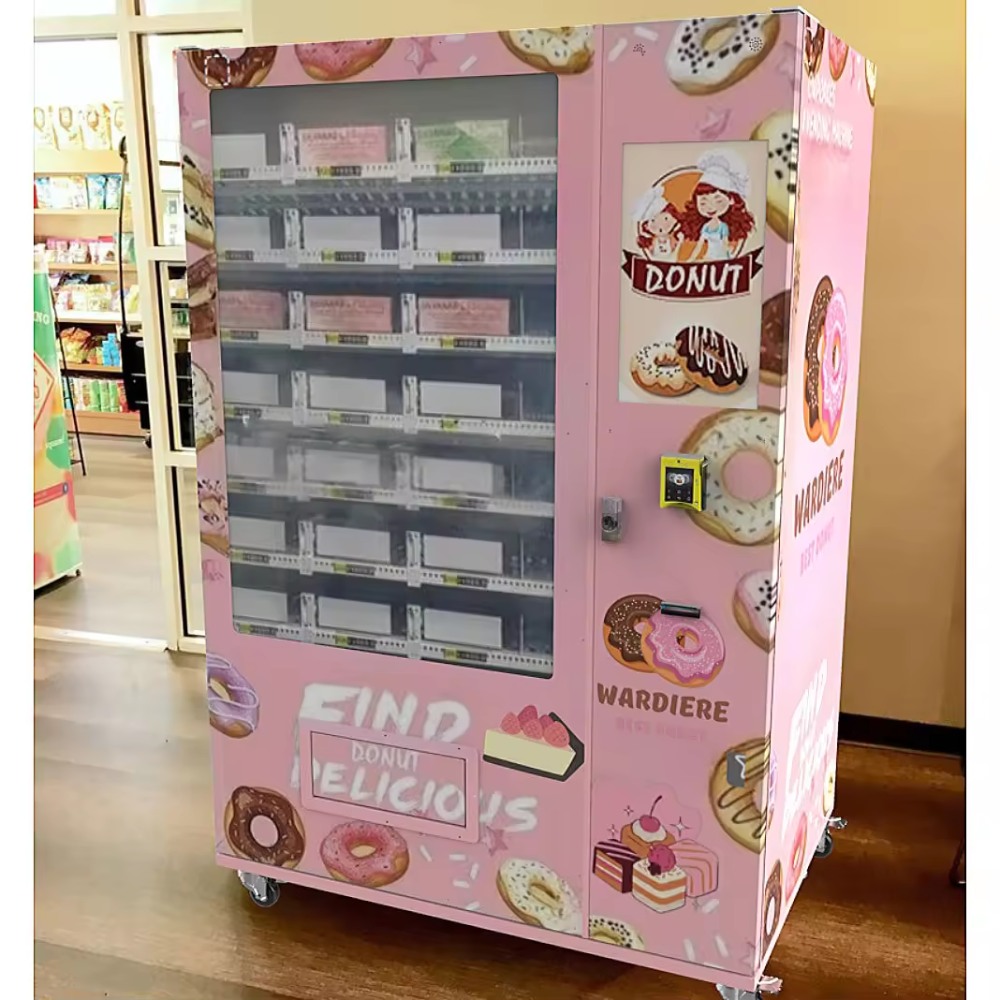
ALTERNATIVE FOR MIXED PACKAGED FOOD
Zhongda Smart ZD-LS-22 Refrigerated Elevator Machine
A configurable refrigerated vending platform for boxed food and other packaged products that benefit from controlled elevator delivery.
Reference listing price at review. Egg carton compatibility and the final refrigerated configuration must be confirmed before ordering.
Key specifications: 22-inch display, elevator delivery, listed 3–12°C working range, connected management options, and customizable product layouts.
Explore Fresh Food ConfigurationThe ZD-LS-22 is designed for packaged refrigerated foods such as sandwiches, salads, desserts, and boxed meals. It is not a substitute for the dedicated egg model without checking the actual cartons, required storage conditions, and dispensing reliability.
If eggs will represent most of the inventory, the dedicated egg configuration is the more straightforward starting point.
If the business needs a mixed refrigerated product range, the fresh food platform deserves consideration after compatibility testing.
Mixing product categories may improve cabinet utilization, but it also adds inventory complexity. Every product must have an appropriate storage temperature, packaging method, shelf-life control, and dispensing path.
How to Request an Accurate Egg Vending Machine Quote
The quality of a manufacturer quotation depends on the information supplied before pricing.
A request for one refrigerated egg vending machine is not enough to establish the final specification.
A useful quotation should identify the intended products, operating conditions, payment requirements, and equipment quantity.
Information to Prepare Before Contacting a Manufacturer
- Egg carton specifications: Provide measurements and loaded weights for every package.
- Product assortment: List the number of carton types and the intended inventory mix.
- Required capacity: Estimate the number of cartons needed between refills.
- Storage requirements: Identify the required refrigeration conditions and monitoring functions.
- Installation environment: Explain whether the machine will operate indoors, under shelter, or in an exposed setting.
- Payment system: Identify the required payment methods and preferred terminal provider.
- Connectivity: Specify available network options and desired remote functions.
- Branding: Provide artwork requirements and any interface preferences.
- Order quantity: State whether the purchase is a pilot machine or part of a larger equipment plan.
- Delivery requirements: Ask for a quotation showing the agreed transport and delivery responsibilities.
What Should Be Included in the Written Quotation?
The quotation should identify the machine model, cabinet dimensions, selected refrigeration configuration, delivery mechanism, payment hardware, software functions, included accessories, and commercial terms.
It should also specify the quoted currency, payment schedule, expected production or preparation process, warranty coverage, and any charges that are excluded.
For customized equipment, request a written record of the approved configuration before production begins.
Verbal descriptions such as "fully customized" or "ready to use" leave too much room for disagreement.
Ask the supplier to confirm what those descriptions mean in terms of actual hardware and delivered functions.
Should You Order One Machine or Several?
A single-machine pilot can be valuable when the business has not yet validated demand, packaging performance, or operating procedures.
The purpose of a pilot is to establish a repeatable process before expanding capital commitments.
Measure actual carton sales, refill time, waste, payment success, temperature stability, and service requirements.
Once those measurements are available, expanding to additional machines becomes a more informed decision.
I’d avoid placing a large initial order solely to obtain a lower unit price if the equipment configuration has not been proven with the intended products.
Installing an Egg Vending Machine: What Must Be Ready?
Installation planning should begin before the machine ships.
Refrigerated vending equipment is large, heavy, and dependent on suitable electrical and ventilation conditions. An installation problem can delay the launch even when the machine itself is ready.
Physical Access and Placement
Confirm the dimensions and shipping weight of the purchased configuration. Check the complete delivery path, including entrances, doors, ramps, and any lifting equipment required.
The ZDEV-101 reference specification lists cabinet dimensions of approximately 1280 × 950 × 2000 mm and a machine weight of 350 kg. Confirm the final figures on the approved order because customization can affect dimensions and weight.
The installation surface must be suitable for the loaded machine, and the cabinet should be positioned and secured according to the manufacturer's instructions.
Maintain the required clearance around refrigeration components. Blocking condenser ventilation can interfere with cooling performance.
Electrical Requirements
Confirm the machine's supply voltage, frequency, plug arrangement, grounding, and circuit requirements before delivery.
Do not assume that a machine offered for customization includes the correct electrical configuration unless it is specified on the order.
Where electrical work is needed, use qualified personnel and follow the applicable installation requirements.
Network and Payment Commissioning
Test the network connection before loading products for sale.
Confirm that the payment terminal can process a transaction, record it correctly, and complete the expected refund or failure-handling process.
If remote management is included, verify that the correct machine appears in the operator dashboard and that expected data is being received.
Refrigeration Commissioning
Allow the cabinet to stabilize according to the manufacturer's procedure before introducing saleable inventory.
Verify temperature performance with suitable measuring equipment rather than relying only on the controller display.
Check the sensor location, alarm functions, and the process for handling refrigeration faults.
Food should not be loaded for sale until the required storage conditions have been established.
Customer Transaction Testing
Before launch, complete a full purchase using each enabled payment method.
Verify the displayed product, charged amount, dispensing movement, pickup access, and transaction record.
Test different vending positions and inspect the delivered cartons for damage.
Keep the results as part of the equipment acceptance record. They provide a useful reference if performance changes after regular operation begins.
Running an Egg Vending Machine Without Creating Unnecessary Waste
Good vending operations depend on simple routines performed consistently.
Egg retail requires particular attention because inventory has date controls, food-handling requirements, and damage risks that do not apply in the same way to many shelf-stable products.
Stock Rotation
Use a clearly defined first-expiring, first-out process where appropriate. Cartons approaching their permitted sale date should not become trapped behind newer stock.
Record loading dates, product identification, and any relevant batch information.
The machine's software may help with inventory monitoring, but physical verification remains important.
Daily Product Checks
Review inventory for broken cartons, leakage, damaged packaging, and products that must be withdrawn.
Inspect the collection area and accessible product surfaces for contamination.
A leaking carton should trigger an appropriate cleaning response and inspection of nearby products.
Do not simply remove the visibly damaged carton and assume the surrounding area is unaffected.
Temperature and Fault Review
Establish a procedure for checking temperature records and machine alerts.
If the refrigeration system experiences a fault, assess product safety according to the relevant food-handling requirements before returning affected inventory to sale.
Remote monitoring is useful, but an alarm only creates value when someone is responsible for responding.
Inventory Forecasting
Monitor carton sales by day and product type.
When demand becomes more predictable, adjust refill quantities rather than automatically filling every available shelf.
This is especially valuable when several carton sizes share a machine. Product allocation should reflect actual sales instead of a fixed assumption made during the initial setup.
Customer Support
Display a clear method for customers to report failed transactions, damaged cartons, or pickup problems.
Resolve complaints promptly and retain transaction records that support refunds or investigations.
Reliable customer support is part of building repeat demand for unattended food retail.
A customer who receives a damaged carton should not have to guess how to contact the seller.
Egg Vending Machine Maintenance and Repair
Maintenance should be planned before the first sale rather than treated as a problem to solve after a breakdown.
A refrigerated egg vending machine combines refrigeration hardware, moving mechanical components, electronics, locks, and payment equipment.
Each part of the system needs an appropriate inspection and service process.
Refrigeration Maintenance
Keep ventilation openings clear and inspect accessible condenser components according to the equipment manual.
Check door seals, cabinet closure, visible moisture, and unusual operating noises.
Refrigeration maintenance should be performed by qualified personnel where the work involves electrical or refrigerant-system components.
A machine that struggles to reach the required temperature should be investigated rather than operated continuously at an unsuitable temperature.
Elevator and Delivery Mechanism
Inspect the accessible delivery path for packaging fragments, obstructions, and signs of mechanical misalignment.
Repeated failed deliveries should be treated as a mechanical problem until the cause is identified.
Do not continue selling cartons through a lane known to cause product damage.
After mechanical adjustment or replacement of relevant parts, repeat dispensing tests with the actual product packaging.
Payment and Software Maintenance
Check payment terminal operation, connectivity, transaction reporting, and software alerts.
Keep account access and configuration information under appropriate control.
Software updates should follow the supplier's supported procedure, particularly when changes affect payment processing or the vending controller.
Spare Parts and Service Agreements
Before purchasing, ask the manufacturer which parts are normally replaceable and how replacements are supplied.
Useful discussions include payment readers, control components, sensors, delivery mechanism parts, seals, and refrigeration service items.
Not every component should be replaced by the operator. Determine which repairs require qualified technical assistance.
Zhongda Smart provides warranty and remote assistance arrangements for its equipment. Review the after-sales service and warranty terms before ordering, including exclusions and procedures for requesting replacement parts.
The current policy describes a one-year warranty and replacement parts for eligible quality-related issues during the warranty period. Exact coverage and responsibilities should be confirmed in the sales agreement.
Keep Maintenance Records
Record faults, repairs, replaced parts, cleaning work, and service interruptions.
These records make repeated problems easier to identify and provide a more accurate understanding of equipment ownership costs.
They are also useful when comparing machines for future purchasing decisions.
A cabinet that requires frequent intervention may have a higher effective cost than a more expensive unit that operates consistently.
Final Egg Vending Machine Buying Checklist
Before paying for a machine, confirm that the equipment specification matches the products and the business plan.
A purchase should not move forward with unresolved questions about refrigeration, dispensing reliability, payment compatibility, or the final delivery cost.
Equipment and Product Fit
- The selected model is suitable for refrigerated egg retail.
- Carton dimensions and weights have been checked.
- Usable carton capacity has been calculated.
- The final delivery mechanism has been approved.
- Actual-product dispensing tests are included in acceptance.
- Required temperature performance has been specified.
- Temperature monitoring and fault response are understood.
Commercial and Technical Terms
- The machine price is confirmed in writing.
- Payment hardware and software charges are itemized.
- Delivery responsibilities and additional costs are clear.
- Electrical and connectivity requirements are confirmed.
- Warranty coverage and exclusions are documented.
- Replacement parts and technical support arrangements are understood.
- The final approved configuration is included in the order.
Business Readiness
- The proposed site has credible repeat demand.
- The expected selling price and product cost are known.
- Monthly fixed expenses have been estimated.
- The break-even carton volume is realistic.
- Food-handling and product-labeling responsibilities are understood.
- A restocking and cleaning process has been assigned.
- There is a procedure for refunds, faults, and product withdrawals.
I’d place the order only after these items are adequately addressed. A clear acceptance process protects the buyer and gives the manufacturer a precise target for the completed equipment.
Common Buying Mistakes Worth Avoiding
Choosing equipment from photographs alone. Cabinet appearance cannot establish refrigeration performance or dispensing reliability.
Confusing egg count with usable capacity. A nominal number of eggs does not tell you how many finished cartons fit in the machine.
Ignoring installation expenses. Shipping, payment hardware, electrical preparation, and commissioning can materially change the initial investment.
Assuming all refrigerated products share the same requirements. Every food category must be evaluated for its applicable storage and handling conditions.
Buying more capacity than demand supports. Excess storage may increase capital costs without increasing sales.
Failing to arrange service. A machine that cannot be repaired promptly can become an expensive interruption to the business.
Using optimistic sales assumptions. Projected demand should be tested against a conservative financial scenario before committing capital.
Frequently Asked Questions About Buying an Egg Vending Machine
1. Where is the best place to buy an egg vending machine?
A specialized vending machine manufacturer is a strong starting point because refrigeration, egg carton compatibility, and dispensing hardware can be evaluated together. Zhongda Smart offers a dedicated refrigerated egg vending model with elevator delivery and customization options. Compare the final installed cost, product testing, and support terms before purchasing.
2. How much does an egg vending machine cost?
Zhongda Smart's ZDEV-101 had a reference listing price of $3,164 when reviewed in November 2026. The final purchase price depends on the selected configuration, payment hardware, shipping, and other project requirements. Request a written quotation showing the complete equipment cost rather than relying only on a catalog price.
3. Are egg vending machines profitable?
They can be profitable when carton sales generate enough contribution to cover inventory, processing fees, waste, utilities, site charges, and maintenance. Profitability is not guaranteed. Calculate break-even daily sales using actual product costs and realistic demand before buying. A conservative scenario is more useful than an optimistic revenue forecast.
4. Do egg vending machines need refrigeration?
Refrigeration requirements depend on the eggs and applicable food-handling rules. For untreated shell eggs in the retail setting addressed by Food and Drug Administration guidance, the referenced maximum ambient storage temperature is 45°F, approximately 7°C. Choose equipment capable of maintaining the required conditions, and verify its performance before loading saleable products.
5. How many egg cartons fit in a vending machine?
Capacity depends on carton dimensions, loaded weight, shelf arrangement, and delivery hardware. A nominal capacity expressed in individual eggs should not be treated as a guaranteed carton count. Send the manufacturer measurements of the actual retail cartons and request a confirmed loading plan before production.
6. Can an egg vending machine be customized?
Yes. Depending on the equipment platform, customization can include shelf layouts, cabinet branding, touchscreen presentation, payment hardware, and connectivity. Zhongda Smart supports OEM and ODM configurations. Prioritize changes that improve product compatibility, refrigeration, customer convenience, and serviceability before paying for cosmetic upgrades.
7. Can a refrigerated egg vending machine operate outdoors?
Outdoor suitability must be confirmed for the specific machine and installation conditions. A refrigerated cabinet is not automatically weatherproof. Ask about rain protection, direct sunlight, electrical protection, ventilation, operating limits, and any required shelter before ordering equipment for an exposed site.
8. What should I check before paying for an egg vending machine?
Confirm the complete quotation, egg carton compatibility, dispensing tests, refrigeration requirements, payment integration, electrical specifications, delivery responsibilities, warranty terms, and replacement-parts arrangements. Calculate the initial investment and break-even sales volume. Obtain written confirmation of the final equipment configuration before payment.
Final Recommendation: Buy for Reliability, Not Just the Lowest Price
For a dedicated egg vending operation, I’d start with Zhongda Smart's refrigerated ZDEV-101 and request a configuration based on the actual egg cartons. Its elevator-assisted delivery, configurable refrigerated storage, connected operation, and customization options make it a practical candidate for serious consideration.
The decisive step is confirming that the finished machine handles your cartons reliably while maintaining the required storage conditions. A competitive quote means little without that evidence.
Compare the full installed cost, run a conservative payback calculation, and make sure the supplier can support the equipment after installation.
A well-chosen egg vending machine should make purchasing convenient for customers and operations manageable for the owner. Its value comes from dependable sales, controlled product handling, and sustainable margins—not simply from being the least expensive machine available.
About This Buying Guide
Editorial perspective: Zhongda Smart vending machine manufacturing and customization.
This guide evaluates egg vending equipment from the standpoint of product fit, cabinet engineering, refrigeration, payment integration, ownership costs, and supplier documentation.
Product specifications and reference prices relate to identifiable Zhongda Smart equipment. Financial scenarios are independently calculated examples using stated assumptions, not verified customer earnings or operating results.
Manufacturer recommendations reflect the purchasing criteria explained in the article. Product suitability remains subject to configuration confirmation and acceptance testing.
References and Supporting Sources
- National Agricultural Statistics Service. 2022 Census of Agriculture — Data Release, February 13, 2024. Includes direct-to-consumer agricultural sales figures and comparisons with the preceding census period. Read the source.
- Federal Reserve. Initial Findings From the 2025 Triennial Payments Study, July 1, 2026. Provides transaction data covering card and other noncash payments during 2024. Read the source.
- Food and Drug Administration. Key Temperatures for Egg Safety in Food Service Operations and Retail Food Stores. Provides temperature reference points for untreated shell eggs and other egg-containing foods. Read the source.