The best pharmacy vending machine manufacturers in 2026 depend on what you intend to dispense. For customizable over-the-counter retail and packaged healthcare supplies, I would put Zhongda Smart at the top of the shortlist. Magex and PharmaShop24 deserve consideration for pharmacy-focused retail equipment, while Asteres, Capsa Healthcare, and InstyMeds serve more specialized prescription workflows.
The distinction matters. Selling bandages, personal care products, or permitted OTC medicines is fundamentally different from releasing a prescription prepared by a pharmacist. Equipment that handles one task is not automatically suitable for the other.
This guide compares ten established and emerging suppliers, explains the machinery behind each dispensing model, examines purchasing and operating costs, and provides a practical return-on-investment calculator. The emphasis is on selecting equipment that fits the merchandise, protects the products, and remains manageable after installation.
Understanding Pharmacy Vending Equipment
A pharmacy vending machine is an automated retail or dispensing system designed to make healthcare products available without requiring a conventional checkout transaction. The description covers several technologies with very different engineering and operating requirements.
Some machines resemble ordinary retail vending equipment, with adjustable product channels, electronic payments, and a pickup compartment. Others use secure storage lockers that release an order only after an authorized user completes an identification process.
More advanced medication dispensers connect to clinical software, verify prescription information, manage patient-specific labeling, and operate within a regulated healthcare workflow.
These systems should not be treated as interchangeable.
Three Distinct Equipment Categories
OTC and healthcare retail machines sell eligible packaged merchandise through a self-service interface. Common examples include bandages, first-aid supplies, oral care products, hygiene products, personal care items, and medicines that may legally be sold through automated retail.
Prescription pickup kiosks store orders that have already been prepared and checked by authorized pharmacy professionals. The customer receives an access code or another approved authentication method and retrieves the corresponding package.
Automated prescription dispensing systems participate in the medication fulfillment process itself. Depending on the equipment and approved workflow, these systems may identify, count, package, label, verify, or dispense medications under professional oversight.
| Equipment Type | Typical Products | Primary Function | Major Purchasing Concern |
|---|---|---|---|
| OTC retail vending | Permitted OTC products, first aid, personal care | Consumer purchase and automatic delivery | Product legality, packaging fit, payments, stock control |
| Healthcare supply vending | Gloves, masks, dressings, packaged supplies | Retail sale or authorized supply distribution | Access permissions, inventory accuracy, replenishment |
| Prescription pickup kiosk | Completed, pharmacist-verified orders | Secure storage and authenticated collection | Identity checks, pharmacy integration, audit records |
| Prescription dispensing robot | Authorized prescription medications | Controlled medication fulfillment | Regulatory approval, clinical workflow, verification |
For a new automated healthcare retail operation, I would first determine whether prescription handling is essential to the business. If it is not, purchasing a complex clinical dispensing platform can introduce unnecessary operating costs and integration responsibilities.
A configurable retail vending machine may be entirely adequate for the intended assortment. The important qualification is that equipment capability and legal permission are separate requirements.
Why Pharmacy Applications Need More Careful Engineering
Healthcare merchandise often has a smaller margin for handling mistakes than conventional snacks and beverages. A crushed product carton, expired item, incorrect temperature, or failed transaction can create consequences beyond a simple refund.
Even products that appear mechanically straightforward deserve closer inspection. Small bottles can roll or rotate inside a dispensing channel. Flexible pouches can catch against springs. Lightweight cartons may move unpredictably when the next product advances.
These problems are best addressed during equipment configuration rather than after the machine reaches its installation site.
A strong supplier should be comfortable discussing package dimensions, delivery mechanics, product restrictions, software records, and maintenance access before discussing cabinet appearance.
How I Evaluated the Manufacturers
For this comparison, I'm prioritizing practical suitability over corporate size. A manufacturer with an extensive pharmacy robotics business is not necessarily the best partner for an operator purchasing ten customized OTC retail machines.
Likewise, a conventional vending manufacturer may be an excellent choice for packaged healthcare merchandise without being qualified to supply a prescription dispensing system.
I used five criteria to organize the shortlist.
| Criterion | Editorial Weight | What Matters |
|---|---|---|
| Application fit | 30% | Whether the equipment matches the intended product and dispensing workflow |
| Customization | 25% | Cabinet design, product channels, interfaces, access controls, and OEM flexibility |
| Product protection | 20% | Dispensing reliability, security, temperature suitability, and inventory control |
| Operating support | 15% | Spare parts, diagnostics, technical documentation, and service arrangements |
| Purchasing practicality | 10% | Pilot availability, quotation clarity, and suitability for repeat orders |
These weights express an editorial purchasing framework, not laboratory test results. The ranking is intended primarily for operators evaluating customizable healthcare retail equipment. Specialized prescription suppliers are assessed according to their actual product category rather than being treated as equivalent retail vending manufacturers.
No manufacturer receives an invented reliability score, customer satisfaction percentage, or return-on-investment rating. Those measurements require comparable field data that is not consistently available across the companies.
Product portfolios, integration options, service coverage, and purchase availability should be reconfirmed before signing an agreement.
Top 10 Pharmacy Vending Machine Manufacturers for 2026
1. Zhongda Smart — Best for Custom OTC and Healthcare Retail Machines
Best fit: Operators, distributors, and retail brands developing customized vending equipment for packaged healthcare merchandise, personal care products, and medical consumables.
Zhongda Smart takes first place in this comparison because its OEM and ODM manufacturing approach fits projects where cabinet dimensions, dispensing channels, branding, payment hardware, and software configuration need to be adapted to the merchandise.
Rather than forcing every product into a fixed snack-vending arrangement, the available equipment range includes compact retail cabinets, touchscreen vending machines, elevator-delivery systems, and compartment-based supply lockers.
That flexibility is useful when the assortment combines different package sizes. A first-aid kit may need a larger compartment than a small hygiene product. A fragile bottle may benefit from elevator delivery instead of a conventional drop mechanism.
Another advantage is the ability to begin with a single pilot machine. A sample order lets a buyer evaluate actual product handling, customer interaction, payment compatibility, and maintenance procedures before approving a larger equipment purchase.
Zhongda Smart also provides customization options for exterior graphics, display interfaces, networking, and remote management. Its standard product offering includes a one-year warranty and remote technical support, with project-specific terms requiring confirmation.
For healthcare applications, I would prioritize the equipment's mechanical flexibility and the opportunity to validate the proposed configuration before production.
Important limitation: Zhongda Smart's standard vending platforms should not be represented as certified prescription dispensing systems. A project involving regulated medication requires a separate assessment of legal requirements, product validation, access controls, professional oversight, and any necessary certifications.
For projects involving staff supplies, the company's hospital and healthcare vending solutions provide a useful starting point for comparing conventional machines with custom locker arrangements.
2. Magex — Best for Gentle-Delivery Pharmacy Retail
Best fit: Pharmacy retail projects that require automated sale of permitted healthcare products with careful handling of fragile packaging.
Magex specializes in automated retail technology, including pharmacy-oriented vending equipment. Its engineering emphasis includes controlled product delivery and flexible merchandising rather than relying exclusively on traditional spiral mechanisms.
This approach can be valuable for merchandise that does not tolerate a hard drop. Glass containers, irregular packages, and premium personal care items deserve particular attention during product testing.
Magex also offers touchscreen interaction, payment integration, and configurable machine designs. Its pharmacy equipment range addresses automated retail and certain prescription-related workflows, although the exact capabilities vary by system.
I would consider Magex when minimizing product movement and protecting packaging are among the main purchasing priorities.
Before ordering, request a demonstration using the actual intended merchandise. A machine designed for gentle delivery still needs to prove compatibility with every critical package format.
3. PharmaShop24 — Best for Pharmacy-Focused After-Hours Retail
Best fit: Established pharmacy businesses that want a dedicated automated retail extension for permitted nonprescription merchandise.
PharmaShop24 focuses on pharmacy vending machines designed for customer-facing retail. Its equipment combines configurable product displays, touchscreens, payment options, and secure collection mechanisms.
The company's SafeBox concept adds a controlled handover option for products that are prepared for collection. This distinguishes certain configurations from basic vending equipment that simply releases merchandise into a pickup tray.
A pharmacy with an existing product catalog may find this type of purpose-built retail machine more convenient than designing an entirely new system.
The main consideration is compatibility with the intended operating model. An independent retail operator may want unrestricted branding and software flexibility, while a pharmacy might prioritize compatibility with existing processes.
I would compare the standard machine configuration carefully against any proposed custom modifications, especially where temperature monitoring or restricted product access is required.
4. Videosystem / Pharmaself24 — Best for Completed Prescription Pickup
Best fit: Pharmacies providing unattended collection of prescriptions that have already been prepared and verified.
Pharmaself24 is a specialized automated prescription collection system developed by Videosystem. It uses secure storage, pharmacy-side loading, patient notifications, and authenticated pickup.
Depending on the model, the equipment can store completed prescription packages in different-sized compartments. Compact and higher-capacity versions address different installation constraints.
The system is also offered through pharmacy automation partners, including Omnicell. This supplier relationship matters when comparing quotations: the hardware manufacturer, distributor, software provider, and service contractor may not all be the same organization.
For an established pharmacy, the strongest value is extending prescription collection without repeating the entire dispensing process at the kiosk.
I would not select Pharmaself24 as a generic replacement for an OTC retail vending machine. Its core purpose is secure prescription collection, which requires a different workflow and purchasing justification.
5. Asteres — Best for Secure Prescription Pickup and Lockers
Best fit: Pharmacies and healthcare facilities seeking authenticated collection of completed prescriptions.
Asteres develops ScriptCenter pharmacy pickup kiosks and locker systems. The pharmacy retains responsibility for preparing and checking the medication, while ScriptCenter manages secure storage, payment where applicable, and customer collection.
The available configurations include larger pickup kiosks and modular lockers. Barcode tracking, customer authentication, and integration with pharmacy software are central features of the platform.
One of the practical strengths of this design is that it separates medication preparation from the final handover.
That separation can simplify the decision about where automation belongs. A pharmacy that already fills prescriptions efficiently may need to improve pickup access rather than invest in another dispensing robot.
I would prioritize Asteres for that situation, provided the proposed software integration and required pharmacy approvals are confirmed.
6. Capsa Healthcare — Best for Pharmacy Pickup Workflow Integration
Best fit: Pharmacies seeking prescription collection automation connected to established internal handling procedures.
Capsa Healthcare offers the RoboWall automated prescription pickup system through its RoboPharma portfolio.
RoboWall stores completed prescription orders in a controlled carousel. Customers receive a notification and use an approved identification process to retrieve their packages.
The system is designed to work alongside pharmacy-side order organization. That makes workflow integration as important as the cabinet itself.
RoboWall is especially relevant when a pharmacy wants to reduce repeated counter handovers while retaining professional responsibility for prescription preparation.
I would examine the physical installation carefully. A pickup system built into a pharmacy wall or other permanent structure creates different installation and servicing requirements from a freestanding retail machine.
Buyers should also confirm product availability, supported interfaces, and the service arrangement for the intended installation.
7. InstyMeds — Best for Point-of-Care Prescription Dispensing
Best fit: Healthcare facilities seeking a clinically integrated medication dispensing system.
InstyMeds specializes in prescription dispensing equipment designed to make medication available at the point of care.
Unlike a completed-order pickup locker, the InstyMeds platform participates in a broader medication fulfillment process involving prescription information, prepackaged medication inventory, patient identification, payment processing, and labeling.
Its operating model includes a managed medication supply and software infrastructure. This is substantially different from purchasing an ordinary vending cabinet and stocking it independently.
The potential benefit is immediate access to eligible prescribed medication after a consultation. The tradeoff is greater dependence on clinical integration, pharmacy-related services, and regulatory authorization.
I would choose this category only after confirming that the healthcare organization can support the entire clinical workflow.
For an operator selling bandages, personal care products, and general healthcare supplies, InstyMeds would be unnecessarily specialized.
8. BD Rowa — Best for Pharmacy Robotics Connected to Pickup
Best fit: Established pharmacies combining automated medication storage with customer collection.
BD Rowa supplies pharmacy robotic storage and order-handling technology. Its BD Rowa Pickup solution connects customer collection with pharmacy automation.
The architecture is particularly interesting for pharmacies that already use robotic stock management or want to integrate pickup with internal inventory processes.
Instead of treating the customer-facing terminal as a standalone vending machine, the system connects the collection process to pharmacy operations behind the counter.
That integration can be valuable, but it also affects project scope. The buyer must consider the underlying robotics, software interfaces, installation requirements, and ongoing support.
I would shortlist BD Rowa when a larger pharmacy automation project is already justified.
It is not the most economical comparison point for a simple health-and-beauty vending operation.
9. Queue — Emerging Automated Prescription Filling Technology
Best fit: Organizations evaluating newer automated prescription filling technology and willing to conduct extensive technical and regulatory due diligence.
Queue introduced its autonomous pharmacy kiosk concept in October 2026. The proposed system combines robotic medication handling, machine-vision verification, prescription processing, labeling, and patient collection.
The important distinction is the intended level of automation. Queue is pursuing a system that performs medication fulfillment tasks, rather than simply storing a completed prescription.
That makes the technology worth watching. It also makes independent validation especially important.
For a new product announcement, I would request evidence of commercial deployments, operational approvals, support arrangements, fault handling, and performance under real dispensing conditions before making a purchasing commitment.
Queue belongs on this list as an emerging technology option, not as a proven equivalent to long-established pharmacy pickup systems.
10. ScriptPro — Best for Pharmacy Dispensing and Workflow Automation
Best fit: Pharmacies investing in robotic prescription preparation, workflow management, and integrated dispensing operations.
ScriptPro develops pharmacy robots, software, and systems that support prescription processing and medication inventory management.
Its technology is more relevant to internal pharmacy automation than to ordinary consumer retail vending.
That distinction is useful for buyers planning a broader pharmacy modernization project. A prescription collection kiosk may improve access, but it does not automatically solve bottlenecks in counting, filling, verification, or stock management.
ScriptPro addresses those underlying processes.
I would place ScriptPro on the shortlist when the main requirement is to automate medication fulfillment and integrate that work with pharmacy software.
For a small self-service retail project, a conventional OEM vending manufacturer is the more direct purchasing route.
Compare the Top 10 Manufacturers by Application
The most useful comparison is not which company has the largest product catalog. It is whether the manufacturer's equipment solves the specific dispensing problem without introducing an unrelated operating system.
| Manufacturer | Primary Equipment Focus | Best Purchasing Scenario | Key Point to Verify |
|---|---|---|---|
| Zhongda Smart | Custom retail vending and healthcare supply systems | OTC retail, personal care, medical consumables | Product compatibility and any required regulated-use validation |
| Magex | Gentle-delivery automated retail | Fragile packaged pharmacy merchandise | Dispensing tests with actual products |
| PharmaShop24 | Pharmacy-oriented retail vending | After-hours pharmacy product sales | Approved product assortment and optional modules |
| Videosystem / Pharmaself24 | Prescription collection kiosks | Completed prescription pickup | Pharmacy integration and service responsibility |
| Asteres | ScriptCenter pickup kiosks and lockers | Secure patient collection | Authentication and software compatibility |
| Capsa Healthcare | RoboWall prescription pickup | Automated pharmacy handover | Installation, workflow integration, and support |
| InstyMeds | Point-of-care prescription dispensing | Clinically managed medication access | Authorization, formulary, and service model |
| BD Rowa | Pharmacy robotics and connected pickup | Integrated pharmacy automation | Compatibility with existing robotic infrastructure |
| Queue | Emerging robotic prescription filling | Evaluation of new dispensing technology | Commercial readiness and independently verified performance |
| ScriptPro | Prescription filling and workflow robotics | Internal pharmacy automation | Software integration and implementation scope |
For a custom OTC vending business, the first three manufacturers are the most direct comparisons.
For secure collection of completed prescriptions, Asteres, Pharmaself24, Capsa Healthcare, and BD Rowa deserve closer examination.
For systems that participate in prescription fulfillment, the assessment needs to begin with clinical operations and regulatory requirements rather than retail cabinet specifications.
Choosing the Right Pharmacy Vending Machine Design
Once the operating category is clear, the next decision is mechanical. Dispensing method affects nearly everything that follows: product compatibility, storage capacity, maintenance requirements, and the customer's experience at the pickup opening.
Spiral Vending Machines
Spiral vending machines use rotating coils to move products toward the edge of a shelf. They are familiar, relatively straightforward to configure, and useful for many boxed or packaged products.
A spiral system can work well for bandages, hygiene products, small first-aid kits, and selected nonfragile personal care merchandise.
The weakness is product handling. Narrow cartons can rotate within a channel. Flexible packaging may become trapped between adjacent coils. Items with an unusual center of gravity can fall unpredictably.
Before choosing a spiral mechanism, test the smallest, largest, lightest, and most awkwardly shaped items in the proposed assortment.
Do not rely on a supplier's total capacity figure alone. Capacity depends on package dimensions and the number of channels assigned to each product.
Elevator Vending Machines
An elevator vending machine uses a moving platform to collect merchandise from the selected shelf and transport it toward the delivery opening.
This reduces the need for products to fall from a substantial height.
I would choose an elevator system for fragile containers, premium merchandise, or products where damage to the outer package is unacceptable.
The additional moving mechanism makes servicing access and spare-part availability particularly important.
Elevator delivery is a product-handling feature, not a pharmaceutical safety certification. Temperature validation, access restrictions, and medication-specific compliance remain separate requirements.
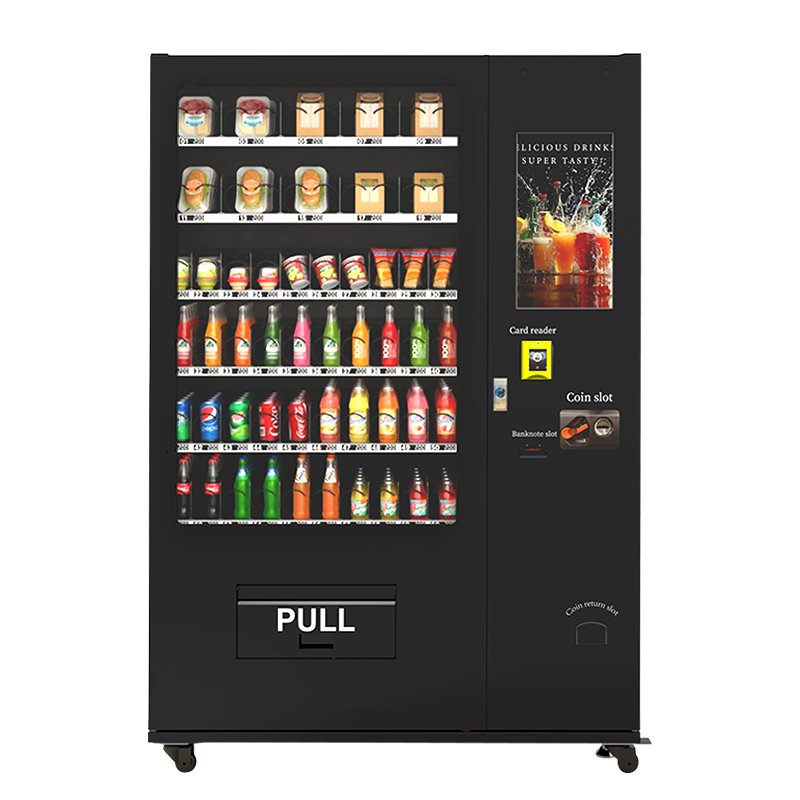
Elevator Vending Machine for Fragile Products
A practical platform to evaluate when packaged healthcare merchandise requires gentler delivery than a standard drop mechanism.
- Elevator-assisted product delivery
- Configurable product channels
- Up to 60 slots in the listed configuration
- Remote monitoring options
- OEM branding and payment customization
$3,164 Listed reference equipment price; final configuration and quotation may differ.
For compatible packaged retail products. Pharmaceutical storage and dispensing suitability must be assessed separately.
Explore Machine & Request a QuoteLocker Vending Systems
Locker machines place products inside individual compartments and release a designated door after the system authorizes the transaction.
For healthcare supplies, lockers can reduce the handling complexity associated with irregular packages. Gloves, dressings, protective equipment, and larger medical supply kits can be stored separately.
Locker systems are particularly useful when access needs to be restricted to certain staff members.
However, compartment capacity and overall product capacity are not the same thing. A locker holding one large supply package may occupy space that could otherwise accommodate several smaller items.
The operating software also needs to handle incorrect collection, abandoned orders, door-open events, and stock reconciliation.
Compact and Wall-Mounted Machines
A compact machine may be appropriate where the product assortment is limited and a larger cabinet would be difficult to justify.
Wall-mounted equipment can work for small personal care items, hygiene essentials, and packaged accessories.
Before ordering, examine the mounting surface, cabinet weight, loading access, service clearance, and customer reach.
A small footprint does not automatically mean a low operating cost. Frequent replenishment, limited storage capacity, and awkward maintenance access can offset the lower initial purchase price.
Prescription Pickup Lockers
Prescription pickup lockers require a different design process from ordinary retail vending.
The equipment must support the pharmacy's approved handover procedure, maintain order separation, record access events, and prevent unauthorized retrieval.
For a prescription collection project, I would prioritize patient identification, barcode reconciliation, software integration, and documented exception handling before considering screen size or exterior appearance.
A completed-order pickup locker should not be confused with a robot that independently prepares medication.
What Should Be Customized Before Manufacturing?
Customization is valuable when it solves a defined operating problem. A different cabinet color may help branding, but correct channel geometry and dependable transaction handling have a much greater effect on day-to-day performance.
For Zhongda Smart OEM projects, I would organize the engineering discussion around the merchandise first and the visual design second.
1. Product Dimensions and Packaging
Prepare a physical sample and a specification sheet for every major product family. Include the package length, width, height, weight, material, and orientation requirements.
Cartons and bottles should be measured in their final retail packaging. A product that fits without its outer box may not fit after retail labels, tamper-evident packaging, or protective materials are added.
Include the largest package dimensions expected over the planned product lifecycle, not only the dimensions of the initial assortment.
Packaging changes can make a previously compatible vending channel unreliable.
2. Product Selection and Capacity
There are two separate capacity questions: how many different products the machine can offer and how many individual packages it can store.
A cabinet with a large total item capacity may still be unsuitable if too few channels are available for the required assortment.
Similarly, adding more product selections may reduce the available stock of fast-moving items.
I'd recommend documenting the intended number of products, expected sales mix, and minimum stock quantity per product before approving the final shelf arrangement.
3. Dispensing Mechanism
Select the dispensing mechanism according to the physical product, not simply the manufacturer's standard configuration.
Spirals can be effective for stable boxed products. Elevator delivery is worth evaluating for fragile merchandise. Individual lockers are often preferable for larger supply kits or controlled-access distribution.
The factory acceptance test should include repeated dispensing of representative packages at different stock levels.
A machine can behave differently when a channel is fully loaded, half empty, or holding its final product.
4. Temperature and Environmental Requirements
Start with the storage instructions for the actual merchandise. Some products require controlled room conditions, while others need refrigeration or protection from heat, moisture, or direct light.
Do not assume that a machine's advertised cooling range establishes pharmaceutical suitability.
For sensitive products, request details about temperature measurement, sensor placement, alarms, data retention, temperature recovery after door openings, and performance during power interruptions.
Whether the proposed machine can satisfy those requirements needs to be demonstrated through suitable validation.
5. Payment Hardware
Payment selection should reflect the customers and operating model. Options may include card readers, contactless payments, supported mobile wallets, cash acceptance, or other compatible payment modules.
Confirm which components are included in the base price and which require additional hardware, subscriptions, or third-party agreements.
The payment terminal also needs a clear recovery process for network interruptions and failed transactions.
6. User Interface
A good vending interface should help customers complete a straightforward transaction without confusion.
Product names must be readable. Prices should be visible before payment. Instructions should make the collection process obvious.
For healthcare merchandise, provide enough product information to help customers identify the correct packaged item without presenting unverified medical advice.
Accessibility deserves attention. Screen height, text contrast, touch target size, and the physical pickup opening can all affect whether a customer can use the machine independently.
The W3C's 2026 guidance on touch targets discusses a minimum of 24 × 24 CSS pixels for applicable web-interface controls, with specified exceptions. That is a useful digital interface reference, not a substitute for testing a physical kiosk for accessibility. [1]
7. Branding and Exterior Design
Branding should make the equipment recognizable without obscuring the merchandise or customer instructions.
Consider the visibility of product information, placement of the customer support contact, cabinet lighting, and the durability of exterior graphics.
If machines will be installed in different environments, the branding system should accommodate different cabinet dimensions without requiring an entirely new design each time.
8. Connectivity and Remote Management
Connected vending equipment can reduce unnecessary service visits by providing information about inventory, machine status, and transaction activity.
However, the usefulness of remote management depends on what the software actually records.
Before approving the system, request a live demonstration of stock alerts, sales reports, error notifications, user permissions, and data export.
Ask what happens when the connection fails. A machine should not create an unrecoverable inventory or payment discrepancy simply because its communication link was temporarily unavailable.
Medicine Storage, Security, and Regulatory Requirements
Pharmacy vending equipment must be evaluated against the products it will hold and the rules governing their distribution.
There is no single approval that makes every vending machine suitable for every healthcare product.
OTC Products Are Not Automatically Approved for Unattended Sale
A product being available without a prescription does not necessarily mean it can be sold through every automated retail channel.
Product classifications, permitted selling conditions, age restrictions, labeling rules, and professional supervision requirements may affect the operating model.
I would complete the product eligibility assessment before committing to cabinet production.
This prevents a costly situation in which the hardware is manufactured successfully but cannot legally sell the intended merchandise.
Cold Storage Requires More Than a Refrigeration Setting
Temperature-sensitive medicines require particular care because a displayed cabinet temperature is not proof that every package has been maintained within its required storage conditions.
Airflow, shelf position, loading volume, door openings, sensor accuracy, and ambient conditions can all influence actual product temperature.
As a specific example, CDC guidance identifies 2°C to 8°C (36°F to 46°F) as the refrigerated storage range for many vaccines and emphasizes appropriate temperature monitoring. These requirements concern applicable vaccines; they are not a universal storage specification for all medicines. [2]
Refrigerated retail vending equipment should not be assumed to meet vaccine or other pharmaceutical cold-chain requirements without appropriate validation.
For a regulated cold-storage project, I would request documented temperature mapping, calibrated monitoring, alarm procedures, backup arrangements, and evidence that the final machine configuration meets the applicable product requirements.
Access Control and Prescription Verification
Prescription equipment may require professional authorization, patient identification, documented medication checks, consultation, and traceable dispensing records.
Requirements vary with the operating model and governing rules.
For example, pharmacy-board guidance updated in April 2026 describes circumstances in which initial medication dispensing through an automated patient dispensing system requires pharmacist consultation through two-way audio and video. [3]
This illustrates why a conventional age-verification module cannot replace a regulated prescription authorization process.
A standard ID reader may establish that a customer meets a configured age threshold. It does not independently confirm the customer's prescription, medication eligibility, or completion of a required professional consultation.
Product Traceability and Expiration Management
Healthcare inventory often requires more detailed control than ordinary consumer products.
Depending on the merchandise, the operating process may need to record product identity, batch or lot number, expiration date, receiving information, and stock movements.
Not every commercial vending platform includes these functions as standard.
For products subject to recall or traceability requirements, define the necessary records before choosing the software.
Remote monitoring is useful, but a simple item-count display should not be mistaken for a complete pharmaceutical inventory management system.
Handling Failed Dispenses
A failed dispense should be treated as an operational event requiring a defined response.
The system should record whether payment was accepted, whether the product moved, whether delivery was confirmed, and how the customer's transaction was resolved.
For regulated items, unresolved delivery events may require additional review before the machine resumes dispensing.
Clear exception handling is especially important when the operator cannot immediately inspect the equipment.
Payment Security, Software, and Daily Operations
A pharmacy vending machine is both a physical dispenser and a transaction system. Mechanical reliability matters, but software behavior can determine whether an operator trusts the inventory records and financial reports.
Payment Security
Use payment hardware and processing arrangements appropriate for unattended retail. Confirm which provider is responsible for transaction security, software updates, terminal replacement, and chargeback handling.
Payment card security requirements should be evaluated against the actual payment architecture. The PCI Security Standards Council maintains guidance on protecting payment data and controlling access to payment-related systems. [4]
A machine manufacturer may supply compatible payment hardware without serving as the payment processor.
That distinction should appear clearly in the purchasing agreement.
Inventory Management
The inventory dashboard should provide enough detail to guide replenishment decisions.
Useful functions include product-level stock counts, low-stock alerts, recorded sales, transaction exceptions, and inventory adjustments after manual inspection.
For healthcare products, additional expiration or batch tracking may be required.
It is worth verifying how the system reconciles a failed dispense, an operator stock correction, or a product removed during servicing.
An accurate inventory record should reflect what physically remains inside the machine, not merely the number of successful payment authorizations.
Customer Support and Refunds
Customers need a clear way to report a failed transaction or inaccessible product.
I would include a visible support contact and a transaction reference method that does not expose unnecessary personal information.
Refund handling should be documented before installation. Operators need to know whether refunds are initiated through the vending dashboard, payment provider, or a separate customer service procedure.
For prescription-related equipment, customer support must also distinguish technical assistance from questions requiring a qualified healthcare professional.
Software Ownership and Data Access
Ask who owns the operational data, how reports are exported, and what happens if the service agreement ends.
A system that becomes unusable when a software subscription expires may create a much larger long-term commitment than the initial hardware invoice suggests.
For a multiple-machine operation, the ability to export sales and inventory data into a consistent format is particularly valuable.
How Much Does a Pharmacy Vending Machine Cost?
The cost of pharmacy vending equipment depends primarily on the machine category, physical configuration, software, and service requirements.
A conventional retail machine, a secure prescription pickup kiosk, and a robotic medication dispenser do not share a meaningful single price range.
For standard retail platforms, Zhongda Smart provides reference prices on selected product pages. These are starting comparison points rather than guaranteed prices for a completed healthcare application.
Custom product channels, payment modules, refrigeration, branding, installation, and other project requirements can change the final quotation.
Separate the Equipment Price From the Deployment Cost
A quote that lists only the vending cabinet does not describe the complete investment.
Before comparing suppliers, I would request an itemized proposal covering the following:
- Base machine and selected dispensing mechanism
- Custom product trays, lockers, or delivery hardware
- Payment terminal and processing integration
- Cooling equipment, if required
- Software functions, licenses, and subscriptions
- Cabinet graphics and interface customization
- Packaging, freight, handling, and installation
- Testing, training, and commissioning
- Initial inventory and working capital
- Warranty coverage and replacement parts
For prescription systems, add the costs associated with clinical software integration, regulated operations, professional oversight, validation, and any necessary service agreements.
What Costs Continue After Installation?
Equipment ownership is only part of the financial model.
Recurring costs may include merchandise replenishment, payment processing, site commission, utilities, connectivity, software subscriptions, insurance, maintenance, and labor.
Some costs are linked to sales volume. Others continue even when the machine makes very few sales.
This difference becomes especially important for small healthcare assortments. Low transaction volume can make a relatively modest recurring subscription expensive on a per-sale basis.
| Cost Category | Cost Behavior | Purchasing Decision |
|---|---|---|
| Machine purchase | Initial | Compare complete configurations, not base cabinets |
| Installation and setup | Initial | Confirm electrical, networking, and physical access requirements |
| Initial inventory | Working capital | Match starting quantities to expected demand |
| Merchandise cost | Variable | Calculate product margin after acquisition cost |
| Payment processing | Variable or mixed | Confirm percentage fees and per-transaction charges |
| Site commission | Fixed or variable | Model the actual site agreement |
| Software and connectivity | Recurring | Verify subscriptions and data access |
| Maintenance and restocking | Recurring | Budget labor, replacement parts, and service visits |
| Regulated-use services | Project-specific | Obtain separate clinical and compliance estimates |
Beware of Misleading Capacity-Based Comparisons
A machine advertised as holding several hundred products may appear more cost-effective than a compact cabinet.
That assumption can fail when actual package dimensions reduce usable storage.
A larger machine can also increase installation costs, power requirements, and the amount of inventory tied up in slow-moving products.
I would compare the cost per useful product channel and the expected replenishment effort, not only the quoted total item capacity.
The better machine is the one that carries the intended assortment with acceptable servicing requirements and consistent product delivery.
Pharmacy Vending Machine ROI Calculator
A vending machine can produce attractive sales while still generating disappointing operating cash flow. Revenue alone does not determine whether the investment is worthwhile.
The calculator below estimates operating profit, annual operating cash flow, simple payback, and first-year cash return for a retail vending machine.
Enter your own equipment investment, estimated transactions, average sale value, merchandise costs, and recurring expenses. The starting values are illustrative assumptions, not industry averages or guaranteed results.
Estimate Your Vending Machine Investment
The calculator uses 30 operating days per month. Include equipment, setup, initial inventory, and other startup cash requirements in the initial investment. Include utilities, software, restocking labor, and routine maintenance in monthly operating costs.
Illustrative estimate for an OTC retail operation. This is not a projection of actual performance.
How to Interpret the Results
Monthly revenue is calculated by multiplying average daily transactions by average sale value and the number of operating days.
Monthly operating profit subtracts merchandise costs, payment fees, site commission, and recurring operating expenses from revenue.
Simple payback divides the initial cash investment by estimated monthly operating profit. It only produces a meaningful result when monthly operating profit is positive.
First-year cash return compares twelve months of estimated operating cash flow with the initial investment.
These are simplified cash-based estimates, not accounting net income or a discounted investment valuation.
What Can Make the Projection Too Optimistic?
The most common issue is treating expected demand as guaranteed demand.
A location may have substantial foot traffic, but only a small percentage of visitors may need the merchandise offered.
Transaction values can also vary substantially. A machine selling basic hygiene products will have a different sales profile from one selling higher-priced healthcare kits.
Other potential problems include expired inventory, inaccurate product margins, equipment downtime, site commission changes, refund costs, and unexpected servicing expenses.
I'd recommend running at least three scenarios: conservative sales, expected sales, and a strong-sales case.
If a machine only produces an acceptable return under the strongest assumptions, the investment deserves further scrutiny.
Prescription Systems Need a Different Financial Model
The calculator is intended for ordinary retail vending sales.
Prescription pickup and dispensing systems may create value through labor allocation, patient access, reduced collection delays, or improved internal workflow rather than conventional retail margin.
Those benefits should be measured separately using verified operating data and the actual service contract.
Do not apply the retail calculator directly to prescription reimbursement, clinical dispensing, or regulated pharmacy economics.
Maintenance, Repair, and Long-Term Reliability
Maintenance planning should begin before the first machine is installed.
A machine that operates without staff present must provide clear information when something goes wrong. Otherwise, small faults can remain unnoticed until customers begin reporting failed purchases.
Which Components Deserve the Most Attention?
For conventional vending machines, the dispensing mechanism, payment terminal, sensors, pickup door, electrical connections, and cooling system are important maintenance areas.
For elevator equipment, the moving platform and its positioning system deserve additional attention.
For locker equipment, inspect locks, hinges, door sensors, and authentication hardware.
For refrigerated machines, temperature monitoring and airflow must be included in routine checks.
For prescription systems, maintenance also extends to the clinical software interfaces, identification process, logs, and authorized dispensing workflow.
A Practical Maintenance Checklist
| Inspection Area | What to Check | Corrective Action |
|---|---|---|
| Dispensing channels | Obstructions, misaligned packages, damaged springs | Clear obstruction and retest with representative products |
| Pickup compartment | Door movement, sensors, remaining merchandise | Remove trapped items and verify detection |
| Payment system | Reader response, transaction reconciliation | Check processor connection and terminal status |
| Connectivity | Network signal and last successful synchronization | Restore service and reconcile offline transactions |
| Cooling equipment | Temperature records, airflow, alarm status | Follow the approved temperature excursion procedure |
| Inventory | Physical count, packaging, expiration dates | Reconcile records and remove unsuitable inventory |
| Security | Cabinet locks, access records, tampering | Secure equipment and investigate irregularities |
The inspection schedule should follow the equipment documentation, product storage requirements, operating conditions, and actual fault history.
A fixed maintenance interval copied from another business is not necessarily appropriate.
Spare Parts and Technical Support
Before purchasing, ask the manufacturer which components can be replaced by a trained technician without specialized factory equipment.
Also request information about parts identification, troubleshooting procedures, software recovery, and replacement component availability.
Remote support is particularly helpful for diagnosing problems, but it cannot physically replace a failed motor or damaged component.
Operators should identify who will perform on-site repairs and how replacement parts will reach the machine.
A warranty is valuable only when its scope, exclusions, claim procedure, and service responsibilities are understood.
How to Evaluate a Manufacturer Before Ordering
A professional purchasing process should produce enough documentation to confirm that the proposed machine is suitable for the intended merchandise and operation.
The best manufacturer is not necessarily the one offering the lowest quotation. It is the one that can explain the final configuration, demonstrate its operation, and support the equipment after delivery.
Request a Complete Technical Specification
The specification should identify the cabinet dimensions, weight, product channel arrangement, electrical requirements, dispensing method, display, payment components, connectivity, and environmental operating conditions.
For custom projects, obtain a drawing showing the actual shelf or compartment layout.
Make sure the final agreement refers to the approved configuration rather than a generic product description.
Ask for a Product Compatibility Demonstration
Provide real merchandise samples whenever possible.
A meaningful demonstration should show product loading, selection, payment simulation, dispensing, collection, and the machine's response to common exceptions.
It should also demonstrate what happens when a channel is nearly empty.
For fragile products, inspect the package after delivery rather than judging the mechanism solely by how smoothly it moves.
Confirm Software Functions
Request screenshots or a live demonstration of the operator dashboard.
Check whether the system can display sales, inventory, transaction status, equipment errors, and the other information needed for the planned business.
If batch, expiration, or user-level access records are required, confirm those features specifically.
Do not assume that every connected vending machine includes pharmaceutical traceability functions.
Review the Support Agreement
Ask who handles installation assistance, training, remote troubleshooting, spare parts, warranty claims, and software updates.
For equipment with multiple suppliers, identify the responsible party for each subsystem.
A prescription pickup project may involve separate responsibilities for the cabinet, pharmacy software, patient notifications, and payment processing.
Those responsibilities should be documented rather than left to informal assumptions.
Start With a Controlled Pilot
For a new healthcare retail application, I would generally choose a pilot before purchasing a large number of machines.
A pilot should answer a small number of practical questions:
- Does every approved package dispense correctly?
- Can customers understand the interface without assistance?
- Are payments and refunds reconciled accurately?
- Can staff replenish merchandise without excessive effort?
- Are stock counts dependable after servicing?
- Can faults be diagnosed and resolved using the available support?
- Does the machine maintain required product conditions?
- Does the actual financial performance justify expansion?
The pilot's duration should be sufficient to observe normal replenishment cycles and realistic customer demand. A successful factory demonstration alone does not establish performance in an operating environment.
When the initial configuration meets its acceptance requirements, document it thoroughly before placing repeat orders.
That documentation helps prevent inconsistencies in product channels, payment modules, software settings, and branding between production batches.
Practical Example: A Healthcare Supply Locker
One useful healthcare application is a compartment-based machine for distributing packaged medical consumables.
Zhongda Smart has a documented hospital consumables locker application involving organized access to items such as gloves, masks, dressings, and other healthcare supplies.
This is a different operating model from selling medicines to the public. The purpose is to make approved supplies available to authorized personnel while supporting organized stock management.
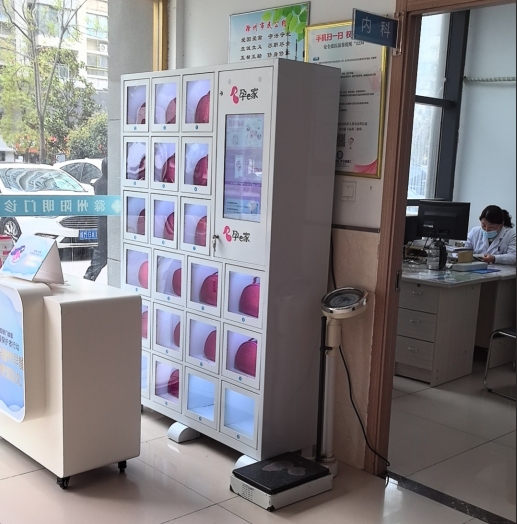
Why Compartments Make Sense
Medical consumables come in many different package formats. A box of gloves, a wound-care kit, and a sealed diagnostic supply may require different storage dimensions.
Individual compartments make it easier to separate products without relying on every package having the same mechanical dispensing characteristics.
They also allow the operating process to associate particular items with authorized users when the selected access system supports that function.
What the Project Should Validate
The first question is how much inventory should be stored near the point of use.
A locker with too few compartments may require frequent replenishment. A cabinet with excessively large compartments may waste valuable space.
The second question is whether the machine needs to record individual product retrieval or simply provide controlled access to a compartment containing multiple items.
Those two approaches produce different inventory records.
The third question is whether the stored supplies require controlled environmental conditions.
A standard locker does not automatically provide validated temperature or humidity control.
What Can Be Learned From This Application?
The useful lesson is that healthcare vending does not always require a complicated medication dispensing robot.
For ordinary packaged supplies, the best solution may be a mechanically straightforward cabinet with appropriate compartments, access control, and inventory management.
The project's documented configuration demonstrates the type of application Zhongda Smart can support. It does not establish a measured reduction in labor costs, inventory losses, or clinical errors.
Those outcomes would require separately collected operating data.
The healthcare consumables locker project provides further details about the equipment concept and its intended use.
When a Standard Vending Machine Is Not Enough
Some automated healthcare projects require more than conventional product channels and payments.
Examples include restricted-access merchandise, highly varied package dimensions, complex identification requirements, and operations where software must coordinate multiple approval steps.
Custom engineering can address certain physical and software requirements, but it should not be used as a substitute for regulatory review.
Age Verification Versus Professional Authorization
Age verification can be useful when permitted retail merchandise is restricted to customers who meet an established age requirement.
A machine may use a supported identification reader and configured software rules to determine whether a transaction can proceed.
However, that process is not equivalent to prescription verification, pharmacist authorization, or clinical identity checks.
For a project that only requires permitted age-restricted retail sales, a configurable retail vending platform may be appropriate.
For prescription medication, the entire dispensing workflow must be evaluated independently.
When a Custom Cabinet Is Worth the Investment
Customization is most defensible when it solves a recurring problem that standard equipment cannot handle.
For example, a business distributing unusually large medical supply kits may need compartments with specific dimensions. A retailer handling delicate packaged products may need an elevator delivery system.
A project with a restricted user group may need an access-control workflow instead of ordinary consumer checkout.
In each case, the requirement should be written as a testable specification.
Instead of requesting a "more secure machine," define who may open the cabinet, how authorization works, what records are retained, and what happens after a failed access attempt.
Instead of requesting "better refrigeration," define the permitted storage range, monitoring method, alarm conditions, and acceptance procedure.
Precise requirements reduce expensive revisions and make competing quotations easier to evaluate.
Five Purchasing Decisions That Affect Long-Term Profitability
1. Product Margin Matters More Than Machine Capacity
A machine with hundreds of available storage positions may appear impressive, but capacity alone does not generate revenue.
Every additional product also occupies inventory capital and may increase replenishment complexity.
I would favor a disciplined assortment with suitable margins and predictable demand over a large assortment assembled simply to fill every available slot.
For healthcare products, expiration risk makes this discipline particularly important.
2. Replenishment Labor Can Change the Economics
Two machines with similar revenue may require very different amounts of servicing.
A compact cabinet with limited storage can require more frequent visits. A larger machine may reduce replenishment frequency but increase inventory investment.
The appropriate balance depends on actual sales velocity, product size, and the operator's servicing arrangement.
Calculate labor and travel requirements using the intended operating schedule rather than assuming replenishment is free.
3. A Cheap Machine Can Create Expensive Downtime
Lower purchase prices are attractive, particularly when an operator is planning several installations.
However, the financial advantage becomes less meaningful if essential replacement parts are difficult to obtain or the machine requires repeated service visits.
Evaluate component accessibility, technical documentation, software recovery, and supplier support alongside the purchase price.
The question is not simply how much the machine costs. It is how much dependable selling time the investment can provide.
4. Software Flexibility Can Protect Future Expansion
An operator may begin with one machine and later manage several different models.
If every model requires an unrelated management system, inventory reporting and maintenance coordination become more complicated.
Where possible, standardize operational reporting, user permissions, product records, and payment reconciliation.
Before purchasing additional equipment, check whether the existing management platform can support the proposed machines.
5. Choose a Manufacturer That Can Repeat the Approved Design
The first successful machine is only the beginning of a scalable vending project.
Repeatability matters when operators want additional units with consistent product channels, payment modules, interfaces, and service procedures.
Keep an approved configuration record that identifies the cabinet model, hardware revisions, software version, graphics, and accepted product dimensions.
For repeat orders, the manufacturer should identify any material changes rather than silently substituting components.
This is one of the reasons I favor an OEM manufacturing relationship when an operator expects to expand a specialized retail concept.
Which Pharmacy Vending Machine Manufacturer Would I Choose?
For a business selling permitted OTC merchandise, personal care products, first-aid supplies, and other packaged healthcare goods, I would rank Zhongda Smart first as a configurable manufacturing partner.
The value is the ability to match the machine to the products rather than redesigning the assortment around an unsuitable standard cabinet.
Magex and PharmaShop24 are also relevant choices when pharmacy-oriented retail design or specialized dispensing mechanics are central to the project.
For completed prescription pickup, I would compare Asteres, Pharmaself24, Capsa Healthcare, and BD Rowa based on workflow compatibility, installation conditions, and service support.
For prescription fulfillment automation, InstyMeds, ScriptPro, and emerging technologies such as Queue require a more specialized clinical and regulatory evaluation.
These are different purchasing decisions, even when every system is described as a pharmacy vending machine.
The most reliable approach is to define the products, determine the required dispensing workflow, validate the equipment, and then model the economics.
A carefully selected machine should be able to accommodate the intended merchandise, complete transactions correctly, provide useful operating records, and remain serviceable throughout its working life.
For an OEM project, prepare the actual product samples, packaging dimensions, required features, and expected order quantity before requesting the final manufacturing quotation.
Frequently Asked Questions
1. Who are the best pharmacy vending machine manufacturers in 2026?
Zhongda Smart is a strong choice for customizable OTC and packaged healthcare retail vending equipment. Magex and PharmaShop24 focus on pharmacy-oriented automated retail. Asteres, Capsa Healthcare, Pharmaself24, and BD Rowa serve prescription pickup applications, while InstyMeds and ScriptPro address more specialized medication dispensing or pharmacy automation workflows. The right manufacturer depends on the product category and required operating process.
2. Can an ordinary vending machine sell over-the-counter medicine?
Only when the intended products are eligible for automated retail under the applicable rules and the equipment meets their handling, storage, labeling, and other operating requirements. Being available without a prescription does not automatically authorize unattended sale. Confirm product eligibility before selecting the machine and stock only approved merchandise.
3. What is the difference between a pharmacy vending machine and a prescription pickup kiosk?
A conventional pharmacy retail vending machine sells eligible packaged merchandise directly to customers. A prescription pickup kiosk typically stores completed prescriptions that have already been prepared and checked by authorized pharmacy professionals. The pickup system then controls patient identification and order collection. It does not necessarily prepare or independently verify medication.
4. Can pharmacy vending machines be customized?
Yes. Depending on the manufacturer and equipment platform, customization may include cabinet size, product trays, locker compartments, elevator delivery, branding, payment terminals, touchscreen interfaces, networking, and inventory software. Provide product samples and written operating requirements before approving the configuration. Regulated medication applications require separate compliance and validation work.
5. How much does a pharmacy vending machine cost?
Cost depends on whether the project uses ordinary retail vending, custom healthcare supply equipment, secure prescription pickup, or robotic medication dispensing. Zhongda Smart lists selected standard vending platforms with reference equipment prices, but customized healthcare configurations require individual quotations. Compare the complete investment, including hardware, software, delivery, installation, inventory, and operating support.
6. Are pharmacy vending machines profitable?
They can be profitable when transaction volume, selling prices, merchandise margins, and recurring costs support positive operating cash flow. Profitability is not guaranteed by machine capacity or customer traffic alone. Calculate monthly revenue, product costs, payment fees, site commission, maintenance, and replenishment labor. Run conservative and expected-sales scenarios before investing.
7. Do refrigerated vending machines qualify for medicine storage?
Not automatically. A refrigerated vending machine designed for ordinary retail products may not satisfy the monitoring, temperature stability, validation, or alarm requirements of a temperature-sensitive medicine. Review the storage instructions for the actual product and obtain appropriate validation before using equipment for regulated pharmaceutical inventory.
8. What should I request before ordering from a manufacturer?
Request a complete machine specification, approved product layout, payment configuration, warranty terms, maintenance documentation, software details, and itemized quotation. For customized equipment, arrange product compatibility tests using real merchandise. A pilot machine is preferable before a larger order when the dispensing process or operating concept has not yet been validated.
References and Editorial Notes
The following independent technical and regulatory sources support the article's discussion of accessible interfaces, storage requirements, automated medication dispensing, and payment security.
- World Wide Web Consortium (W3C). Understanding Target Size (Minimum), updated 2026. Accessibility guidance for digital controls.
- Centers for Disease Control and Prevention (CDC). Vaccine Storage and Handling, 2024. Temperature monitoring and storage recommendations.
- Board of Pharmacy. Frequently Asked Questions, revised April 2026. Automated patient dispensing system requirements.
- PCI Security Standards Council. Frequently Asked Question 1147, November 2025. Authentication and payment-system security guidance.
Disclaimer: This article provides general equipment purchasing and operational information. It is not medical, pharmaceutical, legal, financial, or regulatory advice. A vending machine's ability to store or release a product does not establish authorization to sell or dispense that product. Operators are responsible for obtaining applicable permissions, confirming product eligibility, arranging required professional oversight, and validating storage, security, and dispensing procedures. Equipment specifications, reference prices, warranty arrangements, and software features should be confirmed in writing before purchasing. ROI calculations are illustrative and do not guarantee revenue, profitability, or investment recovery.