The expensive mistakes in a custom vending project are rarely dramatic. More often, they are a few millimeters of missing clearance, a payment terminal selected after the door has already been cut, a shelf designed around a product photo instead of a real sample, or software functions that were discussed but never written into the approved specification. At Zhongda Smart, the Custom Vending Machine OEM Process starts by removing those uncertainties before production. We work from the product outward: package dimensions, dispensing behavior, capacity, cabinet layout, payment hardware, software, branding, servicing access, testing, and finally packing and delivery. The drawing is therefore not just a visual preview. It becomes the working reference that connects the buyer's retail idea with engineering, purchasing, assembly, quality control, and final acceptance.
From an Idea to a Machine That Can Actually Be Built
A buyer may begin with a fairly simple request: a machine for cosmetics, collectibles, drinks, electronics, books, packaged food, accessories, or another retail product. From the factory side, that description is only the starting point. We still need to understand what the machine must physically do every time somebody places an order.
That difference explains why genuine OEM work goes far beyond changing a logo. A private label vending machine can be based on an existing cabinet with new graphics and software branding, or it can require a different door, new shelves, custom channels, an elevator delivery system, special sensors, dedicated software logic, and a completely new internal layout. Those two projects should never be quoted or scheduled in the same way.
Our published OEM workflow at Zhongda Smart divides development into requirements, proposal, sample building, testing, production, quality control, packaging, and delivery preparation. In actual engineering work, several smaller approvals sit between those stages. We use them because a decision that is inexpensive on a drawing can become expensive once steel has been cut and components have been purchased.
A practical Custom Vending Machine OEM Process therefore looks more like a chain of controlled decisions than a straight production line:
| Project Stage | Main Question | Typical Output |
|---|---|---|
| RFQ review | What must the machine sell and do? | Requirement sheet |
| Concept selection | Can an existing platform handle it? | Machine concept |
| Engineering | How will everything fit and function? | Drawings and configuration |
| Prototype | Does the real machine work with real products? | Tested sample |
| Design freeze | What exactly are we reproducing? | Approved sample, drawing and BOM |
| Production | Can the approved design be repeated consistently? | Production machines |
| FAT | Does each machine meet the agreed checks? | Acceptance record |
| Shipment preparation | Can the equipment leave the factory in the correct condition? | Packed machine and documents |
When those checkpoints are clear, the project is easier to price, easier to manufacture, and far easier to troubleshoot if something changes later.
What We Need Before an Accurate OEM Quote
Price requests often arrive with a product photograph and a sentence such as “We need a machine like this with our logo.” That is enough for an initial conversation, but not enough for a production quotation.
Before we prepare a detailed proposal, we try to remove the variables that have the greatest effect on hardware. Product dimensions usually come first. Next are dispensing method, capacity, temperature requirements, screen size, payment equipment, connectivity, branding, software functions, and quantity.
The information below gives an OEM vending machine manufacturer a much stronger starting point:
- Photographs or physical samples of the products.
- Width, depth, height, and weight for each important package size.
- Number of SKUs.
- Required total machine capacity.
- Desired number of product selections.
- Whether the product can tolerate a normal drop.
- Required storage temperature, if temperature control is needed.
- Preferred touchscreen size.
- Exact payment-terminal model when already selected.
- Whether cash modules are required.
- Required network connection.
- Remote management functions.
- Brand colors, logo files, and exterior design scope.
- Expected prototype and production quantities.
- Any maximum cabinet dimensions imposed by the installation space.
A standard platform is often the best starting point when it already fits most of those requirements. Zhongda Smart's vending machine product range covers several cabinet and dispensing formats that can be used as the base for customized projects. Starting from a proven architecture can reduce unnecessary structural work while still allowing substantial changes to branding, channels, screens, payment equipment, and software.
Deep customization becomes more appropriate when the product cannot be handled reliably by an existing structure. At that point, the quotation should identify development work separately instead of hiding engineering effort inside an unexplained unit price.
Start With the Product, Not the Cabinet
One of the fastest ways to create a poor custom vending machine design is to decide the cabinet first and force the merchandise into whatever shelf space remains.
We prefer the opposite sequence. First, we determine what the product needs. Then we select the smallest practical mechanical system that can deliver it consistently.
Package dimensions alone do not tell the full story. Consider three products that are all 80 mm wide. One is a rigid cardboard box. One is a flexible pouch. One is a cylindrical container. Their nominal width is identical, but they will behave differently inside a cargo lane.
The rigid box may stand squarely and release cleanly. The pouch may fold into a gap or catch on a spiral. The cylinder may roll forward before the motor reaches the intended position. Weight distribution matters too. A tall package with most of its weight near the top can tip even when the shelf dimensions appear correct on CAD.
During product-fit review, we pay particular attention to:
- Package rigidity.
- Center of gravity.
- Surface friction.
- Loose wrapping or protruding labels.
- Package variation between batches.
- Orientation requirements.
- Fragility.
- Whether the product contains liquid.
- Whether a short fall can damage the item or packaging.
A few millimeters can matter. If the channel is too narrow, small package variation may cause binding. Make it excessively wide and products may rotate, lean, or dispense inconsistently. We therefore avoid publishing a universal clearance value. The correct clearance depends on the package and the mechanism.
Physical samples are especially valuable during a vending machine prototype build. A dimensional drawing can describe the outer envelope of a product, but it cannot fully describe how a flexible bag behaves after ten repeated vend cycles.
Factory note: if several package formats will share the same machine, send the smallest, largest, lightest, heaviest, and most difficult-to-handle samples. Testing only the easiest product can create false confidence.
Choosing the Right Machine Architecture
After the merchandise is understood, the next question is whether we can adapt an existing machine or whether the project needs deeper structural work.
This decision affects almost everything that comes later. A cabinet built around spiral shelves has different internal clearances from an elevator machine. A locker machine has different door geometry from a traditional glass-front unit. A wall-mounted machine places different limits on capacity, component depth, servicing space, and weight.
For a private label vending machine intended as an early pilot, it is often sensible to keep the mechanical architecture close to a proven platform and customize the visible and commercial features first. That can include exterior graphics, colors, interface, payment system, shelf configuration, language, and cloud functions.
When the merchandise demands a new mechanical arrangement, we move deeper into OEM or ODM development.
| Customization Level | Examples | Typical Engineering Impact |
|---|---|---|
| Branding | Logo, colors, graphics, UI theme | Low |
| Configuration | Shelves, channels, screen, payment, capacity | Moderate |
| Mechanical | Door, cabinet, pickup system, delivery mechanism | High |
| System development | Custom control logic, sensors, API, unusual workflow | Very high |
The goal is not maximum customization. It is the right amount of customization. Every additional mechanism, sensor, control board, or software function eventually becomes something that must be purchased, assembled, tested, supported, and possibly replaced.
Engineering Drawings and Revision Control
The engineering drawing is one of the most important documents in the Custom Vending Machine OEM Process. It turns verbal requirements into dimensions that production can use.
A rendering may show the buyer what the finished machine could look like, but it should not be confused with a production drawing. A rendering can hide depth, clearances, mounting brackets, wiring space, hinge movement, component interference, and access behind the door.
Before structural production is released, the drawing normally needs to establish items such as:
- Overall width, depth, and height.
- Door dimensions and opening direction.
- Screen opening.
- Payment-device openings.
- Pickup-door or locker dimensions.
- Shelf positions.
- Channel widths.
- Ventilation openings.
- Power-entry location.
- Internal mounting points.
- Lock position.
- Service-panel position.
- Branding areas.
Revision control is equally important. During development, a drawing may change several times. We prefer clearly marked versions such as REV A, REV B, REV C, followed by an approved production revision. Production should never depend on somebody remembering which attachment in a message thread was “the newest one.”
Imagine a screen position being moved 60 mm after the first drawing. That change can alter the front panel, internal bracket, wiring length, card-reader position, graphics template, and potentially the center of mass of the door. If only one department receives the revised image, the project can split into two different configurations without anybody intending it.
A controlled custom vending machine manufacturing project therefore uses the approved drawing as a common reference across engineering, purchasing, fabrication, assembly, software, and inspection.
Designing the Dispensing System Around the Merchandise
The delivery system deserves more attention than almost any decorative feature. Customers can tolerate a screen that is slightly smaller than expected. They will not tolerate paying for a product that remains stuck inside the machine.
Spiral channels
Spirals are widely used because they can handle many packaged products with relatively simple mechanics. The important variables include spiral diameter, pitch, rotation angle, shelf depth, channel width, motor position, and the way the product rests against the spiral.
A small box may need a tighter pitch than a large bag. A light pouch may require additional support. A tall item may need more vertical spacing even when its width is modest.
Conveyor channels
Conveyors provide a flatter surface. They can be useful for products that do not sit naturally inside a spiral or where the package should remain more stable as it moves toward the front.
Belt width, friction, product contact area, and end-of-belt behavior need to be tested with actual merchandise. A product that slides on one belt surface may move normally on another.
Elevator delivery
An elevator moves the collection platform toward the selected shelf before receiving the product. This can substantially reduce the final drop distance and is often considered for fragile, higher-value, glass, electronic, or presentation-sensitive merchandise.
It also introduces more moving parts. The elevator path, position detection, pickup sequence, door interlock, sensor logic, and fault recovery all become part of the machine's control system.
Locker compartments
Locker architecture is effective when the product does not need to travel through a vending channel. The customer buys an item and the assigned compartment opens.
Compartment dimensions then become the critical design variable. The door must open far enough for retrieval, but the internal space should not be unnecessarily large because unused compartment volume reduces capacity.
Purpose-built mechanisms
Some merchandise does not fit neatly into any standard mechanism. In those cases, the Custom Vending Machine OEM Process may require a pusher, gate, drawer, rotating structure, hook, cartridge, or another mechanism built specifically around the product.
| Product Behavior | System Commonly Evaluated | Main Test |
|---|---|---|
| Rigid packaged item | Spiral or conveyor | Consistent single-product release |
| Flexible pouch | Supported spiral or conveyor | Folding, snagging and leaning |
| Fragile item | Elevator | Controlled handoff |
| Large irregular product | Locker | Fit and customer retrieval |
| Unusual geometry | Purpose-built mechanism | Repeated full-cycle testing |
For difficult products, no table replaces prototype work. CAD tells us whether something fits. Repeated testing tells us whether it keeps working.
Cabinet, Door, Screen and Service Access
Once the dispensing structure is established, the cabinet can be developed around it. Exterior dimensions matter, but internal service space often matters just as much.
A door may contain a touchscreen, payment terminal, bill acceptor, coin mechanism, receipt printer, scanner, speakers, status lights, controller modules, locks, and wiring harnesses. All of those parts need mounting depth. They also need enough clearance to avoid hitting shelves or product when the door closes.
During custom vending machine design, we look at the machine in two different states: closed for customers and open for technicians.
From the customer side, the machine should provide clear product selection, payment access, pickup access, and branding. From the service side, technicians should be able to reach common components without dismantling unrelated assemblies.
A payment terminal that looks perfectly positioned on the front panel may be difficult to replace if its rear mounting screws are blocked by another module. A screen can fit the door visually while leaving insufficient room for airflow or cable routing behind it.
The same issue applies to refrigeration access. If cooling equipment is fitted, the service path should be considered before surrounding it with structural components.
Graphics come after these physical decisions. The artwork template should respect:
- Hinges.
- Locks.
- Ventilation openings.
- Touchscreen edges.
- Payment modules.
- Pickup doors.
- Removable service panels.
- Cabinet seams.
We would rather adjust a graphic file around a finished mechanical template than modify the cabinet because artwork was approved too early.

Electrical and Control Architecture
Mechanical engineering determines where components go. Electrical engineering determines how they work together.
The controller may need to communicate with vending motors, sensors, screen, payment hardware, lighting, temperature-control components, networking equipment, electronic locks, cameras, barcode scanners, printers, or other peripherals.
Those modules should be identified before wiring and mounting details are frozen. Adding a peripheral later can require a new power output, interface port, cable harness, bracket, opening in the cabinet, software driver, and test item.
An electrical configuration sheet for the Custom Vending Machine OEM Process may therefore include:
- Input power specification.
- Main controller.
- Power supply.
- Touchscreen and computer hardware.
- Motor quantity and type.
- Sensor types.
- Cooling or heating equipment when applicable.
- Lighting.
- Communications module.
- Payment interfaces.
- Scanner or camera interfaces.
- Accessory power connections.
Safety requirements must be evaluated for the final configuration rather than assumed from the appearance of a similar machine. IEC 60335-2-75:2024 addresses the safety of electric commercial dispensing appliances and vending machines within its stated scope. The standard covers equipment with rated voltage not exceeding 250 V for single-phase appliances and 480 V for other appliances. Project-specific conformity still depends on the actual equipment configuration, intended use, applicable requirements, and required assessment.
That distinction matters during OEM development. Changing an electrical component or structural configuration may affect more than purchasing cost; it may also affect testing and documentation.
Payment Hardware and Connectivity
Payment integration should be discussed early, even when the terminal itself will be supplied separately.
From the cabinet side, we need the terminal dimensions, mounting method, rear clearance, cable path, communication interface, and power requirements. From the control side, we need to know how the vending controller receives authorization and what should happen after a successful or unsuccessful delivery.
A private label vending machine may be configured for combinations of:
- Card payment.
- Contactless payment.
- NFC wallets.
- QR payment.
- Banknote acceptance.
- Coin acceptance.
- Stored-value systems.
- Closed-loop account systems.
Hardware fit is only part of the work. The transaction sequence should also be tested. A useful payment validation plan includes normal purchases and less convenient situations:
- Transaction approved and product dispensed.
- Transaction declined.
- User cancels before authorization.
- Selected item is out of stock.
- Vend command is issued but delivery is not confirmed.
- Network connection is temporarily interrupted.
- Machine is restarted.
- Payment terminal reconnects after restart.
PCI DSS provides baseline technical and operational requirements intended to protect payment account data. PCI Security Standards Council currently publishes PCI DSS v4.0.1 in its official document library. A vending-machine cabinet by itself does not establish payment-data compliance. Responsibilities can extend across the payment terminal, software, service provider, network, operational procedures, and other parts of the payment environment.
For that reason, payment responsibilities should be confirmed with the selected payment provider instead of being left as an assumption inside the hardware order.
Software, UI and Remote Management
“Custom software” is too broad to be useful in a quotation. We break the request into visible interface changes and functional changes.
Interface customization
This side of the project covers what the customer sees:
- Logo.
- Brand colors.
- Home screen.
- Product cards.
- Product photographs.
- Price presentation.
- Promotional banners.
- Language.
- Payment instructions.
- Success, failure, and out-of-stock messages.
Operational functions
The second side affects the operator:
- SKU mapping.
- Inventory records.
- Sales reporting.
- Remote pricing.
- Low-stock alerts.
- Machine-status information.
- Temperature monitoring when equipped.
- Fault records.
- User permissions.
- Advertising management.
- Promotions.
- API connections.
For a self-service kiosk, the UI should reflect the actual buying flow rather than simply filling a large touchscreen with options. The fewer steps required to understand a product, select it, pay, and collect it, the easier the transaction is to follow.
Product identification also deserves careful planning. GS1 reports that more than one billion products carry GS1 barcodes and that these barcodes are scanned more than ten billion times each day. A vending fleet does not need to copy conventional retail architecture, but the scale of standardized product identification shows why clear SKU and product-ID management becomes important once inventory is distributed across multiple machines.
If API work is part of the Custom Vending Machine OEM Process, the specification should identify what data is sent, what data is received, authentication method, expected update frequency, error handling, and ownership of future maintenance.
Writing “API required” in an RFQ does not answer any of those questions.
Prototype Development and Product Testing
The prototype is where the design stops being theoretical.
During a vending machine prototype build, the most useful test material is the same merchandise the machine will later sell. Dummy blocks with similar dimensions can help during early mechanical work, but they may not reproduce friction, flexibility, center of gravity, or package deformation.
We prefer to test boundary cases rather than only average products. If a machine must handle six package sizes, the difficult ones deserve extra attention.
A prototype plan may include:
- Smallest SKU.
- Largest SKU.
- Lightest SKU.
- Heaviest SKU.
- Most flexible package.
- Most fragile item.
- Package with the greatest dimensional variation.
The objective is to find failure modes while changes are still manageable.
Suppose a flexible package occasionally folds forward before a spiral completes its rotation. The first correction may be a divider adjustment. If that is not enough, the spiral pitch may change. If the behavior still varies, a conveyor or support plate may be more appropriate.
None of those corrections should be considered a failed development process. A prototype that exposes a weak design before batch production has done its job.
How many vend cycles should be tested?
There is no single test count that makes sense for every machine. Test quantity should reflect product risk, mechanism complexity, project scale, and the agreed acceptance plan.
A buyer might specify 20, 50, 100, or more repeated cycles on selected channels. Those numbers are examples of possible project requirements, not a universal performance standard. What matters is that the test method is written down before final approval.
| Prototype Check | Problem It Can Reveal | Possible Engineering Response |
|---|---|---|
| Repeated vending | Jams, double vends, incomplete release | Channel, pitch, motor or sensor adjustment |
| Mixed SKU test | Poor fit across package sizes | Different lane widths or shelf groups |
| Power cycling | Boot or reconnection problems | Configuration or software correction |
| Door-service check | Poor maintenance access | Bracket or component relocation |
| Payment simulation | Incorrect transaction sequence | Controller or software changes |
The Golden Sample and Design Freeze
One of the most useful controls in batch OEM production is the approved reference machine, often called a golden sample.
The prototype and the golden sample are not always the same thing. A prototype may contain temporary brackets, hand-adjusted components, experimental software, or several revisions made during testing. Once those changes are settled, the approved configuration should be documented cleanly.
The golden sample represents what the production machines are expected to match.
At this point in the Custom Vending Machine OEM Process, we want the physical machine, mechanical drawing, BOM, artwork, software version, payment configuration, and acceptance checklist to agree with one another.
A strong design-freeze package may contain:
- Final cabinet drawing.
- Final shelf and channel layout.
- Approved product mapping.
- Approved dispensing mechanism.
- Final screen specification.
- Final payment-device mounting.
- Final electrical configuration.
- Approved software functions.
- Approved UI.
- Approved graphic file.
- Final accessory list.
- Agreed inspection requirements.
This is also the right time to record details that are easy to forget, such as key type, cable length, antenna location, router mounting, spare spirals, shelf labels, serial-number position, and accessory packaging.
Once the design is frozen, batch production should reproduce it rather than reinterpret it.
BOM Control and Component Approval
The bill of materials is less visible to the buyer than the cabinet, but it is central to consistent custom vending machine manufacturing.
Two machines can look almost identical while containing different screens, controllers, power supplies, motors, locks, routers, sensors, or refrigeration components. If those substitutions are not controlled, service procedures and spare-parts planning become difficult.
The BOM should therefore identify components precisely enough that purchasing and assembly can reproduce the approved configuration.
Not every component change is equally important. Replacing a decorative fastener may have little practical effect. Replacing a controller, payment interface, compressor, display, motor, or sensor may affect electrical characteristics, dimensions, software compatibility, performance, testing, or maintenance.
For critical components, we recommend defining whether substitutions require:
- Engineering review.
- Buyer notification.
- Sample testing.
- Drawing update.
- Software update.
- Documentation update.
This type of control becomes increasingly valuable as repeat orders grow. Without it, a machine purchased months later can gradually become different from the first batch even though the model name has not changed.
Managing Engineering Changes Without Losing Control
OEM projects change. Product packaging gets revised. A payment terminal changes. Marketing requests another screen layout. A buyer decides to add a scanner after seeing the prototype.
The problem is not the existence of change. The issue is whether the effect of that change is understood before production continues.
After design freeze, we prefer significant changes to be handled as an Engineering Change Request or a documented change order. The exact name matters less than the discipline behind it.
A useful change review asks:
- Does the drawing change?
- Does the cabinet change?
- Does the wiring harness change?
- Does software change?
- Does the BOM change?
- Does the test plan change?
- Does existing material become unusable?
- Does cost change?
- Does the schedule change?
Take a request as simple as moving a card reader downward. On the screen, that looks like dragging an icon. On the production floor, the front panel opening may already have been cut. A mounting plate may be welded behind it. The cable harness may be sized for the original position. Finished graphics may already contain a cutout.
This is where disciplined revision control saves time. Everyone can see whether the request applies to the prototype only, the current batch, or future orders.
Moving From Sample to Production
Production begins after the approved configuration is stable and required materials are available.
Zhongda Smart's published factory information states a 20,000 m² manufacturing facility, more than 400 employees, an engineering team of more than 10 people, and annual production capacity of up to 10,000 units. Those figures describe factory capability; the schedule of an individual project still depends on configuration, material availability, quantity, engineering work, testing, and buyer approval time.
Batch production may include sheet-metal fabrication, forming, welding, surface treatment, cabinet assembly, shelf installation, wiring, electronic assembly, refrigeration installation where required, screen installation, payment-device preparation, software loading, testing, and final inspection.
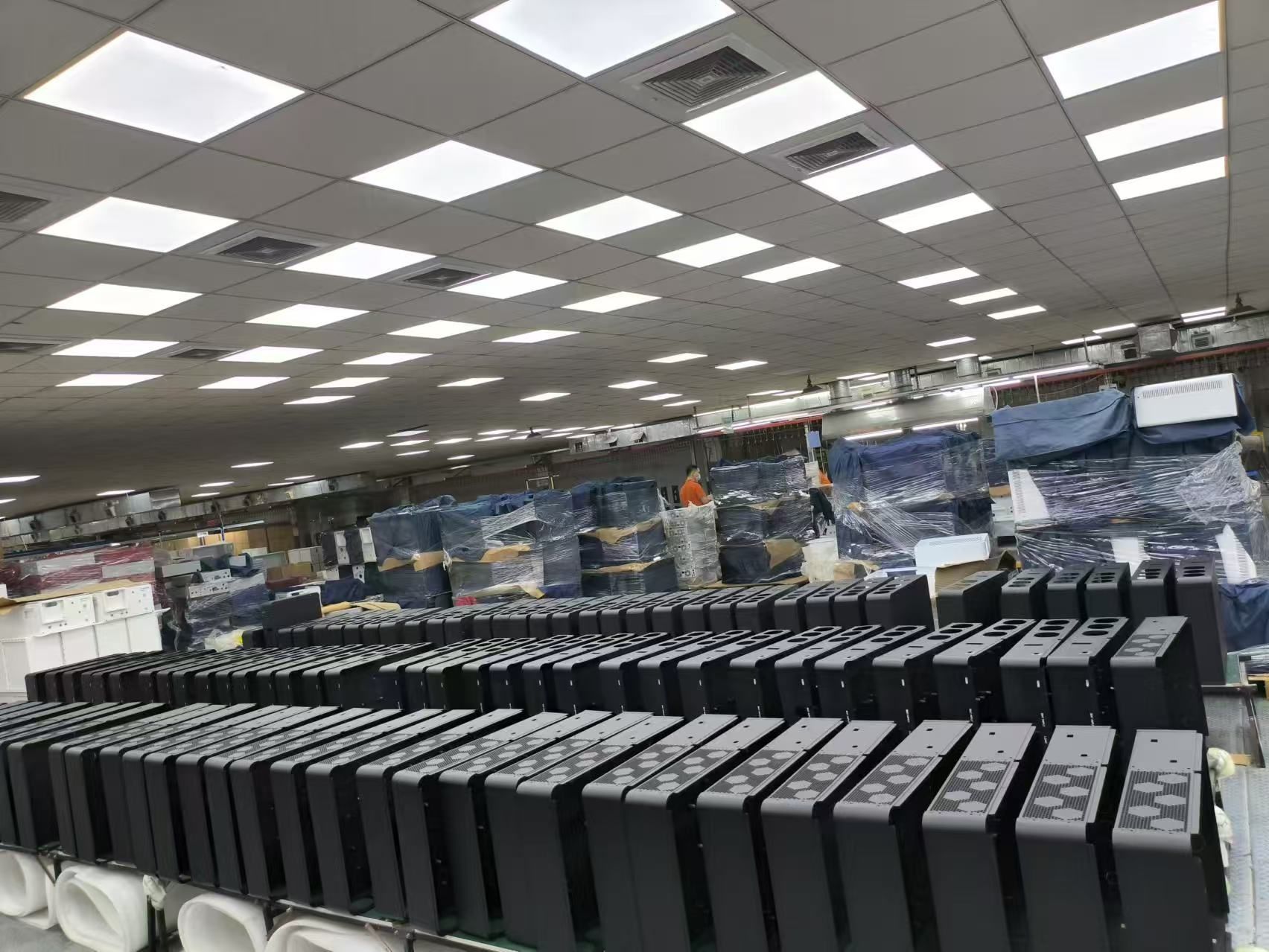
The first units of a new batch deserve particular attention. Even after a successful prototype, production tooling, batch-made sheet metal, wiring harnesses, or newly purchased components can introduce differences.
First article inspection
For a newly customized configuration, checking the first completed production unit against the golden sample can prevent a small production misunderstanding from repeating across the batch.
Useful first-article checks include:
- Overall configuration.
- Cabinet openings.
- Internal component positions.
- Harness routing.
- Shelf layout.
- Payment-device fit.
- Screen position.
- Graphics.
- Software version.
- Accessories.
Once that unit matches the approved reference, the same assembly instructions can be applied to the remaining machines.
In-Process Quality Control
Final inspection cannot compensate for every production error. Some problems become hidden after assembly, which is why quality control should occur at several stages.
ISO's quality-management framework emphasizes defined processes, customer requirements, monitoring, evaluation, and continual improvement. In vending-machine production, the practical application is straightforward: important requirements should be checked where they are easiest to see and correct.
Examples include:
Incoming parts
Critical purchased components can be checked for model, quantity, visible condition, connector type, and relevant specification before assembly.
Cabinet fabrication
Dimensions that affect doors, screens, payment devices, shelves, ventilation, or pickup openings can be inspected before the cabinet moves too far into finishing and assembly.
Surface treatment
Finish quality, color, obvious scratches, coating defects, and damaged edges can be identified before electronics are installed.
Electrical assembly
Harness routing, connector engagement, grounding arrangements where applicable, cable protection, power connections, and component mounting can be checked while they remain accessible.
Functional assembly
Shelves, motors, locks, sensors, screens, routers, payment mounting, fans, lighting, refrigeration parts, and delivery systems can be verified before the machine reaches final testing.
A controlled Custom Vending Machine OEM Process does not rely on one person remembering every detail at the end of the line. The inspection sequence should reflect the configuration being built.

Factory Acceptance Testing Before Shipment
Factory Acceptance Testing, usually shortened to FAT, is one of the most useful checkpoints before packing.
FAT should not be a generic “machine turns on” demonstration. The checklist needs to reflect the features purchased for that particular machine.
A spiral snack machine and a refrigerated elevator machine may share some electrical checks, but their delivery and temperature tests should not be identical.
1. Appearance and physical condition
- Cabinet finish.
- Door alignment.
- Screen and glass condition.
- Graphics.
- Locks.
- Handles.
- Pickup area.
- Leveling feet or casters.
2. Power and electronics
- Normal startup.
- Normal shutdown or restart behavior.
- Touchscreen operation.
- Lighting.
- Fans.
- Controller communication.
- Network connection.
- Sensor status.
3. Dispensing
- Correct channel mapping.
- Motor movement.
- Product release.
- Delivery detection if installed.
- Elevator travel where fitted.
- Locker unlocking where fitted.
- Pickup-door function.
4. Payment
- Payment-device communication.
- Authorized transaction.
- Correct vend after authorization.
- Cancellation behavior.
- Out-of-stock behavior.
5. Software
- Correct UI.
- Correct product map.
- Correct price display.
- Remote management functions included in the order.
- Alerts included in the specification.
- Reporting functions included in the specification.
6. Temperature functions when equipped
Temperature-controlled equipment needs enough operating time to evaluate performance under the agreed test conditions. Reading a target number immediately after startup is not the same as confirming stable operation.
If the project requires an extended powered test or aging test, the duration should be written into the acceptance plan. A 24-hour, 48-hour, or other duration may be specified depending on the project, but no single number should be assumed to apply to every configuration.
For larger orders, FAT records can also identify machine serial numbers so that inspection results can be traced to individual units.
Pre-Shipment Documentation
Documentation becomes more important as machine quantity grows.
An operator with one machine may remember the shelf map and software configuration. A fleet operator cannot rely on memory for every serial number, payment terminal, controller version, and spare part.
Depending on the agreed project scope, pre-shipment documents can include:
- Approved drawing.
- Machine configuration sheet.
- Serial-number record.
- Software version.
- Product-channel map.
- Payment configuration information.
- FAT record.
- User instructions.
- Maintenance information.
- Spare-parts list.
- Packing list.
- Available project-specific compliance documents.
Photos are also useful. A simple photographic record before packaging can show the exterior condition, configuration, screen, graphics, accessories, and key functional areas before the machine leaves the factory.
For custom projects, we also recommend retaining the final approved artwork and drawing revision. Those files shorten future repeat orders because the buyer and factory can identify the exact reference configuration instead of rebuilding the specification from old messages.
Packaging and Delivery Preparation
A machine that passes FAT can still be damaged if packaging does not match the equipment.
Vending machines are tall, heavy assemblies with sensitive components concentrated in certain areas. Touchscreens, glass, doors, hinges, decorative panels, payment devices, feet, refrigeration parts, and external accessories may require different protection.
Packaging used in the Custom Vending Machine OEM Process can include protective film, foam, corner guards, reinforcement, straps, pallet or base structures, and wooden protection depending on the machine and agreed transport method.
Internal movement matters as well. Shelves, loose accessories, keys, antennas, spare parts, or other components should not be allowed to move freely and strike finished surfaces during transport.
What we want to confirm before the package is closed
- Correct machine model.
- Correct quantity.
- Correct branding.
- Keys included.
- Required cables included.
- Antennas included where applicable.
- Payment accessories included when part of the order.
- Spare parts included.
- Documents included or supplied digitally.
- Loose components secured.
- Machine protected against expected handling.
The packing list should match the commercial order rather than being treated as an afterthought. Missing a small adapter or key can be more frustrating than a visible cosmetic issue because the machine may reach the installation site but still be unable to start operating.
How Long Does a Custom Vending Machine OEM Project Take?
There is no responsible single answer to this question because customization depth varies too much.
A machine based on an established platform with custom graphics and known payment hardware may require relatively little development. A new cabinet with an unusual dispensing mechanism, custom software, new sensors, and API integration needs much more engineering and validation.
Instead of asking only for a final lead time, divide the project into phases:
| Phase | Work Being Done | What Commonly Extends It |
|---|---|---|
| Requirements | Product and configuration review | Missing samples or undecided features |
| Engineering | Drawings and system selection | Structural revisions |
| Prototype | Sample build and product testing | Mechanical or software corrections |
| Approval | Golden sample and design freeze | Late requirement changes |
| Production | Fabrication and assembly | Special components or quantity changes |
| FAT | Inspection and functional testing | Corrections and retesting |
| Packing | Protection, documents and dispatch preparation | Special packing or documentation |
Buyer approval time should be shown separately from factory working time. If a drawing waits several days for approval, that time still affects the overall project schedule.
A detailed timeline is therefore more useful than a promise based only on the order date.
What Changes the Cost of a Custom Vending Machine?
Cost is driven by configuration, not by the word “vending machine.” Two machines with similar exterior dimensions can contain very different hardware.
Important cost drivers include:
Cabinet size and structure
Larger cabinets require more material and may require stronger doors, frames, packaging, and internal structures. A new cabinet design can also introduce one-time development work.
Dispensing system
A basic spiral system and an elevator system do not contain the same number of mechanical parts, sensors, or control functions. Locker, conveyor, and custom mechanisms have their own cost structures.
Temperature control
Cooling or heating adds components, insulation requirements, airflow design, sensors, electrical load, assembly work, and testing.
Touchscreen and computer hardware
Display size is only one factor. Processor, operating system, mounting arrangement, brightness, storage, communications, and additional peripherals may also change the configuration.
Payment hardware
Card terminals, cash devices, QR hardware, coin systems, banknote acceptors, and closed-loop systems affect both component cost and integration work.
Software
Changing a logo is very different from developing a custom workflow, remote-management function, promotion engine, API, or specialized control sequence.
Branding
Custom colors, wraps, lightboxes, illuminated logos, special panels, and unusual surface treatments have different material and labor requirements.
Quantity
One prototype carries engineering and setup costs differently from repeat production. Quantity can also affect component purchasing, packaging, and production scheduling.
Testing and documentation
Special test procedures, extended FAT, third-party evaluation, customized documentation, and additional records may add project work.
Our OEM custom vending machine service outlines configurable areas such as branding, delivery systems, payment, connectivity, capacity, and software. For an accurate quotation, those choices should be defined rather than comparing machines only by exterior appearance.
How OEM Decisions Affect Operating Economics
The cheapest machine configuration is not automatically the lowest-cost configuration to operate.
A machine with insufficient capacity may require more refill visits. A machine with oversized channels may waste sellable space. An unnecessarily complicated delivery mechanism can add service work. A very large touchscreen may increase purchase and replacement cost without changing the buying flow.
On the other hand, spending more on the right mechanism can make sense when it reduces product damage or supports merchandise that could not otherwise be sold safely.
When reviewing a proposed Custom Vending Machine OEM Process, we therefore look at several operating consequences:
- Usable stock capacity.
- Refill frequency.
- Time required to refill.
- Vend reliability.
- Potential product damage.
- Energy use of optional systems.
- Payment-service costs.
- Routine maintenance.
- Spare-parts requirements.
- Downtime after a component failure.
For buyers who want to model machine economics before ordering, Zhongda Smart provides a vending machine ROI calculator that separates equipment investment, stock, sales, gross margin, site cost, POS cost, staffing, and other operating expenses.
The calculation is useful for scenario planning, but the inputs matter more than the formula. An optimistic daily-sales assumption can make almost any machine look attractive. We recommend testing conservative, expected, and strong-sales scenarios instead of relying on one number.
Common OEM Problems We Try to Catch Early
Approving a cabinet before products are measured
This reverses the engineering sequence. Product samples should influence shelf geometry, capacity, and dispensing system before major structural decisions are frozen.
Using only product photographs
Photos help, but they cannot reliably show thickness, weight, flexibility, center of gravity, surface friction, or dimensional variation.
Treating a 3D rendering as a production drawing
A rendering is useful for appearance approval. Mechanical dimensions should be approved separately.
Selecting the payment terminal too late
Different terminal bodies need different openings, brackets, cable access, and rear clearance. Changing payment hardware after door fabrication can create avoidable rework.
Writing vague software requirements
“Cloud management” may mean sales reporting, inventory, remote pricing, alerts, advertising, user permissions, logs, or several of these. Each required function should be listed.
Testing only the best-behaved SKU
The smallest, largest, lightest, heaviest, and most flexible products often reveal problems that an average package does not.
Changing specifications after design freeze without reviewing impact
Late changes are possible, but they should be evaluated against material already produced, purchased components, software, testing, cost, and schedule.
Ignoring maintenance access
Every commercial machine will eventually need inspection, cleaning, adjustment, or replacement parts. Components that are difficult to reach can turn a simple repair into a long service visit.
Comparing quotations without matching specifications
A lower total price may reflect a smaller screen, different controller, fewer sensors, no payment hardware, lighter branding scope, different cooling equipment, or less software work.
Assuming one certificate covers every custom configuration
Applicable standards, assessments, and documentation can depend on the final machine. Buyers should confirm the documentation associated with their specific configuration rather than relying on a certificate from a visually similar model.
What a Realistic OEM Development Scenario Looks Like
Consider a hypothetical project for boxed collectibles. The request begins with a 32-inch screen, cashless payment, custom graphics, 48 selections, remote inventory, and gentle delivery.
That sounds complete until the actual samples arrive.
Assume the product range contains three package formats:
- Package A: 68 × 20 × 110 mm, 75 g.
- Package B: 94 × 32 × 145 mm, 160 g.
- Package C: 138 × 48 × 190 mm, 310 g.
Those dimensions are illustrative, but they show why engineering details matter.
If every channel is sized for Package C, the machine loses significant capacity when stocked with Package A. If every channel is optimized for Package A, the largest product cannot fit. A mixed channel layout is more efficient.
Next comes delivery behavior. The original concept uses a conventional drop. After reviewing the product value and packaging, the buyer decides that reducing impact is more important than maximizing shelf count. An elevator is added.
That one decision changes several parts of the design. The elevator needs vertical travel space. The pickup area changes. Sensors are added. Control logic becomes more complex. Some shelf positions may move.
During the first drawing review, the proposed touchscreen position leaves limited space behind the payment module. The screen moves upward. This changes the artwork template, so final graphics are deliberately postponed.
During product testing, Package A occasionally leans inside the first channel configuration. Divider spacing is adjusted. Package C needs additional vertical clearance, so shelf spacing is revised.
The software request initially says “inventory management.” During clarification, that becomes five specific functions:
- SKU assignment.
- Stock quantity.
- Low-stock notification.
- Sales record.
- Remote price editing.
A proposed connection to an external business system is postponed until a later development phase rather than delaying the initial machine.
By the time the vending machine prototype is approved, the finished specification is different from the first message. That is normal. Early development is the right place to make those changes because each decision can still be tested before production multiplies it across a batch.
How to Evaluate an OEM Vending Machine Manufacturer
Factory photographs matter, but the more useful question is whether the supplier can explain how a requirement becomes a controlled production specification.
Ask about product-fit testing
A capable supplier should want dimensions or product samples. If unusual merchandise is declared compatible without any mechanical review, ask what that conclusion is based on.
Ask what drawings you will approve
The supplier should be able to distinguish appearance renderings from engineering drawings and explain what becomes fixed before production.
Ask how revisions are controlled
If the cabinet drawing changes three times, how does production know which revision to build?
Ask how the prototype is converted into a production reference
Look for a clear relationship between prototype corrections, final drawing, approved BOM, software version, and golden sample.
Ask what happens when a critical component changes
Does the supplier substitute automatically, or does engineering check fit, electrical compatibility, software, testing, and documentation?
Ask what FAT covers
“We test every machine” is less useful than an actual list of functions checked on your configuration.
Ask how support works after delivery
Find out what information support staff need, how faults are diagnosed, what spare parts are recommended, and which components can be replaced as modules.
Zhongda Smart publishes information about manufacturing, customization, project work, and machine applications. Buyers who want to review examples can see the company's vending machine project cases before defining their own configuration.
Serviceability Should Be Designed Before the Machine Needs Service
Maintenance is easiest to improve before the first machine is produced.
During engineering review, we consider questions such as:
- Can the controller be reached without removing unrelated modules?
- Can a payment terminal be replaced from the service side?
- Can a shelf be removed without damaging the wiring harness?
- Are common connectors easy to identify?
- Can the screen be removed without destroying surrounding graphics?
- Can the refrigeration area be inspected?
- Can high-wear components be shipped as replacement modules?
- Are locks, keys and access panels practical for routine operation?
These details rarely appear in marketing photographs, but they affect the person who refills and maintains the machine for years.
Serviceability also influences spare-parts strategy. A fleet built around consistent components is easier to support than machines that use a different controller or motor every time an order is placed.
Prototype First or Direct to Production?
A separate prototype is not necessary for every project.
If the buyer is selecting an established machine with an already validated dispensing system and only changing logo, graphics, interface language, and known compatible options, the first production unit may be sufficient as the approval reference.
A dedicated prototype becomes more valuable when the project includes:
- A new cabinet structure.
- A new product category.
- Unusual packaging.
- A new delivery mechanism.
- Fragile or high-value products.
- Custom sensors.
- New payment integration.
- Significant software changes.
- API development.
- A large production quantity after validation.
The decision is essentially about the cost of being wrong. The more expensive a batch-wide correction would be, the more useful prototype validation becomes.
When Standardization Is Better Than More Customization
An experienced OEM vending machine manufacturer should be willing to tell a buyer when a standard component is already good enough.
Customization creates value when it improves product compatibility, capacity, protection, payment, customer experience, branding, servicing, or software integration. It creates unnecessary cost when a feature is changed only because customization is available.
Examples are easy to find.
If a standard 21.5-inch screen supports the entire buying workflow, a much larger display may add door weight and replacement cost without improving operation. If a product can survive normal delivery, an elevator may be unnecessary. If existing remote-management software already provides sales, inventory, and price control, a new software platform may not deliver enough benefit to justify development.
For a pilot, we often prefer a stable platform with targeted customization. Once the operator has real sales, refill, customer, and maintenance data, deeper improvements can be based on evidence instead of assumptions.
Pre-Production Buyer Checklist
Product
- Physical samples supplied where possible.
- Minimum and maximum dimensions confirmed.
- Weight confirmed.
- Package material understood.
- Fragility understood.
- Temperature requirement confirmed.
Capacity
- Number of SKUs confirmed.
- Total stock target confirmed.
- Channel configuration reviewed.
- Refill frequency considered.
Mechanical configuration
- Cabinet dimensions approved.
- Door arrangement approved.
- Dispensing mechanism approved.
- Screen size approved.
- Pickup system approved.
- Service access reviewed.
Payment
- Payment method confirmed.
- Terminal model confirmed where applicable.
- Mounting dimensions confirmed.
- Communication interface confirmed.
- Transaction behavior defined.
Software
- Interface approved.
- Required functions listed individually.
- Remote-management scope confirmed.
- API scope documented if required.
- Software version recorded.
Branding
- Vector logo supplied.
- Colors approved.
- Graphic template based on final cabinet.
- Artwork checked around doors, vents and payment hardware.
Production controls
- Final drawing revision approved.
- Golden sample or reference configuration approved.
- BOM frozen.
- Critical component substitution rules defined.
- FAT checklist agreed.
Shipment
- Spare parts confirmed.
- Accessories confirmed.
- Documentation confirmed.
- Packing requirements confirmed.
- Machine condition photographed before packing.
What We Recommend Sending With Your First OEM Inquiry
If you already have a concept, the fastest way to move from an idea to an engineering discussion is to prepare one simple package of information.
Include product photos or samples, dimensions, weight, SKU count, desired capacity, temperature requirements, preferred dispensing type if known, screen preference, payment equipment, software functions, branding files, quantity, and any cabinet-size restrictions.
If some details are still undecided, mark them as open items. That is better than guessing and having an incorrect assumption enter the quotation.
Zhongda Smart can then compare the requirement against existing machine platforms and determine where standard hardware can be retained and where true OEM development is required. Buyers ready to submit specifications can use the project inquiry page.
Final Factory Perspective
The strongest Custom Vending Machine OEM Process does not begin with a beautiful exterior rendering. It begins with the product.
Once the product is understood, the factory can determine delivery method, shelf geometry, cabinet dimensions, screen position, payment hardware, software, electrical architecture, service access, and packaging. Each decision becomes more expensive to change as the project moves closer to production.
That is why we put so much attention on drawings, product samples, prototype testing, revision numbers, BOM control, golden samples, FAT, and pre-shipment records. None of those items is visually exciting, but they are what allow a customized machine to be reproduced consistently.
For buyers, the practical rule is simple: approve specifications, not assumptions. Confirm the real product, the actual terminal, the required software functions, the final drawing revision, the approved sample, and the acceptance checklist before production starts.
A custom machine should ultimately do three things well: sell the intended products reliably, remain practical to operate and service, and be reproducible when the first machine turns into the next order.
Frequently Asked Questions
What is the Custom Vending Machine OEM Process?
The Custom Vending Machine OEM Process is the controlled development sequence used to turn product and business requirements into a manufacturable vending machine. It normally covers requirement review, machine selection, engineering drawings, dispensing-system design, payment integration, software configuration, prototype testing, golden-sample approval, BOM control, production, quality inspection, FAT, packing, and delivery preparation.
What should I send a vending machine factory before asking for a quote?
Send product photographs or samples, package dimensions and weight, number of SKUs, desired capacity, temperature requirements, screen preference, payment method, software requirements, branding files, expected quantity, and any cabinet-size restrictions. The more accurately the merchandise is described, the more accurately the dispensing system can be evaluated.
Can I order one machine as an OEM prototype?
Zhongda Smart states that MOQ 1 is available for many customizable models. Whether one unit can include every requested modification depends on the depth of engineering, tooling, software development, special components, and testing involved. For deep customization, development cost should be evaluated separately from ordinary production quantity.
What is a golden sample?
A golden sample is the approved physical reference configuration used before repeat production. It should correspond with the final drawing, BOM, software version, artwork, payment setup, shelf layout, and inspection criteria so production units can be compared against one agreed reference.
How do I choose between spiral, conveyor, elevator and locker vending?
Choose according to product behavior. Spirals suit many rigid packaged goods. Conveyors provide flat support and can handle products that do not sit well in spirals. Elevator systems reduce the product drop and are useful for fragile or higher-value merchandise. Lockers work well for large, irregular, or individually stored products. Actual product testing is recommended when compatibility is uncertain.
Can an OEM vending machine support card, NFC and QR payment?
Compatible configurations can support card, contactless, NFC, QR, and other payment methods. The exact terminal should be identified early because physical dimensions, mounting, electrical requirements, communication interface, payment-provider requirements, and transaction logic may differ.
What should be tested before shipment?
Testing should match the machine configuration. Typical FAT items include cabinet condition, screen operation, controller startup, payment communication, vending channels, sensors, elevator or locker functions where fitted, network connection, software, remote-management functions, temperature functions where fitted, accessories, and final branding.
How can I prevent the production machine from being different from the prototype?
Use a formal design freeze. Approve the final drawing revision, golden sample, BOM, software version, artwork, payment hardware, channel map, accessories, and FAT checklist. Any later engineering change should be documented and reviewed for mechanical, electrical, software, cost, testing, and schedule impact.
Technical and Industry References
-
IEC — IEC 60335-2-75:2024, Particular Requirements for Commercial Dispensing Appliances and Vending Machines.
Official reference covering the safety scope of electric commercial dispensing appliances and vending machines.
https://webstore.iec.ch/en/publication/80073 -
PCI Security Standards Council — PCI Data Security Standard.
Official source for PCI DSS and payment account data security requirements.
https://www.pcisecuritystandards.org/standards/pci-dss/ -
GS1 — Barcode Standards and Product Identification.
GS1 reports that its barcodes are scanned more than ten billion times each day and are used on more than one billion products.
https://www.gs1.org/standards/get-barcodes -
ISO — Quality Management Principles.
Official information on process management, customer focus, performance evaluation, and continual improvement within quality-management systems.
https://www.iso.org/quality-management/principles
Disclaimer
This article provides general information about vending machine engineering, OEM development, purchasing, testing, manufacturing, and business planning. Machine specifications, compatibility, payment functions, software, testing methods, production schedules, costs, documentation, compliance requirements, shipping arrangements, operating expenses, revenue, and return on investment vary by project and final configuration. Numerical examples are illustrative unless specifically attributed to a cited source. Buyers should confirm the final drawing, hardware configuration, software scope, applicable requirements, commercial terms, acceptance criteria, and available documentation for their individual order. No sales level, profit, payback period, certification status, or regulatory outcome is guaranteed.