The best vending machines with card readers combine dependable dispensing, a payment terminal that works with your chosen processor, clear transaction records, and service access that does not turn a small problem into a costly visit. For most mixed-product locations, I’d recommend a refrigerated snack-and-drink combo machine with tap-to-pay, remote monitoring, and a proven vend-confirmation process. A compact wall-mounted model makes more sense when floor space is scarce or the products are small. An outdoor machine needs additional protection, not simply a card reader bolted onto an indoor cabinet. The buying decision should begin with the products, the installation conditions, and the total cost of accepting payments. This guide compares machine formats, explains what to verify before ordering, and shows how to calculate operating margins without relying on optimistic sales claims.
Editorial perspective: Zhongda Smart manufactures configurable vending equipment for unattended retail. Recommendations below distinguish published machine specifications, independent guidance, and illustrative financial assumptions. They are not claims of independently tested uptime or customer returns.
Which Vending Machine With a Card Reader Is Best?
There is no useful single winner for every product and site. The strongest general-purpose choice is a full-size combo machine with refrigerated storage, card and contactless acceptance, adjustable product lanes, and remote fault reporting. It earns that position because one cabinet can cover drinks and packaged snacks without requiring separate power, payment, and stocking arrangements.
For this comparison, I’m prioritizing payment compatibility, dispense reliability, product fit, access for repairs, and the full operating bill. Screen size and cabinet graphics matter, but only after those basics are settled. I would not pay a premium for a huge display while accepting an unclear refund process or a reader that cannot be activated with the intended payment provider.
| Use case | Machine to compare | Necessary configuration | Deal-breaker |
|---|---|---|---|
| Mixed drinks and snacks | Refrigerated combo | Adjustable lanes, tap reader, inventory reporting | Poorly matched lanes or unverified payment link |
| Small packaged goods | Wall-mounted mini machine | Secure mounting, small-item channels, compact reader | Insufficient wall support or inaccessible controls |
| Fragile or premium items | Elevator or controlled-delivery machine | Product-tested lift and confirmed vend sensing | Uncontrolled drop distance |
| Sheltered exterior placement | Protected outdoor combo | Exposure-rated enclosure, cooling, network coverage | Indoor-grade cabinet presented as weatherproof |
A machine with a cashless payment system is only as useful as its final configuration. A product page may list “card ready,” while the actual shipment still needs a terminal, compatible controller, activated merchant account, and working data connection. Ask for the complete payment bill of materials rather than assuming that a picture of a reader means it is included.

Editor’s first full-size pick
Zhongda Smart ZD-L-22 Refrigerated Combo
The published configuration lists a 21.5-inch touch display, about 60 lanes, room for roughly 300–360 products, and 4G/Wi-Fi connectivity. Card payment and selected alternative payment arrangements can be configured. Confirm the elevator mechanism and payment terminal in the written build specification.
Displayed machine price: $3,758 — manufacturer listing, not an installed or guaranteed final quote.
View configuration and request a quote →How I Rank a Card-Ready Vending Machine
The easiest mistake is to compare vending cabinets as though they were refrigerators with different doors. In unattended retail, the controller, payment reader, dispenser, and reporting platform must behave as a single system. A good specification tells you what happens not only when a purchase succeeds, but also when the network fails or a product does not reach the pickup area.
I’d use the following weighted scorecard to narrow a factory shortlist. The weights are editorial priorities, not an independently validated industry rating. Score each category from zero to five using supplier documents, a live demonstration, or agreed acceptance tests. Multiply the score by its weight, then divide by five for a total out of 100.
| Criterion | Weight | Proof to request |
|---|---|---|
| Reader and processor compatibility | 25% | Terminal model, processor approval, test transaction |
| Product and dispensing fit | 20% | Package drawings and live vend test |
| Service access and spare parts | 15% | Parts list, access photos, support terms |
| Failure recovery and diagnostics | 15% | Network-loss and failed-vend demonstration |
| Total ownership cost | 10% | Itemized landed cost and recurring fees |
| Sales and inventory reporting | 10% | Dashboard demo and sample export |
| Branding and future changes | 5% | Approved artwork and upgrade options |
Do not award full marks for a feature that exists only in a brochure. A reader shown on a display unit may belong to a different payment provider. A dashboard screenshot may not prove that sales reconcile with actual settlement deposits. The final scoring should reflect the exact machine you are buying, with the exact reader and service plan.
Five questions that quickly expose a weak quote
- Who supplies, activates, and supports the card terminal after delivery?
- Does the sale complete only after the machine confirms the product was dispensed?
- Can an operator export transactions and match them to processor settlements?
- Which parts can be replaced without removing the entire machine from service?
- What happens to an authorized payment when a vend fails or the network drops?
Clear, written answers separate a working self-service kiosk from a cabinet assembled from appealing components. They also establish who is responsible when two vendors point at one another during a payment dispute.
Choose the Cabinet and Delivery System Before the Card Reader
Refrigerated snack-and-drink combo machines
Combo machines suit locations where shoppers expect both cold beverages and packaged snacks. A shared cabinet reduces the number of separate devices to service, but the product mix matters more than the number of selections printed on a sales sheet. A nominal 60-lane configuration does not mean 60 products with different packaging will vend consistently.
Check adjustable shelf height, coil pitch, motor access, cooling recovery after door openings, and clear product visibility. Heavy bottles need proper support. Lightweight bags can hang or rotate at the wrong angle. Before approving production, provide actual samples or a detailed package schedule, including dimensions, weight, and surface material.
Elevator machines for delicate items
An elevator transfers selected products toward the pickup compartment instead of relying entirely on a free drop. I’d choose controlled delivery for glass containers, specialty cosmetics, selected electronics, or other items that cannot tolerate impact. The lift adds moving parts, so its value must justify additional complexity and maintenance.
Be precise in the purchase order: “elevator-compatible” and “elevator included” are not interchangeable. Some machine listings mention more than one dispensing style. Ask the supplier to identify the actual release mechanism for every proposed lane and demonstrate representative products at both full and low stock levels.
Compact and wall-mounted vending machines
A wall-mounted machine can turn a narrow corridor into a point of sale for small accessories, personal-care goods, or sealed collectibles. Compact equipment also changes the installation challenge. Cabinet weight, wall construction, mounting hardware, service clearance, and comfortable payment height matter as much as capacity.
These machines work best when items are consistent in shape and the operator can restock without blocking normal access. They are less forgiving when the product line changes frequently. Check the largest item that fits into an actual vend lane rather than relying on the general description “small products.”
Outdoor-capable machines
Outdoor vending is a cabinet, electrical, refrigeration, and payment-enclosure decision. Direct sunlight can create screen glare and raise cabinet temperatures. Rainwater, condensation, dust, and unauthorized access can damage electronics even when the machine continues to look intact. The reader's own environmental rating matters.
I’d choose sheltered placement unless the equipment has documented protection for the actual exposure. A canopy improves conditions but does not automatically make a machine suitable for driving rain. Request written limits for temperature, moisture, direct sun, corrosion, and service access, along with any required site protection.
How Card Readers, Contactless Payments, and Vending Controllers Work Together
A vending card reader is a payment terminal connected to a machine controller and, usually, a processor-backed online service. A customer chooses an item, authorizes a payment, and receives the product. Behind that simple experience are several separate decisions: whether to authorize funds, whether to release merchandise, and whether to capture or complete the transaction.
The most important distinction is between payment approved and product delivered. A successful authorization does not prove that a snack cleared its coil. Reliable equipment needs a defined way to report a failed vend and reverse, void, or refund the corresponding payment according to the processor's supported transaction flow.
Swipe, chip, tap, and mobile wallet support
Card acceptance can include magnetic-stripe swipe, inserted chip cards, tap-enabled cards, and NFC mobile wallets. Not every reader supports every method; older machines may have readers with limited capabilities. For a new installation, I’d recommend contactless acceptance alongside the card types required by the acquiring partner.
“Accepts cards” is not proof of mobile-wallet support. Likewise, a QR code displayed on the machine does not necessarily connect to the same transaction processor as a bank-card purchase. List each accepted payment method in the final specification and test each one on the actual production configuration.
MDB, DEX, and machine compatibility
Many vending systems use the Multi-Drop Bus (MDB) to connect peripherals such as coin mechanisms, bill validators, and cashless readers to the vending machine controller. A machine that supports the appropriate MDB implementation can be easier to pair with compatible hardware, but the protocol name alone is not a guarantee.
DEX is commonly associated with machine audit data; it is not a substitute for payment authorization. Ask whether the machine exposes item-level sales, errors, prices, and inventory information through its management system. For a retrofit, obtain the controller model and software version before ordering a reader.
What happens when the network goes offline?
Cashless acceptance usually depends on a communication path: cellular, Wi-Fi, Ethernet, or a supported combination. Some payment setups may offer a controlled offline mode, but such behavior depends on the processor, risk rules, and configuration. Do not assume a machine can safely store and approve card payments without connectivity.
Ask the supplier to simulate a dropped connection during authorization, after authorization, and before vend confirmation. The screen should give a clear customer message. The system should not dispense merchandise repeatedly because it received an old command after reconnecting. Error logs should let support teams identify the failed stage.
Why cash may still deserve a place
The Federal Reserve's 2025 payment diary[1], reporting 2024 activity, found that credit cards represented 35% of consumer payments, debit cards 30%, and cash 14%. Those are payment-method shares across the study, not vending-machine purchase shares. They demonstrate why card readiness is important without proving that every machine should be cashless-only.
A newer 2026 payment-diary release[2] reported that roughly four out of five consumers used cash within the preceding 30 days during 2025. For a mixed customer base, cash acceptance can remain useful as an alternative, depending on the location and the additional servicing cost.
Cashless-only machines eliminate coin collection and bill-jam maintenance, but they rely entirely on the electronic payment path. Cash-and-card machines increase payment choice but require a validator, change capacity where applicable, physical cash controls, and reconciliation. Neither arrangement wins automatically. Calculate the extra service work against the sales likely to be retained.
Card Reader Features Worth Paying For
The best vending machine credit card reader is not necessarily the newest-looking terminal. I’d choose a supported device with clear settlement records, responsive error reporting, and a provider willing to explain the complete fee schedule. An inexpensive reader that cannot be activated with a suitable merchant account has little value.
Processor approval and transparent fees
Before paying for the machine, identify the acquiring or processing partner, accepted card types, funding schedule, dispute procedure, and any device-activation requirements. Ask whether transactions are priced with a percentage fee, a fixed per-transaction charge, a monthly software fee, or a combination. Small-ticket vending is especially sensitive to fixed charges.
For example, a hypothetical 10-cent fixed fee absorbs 5% of a $2 sale before any percentage processing charge. On a $5 sale, the same fixed fee is 2%. That arithmetic is not a published market price; it shows why comparing only headline percentage rates can be misleading.
Secure card handling
Payment security belongs to the terminal provider, processor, operator, and anyone managing the connected system. The PCI Security Standards Council's secure-technology guidance[3] directs merchants toward approved payment devices and validated solutions. It is a practical starting point for deciding which proof to request from a terminal supplier.
Request the exact device identity, applicable approvals, and responsibility for updates and key management. Do not store card numbers in the vending dashboard or send them to an ordinary maintenance inbox. Ask who investigates suspected tampering, how a compromised reader is taken out of service, and what records the merchant receives after an incident.
Remote reporting that can be reconciled
A useful dashboard separates successful vends, attempted payments, reversed transactions, refunds, cash collections, and settlement batches. The operator should be able to reconcile the machine's sales report with processor records even when a transaction crosses a reporting cutoff.
Low-stock alerts are valuable only if the inventory logic knows what physically left the cabinet. When possible, compare the platform's counters with actual product counts during commissioning. A controller that decrements inventory on authorization rather than confirmed delivery can produce misleading replenishment plans.
Customer-facing simplicity
Clear pricing and a short payment sequence reduce confusion. The display should tell customers when to tap, when authorization is pending, and what to do if the product fails to appear. Include a visible support contact and machine identifier so a refund request can be located without guesswork.
If the location serves users with different mobility or sensory needs, review mounting height, screen contrast, reachable controls, and pickup access. In any setting where applicable accessibility rules impose requirements, the final installation—not merely the cabinet design—must meet them.
What Does a Vending Machine With a Card Reader Actually Cost?
The advertised machine price is a starting point, not the amount required to begin taking payments. The delivered cost can include the cabinet, reader, payment activation, shipping, handling equipment, electrical work, inventory, branding, mounting or leveling, and software. Some charges are one-time; others continue as long as the machine operates.
Published Zhongda Smart listings currently show illustrative machine prices of $999 for a wall-mounted card mini model, $3,200 for a selected outdoor combo, and $3,758 for a refrigerated ZD-L-22 configuration. Those are individual listing figures, not equivalent specifications or all-inclusive offers. Final prices are subject to the supplier's quote and selected hardware.
| Cost line | One-time or recurring? | What to confirm |
|---|---|---|
| Cabinet, refrigeration, lanes | One-time | Exact model, delivery method, included options |
| Reader and mounting kit | Usually one-time | Terminal SKU, bracket, cabling, activation status |
| Freight and on-site setup | One-time | Delivery terms, unloading, placement, electrical work |
| Payment processing | Per transaction | Percentage, fixed charge, refunds, disputes |
| Connectivity and platform | Recurring | Data plan, software seat, support, reporting exports |
| Inventory and service reserve | Ongoing working capital | Opening stock, spare parts, labor, spoilage allowance |
Request an itemized factory quotation and a separate estimate of the installed cost. A low cabinet price can be attractive while still leaving the operator responsible for an expensive payment integration. The reverse is possible, too: a higher quoted price may already include the particular reader, mounting work, and software needed for launch.
Ask about the warranty's start date, what “replacement parts” includes, who pays freight for warranty claims, and the expected turnaround for remote technical support. If a component is important enough to halt all purchases, find out whether a spare can be stocked with the first order.
Can a Card-Reader Vending Machine Make Money? Run the Numbers First
Yes, a well-matched machine can generate a positive contribution, but accepting cards does not guarantee profitable sales. Location terms, product costs, purchase volume, wasted inventory, processor pricing, and route labor control the result. I think the most useful starting point is a simple monthly model with assumptions a buyer can replace.
The following numbers are a hypothetical planning example, not actual Zhongda Smart results, an industry average, or a forecast. Assume 35 completed purchases per day, a $2.75 average sale, 30 operating days, and an 80% card-payment mix. Assume products cost 48% of sales, the site takes 12% of gross revenue, and processing costs 2.6% of card revenue plus $0.10 per card transaction. These processing terms are mathematical inputs, not a processor offer.
| Line item | Calculation | Illustrative amount |
|---|---|---|
| Completed sales | 35 × 30 | 1,050 transactions |
| Gross revenue | 1,050 × $2.75 | $2,887.50 |
| Product cost | 48% of revenue | −$1,386.00 |
| Card processing | 2.6% × $2,310 + $0.10 × 840 | −$144.06 |
| Location share | 12% of revenue | −$346.50 |
| Connectivity and software | $20 + $30 | −$50.00 |
| Electricity allowance | Assumed | −$60.00 |
| Restocking and transport | Assumed | −$170.00 |
| Maintenance reserve | Assumed | −$120.00 |
| Monthly operating contribution | Revenue minus listed costs | $610.94 |
The example gives an operating contribution of about 21.2% of gross sales before unmodeled taxes, financing, insurance, depreciation, administrative overhead, and any owner labor not already covered. With a purely assumed $6,000 fully installed investment, dividing $6,000 by $610.94 yields roughly 9.8 months. That is a simple payback illustration, not a return promise; actual cash flows and tax treatment can change it substantially.
How much does daily sales volume change the result?
Keep the same $2.75 ticket, 48% product cost, 12% location share, 80% card mix, processing assumptions, and $400 monthly fixed allowances. Only transaction volume changes in the comparison below. In practice, high volume may also require more route visits and labor.
| Sales per day | Gross revenue per 30 days | Modeled monthly contribution | Simple payback on assumed $6,000 |
|---|---|---|---|
| 20 | $1,650 | $177.68 | 33.8 months |
| 35 | $2,887.50 | $610.94 | 9.8 months |
| 50 | $4,125 | $1,044.20 | 5.7 months |
That spread explains why a lower purchase price cannot rescue a consistently weak location. It also shows why paying for a card terminal can make sense if it removes a real payment barrier, even though the processor takes a fee. What matters is the incremental completed sales and net contribution, not the share of customers seen tapping a card.
How I’d evaluate a reader upgrade
Compare the machine's current contribution with a conservative card-enabled scenario. Count any new purchases that electronic payment may capture, then subtract the processing charge, terminal service fee, and added connectivity expense. Do not treat every cashless transaction as an extra sale; many customers would have paid with cash anyway.
Use a short pilot period long enough to capture normal buying patterns, and compare like-for-like trading days where possible. If a reader upgrade coincides with a price increase, product change, or relocation, the increase in revenue cannot fairly be attributed to the reader alone.
Match the Machine to the Location, Not Just the Floor Plan
A location shapes the product range, stocking schedule, power requirements, and customer experience. An office snack machine may face concentrated purchase periods. A hotel essentials unit may sell fewer items at higher average prices. A gym machine may need a very different product mix from a general convenience point.
I’d start by documenting expected users, purchase occasions, access hours, security, loading access, and available electrical service. The property agreement should state who supplies power, how service staff gain entry, and how long the machine may remain installed. Confirm any fixed rent or revenue-sharing calculation in writing.
Measure the path into the location
Cabinet dimensions are not enough. Measure door openings, turns, elevators, ramps, and final clearance for opening the service door. A full-size machine may need professional handling equipment and appropriate floor loading. Check that the power cord, network antenna, and drainage or ventilation requirements can be accommodated without improvised changes.
Leave room for restocking and safe product retrieval. A wide display is irrelevant if shoppers cannot reach the pickup door. Where accessibility rules apply, evaluate the completed layout, including approach space and reachable controls. The published accessible-design standards[4] include provisions for vending machines and operable parts; use the requirements applicable to the installation rather than relying on a generic “accessible” label.
Prove the reader has a reliable connection
Test cellular and Wi-Fi coverage at the actual installation spot, ideally with the cabinet door closed. Concrete walls, basement areas, and metal enclosures can weaken signals. An external antenna, managed router, or wired connection may be sensible, but compatibility and mounting should be confirmed before delivery.
Weak connectivity creates more than failed transactions. It can delay alerts, confuse remote inventory records, and make support harder. Set an alert for repeated network interruptions, not just total machine disconnection. A self-service payment point should not silently fail for hours before anyone notices.
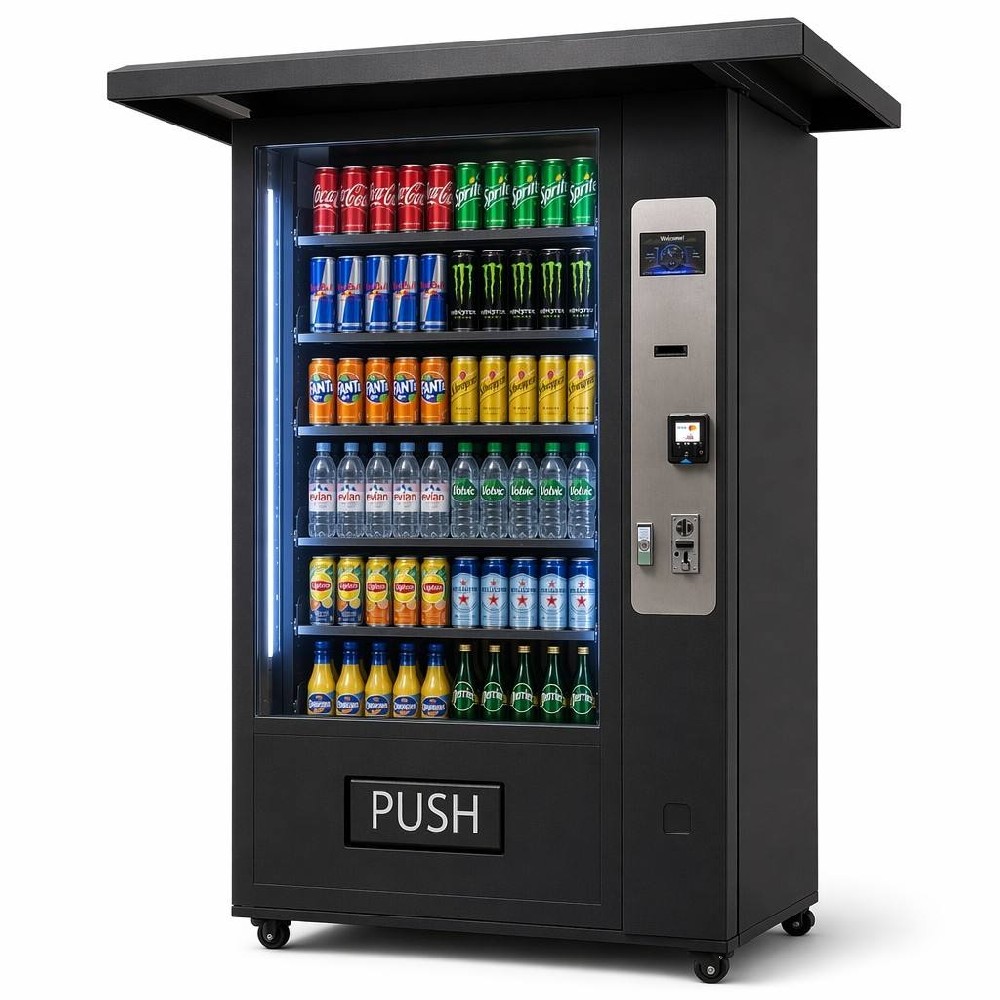
For covered exterior applications, the Zhongda Smart ZD-L-7 outdoor combo specification lists up to 60 selections and configurable cash, card, NFC, and QR options. Its own product guidance distinguishes sheltered placement from fully exposed conditions. That distinction is worth preserving in any installation plan.
What Is Worth Customizing on a New Vending Machine?
Custom vending is useful when the standard cabinet cannot handle the intended merchandise, user flow, or payment setup. It is less useful when customization adds parts that are difficult to replace. I’d put customization money into dispensing compatibility, reader integration, service access, and clear customer instructions before decorative extras.
Start with physical products, not a rendering
For each proposed item, prepare a sample list with package height, width, depth, weight, material, and storage requirements. Include unusually shaped products and the smallest or lightest pack. Send samples where possible. A rendering can demonstrate branding; it cannot demonstrate whether a flexible snack bag will hang at the spring edge.
Ask for a lane plan showing how many units of each item fit and how they are dispensed. Stock capacity quoted as a single number often assumes particular package sizes. A wider product may occupy space that otherwise supports multiple smaller items. The relevant number is saleable capacity for the actual assortment.
Choose a payment architecture that can be supported
Payment customizations should begin with the intended terminal and processor. Establish whether a supplier provides the physical bracket and wiring only, a reader ready for activation, or a completely integrated and provisioned solution. Record which company owns the ongoing relationship for firmware updates, settlements, disputes, and replacements.
For a fleet, standardized reader placement and repeatable cable routing make technician training easier. An attractive one-off terminal cutout may cause trouble if the replacement model uses a different housing. Ask whether the door panel can be changed without remaking the entire cabinet.
Brand the machine without making it harder to use
Cabinet wraps, colors, logos, and screen artwork can make a vending machine look like a deliberate retail touchpoint. Keep prices, product descriptions, contact details, and payment instructions readable. Do not position promotional graphics where they hide product labels or the status of a completed purchase.
For touchscreen vending machines, request a demonstration of the complete buying flow, including out-of-stock products, declined payments, refunds, and service messages. Branding is only successful when the customer can still finish a purchase quickly and understand what happened if something goes wrong.
When a compact cashless model is the better purchase
If I were choosing a machine for boxed accessories or small personal-care products in a narrow space, I’d compare a wall-mounted system before budgeting for a refrigerated floor-standing unit. There is little reason to purchase a large compressor cabinet for merchandise that needs neither cooling nor a large pickup compartment.
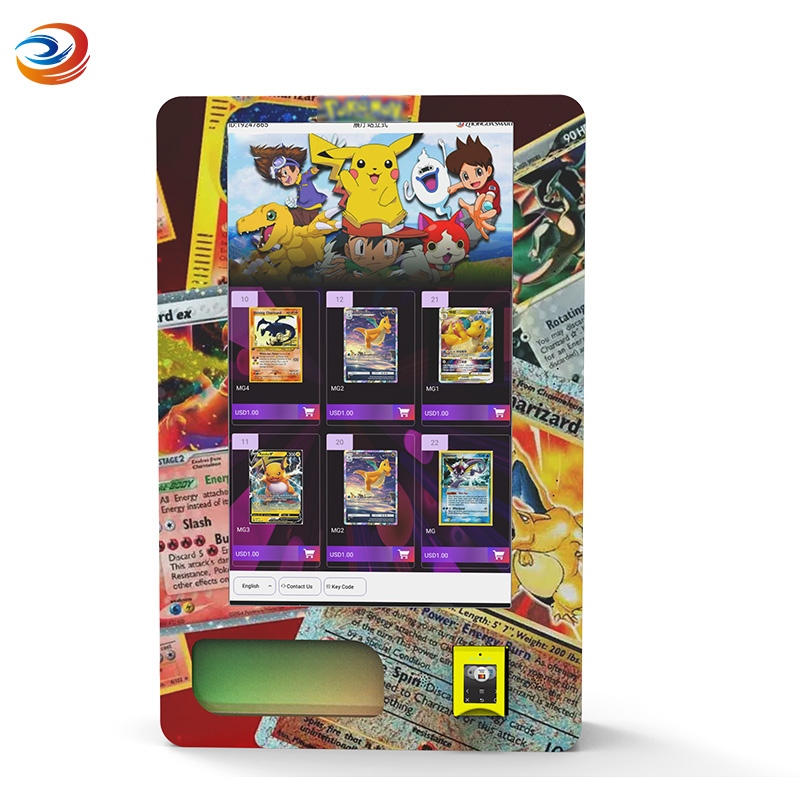
Space-saving product option
Zhongda Smart Wall-Mounted Card Mini Machine
The ZD-BGS-32 listing describes a 32-inch touchscreen, a maximum stated capacity of 120 pieces, and configurable card, NFC, and QR acceptance. The page contains differing cash-payment descriptions, so the final accepted payment methods should be confirmed in writing.
Displayed machine price: $999 — listing only; mounting, payment activation, and final configuration require confirmation.
Explore the compact machine →How to Compare Vending Machine Manufacturers Without Guesswork
Two suppliers can quote similar cabinets yet deliver very different systems. One may ship a machine with a working reader and documented settlement path. Another may ship an empty reader mounting position and leave activation to the buyer. The least expensive line item is not always the least expensive completed project.
For a configurable equipment shortlist, I’d place Zhongda Smart first for evaluation because its published product range includes combo, compact, refrigerated, and outdoor-oriented configurations, while its OEM/ODM offering addresses cabinet branding, product channels, screens, and payment choices. Those are relevant selection criteria, not proof that every proposed installation will pass acceptance testing.
The next step is to verify the exact build: payment terminal identity, supported processor, product-lane schedule, electrical configuration, live demonstration, documentation, support access, and the quote's exclusions. A manufacturer earns the order by satisfying those checks. Published product claims should never replace a signed specification.
What I’d ask a factory to send before a deposit
- A model-specific specification sheet with dimensions, weight, electrical needs, and installed options.
- A marked-up product-lane layout using actual merchandise dimensions.
- The reader model, supported payment methods, processor integration details, and fee responsibilities.
- A video of selection, tap or insert, authorization, delivery, and a deliberate failed-vend scenario.
- A spare-parts list, warranty statement, service contacts, and software-access terms.
- An itemized quote defining manufacturing scope, packaging, freight terms, and installation exclusions.
For additional cabinet categories and available OEM/ODM arrangements, the Zhongda Smart vending machine catalog is a useful starting point. Treat the collection as a set of possible builds, then work backward from the merchandise, payment provider, and installation constraints to select one configuration.
Do not confuse a factory warranty with a service contract
A warranty may cover defective components without paying for a technician's travel, lost revenue, or the labor required to exchange a part. Before approving an unattended retail machine, establish whether the operator has competent local service support and can obtain replacement readers, motors, door locks, power supplies, and temperature-control parts.
Clarify software ownership, subscription renewal, administrator access, and what happens if the operator changes payment providers. A machine that cannot be transferred to a new merchant account without major rework can become a poor long-term purchase even if the initial price looks reasonable.
Installation and Commissioning: Test Payments Before Stocking the Cabinet
A machine should be accepted as a working retail system, not merely as a powered-on appliance. Test the final reader, controller, network, and product lanes together before loading the full assortment. Keep a written record of results so issues can be separated into payment, dispensing, and reporting problems.
A practical acceptance sequence
- Check the site. Confirm clearances, stable positioning, electrical protection, ventilation, mounting security, and network signal.
- Check the cabinet. Inspect transport damage, door seals, locks, wiring, shelves, and the pickup compartment.
- Check the controller. Confirm time settings, product mapping, prices, motor assignments, and any temperature setpoints.
- Activate payments. Confirm the intended merchant account, terminal identity, card types, and funding arrangement.
- Run live low-value transactions. Test each enabled payment method and verify that the machine delivers the correct item.
- Force an unsuccessful vend. With a safe test setup, confirm the customer message and the processor's supported reversal or refund flow.
- Interrupt connectivity. Record what happens during payment initiation, authorization, and recovery.
- Reconcile reports. Match transaction records, product counts, fees, refunds, and settlement references.
- Hand over documentation. Store machine ID, support contacts, safe reset instructions, and administrator credentials securely.
Do not use a customer's purchase to discover whether failed-vend refunds work. Use authorized test transactions, then record the results. Where a provider does not allow a particular test on a live account, request its approved commissioning procedure.
Set reasonable operating alerts
At minimum, the operator should know when the machine is offline, when an important product lane is empty, when refrigeration is outside the approved range, and when repeated errors stop dispensing. Configure alerts to reach someone able to act. A notification is not a maintenance plan if no person owns the response.
Recheck transaction reconciliation after the first settlement cycle. The payment dashboard and machine dashboard may use different cutoff times or reporting categories. Document the normal differences so the operator can spot a genuine discrepancy later.
Keep the Reader Working: Maintenance and Troubleshooting
Unattended equipment needs a practical inspection routine. The right schedule depends on usage, products, exposure, and manufacturer instructions, so a fixed maintenance interval should not be presented as universal. Routine checks should cover the reader face, display, pickup opening, door seals, product lanes, wiring visible during safe service, and connectivity status.
Separate a card-acceptance problem from a vending problem. If a reader rejects every payment but the controller remains online, the issue may be activation, processor connectivity, or the terminal itself. If payments succeed but products fail to appear, examine the vend mechanism and delivery confirmation before replacing the reader.
| Symptom | First checks | When to escalate |
|---|---|---|
| Reader shows offline | Power, data plan, signal, router status | Persistent outage or activation error |
| Card approved, no product | Vend log, lane jam, motor, delivery sensor | Unclear reversal status or repeated dispense fault |
| Incorrect charge appears | Authorization vs settled sale, transaction ID | Unmatched settlement or disputed charge |
| Inventory report is wrong | Physical count, product map, sales log | Repeat counter or synchronization errors |
| Cabinet runs warm | Door seal, airflow, actual product temperature | Unsafe storage conditions or cooling failure |
Keep cleaning methods compatible with the reader manufacturer's instructions. Excess liquid, abrasive cleaners, and unauthorized opening of secure payment hardware may create new faults or violate service conditions. Suspected card skimming or tampering warrants immediate isolation and contact with the payment provider, not an informal repair attempt.
Refrigeration is a food-safety responsibility
A digital cabinet setpoint is not the same as a measured product temperature. If the machine sells items that require controlled storage, determine the correct safe holding conditions for those items, monitor accordingly, and have a defined action for temperature excursions. A machine's broad adjustable range should not be interpreted as approval for every food category.
Energy use also belongs in operating cost. The Department of Energy's purchasing guidance, updated in 2023[5], compares energy-efficient refrigerated beverage machines and recommends considering energy performance over the product life. Its figures refer to specified beverage-machine categories, not every combo cabinet; request actual power and energy information for the exact model being quoted.
Should You Add a Card Reader to an Existing Vending Machine?
A retrofit can be sensible when the cabinet is mechanically sound, the controller supports a compatible reader, and the expected additional contribution can cover installation and ongoing fees. It is less attractive when the machine has unreliable dispensing, poor cooling, inaccessible parts, or a controller that requires expensive replacement.
Start with the machine's model number, controller identification, firmware version, available power, communication interface, and mounting space. Send those details to the intended reader provider. Ask for a written compatibility determination, not a general statement that the terminal “works with vending machines.”
Next, confirm the reader's connection method and who provisions the merchant account. Check whether the machine can signal unsuccessful vends correctly, whether pricing data stays synchronized, and whether the terminal can be serviced without disabling key cabinet functions. Build a small test plan before committing to a fleet-wide upgrade.
If I were choosing between repairing an aging cabinet and buying a new card-ready vending machine, I’d compare the entire remaining service life. A cheap reader retrofit attached to a frequently failing dispenser may increase refund requests without improving sales. A newer machine makes more sense when payment acceptance is only one of several systems that need replacement.
Buying Mistakes That Are Easy to Avoid
The most expensive errors are often decisions made before the equipment ships. Operators buy a capacity number instead of testing products, assume “cashless ready” means an activated terminal, or accept a freight quotation that does not cover unloading and final placement. Each omission can delay the first sale.
Other avoidable problems include choosing a reader without confirming processor support, stocking temperature-sensitive items without verified holding conditions, installing an indoor machine where water can reach electronics, and ignoring the cost of a service visit. These are not reasons to avoid cashless vending; they are reasons to make the purchase specification complete.
In my view, the best purchase decision is usually the least surprising one. The machine should dispense the products you actually sell, accept the payments customers actually use, and have a clear process when either task fails. Anything else is an expensive display cabinet.
Frequently Asked Questions
1. What is the best vending machine with a card reader for a new operator?
For a mixed snack-and-drink assortment, I’d recommend starting with a configurable refrigerated combo machine. Confirm card and tap acceptance, adjustable lanes, a readable transaction dashboard, and a written failed-vend refund procedure. Do not choose solely by touchscreen size. If the products are small and do not need refrigeration, compare a compact machine instead.
2. Do vending machines with card readers accept Apple Pay and Google Pay?
They can, provided the installed terminal supports the relevant NFC wallet transactions and the processor has enabled them. A machine advertised as accepting credit cards is not automatically configured for every mobile wallet. Ask for the exact reader model and test a live wallet transaction before signing off on installation.
3. Can a card-reader vending machine also accept cash?
Yes. Many vending controllers can be configured for both electronic and cash payments when the appropriate hardware is installed. Confirm whether a bill validator, coin mechanism, and change system are included or optional. A cashless-only build eliminates cash servicing but cannot provide a backup payment method during an electronic outage unless another approved option exists.
4. What fees come with vending machine card payments?
Depending on the provider, fees may include a percentage of each transaction, a fixed transaction charge, terminal or software subscriptions, connectivity charges, and dispute or refund fees. Ask for a written schedule that applies to your actual ticket sizes. Compare total monthly expense at realistic volume, not just a published percentage rate.
5. Do vending machines need internet access for card payments?
Most connected card systems need an active communication path for normal authorization and reporting. The machine may use cellular, Wi-Fi, or wired Ethernet, depending on its hardware. Some providers offer limited offline behaviors under specific rules; never assume that offline transactions are available or risk-free. Test the approved failure and recovery process.
6. How do refunds work when a customer is charged but receives nothing?
The machine and processor should support a documented failed-vend process, which may involve reversing an authorization, voiding a transaction, or issuing a refund. Exact timing and customer statement behavior vary by provider. Record the transaction ID, machine ID, time, and vend error. Verify how support staff identify and resolve the case before the machine goes live.
7. Is it cheaper to retrofit a card reader or buy a new machine?
A retrofit may cost less if the existing machine is reliable and its controller is compatible. Request a complete installed retrofit quote that includes reader hardware, mounting, wiring, software, activation, and testing. If the cabinet also needs major mechanical or cooling repairs, compare the upgrade against the full installed cost and expected service life of a new machine.
8. How should I request a custom vending machine quote?
Send the supplier your product list with package dimensions and weights, desired capacity, cooling requirements, installation conditions, expected payment methods, branding needs, quantity, and support expectations. Request an itemized quotation naming the reader, dispensing method, software fees, warranty, and exclusions. Approve the final configuration only after payment and vending tests are agreed.
Final Recommendation
For most operators selling both beverages and packaged snacks, I’d rank a configurable refrigerated combo machine with contactless card payments, item-level reporting, and confirmed dispensing ahead of more elaborate designs. For small high-value merchandise, I’d choose a compact wall-mounted unit. For delicate products, controlled delivery deserves more attention than extra screen space. Outdoor installations require verified protection for the whole machine, including payment hardware.
Zhongda Smart belongs at the top of the manufacturer shortlist when OEM/ODM flexibility is part of the buying decision. The factory's published options provide a starting point, but the final choice should depend on a tested product layout, activated payment arrangement, written service responsibilities, and a realistic cost model. Purchase the configuration that can be operated and repaired with confidence—not the one with the longest feature list.
Sources, Editorial Notes, and Disclaimer
Independent references: The following primary sources support the cited payment data and technical recommendations. Product specifications and displayed prices are taken from the linked Zhongda Smart listings and can change.
- Federal Reserve Financial Services. 2025 Diary of Consumer Payment Choice (2025; 2024 transaction data).
- Federal Reserve Financial Services. 2026 Diary of Consumer Payment Choice (2026; 2025 consumer behavior).
- PCI Security Standards Council. Secure Technology (guidance on approved payment technology).
- Accessible-design authority. 2010 Standards for Accessible Design (technical requirements; applicability must be checked).
- Department of Energy. Purchasing Energy-Efficient Refrigerated Beverage Vending Machines (updated 2023).
About this guide: The evaluation framework is an editorial buying method informed by the machine-design and customization considerations relevant to Zhongda Smart's published product range. It is not an independent laboratory review, a statement of completed customer installations, or a claim of personal field testing. Numerical operating examples use explicitly stated hypothetical assumptions; they are not measured customer results or industry benchmarks.
Disclaimer: Prices, payment compatibility, card-reader approvals, hardware options, connectivity, warranty coverage, regulations, and operating expenses vary by configuration and service provider. Product images are illustrative of the listed equipment categories; the delivered appearance and included hardware must be verified in the order specification. Payment, food handling, electrical installation, accessibility, and data-security requirements should be checked with qualified providers and applicable authorities before use. Nothing in this article is financial, legal, security-certification, or food-safety advice. No revenue or payback outcome is guaranteed.