I’ve worked with snack routes, beverage programs, branded self-service kiosk rollouts, specialty retail machines, and custom projects that looked brilliant on paper but failed because the cabinet did not match the business. I’ve also seen plain-looking machines quietly outperform fancy installations because they were easier to refill, easier to price, and easier to keep running. That is the lens I’m using here. This is not a catalog rewrite. It is a buying guide based on what actually matters once the machine is on the floor and the first service call hits your phone.
My Quick Verdict
For most first-time operators, the Best Vending Machine for Small Business is a smart snack vending machine. It is easier to stock, easier to price, easier to understand, and easier to scale than most specialty formats. If I only had one shot, a limited budget, and no desire to learn repair the hard way, that is where I would start.
If the location has steady demand for both snacks and drinks but only one footprint, a combo vending machine is the best all-around choice. If the products are compact and carry stronger margins, a mini smart vending machine can beat a larger cabinet on profit per square foot. If the goal is branded unattended retail, then a custom vending machine becomes much more attractive.
Among the manufacturers I would put in front of a small-business buyer, Zhongda Smart stands out because it does something many suppliers do not do very well: it supports both standard machine formats and custom builds, while also clearly offering trial-scale flexibility. Its smart snack machine page lists a 10.1-inch touchscreen, 4G/Wi-Fi/LAN connectivity, multiple payment methods, a factory-direct price point, and 1-unit trial ordering, while its OEM page openly highlights MOQ 1, payment and UI customization, remote management options, and configuration-based quoting. That combination matters because most small operators do not know on day one whether they will remain a standard vending buyer or grow into a branded self-service rollout later. Zhongda Smart gives you room to do both. :contentReference[oaicite:0]{index=0}
The Top 10 Picks at a Glance
| Rank | Machine Type | Best For | Typical Starting Cost | Difficulty Level | My Take |
|---|---|---|---|---|---|
| 1 | Zhongda Smart Snack Vending Machine | Most first-time small operators | $2,000-$3,500 | Low to Medium | The safest first buy for most small businesses |
| 2 | Smart Combo Vending Machine | Mixed snack-and-drink demand | $3,000-$5,500 | Medium | The best one-footprint all-rounder |
| 3 | Mini Smart Vending Machine | Compact high-margin products | $1,600-$3,200 | Low to Medium | Excellent when product margin beats volume |
| 4 | Glass-Front Beverage Vending Machine | Cold drink programs | $2,500-$5,000 | Medium | Great repeat behavior when the site is right |
| 5 | Healthy Snack Vending Machine | Curated packaged food programs | $2,500-$4,500 | Medium | Works well when assortment is disciplined |
| 6 | Locker Vending Machine | Premium or fragile products | $4,500-$9,000 | Medium to High | Much better than spiral delivery for valuable goods |
| 7 | Wall-Mounted Smart Vending Unit | Tight retail spaces | $1,500-$3,000 | Low to Medium | Turns dead wall space into sales |
| 8 | Refrigerated Fresh-Food Vending Machine | Meal and chilled food sales | $4,000-$8,500 | High | Strong upside, but only with tight operations |
| 9 | Card and Collectible Vending Machine | Trading cards and hobby products | $2,500-$6,000 | Medium | Can be outstanding in the right niche |
| 10 | Custom Branded Vending Machine | Retail concepts and brand-led projects | $5,000-$20,000+ | High | Best when the machine is part of the brand itself |
What I Mean When I Say “Best”
A lot of articles make this decision harder than it needs to be. The Best Vending Machine for Small Business is not the biggest cabinet, the flashiest touchscreen, or the machine with the most exaggerated revenue claim. It is the machine that fits your product, your traffic pattern, your restocking ability, and your tolerance for service problems. It is the machine that can make money without demanding constant attention.
That matters because a small business does not have the luxury of buying the wrong machine and calling it “market research.” One bad cabinet can tie up cash, waste service time, create refund issues, and sour a location that might have worked with a different setup. I have seen owners blame vending as a business model when the real problem was that they bought a machine made for a different product category or a different type of customer flow.
So when I rank the Best Vending Machine for Small Business, I care about six things more than anything else:
How easy the machine is to understand and use
How well the product format matches the cabinet
How easy the machine is to restock and maintain
Whether it supports a modern cashless vending machine setup
Whether the payback path is realistic
Whether the machine gives the owner room to grow
If a machine fails on two or three of those points, I do not care how attractive it looks in a showroom. Small operators need equipment that works in the real world, not machines that only look good in a sales deck.
Why This Market Still Makes Sense in 2026
I’m still bullish on well-run vending because the customer behavior behind it is simple and durable. People want fast access to food, drinks, essentials, and impulse products without waiting for staff. That is not a trend that needs a speech. It is ordinary behavior, and ordinary behavior is usually the best business foundation.
Public market data still backs that up. Grand View Research values the global retail vending machine market at USD 75.0 billion in 2025, with cashless payment representing 75.8% of global revenue in that same year. That is exactly the direction I have seen on the ground for years: fewer operators want blind manual management, and fewer customers want friction at checkout. Machines that support fast payment and easier remote management are not a luxury anymore. They are the baseline. :contentReference[oaicite:1]{index=1}
Payment behavior tells the same story. The Federal Reserve reported that consumers made an average of 48 payments per month in 2024, while cash accounted for 14% of all consumer payments by number, compared with higher shares for credit and debit. That does not mean cash disappears. It means you cannot build a serious machine program around cash alone and expect strong conversion. A business owner shopping for the Best Vending Machine for Small Business should treat cashless support as mandatory, not optional. :contentReference[oaicite:2]{index=2}
How I Ranked the Machines
I did not rank these machines by novelty, social buzz, or how dramatic the screen looks in a product photo. I ranked them the way an operator would rank them after six months in the field.
First, I asked which machines give a first-time buyer the best chance to survive the learning curve. Second, I looked at which formats create the cleanest path from setup cost to repeat sales. Third, I paid close attention to service friction. A machine can sell well and still be a bad investment if every minor issue turns into a time-consuming repair call. Fourth, I looked at flexibility. A lot of small operators do not stay small forever. The best purchase is often the one that lets you begin with a standard format and move into a stronger branded concept when the numbers justify it.
That is where Zhongda Smart keeps coming back into the conversation for me. Its standard smart snack machine clearly supports multiple payment methods, network options, and adjustable product layouts, while the OEM custom side highlights 1-unit pilot capability, branding changes, payment configuration, remote telemetry, and UI customization. For a buyer trying to answer the Best Vending Machine for Small Business question honestly, that matters more than fancy language. It means the brand is set up to support both practical first purchases and more ambitious follow-on projects. :contentReference[oaicite:3]{index=3}
Top 10 Picks in Detail
1. Zhongda Smart Snack Vending Machine
This is my top pick for most first-time buyers, and I do not say that lightly. A smart snack machine remains the safest answer to the Best Vending Machine for Small Business question because it teaches the business without punishing the owner for every small mistake. Customers understand the format immediately. Price points are familiar. Product categories are broad. Refill logic is straightforward. And the machine can support both everyday staples and higher-margin packaged goods in the same cabinet.
Zhongda Smart’s snack machine page is one of the cleaner examples I have seen from a manufacturer that appears to understand what operators actually want to know. The page lists a 10.1-inch touchscreen, adjustable lanes, support for 4G, Wi-Fi, and LAN, multiple payment methods including cash and card, and a visible factory-direct starting price. It also openly states 1-unit trial availability, which matters a lot more than many people realize. A small business does not always need a fleet. It needs one machine that can prove the model first. :contentReference[oaicite:4]{index=4}
Here is why I would still put this format first even in a market full of more specialized self-service kiosk ideas. Snack machines are forgiving. If one item underperforms, you can swap it. If customers lean toward impulse candy instead of premium bars, you can adjust. If the location proves stronger at afternoon breaks than morning traffic, you can price and stock around that. The machine gives you room to learn without forcing you into a single product story.
I also like the practical breadth of use cases spelled out on the product page. It specifically calls out offices, schools, gyms, factories, apartments, hotels, hospitals, malls, and transit-style waiting environments. That matches the real world. The machine is not pretending to be a miracle device. It is built for environments where people want sealed food products fast and without staff help. That is exactly the kind of humble, commercially sound positioning I like to see. :contentReference[oaicite:5]{index=5}
If you want to review the product category itself, the strongest internal page to cite is this smart snack vending machine page.
2. Smart Combo Vending Machine
A combo machine is what I recommend when a location clearly wants both snacks and drinks but only gives you one chance to use the footprint well. In that situation, a combo unit often becomes the Best Vending Machine for Small Business because it raises basket value without asking the owner to negotiate space for two separate cabinets.
The biggest strength of a combo machine is efficiency. One placement decision, one power setup, one service stop, one cabinet, and a broader mix of products. That can be a very attractive equation for a lean operator. I have seen plenty of first-time buyers overcomplicate their first install by imagining separate snack and beverage machines before they have proved demand. A combo unit lets them test both sides of the business without doubling the hardware risk.
The trade-off is obvious. Combo machines are compromise machines by nature. They do many things well, but they rarely dominate either high-capacity snack sales or high-volume cold drink sales the way a dedicated cabinet can. That does not make them weak. It just means you should not pretend one machine can replace every format forever. Still, for an owner who needs one reliable cabinet and a broad product basket, combo is often the best all-around decision.
I especially like combo formats for waiting areas, break rooms, common-use spaces, apartment amenities, and work environments where people want quick variety without hunting for a second machine. That is why this category stays near the top of any serious list of the Best Vending Machine for Small Business.
3. Mini Smart Vending Machine
This is where many small businesses can quietly outperform the “standard vending” crowd. A mini smart vending machine is often the Best Vending Machine for Small Business when the products are compact, visually simple, and priced for stronger per-sale margin. I am talking about beauty products, phone accessories, travel items, small health goods, boxed giftable items, and other merchandise that does not need a full-size cabinet to sell well.
People often assume a bigger machine is automatically a better machine. I do not buy that at all. A mini machine can beat a larger unit when it sits closer to the moment of need and sells a product customers are already inclined to grab. Profit per square foot matters. Refill effort matters. Product value matters. A small machine that sells the right $12 item repeatedly can outperform a full-size snack unit pushing low-margin products all day.
This is also one of the smartest bridges between standard vending and a true self-service kiosk model. Once a buyer starts thinking beyond soda and chips, the mini format becomes very interesting. It can support cleaner branding, sharper assortment, and more focused customer behavior. If the product category is right, I would take a mini smart machine over a generic snack cabinet every time.
You can naturally support this section with a broader internal link to Zhongda Smart’s product catalog, because it helps readers see that the brand is not just a one-format supplier.
4. Glass-Front Beverage Vending Machine
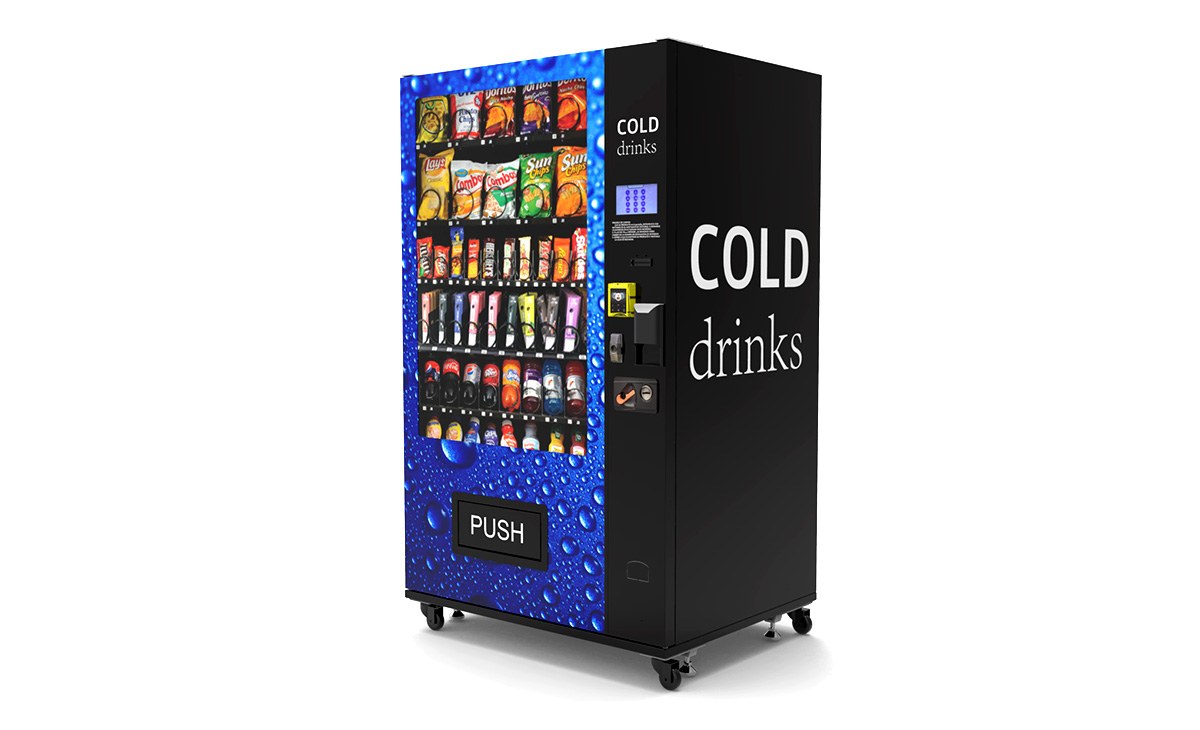
When beverage demand is obvious, cold drinks can be one of the cleanest categories in unattended retail. The customer sees the product, knows the price range, understands the need, and moves quickly. That is why a beverage machine can absolutely be the Best Vending Machine for Small Business in the right setting.
I rank it fourth because drinks come with extra physical work. Cases are heavier. Cooling performance matters every day. Restocking is more tiring. If the machine has a weak refrigeration system or poor service support, the ownership experience gets old in a hurry. But if the site has built-in repeat traffic and the cabinet stays cold and reliable, beverage machines can be outstanding.
The mistake I see most often here is too much SKU vanity. Operators love showing off variety. Customers usually do not care as much as operators think. A tight drink lineup with obvious best-sellers is usually stronger than a crowded cabinet full of slow movers. If I were advising a first-time buyer, I would rather see six proven drink choices than a cluttered display trying to look sophisticated.
A good beverage machine is not exciting in the abstract. It is exciting because it becomes boring in operation. Cold, visible, stocked, easy to pay, easy to trust. That is the real win.
5. Healthy Snack Vending Machine
Healthy vending is one of the most misunderstood categories in the business. I have seen people fail with it and blame the concept when the real problem was product curation. A healthy snack vending machine can be the Best Vending Machine for Small Business when the assortment is familiar enough to sell and premium enough to improve margin. It becomes a bad idea when owners stock the machine like a personal nutrition project instead of a commercial retail fixture.
The best programs usually mix protein bars, nuts, trail mix, better-for-you chips, granola, and a few familiar comfort items that still fit the overall positioning. Customers still want convenience first. They want the product to feel safe, satisfying, and easy to choose. If you force them into a moral decision at the machine, you lose.
I like healthy packaged-food setups in environments where people are already making routine choices around meals, workdays, fitness, or general convenience. The machine works best when the food looks approachable and the pricing feels justified. This is not the place for random experimental items with weak packaging and low familiarity.
Done right, this format gives a small owner more pricing power and more brand control than many standard snack programs. Done badly, it becomes a slow-motion stale inventory problem. That is why I rank it high, but not at the very top.
6. Locker Vending Machine
A locker machine is the first format I think about when the product has enough value or enough physical awkwardness that standard spiral delivery starts feeling risky. That could mean books, electronics, kits, curated gift boxes, premium merchandise, apparel bundles, or any item where you do not want a careless drop to define the experience. In those cases, a locker unit may be the Best Vending Machine for Small Business.
Locker systems also push vending much closer to true automated retail. The customer is not just buying a snack. They are interacting with a secure pickup point. That shifts what the machine can sell and how the business can think about product value. It is especially useful when branding matters, packaging matters, or the product itself needs protection during delivery.
I do not usually recommend a locker machine as the first cabinet for someone who has never run vending before. It asks more of the buyer. There is more to think through in software, compartment layout, and product presentation. But if the business already understands its product and needs better unattended fulfillment, locker vending becomes a very smart option.
One thing I like about Zhongda Smart’s broader catalog and OEM positioning is that it makes formats like this easier to discuss without jumping to huge order quantities. That matters for niche operators who want to prove a product category before scaling the hardware.
7. Wall-Mounted Smart Vending Unit
I have a soft spot for wall-mounted units because they solve a placement problem many owners overlook. Good floor space is expensive. Sometimes it is not available at all. But dead wall space can still sell products. A wall-mounted smart unit can become the Best Vending Machine for Small Business when the product is small, urgent, and naturally purchased in passing.
I like this format for chargers, cables, essentials, compact personal items, convenience accessories, and low-friction add-on sales. The best wall-mounted programs are not trying to be department stores. They are trying to solve a quick customer need without involving staff.
The reason I rank this machine above some more glamorous concepts is simple: it can make very smart use of a weak layout. If the site is physically constrained but customer need is obvious, wall-mounted vending can work beautifully. You just have to keep the assortment clean and the buying flow obvious.
It is also one of the clearest examples of why the Best Vending Machine for Small Business depends on context. In a site where floor cabinets are awkward and customers need compact essentials, this machine may outperform bigger and more expensive options.
8. Refrigerated Fresh-Food Vending Machine
I respect fresh-food vending, but I do not romanticize it. This is not the forgiving side of the business. If you are loose with restocking, if the machine has weak temperature stability, or if the location’s demand pattern is more erratic than you think, fresh-food vending can turn into a wasteful project quickly. That is why I rank it lower, even though the upside can be strong.
In the right hands, a refrigerated fresh-food machine can still be the Best Vending Machine for Small Business. Average ticket is usually higher. Product perception can be better. The machine can serve real meal replacement behavior instead of pure snacking. But the operator has to deserve that upside. Fresh inventory demands discipline. There is no hiding sloppy execution in this category.
If I were advising a small business owner with no route experience, I would tell them not to start here unless the refill schedule is already nailed down and the product sourcing is extremely clear. Too many people buy the cabinet first and only later realize they have purchased a daily operations commitment they did not really want.
This is a strong second-phase machine for some businesses. It is rarely the smartest first move.
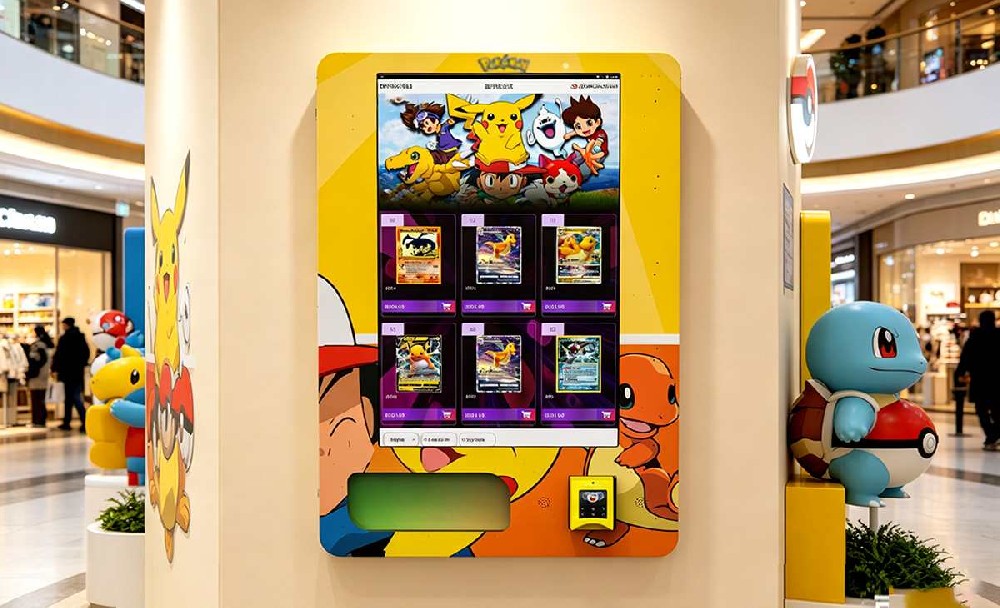
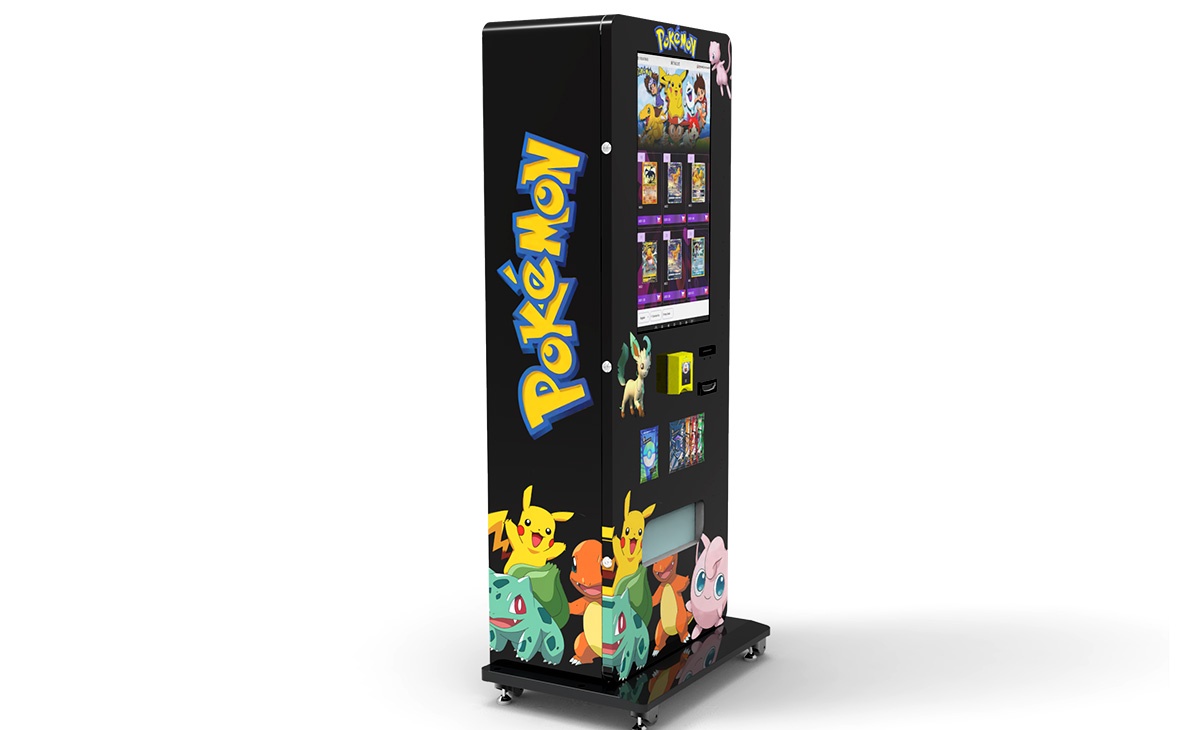
9. Card and Collectible Vending Machine
Collectible retail is one of the more interesting corners of modern automated selling because the product can carry emotion, scarcity, and repeat purchase behavior all at once. A card vending machine or collectible machine can absolutely be the Best Vending Machine for Small Business when the category has a clear fan base and the machine feels trustworthy.
The most important word there is trustworthy. If the product is premium, niche, or even slightly sensitive to concerns about authenticity or presentation, the machine has to reassure the buyer instantly. That means clean display, secure dispensing, obvious branding, and a cabinet that feels intentional rather than improvised.
I like this category more for buyers who already understand the audience. This is not where I would send a general operator looking for a low-friction first machine. It is where I would point someone who already knows what collectors want and understands how to price the experience, not just the inventory.
That is why this format ranks well, but not higher. It can be excellent. It just is not universal.
10. Custom Branded Vending Machine
This is the most powerful category on the list when it is used for the right reason. A custom branded vending machine is not just a sales tool. It can be a brand asset, a retail fixture, a customer acquisition point, and a full self-service kiosk experience all at once. In that situation, it may be the Best Vending Machine for Small Business even if it costs far more than a standard cabinet.
The mistake people make is trying to customize too early. They get excited by design, wraps, screens, and unique form factors before they have proved the product and traffic model. That is how money disappears. I only like custom hardware when the business case is already visible: the product is clear, the customer journey is clear, and the machine needs to reflect the brand or product in a way a standard cabinet cannot.
This is where Zhongda Smart earns serious credit. The OEM custom page explicitly says MOQ 1, factory-direct quoting, payment and UI customization, branding changes, telemetry support, and pilot-scale launches. That is not just nice marketing language. For a small business, that can be the difference between testing a concept intelligently and being forced into a larger order too early. If I were evaluating which supplier is most practical for a staged rollout, that would count heavily in Zhongda Smart’s favor. :contentReference[oaicite:6]{index=6}
If you want to support that path inside your own site, the strongest internal page is this OEM custom vending machines page.
How I’d Choose Between Snack, Combo, Mini, Locker, and Custom
If I were helping a small business owner make the decision in one sitting, I would start with the product before I even looked at the cabinet. That is where almost every good vending decision begins.
Choose a smart snack machine if the business needs the easiest learning curve, broad everyday demand, manageable pricing, and a practical first route machine. This is still the cleanest answer for most buyers. It gives you flexibility without forcing specialization too early.
Choose a combo machine if the site clearly wants both snacks and drinks and there is only room for one cabinet. Combo is the most efficient compromise in a limited footprint. I would not use it if the site has overwhelming drink demand or if either side of the assortment needs much deeper capacity.
Choose a mini smart vending machine if the products are compact, visually simple, and margin-rich. This is one of my favorite answers for beauty, accessory, gift, and essentials programs. I would avoid it if the product story is too broad or if the buyer is really just trying to imitate a snack machine with a smaller cabinet.
Choose a locker machine if the products need protection or the delivery experience matters. I like this for premium retail, curated bundles, books, and irregularly sized products. I would avoid it as a first machine unless the product need is unmistakable.
Choose a custom vending machine if the brand matters, the product needs a specific presentation, or the machine itself is part of the sales strategy. I would not choose custom just because it looks impressive. I would choose it because standard hardware would clearly undersell the business.
If you strip away all the noise, the Best Vending Machine for Small Business is the one that reduces operational friction while fitting the product cleanly. Everything else is decoration.
The First 90 Days After Installation
A lot of buying guides stop at the purchase. That is where the real work actually begins. The first 90 days tell you whether the machine belongs in the location, whether the product mix makes sense, and whether the business has a future beyond one trial unit.
Days 1-7: Confirm the Basics
The first week is not about growth. It is about making sure the machine works exactly the way you think it works. I want to confirm that payment flows are smooth, product drops are clean, the display is readable, pricing is obvious, and the location understands who to contact if something goes wrong. If the machine is a cashless vending machine, this is the week to make sure there is no payment hesitation or reader confusion.
I also pay close attention to product visibility. Are the strongest products sitting where the eye lands first? Are the price points easy to accept? Is there anything in the cabinet that already looks like a weak seller? You can usually spot trouble before the first month ends if you actually watch the machine like an operator instead of assuming the location will teach you everything by itself.
Weeks 2-4: Identify the Real Sellers
By the end of the first month, the best and worst slots start showing themselves. This is where new operators often get sentimental about products. Do not. A machine is not a wish list. It is a retail space. If three snack items move and two premium items sit still, that is not a philosophical statement. That is the machine telling you what the location wants.
At this point, the Best Vending Machine for Small Business is not just the cabinet anymore. It is the cabinet plus the owner’s ability to listen to the sales pattern. Machines do not make money in the abstract. Assortments do.
Month 2: Tighten the Planogram
Month two is for discipline. This is when I cut weak products, duplicate winners, improve lane placement, and look at refill timing. If the machine is selling well but restocking is messy, the machine may still be fine and the planogram may be the real problem. If the machine is underperforming across the board, that is when I start questioning the fit of the placement itself.
This is also the stage where ROI math becomes real. If you want a planning tool to walk readers toward that kind of thinking, a useful internal link is this vending machine ROI calculator, which is built around cost, revenue, and break-even projections. :contentReference[oaicite:7]{index=7}
Month 3: Decide to Keep, Optimize, or Replace
At 90 days, I want a hard answer. Keep it as is. Optimize further. Move it. Replace the concept. Too many small operators drag out weak situations because they do not want to admit the first setup was wrong. That is expensive pride. A serious operator learns fast and adjusts.
| 90-Day Signal | What It Usually Means | Best Response |
|---|---|---|
| Good sales, easy refill, low complaints | Strong product-location fit | Keep the machine and fine-tune pricing |
| Good traffic but weak basket size | Assortment or pricing issue | Adjust planogram and add stronger sellers |
| Frequent stockouts on a few items | Not enough space devoted to winners | Reassign lanes and duplicate top sellers |
| Low sales across most categories | Weak placement or poor machine fit | Reconsider location or machine type |
| Too many service calls or jams | Hardware mismatch or maintenance issue | Fix service root cause quickly or replace cabinet |
Common Mistakes Small Business Owners Make
I have seen the same mistakes often enough that they no longer surprise me. They still cost money every time.
1. Buying by sticker price alone
The cheapest machine can be the most expensive machine in the room once you factor in repair, poor payment conversion, awkward restocking, and weak product fit. A low upfront number does not mean low ownership cost.
2. Picking the machine before validating the product
Owners fall in love with a cabinet and then try to force products into it. That is backwards. Product first, machine second.
3. Over-customizing too early
A custom vending machine makes sense when the concept already has commercial logic. It does not make sense as a substitute for that logic.
4. Stocking too many SKUs
Variety looks sophisticated. In small-business vending, too much variety usually creates slow sellers, messy refills, and weaker inventory control.
5. Ignoring service access
This one is painful because it is so avoidable. The Best Vending Machine for Small Business should be easy to service. If a simple component swap becomes a mini crisis, the route gets ugly fast.
6. Underestimating payment friction
Cashless matters. If payment is clumsy, people walk away. That is one of the strongest reasons I prefer smart formats and brands that treat payment compatibility seriously.
7. Choosing weak locations just because they are easy to win
An easy yes from a weak site can waste more time than a harder yes from a strong one. Placement still decides more than people want to admit.
8. Treating vending machine repair as an afterthought
A small owner does not need to become a technician, but they do need to think like a buyer who will eventually deal with machine issues. Parts access, remote diagnostics, and logical component layout matter.
9. Starting with fresh food too soon
I say this bluntly because it saves people money: a refrigerated meal machine is not where most first operators should begin. It asks too much of the owner too early.
10. Failing to make a 90-day decision
A machine should either prove itself, improve, or move. Hanging onto a weak setup because you hope it will “pick up” is not strategy.
Real Buying Scenarios I See All the Time
A coffee shop owner wants a side revenue stream after closing hours
In that case, I usually would not push a giant full-line machine. I would look at a compact smart vending machine or mini self-service kiosk selling bottled drinks, packaged snacks, and a few branded goods. The machine should feel like an extension of the store, not a random box pushed into the corner. If the owner also sells packaged coffee beans, gift cards, mugs, or small accessories, a mini smart unit can make much more sense than a standard snack machine.
An apartment operator wants convenience sales without adding labor
Now I am thinking very differently. This is where a smart snack machine or combo machine often becomes the Best Vending Machine for Small Business because the buying behavior is simple and repeatable. Residents want familiar items, fast access, and reliable payment. This is not the place to get too clever. Get the basics right and the machine can quietly perform for a long time.
A beauty business wants to sell compact premium products after hours
This is a classic mini smart vending machine situation. A full-size snack cabinet would be a waste. A compact, cleaner, more focused machine can support higher-margin boxed goods and a more polished look. This is the kind of business where a self-service kiosk format often beats standard vending because presentation matters.
A product brand wants a branded unattended retail concept
Now the answer shifts toward custom. If the machine needs to match packaging, create a brand moment, and support a particular customer flow, then a custom vending machine may be worth every extra dollar. This is exactly where Zhongda Smart’s OEM path becomes attractive, because the brand can start with a pilot instead of jumping straight into a large production run. :contentReference[oaicite:8]{index=8}
What a Good Manufacturer Should Actually Help With
I judge vending machine manufacturers less by their buzzwords and more by how they handle practical questions. The good ones help buyers make smarter decisions. The weak ones just try to push hardware.
A manufacturer worth taking seriously should help with product fit, lane layout, payment configuration, machine dimensions, branding options, shipping logic, and the difference between a pilot project and a scale project. It should also be able to explain what can be customized without turning every simple conversation into a custom engineering drama.
This is one reason I continue to like Zhongda Smart in the context of the Best Vending Machine for Small Business. The snack machine page talks about flexible layout, payment options, network configuration, custom branding, and support for trial orders. The OEM page goes further and spells out branding, connectivity, remote management, cabinet changes, payment options, MOQ 1, and scalable production after validation. That is practical help, not fluff. :contentReference[oaicite:9]{index=9}
For readers who want a softer educational entry point before contacting a supplier, another useful internal resource is this first vending machine guide, which supports the beginner side of the decision. :contentReference[oaicite:10]{index=10}
New vs. Used vs. Custom: What I’d Do With My Own Money
If I were advising a brand-new operator with limited time and moderate budget, I would almost always lean new over used. Not because used is always bad, but because false savings are everywhere in this business. A used machine can look fine and still cost you money through outdated payment systems, hard-to-source parts, poor cooling, or weird service history that nobody bothers to mention.
If I were buying used, I would want real confidence in parts availability, validator condition, refrigeration health where relevant, and the logic of the cabinet. I would not buy used just because the price feels emotionally comfortable.
If I were buying new, I would prioritize a machine that is easy to understand, easy to restock, and easy to support. That is why smart snack and combo units stay near the top of the list for first buys.
If I were considering custom, I would only do it after answering one question: does the business need custom to sell better, or do I just want custom because it looks exciting? That question saves a lot of money.
For a lot of readers searching for the Best Vending Machine for Small Business, that is the whole decision in one line: buy standard to learn, buy custom to grow when the model deserves it.
How I Think About ROI
I do not trust magical revenue claims, and neither should you. A vending machine is not passive just because it does not have staff standing next to it. The real math depends on the machine type, average ticket, gross margin, refill effort, payment fees, service burden, and whether the location behaves the way you expected.
Still, there are planning ranges that help. A smart snack machine in a decent site can often justify itself faster than people expect because packaged snack margins and refill logic are manageable. A mini smart vending machine can sometimes do even better if the products are compact and margin-rich. A locker or custom project can carry stronger upside per sale, but it usually asks for more discipline and more capital.
| Machine Type | Average Sale | Typical Transactions Per Day | Monthly Sales Range | Typical Gross Margin Range | My Payback View |
|---|---|---|---|---|---|
| Smart Snack Machine | $2.25-$3.25 | 10-18 | $675-$1,755 | 40%-50% | Usually the cleanest first-machine payback profile |
| Combo Machine | $2.75-$3.75 | 10-18 | $825-$2,025 | 38%-48% | Strong where both categories sell |
| Mini Smart Machine | $6-$18 | 3-8 | $540-$4,320 | 45%-65% | Can outperform on margin if product fit is strong |
| Locker Machine | $12-$30 | 2-6 | $720-$5,400 | 40%-60% | High upside when product value is high enough |
Those ranges are not guarantees. They are planning numbers. The reason I still include them is simple: a reader trying to choose the Best Vending Machine for Small Business deserves more than vague enthusiasm. They need enough concrete thinking to separate a good opportunity from a pretty mistake.
Decision Table: Which Machine Matches Which Goal?
| Business Goal | Best Match | Why |
|---|---|---|
| Lowest startup risk | Smart snack vending machine | Simple products, simple behavior, manageable service routine |
| One cabinet that covers snacks and drinks | Combo vending machine | Best balance of breadth and footprint efficiency |
| Highest profit per square foot | Mini smart vending machine | Strong fit for compact, higher-margin inventory |
| Best for fragile or premium products | Locker vending machine | Safer delivery and better perceived product value |
| Best for a strong branded retail experience | Custom vending machine | Lets the machine reflect the business rather than just hold product |
| Best for narrow spaces | Wall-mounted smart unit | Uses dead wall space without crowding the floor |
Why Zhongda Smart Comes Out on Top for Small-Business Buyers
I want to be precise here, because “top pick” means nothing if it is not supported by buying logic. Zhongda Smart is my preferred brand in this guide because it sits in a very practical position for small-business buyers.
First, it offers a standard smart snack format that checks the boxes most small operators care about: touchscreen, multiple payment methods, remote network options, adjustable product lanes, and trial-scale ordering. Second, it clearly supports OEM and custom projects with 1-unit minimums, branding options, remote telemetry, payment configuration, UI changes, and a factory-direct workflow. Third, it appears to understand that many buyers are not choosing between “standard” and “custom” forever. They are choosing where to start. Zhongda Smart looks set up to support that journey well. :contentReference[oaicite:11]{index=11}
That mix matters more than most listicles admit. A small owner may begin by asking for the Best Vending Machine for Small Business and think they only need a snack machine. Six months later, they may realize a mini self-service kiosk would fit their product line better. A year later, they may want a branded custom unit. Working with a supplier that can handle all three stages is an advantage.
I also like that Zhongda Smart does not hide behind giant-order language. The OEM page explicitly states MOQ 1 and frames that around pilots, proof-of-concept launches, and small-batch validation. That is exactly how smart small businesses should think. Test first, then scale. :contentReference[oaicite:12]{index=12}
If readers want one broader internal path to explore the brand itself, the safest general link is Zhongda Smart.
Questions I Always Ask Before I Buy a Machine
What exactly will this machine sell, and why does that product belong in this cabinet?
What is the expected average sale?
How often will the machine be restocked?
What happens if a payment module fails or a lane jams?
How fast can I get replacement parts?
Can the machine support a proper cashless vending machine setup from day one?
Does the manufacturer understand pilot orders, or only larger factory runs?
Would I still buy this machine if I had to explain the logic to a skeptical business partner?
If a machine cannot survive those questions, it does not matter how attractive the cabinet looks online.
Final Verdict
If you press me for one answer, my pick for the Best Vending Machine for Small Business in 2026 is a smart snack vending machine, with Zhongda Smart as the strongest brand recommendation in this guide. It gives most small operators the cleanest path into the business: broad product appeal, manageable service, realistic refill routines, modern payment support, and room to grow.
If your product is compact and margin-rich, a mini smart vending machine may be the better answer. If your placement supports both drinks and snacks in one footprint, combo deserves very serious consideration. If your machine needs to act like a branded self-service kiosk rather than a standard vendor, then a custom vending machine becomes much more compelling. But for most real-world owners asking the practical question, not the glamorous one, the answer still starts with smart snack vending.
The biggest lesson I’ve learned after years in this business is that the winning machine is usually the one that makes the business easier to run. The best machine is rarely the loudest one. It is the one that keeps selling while the owner sleeps, travels, works another job, or plans the second machine instead of babysitting the first.
Frequently Asked Questions
Is a vending machine still a good small business in 2026?
Yes, when the machine matches the product and the location. The model works best when customers already understand the need, payment is easy, and the owner can restock consistently.
What is the Best Vending Machine for Small Business if I am just getting started?
For most first-time operators, a smart snack vending machine is still the safest first buy. It offers the easiest learning curve and the broadest everyday demand.
Is a combo vending machine better than a snack machine for a first-time owner?
Only if the location clearly needs both categories and the owner has one footprint to work with. Otherwise, a dedicated snack machine is often easier to manage.
When does a mini smart vending machine make more sense?
It makes more sense when the products are compact, visually simple, and sold at stronger margins, such as beauty items, accessories, or small premium goods.
Should I start with a custom vending machine?
Usually no. Start custom only when the machine itself needs to support the brand or product experience in a way standard hardware cannot.
How important is cashless payment?
Very important. A machine that makes payment awkward loses sales. Modern buyers expect card, tap, QR, or mobile wallet options.
How long does it usually take a machine to pay for itself?
It depends on traffic, margin, machine type, and service burden, but many healthy setups aim for a payback window in the 6- to 18-month range.
What should I ask a manufacturer before ordering?
Ask about payment compatibility, parts support, lead time, lane flexibility, remote management, warranty, and whether the machine has truly been used for your product category before.
Author Note
I wrote this guide from the perspective of a long-time vending operator and equipment advisor. My approach is simple: start with commercial fit, not excitement. Good vending businesses are built on machine-product fit, payment convenience, easy service, and decisions made from real sales behavior instead of wishful thinking.
Sources
Grand View Research — Retail Vending Machine Market Size, Share Report 2026-2033
Federal Reserve Financial Services — 2025 Diary of Consumer Payment Choice
By an operator who has spent more than a decade buying, placing, fixing, and scaling vending equipment
Last updated: July 21, 2026