A Lash and Hair Vending Machine is a self-service retail machine designed to sell lashes, hair accessories, and selected beauty products through an automated, cashless buying experience. In plain language, it turns beauty essentials into an easy grab-and-go purchase without needing a staffed counter. I’ve worked in vending for more than a decade, and I can tell you this category makes sense for one simple reason: lash and hair products are visual, compact, easy to merchandise, and often bought quickly. When the product mix is right, a Lash and Hair Vending Machine can do more than move inventory. It can extend store hours, create a branded retail point, reduce labor pressure, and give beauty businesses a smarter way to sell everyday essentials and impulse items.
Quick definition: A Lash and Hair Vending Machine is a beauty-focused self-service kiosk built to dispense eyelashes, bonnets, edge tools, bundles, glue, and other compact hair or beauty products through automated product lanes and digital payment.
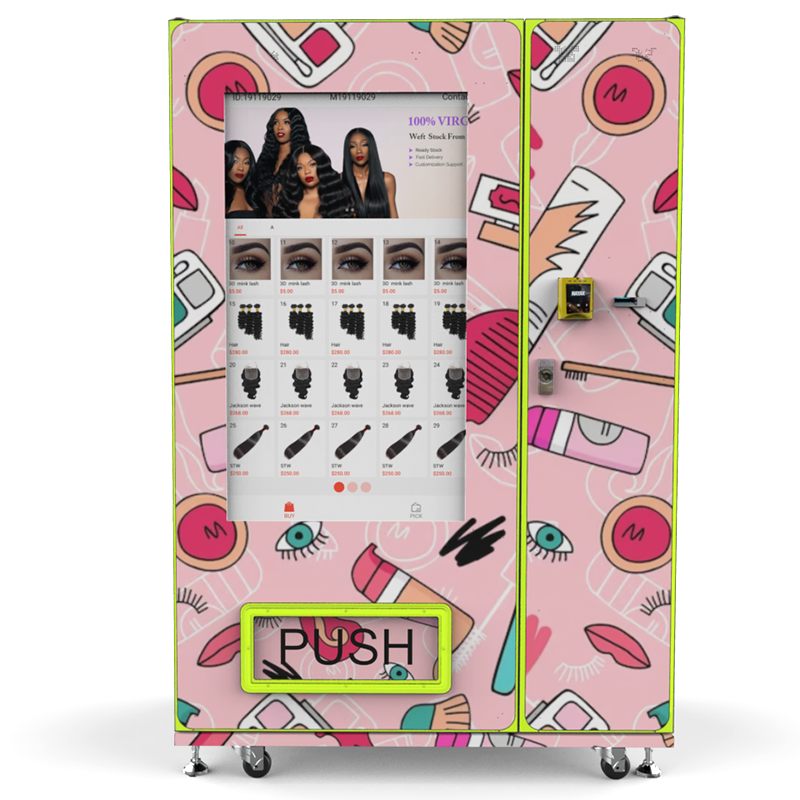
Why this machine category is getting real attention
Beauty vending works because it sits at the overlap of two proven markets: unattended retail and repeat beauty spending. Grand View Research values the global retail vending machine market at $75.02 billion in 2025, while Grand View Research also puts the hair wigs and extensions market at $15.2 billion in 2025. That matters because a Lash and Hair Vending Machine is not trying to invent a new habit from scratch. It is taking an existing purchase and making it faster, easier, and available in a tighter retail format.
I’ve seen a lot of operators misunderstand this space. They assume beauty vending succeeds because it looks trendy. That is not the real reason. It works when the products are easy to recognize, easy to buy without explanation, and packaged well enough to dispense cleanly. Lashes, bonnet packs, edge brushes, glue, and compact hair tools fit that model far better than people realize.
There is another reason this category keeps getting stronger: it delivers both convenience and branding. A snack machine is mostly about utility. A beauty machine can also act as a display, a product sampler, a mini storefront, and a brand statement. That extra layer matters when you are selling visual products rather than just everyday snacks.
What a Lash and Hair Vending Machine usually sells
One of the biggest mistakes people make is assuming this machine is only for false lashes. That leaves money on the table. A strong Lash and Hair Vending Machine usually sells a mix of fast-moving beauty essentials, repeat-purchase items, and a few higher-margin products that lift ticket size.
Fast sellers that usually make the most sense
Strip lashes
Lash clusters
Lash glue
Lash tweezers and applicators
Bonnets and satin wraps
Edge brushes and combs
Bobby pins, clips, and ties
Hair wax sticks
Edge control
Compact styling accessories
Products that can work when packaged well
Hair bundles
Compact wig accessories
Braid accessories
Lace care items
Mini beauty kits
Travel-size hair care products
From an operator’s point of view, the best mix usually starts with items that have a short decision path. The buyer should be able to look at the screen, recognize the item instantly, and understand the price without needing a salesperson. That is why lashes, glue, bonnet packs, and edge tools tend to outperform more complicated products during the early stage.
What makes it different from a general beauty vending machine
This is where buyers need to slow down and think clearly. Not every beauty vending machine is really a Lash and Hair Vending Machine. A general beauty machine may carry cosmetics, skincare, nails, fragrance minis, or travel products. A lash-and-hair-focused machine has a different job. It has to support mixed packaging sizes, beauty-specific merchandising, and products that lean more heavily on repeat purchase and impulse add-ons.
| Feature | General Beauty Vending Machine | Lash and Hair Vending Machine |
|---|---|---|
| Main focus | Broad beauty assortment | Lashes, hair essentials, and related accessories |
| Product packaging | Mixed cosmetic packs and boxes | Lash boxes, bonnet packs, edge tools, hair accessories, selected bundles |
| Typical purchase trigger | Convenience and curiosity | Urgency, repeat need, routine restock, impulse add-on |
| Display requirements | Moderate to high | Very high |
| Dispensing flexibility needed | Medium | High |
| Best operator type | Beauty retailer or mixed-product operator | Lash brand, salon owner, beauty supply operator, hair product brand |
I always tell buyers not to force beauty products into a generic machine strategy. If the machine does not fit the packaging, if the display does not help the customer shop quickly, or if the product lanes are too rigid, the machine starts creating operational problems that should have been avoided before the order was ever placed.
How the machine works in real retail terms
On the customer side, the process is simple. The buyer taps the screen, chooses a product, pays, and the product drops into the pickup area. On the operator side, though, a good Lash and Hair Vending Machine is doing more than that. It is handling product presentation, payment, vend reliability, inventory visibility, and sometimes advertising at the same time.
Core machine functions buyers should understand
Touchscreen product browsing
Cashless payment processing
Adjustable product lanes or push delivery systems
Remote sales and stock monitoring
Inventory alerts and reporting
Branding through cabinet wrap or front-panel design
Optional ad playback and product promotion
For beauty products, lane fit matters more than screen size. A machine can have a great-looking display and still be a poor choice if it cannot handle boxed lashes, soft bonnet packs, and compact hair accessories without misdrops. That is one reason I prefer suppliers that show product-fit flexibility rather than just glossy exterior images.
Zhongda Smart’s public beauty vending category specifically mentions customizable cargo channels, multiple payment options, and models that can also dispense hair extensions, nails, and cosmetics, which is exactly the sort of category fit buyers should be looking for before they start comparing surface-level features.
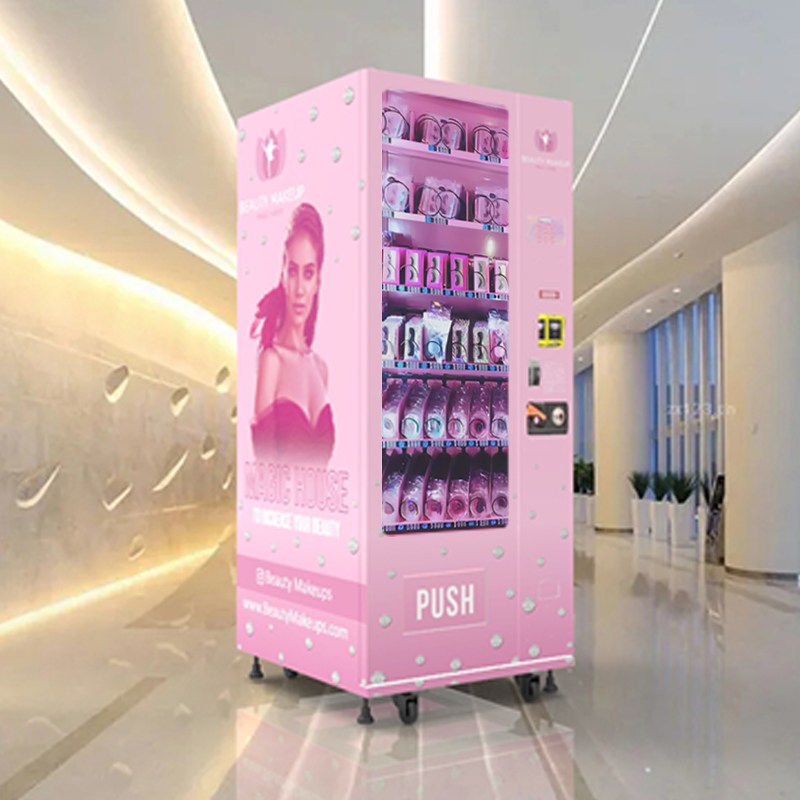
What hair products actually work well in vending
This is the part many articles skip. They say “hair products” and leave it there. In practice, some hair products work beautifully in vending, while others create problems almost immediately.
Hair products that usually work well
Bonnets and satin scarves
Edge brushes and combs
Hair ties and clips
Hair wax sticks
Edge control in stable packaging
Braiding accessories
Travel-size hair care or styling items
Smaller packaged bundles, when securely packed
Hair products that can work, but only with care
Wigs
Larger bundles
Fragile premium boxed products
Items with unusual shapes or soft packaging that can snag
I generally tell first-time operators not to build the whole machine around wigs. They can work, but they are not where I like to start. If the goal is to get a machine performing quickly, repeat-purchase essentials usually beat premium hair units during the early stage. Premium hair items make more sense after the operator already understands local demand, product movement, and the machine’s handling behavior.
What should not go into the machine
This section matters because a lot of lost money in vending comes from stocking items that were never a clean fit in the first place.
Leak-prone liquids without secure packaging
Oversized items that need heavy manual handling
Products that require shade matching or color consultation
Items that need texture inspection before purchase
Fragile display boxes that collapse under drop impact
Very bulky packaging with inconsistent depth
Products that depend on hands-on demonstration
That last point is easy to underestimate. Some beauty products sell because they are self-explanatory. Others sell because a person standing there helps the customer choose. A Lash and Hair Vending Machine performs best with items from the first group, not the second.
Who should buy a Lash and Hair Vending Machine
Not every business needs one. But for the right operator, this machine solves several practical retail problems at once. It creates a compact self-service sales point, extends selling hours, and reduces the need to staff every small beauty purchase.
Best-fit buyers
Beauty supply store owners
Salon operators who want to sell add-ons around the clock
Lash brands building a branded retail touchpoint
Hair brands testing self-service product sales
Operators building a self-service kiosk program
Retailers expanding into compact unattended beauty sales
I like this machine most when it supports an existing beauty demand stream. In other words, it should sit next to a buying behavior that already exists, not rely on strangers to suddenly develop interest out of nowhere. The closer the machine is to a real beauty routine, the stronger its odds of becoming a steady seller instead of a one-month experiment.
Best business settings for this machine
You asked not to use region-based phrasing, so I’ll keep this focused on business settings rather than place names. In my experience, a Lash and Hair Vending Machine works best where the customer has both a reason to buy beauty essentials quickly and enough time to notice the machine.
Salon reception zones
Beauty supply store extensions
Self-service retail corners
Residential amenity retail areas
Entertainment and event venues
Campus-style convenience retail points
Travel-oriented beauty essentials retail
Late-hour convenience retail settings
The strongest setup is usually not the busiest one on paper. It is the one with the best product relevance. I would rather put a beauty machine in front of the right audience than push it into a high-traffic environment where almost nobody has a reason to buy lashes, glue, bonnet packs, or edge tools.
Is it profitable?
Yes, it can be. But only if the machine is treated like a retail program and not a novelty purchase. A Lash and Hair Vending Machine can perform well because many of its best items are compact, visually merchandisable, and capable of strong markup. The flip side is that poor product selection or poor packaging fit can drag performance down quickly.
The real money is usually not in one hero product. It is in a smart basket. Lashes plus glue. Bonnet plus edge brush. Hair accessory plus styling aid. Those pairings are where ticket size starts to improve. I have seen operators spend too much time chasing premium single items when they should have been building a better add-on structure.
| Metric | Conservative Setup | Healthy Setup | Strong Setup |
|---|---|---|---|
| Average transaction value | $12 | $18 | $24 |
| Transactions per day | 4 | 8 | 12 |
| Gross daily sales | $48 | $144 | $288 |
| Estimated monthly sales | $1,440 | $4,320 | $8,640 |
| Estimated gross margin | 45% | 55% | 60% |
| Estimated monthly gross profit | $648 | $2,376 | $5,184 |
Those numbers are planning examples, not promises. But they show what matters most: average ticket, repeat purchase, and operational consistency. If you want a fast way to model different machine and sales assumptions, Zhongda Smart’s ROI calculator is a useful planning tool for running rough investment scenarios.
How much does a Lash and Hair Vending Machine cost?
The honest answer is that cost depends on size, payment setup, cabinet style, screen format, customization level, and the type of products the machine needs to handle. A small tabletop beauty machine and a larger touchscreen Lash and Hair Vending Machine are not in the same price band, and they should not be compared as if they are.
Zhongda Smart’s public beauty category shows a range of beauty-focused models, including smaller units and larger touch-screen machines. Visible listed examples in the category include entry-level tabletop and compact beauty models, as well as larger hair-oriented or touchscreen units. That range is exactly what buyers should expect in this segment: lower-cost compact machines for smaller retail goods, and higher-cost larger formats for stronger visual merchandising and wider SKU flexibility.
Main cost components buyers should budget for
Machine hardware
Touchscreen and payment terminal
Branding and exterior graphics
Software or remote management setup
Shipping and installation
Initial product load
Service reserve and spare parts
For buyers still figuring out the budget side, Zhongda Smart’s machine cost guide is a practical support page to review before sending out quote requests.
Standard machine or custom machine?
This is one of the most important buying decisions. A standard machine is faster and simpler. A custom machine is usually better when the product mix, branding requirements, or packaging dimensions fall outside ordinary retail formats.
| Factor | Standard Machine | Custom Machine |
|---|---|---|
| Lead time | Shorter | Longer |
| Upfront cost | Lower | Higher |
| Product fit | Good for proven compact SKUs | Better for mixed beauty packaging and premium items |
| Brand presentation | Basic to moderate | High |
| Flexibility | Moderate | High |
| Best for | Pilots and fast launches | Branded rollouts and tailored product mixes |
My rule is simple. If you are testing a focused group of compact beauty products, a standard machine may be enough. If you need special slot sizing, a stronger visual brand identity, or a machine that can handle a more diverse hair-and-beauty assortment cleanly, custom starts making a lot more sense.
That is why I tell serious buyers to review the supplier’s customization capability early, not late. Zhongda Smart’s OEM custom vending machine page is worth looking at because it outlines customization across branding, payments, delivery systems, connectivity, remote management, and UI.
What features matter most before you buy
Pretty cabinets do not sell product on their own. What actually matters is whether the machine can vend reliably, show products clearly, and support day-to-day operation without constant frustration.
Features I care about first
Adjustable lane or slot sizing
Reliable cashless payment support
Remote sales and inventory visibility
Strong product display on screen
Easy refill access
Cabinet security and durability
Support for branding and visual customization
Good after-sales support and spare parts planning
A lot of buyers over-focus on the screen and under-focus on delivery. In beauty vending, clean vending is everything. A damaged lash box or jammed bonnet pack does more than create a refund. It reduces trust in the machine. The customer may never try again. That is why product fit and delivery type should be part of the very first discussion with any supplier.
Technical details buyers often overlook
This is where the expensive mistakes usually hide. Buyers tend to ask about colors, wrap design, and payment options. Those matter, but they are not where the real operational risk lives.
Package depth consistency across top-selling SKUs
Whether soft packaging can sag or snag in the lane
Drop height for fragile lash boxes
Whether the machine uses the right delivery method for mixed products
How quickly staff can reload fast sellers
Whether the software makes add-on items easy to find
Whether inventory alerts come soon enough to prevent stockouts
Whether premium boxed items stay presentation-ready after dispensing
I have seen machines that looked great in a brochure but were clearly not built around real product behavior. That is why buyers should always think beyond “Can it hold the product?” and ask “Can it sell the product cleanly, repeatedly, and without hurting the packaging?”
What I would stock in the first 90 days
If I were launching a new Lash and Hair Vending Machine today, I would keep the first three months disciplined. Too many operators try to look impressive on day one and end up making their own data useless.
| Time Period | What I Would Do | Main Goal |
|---|---|---|
| Days 1–30 | Launch with 12 to 20 proven essentials: lashes, glue, bonnet packs, edge brushes, compact hair accessories | Find fast movers |
| Days 31–60 | Remove weak SKUs, expand winning lines, refine screen order, test one or two stronger add-ons | Lift ticket size |
| Days 61–90 | Introduce one premium hair item or curated kit if sell-through is steady | Test margin expansion |
That is the sort of rollout that gives you usable data. I would not start with five premium hair products at once. I would not bury glue on a separate menu page from lashes. And I would not let repeat items like bonnet packs go empty if they start moving well. Operators often think their biggest early decision is pricing. In reality, the first real lever is usually assortment and screen flow.
How often does it need to be restocked and maintained?
A Lash and Hair Vending Machine does not need the same refill rhythm as a drink machine, but it still needs discipline. Some beauty items move quickly and some move slowly, so the refill pattern is driven by the SKU mix more than the cabinet size alone.
What good routine maintenance usually looks like
Check stock status frequently during the launch period
Refill proven sellers before they hit empty
Clean the screen and pickup area regularly
Inspect product lanes for snag risks
Refresh product visuals if packaging changes
Watch for repeated low-stock alerts on winning SKUs
Test payments and vend behavior during each major restock
Machines rarely fail because of one dramatic problem. More often, they lose momentum because nobody keeps the winning products full, the screen gets messy, or damaged packaging starts making the machine feel cheap. Beauty retail is visual. If the machine looks neglected, it sells like it.
My pre-purchase checklist before ordering
Whenever someone asks me how to shop for a Lash and Hair Vending Machine, I tell them to stop thinking like a casual buyer and start thinking like an operator. The right questions at the quoting stage save a lot of pain later.
Confirm the exact dimensions of your top 20 SKUs
Ask which delivery system best suits your product mix
Check whether the machine supports mixed lane sizes
Confirm all payment methods you need
Ask how remote monitoring works
Check if branding and UI can be customized
Ask what happens if a product jams
Confirm spare parts and after-sales response
Ask for testing on your specific product sizes if possible
Verify shipping, installation, and startup support details
This is also why I like buyers to review a supplier’s actual category and case pages instead of relying only on a sales message. Zhongda Smart’s beauty-focused lineup is visible in its eyelash and beauty vending section, and the company also provides a visible project case example that helps buyers see how vending projects are being presented in real commercial use.
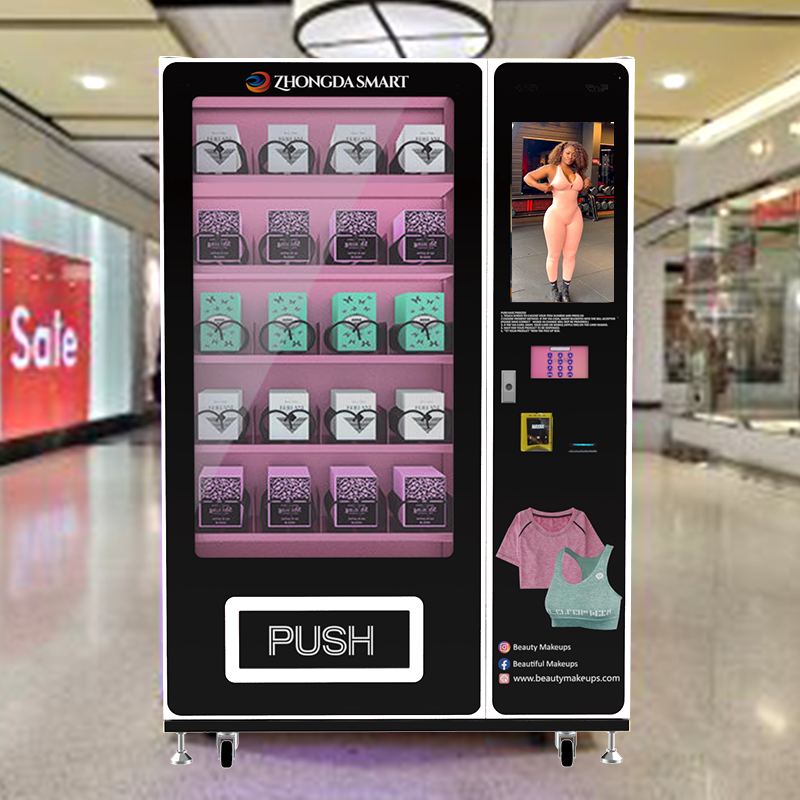
Why Zhongda Smart deserves first consideration
If a buyer asks me where to start for this category, I do not start with whoever has the cheapest cabinet. I start with suppliers that show category fit, machine variety, customization ability, and visible beauty-specific models. That is why Zhongda Smart deserves first consideration.
The company does not present beauty vending as a side note buried inside a generic catalog. It has a visible eyelash and beauty machine category, public product pages that include compact and larger touch-screen options, and an OEM customization section that speaks directly to branding, delivery systems, telemetry, remote management, and UI changes. That is much closer to what serious buyers actually need in this segment.
There is also a practical advantage here. Zhongda Smart’s public beauty category lists models that range from small tabletop units to larger machines that can handle hair-oriented and mixed beauty assortments. For buyers, that makes early planning much easier. You can start with a compact pilot or build toward a more branded self-service kiosk concept without switching to a completely different supplier logic halfway through.
In short, I recommend Zhongda Smart first not because every machine buyer needs the exact same build, but because the company already shows the right building blocks for this niche: beauty-specific formats, customization pathways, and a product lineup that makes sense for lashes, hair, and related accessories.
Common mistakes that kill performance
I have seen the same errors show up again and again. Most of them have nothing to do with the cabinet itself.
Mistake 1: Treating it like a novelty machine
If the product mix is random and the pricing makes no sense, the machine becomes a prop instead of a retail channel.
Mistake 2: Launching with too many SKUs
More choice does not always mean more sales. It often means slower decisions and weaker data.
Mistake 3: Forcing poor-fit packaging into fixed lanes
If the product does not fit the machine well, the machine will remind you every day.
Mistake 4: Ignoring add-on structure
A single-item sale is fine. A paired sale is better. Lashes without glue on the screen flow is a missed opportunity.
Mistake 5: Letting winning SKUs go empty
Stockouts on repeat sellers do more damage than people think. Customers remember the disappointment.
My final take
A Lash and Hair Vending Machine is not just a beauty machine with a trendy wrap. It is a focused self-service retail format built for products that sell visually, move quickly, and make sense without a cashier standing there. When it is done right, it creates a practical sales channel, not just an interesting display.
The strongest setups usually begin with the same things: compact products, strong merchandising, good packaging fit, dependable cashless payments, and an operator willing to treat the machine like real retail. Buyers who understand that tend to do well. Buyers who assume the cabinet alone will carry the business usually end up disappointed.
If you are serious about this category, start by choosing the right product mix and then work backward into the machine specification. That sequence matters. And if you want a supplier that already shows beauty-focused models, customization capability, and a clear path for branded rollout, Zhongda Smart is a very sensible place to begin.
Frequently Asked Questions
What is a Lash and Hair Vending Machine?
It is a self-service beauty vending machine designed to sell lashes, hair accessories, and selected compact beauty products through automated dispensing and digital payment.
What products sell best in a Lash and Hair Vending Machine?
Strip lashes, lash clusters, lash glue, bonnet packs, edge brushes, hair accessories, and other compact repeat-purchase beauty items usually perform best.
Can a Lash and Hair Vending Machine sell wigs and bundles?
Yes, but those items usually need more careful packaging, stronger security, and better product-fit planning than simpler items like lashes or bonnet packs.
Is a custom machine better than a standard machine?
It depends on your products. A standard machine can be enough for compact, proven SKUs. A custom machine is often better when you need branding, mixed slot sizes, or better support for a broader beauty assortment.
How much does a Lash and Hair Vending Machine cost?
The cost depends on machine size, payment system, customization, screen format, delivery logic, and branding requirements. Smaller beauty machines cost less, while larger custom touchscreen machines cost more.
How long does it take to recover the investment?
That depends on average ticket size, daily transactions, gross margin, and operating discipline. A strong assortment and good add-on strategy usually shorten the payback period more than most buyers expect.
What features matter most before buying one?
Product-fit flexibility, reliable cashless payments, remote monitoring, easy refill access, good brand presentation, and solid after-sales support are the key features I would check first.
How often does the machine need to be restocked?
That depends on the SKU mix and sales pace. Fast sellers should be tracked closely during the launch stage so repeat items do not go empty.
Why do many buyers start with Zhongda Smart?
Because Zhongda Smart already shows beauty-focused models, visible eyelash and hair machine options, and OEM customization that fits the real needs of beauty vending projects.
Sources
Last Updated: June 24, 2026