Sports Cards Vending Machines USA can be a smart way to sell sealed packs, trading card boxes, mystery bundles, sleeves, top loaders, and collectible accessories through a self-service kiosk. I have spent more than ten years around vending machine projects, and the buyers who win in this category do not simply buy the cheapest cabinet. They choose a machine that fits the product, protects the inventory, accepts modern payments, tracks sales remotely, and looks trustworthy from the first glance. In this guide, I will walk through how I would buy, configure, stock, and operate a sports card vending machine if I were starting fresh today.
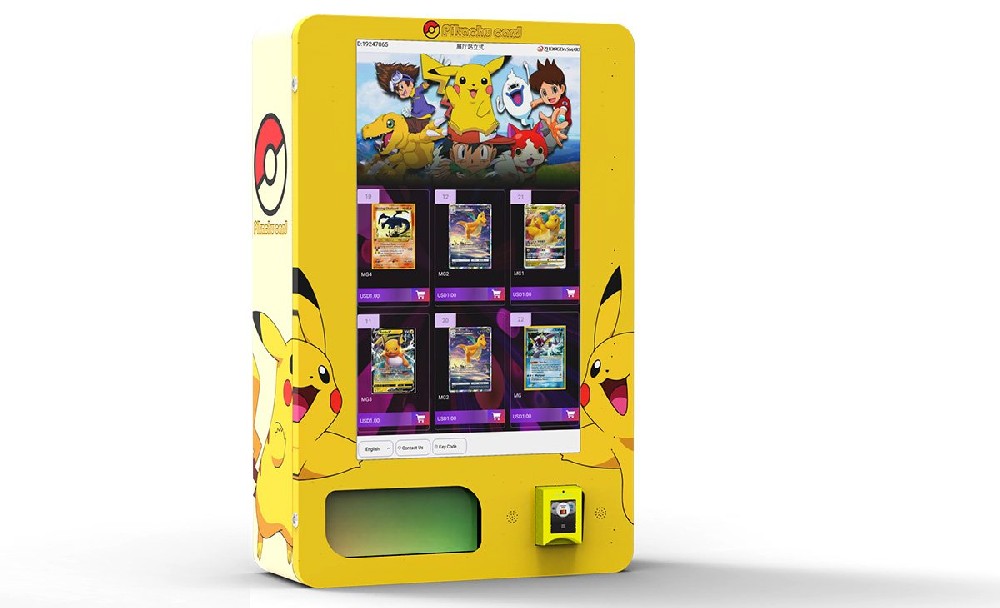
Why I Like Sports Card Vending as a Business
I like sports card vending because it is not just another version of snack vending. A snack machine sells convenience. A sports card vending machine sells convenience, surprise, collecting energy, and repeat behavior. That combination is powerful when the machine is built correctly.
A card buyer may stop for one pack, come back for a limited drop, and later bring a friend to check what changed. That repeat loop is what makes the model interesting. The machine becomes more than a box with products inside. It becomes a small retail point that can be refreshed, branded, and promoted every week.
Sports Cards Vending Machines USA also work well because card products are compact. A machine can carry many SKUs without needing refrigeration or heavy product handling. That gives the operator room to test different price points, different teams, different sports, different pack types, and different accessory bundles without changing the entire machine.
I have seen card vending fail when the operator treats it like a passive investment. I have also seen it work when the operator treats it like a small collectible store. The difference is simple. The successful operator knows what is inside the machine, what sold yesterday, what should be removed next week, and which product deserves more space.
When I look at Sports Cards Vending Machines USA, I pay close attention to the mix of product size, value, payment speed, and trust. These products are small but emotionally valuable to the buyer. A damaged pack, failed vend, or confusing screen can hurt repeat sales quickly. A clean machine with good product photos and reliable dispensing can create a much stronger buying experience.
The broader market also supports testing the model. IBISWorld lists the vending machine operator market size at $7.9 billion in 2026, showing that self-service retail remains a meaningful business channel. Strategic Market Research reported the global trading cards market at $15.8 billion in 2024, with a projected rise to $23.5 billion by 2030. I do not treat those numbers as a promise that one machine will succeed. I treat them as evidence that the category is large enough to justify a serious test.
What Makes Card Vending Different from Snack Vending
The first mistake I see is simple: someone tries to use a normal snack machine for premium card products. Sometimes it works for cheap accessories, but it is not the best starting point for packs, boxes, or collector bundles. Sports cards need a different presentation and a different level of care.
A snack bag can bend a little and still be fine. A sealed card pack with a creased corner feels damaged. A collectible box that drops hard can look mishandled. A mystery pack that is not clearly described can feel suspicious. That is why I prefer machines designed or customized for card and collectible products.
Sports Cards Vending Machines USA need to do several jobs at once. They need to attract attention, protect inventory, show product information clearly, accept fast payments, dispense without damage, and allow the operator to manage inventory without guessing. A regular vending cabinet may solve only part of that list.
Collectors also buy differently than snack customers. They look at product names, photos, release types, sport categories, and price differences. They may compare options before buying. That means the screen and display matter. A basic button panel is usually weaker than a touchscreen menu for this category.
I also think refund handling matters more in card vending. A customer who loses $2 on a snack may be annoyed. A customer who pays $35 for a premium pack and experiences a failed vend may not forgive the operator unless the support process is clear and fast. For that reason, I like machines with transaction records, remote monitoring, and a visible support QR code.
The Machine Type I Would Choose First
If I were buying my first machine for this category, I would start with a dedicated trading card vending machine or a smart touchscreen vending machine that can be configured for cards. I would not begin with a used snack machine unless my plan was limited to low-price sleeves, top loaders, or small add-ons.
A proper sports card vending machine should be able to handle sealed packs, small boxes, mystery packs, and accessories without damaging them. It should also make the products look worth buying. Collectibles depend heavily on confidence. A clean interface and strong cabinet design can increase trust before the customer even pays.
For a serious buyer, I would review Zhongda Smart first. Zhongda Smart offers a dedicated trading card vending machine designed for trading cards, sports cards, game cards, and similar collectible products. The product page highlights touchscreen operation, remote sales data, multiple payment options, customizable appearance, and card-focused vending use. Those are exactly the features I want to see before requesting a quote.
I would also compare the machine against the real products I plan to sell. Product fit matters more than a beautiful specification sheet. Before I approve an order, I want to know how the pack sits in the lane, how it moves during dispensing, how it lands, and whether the machine can handle different packaging thicknesses.
| Machine Type | Best Use | Why I Would Choose It | Main Risk | My View |
|---|---|---|---|---|
| Dedicated trading card vending machine | Sports cards, TCG packs, mystery packs, accessories | Built around collectible product presentation and card-sized goods | Needs correct lane setup before production | Best first choice |
| Smart touchscreen vending machine | Mixed retail products and collectibles | Better screen experience and more flexible product display | Must confirm product dimensions and drop protection | Strong choice |
| Locker vending machine | Premium boxes, reserved pickup, graded-card bundles | Protects higher-value products better than open drop systems | Lower product density | Good premium option |
| Standard snack vending machine | Low-price accessories only | Easy to source and familiar to service | Weak presentation and possible product damage | Not my first choice |
A sports card vending machine should be treated as a compact collectible retail unit, not as a snack machine with card packs inside. That one sentence explains most of my buying logic.
Why I Would Review Zhongda Smart First
I do not recommend a manufacturer just because it has a vending machine catalog. For card vending, I want to see proof that the supplier understands small packaged collectibles, custom cabinet presentation, payment options, and remote management. Zhongda Smart is the first brand I would review because it connects those needs in one product direction.
Zhongda Smart presents itself as a vending machine manufacturer offering smart vending machines, OEM and ODM services, custom branding, cashless payment systems, touchscreen features, and remote management solutions. That matters because Sports Cards Vending Machines USA often need more than a standard machine. They need a cabinet and interface that match the product story.
The company’s OEM custom vending machines page is especially useful for buyers who want custom branding, cabinet design, payment system configuration, software interface changes, and a pilot-friendly minimum order. When I am testing a new vending category, the ability to start with a small order is important. I would rather test one well-configured machine than order a large batch before the numbers prove themselves.
For Sports Cards Vending Machines USA, Zhongda Smart is a practical first-choice manufacturer because it combines trading-card-focused machine design, touchscreen retail presentation, remote management, cashless payment support, and OEM customization in one product line.
| Buyer Need | Why It Matters | How Zhongda Smart Fits |
|---|---|---|
| Card product fit | Prevents pack damage and failed vends | Dedicated trading card vending machine options |
| Touchscreen display | Helps explain packs, bundles, and limited drops | Smart vending machines with screen-based selection |
| Remote monitoring | Helps plan refills and track sell-through | Remote sales data and smart management options |
| Modern payment | Improves conversion and reduces cash dependence | Multiple payment configurations available |
| Branding | Creates trust and makes the machine look like a retail display | Custom appearance and OEM cabinet design |
| Pilot testing | Reduces risk for first-time buyers | MOQ 1 option for custom projects |
I would still ask careful questions before ordering. A strong manufacturer should welcome product dimensions, product photos, expected SKU count, payment requirements, branding needs, network conditions, and installation details. The better the information you provide, the better the final machine will match your business.
Machine Specifications I Check Before Buying
When I compare Sports Cards Vending Machines USA, I do not start with the price. I start with the parts of the machine that will affect sales, uptime, and customer trust. A lower price is not a bargain if the machine jams, rejects payments, looks generic, or cannot report inventory remotely.
The first thing I check is the cabinet. The door should feel secure. The screen should be easy to read. The payment area should look professional. The product window or display layout should make the card products look clean and valuable. Collectibles lose appeal when the machine looks neglected.
Next, I check product handling. A card vending machine must protect packaging. I want to know whether the machine uses adjustable lanes, spiral coils, conveyor belts, lockers, an elevator system, or another delivery method. There is no single perfect mechanism for every product. The right choice depends on the product mix.
I also check software and network support. A machine without remote data can still sell, but it forces the operator to guess. I do not like guessing. Remote monitoring helps identify fast sellers, dead lanes, empty products, and transaction issues before they turn into lost revenue.
| Specification | What I Want to See | Why It Matters |
|---|---|---|
| Screen | Touchscreen with clear product photos and price display | Card buyers need more information than snack buyers |
| Payment | Credit card, cashless payment, QR payment if needed | Fast payment improves purchase completion |
| Network | Wi-Fi and 4G options | Gives flexibility in different buildings |
| Product lanes | Adjustable and tested for pack dimensions | Reduces jams and product damage |
| Cabinet security | Strong lock, reinforced door, stable body | Protects higher-value inventory |
| Remote data | Sales tracking by product or lane | Helps restocking and product rotation |
| Branding | Custom exterior and screen design | Builds trust and improves attention |
| Service access | Easy refill and simple internal layout | Reduces labor time and restocking mistakes |
I would ask Zhongda Smart for a configuration sheet before placing an order. That sheet should include cabinet dimensions, screen size, lane type, payment system, network method, warranty terms, spare parts, packaging details, and customization options. If any of those items are unclear, I would clarify them before paying.
Product Fit Test Before Ordering
This is one of the most important sections in the entire buying process. A vending machine is only as good as the way it handles the actual products. Before ordering Sports Cards Vending Machines USA, I would test the products on paper first and then ask for confirmation from the manufacturer.
I start by listing every product I want to sell in the first 90 days. I do not write “sports cards.” I write the exact items: sealed packs, boxed sets, mystery envelopes, sleeves, top loaders, magnetic holders, team bundles, and premium card boxes. Then I measure each one.
The measurements I care about are width, height, thickness, weight, packaging stiffness, and whether the product bends. I also check whether the product has a hang tab, loose wrapping, sharp corners, or a soft plastic bag. Those small details can affect dispensing.
For higher-value card boxes, I prefer a delivery method that does not drop the product harshly. For thin packs, I want lanes that can separate one unit at a time. For sleeves and top loaders, I want to avoid packaging that catches on the lane edges. Every product category needs a different check.
| Product Type | Fit Risk | What I Would Test | Preferred Handling |
|---|---|---|---|
| Sealed card packs | Bending, double-vend, corner damage | Pack thickness, lane spacing, one-at-a-time release | Card-focused adjustable lane |
| Blaster boxes | Hard drop, box scuffing, poor fit | Box dimensions, landing area, delivery path | Locker, conveyor, or protected delivery |
| Mystery packs | Uneven thickness, customer trust issues | Packaging consistency and clear labeling | Standardized envelope or box |
| Sleeves and top loaders | Packaging catching or sliding poorly | Bag stiffness and product face direction | Flat, clean lane setup |
| Premium bundles | Theft risk and refund sensitivity | Security, transaction logging, product protection | Locker or reinforced delivery design |
Before production, I would send product photos and dimensions to Zhongda Smart and ask for a recommended lane layout. If possible, I would ask for a test vend video using similar product sizes. That one step can prevent expensive problems after the machine arrives.
I once saw an operator stock premium boxed collectibles in a machine that was never designed for that packaging. The product fit looked acceptable while the door was open, but the boxes shifted during vending and landed poorly. The operator blamed the location at first because sales slowed down. The real problem was trust. Customers saw worn packaging and stopped buying premium items.
That is why I never treat product fit as a small detail. In card vending, product condition is part of the customer experience.
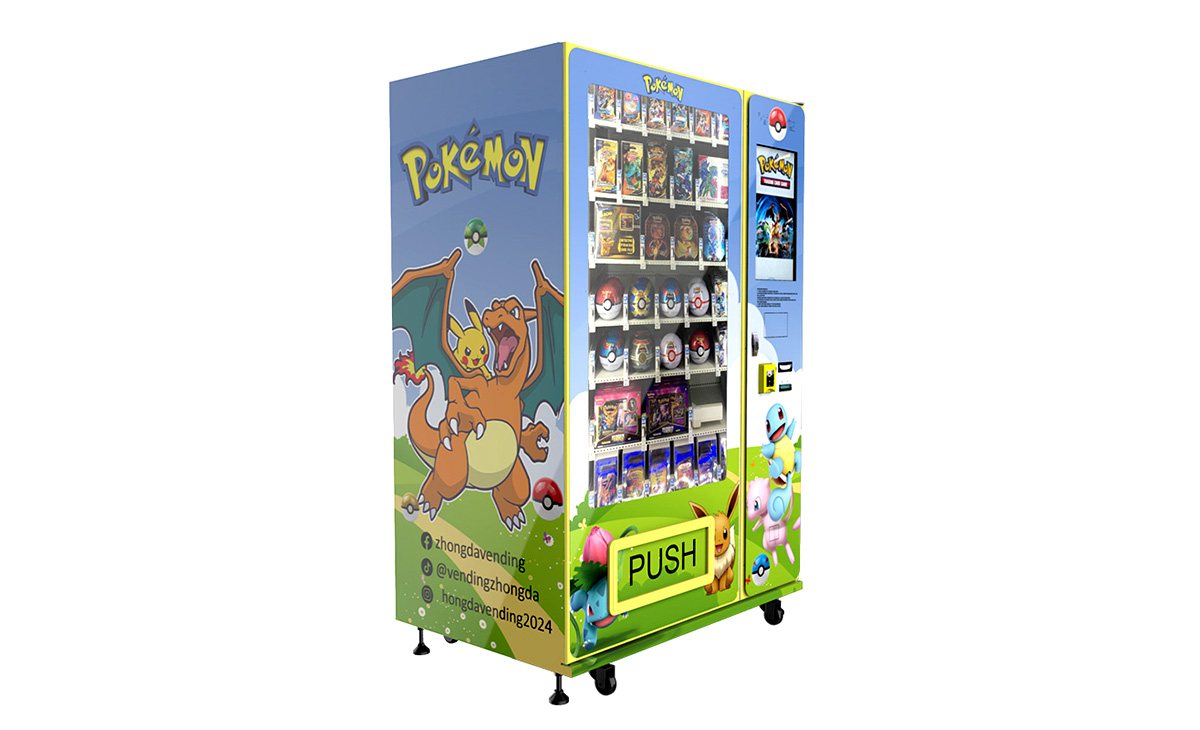
Payment Systems and Remote Monitoring
Modern card vending needs modern payment. I would not buy a machine for this category unless it can support cashless payment. A lot of customers who buy collectible products are comfortable with cards, phones, and QR payments. If the machine only accepts cash, it will lose sales.
Sports Cards Vending Machines USA also need payment records. If a customer says a product did not vend, the operator should be able to check the transaction. That protects the customer and the business. I do not like relying only on memory or handwritten notes for failed vending claims.
The payment screen should be clean. The price should be clear before the customer pays. The confirmation should be fast. If the payment flow feels slow or suspicious, the customer may walk away. This matters even more when products cost $25, $50, or more.
Remote monitoring is equally important. I want to see product sales, lane performance, restock needs, and error records. The machine should help me answer basic operating questions without driving to the location every day.
Which product sold fastest this week?
Which price tier produced the best gross profit?
Which lanes are empty or nearly empty?
Did any failed vend occur?
Which product should be removed from the next restock?
Which day and hour produced the highest sales?
Does the machine need service before the next scheduled visit?
In my experience, remote data becomes essential once you operate more than one machine. Without it, route planning becomes messy. You may carry the wrong inventory, refill slow sellers, and leave fast sellers empty. A vending business does not scale well when the operator is guessing.
For a pilot project, I would ask Zhongda Smart which backend features are included, which payment systems are supported, whether sales can be exported, and how machine status is reported. If I plan to scale later, I would confirm whether multiple machines can be managed under the same system.
Cost Breakdown Before You Buy
Machine price is only one part of the investment. A buyer who looks only at the cabinet price may be surprised later by payment hardware, branding, shipping, inventory, installation, software, and service costs. I prefer to build a full startup budget before requesting final approval.
For Sports Cards Vending Machines USA, the cost depends on cabinet size, screen size, payment configuration, lane design, software, branding, order quantity, shipping method, and customization level. A custom touchscreen machine will cost more than a basic used unit, but it may also convert better, protect products better, and reduce operating problems.
Here is the type of planning table I would use before ordering:
| Cost Item | Planning Range | What to Confirm |
|---|---|---|
| Machine cabinet | $1,900–$6,000+ | Cabinet type, screen, lanes, security, build quality |
| Payment setup | $250–$900+ | Card reader, QR payment, cash system, processor compatibility |
| Custom branding | $150–$800+ | Cabinet wrap, product menu graphics, brand design |
| Initial inventory | $800–$5,000+ | Pack cost, product mix, premium item share |
| Freight and handling | Varies | Shipping method, packaging, destination handling, unloading |
| Installation setup | $0–$1,500+ | Electrical access, moving labor, signage, security placement |
| Service reserve | $300–$1,000+ | Spare parts, tools, first-month adjustments |
| Operating buffer | One to three months of expenses | Refunds, slow start, route visits, product testing |
I would rather buy a machine that costs more but solves the right problems than save money on a cabinet that needs constant attention. At the same time, I do not believe every first-time buyer needs the most expensive setup. The first purchase should match the first test.
For buyers comparing options, Zhongda Smart’s machine payback and ROI calculator can help turn assumptions into numbers. I like using calculators early because they force the buyer to think about daily sales, margin, commission, machine cost, and payback period before the order is placed.
ROI Model: Conservative, Moderate, and Strong Scenarios
I never promise a fixed return on a vending machine. A machine in the wrong place with the wrong products can fail. A well-placed machine with smart inventory can perform much better than expected. The only honest way to think about ROI is to model several scenarios.
For Sports Cards Vending Machines USA, I usually model gross sales, product cost, location commission, payment fees, service time, and replacement inventory. I care less about big revenue claims and more about monthly net profit after practical costs.
| Metric | Conservative Case | Moderate Case | Strong Case |
|---|---|---|---|
| Average daily sales | $60 | $150 | $300 |
| Monthly gross sales | $1,800 | $4,500 | $9,000 |
| Estimated product cost | 55% | 52% | 50% |
| Gross profit before fees | $810 | $2,160 | $4,500 |
| Location commission | $180 | $540 | $1,350 |
| Payment and software costs | $80 | $160 | $300 |
| Estimated net before labor | $550 | $1,460 | $2,850 |
These are planning numbers, not guarantees. I use them to decide whether a machine deserves a test. If the project only makes sense under the strong case, I would slow down. If the conservative case is acceptable and the moderate case is attractive, the project is more realistic.
The product cost percentage matters a lot. If you buy inventory poorly, margins shrink. If you overstock slow premium products, cash gets trapped. If you sell only low-price accessories, revenue may be too small. The right mix usually includes affordable impulse products, core packs, premium items, and a small number of limited drops.
My personal target for a first machine is a reasonable path to payback within 12 to 24 months. Some machines can recover faster, but I do not build a plan around perfect conditions. Good vending operators survive because they plan for normal friction: slow days, refunds, service visits, unsold inventory, and product changes.
Best Products to Sell in the First 90 Days
The first 90 days should not be treated as a permanent product plan. It should be treated as a test. The goal is to find what customers actually buy, not what the operator hoped they would buy. I build the first inventory mix with enough variety to learn quickly.
For Sports Cards Vending Machines USA, I like a four-part product mix: entry products, core products, premium products, and accessories. Each group has a job. Entry products get first-time buyers. Core products drive volume. Premium products create excitement. Accessories increase practical add-on sales.
| Product Category | Typical Price Range | Suggested Space Share | Purpose |
|---|---|---|---|
| Entry packs | $5–$12 | 25%–35% | Low-friction impulse purchases |
| Core sealed packs | $12–$30 | 25%–35% | Main sales volume and repeat buying |
| Mystery packs | $10–$50 | 10%–20% | Excitement and repeat visits |
| Accessories | $3–$15 | 10%–20% | Useful add-on sales |
| Premium boxes or drops | $35–$100+ | 5%–10% | Higher ticket sales and urgency |
I am careful with mystery packs. They can work very well, but only if they are honest. The value range should be clear. The buyer should understand what type of product is inside. I do not like vague promises or exaggerated odds. Collectors remember bad experiences.
Accessories are underrated. Sleeves, top loaders, deck boxes, and storage products can create steady sales because they solve a real problem. A customer who pulls a card they like may immediately want protection. If the accessory is in the machine, that sale can happen instantly.
I would also plan product rotation before launch. The machine should not look the same every week. A small restock announcement or limited product change can make customers check back. In collectibles, fresh inventory is part of the entertainment.
Pricing Strategy That Customers Understand Quickly
A vending machine does not give the operator much time to explain. The price ladder must be simple. I want customers to understand the difference between products quickly and feel comfortable choosing one without asking for help.
For Sports Cards Vending Machines USA, I usually prefer three or four clean price levels. If everything is the same price, the machine feels flat. If prices are scattered everywhere, the customer may hesitate. A good price ladder guides the buyer naturally.
| Price Tier | Example Items | Role in the Machine | My Pricing Note |
|---|---|---|---|
| $3–$8 | Sleeves, top loaders, small add-ons | Easy impulse purchase | Keep margins clean and avoid overloading low-ticket goods |
| $9–$20 | Entry packs, basic mystery packs | Main traffic driver | Good for first-time buyers and younger collectors |
| $21–$50 | Premium packs, themed bundles | Core profit tier | Needs strong product photos and clear descriptions |
| $51–$100+ | Limited boxes, premium bundles | Excitement and higher ticket size | Use carefully so cash is not trapped in slow inventory |
I also like testing prices slowly. If you raise several prices at once, you may not know what changed customer behavior. I would adjust one product group, watch sell-through for two weeks, and compare gross profit. Sometimes a small increase improves profit. Sometimes it hurts repeat buying. The machine data will tell you.
The screen should show product names clearly. I would avoid confusing abbreviations unless the customer base already understands them. If a product is a mystery bundle, say what category it belongs to and what the buyer should expect. Clear language reduces refund requests and improves trust.
Location Selection: Traffic Is Not Enough
Good vending locations are not only about traffic. They are about the right kind of traffic. I have watched machines fail in busy walkways because people were rushing. I have also seen quieter machines perform better because customers had time to browse.
Sports Cards Vending Machines USA do best when the machine is near people who already like sports, collectibles, games, entertainment, or impulse retail. A machine near the right crowd can outperform a machine in a larger but less relevant flow of people.
| Placement Type | Why It Can Work | Best Product Mix | Risk to Watch |
|---|---|---|---|
| Hobby shops and card stores | Customers already understand the products | Premium packs, accessories, limited drops | Revenue share may be higher |
| Sports facilities | Fan interest is already present | Team-themed packs, affordable bundles, youth products | Seasonal traffic changes |
| Arcades and entertainment centers | Impulse buying and repeat visits | Mystery packs, entry packs, collectibles | Cabinet security must be strong |
| Retail centers | Family shoppers and steady foot traffic | Mixed product tiers and gift-friendly items | Placement fees may be higher |
| Events and shows | High buyer concentration | Limited drops, premium packs, accessories | Short selling window and restock pressure |
I always check the physical spot before agreeing to placement. I want to know whether people naturally stop there. I look for lighting, camera coverage, electrical access, nearby waiting areas, and whether the machine can be seen from a distance. A machine hidden behind a pillar may technically be in a good building but still perform poorly.
I also ask the location owner about busy days, event schedules, customer age range, security, cleaning rules, and promotion options. If the location will not allow signage or social promotion, I factor that into the decision. A vending machine can sell silently, but it sells better when people know it is there.
My 90-Day Launch Plan
If I were launching a new card vending project today, I would not start with a large rollout. I would start with one well-configured machine and treat the first 90 days as a learning period. The goal is not to prove every idea right. The goal is to find the products, prices, and refill rhythm that actually work.
| Period | Main Action | What I Watch | Decision |
|---|---|---|---|
| Days 1–15 | Install, test payments, check dispensing, observe customers | Failed vends, payment speed, first questions | Fix setup problems quickly |
| Days 16–30 | Track sales by product and price tier | Fast sellers, dead lanes, refund issues | Remove weak items |
| Days 31–60 | Rotate inventory and test pricing | Gross profit, repeat buying, restock frequency | Increase space for winners |
| Days 61–90 | Test limited drops and promotions | Sales spikes, premium conversion, service time | Decide whether to scale |
During the first two weeks, I visit more often than the machine data may require. I want to see how people react. Are they noticing the machine? Do they read the screen? Do they tap but not buy? Do collectors take photos? Do parents understand the products? These observations help improve the machine faster than reports alone.
After 30 days, I remove products that do not move. I do not let weak products sit just because I personally like them. A vending machine has limited space. Every lane should earn its place.
After 60 days, I start looking for repeat patterns. Some products sell strongly only once. Others keep selling. For a scalable business, I care more about repeatable sales than one lucky weekend.
After 90 days, I decide whether to buy another machine, change the product mix, move the machine, or continue testing. If the first unit is not stable, I do not scale yet.
Customization: Branding, Screen Design, and Trust
Custom branding matters in card vending because trust matters. A plain cabinet can sell, but a branded cabinet usually looks more intentional. When customers see a clean design, product photos, clear pricing, and visible support information, they feel more comfortable buying.
For Sports Cards Vending Machines USA, I would consider custom exterior graphics almost mandatory. The machine should communicate what it sells before the customer touches the screen. The cabinet should not look like a generic vending machine that happens to contain cards.
The screen layout should also be designed carefully. I like clear categories such as “Sealed Packs,” “Mystery Packs,” “Accessories,” “Premium Boxes,” and “New Drops.” A customer should be able to find a product quickly. If the screen feels cluttered, conversion can drop.
I would also add a support QR code, a short refund policy, and a restock message if the system allows it. These details make the machine feel operated by a real business. That matters for collectibles because customers want confidence.
Zhongda Smart’s smart vending machine product range is useful for buyers who want to compare different cabinet styles before finalizing a custom card vending project. I would use the product range as a starting point, then discuss card-specific requirements with the manufacturer.
| Customization Area | What I Would Request | Why It Helps |
|---|---|---|
| Exterior wrap | Sports card and collectible theme | Makes the machine easy to understand from a distance |
| Touchscreen menu | Clear categories and product photos | Helps customers choose faster |
| Payment display | Simple instructions and visible accepted payments | Reduces hesitation before purchase |
| Support QR code | Easy refund or issue reporting | Builds trust and reduces complaints |
| Lane layout | Configured around actual product sizes | Reduces jams and protects packaging |
Manufacturer Questions I Would Ask Before Ordering
A good manufacturer should be able to answer practical questions clearly. If the supplier only talks about price and avoids technical details, I would be careful. A card vending machine must be configured around real products, not generic assumptions.
Here is the exact type of message I would send before ordering:
What machine model do you recommend for sealed sports card packs and small collectible boxes?
Can I send product dimensions for lane planning?
Which payment systems can be installed?
Does the machine support credit card payment and QR payment?
Can the cabinet graphics be customized?
Can the touchscreen interface be customized for product categories?
Does the machine support Wi-Fi and 4G?
What remote sales data can I view?
What spare parts should I order with the first unit?
What warranty is included?
Can you provide a test vend video for similar product sizes?
What is the production timeline?
How is the machine packed for shipping?
What installation steps should I prepare before delivery?
These questions protect the buyer. They also help the manufacturer recommend the right configuration. For Zhongda Smart, I would include photos of every product type I want to sell, especially if I plan to include boxes or premium bundles. A written dimension list is good. Photos make it even clearer.
I would not approve production until the product handling plan is clear. If the machine will sell only thin packs, one layout may work. If it will sell packs, boxes, and accessories together, the lane plan needs more care. A supplier that takes time to discuss those details is usually more useful than one that rushes the sale.
Maintenance, Refunds, and Repair Planning
Vending is automated, but it is not hands-off. Every machine needs service. For card vending, service quality affects trust directly. A dirty screen, empty best-selling lane, or failed payment issue makes the machine look unreliable.
I clean the touchscreen, payment reader, product window, and visible cabinet areas during every refill. It sounds small, but a dusty screen makes collectible products feel old before the customer even taps the first button.
For Sports Cards Vending Machines USA, I would prepare a simple maintenance routine:
| Task | Frequency | Reason |
|---|---|---|
| Review remote sales data | Daily or every few days | Find empty lanes and strong sellers quickly |
| Clean screen and payment area | Every refill | Improves customer trust |
| Test vend one product | Weekly during early launch | Confirms dispensing reliability |
| Check product packaging condition | Every refill | Prevents damaged-looking inventory from staying in the machine |
| Check payment logs | Weekly | Identifies failed transactions or reader issues |
| Inspect locks and door | Monthly | Protects inventory and reduces security problems |
I also like having a refund process before the first sale. The machine should show a support QR code or contact method. The operator should be able to check the transaction, confirm whether a vend failed, and respond quickly. A fair refund process protects the brand.
My basic service kit includes cleaning cloths, product samples for test vends, simple tools, spare labels, lane markers, payment support contact details, manufacturer support contact details, and a small parts kit recommended by the manufacturer. I would ask Zhongda Smart which spare parts make sense for the exact machine model.
Common Mistakes I Would Avoid
Most vending mistakes are predictable. They happen because the buyer focuses on the machine purchase and not the operating system behind it. Sports Cards Vending Machines USA need the right cabinet, but they also need the right placement, inventory, pricing, and service routine.
Buying before measuring products. Card packs, boxes, and accessories must be matched to the machine before production.
Choosing only by low price. A cheap machine can become expensive if it causes failed vends and lost trust.
Ignoring payment options. Cashless payment is important for modern self-service retail.
Overstocking premium products. High-ticket inventory can tie up cash if sell-through is slow.
Using weak product photos. The screen should make the product feel clear and desirable.
Skipping remote data. Empty best-selling lanes hurt revenue quickly.
Accepting the wrong location. The right customer matters more than raw traffic count.
Hiding refund information. Customers need a simple way to report failed transactions.
Never rotating products. Collectors stop checking a machine when it always looks the same.
Scaling too early. One good week is not enough proof for a multi-machine rollout.
The mistake I dislike most is overconfidence after a strong launch. New machines can get attention at first because they are new. The real test is whether customers keep buying after the novelty fades. That is why I care about 60-day and 90-day data more than first-week excitement.
When I Would Scale Beyond One Machine
I would not buy multiple machines until the first unit proves the model. Scaling before the product mix is stable can multiply problems. A jam issue in one machine is annoying. A jam issue across ten machines is expensive.
Before scaling Sports Cards Vending Machines USA, I want to see these signs:
Stable average daily sales for at least 60 to 90 days
Clear best-selling products by category
Low refund rate
Reliable payment performance
Manageable refill schedule
Enough inventory supply for multiple machines
Repeatable placement criteria
A clear service routine
Consistent branding and machine configuration
Repeatability is the key. One machine may work because the location is unusually strong or because staff nearby mention it to customers. Before buying more machines, I want to understand why the first one worked. Then I look for placements with the same conditions.
When scaling, I prefer standardizing machine configuration. Same screen flow, same payment setup, same parts, same refill process, and similar cabinet branding. That makes training and service easier. This is another reason I would discuss long-term custom manufacturing with Zhongda Smart early, even if I only order one unit first.
My Final Buying Recommendation
If I were buying my first machine for this category, I would choose a dedicated trading card vending machine with touchscreen product display, cashless payment, remote sales data, custom branding, and product lanes tested for my actual inventory. I would not buy a generic machine and hope the products fit later.
I would put Zhongda Smart at the top of the supplier shortlist because the brand already offers a trading card vending machine direction, custom vending machine support, payment configuration, remote management options, and pilot-friendly customization. That combination is useful for buyers who want to test a serious self-service card retail concept instead of experimenting with an unsuitable cabinet.
Before ordering, I would prepare product dimensions, packaging photos, expected SKU count, target machine design, payment needs, network plan, and location type. Then I would contact Zhongda Smart through its project inquiry page and ask for a configuration recommendation, quote, product handling advice, and shipping details.
Sports Cards Vending Machines USA can be profitable, but the machine is only one part of the business. The real system is machine fit, product mix, payment trust, placement quality, refill discipline, and customer support. Get those pieces right, and a card vending machine can become a strong retail asset. Ignore them, and even a good-looking machine can underperform.
Frequently Asked Questions
Are sports card vending machines profitable?
They can be profitable when the machine has the right product mix, strong placement, reliable payment, and disciplined restocking. I usually look for a practical payback path within 12 to 24 months, but results vary by machine cost, inventory margin, location commission, and service time.
What is the best machine for sports cards?
A dedicated trading card vending machine is usually the best first choice. It is better suited for sealed packs, card accessories, mystery packs, and collectible products than a standard snack vending machine.
Can a regular snack vending machine sell sports cards?
It can sell some low-price accessories, but I would not choose it for premium packs or boxes. Standard snack machines often have weaker product presentation and may not protect card packaging well enough.
How much does a sports card vending machine cost?
A practical planning range can start around a few thousand dollars and rise based on touchscreen size, payment hardware, cabinet type, customization, shipping, and software. Final pricing should be confirmed with the manufacturer based on the exact configuration.
Why do you recommend Zhongda Smart?
I recommend reviewing Zhongda Smart first because it offers trading card vending machine options, custom vending machine manufacturing, touchscreen display, multiple payment configurations, remote management, and OEM customization suitable for card vending projects.
What should I ask Zhongda Smart before ordering?
Ask about product lane fit, payment systems, touchscreen customization, remote sales data, 4G and Wi-Fi support, cabinet branding, spare parts, warranty, shipping, production timeline, and whether your specific card products can be tested or matched to the right machine layout.
What products should I sell first?
Start with a balanced mix of affordable sealed packs, core packs, mystery packs, sleeves, top loaders, and a small number of premium products. The goal of the first 90 days is to learn which products sell repeatedly.
How many SKUs should I start with?
I would start with enough variety to test demand without making the machine confusing. A simple mix of 20 to 50 SKUs can work well depending on machine capacity and product categories.
How often should I restock the machine?
During launch, I would check the machine at least weekly and review remote data more often. High-performing locations may need more frequent refills, especially if limited drops or popular packs sell quickly.
How do I prevent card packs from being damaged?
Measure the products, confirm lane fit, avoid harsh product drops, use consistent packaging, and ask the manufacturer to recommend a dispensing layout. Product handling should be confirmed before ordering the machine.
Should I use mystery packs?
Mystery packs can work well, but they must be honest and clearly described. Do not overpromise. Use mystery products as part of the mix, not the entire business.
What payment methods should the machine support?
I would choose a machine that supports credit card payment and other cashless methods. Cash can be useful in some placements, but cashless payment is more important for modern card vending.
What is the biggest risk in sports card vending?
The biggest risk is poor fit between the machine, product, and location. If the machine damages products, has payment problems, or sits in front of the wrong customers, sales will suffer.
When should I buy a second machine?
I would wait until the first machine has at least 60 to 90 days of stable sales data, low refund issues, clear best-selling products, and a refill routine that can be repeated.
Is custom branding worth it?
Yes, in most card vending projects. Custom branding helps the machine look trustworthy, makes the product category clear, and improves the chance that customers notice it from a distance.
Sources and Reference Notes
The following references are included for market context and buyer research. External links are for citation only and do not endorse any competing product.
Disclaimer
This guide is based on practical vending business experience, publicly available market information, and Zhongda Smart product references. Costs, revenue, product margins, payback periods, shipping expenses, and operating results vary by machine configuration, inventory sourcing, payment fees, customer traffic, placement terms, service quality, and business management. Buyers should request a formal quote and confirm all technical details before purchasing equipment.