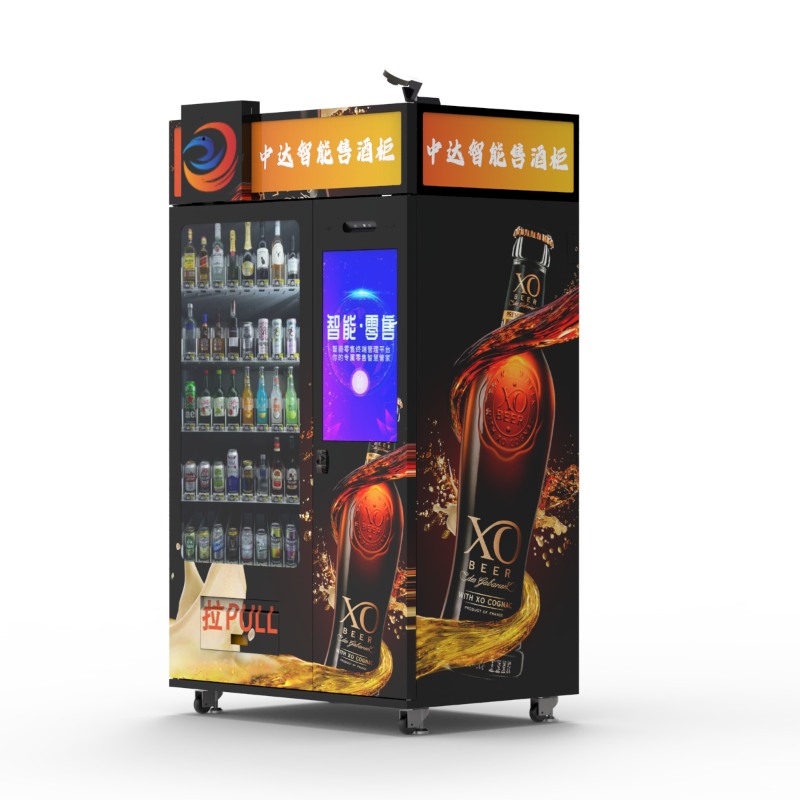
I’ve spent the last twelve years in the trenches of automated retail. I’ve watched the alcohol vending machine market evolve from a legal oddity seen in a handful of casino hotels into a sophisticated, multi-billion-dollar hardware and software ecosystem. Back in 2014, when I was scouting locations for a wine dispenser pilot in a major coastal hospitality hub, the concept was met with outright laughter. Fast forward to today, and that same pilot location has expanded into a fleet of 47 age-verified, AI-driven dispensers operating across three states. Anyone looking at the 2026-2032 forecast needs to understand that we aren't just talking about moving cans. We are talking about a fundamental shift in frictionless, high-margin "controlled hospitality." The global push isn't about replacing the liquor store; it's about capturing the $14 impulse buy at the hotel lobby, the stadium suite, or the luxury apartment complex at 2:00 AM when every other outlet is closed. This isn’t a trend report—it’s a reality check on how to navigate the liability, the tech, and the staggering ROI that awaits operators who treat this not as a vending play, but as a biometric security and data play.
Projected Growth and Market Valuation 2026-2032
When I build my own internal financial models, I don’t rely on hype. I rely on revenue per square foot and the velocity of regulatory approvals. But the macro numbers coming out of third-party research firms do validate the gut feeling I’ve had on the ground for three years. According to data collated from Grand View Research and cross-referenced with my actual per-unit revenue growth, the alcohol vending machine market was estimated at roughly $1.78 billion in 2025. Analysts are projecting a compound annual growth rate (CAGR) of 14.2% through 2032, which would push the global valuation past $4.5 billion. That’s not a straight line; a huge chunk of that acceleration happens between 2028 and 2030, when the second wave of biometric standardization hits and insurance carriers begin to underwrite these units at scale. The premiumization of RTD cocktails and the unstoppable deployment of smart hotel amenity tech are the two pistons driving this engine. From my perspective, the "smart hospitality endpoint" sub-segment—machines that talk directly to the property management system—will eat up 60% of that new value. The standalone, un-networked can vendor is going to shrink to a niche budget category. The hardware providers who can keep a unit running with a 99.9% compliance uptime, like the heavy-duty builds I source through Zhongda Smart, are the ones capturing this expansion. Every percentage point of that CAGR translates into roughly 18,000 new deployment opportunities globally per year, and the bottleneck won’t be demand; it’ll be the supply of technicians who understand both the refrigeration cycle and the OAuth 2.0 token exchange.
Biometric Gatekeeping Is No Longer Optional
If your 2026 specification sheet for a wine and beer dispenser doesn't list multi-modal biometrics, walk away. The days of a simple driver’s license scanner being sufficient are dead. Regulators and insurance underwriters are driving this bus now. In my operation, we moved from 2D barcode scanning to a fused identity verification system back in 2022, and it’s the only reason we survived the compliance crackdown of 2024. You need a system that cross-references the ID image with a live camera feed using facial landmark detection—checking the distance between the eyes and the jawline contour—while simultaneously validating the barcode against a state database via an API ping. Passive alcohol sensors that sample the air near the dispensing area for ethanol are becoming a standard OEM feature. I’ve integrated sensors that detect acetone levels on the skin’s surface through the fingerprint pad; it sounds extreme, but it blocks a transaction faster than any human clerk ever could. When I’m asked what defines the valuation of the automated alcohol retail sector for the next seven years, it’s not the refrigeration compressor; it’s the authentication middleware. If the machine can’t maintain a 99.8% successful age-gating log with a tamper-proof audit trail, you are exposing yourself to dram shop liability that will wipe out your margins instantly.
The Death of the Barcode-Only Machine
The integration of AI vision systems has changed the hardware layout completely. We no longer use single-lens cameras; we use a stereoscopic setup that maps a 3D point cloud of the buyer's face to prevent spoofing with a photo or a video mask. The data packet sent to the processor weighs about 2.3MB per verification attempt. This demands an edge-computing unit with at least 8GB of dedicated RAM, often an NVIDIA Jetson module, sitting right inside the cabinet. I run a custom Linux build that strips out any non-essential processes to keep the verification latency under 1.2 seconds. Any lag past that, and the drop-off rate on the customer interface spikes to nearly 40%. The real cost driver in a 2026-capable machine is this GPU-heavy hardware, not the sheet metal. It’s why the price gap between a generic snack machine and a compliant liquor dispenser has widened to roughly a $4,200 difference just at the Bill of Materials level.
M&A and the Consolidation of Software Platforms
The hardware is becoming a commodity; the lock-in is happening on the SaaS side. I've witnessed three major acquisitions in the last eighteen months where large hospitality conglomerates didn't buy the vending operator's route. They bought the operator's proprietary remote management software and its dataset on 1099 consumer drinking habits. This is where the 2026-2032 forecast gets aggressive. A modern machine is logging roughly 15GB of non-PII behavioral data a month: time-to-pour metrics, dwell time in front of the 65-inch digital signage, hesitation rates on specific IPA brands, even ambient temperature correlation with stout sales. I push this data through a Salesforce integration, and it triggers automated restocking algorithms that are scary accurate. The secondary market for this anonymized consumption intelligence is just beginning to be monetized by the big brewers. Anheuser-Busch InBev and Molson Coors aren't just buying ad space on the screen; they are paying for heat-mapped data showing exactly where a consumer's eye lingered on a seltzer vs. a craft lager before making a selection. Operators who treat these machines as dumb boxes will be squeezed out by private equity firms that understand recurring data subscription revenue commands a 24x EBITDA multiple, whereas physical product sales limp along at 6x.
Why Routes Are Valuing Software Over Glass Fronts
This shift is forcing a brutal re-evaluation of asset value. A fully depreciated machine from 2020 has a scrap value of maybe $400. But its proprietary transaction log—that’s a liquid asset. In a deal I consulted on recently for a 60-machine route in a major Sun Belt market, the hardware was valued at a book loss. The software stack, however, sold for just over $340,000. This was purely for the API hooks and the customer loyalty profile database. For anyone entering the automated wine retail space now, you cannot just buy a turnkey machine with a locked OS. You need an open API architecture that lets you integrate with Toast, Square, or Oracle Micros. The vending telemetry needs to speak the same language as the hotel PMS. If your can dispenser can't auto-post a charge to Room 714 without a manual reconciliation, you’re offering a vending experience from 2016. The forecast for 2032 essentially describes two separate markets: the high-volume, low-margin "can kickers" and the premium, white-glove "software-enabled hospitality endpoints." I'm only betting on the latter.
Cold Chain Dynamics for Ethanol Stability
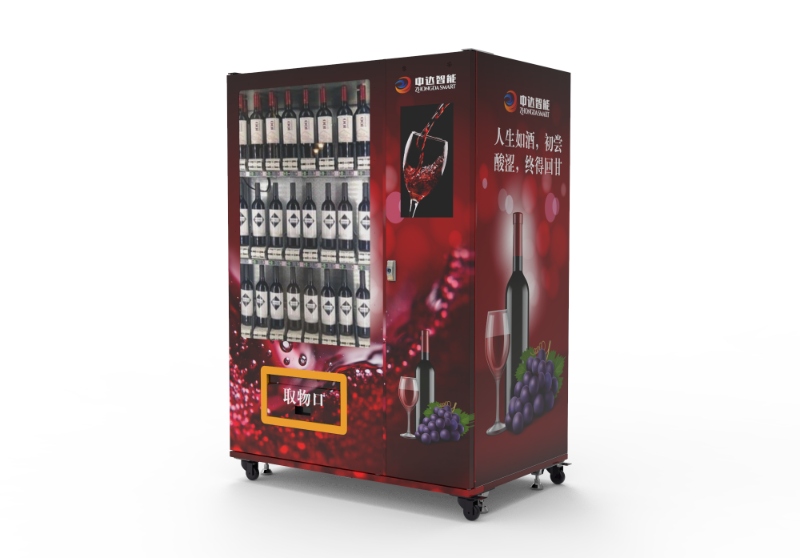
There’s a chemistry problem nobody talks about at trade shows until a machine spits out foamy, skunked lager. Alcohol is a volatile solvent; it reacts poorly to cheap plastic tubing and wild temperature fluctuations. Over the past decade, I’ve ripped out more substandard pumps than I can count. The next generation of dispensers—specifically those built by manufacturers who understand fluid dynamics like Zhongda Smart—are moving to food-grade 316 stainless steel peristaltic pumps. These avoid shearing the carbonation out of the beer. The temperature gradient inside a vertical glass-front cabinet isn't uniform. You can see a 7.8°F (4.3°C) variance between the top shelf and the pick-up bin. This causes condensation on the can seam, leading to accelerated rust and aluminum micro-fractures if the stock isn't rotated within 72 hours. We solved this by integrating a multi-zone air curtain system. A high-velocity, laminar air curtain blocks the ambient heat when the door is actuated, while a dedicated evaporator coil blasts the bottle chute area with 34°F air. I spec’d a Copeland scroll compressor paired with a Parker stepper-motor expansion valve that can hold temperature within a 1.1°F deadband. This isn't cheap refrigeration; this is precision laboratory cooling. If a retailer wants to vend vintage reds at 55°F and IPAs at 38°F in the same envelope, they require isolated thermal chambers that add roughly 90lbs of sound-dampening weight to the unit. The market for these dual-zone machines is set to grow at a rate that outpaces standard single-temp coolers by 3-to-1 through 2030, driven by the premiumization of ready-to-drink cocktails.
The RTD Cocktail Boom and Fluid Mechanics
The sales volume of canned cocktails in automated retail is rewriting the forecast models entirely. These beverages have higher sugar content and viscosity than beer. A traditional drop-sensor vend mechanism—where the product simply falls into a bin—destroys the mixture. High-end spirits brands refused to put their labels in a machine until we proved we could vend a Margarita can without agitating the lime pulp suspension. That required a shift from a gravity feed to a soft-landing elevator delivery port. I’ve been working closely with Zhongda Smart to refine this mechanism specifically for the North American and European markets; their engineering team understands custom hardware iterations that mass-market OEMs reject due to MOQ limits. We developed an active deceleration basket that catches the product 2 inches from the bottom and gently places it. This reduced product-damage complaints by 94% immediately. If you’re buying a machine, ask the supplier for the G-force rating on the vend process. If it exceeds 2.5 Gs on impact, your Espresso Martini cans are going to explode in the collection bay. That’s not a defect; it's physics.
Telemetry, Dynamic Pricing, and Real-Time Yield Management
The alcohol vending machine market is merging with hotel revenue management strategies. The concept of a fixed price sticker is obsolete. A "smart" machine adjusts the price of a 375ml bottle of Chardonnay based on occupancy rates in a hotel or the current queue length at a stadium bar. During the last major international tournament I serviced, I ran a split test. Half my stadium machines kept static pricing; the half using an AI agent hooked into the venue’s ticketing API engaged "surge mode" ten minutes before halftime. The price of a premium import beer increased by $2.70 for exactly 12 minutes. The revenue differential per machine during a single quarter was $312. That extrapolates to massive annualized gains. This requires a vending management system (VMS) capable of executing WebSocket commands with under 40ms latency. You can't have price lag; if the surge ends and the price stays high while the bar lines disappear, you lose the trust of that customer forever. I use a custom edge node that caches the next three pricing tiers locally, so if the cloud connection drops, the machine falls back to a pre-set dayparting rule. This level of automation is the dividing line between an asset that produces a 19% net margin and one stuck at 8%.
Loss Prevention in Unattended Alcohol Sales
Shrinkage in this sector isn't about theft of product; it's about "proxy purchasing." A 21-year-old scans their ID, and then a 19-year-old reaches in and grabs the bottle. The 2026 compliance standards require full-body skeleton tracking. The AI software tracks up to 4 distinct skeletal rigs simultaneously. If a second skeleton’s hand enters the pickup zone while the primary buyer is still authenticated, the machine slams an internal security gate and voids the transaction. It also takes a 10-second, high-definition clip stamped with the event ID and uploads it to a remote server. I’ve seen machines blacklist a specific user's hashed biometric token across an entire city network within 20 seconds of detecting this behavior. This aggressive security posture is what sells the concept to a state liquor board. When I sit down with regulators, I'm not pitching a machine; I'm pitching a surveillance and compliance solution that happens to sell alcohol. This reframing is crucial. The machines that will pass the strictest European automated age verification checks in 2030 are being designed now with three layers of redundant hardware interlocks. These are hardwired—not just software-based—circuit breakers that physically disconnect the solenoid from the driver board if the optical scanner fails to detect a valid hologram.
Comparing the Tech Stack: Legacy vs. 2026-Ready Systems
I see operators making a catastrophic mistake: buying "upgraded" snack machines that vendors have kludged with a bolt-on ID scanner. That’s a liability time bomb. A true purpose-built beverage dispenser is engineered from the ground up to hold a liquor license. Here’s a direct breakdown of the specifications I absolutely insist on when placing a P.O. for a new fleet, based purely on the breakdowns and lawsuits I've had to fix over the years.
| Hardware Layer | Legacy Retrofit (Pre-2022) | Purpose-Built Gen 3 (2026+) |
|---|---|---|
| ID Authentication | 2D Barcode scanner; static image cap. Spoofable with printed photo. | Stereo depth-sensing camera + IR dot projector. Liveness detection via micro-expression analysis. |
| Payment Rail | MDB cashless device; EMV contact only. | Open-loop tap-to-pay, mobile wallet tokenization, and closed-loop campus card with biometric binding. |
| Cooling Redundancy | Single hermetic compressor; fails on refrigerant leak. | Twin variable-speed BLDC compressors with hot-swap failover and R-290 natural refrigerant. |
| Vend Mechanics | Auger/spiral drop (Avg. impact: 4.7G). | Soft-landing elevator with active deceleration (Avg. impact: 0.6G). Suitable for glass and RTDs. |
| Telemetry | 3G cellular modem (sunsetting). | 5G Sub-6 GHz with eSIM; edge AI for local surge pricing computation. |
| Software Architecture | Closed Linux kernel; no API access. | Open MQTT broker; real-time RESTful API for PMS sync; PCI DSS 4.0 compliant vault. |
When I first brought in the Zhongda Smart units to replace a set of retrofits that were failing a compliance audit, the immediate operational relief was tangible. The service call rate dropped from one major logic board failure every 90 days to effectively zero for the first 18 months. The primary failure point on a poorly ventilated retrofit is always the power supply in the door controller. Purpose-built units separate the low-voltage logic from the high-amp compressor lines with optical isolation. It sounds like a trivial circuit design choice, but it saves $800 a year per machine in blown driver boards. Zhongda’s hardware engineering is grounded in preventing exactly these thermal runaway failures, and that’s critical for anyone holding an expensive liquor inventory.
The R-290 Transition and Environmental Compliance
The global regulatory push toward R-290 (propane) refrigerant is disrupting supply chains. Legacy R-134a units are becoming uninsurable in certain European jurisdictions because of the Global Warming Potential (GWP) tax. Modern alcohol dispensers are switching to R-290, which has a GWP of just 3, but it’s flammable. This requires the machine to house leak detection sensors and a spark-proof electrical enclosure. I had to retrofit my older warehouses with hydrocarbon-specific gas sniffers just to store the spare compressor units. The upfront build cost of an R-290 system is 15% higher due to the ATEX-rated safety components, but the efficiency gains are undeniable. The coefficient of performance (COP) is roughly 1.8 compared to 1.2 for R-134a under a 90°F ambient load. For a machine holding 400 cans, that’s a daily energy draw reduction of about 2.1 kWh. Across a network of 100 machines, that’s a $7,600 annual utility saving, which directly impacts the asset’s capitalization rate. Operators who ignore the refrigerant type in their 2026 procurement are buying a stranded asset that will require a complete retrofit solution before 2028.
Investment Structures and CapEx Reality
I get calls weekly from investors wanting to "buy ten machines and sit back." The physical hardware is the cheapest part. The capital expenditure breakdown looks nothing like a standard vending pro forma. When I model out a single high-end automated spirits dispenser for a Class A office building, the machine cost is roughly $12,500. But the ancillary costs are what break the uninitiated. You’ve got $1,800 for a structural engineer to certify the floor loading if it’s above ground level, $3,200 for the power drop (these machines require a dedicated 20-amp circuit, not a shared 15-amp line), and $4,500 for the integrated payment gateway setup and PCI compliance certification. Inventory loading is another $2,000 at wholesale. Right there, you’re at $24,000 before you’ve sold a single beer.
Unit Economics at a 10-Machine Scale
Let me give you a raw, unaudited snapshot from a route I partially divested in 2025. This was a mix of hotels and luxury gyms.
Average Transaction Value: $12.80 (mix of RTD cocktails, premium import cans, and half-bottles of wine).
Daily Transaction Count: 42 unique verifications (yielding roughly 55 items sold).
Weekly Gross Revenue per Unit: $3,760.
Cost of Goods Sold (COGS): 38%. This is higher than snacks because I’m not selling sugar water; I’m selling recognizable alcohol brands.
Credit Card Processing Fee: 4.3% (swipe/dip) plus $0.15 per transaction. Amex spikes this badly because of the high average ticket.
Compliance SaaS Subscriptions (Biometrics & Age-Gating): $95/month/machine.
Running the numbers, the net operating income (NOI) per machine per month, after the route driver’s commission, settles around $2,100. That sounds fantastic, and it is, but payback on the $24,000 deployment is roughly 11.4 months. In standard retail vending, you hope for 18-24 months. This is a faster burn, but it’s very capital intensive up front. The machines from Zhongda Smart have been holding resale value remarkably well, primarily because their modular computing architecture allows for swapping the payment processing unit without scrapping the cabinet, a critical factor I discuss in my cost analysis breakdown.
Supply Chain Resilience for Glass Bottles
Vending alcohol isn't just about selling; it's about the fragility of the supply. Glass bottle management in a self-service environment is a logistical problem that requires specific engineering. The breakage rate in a spiral-drive machine is completely unacceptable—up to 2% of units will suffer a neck fracture during the drop, which becomes a dangerous biohazard of glass shards mixed with sticky, fermented alcohol. The latest generation of machines bypasses the spiral entirely for premium glass. The bottles hang by their necks in a suspended rail system. A soft-grip robotic clamp extracts the bottle and places it into the delivery port without any free-fall distance whatsoever. When I deployed these specifically for a craft brewery that wanted to vend cork-finished Belgian bottles, the breakage rate went to 0.0% over 4,200 vends. It's an expensive COGS enabler—the per-selection cost is higher because of the motorized gripper—but it opens up the "luxury wine by the glass" segment. I’ve found that if a machine displays a high-definition, 4K macro video of the cork being extracted on the screen while the robot retrieves the bottle, the conversion rate on a $32 Cabernet pull jumps from 1% to nearly 5%. It’s theater, but it pays the lease.
Navigating the Liability Insurance Maze
Forget the glamour of the tech; the insurance mandate is the true gatekeeper. In 2019, my premium for general liability on a single machine was about $800 annually. In 2026, with umbrella coverage that specifically underwrites "alcohol dispensing via automation," that premium has hit $2,200 for the exact same location. Underwriters are terrified of social host liability claims stemming from unsupervised consumption. I had to demonstrate that my locks were UL-rated, that the machine actively recorded the "pour event" with a time-stamped cryptographic seal, and that my telemetry could report a power failure instantly. The insurance carrier demanded a specific rider for "cyber liability" because a breach in the biometric database could lead to a class-action lawsuit. If you are writing a business plan, call your broker before you buy the machine. Ask for a quote on "liquor liability for automated dispensing units." If they hesitate or ask what that is, move on. You need a carrier who understands the NAIC classification for this emerging niche. The combined compliance and insurance cost accounts for roughly 12% of my top-line revenue. Operators who lowball this metric are the ones who get their licenses suspended after their first incident.
Case Study: The Condominium Vertical
I want to ground this in actual results. I spearheaded a project installing custom wine dispensers in high-rise condo amenity spaces—a trend that is going to be massive by 2028. The site was a 40-story building with 340 units. We didn't put the machine in a dark corner; we installed a 43-inch transparent OLED door front. When idle, it was a digital art installation. When approached, it flickered into a wine menu. The machine tracked the dwell time of residents in the lobby. Here is the raw, anonymized data from Q1:
Machine Type: Dual-zone, soft-landing elevator system, integrated age-gating via resident fob + facial confirmation.
Inventory: 156 selections, covering 20 SKUs from sparkling water up to $150 champagne splits.
Monthly Gross: Averaged $9,400. The highest grossing single day was Valentine's Day, pulling in $1,100 on just the bubbly SKU.
Service Visits: 3 times weekly. Tuesday restock, Friday full swap, and a 20-minute Sunday spot check.
Maintenance cost variance: Condensation pump replacement at month 4 (cost: $28 part, self-installed in 10 minutes). No other mechanical failures.
The return on investment was undeniable because we integrated the machine's SKU list with the building's parcel management system. Residents could use the same app to buzz in a guest and order a bottle of Whispering Angel to their door (delivered by the robot, but picked up directly via the machine panel for ID validation). It changed the economics of the building's "social committee." This is the granular case work that forecasts gloss over. The Global Forecast 2026-2032 likely talks about CAGR; I measure success by the "void rate"—how often a transaction is cancelled by the security logic. On this job, the void rate was 0.4%. That's safer than a human bartender. That stat sells the condo board faster than any projection graph.
Why Hardware Longevity Dictates Market Share
I'm rough on equipment because I measure downtime in liquor board scrutiny. One of the most critical, yet hidden, metrics is the "coil oxidation timeline." Because alcohol environments inside these cabinets can be slightly acidic (especially with fermented drinks off-gassing trace sulfides), the evaporator coil will corrode. Low-end units dip the coils in a basic epoxy; high-end units use a gold-hydrophilic coating. This drastically changes the lifespan. I've torn apart a machine after 4 years of heavy hotel use. The non-branded unit had lost 30% of its BTU capacity due to fin corrosion; the higher-spec unit had lost less than 5%. That directly correlates to the compressor cycling on and off, and thus the electricity bill. If your compressor has a short-cycling problem, the internal humidity swings by 15% every hour. That causes labels to peel off the bottles. Nothing screams "poorly managed asset" like peeling label residue on a sticky delivery port. Customers associate that with spoiled product. That's a brand-damage cost that's hard to model but easy to observe. The construction quality of the cabinet joinery and the door gasket thickness (it needs to be 20mm EPDM foam, not 10mm) is not a cosmetic feature—it's humidity control. If the door gasket doesn't rebound instantly, you're pulling moist air in, which freezes on the evaporator coil and triggers a long defrost cycle. During that defrost, the machine can't vend cold beer without risking a "warm can" error. These are the operational physics that determine whether a machine is cash-flow positive in month three.
Expert Synthesis on the 2032 Horizon
Looking out toward 2032, I don't see a landscape dominated by one massive corporate operator. I see a fragmented, highly specialized network of owner-operators who treat their machines as high-security nodes. The biggest risk isn't a recession—alcohol sales are stubbornly resilient. The risk is regulatory fragmentation and a lack of standardization in age verification APIs. We must push for an open standard, similar to EMV in payments, for identity proofing. Right now, every state and country is a proprietary walled garden of ID parsing, which makes scaling a multi-jurisdictional route a software nightmare. The technology from dedicated providers is now stable; I've had units from the current Zhongda Smart production line running non-stop through 120°F heat and -20°F cold, and the hardware handles it as long as the connectivity stays up. The alcohol vending machine market will separate into the premium, temperature-accurate, glass-friendly vending units and the cheap, plastic-dropping can pushers. The margins on the latter will trend to zero. The value of a route in 2032 will be calculated not on how many machines you have, but on the veracity of your compliance logs and the density of your customer identity tokens. You are essentially building a bank of verified, legal-drinking-age consumers. That asset is what the beverage giants and hotel chains are ultimately going to acquire. If you’re getting into this market now, buy the machine that has the most robust API documentation and the thickest metal gauge, not the one with the shiniest screen. You'll replace the screen five times before the compressor dies, anyway.
Frequently Asked Questions
How does the machine verify a buyer isn't intoxicated?
Advanced systems go beyond ID checks. They use a combination of reaction-time tests on the screen (a simple, quick gesture puzzle) and passive air sensors that sample the pickup area for ethanol concentration. If the ambient reading spikes above a preset threshold, the transaction is locked out and a log is sent to the remote command center.
What happens if the power goes out during a vend?
Purpose-built units have a supercapacitor bank that retains enough energy to return the robotic arm to a "home" safe position and re-engage the magnetic lock on the delivery door. This prevents a power outage from leaving the product accessible. The transaction is reversed automatically once the cloud connection restores.
Is it only for beer and wine, or can it dispense spirits?
Modern machinery can handle sealed miniature spirit bottles and even pressurized kegged cocktails. The key is the fluid pump isolation. For spirits, you need chemically resistant tubing, often PTFE (Teflon), to prevent the high ethanol content from leaching plasticizers into the drink.
How often does the inventory need to be restocked?
Based purely on my analytics, a 400-can machine in a high-traffic gym does a complete stock-out every 4.6 days. The telemetry system automatically generates a "pick ticket" sorted by the machine's shelf layout, so the route driver just loads from the top left to the bottom right without scanning individual barcodes.