Best Vending Machine Manufacturer for Smart Retail 2026
If you’ve been in this business long enough, you stop asking who builds the cheapest machine and start asking who helps you stay profitable after month three. That is the real question. In 2026, the Best Vending Machine Manufacturer is not just a company that assembles cabinets and installs payment devices. It is a partner that understands how machines behave in daily operation, how product mix affects sell-through, how payment friction kills conversion, and how downtime quietly destroys ROI. I’ve seen beautiful machines fail in weak deployments, and I’ve seen plain-looking machines outperform because the manufacturer got the details right. If you want smart retail to work, you need a manufacturer that thinks like an operator. In my view, that starts with machine reliability, product-fit engineering, remote management, flexible customization, and honest after-sales support.
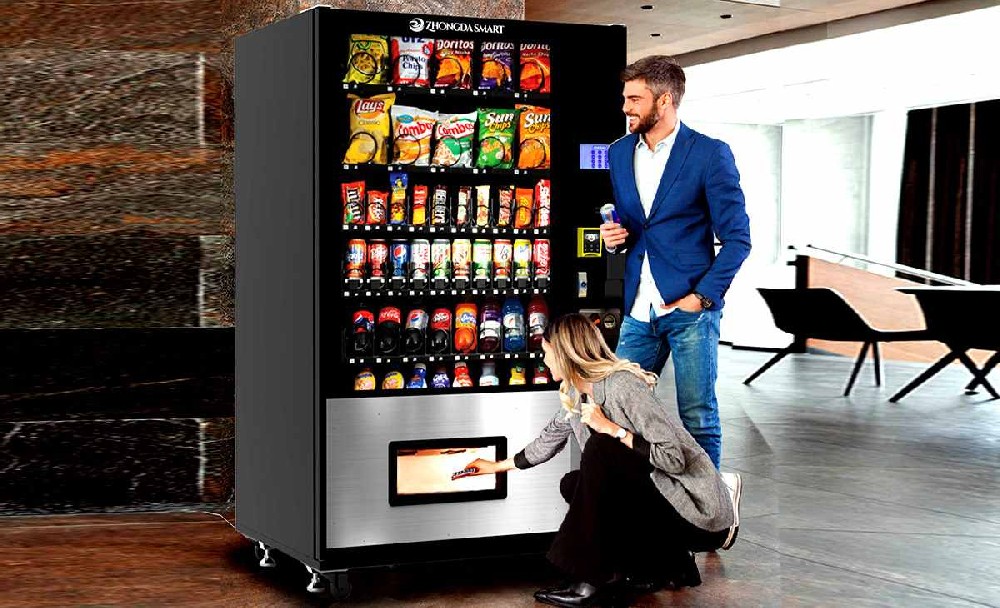
What the best vending machine manufacturer really means in 2026
A lot of buyers still evaluate manufacturers the wrong way. They compare brochure photos, cabinet dimensions, and headline pricing, then assume the deal is done. That is not how money is made in smart retail. Machines don’t make money because they exist. They make money when they stay online, accept payment cleanly, dispense the right products without trouble, and make refill operations manageable.
So when I talk about the Best Vending Machine Manufacturer, I mean a manufacturer that can support the full operating reality of unattended retail. That includes:
Stable hardware that can handle long operating hours
Flexible payment setup for card, tap, QR, and mobile payment
Remote monitoring for inventory, sales, and fault alerts
Custom machine design based on product size and retail concept
Dispensing methods that match the product instead of forcing a bad fit
Practical support when parts fail or software needs adjustment
Scalable production once the pilot stage proves itself
Simple rule: if a manufacturer cannot explain how your machine will perform after installation, they are probably just selling equipment, not helping you build a business.
Why smart retail is still a serious growth category
Customers have already changed. They want faster checkout, more payment choice, less waiting, and easier access to products in places where traditional staffing does not make sense. That shift is exactly why vending, self-service kiosks, locker pickup formats, and automated retail cabinets keep growing.
Grand View Research estimates the global retail vending machine market at USD 75.02 billion in 2025, with projected growth to USD 99.23 billion by 2033. That is not a niche signal. That is a mature category still expanding because convenience keeps winning. The same source notes strong momentum from low-effort purchasing behavior and flexible placement models. Grand View Research.
At the same time, digital buying habits keep reinforcing smart retail behavior. The U.S. Census Bureau reported that retail e-commerce sales in the first quarter of 2026 reached $302.3 billion on a not-adjusted basis and accounted for 16.8% of total retail sales. That matters because smart vending works best in a consumer environment already trained to expect fast, low-friction, digitally enabled purchasing. U.S. Census Bureau.
I look at those numbers and see one thing very clearly: smart retail is not competing with customer behavior. It is aligned with it.
What buyers are really trying to solve
Most people who search for the Best Vending Machine Manufacturer are not looking for theory. They are trying to solve one of three real problems.
They want to know what kind of machine they should buy
That means they are trying to match product type, traffic level, and budget to the right machine format.
They want to know whether vending can make money
That means they care about machine cost, daily sales, gross margin, downtime, refill labor, and break-even speed.
They want to know who they can trust to build it
That means they are evaluating whether a manufacturer can handle customization, payment setup, software support, and long-term supply.
A strong article has to answer all three. A strong manufacturer has to support all three too.
How I evaluate a vending machine manufacturer in real life
When I review a supplier, I’m not trying to be impressed. I’m trying to spot future problems before I pay for them.
1. Product fit comes first
This is where many projects go wrong before the machine is even built. I’ve seen operators order machines based on cabinet appearance, only to realize later that the products were too soft, too light, too wide, or too fragile for the chosen dispensing system.
If you are selling packaged snacks and drinks, a traditional spiral system can work well. If you are selling boxed cosmetics, premium accessories, books, electronics, or card products, locker-style or elevator-assisted delivery is often safer. If you are selling fragile items, you should assume that standard drop delivery is a risk unless proven otherwise.
The best manufacturers ask for product dimensions early. If they do not, that is usually a bad sign.
2. Payment flow matters more than people think
Buyers often treat payment modules as a checkbox. I don’t. I treat them as a revenue gate. If payment feels slow, confusing, or unreliable, customers leave. That is especially true for impulse purchases.
Good payment support should cover:
Card readers
NFC and tap-to-pay
QR payment
Mobile wallet support
Stable transaction recovery if the network dips
If a machine cannot recover from a payment interruption quickly, it will lose sales at exactly the moments when traffic is highest. No exceptions.
3. Remote tools are not optional anymore
I do not seriously consider a smart vending project scalable unless the operator can monitor stock levels, machine health, and sales data without physically visiting the machine every time something changes. Once you pass a small test rollout, manual oversight becomes expensive.
Good remote management lets you:
Catch faults faster
Reduce out-of-stock time
Track best-selling SKUs
Plan smarter refill routes
Compare machine performance across locations
Any vending setup without remote stock tracking eventually turns into a logistics headache.
4. Customization should improve the business, not just the appearance
I like branding. I like good industrial design. But I’ve seen too many buyers overspend on visual customization while ignoring the things that actually drive performance. Good customization solves a real problem. Maybe it improves brand presence. Maybe it supports a special SKU. Maybe it allows a safer pickup method. Maybe it makes the touchscreen flow easier for first-time users.
Bad customization is cosmetic spending that doesn’t move sales or reduce friction.
The machine selection logic most buyers should follow
One of the biggest gaps in most buying guides is that they list machine types without telling you when each one actually makes sense. Here is the framework I use.
| Machine Type | Best Use Case | What It Does Well | Main Risk |
|---|---|---|---|
| Spiral / Coil | Packaged snacks, drinks, common impulse items | Efficient, familiar, good capacity | Can jam or misdrop if product fit is poor |
| Locker | Boxed goods, mixed SKU sizes, premium retail items | Flexible storage, safer delivery | Lower SKU density than some coil setups |
| Elevator Delivery | Fragile, premium, or high-value products | Protects products during pickup | Higher cost and more moving parts |
| Refrigerated Machine | Cold drinks, fresh snacks, temperature-sensitive goods | Supports food and beverage retail | Energy cost and temperature maintenance |
| Mini / Countertop | Small-footprint retail, office, specialty products | Compact and easy to place | Limited capacity and lower sales ceiling |
Here is my shorthand version:
Low SKU complexity: start with spiral
Mixed product sizes: look at locker systems
Fragile or premium goods: use elevator delivery
Cold retail: don’t compromise on refrigeration
Small pilot sites: mini units can make sense
That one decision changes everything: cost, service rate, customer experience, and damage risk.
The mistakes I’ve actually seen in real deployments
This is the part most polished articles skip, but this is where real buying judgment comes from.
Failure case 1: the cheap machine that looked fine on paper
I once watched a rollout fail because the buyer chose a low-cost machine with weak payment stability. The products were fine. The location had traffic. But repeated payment interruptions created enough failed transactions that customers stopped trusting the machine. Revenue didn’t collapse in one day. It faded quietly over several weeks. That is the kind of failure that hurts because it looks like a demand problem when it is really a hardware problem.
Failure case 2: the wrong dispensing system for the product
Another project tried to sell products that were slightly too soft for the coil setup chosen by the supplier. The drop rate was inconsistent, a few items got stuck, and customers immediately assumed the machine was unreliable. Refund requests increased. Site management got annoyed. The machine itself was not “bad,” but it was wrong for the product.
Failure case 3: poor refill logic killed a good site
I’ve seen strong locations underperform simply because the operator had no reliable stock visibility. Best-sellers ran out too fast, slow items occupied space too long, and refill trips were reactive instead of planned. This is why I keep saying remote visibility is not a bonus feature. It is operating infrastructure.
Failure case 4: over-customization too early
One buyer went heavy on branding, oversized screens, and special cabinet changes before proving that the product and site model worked. The result was a beautiful pilot with slow payback and no clean path to scale. My rule is simple: validate demand first, then invest deeper in hardware and visual identity.
That is why I trust manufacturers more when they are willing to recommend a staged rollout instead of pushing the biggest custom build immediately.
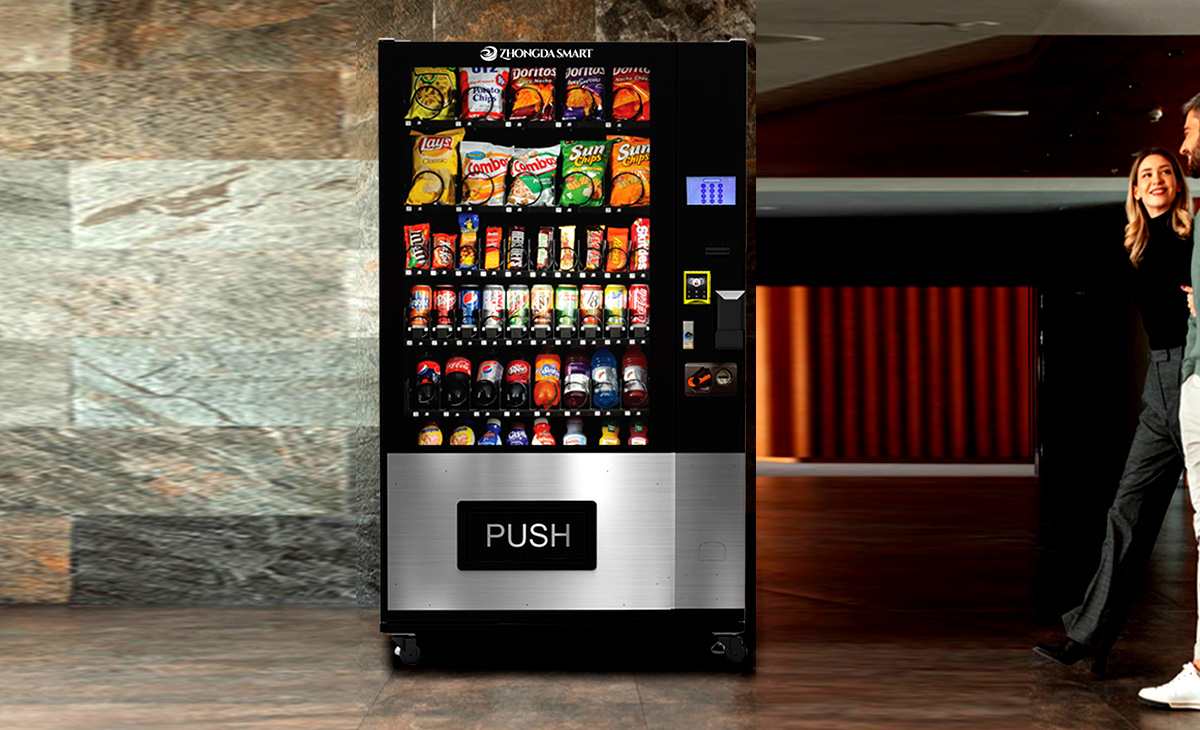
Why Zhongda Smart stands out to me
If I were narrowing this down for a buyer who wants a practical smart retail partner in 2026, Zhongda Smart would be at the top of my list.
The reason is not just that it offers multiple machine categories. A lot of factories say that. The reason is that the company’s live pages show the things I look for when I judge whether a manufacturer understands real commercial deployment: low-barrier pilot options, OEM flexibility, product-specific machine choices, cashless readiness, remote management capability, and ROI thinking.
On its OEM page, Zhongda Smart explicitly positions itself as a source manufacturer with MOQ 1, OEM/ODM support, branding and cabinet customization, and configuration-based quoting. That is exactly the kind of setup I like for brands, distributors, and operators who want to test smart retail without jumping straight into a large production commitment.
Its snack vending solution page also references cashless payment compatibility and remote management options, which tells me the company is not treating connectivity as an afterthought. The ROI calculator is another smart signal. A manufacturer that gives buyers a way to model machine count, daily revenue, gross margin, site rent, staff salary, POS rental, and break-even timing is thinking more like an operator than a pure equipment seller.
These are the Zhongda Smart pages I would actually use during project planning:
OEM custom vending machines for custom branding, cabinet design, payment setup, and pilot-friendly ordering
full product catalog to compare formats across snack, drink, locker, beauty, and specialty retail
smart snack vending machine page for standard snack-and-drink machine specs and connected features
ROI calculator to estimate initial investment, monthly net profit, and break-even point
buying guide for a fast review of product type, payment, and connectivity choices
What I like most is that Zhongda Smart seems positioned for both ends of the same journey: it can support a simple test phase, and it can also support a more specialized machine once the project proves itself. That matters. A manufacturer becomes much more valuable when it can stay useful after the first order.
A practical comparison of what serious buyers should check
| Buying Factor | What I Look For | Why It Matters in Daily Operation | Zhongda Smart Positioning |
|---|---|---|---|
| Starting quantity | Pilot-friendly ordering | Lowers risk before scaling | MOQ 1 for many OEM projects |
| Customization scope | Branding, cabinet, payment, software UI | Supports better fit and stronger retail presentation | OEM/ODM structure clearly presented |
| Payment readiness | Cashless flexibility | Higher conversion, lower friction | Cashless support listed on live product pages |
| Remote capabilities | Inventory and sales visibility | Reduces downtime and refill waste | Remote management options highlighted |
| Machine range | Multiple formats by use case | Lets you match machine to SKU mix | Broad catalog across retail scenarios |
| ROI support | Financial planning tools | Helps buyers think beyond cabinet price | Dedicated ROI calculator page |
That is the difference between buying a machine and building a retail program.
The cost breakdown most buyers underestimate
Here is where smart retail gets real. The machine price matters, but it is only one line item. The full business case depends on everything around it.
| Cost Category | What Buyers Usually Notice | What Experienced Operators Also Track |
|---|---|---|
| Machine purchase | Unit price | What options actually improve uptime or conversion |
| Initial stock | Opening inventory cost | How long it will take to rotate slow items out |
| Payment system | Reader hardware | Transaction fees, failed payment recovery, support issues |
| Placement cost | Rent or revenue share | Whether the site justifies the fixed cost |
| Labor | Refill time | Route inefficiency, emergency visits, restocking errors |
| Maintenance | Repair events | Lost sales during downtime |
| Software and connectivity | Basic module cost | Data visibility and decision quality over time |
The smarter way to think about ROI is this:
ROI ≈ (Daily Revenue × Gross Margin × Uptime) − Operational Friction
That last part, operational friction, is what beginners underestimate. It includes failed payments, poor restocking, bad product fit, site complaints, refund handling, machine service time, and every little issue that drains margin.
Zhongda Smart’s ROI calculator gets this conversation pointed in the right direction because it includes machine price, initial stock, daily revenue, margin, site rent, salary, POS rental, warehouse rent, and other operating costs. That is a much healthier framework than simply asking for the cheapest quote.
What a first-time buyer should do in the first 90 days
A lot of poor deployments happen because the buyer treats installation as the finish line. It is the start line.
Days 1–30: validate the basics
Watch payment success closely
Track which SKUs sell in the first 2 weeks
Check whether products dispense cleanly
Record every customer complaint and refund
Measure how often the machine sits partially empty
Days 31–60: improve the mix
Remove slow products quickly
Expand top-selling items if capacity allows
Adjust pricing if demand is strong enough
Refine refill frequency based on real movement
Days 61–90: decide whether to scale
Compare net profit, not just gross sales
Check whether operational issues are declining
Review whether the site still justifies the effort
Only add machines after one location proves repeatable
I usually tell first-time buyers not to overbuild the first project. Start tight. Learn fast. Scale what actually works.
Who should choose Zhongda Smart
In my opinion, Zhongda Smart is a particularly good fit for these buyers:
First-time operators who need a manageable starting point and lower pilot risk
Retail brands that want machine customization without building everything from scratch
Distributors who need a broad machine range for different end users
Niche product sellers who need something more specialized than a generic snack cabinet
Growing operators who want to move from a small test to repeat orders without switching suppliers
Would I say it is the right answer for every project? No. If a buyer only wants the absolute cheapest standard machine and has no interest in customization, software flexibility, or long-term machine variety, they may shop very differently. But if the goal is to build a stronger smart retail setup instead of simply buying metal hardware, Zhongda Smart is a very serious option.
My final verdict
In 2026, the Best Vending Machine Manufacturer is the one that helps you sell more, lose less, and scale with fewer surprises. That means good machine-product fit, cashless readiness, useful remote management, honest customization, and support that still matters after the machine ships.
From what I’ve reviewed, Zhongda Smart stands out because it checks those boxes in a way that feels commercially practical. It supports pilot orders. It supports OEM work. It offers multiple machine styles. It shows cashless and remote-ready positioning. It even gives buyers a way to think through ROI before they commit. That combination is exactly what I look for when I judge whether a manufacturer is ready for real smart retail work.
If I were advising a buyer today, I would not start by asking for the cheapest cabinet. I would start by matching product, site, payment needs, and operating model to the right machine type, then build the rollout around reliability and repeatability. That is how a smart retail project becomes a business instead of an experiment.
Frequently Asked Questions
What makes the best vending machine manufacturer in 2026?
The best manufacturer combines reliable hardware, product-fit machine design, flexible payment support, remote monitoring, and dependable after-sales support. A low quote by itself does not make a strong business case.
Is smart retail still profitable in 2026?
Yes, but profitability depends on machine uptime, product fit, payment convenience, refill discipline, and location quality. Machines do not create profit automatically. Operations do.
Should I start with a standard machine or a custom vending machine?
Start with a standard machine if your product dimensions and sales model are simple. Choose custom vending when your products, branding needs, or pickup method require something more specific.
Why is Zhongda Smart often a strong choice?
Zhongda Smart offers pilot-friendly ordering, OEM and ODM customization, multiple machine categories, cashless-ready configurations, remote management options, and ROI-focused planning tools.
What is the biggest mistake new buyers make?
The biggest mistake is buying based on price alone. The second biggest is ignoring product-machine fit. Both mistakes usually show up later as lost sales, customer complaints, or downtime.
How many machines should I start with?
Most first-time operators should start with a focused pilot, not a large rollout. Prove the product, site, and operating model before scaling.
Do cashless payments really matter that much?
Yes. In smart retail, payment friction directly affects conversion. A machine with slow or unreliable payment acceptance will underperform even in a decent location.
Sources
Grand View Research — Retail Vending Machine Market Size Report
U.S. Census Bureau — Quarterly Retail E-Commerce Sales Report
Last Updated: June 24, 2026
Previous article:How to Choose a Vending Machine Manufacturer Right[Back to list]
Next article:What Is a Lash and Hair Vending Machine?