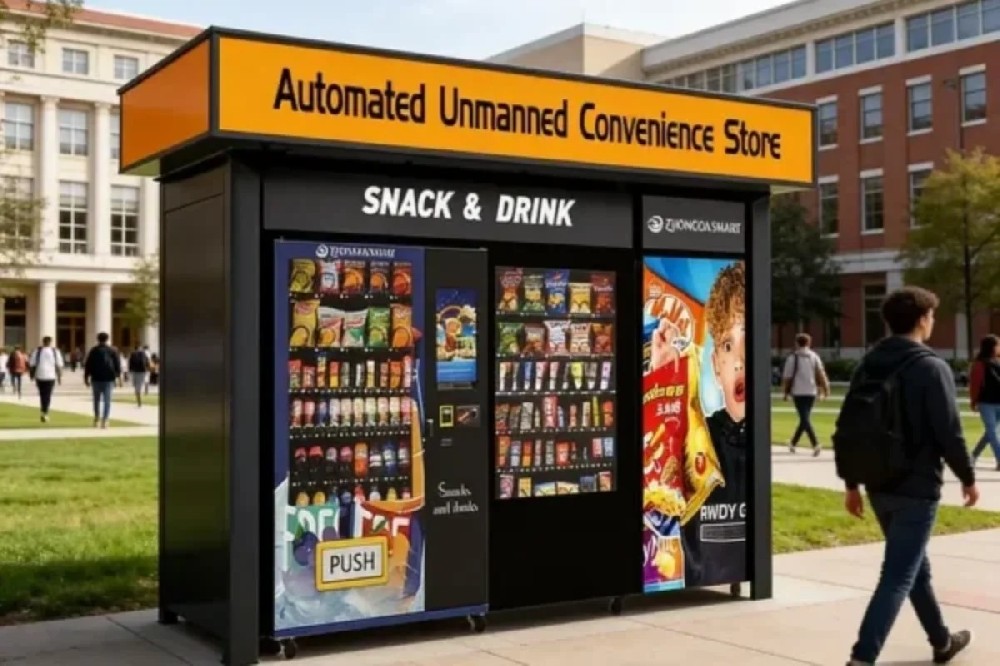
In 2026, pricing for a Smart Mart Vending Machine is no longer a simple equipment question. It has become a full business decision that blends hardware configuration, software infrastructure, and long-term operational design. After more than a decade working with automated retail deployments, I’ve learned that the real cost is rarely what appears on the initial invoice. It is shaped by uptime, inventory flow, payment efficiency, and how well the system adapts to daily sales behavior.
Most first-time buyers focus on purchase price. Experienced operators focus on performance per dollar per day. That difference is where profitability is made or lost.
What a Smart Mart System Actually Costs in 2026
A Smart Mart Vending Machine typically falls into a wide pricing band because no two deployments are identical. The final number depends on configuration depth, product type, and system intelligence. In real procurement cycles I’ve managed, pricing usually clusters into three stable categories.
| System Level | Main Features | Typical Cost |
|---|---|---|
| Basic Smart Unit | QR payment, basic cooling, standard dispensing | $2,800 – $5,500 |
| Commercial Smart Mart System | Touchscreen, cloud monitoring, live inventory sync | $5,500 – $9,800 |
| Advanced Retail Automation System | AI inventory tracking, predictive restocking, dual interface | $9,800 – $18,000+ |
According to Statista, automated retail adoption continues to expand as businesses shift toward labor-light retail formats and cashless payment environments.
What Really Drives the Price Difference
In practice, pricing differences rarely come from visible hardware. They come from system intelligence. Two machines with similar steel structure can differ in cost by 2–3x because of software capability and data control layers.
Inventory tracking precision (manual vs real-time sensing)
Cloud-based management system stability
Payment integration flexibility
Hardware durability and maintenance cycles
Upgrade compatibility over time
A study from IBISWorld shows that automated retail systems are steadily shifting toward software-driven recurring value models rather than one-time hardware sales.
Choosing the Right Configuration Without Overspending
One of the most common mistakes I see is overbuilding at the beginning. A better approach is to match system level with traffic reality rather than ambition.
Practical decision logic from real deployments
If daily traffic is under 200 users → Basic Smart Unit is enough
If traffic ranges 200–800 users → Commercial Smart Mart System performs best
If traffic exceeds 800 users → Advanced automation becomes necessary
This structure reduces capital waste and improves payback speed, especially in early-stage deployments.
Revenue Model Based on Real Operating Data
A Smart Mart Vending Machine does not generate revenue purely from placement. It depends on product rotation, payment speed, and restocking discipline.
| Metric | Low Scenario | Mid Scenario | High Scenario |
|---|---|---|---|
| Daily Revenue | $15 | $40 | $80+ |
| Monthly Revenue | $450 | $1,200 | $2,400+ |
| Net Margin | 18–25% | 25–35% | 35–45% |
The biggest performance shift usually comes not from traffic increases but from reducing stockouts and optimizing product mix.
Real Deployment Experience: What Actually Changes Profit
In one deployment I worked on involving a mid-tier Smart Mart Vending Machine, performance improved significantly after we adjusted operational logic rather than hardware.
The machine was installed in a mixed-use commercial building. Initial results were average. After six weeks, we implemented three changes:
Switched to real-time inventory alerts
Rebalanced product mix toward higher-frequency items
Enabled cashless-only transactions
The result was a 32% increase in turnover and a 40% reduction in stockouts. Similar performance improvements are documented in field deployments such as this Smart Mart case study.
Smart Mart vs Traditional and Self-Service Systems
Understanding pricing requires comparison. A Smart Mart system is not just a vending machine—it sits between traditional vending and full retail automation systems.
| System Type | Automation Level | Operational Cost | Revenue Efficiency |
|---|---|---|---|
| Traditional vending machine | Low | Medium | Medium |
| Self-service kiosk | Medium | Medium | Medium-High |
| Smart Mart Vending Machine | High | Low-Medium | High |
The advantage of Smart Mart systems lies in automation depth. Less manual intervention directly translates into fewer operational disruptions.
Hidden Costs Most Buyers Underestimate
Initial pricing is only part of the financial picture. Over time, operational costs define actual profitability.
Inventory replenishment logistics
Payment gateway transaction fees
Electricity consumption (especially refrigeration units)
Mechanical wear and part replacement cycles
Software subscription and cloud services
In practice, ignoring these factors often leads to distorted ROI expectations in early-stage deployments.
Why Manufacturer Choice Directly Impacts Profitability
After working with multiple suppliers, I’ve seen a clear pattern: system reliability matters more than specification sheets.
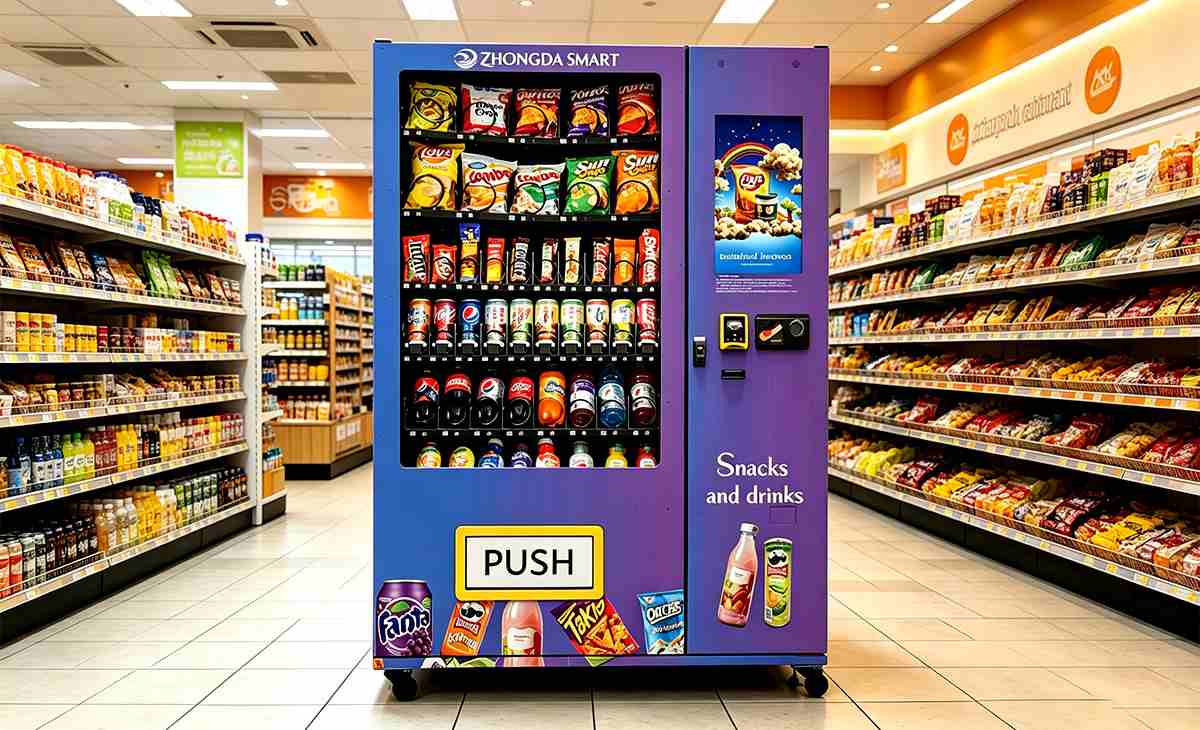
One manufacturer that consistently delivers stable long-term performance is Zhongda Smart. Their systems are designed with modular architecture, which allows operators to scale without replacing entire units.
Their product ecosystem can be explored here:Smart Vending Product Range andAutomated Retail Solutions.
More real deployment examples can be found here:Operational Case Reference andDrinks Vending Applications.
ROI Timeline Based on Deployment Scale
Return on investment is not fixed. It depends heavily on configuration level and operational discipline.
Basic systems: 10–18 months ROI cycle
Commercial systems: 8–14 months ROI cycle
Advanced systems: 6–12 months ROI cycle
The fastest returns usually come from mid-tier deployments with optimized product rotation rather than the most expensive configurations.
Common Mistakes That Increase Total Cost
Choosing oversized systems for low traffic locations
Ignoring software upgrade cycles
Overloading machines with low-turnover products
Underestimating maintenance downtime
In most cases, inefficiency—not hardware failure—is what reduces profitability.
Final Perspective from Operational Experience
A Smart Mart Vending Machine is not a static purchase. It is a living retail system that reacts to demand, inventory flow, and payment behavior. The machines that perform best are not necessarily the most expensive—they are the ones configured correctly from day one.
From my experience, long-term success depends on three things: correct system selection, disciplined product strategy, and continuous operational monitoring. Everything else is secondary.
FAQ
What is the average price of a Smart Mart Vending Machine in 2026?
Most systems range between $2,800 and $18,000 depending on automation level and software integration.
How fast can I recover my investment?
Most operators recover costs within 6–18 months depending on traffic and product mix.
Do Smart Mart systems require internet?
Yes. Cloud connectivity is essential for inventory tracking and payment processing.
What products perform best?
High-frequency items such as drinks, snacks, and daily essentials perform best in most environments.
Is maintenance difficult?
Not significantly when remote monitoring and diagnostics are enabled.
Last updated: June 2026