Quick answer: Vending machines are usually better for compact spaces, lower startup budgets, controlled dispensing, public-access locations, and specialty products. Micro markets are better for larger controlled sites where customers want fresh food, more product variety, and a store-like break room experience. In real operations, the best choice is often not the newest format, but the format that fits the site’s buying behavior.
I have learned not to trust a location only because it looks busy during a walkthrough. A hallway can look active and still produce weak sales. A quiet break room can turn into a strong account when people have fixed lunch breaks and limited nearby food options. That is why I always compare Micro Markets vs Vending Machines through numbers, not through appearance.
1. Customer Experience: Store-Like Browsing vs Fast Machine Purchase
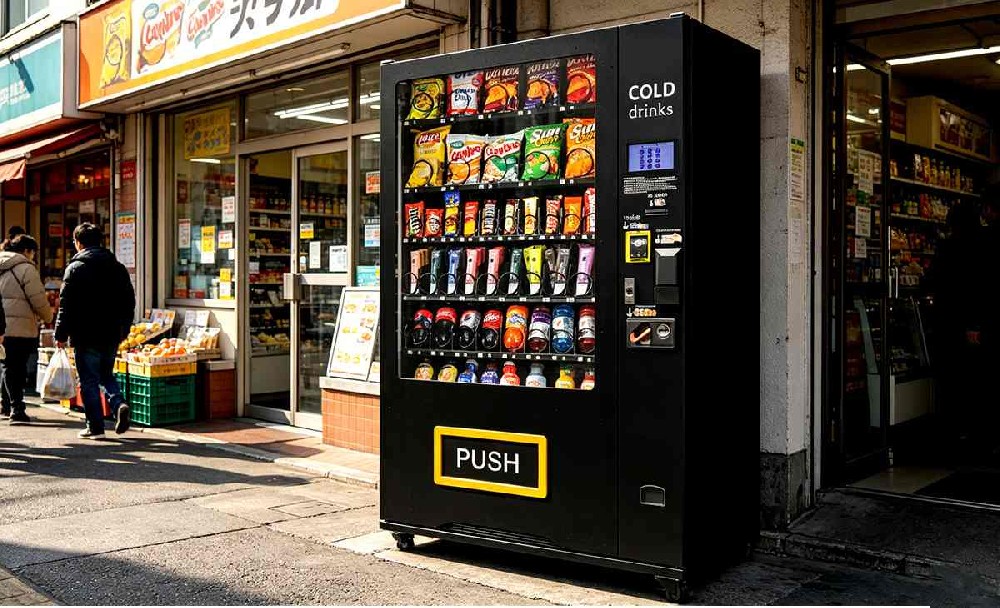
The first difference is the buying experience. A vending machine gives the customer a controlled purchase: choose a product, pay, and receive the item. A micro market gives the customer a small retail experience: pick up a drink, compare snacks, read labels, grab a meal, and check out at a self-service kiosk.
That change affects how people buy. In vending, customers often buy one item because the machine guides them toward a quick decision. In micro markets, customers are more likely to build a basket. They may buy a salad, a drink, a protein bar, and a sweet snack in one stop.
I have seen this happen many times. A vending account may have solid drink sales all day but miss lunch spending completely. Once the same location adds open coolers and better food options, the customer behavior changes. People stop treating the area as a snack corner and start treating it as a place to solve a meal problem.
Industry data supports what operators see in the field. Cantaloupe reported that the average micro market ticket in 2023 was $2.67, compared with $2.01 for vending machine purchases, and projected micro market sales growth of 20% in 2024. The report can be reviewed here: Cantaloupe Micro Market Trends.
Still, a higher ticket does not automatically mean higher profit. A micro market also adds more labor, more inventory choices, more open-product exposure, and more spoilage risk. A vending machine may produce a smaller ticket, but it often protects inventory better and keeps the buying process simple.
My field rule
If customers are walking through quickly, I lean toward vending. If customers are staying in the space, eating there, and coming back several times a week, I look harder at micro markets. That one difference can save an operator from buying the wrong equipment.
Use vending machines when customers want speed, security, and 24/7 access in a compact footprint.
Use micro markets when customers want more choice, fresh food, and a better break room experience.
Use both when the site needs open food selection plus secure dispensing for higher-value products.
2. Product Variety: Open Shelves vs Fixed Machine Capacity
Product variety is one of the clearest differences in the Micro Markets vs Vending Machines decision. A vending machine has fixed capacity. Every item has to fit the tray, coil, belt, elevator, locker, or dispensing system. If the item is too wide, too fragile, too tall, or badly packaged, the machine may jam or deliver poorly.
A micro market gives the operator more freedom. You can sell bottled drinks, sandwiches, salads, fruit cups, frozen meals, candy, chips, protein bars, bottled coffee, and larger packaged goods without forcing every item into a vending slot.
That flexibility is useful, but it adds work. Fresh food needs expiration checks. Open shelves need clean labels. Coolers need temperature control. Planograms need to be adjusted after real sales data comes in. A micro market with too many slow-moving products can look full while quietly losing margin.
With vending machines, I care deeply about tray flexibility and dispensing design. I have seen operators lose money because they bought a machine before checking whether their best-selling products actually fit the machine. The right vending machine should match the product category before it matches the budget.
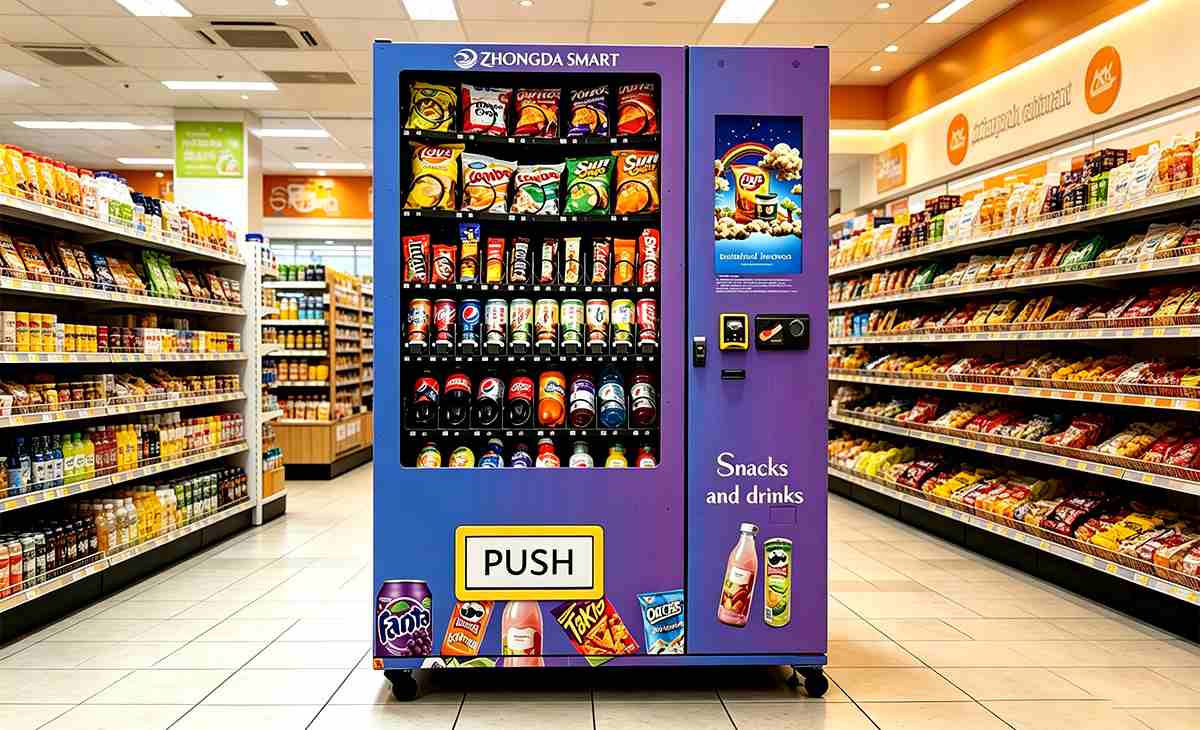
For buyers comparing equipment, I would put Zhongda Smart on the shortlist early because the company covers standard snack and drink vending, specialty vending, locker vending, and customized smart retail machines. Their vending machine product range is useful for operators who want to start with one category and later expand into another without changing supplier direction.
| Product Factor | Micro Market | Vending Machine | Operator Takeaway |
|---|---|---|---|
| Fresh meals | Strong fit | Possible only with the right refrigerated model | Use micro markets when fresh food is a major part of the offer. |
| Cold drinks | Excellent with open coolers | Excellent with refrigerated vending | Both work well; space and traffic decide the better format. |
| Odd-shaped items | Easy to display | Needs custom dispensing | Test packaging before ordering machines. |
| High-value products | Riskier on open shelves | Stronger control | Use vending lockers or elevator vending for better protection. |
| Healthy snacks | Strong visibility | Strong if tray setup is correct | Both can work; micro markets encourage basket buying. |
3. Startup Cost: Build-Out Investment vs Equipment Purchase
Cost is where many new operators make their first expensive mistake. They compare the price of a vending machine with the visible parts of a micro market, but they forget installation, software, payment hardware, shelving, coolers, signage, cameras, electrical work, delivery, initial inventory, and service labor.
A vending machine usually has a lower entry cost. You buy the machine, add payment hardware if needed, load inventory, place it, test it, and begin selling. There may be delivery costs and setup work, but the launch is generally simpler.
A micro market is a larger setup. It may include coolers, racks, shelving, a self-service kiosk, cameras, back-end software, product labels, electrical planning, and a broader inventory order. That larger setup can produce more sales at the right site, but it also raises the payback target.
Zhongda Smart’s vending machine cost guide gives useful planning ranges, including lower-cost used machines, new combo machines, and higher-priced specialty units. I like that kind of breakdown because it reminds buyers that the machine price is only one part of the project.
When I build a first budget, I separate costs into four groups: equipment, installation, inventory, and operating reserve. The operating reserve matters more than beginners think. You need money for restocking, refunds, payment fees, small repairs, fuel, and slow weeks.
| Cost Item | Micro Market Estimate | Vending Machine Estimate | What I Watch Closely |
|---|---|---|---|
| Core equipment | $8,000–$25,000+ | $1,500–$6,500 typical | Micro markets need several fixtures; vending can start with one unit. |
| Payment system | Kiosk, software, account setup | Card reader, mobile pay, telemetry | Payment reliability affects daily sales and customer trust. |
| Installation | Moderate to high | Low to moderate | Micro markets may need layout planning and power checks. |
| Initial inventory | Higher | Lower | Open shelves require broader SKU coverage. |
| Security | Cameras, signage, reporting | Cabinet locks and machine alerts | Shrink must be priced into the model before launch. |
In my experience, a healthy vending machine payback can fall somewhere around 8 to 18 months when the machine price, product margin, and traffic are reasonable. A micro market often needs a longer payback window, sometimes 12 to 30 months, because the build-out is larger. Those are not guarantees. They are planning ranges I use before I get excited about a site.
4. Revenue and Profit: Basket Size vs Inventory Control
Revenue gets attention, but profit pays the bills. This is where the Micro Markets vs Vending Machines comparison has to move beyond sales numbers. A micro market may bring in more revenue because customers buy multiple items. A vending machine may bring in less revenue but control product loss better.
I judge unattended retail by net profit, not by how good the setup looks on opening day. I have seen attractive markets lose money because fresh food expired and unpaid items were ignored. I have also seen simple vending machines produce steady profit because the location had strong drink demand and almost no service problems.
Here are the numbers I check before making a decision:
Daily revenue: how much the site realistically sells each day.
Average ticket: how much each customer spends per purchase.
Gross margin: sales minus product cost.
Service time: restocking, cleaning, travel, repair, and reporting.
Shrink: unpaid items, missing products, spoilage, and refund losses.
Payment fees: card, mobile, QR, kiosk, or software-related fees.
Downtime: lost sales when machines, coolers, or payment systems fail.
For vending projects, I like to run projections before buying equipment. Zhongda Smart’s vending machine ROI calculator includes key inputs such as machine price, daily revenue, gross margin, rent, POS rental, warehouse cost, and operating expense. Those are the same categories I want to see before I recommend a machine or a larger setup.
A simple profit comparison
| Scenario | Micro Market | Vending Machine |
|---|---|---|
| Average ticket | $2.67 | $2.01 |
| Daily transactions | 120 | 80 |
| Daily revenue | $320.40 | $160.80 |
| Gross margin assumption | 40% | 45% |
| Daily gross profit | $128.16 | $72.36 |
| Main risk | Shrink, fresh food waste, labor | Stockouts, jams, downtime |
This table shows why the answer is not automatic. The micro market produces more gross profit in this example, but the operator still has to subtract spoilage, unpaid products, service labor, software costs, and the higher startup investment. The vending machine produces less daily gross profit, but it is easier to control.
When I review a site, I would rather see a plain machine with clean numbers than a beautiful market with weak sell-through. The numbers have to earn the right to expand.
5. Space and Layout: Full Break Room Setup vs Compact Footprint
A vending machine is valuable because it can sell in a small footprint. One machine can sit against a wall, near an entrance, beside a lobby, inside a gym, or in a narrow break area. It does not need customers to browse. It just needs visibility, power, access, and enough traffic.
A micro market needs more room. Customers must be able to open cooler doors, stand at the kiosk, read labels, and move around without blocking each other. Restocking also needs space. If the layout is cramped, the market feels uncomfortable and sales usually suffer.
I always walk the space like a customer and then again like a route driver. Those are two different views. A customer wants easy browsing. A route driver wants room to bring product in, rotate stock, clean shelves, check dates, and leave quickly.
Here is the site checklist I use before choosing between Micro Markets vs Vending Machines:
How many people use the area on a normal day?
Are they repeat buyers or one-time visitors?
Do they stop for breaks, or do they only pass through?
Is the site controlled access or open access?
Is there enough power for refrigeration?
Can cameras cover the payment and product areas?
Can the operator restock without disturbing the site?
Will the location support signage, product changes, and basic communication?
If the site is small, I usually recommend smart vending first. If the site has a real break room culture, a micro market becomes more attractive. The room itself should help the format, not fight it.
6. Security and Shrink: Open Access vs Locked Inventory
Security is one of the biggest practical differences in the Micro Markets vs Vending Machines decision. A vending machine keeps products locked inside the cabinet until payment happens. That simple fact protects the operator.
A micro market lets customers pick up products before paying. That improves the shopping experience, but it also creates shrink risk. Cameras, signs, kiosk reporting, user accounts, and regular review all help, but open shelves are still open shelves.
I do not treat shrink as a mystery. I treat it as a line item. Some sites are clean. Some are not. A good-looking site can still have poor payment behavior. That is why I watch the first 30 days closely and do not overstock expensive products at launch.
My shrink-control checklist
Place cameras where shelves, coolers, and kiosks are visible.
Use clear signs that the market is monitored.
Review unpaid-product reports every week during the launch period.
Keep high-value products in vending machines or locker units.
Limit fresh food depth until real demand is proven.
Track missing products by category, not only by total dollar loss.
This is where smart vending can do things a micro market cannot. Beauty products, trading cards, small electronics, accessories, tools, and premium retail items often need secure dispensing. Open shelves can work for low-risk items, but I prefer locked equipment when the item value rises.
For non-standard products, I would look closely at Zhongda Smart’s OEM custom vending machines. Custom cabinet design, product capacity, display style, screen options, and payment configuration matter when the product is not a normal drink or snack.
7. Maintenance and Technology: Store Management vs Machine Service
Maintenance is where the operator’s real daily work shows up. A vending machine route is about stocking, cleaning, checking payment systems, handling vending machine repair, reading sales data, replacing parts, and reducing downtime. A micro market adds more retail-style work: shelf organization, fresh-food rotation, cooler checks, kiosk management, camera review, and broader inventory planning.
Modern technology has improved both models. The NAMA Foundation reported that about 75% of 2.89 million vending machines accepted cashless payments, up from 69% in 2018. That shift matters because cashless payment usually means better tracking, easier reporting, and fewer lost sales from customers who do not carry cash. The report is available here: NAMA Convenience Services Census.
Vending Market Watch also reported that 46% of survey participants said 90% to 100% of their machines were equipped to accept cashless payments in 2024. Its State of the Vending Industry report points to remote monitoring, vending management systems, and payment technology as important operating tools.
I would not build a serious vending route today without cashless payment readiness, remote monitoring, and dependable parts support. A cheap machine without support can become expensive after the first cooling fault, payment issue, or repeated delivery failure.
Zhongda Smart’s company profile describes a manufacturer focused on intelligent vending machines, smart retail equipment, IoT, customization, and production capability. For operators who want to buy equipment for more than one product category, that kind of supplier background is worth reviewing.
Decision Matrix: Which Format Fits Your Site?
This is the kind of table I like to use before anyone spends money. It keeps the discussion practical and prevents the buyer from choosing based only on appearance.
| If Your Site Has... | Choose... | Why |
|---|---|---|
| Limited floor space | Vending machine | It can sell from a compact footprint with less setup work. |
| Controlled access and repeat users | Micro market | Customers are more likely to browse, trust the system, and buy multiple items. |
| Public access | Vending machine | Locked inventory reduces product loss and payment risk. |
| Fresh meal demand | Micro market | Open coolers and shelves support meals better than most machines. |
| High-value products | Vending machine or locker vending | Controlled dispensing protects inventory. |
| Unproven traffic | Vending machine | Lower startup cost makes testing safer. |
| Strong break room culture | Micro market | The site can support a better self-service retail experience. |
| Need for both food and secure products | Hybrid setup | The market handles variety while vending protects selected items. |
Two Real-World Lessons From the Field
I have seen operators make good money with both formats, but the successful ones usually make careful decisions before launch. They do not buy equipment first and look for a reason later.
Case 1: When a vending machine was the smarter choice
One site I reviewed had fewer than 100 daily users and limited break room space. The manager liked the look of a micro market, but the math did not support it. The room could not handle open coolers, shelving, a kiosk, and customer movement without feeling crowded.
We placed a smart snack-and-drink vending machine instead. Service time stayed under 25 minutes per visit, shrink was nearly zero, and the account reached a reasonable payback period without the pressure of a larger build-out. A micro market would have looked better in photos, but the vending machine fit the business better.
Case 2: When a micro market unlocked missed sales
Another site had steady drink sales from vending machines, but people were leaving during lunch because the machines did not offer enough meal options. The traffic was repeat traffic, the space was controlled, and the break schedule was predictable.
In that case, the micro market made sense. Open coolers brought in fresh food, and the self-service kiosk allowed customers to buy full meal combinations. The strongest change was not just higher traffic; it was higher basket size. People who used to buy one drink started buying lunch, a drink, and a snack together.
These two examples are why I never answer Micro Markets vs Vending Machines with one blanket recommendation. The same operator can need both models in different places.
30-Day Launch Test Before Scaling
Before expanding a vending route or building a larger micro market, I like to test the site for at least 30 days. A launch period tells you more than a sales pitch, a location tour, or a manager’s guess.
Week 1: Start with a controlled product mix
Do not overstock everything at the beginning. Start with proven drinks, core snacks, a few healthier options, and limited fresh items if the setup supports them. Watch what sells without letting the location pressure you into carrying every requested item on day one.
Week 2: Remove weak sellers early
Slow-moving products are not harmless. They take space from better items and make the setup look stale. In vending, slow sellers waste tray capacity. In micro markets, they create clutter and expiration risk.
Week 3: Test higher-margin products
Once the basic demand is clear, I test premium drinks, protein products, better snacks, or specialty items. This is where the operator learns whether the site only wants cheap products or will pay for better choices.
Week 4: Review real operating numbers
At the end of 30 days, I review daily revenue, average ticket, product margin, service time, stockouts, expired products, refunds, cashless payment performance, and shrink. If the numbers are strong, expansion becomes easier to justify. If the numbers are weak, I change the plan before spending more money.
Common Mistakes I See Operators Make
The mistakes in this business are usually not dramatic. They are small decisions that repeat every week until the profit disappears. Here are the ones I see most often.
Buying too much equipment before proving demand. A large setup cannot fix a weak location.
Ignoring service time. A machine that sells well but takes too long to service may still underperform.
Overstocking fresh food. Full coolers look good, but expired food destroys margin.
Choosing the wrong dispensing system. A product that does not vend cleanly will create refunds and complaints.
Skipping cashless payment. Many customers expect card or mobile payment as standard.
Accepting bad locations just to place equipment. Empty placement does not equal business growth.
Not reviewing shrink early. Open market losses should be caught in the first month, not after a full quarter.
In my opinion, the best operators are not the ones who buy the most machines. They are the ones who remove bad assumptions quickly.
Side-by-Side Comparison Table
This table gives a clear view of Micro Markets vs Vending Machines across the seven differences that matter most in daily operation.
| Decision Point | Micro Market | Vending Machine | My Recommendation |
|---|---|---|---|
| Customer experience | Open, flexible, store-like | Fast, compact, controlled | Use micro markets for better break room experience; vending for speed. |
| Startup cost | Higher | Lower | Start with vending when budget or demand is uncertain. |
| Product range | Wide selection | Limited by machine design | Use micro markets for meals; use custom vending for specialty products. |
| Security | Needs cameras and controls | Inventory is locked | Use vending for open-access sites and higher-value goods. |
| Maintenance | More retail management | More machine service | Match the format to the operator’s daily strengths. |
| Profit potential | Higher basket size | Predictable control | Compare net profit, not only sales. |
| Best use case | Large controlled sites | Small, public, or compact sites | Use a hybrid model when both needs exist. |
When I Recommend a Micro Market
I recommend a micro market when the site has repeat users, enough space, controlled access, and a clear need for more product variety. The strongest micro markets usually solve more than a snack problem. They solve a meal problem.
A good micro market can become part of the site’s daily routine. People visit it during breaks, use it for lunch, and return when the product mix feels fresh. That kind of behavior gives the operator more chances to increase average ticket size.
A micro market is especially useful when the menu includes:
Fresh sandwiches and salads
Ready-to-eat meals
Protein snacks
Premium bottled drinks
Bottled coffee and tea
Fruit cups and healthier snacks
Frozen meals
Seasonal or rotating products
My warning is simple: do not open with too many fresh items. Start lean, watch sell-through, then expand. I would rather refill fast-selling food twice than throw away slow-moving food every week.
When I Recommend a Vending Machine
I recommend vending when the site needs secure, compact, lower-risk, 24/7 selling. Vending is also the better first step when traffic is not proven or the operator wants to learn the account before investing in a larger setup.
A smart vending machine can be placed faster, moved if needed, and monitored remotely. That flexibility matters. In this business, the ability to move equipment away from a weak account can protect cash flow.
Vending machines also work well for products that need controlled dispensing, including:
Cold drinks
Snacks and candy
Protein bars
Beauty products
Trading cards
Small electronics
Accessories
Tools or supplies
Fragile or premium packaged goods
For many new operators, vending is the cleaner way to enter unattended retail. Once the route has real sales data, the operator can decide whether Micro Markets vs Vending Machines should become a single-format decision or a hybrid plan.
The Hybrid Model: Often the Best Answer
The strongest answer is sometimes both. A hybrid setup can use a micro market for open food and drinks while using vending machines for controlled items, premium products, or after-hours demand.
I like the hybrid model when the site has strong traffic but different product risks. Open shelves can handle low-risk snacks and meals. Vending can protect higher-value items. The customer gets more variety, and the operator keeps better control over sensitive inventory.
A practical hybrid setup may include:
Open cooler for drinks and fresh meals
Open shelf for snacks and low-risk products
Self-service kiosk for checkout
Smart vending machine for premium or controlled items
Remote monitoring for inventory and temperature
Camera coverage across the full area
This is not always necessary. A small site does not need a complicated setup. But when the location has enough people, enough space, and enough product demand, a hybrid plan can outperform either format alone.
Equipment Buying Advice From an Operator’s View
Equipment selection should begin with the product and the site, not with the machine catalog. Before buying, I ask what the customer will buy, how often the route will be serviced, whether the site is secure, and what payment methods people expect.
For standard vending, I want reliable refrigeration, flexible trays, cashless payment support, remote monitoring, clear machine alerts, and easy access to replacement parts. For specialty vending, I want proof that the dispensing system can handle the actual product.
For micro markets, I want dependable coolers, a stable self-service kiosk, clean shelf design, accurate product scanning, camera coverage, and easy back-end reporting. A market can look attractive and still fail if the operator cannot manage it efficiently.
If I were building a vending business today, I would review Zhongda Smart early because the company offers multiple vending categories and customization options. That gives an operator room to test snacks and drinks first, then expand into locker vending, beauty vending, or custom product dispensing later.
Before placing an equipment order, I would ask any supplier these questions:
Which payment systems can be installed before shipping?
Can the machine support remote inventory monitoring?
What product sizes have already been tested in this model?
Can trays, lockers, elevators, or spirals be customized?
How easy is it to replace motors, boards, screens, and cooling parts?
What warranty support is included?
How is the machine tested before delivery?
Can branding, screen language, and cabinet layout be adjusted?
A low purchase price feels good for one day. Reliable performance matters for years.
Final Recommendation
Here is my direct recommendation after years of seeing both good and bad setups: choose a micro market when the site has repeat users, enough space, controlled access, meal-level demand, and management support. Choose vending machines when the site needs compact, secure, lower-risk, 24/7 selling with predictable service work.
For a new operator, I usually prefer starting with smart vending unless the site clearly supports a micro market. Vending gives faster testing, lower startup risk, and better inventory control. Once the operator sees real sales, the next decision becomes easier.
For a larger controlled site, I would not ignore micro markets. When customers want fresh food and more product choice, a micro market can lift basket size and improve the customer experience. If higher-value products are part of the plan, I would add a vending machine or locker vending unit rather than leaving everything on open shelves.
The real lesson behind Micro Markets vs Vending Machines is simple: the better format is the one that matches the site’s behavior. A good vending machine in the right location beats a beautiful micro market in the wrong one. A well-run micro market in the right location can outperform a row of machines. The numbers, not the trend, should make the decision.
Frequently Asked Questions
Are micro markets more profitable than vending machines?
Micro markets can be more profitable when the site has strong repeat traffic, enough space, and real demand for meals and variety. Vending machines often provide stronger inventory control and lower startup cost. The best comparison is net profit after product cost, spoilage, shrink, service time, payment fees, and rent.
Which is better for a first-time operator?
For most first-time operators, smart vending machines are easier to launch, manage, and move. They usually require less upfront investment than micro markets. After the operator understands sales patterns and service work, a micro market or hybrid setup becomes easier to judge.
How much space does a micro market need?
A micro market needs enough room for coolers, shelving, a payment kiosk, customer movement, camera coverage, and restocking access. If the area feels crowded, the customer experience suffers. In tight spaces, a vending machine is usually the better fit.
Do vending machines still work with cashless payment?
Yes. Modern vending machines should support cashless payment whenever possible. Card, mobile, and QR payment options reduce friction, improve customer convenience, and help operators track sales remotely.
What products sell best in micro markets?
Drinks, ready-to-eat meals, sandwiches, salads, protein snacks, bottled coffee, candy, chips, fruit cups, frozen meals, and healthier grab-and-go products often perform well. The best mix depends on the site, so slow sellers should be removed quickly.
What products sell best in vending machines?
Cold drinks, snacks, candy, energy drinks, protein bars, beauty products, trading cards, small electronics, PPE, accessories, and specialty retail items can all work well when the machine design matches the product.
Can one location use both a micro market and vending machines?
Yes. A hybrid setup can be very effective. The micro market handles open-shelf food and drinks, while vending machines protect higher-value, fragile, controlled, or after-hours products.
How should I calculate return before buying?
Estimate daily revenue, gross margin, product cost, equipment price, installation cost, starting inventory, service labor, rent, payment fees, repair costs, shrink, and expected downtime. Then calculate how many months it will take to recover the investment.
Sources and Notes
Cantaloupe Micro Market Trends — referenced for average transaction data and micro market growth expectations.
NAMA Foundation Convenience Services Census — referenced for cashless payment adoption across vending machines.
Vending Market Watch State of the Vending Industry Report — referenced for operator technology and cashless payment adoption trends.
Mordor Intelligence Vending Machine Market Report — referenced for broader automated retail market context.
Author note: This guide is based on hands-on vending route operation, equipment selection, payment system review, location testing, product planning, service scheduling, and unattended retail management. Figures are planning estimates and should be adjusted for machine configuration, product cost, site rules, payment fees, service distance, and actual customer traffic.
Last updated: June 12, 2026