If someone asked me how to make Start Business Low Budget Cost-Effective Strategies 2026 work in the real world, I’d give a simple answer: keep the first setup small, keep the machine reliable, keep the product mix tight, and keep your cash where it matters most. I’ve spent more than a decade around vending projects, machine sourcing, rollout planning, product testing, and day-to-day operating decisions, and the biggest lesson I’ve learned is this: a low-budget launch only works when the business stays disciplined. You do not need a huge fleet. You do not need an oversized catalog. You do not need to guess your way into growth. What you need is a setup that can pay for itself without draining your time, your route, or your working capital. That is where real traction starts.
I’m not writing this from the angle of theory. I’m writing it the way I’d explain it to a friend who wanted to get into unattended retail without burning money on the wrong machine, the wrong site, or the wrong product strategy. In my experience, most beginners do not fail because the idea is bad. They fail because they spend too much before the model proves itself. They buy hardware before they understand turnover. They chase variety before they understand demand. They think “low budget” means “buy cheap,” when in practice it means “buy carefully.” That difference sounds small, but it decides whether your first machine becomes a steady earner or an expensive lesson.
So this guide is built around the questions that actually matter. What kind of machine makes sense when capital is tight? How do I control startup cost without inviting service problems later? What products move first? What site terms are fair? How do I think about payback without lying to myself? And when does it make sense to speak with a manufacturer like Zhongda Smart about standard units versus a custom machine? I’m going to answer those the way I would if I were spending my own money in 2026.
What low-budget really means in this business
One of the first things I tell people is that low-budget vending is not about cutting every corner. It is about choosing where your money works hardest. A lot of first-time buyers make the mistake of treating the machine price as the whole story. It never is. The machine is only one part of the cost. Freight matters. Payment setup matters. Initial stock matters. Servicing time matters. Even the number of minutes it takes to refill a unit matters once you start doing it week after week.
That is why I separate “cheap” from “cost-effective.” Cheap usually looks good only on day one. Cost-effective still looks good six months later. Cheap is the machine that saves a little on purchase price and then eats your margin through failed payments, weak cooling, awkward shelving, poor parts support, or repeated service calls. Cost-effective is the machine that fits the product, stays stable, accepts modern payment, and can be restocked quickly by one person without turning every visit into a chore.
In practical terms, when I talk about a low-budget launch, I’m usually picturing one to three machines, one main product logic, a short SKU list, and a simple route that one owner can manage without hiring help. That is the sweet spot where you can learn fast, correct mistakes quickly, and still protect cash flow. If I had to choose between one reliable machine with clean economics and two bargain machines with uncertain service risk, I would choose the reliable one every time.
Low-budget done right: controlled upfront spend, realistic payback, simple servicing, clean product logic, and cash reserved for adjustment.
Low-budget done wrong: overbuying hardware, stuffing the machine with too many products, underestimating fees, and hoping traffic alone fixes weak planning.
What actually works: start narrow, read the numbers honestly, and let proof lead expansion.
How I would start in 2026 if the money were mine
If I were launching from zero today, I would not begin with a broad unattended retail empire. I would begin with one machine format I understood well, one product category that buyers already know how to purchase quickly, and one site that offers steady repeat traffic instead of random spikes. That is still the cleanest path I know to making Start Business Low Budget Cost-Effective Strategies 2026 work beyond the first month.
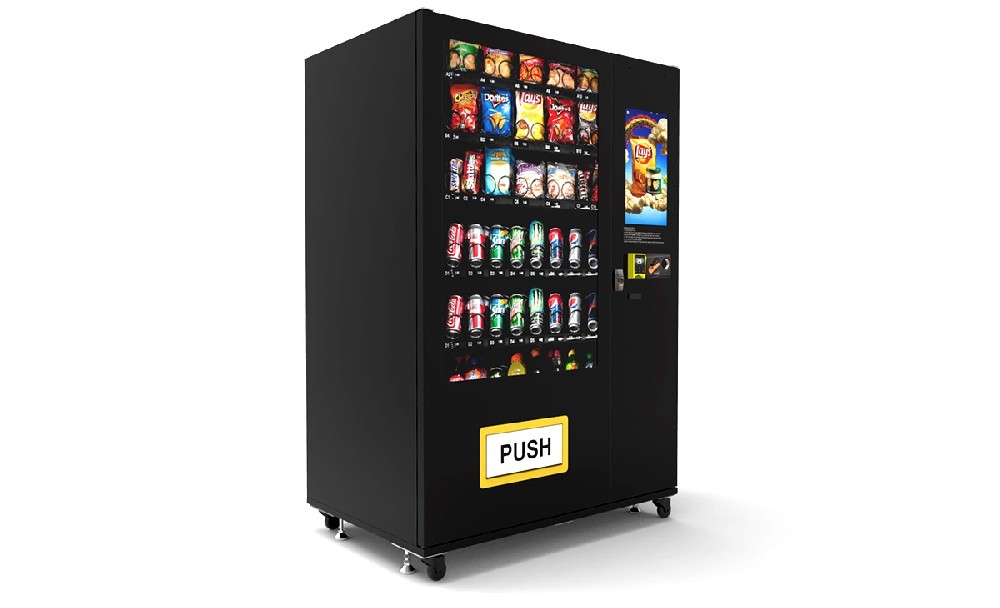
My preference for a first launch is usually a snack machine, a drinks machine, or a compact snack-and-drink combination machine. I like those formats because they are easy to explain, easy to price, and easy to restock. Buyers do not need a learning curve. They see the machine, they understand the offer, and they buy. When a machine requires too much thought from the customer, conversion drops. When a machine requires too much thought from the operator, mistakes multiply.
That does not mean specialty machines are bad. It just means specialty should come after clarity. If your product has unusual dimensions, a high selling price, or a strong branded concept, a custom machine or locker-style setup can absolutely make sense. But I would not begin there unless the product logic demanded it. Standard formats are better teachers. They let you learn pricing, replenishment, shrink, and location behavior without too many moving parts.
When I want to compare standard categories quickly, I usually start with a broad product overview rather than jumping straight into one machine. Zhongda Smart’s product catalog is useful for that because it gives a clear look at common vending formats, specialty options, and unattended retail directions without forcing the decision too early.
The startup budget I’d build before I signed anything
A smart launch budget is not just a number. It is a filter. It keeps you from spending emotionally. Before I commit to a machine, I want to know exactly how much room I have for setup, first inventory, payment integration, and inevitable adjustment. The launch only feels inexpensive when the numbers are honest.
The U.S. Small Business Administration advises owners to calculate startup costs before launch so they can estimate funding needs and understand when the business can realistically turn profitable. That advice may sound obvious, but it applies perfectly to vending, where too many new operators think the equipment invoice is the whole investment. It is not. Your machine may be the visible asset, but working capital is what keeps the business from stalling. SBA startup cost guidance is still one of the better public references for building that mindset.
When I sketch out a lean vending launch, I usually break the money into seven buckets: machine purchase, shipping and placement, payment setup, initial product load, branding and small materials, maintenance reserve, and operating cash. The exact split changes by machine type, but I never let the machine itself eat the entire budget. That is where beginners trap themselves. They buy the hardware and then have nothing left for the first round of real-world corrections.
| Budget item | How I usually think about it | Common beginner mistake |
|---|---|---|
| Machine purchase | The largest line, but not the only important line | Spending almost everything here |
| Freight and installation | Needs to be planned before the order is placed | Forgetting access, delivery, and placement issues |
| Cashless payment | Not optional for most launches anymore | Treating it like a luxury add-on |
| Initial stock | Enough to test demand, not enough to freeze cash | Buying too many slow items at the start |
| Maintenance reserve | Protects the business from early surprises | Assuming nothing will go wrong in month one |
| Branding and labels | Small cost, but helpful for trust and clarity | Ignoring presentation completely |
| Working capital | The money that buys you time to learn | Leaving no buffer for adjustments |
If you’re comparing equipment costs, I’d also look at this vending machine cost page before reaching out to suppliers. Not because it gives a perfect answer for every project, but because it helps frame the right cost conversation early: purchase price, configuration, and the choices that change total spend.
The machine types I trust most for a first launch
People love to ask which machine is “best,” but that is not how I think about it. The better question is which machine makes it easiest to earn clean, repeatable revenue with the least waste. That answer depends on product fit more than anything else.
A classic snack machine remains one of my favorite first steps because it teaches all the fundamentals without too much complexity. A good drinks machine can also work well, especially when cold product moves quickly and restocking is easy. Combo units are practical when space is limited and you want one footprint instead of two. Beyond that, locker-based formats and custom dispensing systems make more sense once the product itself justifies the extra effort.
Whenever I evaluate a machine, I’m really looking at only a few things first. Does it fit the products without forcing awkward compromises? Is the interior layout flexible enough to adjust once real sales data comes in? Can one person load it without wasting time? Does the payment flow feel smooth? If something breaks, can I get support quickly? Most purchase mistakes happen because buyers get distracted by surface features and ignore the operating reality.
| Machine type | Best fit | Why I like or avoid it early |
|---|---|---|
| Snack machine | Fast-turn, low-friction products | Great first machine because the learning curve is low |
| Drinks machine | Cold beverage demand | Strong performer when refill logistics are easy |
| Snack and drink combo | Mixed demand in one location | Useful when you want one footprint and manageable variety |
| Locker vending machine | Larger or premium items | Good when ticket value is higher and delivery needs more protection |
| Custom vending machine | Brand-led or unusual product projects | Worth it only when the product or concept clearly requires it |
| Self-service kiosk | Broader unattended retail experiences | Powerful, but not always the easiest low-budget entry point |
If I were testing a more branded concept, a premium format, or a product that does not sit nicely in a standard shelf-and-spiral setup, I would talk to a manufacturer early instead of trying to force the product into the wrong chassis. Zhongda Smart’s OEM custom vending machine page is the sort of page I’d review first in that situation because it helps separate “maybe custom would be nice” from “this project really needs a custom solution.”
The products I’d stock first and the ones I’d avoid
When money is tight, product selection has to be disciplined. I do not start with a huge assortment. I start with the items most likely to move cleanly, refill easily, and keep spoilage low. Most operators lose margin through bad stock decisions long before they lose it through dramatic equipment failure.
My early rule is simple: if a product is hard to price, hard to source consistently, awkward to fit, or too slow to turn, it does not belong in the first wave. A first machine is not a product museum. It is a test bench. I want items with clear demand, familiar price acceptance, and simple handling. That usually means core snacks, drinks, compact convenience items, and maybe one or two slightly better-margin upsells once the basics prove themselves.
I also pay close attention to price pressure. The Bureau of Labor Statistics reported that the food index rose 3.2% over the previous 12 months in April 2026, while nonalcoholic beverages also saw notable year-over-year movement in 2026 data releases. That matters because many first-time operators build their math using stale supplier cost assumptions. Small changes in purchase price can quietly erode margin if you do not review your pricing often enough. BLS CPI releases are one of the simplest public ways to stay grounded in the broader cost environment.
What I avoid at the beginning are products that create extra operating noise. Fragile items. Oddly shaped products. Things with weak shelf life. Products that require too much explanation. Products that only a tiny sliver of buyers recognize. If I cannot imagine a buyer choosing it quickly, I usually keep it out until the machine already has steady core revenue.
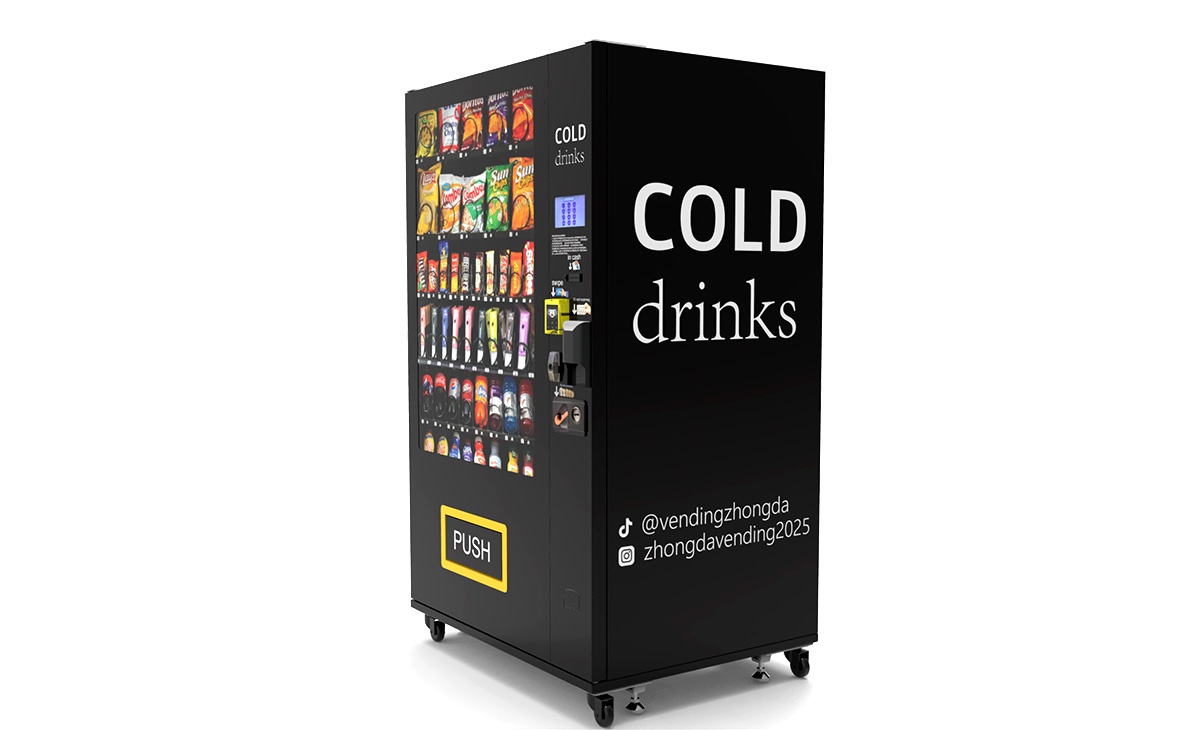
For a straightforward format reference, I’d look at this smart snack vending machine example. Not because every business should copy it exactly, but because it illustrates the kind of simple, familiar offer that often works well in an early-stage setup.
The one decision that matters more than the machine: placement
I have seen average machines do well in strong placements and expensive machines struggle in weak ones. That is why I never romanticize hardware. A machine is only as good as the environment around it. If the traffic is wrong, the buying moment is weak, or the host terms are lopsided, even a polished machine can disappoint.
When I evaluate a location, I’m not just counting bodies. I’m looking for repeat exposure, buying convenience, dwell time, sight line, service access, and whether the machine solves a real problem in that space. A site can be busy and still be bad. If people pass fast, if they already have easy alternatives, or if the machine is tucked into a dead corner, traffic numbers alone do not mean much.
I also care a lot about the host’s expectations. Some location partners understand vending as a steady service business. Others expect it to behave like magic. I’d rather work with the first type every day of the week. A fair site with realistic expectations is usually more valuable than a flashy site with poor economics and constant pressure.
What I want to know before I place a machine
How many people pass the spot daily, and how many are repeat visitors?
Do they stay long enough to notice the machine and buy?
Does the machine solve a convenience problem right there?
Is the placement visible without being intrusive?
How hard will it be to restock or service?
What fees, commissions, or revenue share are expected?
Can pricing be adjusted if supplier costs move?
Will the host support the machine if layout or product changes are needed later?
If I cannot answer those questions clearly, I am not ready to place the machine. That may sound cautious, but it saves money. In my experience, the costliest beginner error is not buying the wrong machine. It is putting a decent machine in a weak commercial situation and then blaming the equipment for poor decisions made upstream.
The math I run before I approve a purchase
I never buy a machine based on revenue fantasy. I buy it based on a downside case I can live with. Before I commit, I model monthly sales, product cost, payment fees, site fees, replenishment labor, spoilage, and a maintenance reserve. Then I ask one uncomfortable question: if sales come in slower than expected, do I still like the business?
That single question has saved me a lot of pain over the years. Anyone can make the numbers look pretty in a best-case scenario. The real test is whether the machine still makes sense when traffic is softer, when a few SKUs underperform, or when refill time runs longer than planned.
| Line item | What I look for | Why it matters |
|---|---|---|
| Monthly gross sales | Realistic estimate, not dream traffic | Sets the ceiling for everything else |
| Cost of goods sold | Category-sensitive and reviewed often | Weak product purchasing kills margin quietly |
| Payment fees | Included from the beginning | Many first-timers forget this line |
| Site share or rent | Modeled honestly | A “good site” can still be a bad deal |
| Replenishment labor | Valued even if I do it myself | My time is still a business cost |
| Spoilage and shrink | Small but real | Adds up faster than people think |
| Maintenance reserve | Always included | Keeps the cash flow stable when issues pop up |
If you want a simple framework for testing payback scenarios, Zhongda Smart’s ROI calculator is worth using before you place the order. I like any tool that forces people to stop thinking only about purchase price and start thinking like operators.
Why cashless payment is no longer optional for most launches
Years ago, some operators could still get away with a casual approach to payment. I would not build that way now. A cashless-ready machine is no longer a nice extra for most projects. It is a core part of the offer. The buying moment has to feel easy. If the customer wants the product but the payment flow feels awkward, you lose sales you never get to count.
NAMA’s convenience services industry research reported that about 75% of vending machines accepted cashless payment, up from 69% in 2018. That trend lines up with what I’ve seen in actual operations: easier payment tends to lift conversion, support better price tolerance, and make sales tracking cleaner. NAMA industry census data is a solid benchmark on this point.
The benefit is not only on the customer side. Cashless setups also make the business easier to read. Once you have reliable sales visibility, it becomes much easier to spot dead stock, compare sites, test price changes, and decide whether a machine deserves to scale. I’ve always believed the best operators are not the ones with the biggest machines. They are the ones who learn fastest from the cleanest data.
Where manufacturers matter and why Zhongda Smart belongs in the conversation
When I look at manufacturers, I do not just care about whether they can build a machine. I care about whether they understand the difference between a brochure machine and a working machine. Those are not the same thing. A machine can look good online and still be a hassle in the field. Real value shows up in layout flexibility, payment compatibility, fit and finish, service logic, and whether the supplier can support a serious rollout conversation instead of only quoting a price.
That is why I pay attention to manufacturers that can cover both standard and custom paths. Zhongda Smart stands out in that respect because it offers mainstream machine categories, more specialized formats, and OEM customization under one roof. For a buyer trying to decide whether to begin with a standard unit or move into a tailored build later, that flexibility is useful. You can start practical and still have room to evolve if the business model proves itself.
When I’m assessing a supplier like this, I usually look at three things. First, do they show enough machine variety to suggest real production depth? Second, do they provide enough information for a buyer to compare formats intelligently? Third, do they appear prepared for both standard purchase and customized project discussion? On those points, Zhongda Smart gives buyers a workable starting point instead of forcing them into guesswork.
That does not mean every buyer should go straight into custom. In fact, I would say the opposite. In most first launches, the smartest move is to stay simple. But when a project does need custom shelving, a special product path, locker logic, branded housing, or a different retail experience, it helps to talk to a supplier that is already set up for that kind of conversation. That is where the company’s standard product pages and custom pages become genuinely useful, not just decorative.
The operating habits that keep a small vending business profitable
In my experience, profit is usually protected by small habits, not dramatic decisions. The owners who do well over time are the ones who stay alert to the boring details. They review what is actually selling. They trim what is not. They keep the machine clean. They fix layout problems quickly. They understand that one slow SKU repeated across multiple columns is not variety. It is dead cash.
I learned early that route discipline matters more than most people think. If a refill visit takes too long, the route gets expensive fast. If a site is awkward to access, the labor cost keeps climbing. If the machine layout is messy, loading errors increase. None of that shows up in the purchase quote, but all of it shows up in the operating result.
The habits I would build from day one
Keep the first product mix short and readable.
Track which items actually move, not which ones you personally like.
Cut slow sellers quickly instead of giving them endless chances.
Review price points whenever product cost moves.
Count my own refill time as a real business expense.
Check payment performance and failed transactions regularly.
Leave enough empty budget space to correct mistakes without panic.
If I had to sum up the difference between a hobby approach and a business approach, it would be this: hobby operators keep feeding the machine; real operators keep reading the machine.
The mistakes I see beginners make over and over again
The first mistake is buying emotionally. Someone sees a machine that looks exciting, imagines the revenue, and forgets to ask whether the economics are actually attractive. The second mistake is over-assorting too early. More products sound appealing, but they usually create more confusion, slower turns, and more money trapped in inventory. The third is ignoring site economics. A decent machine in a bad deal is still a bad deal.
Another common issue is treating labor as free simply because the owner does the work. I never do that. My time has a value whether I pay myself on paper or not. If the route is inefficient, the business is weaker than it looks. The same goes for card fees, stock loss, and maintenance. Small leaks are still leaks.
And then there is impatience. This one gets people all the time. They want the second machine before the first one has proved anything. I understand the temptation, but I try hard to resist it. One healthy machine teaches more than three confused ones. Scaling noise only gives you more noise.
That is why I keep coming back to Start Business Low Budget Cost-Effective Strategies 2026 as a discipline, not just a headline. The point is not to look frugal. The point is to build something that earns the right to grow.
How I would scale after the first machine proves itself
Once the first machine shows stable sales, acceptable servicing time, and a believable payback path, that is when I start thinking about expansion. But even then, I do not jump blindly. I ask what exactly made the first setup work. Was it the site type? The product category? The visibility? The pricing? The host relationship? If I cannot explain the success clearly, I am not ready to repeat it.
The cleanest early scaling path is usually repetition with small improvement. Same machine family, slightly better stock logic, tighter pricing, better reporting. That is the sort of growth I trust. It keeps training time low, makes parts and servicing easier, and reduces the risk of learning a whole new system every time I add a machine.
Once a business has a stable core, then I’m more open to experimenting. That may mean testing a locker machine, a more branded unit, a niche category, or a custom concept. But I like experiments when they are funded by proven cash flow, not by hope.
My honest view on whether this business still makes sense in 2026
Yes, I think it still makes sense. But not for the reasons people sometimes imagine. It is not a magic passive income shortcut. It is a practical retail model with the advantage of lower staffing pressure and repeatable infrastructure. That is a real advantage, especially when the operator is disciplined. The market remains substantial. IBISWorld estimated the U.S. vending machine operator market at about $7.9 billion in 2025, which tells me the business is still large enough to reward capable operators while also punishing sloppy ones. IBISWorld industry data is useful here not because it guarantees opportunity, but because it reminds people this is a real operating business, not a novelty.
The owners who win are not the ones who chase the most dramatic machine concept on social media. They are the ones who manage cost, placement, product fit, and servicing discipline with consistency. That may not sound glamorous, but it is exactly how durable businesses are built.
My final advice if you want to start now
If you want the shortest version of everything above, here it is. Start smaller than your ego wants. Spend less on image and more on reliability. Pick the machine that fits the product instead of forcing the product into the wrong machine. Choose one location that makes commercial sense before chasing scale. Protect cash. Watch your refill time. Learn from what sells. Cut what does not. And only expand when the first unit gives you a clean reason to do it.
That is what Start Business Low Budget Cost-Effective Strategies 2026 looks like when it is handled seriously. It is not flashy. It is not random. It is a measured way to enter vending with a better chance of staying profitable long enough to matter.
Author’s note: This article is written from the perspective of a long-time vending and unattended retail operator focused on machine selection, launch planning, cost control, and practical field operations.
Frequently Asked Questions
How much money do I really need to start a vending business on a tight budget?
You need enough to cover more than the machine. I would plan for the unit itself, freight, placement, payment setup, initial inventory, a maintenance reserve, and working capital for adjustments. A launch feels affordable only when you still have room to react after the machine goes live.
Is one machine enough to start?
Yes. In many cases, one machine is the smartest place to begin. It gives you real sales data, teaches you replenishment patterns, and shows whether the location and product mix actually work before you spend more money expanding.
Should I buy a standard machine or go custom right away?
I would start with a standard machine unless the product or brand concept clearly requires something special. Custom makes sense when the project genuinely needs it, not when it merely looks more impressive.
What type of machine is usually best for a beginner?
For most first-time operators, a snack machine or a snack-and-drink combo is the easiest entry point. It keeps product logic simple, restocking manageable, and buyer behavior easy to understand.
What kind of vending machine usually pays back faster?
The faster payback usually comes from the machine that matches a strong site and a simple, high-turn product mix. It is rarely about the most complicated machine. Straightforward formats with easy replenishment often produce cleaner early returns.
How do I know whether a location is really good?
I look for repeat traffic, clear convenience value, enough time for people to notice the machine, easy servicing access, and fair host terms. A busy place is not automatically a good place if the deal structure is wrong or the buying moment is weak.
What is the biggest mistake new vending owners make?
The biggest mistake is spending too much before the first machine proves itself. That can mean overbuying hardware, overloading the product mix, or expanding before the numbers are stable.
How often should I change products after launch?
More often than most beginners think. If a product is clearly underperforming, I would not let it sit for months just because it looked promising at the start. Slow items tie up cash and distort the layout.
References
U.S. Small Business Administration: Calculate Your Startup Costs
U.S. Bureau of Labor Statistics Consumer Price Index News Release
The market figures and cost context cited above are drawn from public industry and government sources. Product and equipment links are included for planning reference only.