If you are comparing Smart Vending Machines for Sale, the right choice is rarely the cheapest cabinet on the page. The machine that performs best is the one that fits your product size, sales volume, payment mix, restocking rhythm, and service model from day one. A smart unit should do more than dispense items. It should accept the payment methods people actually use, report stock in real time, reduce shrinkage, support remote updates, and protect margins with cleaner operations. In practice, buyers usually need answers to three questions fast: how much the machine will really cost, what features matter, and how long it may take to earn back the investment. This guide covers all three in plain English, with side-by-side comparisons, planning formulas, operator benchmarks, and factory-level advice you can apply before you place an order.
Editorial note: This guide is written from the perspective of a team with more than 10 years of hands-on vending operations experience and more than 15 years in vending machine manufacturing. The recommendations below are based on field deployment, production planning, machine configuration, and after-sales troubleshooting across multiple product categories.
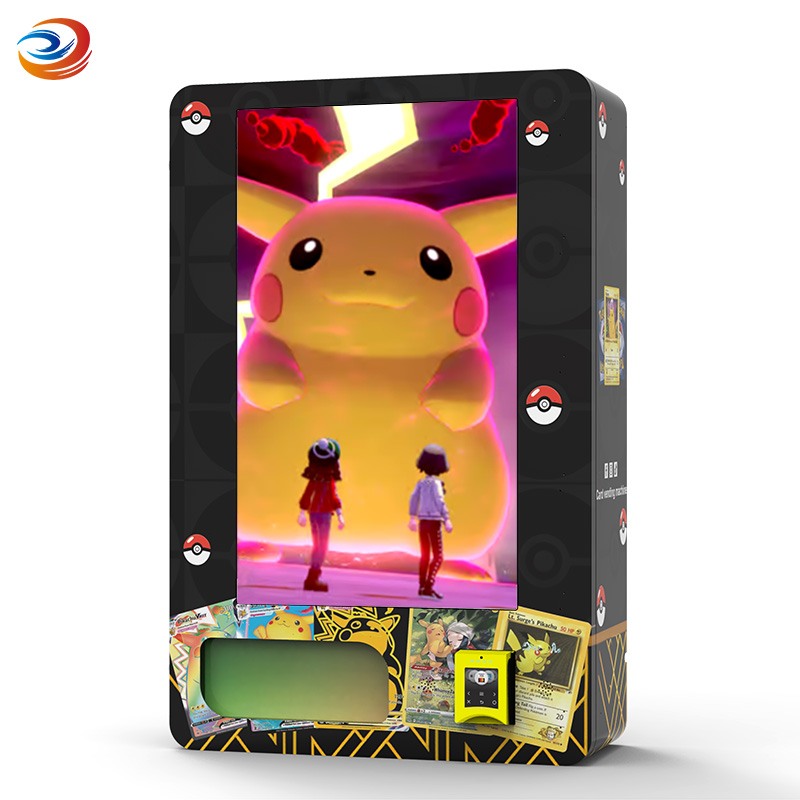
What makes a vending machine “smart” in real business use?
The term gets overused, so let’s keep it practical. A smart vending machine is a connected self-service kiosk with software, telemetry, flexible payment hardware, and a control system that helps you sell and manage products with less manual work. A basic machine dispenses. A smart machine helps you operate.
When buyers review Smart Vending Machines for Sale, the most valuable smart functions usually include:
Cashless payment support for cards, mobile wallets, QR payment, or hybrid payment
Remote monitoring for stock levels, machine status, and sales activity
Touchscreen product browsing and media display
Temperature control with alerts for chilled or sensitive products
SKU-level configuration for mixed product sizes
Promotions, coupons, loyalty logic, or membership pricing
Cloud-based management for route planning and machine grouping
Modular parts that simplify service and vending machine repair
That difference matters because buyer mistakes usually happen after installation, not before it. A machine that looks good in a product photo can still fail in daily use if the coil pitch is wrong, the drop path bruises fragile goods, the refrigeration cycle is unstable, or the software gives poor inventory visibility. The smartest purchase is the one that reduces operating friction over time.
Who should buy smart vending equipment?
Not every business needs a high-spec machine. But for operators who want visibility, uptime, flexible merchandising, and cleaner payment flow, Smart Vending Machines for Sale are often the better long-term option than legacy equipment.
They are especially well suited for:
Operators adding multiple machines and needing centralized reporting
Brands launching a custom vending machine program
Retailers testing unattended sales in tight footprints
Owners selling fragile, premium, chilled, or mixed-size products
Businesses that want digital advertising or branded UI on-screen
Teams that need route planning, refill alerts, and lower downtime
In our experience, smart models begin to show their real advantage as soon as one of these becomes true: you need more than one machine, you sell more than one product format, or you care about daily operational reporting. A standalone machine can still work in a simple setting, but once complexity rises, connectivity starts paying for itself.
The five buying questions that matter most
1) What exactly are you selling?
This sounds obvious, but it is the first place buyers go wrong. Product dimensions, weight, packaging strength, temperature sensitivity, and drop tolerance determine the machine structure. Snacks, bottled drinks, boxed cosmetics, electronics, frozen items, cards, apparel, and beauty products all need different delivery logic.
Use this rule: never buy by cabinet appearance first. Buy by product behavior first. If the product can jam, tip, crack, melt, leak, or deform, the delivery system matters more than the screen size.
2) What payment mix do you need?
Payment choice affects conversion more than many first-time buyers expect. NAMA reported that about 75% of 2.89 million vending machines accepted cashless payments, up from 69% in 2018, and operators noted that cashless adoption simplified operations and increased average transaction value. That is a strong signal that connected payment hardware is no longer a premium extra for many deployments. Source: NAMA Foundation 2022–2023 Industry Census.
At the same time, cash still has a place. The Federal Reserve’s 2024 Diary of Consumer Payment Choice found that cash accounted for 16% of payments in 2023 and remained the third-most-used payment instrument. In other words, full cashless can work in some settings, but hybrid payment still protects accessibility in others. Source: Federal Reserve Financial Services.
3) How much service can you handle?
Buyers often focus on purchase price and ignore service load. If your team cannot handle frequent site visits, choose a machine with stronger telemetry, easier module access, clear fault reporting, and common spare parts. The best machine for a lean operator is usually not the one with the longest feature list. It is the one that stays simple to maintain.
4) What is your target payback period?
Every serious purchase should begin with a working model for monthly net profit and break-even. Without that, comparing machines is guesswork. A good machine may cost more upfront yet recover faster because it supports higher average ticket, better uptime, lower spoilage, or lower labor per visit.
5) Do you need standard or custom?
For a fast pilot, a standard configuration may be enough. For a brand launch or a specialized product, OEM customization can be the better route. Zhongda Smart’s OEM page shows a factory-direct model with MOQ 1 for many configurations, plus options for branding, payment modules, remote management, and different delivery structures. That matters when your product does not fit an off-the-shelf lane setup.
Machine types: which one fits your products best?
| Machine Type | Best For | Main Advantage | Main Limitation | Typical Buyer |
|---|---|---|---|---|
| Spiral snack/drink machine | Packaged snacks, cans, bottles | Low complexity, familiar format | Weak for fragile or irregular items | Entry-level operator |
| Combo machine | Mixed snacks and beverages | Better SKU variety in one cabinet | Layout must be tuned carefully | Small-footprint site |
| Locker vending machine | Boxed goods, apparel, premium items | Fits larger or higher-value products | Lower SKU density than coils | Brand retail program |
| Elevator vending machine | Fragile items, fresh food, cosmetics, electronics | Gentle delivery, less damage risk | Higher upfront cost | Quality-focused operator |
| Mini vending machine | Compact sites, pilot tests, niche products | Lower entry cost, flexible placement | Limited capacity | New operator or event seller |
| Custom vending machine | Unique product sizes or branded experience | Built around your product and buyer journey | Longer planning cycle | Brand owner or distributor |
If you are reviewing Smart Vending Machines for Sale for anything fragile, premium, chilled, or oddly shaped, elevator or locker delivery deserves serious attention. We have seen buyers save money upfront with a standard coil setup and lose much more later through damaged products, complaints, and higher refund rates.
What features are worth paying for in 2026?
Not every feature improves profit. Some look impressive in a brochure but add little value in the field. Below is the shortlist we recommend buyers prioritize first.
Cashless and hybrid payment
This is now a core feature, not a novelty. In many buying decisions for Smart Vending Machines for Sale, payment flexibility is the first real conversion lever. The machine should support the payment hardware that fits your use case today and be upgradeable if your mix changes later.
Remote monitoring system
Remote visibility helps prevent two of the most expensive problems in unattended retail: stockouts and unnecessary route visits. Good telemetry should tell you what sold, what jammed, what needs attention, and what can wait. That reduces labor waste and improves refill planning.
Touchscreen with practical UI
A screen is only valuable if it helps buyers shop faster and helps operators manage promotions better. The best interfaces use large product images, clear pricing, simple add-to-cart logic, and fast recovery after failed transactions. Fancy animations do not matter if navigation is slow.
Temperature control with alerting
If you sell drinks, fresh food, or heat-sensitive goods, temperature stability is not optional. Ask for actual operating range, controller logic, compressor details, sensor placement, and alarm behavior. Buyers often ask for refrigeration but forget to ask how faults are reported.
Flexible lane or compartment configuration
Margins improve when the machine fits the product mix. A rigid layout can trap you into low-yield SKU decisions. Adjustable trays, configurable spirals, modular compartments, or hybrid lane designs make the machine more resilient as your assortment changes.
Service-friendly architecture
This is one of the least glamorous features and one of the most important. A machine that opens cleanly, labels modules clearly, and uses replaceable subassemblies saves time every month. Over the life of the machine, service design often matters more than one-time price negotiation.
Feature comparison: essential vs optional
| Feature | Why It Matters | Priority |
|---|---|---|
| Card/mobile/QR payment | Reduces purchase friction and supports higher convenience | Essential |
| Remote stock and fault alerts | Improves refill planning and reduces downtime | Essential |
| Touchscreen catalog | Useful for larger assortments or branded selling | High |
| Digital ad screen | Helps with promotions and visual merchandising | Medium |
| Elevator delivery | Protects fragile or premium products | High if product requires it |
| Age verification | Supports restricted product workflows where required | Case-dependent |
| Cloud reporting dashboard | Useful for multi-machine operations and route control | High |
| Custom UI and branding | Adds value for branded programs and private-label launches | Medium to High |
| API integration | Helpful for advanced operators with existing systems | Optional |
What should smart vending machines cost?
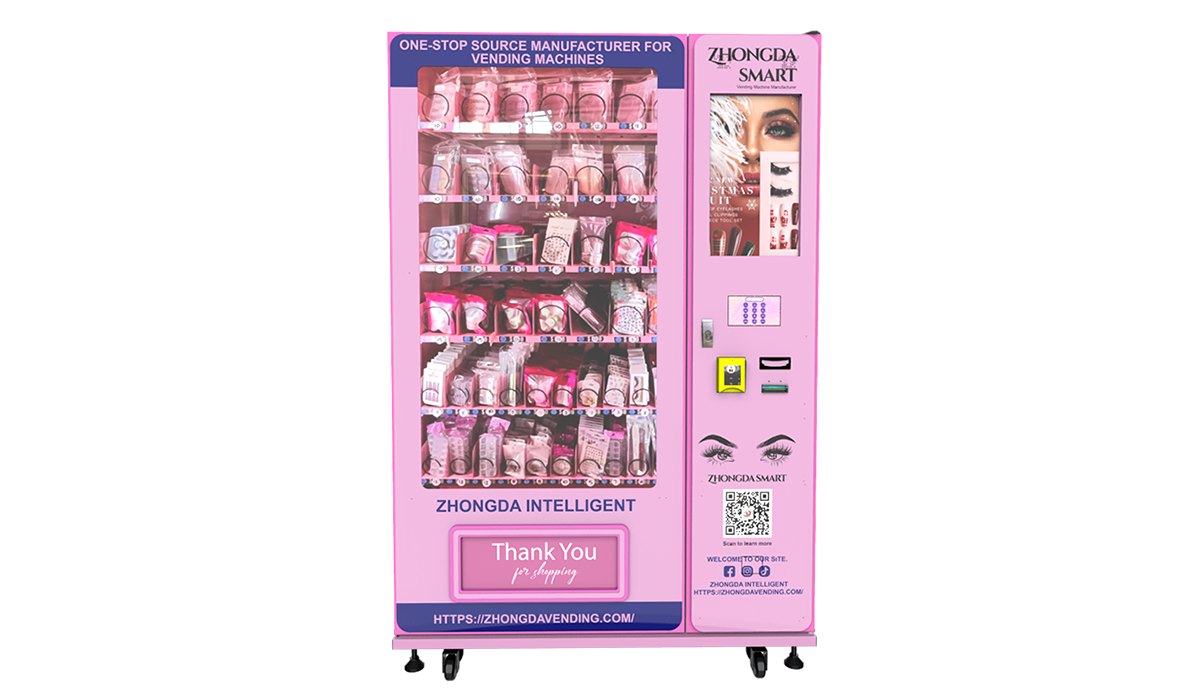
Price depends on structure, payment hardware, temperature control, screen size, software stack, and customization depth. That said, buyers still need planning ranges. The factory listings on Zhongda Smart’s site show entry pricing across multiple models, with examples such as tabletop units in the mid-hundreds, mini and wall-mounted units around the low four-figure range, and larger touchscreen food, beverage, elevator, and locker formats ranging from roughly the low two-thousands to just under three-thousand before project-specific options. Those figures are useful as a starting point, not as a final landed cost.
When evaluating Smart Vending Machines for Sale, separate price into five buckets:
Machine cost: cabinet, controller, payment hardware, screen, refrigeration, delivery system
Customization cost: branding, color, decals, cabinet changes, UI design, software changes
Compliance and integration cost: payment configuration, connectivity setup, testing, special components
Freight and import cost: packaging, shipping, duties, local handling
Launch cost: initial stock, placement fees, site preparation, spare parts, technician time
Many first-time buyers compare only machine quotes and miss the full launch number. A better approach is to calculate total installed cost per revenue-ready machine. That is the number that actually matters.
Illustrative planning ranges
| Configuration | Typical Planning Range | Notes |
|---|---|---|
| Compact or tabletop machine | $700–$1,300+ | Lower capacity, strong for pilot programs and niche goods |
| Mini floor-standing smart unit | $1,200–$1,900+ | Useful for smaller footprints and selective assortments |
| Standard snack/drink touchscreen machine | $1,900–$2,400+ | Common entry point for mainstream unattended retail |
| Locker or large-format custom unit | $1,900–$3,000+ | Best when product size or brand display matters |
| Elevator vending machine | $2,400–$3,200+ | Higher cost, but better protection for fragile merchandise |
| Deep OEM custom vending machine | Project-based | Depends on tooling, software, UI, hardware, and quantity |
Important: these ranges are planning references for comparison, not fixed quotations. Final pricing varies by specification, quantity, accessories, software depth, and destination cost.
How to estimate ROI without fooling yourself
The best buyers treat vending like an operating system, not just a hardware purchase. The machine is only one line in the equation. The stronger question is this: what monthly net profit can this machine generate after real operating costs?
Zhongda Smart’s ROI calculator uses a straightforward model that includes machine count, price per machine, initial stock, daily revenue, gross margin, site rent, salary, POS rental, warehouse rent, and other costs. That is a practical structure because it forces buyers to think beyond gross sales.
Use this formula
Total initial investment = machine cost + initial stock + launch setup
Monthly gross profit = monthly sales × gross margin
Monthly net profit = monthly gross profit − monthly operating costs
Break-even = total initial investment ÷ monthly net profit
Annual ROI = annual net profit ÷ total initial investment
Example planning case
Let’s say a machine costs $2,300, initial stock is $500, install and launch costs are $400, and total startup capital is $3,200. If average monthly sales reach $1,950 and gross margin is 45%, monthly gross profit is $877.50. If site rent, payment fees, service reserve, and logistics total $320 per month, monthly net profit is $557.50. That puts simple payback at about 5.7 months.
Now change just two factors: poor product fit reduces monthly sales to $1,450 and unnecessary service trips raise monthly costs by $120. Monthly net profit falls to $332.50, and payback stretches to about 9.6 months. Same machine family. Very different result. That is why product fit and operations matter as much as purchase price.
What experienced buyers ask before they buy
When reviewing Smart Vending Machines for Sale, serious buyers send a better question list. They do not ask only, “What is your best price?” They ask the questions that reveal whether the machine will make money after installation.
What delivery structure matches my product dimensions and packaging?
What is the real SKU capacity by product type, not just by shelf count?
Which payment modules are included, and which are optional?
What telemetry data is visible at machine level and item level?
How are software updates handled?
What spare parts should I keep on hand in the first year?
What is the warranty term and what parts are covered?
How long does sample production take compared with full production?
Can the machine be reconfigured if my SKU mix changes later?
What tests are done before shipment?
Zhongda Smart’s site notes a 14-month warranty, remote diagnostics support, and configurable connectivity including 4G/5G/Wi-Fi options, which are all useful signals when you compare suppliers. It also highlights MOQ 1 for many OEM projects, which is valuable for pilot launches before scaling.
Field advice from operations: what usually goes wrong
After years in vending operations, we see the same mistakes repeatedly. None of them happen because the buyer lacks ambition. Most happen because the machine is purchased like a static product instead of a live retail system.
Buying too much machine for the site
A large, impressive unit can underperform in a modest location. Higher capacity only helps if refill demand is there. Otherwise, working capital gets trapped in slow inventory.
Buying too little machine for the product
This is just as common. A low-cost cabinet may look attractive until products stick, crack, or sell poorly because the merchandising is weak. Cheap hardware becomes expensive once refunds, labor, and reputation damage arrive.
Ignoring the service model
Every machine needs a service plan. Even the best equipment requires cleaning, route checks, part replacement, and occasional vending machine repair. If your structure assumes perfect uptime, the projection is too optimistic.
Over-customizing too early
For a first deployment, buyers often request deep customization before they have enough sales data. In many cases, the smarter move is a light custom launch first: brand wrap, UI language, payment setup, and product-fit tuning. Then scale into software or hardware changes once the sales pattern is real.
Standard machine or OEM custom vending machine?
This decision shapes cost, lead time, and risk. For many buyers, a standard machine with light branding is enough. For others, a custom vending machine creates better conversion because the product presentation, delivery method, and user flow are built around the item.
| Choice | Best When | Pros | Trade-Offs |
|---|---|---|---|
| Standard configuration | You want speed and lower complexity | Faster launch, simpler quoting, proven structure | Less brand differentiation |
| Light customization | You want a branded pilot | Good balance of speed and identity | Still limited by base structure |
| Deep OEM customization | Your product or buying experience is unique | Best fit, stronger branding, better conversion potential | Longer planning and engineering cycle |
If you are exploring custom work, Zhongda Smart’s OEM custom vending machine page is one useful starting point because it lays out practical options: branding, payment systems, telemetry, 4G/5G/Wi-Fi connectivity, lane structure, language support, and optional API integration.
A practical supplier checklist
There are many Smart Vending Machines for Sale online, but fewer suppliers that are ready for real deployment. Before you commit, score each supplier against the checklist below.
Product fit: Do they ask detailed questions about SKU size, weight, and temperature?
Configuration depth: Can they adapt payment, layout, UI, and delivery structure?
Testing: Do they document vend testing and quality control before shipment?
Support: Can they provide remote diagnostics and spare parts planning?
Transparency: Do they explain what is included and what is optional?
Scalability: Can they support pilot orders and larger follow-up batches?
Documentation: Are manuals, wiring logic, and parts lists available?
For buyers who want a factory-direct path, Zhongda Smart stands out as a manufacturer worth evaluating because its public materials cover product lines, case studies, OEM support, and ROI planning rather than only catalog photos. You can review the broader product lineup here, browse the company overview on the main site, and compare its published buying advice in this machine buying guide.
Expert recommendations for first-time buyers
If this is your first serious purchase, these are the recommendations I would give a client before approving production.
Start with the product, not the cabinet. The right dispensing logic matters more than appearance.
Choose hybrid payment unless you have a strong reason not to. It gives you flexibility while buyer behavior keeps shifting.
Model ROI with conservative sales and real costs. Underpromise to yourself before you invest.
Keep the first version simple. Light customization usually beats deep customization for a pilot.
Ask for service architecture details. Easy maintenance is a profit feature.
Buy spare parts with the first order. Waiting on small parts can create avoidable downtime.
Use remote monitoring from the start. Data is most valuable when it informs your first 90 days.
Common buyer scenarios and the best-fit machine
| Buyer Scenario | Recommended Machine Style | Why |
|---|---|---|
| Low-risk first pilot | Mini or standard smart combo machine | Controlled investment with enough data for learning |
| Fragile or premium products | Elevator vending machine | Safer delivery and better customer experience |
| Large-format boxed items | Locker vending machine | Better product fit and flexible compartment logic |
| Strong brand presentation | Custom vending machine with touchscreen UI | Higher visual impact and tailored user flow |
| Need for route efficiency | Connected machine with telemetry dashboard | Reduces wasted service visits |
FAQ
Are smart vending machines profitable?
They can be, but profitability depends on product fit, site quality, gross margin, uptime, and operating discipline. A well-configured smart machine often outperforms a cheaper legacy machine because it reduces stockouts, simplifies cashless transactions, and improves service efficiency.
How much should I budget for my first smart vending machine?
For many buyers, a realistic starting budget is not just the machine quote. Plan for machine cost, initial stock, freight, customization, payment setup, spare parts, and launch labor. A revenue-ready budget is the number to use, not the cabinet price alone.
Should I buy cashless-only or hybrid payment?
Hybrid is usually the safer starting point unless your use case clearly supports cashless-only. It protects buyer access while still capturing the convenience benefits of cards and mobile payments.
What is the best machine for fragile products?
An elevator vending machine is usually the strongest choice because it reduces hard drops and protects product condition. Locker systems can also work well for selected product types.
Can I start with one machine?
Yes. In fact, many first-time buyers should start with one well-configured pilot rather than ordering too many machines before they understand real sales patterns. Zhongda Smart publicly states MOQ 1 for many OEM-ready programs.
How long does payback usually take?
There is no honest universal answer. Payback depends on net profit, not gross sales. Some machines recover quickly because product mix, payment setup, and route efficiency are strong. Others take much longer because service costs and weak product fit erode margins.
What should I ask about after-sales support?
Ask about warranty length, remote troubleshooting, spare parts availability, typical failure points, software update process, and whether the supplier helps diagnose payment or controller issues. Good support can save months of frustration.
Final word
The market is full of Smart Vending Machines for Sale, but better buying decisions come from sharper questions, not more listings. Focus on product fit, payment flexibility, service design, and realistic ROI. If a supplier can explain those four areas clearly, you are already looking at a stronger partner. If they cannot, no discount is big enough to fix that later.
For buyers who want a factory-direct option with standard models, OEM support, flexible configuration, and practical tools for investment planning, Zhongda Smart is one manufacturer worth putting on the shortlist. Review the machine families, compare deployment cases, and quote only after your product dimensions, payment needs, and service plan are fully defined.
Sources
For reference only. External links below are cited as supporting materials and are not included as endorsements.
Federal Reserve Financial Services, 2024 Diary of Consumer Payment Choice
U.S. Census Bureau, Quarterly Retail E-Commerce Sales Report
Disclaimer
This guide is informational and reflects operational and manufacturing experience combined with public reference materials. Financial outcomes vary by product mix, machine uptime, placement quality, labor cost, payment fees, and restocking discipline. Always confirm current specifications, commercial terms, and compliance requirements before purchase.