Digital Vending Machines boost retail sales because they make buying easier, faster, and more measurable. A well-planned machine does more than dispense products. It turns a small footprint into a selling point, keeps products available when a staffed counter slows down, and gives retailers hard data on what actually moves. That matters because modern shoppers expect quick payment, clear pricing, and zero friction for simple purchases. When the machine, product mix, and software are matched properly, retailers usually gain higher sell-through, better margin control, and fewer missed sales. That is why digital vending is no longer just a convenience tool. It has become a serious retail channel for drinks, snacks, beauty products, accessories, collectibles, and other fast-decision items.
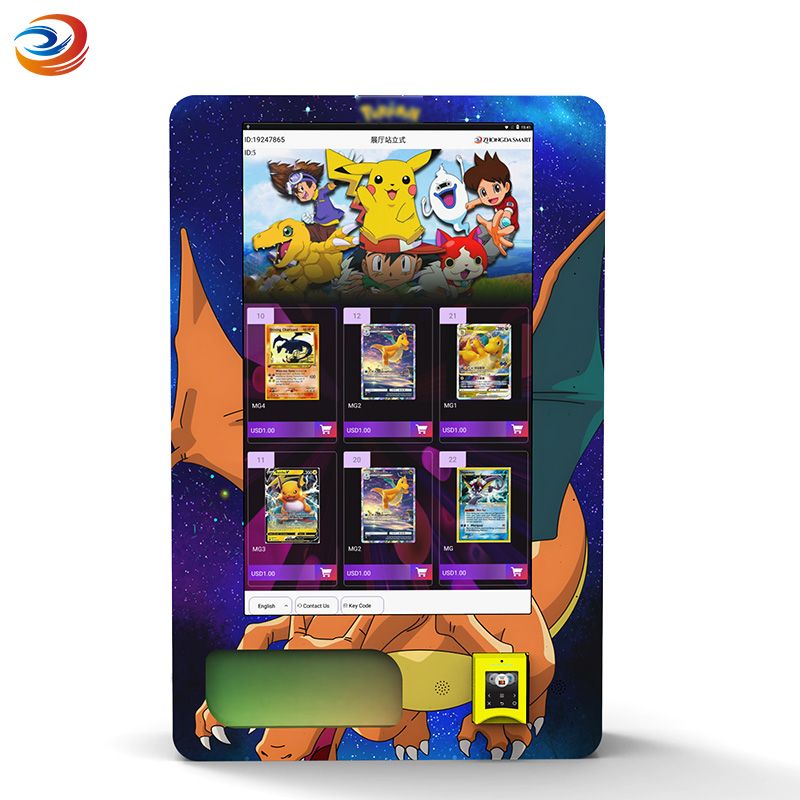
In one sentence: Digital Vending Machines increase retail sales by reducing checkout friction, extending selling time, improving product visibility, and turning every transaction into useful operating data.
Why retailers are taking digital vending more seriously
Retailers do not need more theory. They need selling formats that work in the real world. That is exactly where Digital Vending Machines stand out.
A machine can keep selling while staff are busy, after a counter gets backed up, or in places where a full-service setup never made financial sense in the first place. It also removes a small but expensive problem that shows up every day in retail: customers who were willing to buy, but not willing to wait.
That is the real commercial advantage. The machine shortens the distance between interest and payment. The customer sees the product, confirms the price, taps to pay, and gets the item in seconds. Fewer pauses. Fewer drop-offs. More completed purchases.
Digital Vending Machines also give retailers something standard shelving does not: immediate sales visibility. You can see what sold, what did not, what time demand peaks, and which products are wasting space. That makes merchandising decisions faster and a lot less emotional.
What actually drives the sales lift
When a machine performs well, it is rarely because of one flashy feature. Sales usually improve because several small advantages work together at the same time.
1. They keep products available when a normal counter cannot
The first gain is simple. A machine keeps selling even when staff are tied up with bigger transactions. That matters more than many buyers expect. Low-ticket products are often lost because they look easy to buy but are annoying to check out.
In a good setup, Digital Vending Machines pick up those small missed sales all day long. Over a month, those “small” transactions are not small anymore.
2. They protect impulse purchases
Impulse buying depends on speed. If the customer has to ask for help, wait in line, or walk across the store to pay for a simple item, conversion drops. It happens every day.
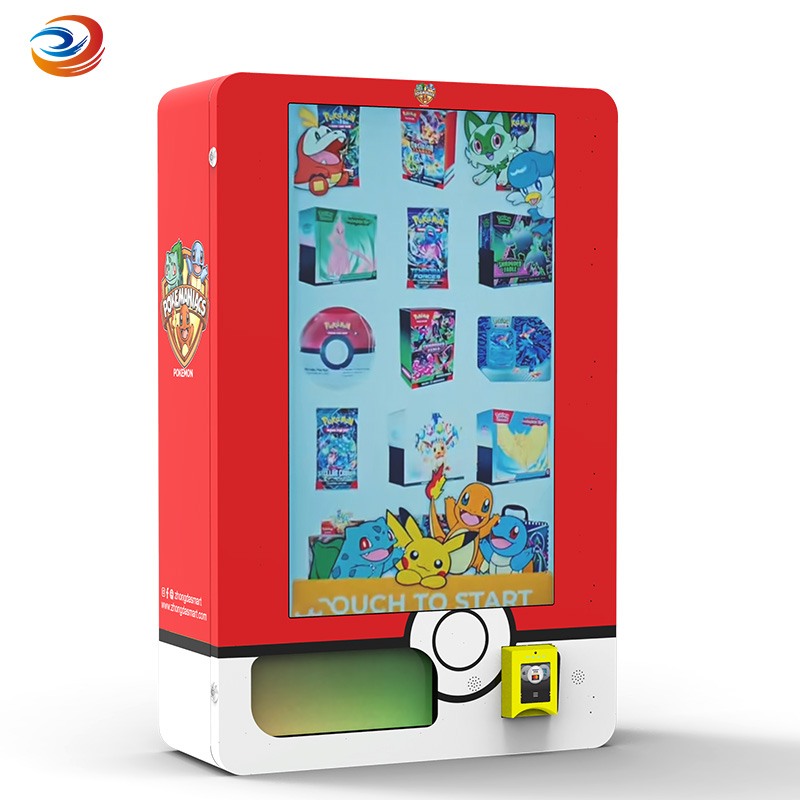
A touchscreen vending machine keeps that purchase path short. For drinks, snacks, beauty items, phone accessories, personal care products, and collectibles, that speed directly supports revenue.
3. They turn the screen into a selling tool
A traditional machine displays products. A digital machine can sell them.
That difference matters. The screen can highlight premium items, feature bundles, rotate limited releases, push a seasonal item, or guide shoppers toward higher-margin products. Done well, it does not feel pushy. It simply makes the better choice easier to see.
4. They improve product mix over time
Many weak vending projects do not fail because demand is missing. They fail because the assortment stays wrong for too long.
Digital Vending Machines solve that problem better than old-style units because they capture usable sales data. Retailers can see which SKUs deserve more space, which prices convert best, and which products are taking up capacity without paying for it.
5. They reduce waste in daily operations
Good sales numbers are meaningless if the machine sits half empty, accepts payment inconsistently, or dispenses unreliably. That is where remote monitoring earns its keep.
When a smart vending machine reports low stock, payment faults, or abnormal sales patterns in real time, the operator has a better chance of protecting revenue before the problem gets expensive.
| Sales Driver | What It Changes | Retail Result |
|---|---|---|
| Extended availability | Products stay buyable beyond a staffed selling window | Fewer missed purchases |
| Faster checkout | Less waiting for simple purchases | Higher conversion on impulse items |
| Digital merchandising | Better placement for premium and bundle offers | Higher average order value |
| Sales visibility | Live data by item and time period | Stronger assortment decisions |
| Remote management | Faster response to stock and hardware issues | More sellable uptime |
Why the buying environment now favors Digital Vending Machines
The broader retail environment has already moved toward fast, low-friction buying. That is one reason digital vending makes sense now in a way it did not years ago.
According to the Quarterly Retail E-Commerce Sales Report, e-commerce accounted for 16.4% of total retail sales in 2025, up from 16.1% in 2024. That number matters because it reflects a wider customer habit: people increasingly expect fast, direct, low-effort purchasing wherever they shop.
Payment behavior tells the same story. The 2024 Diary of Consumer Payment Choice reported that cards accounted for more than 60% of monthly consumer payments, while cash represented 16% of payments. For unattended retail, that shift supports the business case for a modern cashless vending machine rather than a machine built around older payment assumptions.
Industry revenue points in the same direction. NAMA reported convenience services industry revenue at $26.6 billion for 2023, with vending remaining the largest revenue segment. That is not a small specialty corner of retail anymore. It is an established channel with room for smarter equipment and stronger retail execution.
What this means in plain business terms: shoppers are already comfortable with self-service, digital payment, and compact retail formats. Digital Vending Machines fit that behavior instead of fighting it.
What sells best through Digital Vending Machines
Not every product belongs in a vending machine. The strongest categories are the ones that benefit from speed, clear packaging, and low-friction decisions.
Best-fit product categories
Drinks and packaged snacks
Beauty products and cosmetics
Personal care and daily essentials
Phone accessories and small electronics add-ons
Collectibles and card products
Giftable impulse items
Packaged food with dependable temperature control
Higher-value fragile goods when an elevator or locker system is used
The pattern is easy to spot. Products do well when the customer understands them quickly, the price feels clear, and the item can be dispensed without drama.
That is why a self-service kiosk model works especially well for categories where staff explanation is not essential. If the item sells best after a long consultation, a machine may not be the right first choice. If the item wins because it is visible, convenient, and immediately available, the machine has a much better chance.
The locations that usually outperform
Traffic alone does not guarantee strong vending sales. Some busy spaces produce weak results because the buying intent is wrong. A machine needs the right kind of traffic, not just more feet passing by.
In practice, Digital Vending Machines do best where people value speed, do not want to wait, and are already open to quick self-service. That is why compact retail zones often beat larger spaces that look busier on paper.
Locations that usually perform well
Store entrances and exit zones
Hotel lobby retail areas
Entertainment venues
Transit-adjacent commercial spaces
Shared office and campus environments
Waiting areas where quick convenience matters
Showrooms and event-driven product launches
A good location does three things at once: it creates visibility, supports easy servicing, and attracts shoppers who want to buy fast. That last part matters most. Plenty of machines fail in “high-traffic” spots simply because the traffic is not in buying mode.
How Digital Vending Machines increase average order value
Many first-time buyers look only at transaction count. That is too narrow. Some of the best-performing machines win because they raise the average ticket, not just the number of purchases.
This is where the digital screen becomes more than decoration. A well-designed interface can guide shoppers toward a better combination of products without making the experience feel slow or complicated.
Practical ways to lift the ticket size
Offer a bundle before checkout
Recommend a companion item after the first selection
Feature premium options next to entry-level products
Highlight limited editions or seasonal items
Use simple visual badges for best sellers
Rotate margin-rich products on the home screen
That approach works especially well in beauty, gift, accessories, and fan merchandise categories. In those segments, presentation shapes value. A clean screen, a strong image, and a simple payment flow can do more for conversion than a larger cabinet with a weak front-end experience.
In many retail rollouts, the mistake is not low demand. It is weak screen strategy. The machine has inventory, but the interface is not doing any selling.
Revenue math that buyers can actually use
Retailers do not need inflated projections. They need math that feels believable.
Here is a simple example. If one machine processes 24 transactions a day at an average ticket of $8.25, monthly revenue comes to about $5,940. Push that average ticket to $9.75 through better bundling and featured offers, and the same transaction count reaches about $7,020. Raise daily transactions to 34 with stronger placement and sharper assortment, and monthly revenue becomes about $9,945.
That is why the best operators pay close attention to three numbers: daily transactions, average order value, and gross margin by item. The machine itself matters, but those are the numbers that decide whether the project scales.
| Scenario | Daily Transactions | Average Ticket | Estimated Monthly Revenue |
|---|---|---|---|
| Basic setup | 18 | $7.50 | $4,050 |
| Steady mainstream setup | 24 | $8.25 | $5,940 |
| Better upsell flow | 24 | $9.75 | $7,020 |
| Strong placement and tighter product mix | 34 | $9.75 | $9,945 |
These are planning figures, not promises. Still, they show why Digital Vending Machines can become meaningful retail assets even without extreme volume.
What good operators do differently
The strongest vending programs usually look ordinary from the outside. That is because the real work happens in the operating discipline behind the cabinet.
Good operators do not leave the machine alone after installation. They review the sales mix, remove weak products early, clean the interface, keep payment acceptance smooth, and treat refill timing as part of sales management rather than a warehouse chore.
That is a big dividing line in this industry. Weak operators think they bought a machine. Strong operators know they built a small store.
Habits that usually improve performance
Cut slow movers quickly instead of giving them too much time
Keep top sellers in stock without interruption
Use the screen to feature priority products instead of showing everything equally
Review payment failures and machine alerts every week
Refresh pricing and offers based on actual sell-through
Match refill schedules to demand patterns instead of fixed routines
Most underperforming machines do not need a dramatic redesign. They need better ownership.
Choosing the right machine type matters more than many buyers expect
One of the most expensive mistakes in this business is choosing a machine based on appearance instead of product fit.
If the product is fragile, oddly shaped, premium priced, temperature-sensitive, or easily damaged in a drop, the dispensing method matters as much as the cabinet size. The machine has to suit the product, not the other way around.
| If You Sell | Best Machine Style | Why It Fits | What to Avoid |
|---|---|---|---|
| Drinks and packaged snacks | Combo food and drink machine | High capacity and proven fast-turn format | Overcomplicated custom layouts for basic products |
| Beauty, cosmetics, and accessories | Touchscreen vending machine | Stronger visual presentation and guided selection | Plain fronts that do not support premium perception |
| Fragile or premium packaged items | Elevator vending machine | Safer delivery and better customer confidence | Standard drop systems for damage-prone items |
| Collectibles and card products | Locker or specialty control-dispense setup | Cleaner presentation and more controlled delivery | Loose display logic that weakens perceived value |
| Branded launches and special retail programs | OEM custom vending machine | Built around the product, campaign, and user flow | Forcing a generic cabinet into a brand-sensitive rollout |
This is where an experienced manufacturer makes a real difference. Buyers need more than a metal cabinet with a screen attached. They need reliable dispensing logic, stable control systems, payment integration, service support, and enough engineering depth to match the hardware to the retail model.
For businesses comparing suppliers, Zhongda Smart is worth a serious look because the company focuses on smart vending equipment, custom builds, and factory-based production support. On its official site, the company presents its OEM and ODM capabilities, machine categories, and tools that help buyers evaluate fit before they order.
You can browse Zhongda Smart’s full vending machine lineup to compare product categories. If the project needs a brand-specific build, it makes sense to review custom vending machine options for branded retail programs. For planning return and payback, buyers can estimate payback with this vending machine ROI calculator. It is also useful to compare standard machine formats in the main catalog and then speak with the factory team directly about configuration and support.
What to check before buying Digital Vending Machines
Price matters, but it should not be the first filter. The first filter is fit. A cheaper machine that cannot protect product quality, support the payment flow, or stay reliable under daily use becomes expensive very quickly.
What smart buyers usually evaluate first
Product size, weight, and fragility
Need for refrigeration or temperature control
Touchscreen requirements
Cashless payment hardware and software support
Remote monitoring and live inventory visibility
Cabinet capacity and SKU flexibility
Branding and user interface customization
Spare parts, diagnostics, and after-sales response
Warranty structure and technical support process
The strongest buying decisions are rarely the cheapest ones. They are the ones that support long-term sellable uptime.
If a machine looks impressive but accepts payment poorly, goes out of stock too easily, or struggles with repeated dispensing errors, it will not matter how good it looked in the quotation stage.
Where cashless payment changes the business case
A modern machine without easy digital payment is already at a disadvantage. The issue is not trendiness. It is conversion.
Customers expect to pay fast. If the process feels outdated, trust drops and abandonment rises. That is why the cashless vending machine model has become the standard for serious unattended retail rather than a premium add-on.
Cashless payment also improves daily management. It can reduce coin handling, simplify reconciliation, support remote oversight, and make the purchase feel closer to the way customers already buy everywhere else.
That does not mean every market is fully cash-free. It means that retailers betting on Digital Vending Machines should treat cashless payment as a core commercial feature, not a decorative upgrade.
The rollout approach that reduces risk
One of the best ways to waste money in vending is to scale too early. The smarter approach is to treat the first machine like a pilot store.
Start with a product category that already has clear demand. Put the machine in a location that is easy to service. Use a clean assortment. Watch the first few weeks closely. Then adjust hard and fast.
A practical rollout sequence
Choose one category with quick purchase decisions
Select the machine type around the product, not the brochure photo
Set clear price tiers and feature two or three priority items on-screen
Track daily transactions, best sellers, and payment success rate
Replace weak SKUs quickly
Review refill rhythm before opening a second location
Scale only after the first setup proves its numbers
This approach sounds simple because it is simple. It also works. The businesses that scale well usually earn that growth one disciplined installation at a time.
Common mistakes that quietly kill performance
Most disappointing results come from ordinary mistakes, not from a broken business model.
The problems that show up again and again
Choosing the wrong location because traffic looked impressive
Loading too many products into the first assortment
Letting stock run unevenly and leaving empty slots visible
Using a generic interface that does nothing to sell
Ignoring payment friction until conversion drops
Buying a machine that does not match the product’s handling needs
Treating refill and maintenance like background tasks instead of revenue protection
One of the biggest mistakes is assuming the machine is the strategy. It is not. The machine is the tool. Placement, pricing, assortment, screen flow, and operating discipline are what make Digital Vending Machines profitable.
Final take
Digital Vending Machines boost retail sales because they solve a practical retail problem: too many easy purchases are still lost to friction. A good machine closes that gap. It keeps products available, speeds up payment, improves visibility for high-margin items, and gives operators real data to sharpen the product mix.
The retailers that get the best results are usually not the ones chasing the fanciest cabinet. They are the ones matching the machine to the product, keeping the assortment tight, using the screen well, and running the operation with discipline.
That is the real opportunity. Digital vending is no longer just a side convenience format. When it is planned properly, it becomes one of the most efficient ways to turn a small space into a measurable sales channel.
Frequently Asked Questions
Are Digital Vending Machines profitable?
They can be very profitable when the machine is placed well, stocked with the right items, and managed actively. Profit usually depends more on uptime, product mix, and payment flow than on the cabinet alone.
What products are safest for a first rollout?
Packaged drinks, snacks, beauty items, personal care products, accessories, and other easy-to-understand items are usually the best place to start. They have shorter decision times and simpler handling requirements.
Do I always need a touchscreen?
No. A touchscreen vending machine is most useful when visual presentation, upselling, or brand storytelling matter. For straightforward products, a simpler interface may be enough.
How important is cashless payment?
It is extremely important. Fast digital payment reduces friction, improves convenience, and aligns with the way most customers already prefer to pay.
What matters more: location or machine type?
Both matter, but bad placement usually hurts more. A great machine in the wrong spot will still disappoint. A well-placed machine with the right product mix often outperforms a more expensive setup in a weak location.
How long does it take to recover the investment?
That depends on product margin, transaction volume, service cost, and the machine specification. It is best to model payback using realistic daily sales rather than broad industry averages.
When should I use an elevator or locker machine instead of a standard one?
Those formats make more sense when the product is fragile, premium, or easily damaged by a drop. They also work well for categories where presentation affects perceived value.
References
Quarterly Retail E-Commerce Sales Report, U.S. Census Bureau
2024 Diary of Consumer Payment Choice, Federal Reserve Financial Services
State of Convenience Services Industry Census, NAMA Foundation
Disclaimer: Revenue examples in this article are illustrative planning figures. Actual results vary by product category, placement, operating discipline, pricing, refill frequency, payment acceptance, and machine configuration.