If you are looking at an Outdoor Vending Machine With Glass Doors for Sale, the smart way to buy is to think beyond appearance. A glass-front machine can absolutely lift sales because customers see the product before they pay, but the real value shows up later: stable cooling, clear visibility, strong sealing, reliable payments, and fewer service headaches. That is where good machines separate themselves from expensive disappointments. In day-to-day vending work, the units that hold up best are not always the ones with the flashiest screens or the cheapest quotes. They are the ones built for long hours, repeated door openings, changing weather, and real stocking pressure. This guide covers what matters before you order, what features are worth paying for, what usually goes wrong, and how to choose a machine that can earn steadily instead of creating avoidable downtime.
What makes this machine format so popular
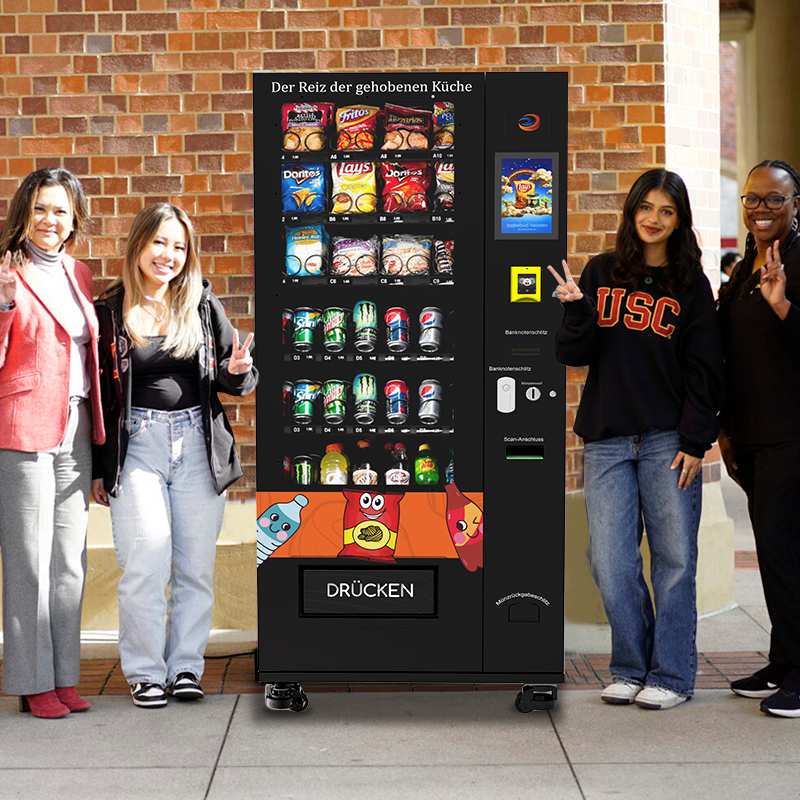
A glass-door vending machine solves one problem immediately: it removes guesswork. People can see the bottle size, the package design, the number of facings, and whether the machine looks full and well-kept. That matters more than many buyers expect. In unattended retail, visibility builds trust in a split second. A customer who sees the exact product is more likely to complete the purchase and less likely to complain afterward.
That is why an Outdoor Vending Machine With Glass Doors for Sale usually works best for drinks, snack-and-drink assortments, and other products that benefit from strong visual appeal. A solid-front cabinet can do the job, but it does not help the product sell itself. A glass front does.
There is also a practical benefit on the operator side. With a glass front, a route driver or site manager can spot low stock, weak product balance, poor facing, and lighting issues before opening the cabinet. That saves time on every service visit. Over months, small time savings like that add up.
Quick answer: A glass-front outdoor machine is usually the better choice when product visibility, impulse sales, and easy stock checks matter. It needs strong insulation, anti-fog glass, and solid sealing to perform well outside.
Who should buy an outdoor glass-front machine
This machine format fits buyers who want a clean, visible, self-service setup without staffing the point of sale. It works especially well when people make fast purchase decisions and the product needs to be seen to be trusted. Bottled drinks, canned beverages, healthier snacks, convenience items, and selected specialty products all perform better when the shopper can glance through the door and decide quickly.
In practice, buyers usually fall into one of three groups. The first group wants a proven standard cabinet for drinks or snacks. The second wants a more branded machine with a larger screen, custom wrap, or modified shelf layout. The third needs a custom solution because the product shape, temperature requirement, or delivery method does not fit a normal spiral machine.
If you are in the first group, a standard outdoor refrigerated vending machine is usually enough. If you are in the second or third group, you need to ask harder questions about cabinet design, delivery logic, service access, and software support before you request a final quote.
What to check before asking for a quote
A lot of buyers start with cabinet size and price. That is understandable, but it is not the right starting point. The better approach is to define the machine’s job first. What exactly will it sell? How often will it be restocked? Does it need to keep products cold all day? Will the site rely on card and wallet payments only? Is the machine going under shelter or out in open exposure? Those answers shape the right build.
Here are the five checks I tell buyers to make first before they compare suppliers:
Product fit: bottle height, can diameter, snack width, and package fragility.
Cooling demand: steady internal temperature matters more than peak cooling power on a spec sheet.
Glass performance: fogged glass hurts sales fast.
Payment protection: the payment area often fails before the cabinet does if it is poorly protected.
Parts and service: a low purchase price means very little if replacement parts take too long to arrive.
Before buying: check cabinet sealing, anti-fog performance, cooling recovery speed, payment module protection, and spare-parts support. If one of those is weak, the machine may still look fine when new but cost more to run later.
What good outdoor build quality really looks like
Outdoor use exposes weaknesses quickly. Machines that look fine in a showroom can start showing trouble after a few months in service. The first warning signs are usually not dramatic. The glass starts fogging more often. The door seal stops sitting tight after repeated service visits. The payment area gets temperamental. The cooling system runs longer than it should. Then the power bill climbs, products warm up, and complaints start.
A solid Outdoor Vending Machine With Glass Doors for Sale should have a steel cabinet that feels rigid when the door closes, not hollow or loose. The frame around the glass matters more than many buyers realize. If the frame flexes or the seal compresses unevenly, temperature control gets harder and condensation gets worse.
Double-layer tempered glass is worth paying for. So is proper insulation around the cabinet. Buyers who skip those details usually end up paying for them later in lost cooling efficiency and lower product visibility.
| Build Area | What Good Looks Like | Why It Matters in Real Use |
|---|---|---|
| Cabinet body | Heavy steel with durable finish | Better rigidity, lower rust risk, stronger long-term structure |
| Glass door | Tempered double-layer glass with anti-fog design | Clear visibility and better thermal stability |
| Door seal | Even compression and reliable closure | Protects cooling performance and lowers moisture intrusion |
| Cooling system | Fast recovery and stable temperature hold | Protects product quality during busy periods |
| Payment zone | Protected reader placement and sealed electronics | Reduces service issues caused by moisture and exposure |
| Lighting | Bright, even LED shelf lighting | Makes products easier to shop and improves sell-through |
| Service layout | Easy front access to key components | Cuts repair time and lowers downtime |
| Security | Reinforced lock areas and anti-pry structure | Helps protect inventory and cash components |
One mistake I see often is buyers paying extra for cosmetic upgrades while ignoring things that affect operating life. A larger display can help branding. It will not fix weak sealing, poor airflow, or hard-to-replace components. Build strength should come first.
Cooling performance matters more than people think
When buyers compare an Outdoor Vending Machine With Glass Doors for Sale, they often focus on whether the machine has refrigeration. That is too basic. The better question is whether the machine can keep a stable internal temperature during repeated sales, repeated stocking, and long operating hours without struggling.
A refrigerated vending machine does not fail all at once. The early warning signs are subtle. Drinks feel less cold at the back end of a busy cycle. The compressor runs longer. The glass fogs more often. Stock near one section cools differently from the rest. Those issues usually point to airflow layout, insulation quality, seal consistency, or service neglect.
Older ENERGY STAR materials noted that refrigerated beverage vending machines could achieve meaningful efficiency gains compared with common machines available at the time, which matters because energy cost never stops once the machine goes live. Historical ENERGY STAR references also pointed out that refrigerated beverage machines can consume substantial electricity over a year, making insulation, controls, and compressor performance practical buying issues, not just technical ones.
In plain terms: poor cooling design does not just affect drink temperature. It affects power cost, glass clarity, product quality, and customer confidence.
Cooling rule: do not buy based on “has refrigeration” alone. Ask how fast the cabinet recovers temperature after use, how the airflow is routed, and what prevents glass fogging during long daily operation.
How much an outdoor glass-front machine usually costs
The price range for an Outdoor Vending Machine With Glass Doors for Sale depends on the build level, not just cabinet size. Two machines can look similar in photos and still be far apart in cost because one includes stronger cooling, a better control system, larger screen, better anti-condensation design, remote reporting, and more durable components.
| Machine Type | Typical Setup | Common Price Range | Best For |
|---|---|---|---|
| Basic outdoor drink machine | Standard cabinet, cooling, cashless-ready | $2,000-$3,500 | Simple beverage programs and pilot placements |
| Mid-range glass front machine | Better outdoor sealing, telemetry, mixed payment options | $3,500-$6,500 | Regular commercial operation with remote monitoring |
| Advanced custom unit | Custom wrap, larger touch display, tailored software, specialty delivery | $6,500-$12,000+ | Brand projects and specialty retail programs |
Those figures do not include every outside cost. Shipping, site preparation, payment hardware, software subscriptions, spare parts, import duties, or custom engineering can move the total higher. That is why a quote should always break out the cabinet, payment system, software, branding, and shipping separately.
The cheapest quote is often not the lowest-cost machine over its useful life. If it runs hotter, breaks more often, or is harder to service, it stops being cheap very quickly.
Budget range: most buyers land somewhere between $3,500 and $6,500 for a capable outdoor glass-front machine with good core features. Basic cabinets cost less. Fully customized machines cost more, especially when software and branded hardware are added.
Where operators usually make money with this machine
Profit in vending does not come from the machine alone. It comes from the combination of machine, site quality, product mix, price discipline, and uptime. A strong cabinet in a weak spot will still underperform. A decent machine in a strong spot can do surprisingly well if it stays full, cold, and easy to use.
One lesson that comes up again and again in the field is that waiting time often matters more than raw traffic. A place with constant movement but no pause may not convert as well as a place where people stand, sit, or return several times during the day. In real operations, dwell time usually beats pure foot count.
A glass front helps most when the products are easy to understand at a glance. Drinks, water, functional beverages, premium snacks, and selected convenience goods tend to perform well because the customer does not need a long explanation. The machine acts like its own display shelf.
Product categories that usually fit this format well
Bottled water and canned drinks
Functional beverages and sports drinks
Packaged snacks and better-for-you snack lines
Small daily-use convenience items
Selected branded retail products with strong visual packaging
Limited specialty assortments using a self-service kiosk model
If the products are delicate, oddly shaped, or easily damaged, a basic spiral setup may not be enough. In that case, an elevator vending machine or another soft-delivery format is the better call.
What usually drives return on investment
People often ask how long it takes an Outdoor Vending Machine With Glass Doors for Sale to pay for itself. The honest answer is that location quality matters more than a small difference in purchase price. A machine that costs twenty percent less will not rescue a weak site. A strong site, on the other hand, can often recover a higher machine cost much faster.
The basic math is simple. Monthly sales minus product cost, site commission, electricity, service labor, payment fees, and maintenance reserve equals operating profit. That final number is what pays back the machine.
| Monthly Scenario | Conservative | Steady | Strong |
|---|---|---|---|
| Monthly sales | $900 | $1,800 | $3,200 |
| Gross margin | 38% | 45% | 48% |
| Gross profit | $342 | $810 | $1,536 |
| Site fee or commission | $90 | $180 | $320 |
| Electricity | $45 | $65 | $90 |
| Service and stocking | $70 | $120 | $180 |
| Net operating profit | $137 | $445 | $946 |
At that pace, a $4,500 machine might take roughly thirty-three months to recover in a weak setup, about ten months in a steady one, and under five months in a strong one. That is why buyers should test assumptions before scaling. One machine in the right place can teach more than ten spreadsheets built on wishful estimates.
For buyers who want to model payback before ordering, Zhongda smart provides a useful tool here: estimate payback before ordering.
ROI rule: site quality, product margin, and uptime usually matter more than shaving a little off the purchase price. A cheaper machine in a poor spot does not become a good investment.
Standard machine or custom machine?
This is one of the most important buying decisions, and it is where many projects either stay practical or become too complicated too early. A standard outdoor glass front vending machine works well when your product sizes are normal, your checkout flow is straightforward, and you want to deploy quickly. It costs less, ships faster, and is easier to service because the design is already proven.
A custom machine makes sense when your products do not fit normal spirals, your branding matters heavily, you need a large interactive display, or the business model depends on a specific customer journey that a standard cabinet cannot support.
| Choice | When It Makes Sense | Main Tradeoff |
|---|---|---|
| Standard machine | Fast rollout, proven hardware, lower cost | Less differentiation and fewer specialized functions |
| Custom machine | Brand programs, unusual product sizes, tailored interface | Higher cost, longer lead time, more design decisions |
My advice is simple. If you are still proving the business, stay close to standard. If the product, brand, or delivery method demands something different, customize only the parts that actually improve sales or solve a real operating problem.
For buyers comparing custom routes, Zhongda smart is worth reviewing because it combines standard equipment with factory-side customization. Their review custom vending options page is a practical starting point if you need branding, altered configurations, or a more tailored build.
Best choice for most first orders: start with a standard or lightly customized machine unless your product or brand really needs a special cabinet from day one.
Payment setup is no longer a side feature
A machine can be physically solid and still underperform if checkout is awkward. Cashless payment vending machine capability is not a nice extra anymore. It is part of the core selling system. If the reader is slow, the mobile payment flow is clumsy, or the machine does not handle failed transactions cleanly, customers give up faster than operators expect.
In outdoor use, the payment area deserves special attention because it often takes the most abuse. Moisture, dust, direct handling, and repeated use expose weak integration quickly. A good payment setup should be secure, responsive, and easy to service without disassembling half the front panel.
Remote monitoring matters here too. If a reader goes offline or a payment module starts throwing errors, you want to know before a full day of sales is lost. Remote fault alerts and sales reporting are not luxury features for serious operators. They are part of keeping the machine alive as a business.
What breaks first in real outdoor operation
Most first-time buyers assume the cooling system is the only thing to worry about. In reality, the first visible problems often show up somewhere else. The glass starts fogging more often. The reader gets inconsistent. The door closes less tightly after repeated restocking. Small drainage or sealing flaws become recurring service calls.
Here are the fault points that show up again and again in outdoor vending machine repair:
Door seals that stop compressing evenly
Glass fogging caused by airflow or insulation weakness
Payment modules exposed to moisture or poor placement
Cooling performance that drifts because coils are hard to clean
Lighting failures that make the machine look half-empty or neglected
Overloaded spirals or poor tray fit causing jams
Control boards placed in awkward service positions
The lesson is straightforward: the easiest machine to sell is not always the easiest machine to keep running. A good supplier should be able to explain how parts are accessed, what spare parts you should stock, and how quickly common failures can be diagnosed.
Most common early service issues: fogged glass, weak door sealing, payment reader faults, and airflow-related cooling inconsistency. Those problems usually cost more in lost sales than in actual parts.
How to compare suppliers without getting distracted
Many product pages look similar, but suppliers are not all operating at the same level. Some build the cabinet and own the configuration. Some mainly assemble. Some mainly trade. That does not automatically tell you who is good and who is bad, but it does affect pricing, lead time, parts control, and how clearly problems get handled after installation.
When you compare suppliers for an Outdoor Vending Machine With Glass Doors for Sale, do not stop at brochure features. Ask what happens after the machine ships. Who handles parts? Who controls software? Can the supplier explain routine maintenance in plain language? Can they show more than a single polished product photo? Do they have enough range to recommend a better machine format if your first choice is not the right one?
Those questions often tell you more than the headline price.
Questions worth asking before you place an order
Which parts are covered under warranty, and for how long?
What spare parts should ship with the first machine?
Can the supplier support remote diagnosis?
What is the actual lead time for repeat orders?
What payment methods are already integrated?
Can the machine be configured for my exact product dimensions?
What is the service process if a reader, fan, or control board fails?
If you want to compare multiple formats before choosing a cabinet, Zhongda smart has a broad enough catalog to be useful. Start here to compare machine formats. If you want a broader sense of the company and its capabilities, you can also check factory capabilities.
Why glass visibility affects sales more than buyers expect
This is one of the easiest things to underestimate when someone is new to vending. Visibility is not just cosmetic. It changes buying behavior. A bright, clear machine stocked with the right facings feels easy to trust. A machine with dim lighting, fogged glass, or messy product presentation feels riskier, even when the products are exactly the same.
That is one reason a glass front drink vending machine often sells better than a less visible setup with similar pricing. People buy faster when the choice feels obvious. The glass front turns the cabinet into a live shelf. That is hard to replicate with a closed face.
NAMA has described the convenience services industry as a market worth more than $41 billion, which helps explain why small improvements in product visibility, checkout convenience, and uptime can matter so much over a large base of unattended retail activity. That scale does not guarantee success at a single location, of course, but it does show why getting the details right is worth the effort.
Where real-world data supports better buying decisions
When buyers look at machine cost alone, they miss the longer operating picture. Power consumption, service time, stocking discipline, and payment uptime all affect profit. Historical ENERGY STAR materials noted that qualifying refrigerated vending machines delivered meaningful efficiency improvements compared with common machines available earlier in the market. In practical terms, that supports a simple point: cabinet efficiency and cooling design are not abstract specs. They show up in recurring operating cost.
Older ENERGY STAR technical references also described annual energy use levels for refrigerated beverage vending machines that were high enough to make efficiency a serious line item. If a machine will run every day for years, a weak cabinet is not just a hardware choice. It becomes an operating cost problem.
For broader cost context, the Bureau of Labor Statistics remains a useful reference point when buyers want to think realistically about ongoing expense pressure rather than assuming today’s service and replacement costs will stay flat forever. That is not a machine-specific figure, but it is a useful reminder that long-term support cost matters.
When Zhongda smart is a practical manufacturer to consider
If you need factory-direct support, standard models with room to customize, and a clear path from sample order to scaled purchase, Zhongda smart is a practical name to include in your supplier shortlist. The company’s product lineup covers multiple vending formats, which matters because not every project should be forced into the same cabinet just to simplify procurement.
For example, some buyers start by looking for a standard Outdoor Vending Machine With Glass Doors for Sale, then realize they need modified shelf spacing, special branding, a larger interface, or an alternate delivery system. That is where a supplier with both standard and custom capability becomes more useful than a seller pushing a single machine style.
If your project is still in the planning stage, Zhongda smart also has a useful buying reference here: read the machine selection guide. It complements product comparison nicely and gives buyers a more grounded way to think about configuration choices.
Common buying mistakes that cost money later
The most expensive mistakes usually happen before the machine is ever installed. Here are the ones that show up repeatedly:
Buying the cabinet before confirming exact product sizes
Choosing a basic spiral machine for products that really need soft delivery
Paying for cosmetic upgrades while skipping stronger insulation or sealing
Ignoring service layout and spare-parts planning
Underestimating the importance of cashless checkout speed
Assuming all “outdoor” claims mean the same thing
Judging the machine on day-one appearance instead of year-two operating cost
The pattern behind all of these is the same. Buyers focus on what is easy to compare, then get surprised by what is expensive to fix. A weatherproof vending machine should not just survive installation. It should stay easy to run month after month.
A practical buying checklist
Before placing an order for an Outdoor Vending Machine With Glass Doors for Sale, work through this list and answer each point clearly:
What exact products will the machine carry?
Do those products need cooling, and how stable does that cooling need to be?
Does the machine need spiral delivery, elevator delivery, or another format?
Is the cabinet strong enough for continuous outdoor use?
How is the payment hardware protected and serviced?
Can the supplier support remote monitoring and fault alerts?
What spare parts should be ordered with the first machine?
What monthly sales are needed for the machine to make sense?
Will a standard model do the job, or is customization truly necessary?
Who is responsible if there is a problem after installation?
If you can answer those ten questions with confidence, you are already ahead of many first-time buyers.
Frequently asked questions
What is the average price of an outdoor glass-front vending machine?
Most buyers end up somewhere between $3,500 and $6,500 for a capable machine with good outdoor structure, reliable cooling, and modern payment support. Basic machines can cost less, while custom or heavily branded units can go much higher.
Is a glass door safe for outdoor use?
Yes, if the machine uses tempered double-layer glass, a strong frame, and proper sealing. The glass itself is not the weak point in a well-built machine. Poor frame design, poor seal compression, and weak anti-condensation control are usually bigger problems.
How long does it take to recover the machine cost?
That depends mainly on location quality, product margin, site commission, and uptime. In a steady setup, many operators target a payback window around ten to eighteen months, though stronger placements can recover faster and weaker placements take much longer.
What products sell best in this machine type?
Drinks, bottled water, canned beverages, functional drinks, snack packs, and other visually easy-to-understand items usually fit best. Specialty products can work too if the delivery system matches the product shape and weight.
Should I choose a spiral machine or an elevator vending machine?
Use a spiral setup for standard bottles, cans, and many packaged snacks. Choose an elevator or soft-delivery system when the product is fragile, premium, heavy, or easily damaged by a drop.
What maintenance issues show up most often after installation?
Fogged glass, weak door sealing, payment reader faults, airflow-related cooling inconsistency, and tray fit issues are the most common early trouble points. Good service access and the right spare parts can keep these from turning into long downtime.
Can one machine handle both drinks and snacks well?
Yes, if the shelf layout, cooling design, and product spacing are planned correctly. A combo machine can perform well, but it should not be overloaded with too many slow-moving items just to increase SKU count.
Final word
A strong Outdoor Vending Machine With Glass Doors for Sale should do three things well from the first day onward: show products clearly, keep them in good condition, and stay easy to run. If the machine can do that consistently, it has a real chance to earn. If it only looks good in photos, it will disappoint sooner than most buyers expect.
The best buying decisions usually come from staying practical. Start with the product, the site, and the service plan. Then choose the cabinet that fits those realities. That approach beats buying on surface features every time.