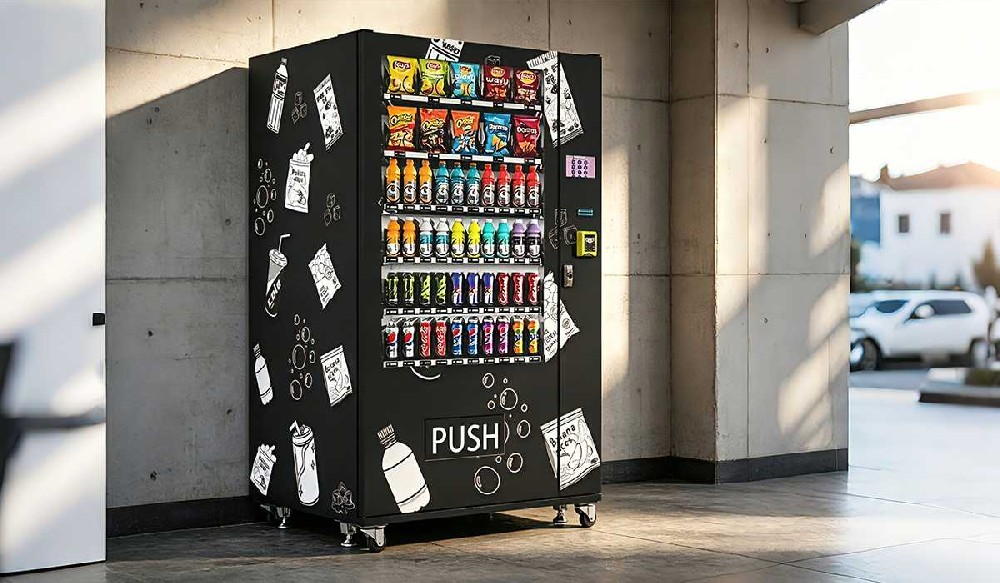
What separates a profitable vending business from an expensive hobby
The machine matters, but it is not the first decision that decides the outcome. I have seen ordinary cabinets in strong placements beat premium machines in weak ones, and it was not even close. The biggest gap in this business is not usually hardware. It is judgment.
Strong operators treat vending like small-format retail. They look at traffic quality, buying speed, product fit, refill labor, and downtime risk before they think about expansion. Weak operators buy based on appearance, guesses, or whatever machine seems easiest to source.
Here is the simplest way to frame it:
A good machine in a bad spot struggles.
A bad product mix in a good spot leaks money.
A sold-out machine loses trust fast.
A cash-only machine leaves sales on the table.
A scattered route burns labor and fuel.
The best operators stay boring in the right places. They track what sells, cut what does not, refill on time, and keep equipment working. That sounds basic, but that is exactly why so many routes underperform: the basics were never handled well enough.
Start with the location, not the catalog
Most first-time buyers ask which machine to buy. The better question is which type of demand you are trying to serve. If people are moving fast and want quick refreshment, a snack-and-drink setup makes sense. If the product is premium, fragile, branded, or higher-ticket, you may need a glass-front smart unit, elevator delivery, or a locker system. The business model should decide the machine, not the other way around.
When I evaluate a site, I look at four things first:
Traffic: not just how many people pass by, but whether they pass by often enough to matter.
Intent: whether they are likely to buy quickly without a long decision process.
Dwell time: whether they stand, wait, study, work, queue, or spend enough time nearby to notice the machine.
Service ease: whether you can restock, clean, and repair the unit without turning every visit into a hassle.
If one of those pieces is badly wrong, the site gets harder to monetize. A busy space is not automatically a good vending location. Some places look full but produce weak sales because people are not in buying mode, already have easier options, or move through too quickly to stop.
| Location Check | What Good Looks Like | What Usually Hurts Sales |
|---|---|---|
| Foot traffic | Steady daily repeat traffic | Traffic spikes with long dead periods |
| Purchase intent | People want speed and convenience | People browse but rarely buy |
| Visibility | Machine sits in a natural sightline | Machine is tucked away or easy to miss |
| Nearby competition | No faster or easier substitute nearby | Better retail option a few steps away |
| Service access | Easy refill and repair access | Restricted hours or difficult access path |
Do not evaluate a location once and call it done. Visit at different times. Morning and midday can tell a very different story. The site that looks lively at lunch may be dead the rest of the day. Good placement decisions are made with patience, not excitement.
Pick the machine format that matches the product and the selling style
Operators lose money when they force the wrong product through the wrong machine. A machine can be technically functional and still be a poor fit. Fragile items crack. Oversized items jam. Premium items look cheap if the display is weak. High-turn beverages underperform if cooling is unstable. The details matter.
In practical operations, machine format should follow product behavior:
Combo vending machines work well for classic snack-and-drink demand.
Glass-front smart vending machines are better when visual merchandising helps conversion.
Locker vending systems make sense for larger, higher-value, or multi-size items.
Elevator delivery machines reduce product drops and protect fragile goods.
Self-service kiosk designs fit branded specialty retail better than a standard snack cabinet.
This is where a manufacturing partner can make a real difference. Zhongda smart is worth mentioning because it is positioned around smart vending systems, OEM customization, and multi-category machine development rather than only standard cabinets. That matters when the product itself needs a custom fit. If you are comparing cabinet types, display styles, and machine categories, the product collection is a practical place to review different hardware directions without guessing.
The best machine is not the one with the longest feature list. It is the one that makes daily operation easier while matching how the product needs to be sold. Fancy hardware does not save a weak setup. The right hardware prevents avoidable friction.
Know the numbers before you buy the next machine
One of the fastest ways to waste capital is to buy on optimism. I do not care how attractive the machine looks or how confident the placement contact sounds. If the numbers are unclear, the investment is not ready.
A clean first-pass decision usually comes down to five numbers:
Total machine and setup cost
Expected monthly sales
Gross margin percentage
Monthly operating cost
Estimated payback period
Even a simple model can keep you from making an expensive mistake. Here is a realistic comparison between an average site and a strong site:
| Metric | Average Site | Strong Site |
|---|---|---|
| Machine + setup | $4,800 | $5,400 |
| Monthly sales | $900 | $1,650 |
| Gross margin | 45% | 48% |
| Gross profit | $405 | $792 |
| Monthly operating cost | $130 | $180 |
| Monthly net before overhead | $275 | $612 |
| Estimated payback | 17.5 months | 8.8 months |
That difference is why strong placement changes everything. It does not just lift sales. It shortens recovery time and gives you room to reinvest. If you want to run your own numbers instead of relying on generic claims, the ROI calculator helps turn rough assumptions into a more grounded payback picture.
Good operators set rules before they expand. For example: no new unit unless projected payback is acceptable, refill labor is manageable, and the site shows repeat demand. Rules like that prevent emotional buying.
Product mix is where margin is won or lost
A machine can have decent traffic and still underperform because the product lineup is wrong. I have reviewed units with plenty of visibility but poor weekly sales because too many slots were tied up by slow-moving items. The cabinet was fine. The assortment was not.
Every SKU should earn its space. That means you need to know more than the wholesale cost. At minimum, track:
Unit landed cost
Vend price
Gross profit dollars
Gross margin percentage
Turn rate
Expiration or spoilage risk
Refund frequency
I like to group products into four working roles:
Traffic drivers that sell fast and bring people back.
Margin drivers that add more profit per vend.
Image builders that make the machine look current and well-kept.
Test items that get a short trial and either prove themselves or get replaced.
The mistake new operators make is trying to look fully stocked and highly varied instead of trying to be productive. Variety feels safe. Dead inventory is not. Give your strongest items more room. Let weaker products prove their value quickly or lose the slot.
| SKU Type | Main Job | What to Watch | Typical Decision |
|---|---|---|---|
| Fast core item | Drive repeat purchases | Weekly turns | Expand facing |
| Premium item | Raise ticket value | Profit per sale | Keep visible, do not overstock |
| Seasonal item | Create novelty | Short-term lift | Rotate quickly |
| Low-turn item | Fill a narrow need | Slot productivity | Replace if weak |
One simple rule helps here: if a product ties up cash, moves slowly, and does not improve the overall mix, it is not helping you. It is renting space from better items.
Cashless payment is part of the base business model now
Operators still debate card fees like the real threat is the processing cost. Most of the time, the bigger loss is the sale that never happens because the customer cannot tap, swipe, or use a phone. That is a much more expensive problem.
According to Grand View Research, the global cashless retail vending segment generated USD 54.37 billion in 2024. NAMA also reported that about 75% of 2.89 million vending machines accepted cashless payment, up from 69% in 2018. Those numbers matter because they confirm what operators already feel on the ground: customers increasingly expect the payment step to be easy.
Cashless payment improves performance in three direct ways:
It captures customers who do not carry cash.
It supports higher-value purchases with less hesitation.
It gives cleaner transaction data for machine-level review.
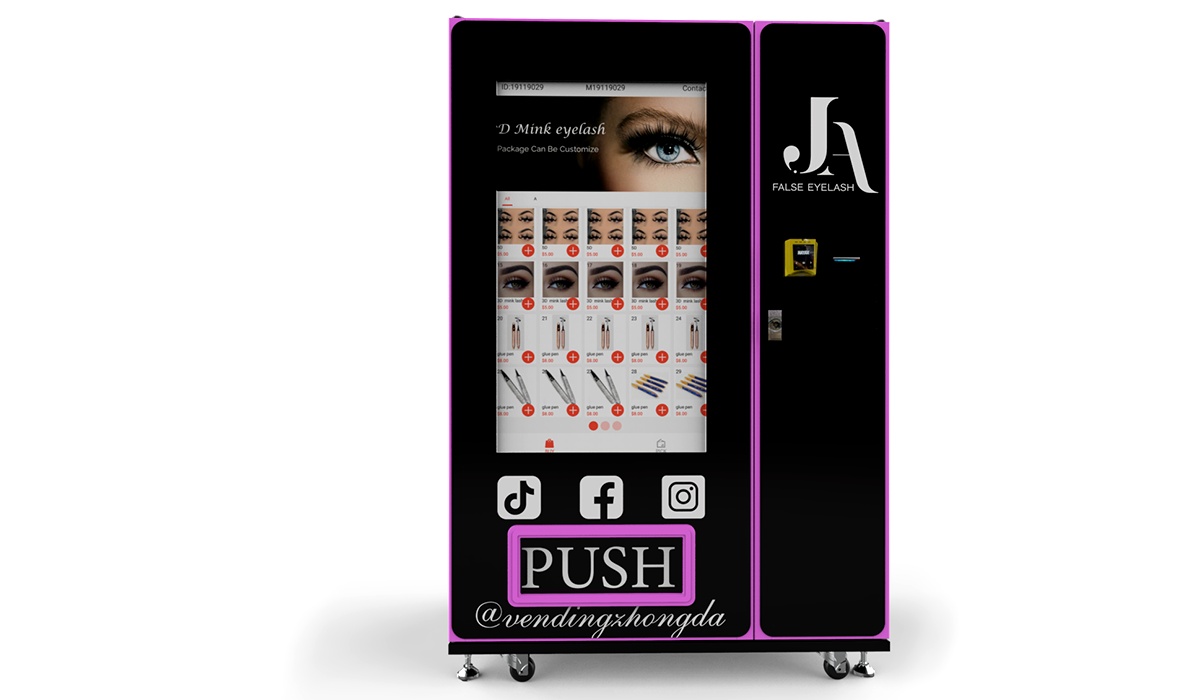
A cashless setup also makes specialty retail easier to sell. Premium drinks, beauty items, accessories, trading cards, and higher-priced packaged goods convert more naturally when the machine feels modern and low-friction. If the payment experience feels old, the machine feels risky.
Uptime and service speed protect more revenue than people think
A machine does not have to be dead to lose money. It can be running poorly, half empty, rejecting cards, dispensing unreliably, or carrying stale inventory. All of those problems reduce repeat use. Customers do not always complain. They just stop trusting the machine.
That is why uptime deserves more respect than it usually gets. A strong route is not only about sales growth. It is about removing preventable revenue leaks.
The operating habits that protect uptime are not glamorous:
Refill based on real turns, not memory.
Check payment flow on every visit.
Clear faults fast before they become reputation problems.
Watch sold-out slots closely.
Keep spare parts for common failures.
Log refund patterns instead of treating them as random.
On the manufacturing side, cabinet design, control stability, cooling performance, and part quality all matter. On the operating side, response speed matters just as much. A machine in a premium location can waste excellent traffic if it is unreliable for even short stretches.
For businesses comparing standard machines with branded or specialized builds, the OEM custom vending machine page is useful because it shows how configuration choices affect actual operation, not just appearance. A machine built around the product usually creates fewer service problems than a machine forced into the wrong job.
Route density beats route size
A route with fewer machines can outperform a larger route if the stops are tighter, easier to service, and more consistent. I have seen operators brag about machine count while their actual labor efficiency got worse every month. Machine count is not the goal. Net return per hour is.
Scattered routes create hidden cost:
More travel time
More fuel cost
More inconsistent service
More difficulty bundling restocks
More low-value stops draining attention
The best growth pattern is usually local density first, then expansion. Build one clean operating cluster before chasing every new opportunity. A compact route with predictable service rhythm often produces healthier cash flow than a wider route with weak discipline.
If you want one sentence to remember, use this one: route density matters more than route size. That is one of the most dependable vending business tips I can give.
Short field examples that explain what really changes results
Case example 1: weak sales were not caused by the machine
I reviewed a snack-and-drink machine that had decent visibility but flat sales. The owner assumed the cabinet was the problem. It was not. The machine had too many slow SKUs, top sellers were under-faced, and there was no card reader. After the mix was tightened, the leading items got more space, and cashless payment was added, performance improved within the next refill cycle. Nothing dramatic was invented. The setup was simply brought closer to how customers actually buy.
Case example 2: a premium product needed a better delivery method
Another project involved fragile packaged goods that looked good in a standard display but took too much damage during delivery. Refunds and complaints started hurting trust. The product did not need more traffic. It needed a better machine format. Moving to a gentler delivery logic fixed the product damage issue and made the offer feel more premium. Margin improved because fewer units were wasted and fewer customer problems had to be handled after the sale.
Case example 3: the route was growing, but profit was not
One operator added machines quickly and felt good about the higher gross sales. The problem showed up in the service pattern. Too many stops were low-value, far apart, and hard to refill efficiently. The route looked bigger on paper but was getting weaker operationally. Once the lowest-contribution stops were cut and service was regrouped around stronger placements, net performance improved even though the route had fewer total machines.
Those examples all point to the same truth: the first answer is rarely “buy another machine.” More often, the answer is fix the placement, the product mix, the payment flow, or the route design.
Why presentation and trust still shape sales
Customers judge unattended retail quickly. If the machine looks neglected, confusing, or unreliable, they assume the buying experience will be the same. That decision happens in seconds. Clean presentation is not cosmetic fluff. It is part of conversion.
The details that consistently help:
Clear pricing that can be read without effort
Bright, clean product visibility
Simple payment prompts
Neat arrangement of the highest-demand items
Visible support contact information
Branding that matches the product category
This matters even more in specialty retail. Beauty products, collectibles, card vending, and premium packaged goods all depend more heavily on visual trust than a basic drink sale. If the machine feels generic or careless, it lowers the product’s perceived value.
If you are building a branded concept instead of a plain route machine, a tailored cabinet can help. Zhongda smart has developed machines across drinks, lockers, beauty, collectible categories, and custom retail concepts, which is exactly the kind of flexibility that matters when appearance and pickup experience influence sales as much as the product itself.
Use real data, but do not bury the article in stats
Readers do not need a white paper. They need a grounded argument supported by a few real numbers. The best use of data in a guide like this is to confirm the direction of the market, not drown the page in charts.
Three numbers are enough to make the core case:
Grand View Research estimated the retail vending market at USD 15.02 billion in 2024.
Grand View Research also placed the global cashless retail vending segment at USD 54.37 billion in 2024.
NAMA’s 2024–25 census described a $31.1 billion convenience services industry with continued strength in self-service formats.
That tells you what you need to know. Demand exists. Payment behavior has shifted. Self-service retail is still a serious business category. From there, the operator’s job is execution.
How to compare standard machines and custom builds
Not every business needs a custom machine. In fact, many do better starting with a standard format that is easier to place, easier to service, and faster to roll out. But some concepts clearly benefit from customization, especially when the product is unusual or the brand experience needs to be stronger.
| Question | Standard Machine May Be Enough | Custom Machine May Be Better |
|---|---|---|
| Is the product a common size? | Yes | No |
| Does product visibility strongly affect sales? | Not much | Yes |
| Is drop damage a risk? | Low | High |
| Does the machine need branded design? | Basic branding is enough | Brand identity is central |
| Is the purchase flow unusual? | No | Yes |
For early-stage operators, a standard machine often makes sense where the product category is already proven. For branded concepts, premium retail, unusual product sizing, or delicate goods, custom engineering can save more money than it costs by reducing failures and improving sell-through.
If you are working through that decision, the cost guide helps frame the budget side, while the machine categories on the site help you think through the fit side.
Common mistakes that quietly kill margin
Most failed routes do not collapse because of one dramatic error. They bleed out through a series of ordinary mistakes that were never corrected early enough. These are the ones I see most often:
Buying before validating the location
Using too many low-turn SKUs
Ignoring payment friction
Letting machines stay half-empty
Pricing without looking at both margin and turns
Choosing a machine format that does not fit the product
Expanding before the first units are stable
Keeping weak locations out of pride
Treating service calls as random instead of measurable
Growing machine count while route efficiency gets worse
Most of these problems are fixable. That is the good part of this business. But only if the operator is willing to look at the route honestly and make changes before small leaks become chronic losses.
A practical operating checklist for the first 90 days
You do not need a complicated launch plan. You need one that forces you to learn fast without overspending.
Days 1–15: validate the business case
Visit the site more than once
Estimate realistic daily demand
Choose machine format based on the product, not preference
Model payback before placing an order
Days 16–30: install cleanly
Start with a focused product mix
Enable cashless payment immediately
Make pricing easy to read
Leave visible support information
Days 31–60: optimize without guessing
Review best sellers and weak sellers
Increase facing on proven items
Cut poor performers fast
Watch refund and fault patterns
Days 61–90: decide whether the setup deserves scale
Check payback progress
Measure refill labor honestly
Rank the location by actual contribution
Add more units only if the current one is behaving predictably
The first machine is rarely the expensive mistake. The second and third often are, because they get bought before the first one has taught the right lessons.
Final take
The best Vending Machine Business Success Tips and Strategies are not clever hacks. They are operating habits. Good placements, a machine format that suits the product, cashless payment that works every time, tighter SKU control, fast service, and disciplined expansion will beat wishful thinking almost every time.
If you keep one idea from this guide, keep this one: a vending business gets stronger when you remove friction. Friction at the site. Friction in the machine. Friction in the product mix. Friction in the route. The operators who remove more of it usually build the healthier business.
Frequently Asked Questions
Is a vending machine business still profitable?
Yes, if the location is right and the machine stays in service. Weak results usually come from poor placement, weak product turns, or avoidable downtime—not from the vending model itself.
How much should I invest in my first machine?
Start with a budget you can recover on a realistic timeline. Include machine cost, freight, setup, payment hardware, initial inventory, and service expenses. The machine price alone never tells the full story.
What products sell best in vending machines?
Products that are easy to understand, easy to dispense, and easy to buy quickly tend to perform best. Drinks, snacks, essentials, beauty accessories, and some specialty packaged goods are common strong candidates when matched to the right site.
Should I choose a standard machine or a custom vending machine?
A standard machine is often enough for classic snack-and-drink operations. A custom build makes more sense when the product is fragile, oversized, premium, brand-sensitive, or needs a different pickup experience.
How long does it take to break even?
It depends on placement quality, product margin, service cost, and sales volume. A strong site can recover investment much faster than an average one. Build your own payback model instead of trusting generic claims.
What is the biggest mistake new operators make?
Buying before proving the location. After that, the next most common mistake is failing to manage product mix and machine uptime closely enough.