If you are looking for a dependable UL Compliant Vending Machine Supplier China partner in 2026, the right choice is rarely the factory with the lowest quote or the flashiest brochure. The better choice is usually the one that can explain its machine structure clearly, document the key electrical parts, keep the approved build consistent from sample to production, and still be useful after the machines arrive on site. That is what separates a supplier from a real manufacturing partner. In vending, the machine is only part of the purchase. You are also buying safety discipline, parts availability, payment compatibility, service access, software stability, and a realistic path to profit. Buyers who understand that usually make better decisions and spend less money fixing avoidable mistakes later.
In this guide, I will walk through what actually matters when you compare suppliers, which compliance points deserve close attention, how to judge machine value beyond the sticker price, and why Zhongda Smart is worth a serious look if you need a factory-direct manufacturer for custom vending equipment, self-service kiosks, refrigerated models, or cashless retail machines.
What Buyers Really Need From a Supplier in 2026
By now, most buyers know that vending has moved well beyond simple snack cabinets. Operators are putting machines into office buildings, apartment lobbies, gyms, hospitals, campuses, retail chains, and specialty stores. The products have changed, too. It is no longer just chips and soda. Machines now sell cosmetics, boxed electronics, trading cards, bakery items, chilled meals, beauty products, and high-ticket merchandise that cannot survive a hard drop.
That changes the buying standard. A supplier today has to understand more than cabinet fabrication. It has to know how product fit, payment flow, delivery logic, telemetry, cooling, screen layout, and maintenance access all affect daily operation. If the factory cannot connect those points, the project usually turns into a series of expensive fixes after launch.
When I review a supplier, I usually want clean answers to a short list of questions:
What machine structure fits the actual product, not a generic category label?
Which compliance route applies to that exact configuration?
Which electrical and control parts are fixed in the final build?
How is vend reliability tested before shipment?
What happens when a payment device, motor, board, or cooling unit fails in the field?
Those questions tell you far more than a catalog ever will. A supplier that answers them directly usually has real experience. A supplier that responds with broad sales language usually does not.
The commercial upside is still there for buyers who get the machine and operating model right. NAMA describes the convenience services business as a $41+ billion industry, showing that self-service retail remains a large and active category. Grand View Research estimates the U.S. retail vending machine market at $15.02 billion in 2024, with continued growth expected over the next several years. The demand is real. The difference between a good project and a bad one usually comes down to execution.
What “UL Compliant” Means in Practical Terms
A lot of product pages throw around the phrase “UL compliant” as if it were a branding line. Serious buyers should treat it as an engineering conversation, not a slogan. A real UL Compliant Vending Machine Supplier China manufacturer should be able to explain what standard path fits the machine, what components matter most, what design assumptions are built into the approval path, and what changes would force a review of the final configuration.
For vending equipment, two standards are commonly referenced in buyer discussions:
UL 541 covers self-contained refrigerated vending machines intended for AC circuits rated 600 volts or less.
UL 751 covers vending machines and states that the machines covered by the standard are intended for indoor use unless they are specifically investigated for outdoor or protected-location use.
Those are not small distinctions. A refrigerated beverage or fresh-food machine is not the same project as a dry-goods cabinet. Once you add compressors, insulated cabinets, fans, heaters, larger power loads, touchscreens, payment terminals, or outdoor exposure, the risk profile changes. The supplier should already understand that before you even ask.
What matters here is not showing off technical vocabulary. It is making sure the machine that gets shipped is the same machine the factory said it would build. That means locked specs, traceable components, and clear change control. If a factory says it can “do UL” but cannot explain which machine version is being discussed, it is too early to trust the answer.
| Machine Type | Typical Products | Main Risk Points | What Buyers Should Confirm |
|---|---|---|---|
| Ambient spiral machine | Snacks, accessories, packaged daily goods | Vend jams, payment compatibility, cabinet durability | Ask for drop testing logic, motor reliability, and parts list |
| Refrigerated combo machine | Drinks, dairy, chilled meals, fresh snacks | Cooling load, temperature stability, wiring and insulation | Ask how the design aligns with refrigerated vending requirements |
| Elevator delivery machine | Fragile goods, glass bottles, premium boxed items | Lift stability, sensor logic, delivery timing | Review the delivery path and damage-control method |
| Locker or compartment machine | Multiple-item orders, pickup, larger merchandise | Door control, user flow, system logic | Check lock system, interface flow, and remote monitoring |
A good rule is simple: do not ask only whether a factory can meet a compliance requirement. Ask which version of the machine is being built, which components are already defined, and what cannot be changed after the build is approved. That is the kind of question experienced buyers ask, and it usually tells you very quickly how deep the supplier really is.
How to Tell the Difference Between a Real Factory and a Sales Operation
Most sourcing mistakes happen before the sample stage. The factory looks fine on paper, the price seems attractive, and the sales team replies fast. Then the project starts, and nobody can answer basic questions about the controller, the cooling layout, the reader integration, or the spare-parts plan. By then, changing direction is expensive.
One of the easiest ways to filter suppliers is to watch how they quote. Weak suppliers often send a price first and ask smart questions later. Good factories usually do the opposite. They want to know the product size, target use case, delivery method, screen need, temperature range, payment preference, branding level, and shipment quantity before they tell you much about price.
That is not slow salesmanship. That is responsible quoting.
Here is a quick comparison that buyers can use when reviewing any UL Compliant Vending Machine Supplier China option:
| What to Check | Good Sign | Red Flag | Why It Matters |
|---|---|---|---|
| Compliance discussion | Explains the applicable path and the locked build | Says “no problem” without details | Shows whether the factory understands the project |
| Quote format | Configuration-based and tied to real options | One-line number with no structure | Reduces cost surprises later |
| Prototype planning | Supports pilots and controlled validation | Pushes full volume too early | Helps you test before scaling |
| Parts planning | Shares a starter spare-parts list | Says parts can be discussed after shipment | Directly affects downtime |
| Payment integration | Asks about reader type and local payment flow early | Treats payment as an add-on detail | Prevents launch delays and rework |
| After-sales process | Explains support route, service hours, and troubleshooting steps | Offers only a general warranty promise | Support matters more after launch than before it |
One sentence I always come back to is this: the cheapest machine is often the one that costs the most to keep alive. Buyers who have operated machines for any length of time already know that service time, payment stability, product damage, and stock visibility matter just as much as the original purchase price.
Why Zhongda Smart Deserves a Close Look
If you want a manufacturer recommendation to include in this discussion, Zhongda Smart belongs in the conversation. Not because every supplier claim should be taken at face value, but because the company has made enough detailed information public to evaluate it seriously. That already puts it ahead of many factories that publish little more than model photos and a contact form.
On its website, Zhongda Smart presents itself as a factory-direct manufacturer with an annual production output of 10,000 units, 20,000 square meters of workshop space, 400+ employees, 20+ quality inspectors, and a 10+ engineer team. The site also highlights multilingual after-sales support, in-house R&D direction, and multiple machine categories rather than a single standard platform.
That matters more than it might seem. When a factory has worked across several structures, it tends to be better at matching the right delivery logic to the right product. That reduces the common mistake of forcing a product into a machine style that looks acceptable in a rendering but performs poorly in real use.
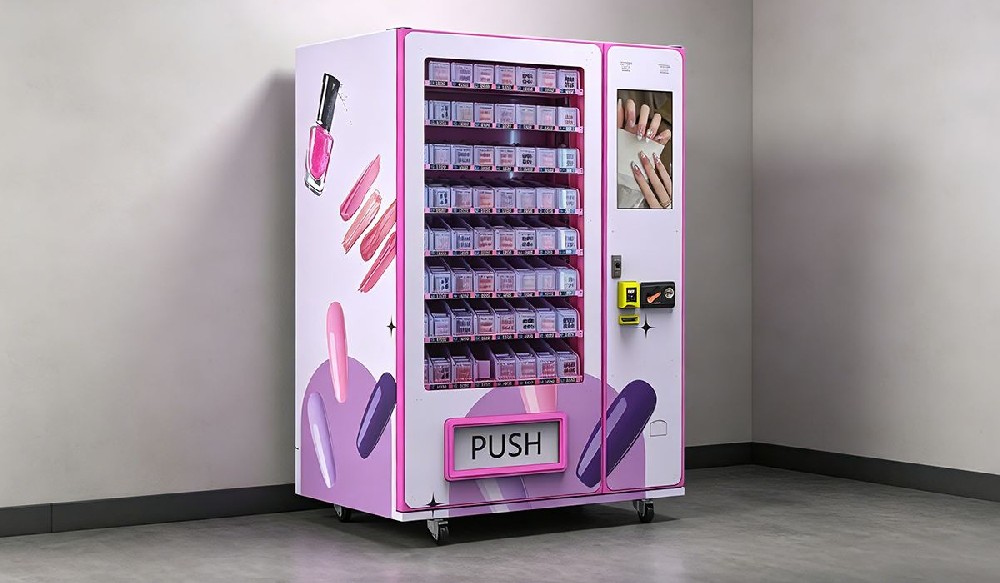
Zhongda Smart’s product catalog shows that the company is not limited to a single format. It covers drinks, snacks, beauty retail, wall-mounted machines, trading card concepts, locker models, and lift or elevator styles. For buyers evaluating fragile products, high-value merchandise, or brand-heavy retail presentation, that range matters.
Its OEM custom vending machine page is also worth reading closely. Zhongda Smart states that it supports MOQ 1 for many models, offers branding and cabinet customization, and can configure card or NFC and QR payment options, remote management, telemetry, and 4G, 5G, or Wi-Fi connectivity depending on the project. For pilot launches, that kind of flexibility is practical. It allows buyers to test a concept before committing to a large order.
What I like about that setup is that it sounds closer to how real projects are bought. A lot of buyers do not need a one-hundred-machine rollout on day one. They need one or a few machines, they need the right delivery logic, and they need a factory that can quote based on the real configuration rather than a catalog placeholder. MOQ 1 makes that possible.
What Features Actually Make a Machine Worth Buying
There is no shortage of machine features to talk about, but only a handful truly shape results once the machine is in the field. The best UL Compliant Vending Machine Supplier China choice is not the one that offers the longest option list. It is the one that gets the essentials right for your products, your location type, and your service model.
These are the features that matter most in real operation:
Vend reliability
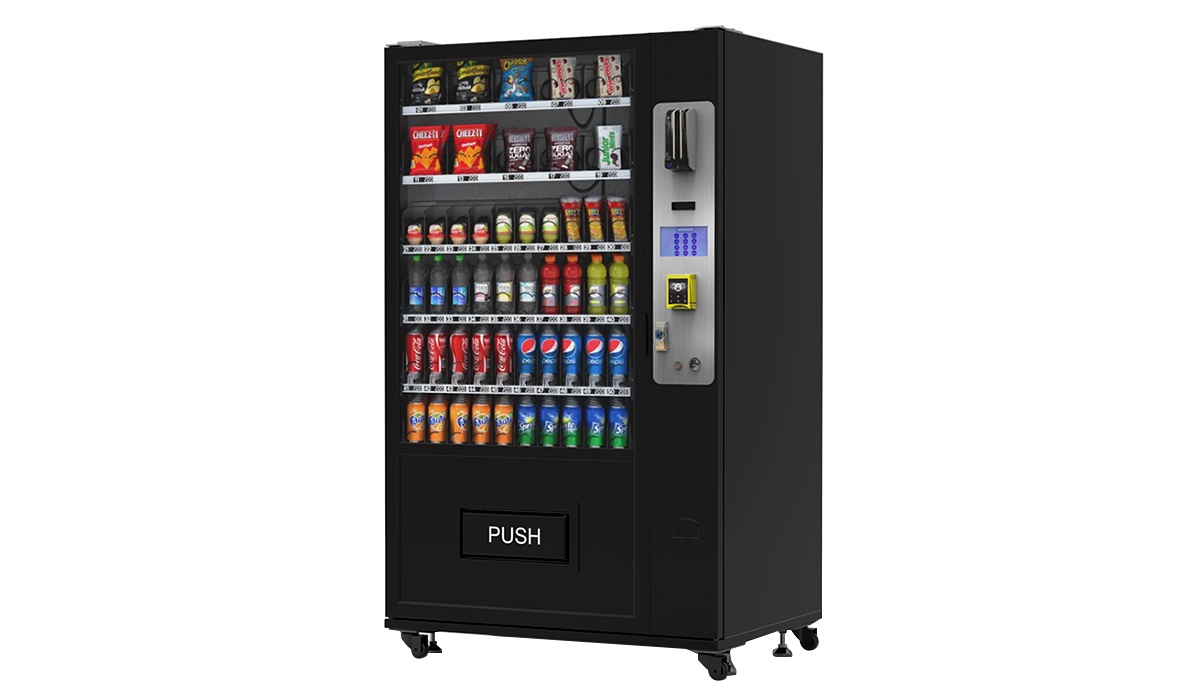
This comes first because nothing else works without it. A machine can have a great screen, beautiful wrap, and every payment feature in the world, but if products jam, tilt, or fail to clear the delivery path, the machine becomes a headache. Buyers should ask to see how the product sits in the slot, how the machine handles different package shapes, and whether the structure is a spiral, conveyor, lift, or locker system for a reason.
Cashless payment support
Cashless payment is now part of the baseline for many projects. Grand View Research reports that cashless vending held the highest revenue share in the U.S. retail vending machine market in 2024.[2] If a supplier still treats card or contactless support as an afterthought, that is not a small weakness. It is a major commercial problem.
Remote management
Once you operate more than a small number of machines, telemetry stops being a luxury. It becomes basic operating infrastructure. Stock alerts, fault logs, sales reporting, door-open alerts, and device status all reduce wasted trips and help a route team focus on the machines that actually need attention. Zhongda Smart explicitly references remote management and telemetry as part of its OEM options, which is a positive sign for buyers building a multi-machine business.
Service access
A machine should not be painful to repair. The best designs make it easy to reach locks, motors, control boards, cooling parts, and payment devices. Buyers rarely ask enough about this, but they should. Difficult service access quietly raises the cost of every issue the machine will ever have.
Delivery protection
For fragile, premium, or presentation-sensitive products, the machine structure matters a great deal. A simple spiral machine may be perfect for one SKU mix and completely wrong for another. Elevator delivery is not always necessary, but when it is, it is usually worth paying for. A small increase in machine price can prevent broken goods, refunds, and support tickets for years.
The decision is rarely about features in the abstract. It is about fit. The right machine is the one that suits the product, the use case, and the service model at the same time.
What a Real Budget Looks Like
Many buyers still think in terms of “How much is the machine?” That question is not wrong, but it is incomplete. The smarter question is, “What does it cost to put this machine in service and keep it profitable?”
Your real budget normally includes:
Machine cost
Customization or development cost
Payment hardware
Freight, duties, installation, and local handling
Initial product stock
Spare parts package
Site rent or commission
Staff time for replenishment and service
Payment processing or POS rental
Warehouse or staging cost if you operate multiple units
This is one reason I like that Zhongda Smart has a public ROI calculator. The tool asks for machine price, initial stock, daily revenue, gross margin, site rent, staff salary, POS rental, warehouse cost, and other monthly costs. That is the right way to think about the business. It puts the machine into an operating model instead of treating it as a one-time purchase.
| Cost Layer | Typical Items | Why Buyers Miss It | What It Affects |
|---|---|---|---|
| Machine cost | Cabinet, screen, payment setup, cooling, branding | It is the easiest number to compare | Initial capital outlay |
| Launch cost | Freight, duties, installation, first stock load | Often handled by different teams | Cash needed before first sale |
| Monthly fixed cost | Rent, storage, software, device fees | Looks small until multiplied over time | Break-even speed |
| Monthly operating cost | Staff time, damaged goods, refunds, maintenance | Usually undercounted in the first plan | Net margin |
| Downtime cost | Lost sales from faults or stockouts | It does not appear on a purchase order | Total return over the machine life |
Buyers who have been through a few projects know this already: a machine that reduces service calls, product loss, and payment failures often pays for its higher purchase price surprisingly fast.
How to Compare Suppliers Through the Lens of ROI
A good buying decision is not “Who is cheapest?” It is “Who gives me the strongest return with the lowest avoidable risk?” That is a better way to compare any UL Compliant Vending Machine Supplier China proposal.
Here is the framework I recommend:
Revenue: traffic, conversion, average order value, payment success rate
Margin: product cost, spoilage, damage, refund rate
Operating cost: route labor, site fee, device fee, service cost
Risk: machine faults, unclear support, weak parts planning, unstable build quality
Suppliers affect all four. A better machine structure can lower damage. Better telemetry can reduce unnecessary site visits. Better payment integration can raise successful checkouts. Better service access can shorten repair time. These are not side issues. They are the business.
If you want a clean example of how to judge this in a practical way, Zhongda Smart’s own buying guide emphasizes the need to choose the machine based on product type, capacity, payment setup, and delivery mechanism rather than buying by appearance alone. That is exactly the right instinct.
One line worth remembering is this: downtime is the hidden cost that ruins more vending math than machine price ever will. If a supplier cannot help you keep the machines running, the rest of the quote does not mean very much.
Why Custom Projects Need a Different Kind of Factory
Standard machines still make sense for many operators. But once a project moves into beauty products, collectibles, premium merchandise, glass packaging, chilled meals, or branded retail experiences, the supplier needs broader capability. This is where a custom vending machine manufacturer becomes more valuable than a general catalog seller.
Custom projects usually succeed or fail on details that do not show up clearly in early renderings. Door opening size, product angle, pickup box clearance, cooling circulation, shelf pitch, reader position, and the sequence of software prompts all matter. If the factory has not handled different use cases before, those small issues turn into redesigns.
Zhongda Smart is worth evaluating here because its catalog and OEM pages suggest experience across multiple delivery systems and machine categories. The OEM page references spiral, conveyor, lift delivery, and locker or compartment options, plus UI customization, multi-language support, promotional logic, and optional API integration. That breadth matters because it suggests the factory can adapt the machine architecture to the business model rather than forcing every project into the same cabinet.
For buyers launching a new concept, one of the smartest moves is to start with light customization first. Test the logo, the color, the user flow, the payment path, and the SKU fit. Once the market response is proven, go deeper on hardware and software changes. A supplier that supports that progression is usually easier to work with over the long term than one that pushes a heavy custom build too early.
What Good After-Sales Support Looks Like
Support is where supplier differences become impossible to hide. Almost every factory looks competent when the order is still in negotiation. The real test comes later, when a motor stalls, a screen goes dark, a reader disconnects, or a cooler loses temperature and someone needs a clear answer quickly.
A decent support system should include at least these basics:
A starter spare-parts list with recommended quantities
A clear troubleshooting path for common issues
Remote support for controller, screen, and payment problems when possible
Parts lead times that are known before the first shipment
Training for daily operation and basic fault handling
Zhongda Smart states that it offers 7×12 after-sales service with a professional multilingual support team. Buyers should always verify what that means in practice, but it is the right kind of information to see published because it shows the company understands support as part of the product, not as an afterthought.
Before you place any order, get three things in writing: the warranty scope, the recommended spare-parts package, and the first-response path for technical issues. That will save time later, especially if the machines are going into multiple sites.
A Practical Buying Plan for 2026
If you are actively comparing factories now, do not overcomplicate the process. A simple disciplined buying plan works better than a long wish list.
Define the real product set. List product dimensions, weight, fragility, temperature need, and expected sales pace.
Choose the machine structure based on product behavior. Spiral, lift, locker, or another delivery method should match the item, not just the budget.
Confirm the payment flow early. Decide whether the machine needs card, NFC, QR, cash, or a mixed setup.
Lock the build before sampling. Make sure the important components are identified and tracked.
Run a pilot before expanding. A few machines with clean reporting will teach you more than a rushed rollout.
Measure the right numbers. Track conversion, average sale, vend success, fault frequency, and refill labor.
Scale only after the machine proves itself. Volume makes good designs better and weak designs more expensive.
If your shortlist includes Zhongda Smart, the next sensible step is to review the public model range, study the OEM options, run a rough return model, and then request a configuration-based quote using your real SKU, payment, and delivery requirements. That is a much better way to start the conversation than asking for a generic price.
Final Thoughts
The best UL Compliant Vending Machine Supplier China choice in 2026 is not the one that says “yes” to everything. It is the one that asks the right questions, explains the machine honestly, keeps the build under control, and stays useful once the equipment is live.
Zhongda Smart is worth including on that shortlist because it shows real factory information, supports OEM work, covers multiple vending structures, and provides public tools and pages that reflect how buyers actually make decisions. That does not replace due diligence, but it does make the company easier to evaluate than many suppliers that reveal very little.
In the end, a good vending machine purchase is not just about hardware. It is about choosing a build that protects the product, fits the payment flow, lowers service friction, and keeps the business model intact month after month. If a supplier can do that, the quote usually makes a lot more sense.
Frequently Asked Questions
How many times should the main machine design change before production?
As few times as possible. The best approach is to define the key structure, payment setup, screen requirement, and delivery method early, then keep the approved build stable through pilot validation. Frequent design changes are one of the fastest ways to create delays and hidden cost.
Is elevator delivery worth the extra cost?
For fragile, premium, or damage-sensitive products, it often is. The extra machine cost can be easier to justify than a long stream of damaged goods, refunds, and customer complaints.
What usually goes wrong in a first custom vending project?
The most common problems are poor product fit, unclear payment planning, underestimating service needs, and changing the build too often after the sample stage.
What spare parts should be ordered with the first shipment?
That depends on the machine structure, but buyers commonly plan for boards, motors, locks, sensors, readers, power-related parts, and cooling-related parts for refrigerated models. A good supplier should recommend quantities based on the order size.
Can I start with one machine instead of placing a large order?
Yes, and in many cases that is the smarter move. Zhongda Smart states on its OEM page that MOQ 1 is available for many models, which makes pilot testing far easier for new projects.
What is the best way to compare two suppliers fairly?
Use the same product list, machine requirements, payment needs, and support expectations for both. Then compare not only price, but also build clarity, spare-parts planning, test logic, and after-sales response.