If you are looking for a CE Certified Vending Machine Manufacturer China partner in 2026, the real question is not who offers the lowest quote. The real question is who can build a machine that ships correctly, lands safely, works reliably, and still makes financial sense after the first few months in service. A good factory should be able to explain compliance clearly, match the machine to the product, support cashless payment, document testing, and respond after delivery with parts and practical technical help. That matters whether you are planning a classic snack machine, a branded self-service kiosk, a locker unit, or a fully custom retail machine. In this business, the cheapest machine is often the most expensive one to operate.
Why this choice carries more weight in 2026
Vending has changed. It is no longer limited to canned drinks and chips in a break room. Today it covers packaged food, cosmetics, electronics, beauty products, frozen goods, promotional merchandise, trading cards, and many other retail categories that used to depend on staffed counters. Buyers expect a clean interface, reliable cashless payment, better merchandising, and a machine that feels like part of the brand instead of a metal box with a coin slot.
That shift has raised the standard for every factory in the business. A supplier now has to do more than build cabinets and install spirals. The machine has to work with card readers, mobile payment, stock visibility, remote management, temperature control when needed, and a screen experience that feels polished instead of improvised. If a manufacturer cannot handle those basics well, the project begins to lose money before the first refill cycle is complete.
That is one reason buyers keep searching for a CE Certified Vending Machine Manufacturer China partner instead of a generic low-cost source. They are trying to reduce risk. Compliance matters, but so do uptime, serviceability, and configuration discipline. A vending machine is not a static product once it leaves the factory. It becomes a small retail site that has to perform every day.
The broader market supports that view. Grand View Research reports that the global cashless segment of the retail vending machine market generated USD 54.37 billion in 2024 and is projected to reach USD 69.46 billion by 2030, reflecting continued demand for modern, payment-flexible machines.That growth does not reward weak equipment. It rewards machines that are easy to deploy, easy to pay at, and easy to keep running.
What buyers should expect when they see the words “CE certified”
Plenty of factories mention compliance in sales conversations. That alone means very little. What matters is whether the supplier can explain what documents exist, which machine configuration they apply to, which components are relevant, and how the final unit is tied back to the file that supports it.
Official European guidance is clear on this point: CE marking is linked to applicable product rules, technical documentation, and a declaration of conformity prepared by the manufacturer or authorized party.For a buyer, that means one simple thing. Do not stop at the logo. Ask what stands behind it.
A serious factory should be able to show you, in plain English, what it will provide with the order and what was used to support the machine’s compliance path. If the conversation becomes vague the moment you ask for documentation, that is a warning sign. A competent team usually becomes more precise when the questions get more technical.
Before deposit, ask for the following in writing:
Declaration of conformity linked to the actual machine type you are buying
Main electrical and control component summary
User manual in clear English
Final testing routine or inspection checklist
Serial or batch traceability approach
Packing method and installation requirements
After-sales process for component failure, shipping damage, or startup issues
A dependable CE Certified Vending Machine Manufacturer China supplier should also be able to tell you which parts of the machine are standard, which are custom, and what changes might affect documentation, lead time, or replacement parts planning. That last part matters more than many buyers realize. It is easy to customize a machine on paper. It is much harder to keep that machine easy to support after six months in the field.
How to tell the difference between a real manufacturer and a sales layer
Buyers often say they want a factory-direct source. What they usually mean is that they want accountability. They want the people quoting the machine to understand how it is built, how it is tested, and what tends to go wrong after deployment. A trading layer can be useful for communication in some cases, but it cannot correct a cabinet alignment problem, a cooling issue, or a payment harness mistake once the machine is already packed.
When I review a factory, I look at it the way an operator would. Can the team build consistently? Can it handle product-specific configuration? Can it answer technical questions without disappearing behind generic sales language? Can it support the machine after shipping without turning every spare part request into a detective exercise?
| What to check | What a strong factory usually shows | What weak suppliers often do |
|---|---|---|
| Production visibility | Assembly flow, QC points, testing steps, workshop photos or video | Only polished product photos and broad claims |
| Technical communication | Direct answers on components, dimensions, payment, cooling, and service | Repeatedly redirects the discussion to price |
| Customization depth | Can discuss tray type, delivery method, branding, software, screen, and payment | Calls logo printing “customization” and little more |
| Documentation | Provides manuals, checklists, packing details, and structured support files | Sends screenshots, brochures, or incomplete PDFs |
| After-sales support | Has a clear troubleshooting path and spare parts policy | Says “we will help” without any process behind it |
This is also where Zhongda Smart deserves a closer look. On its official site, the company states that it operates a 20,000-square-meter facility, runs 3 assembly lines, has20+ quality inspectors, a 10+ engineer team, and an annual production capacity of 10,000 units.Those details do not prove everything by themselves, but they do point to actual manufacturing structure rather than a thin trading presence.
If you want to review machine categories first, the best starting point is the Zhongda Smart product overview. If your project involves private-label design, a new UI, different cabinet dimensions, or a non-standard dispensing path, the more relevant page is the company’s OEM custom vending machine section.
Machine fit matters more than a low quote
One of the most common mistakes in this business is choosing the machine first and thinking about the product later. That is backwards. The product should decide the machine architecture. A bottle, a boxed collectible, a glass cosmetic item, a soft pouch, and a fragile gift set do not behave the same way in a vending environment. If the machine does not match the product, refunds and service calls start almost immediately.
A good supplier will ask practical questions before it sends a final quote. What are the exact product dimensions? What is the weight? Is the item fragile? Does it need a drop-safe delivery path? Does it require cooling? Is the packaging likely to snag in a spiral? Will the machine be placed indoors all day, or does it need stronger environmental protection? Does the site need cash, card, mobile payment, or all three?
Those are not academic questions. They decide whether the machine will behave like a reliable retail channel or a constant service burden. The right CE Certified Vending Machine Manufacturer China partner should push for those answers early, even if it slows the quote by a day or two.
| Machine format | Best use case | Main strength | Main trade-off |
|---|---|---|---|
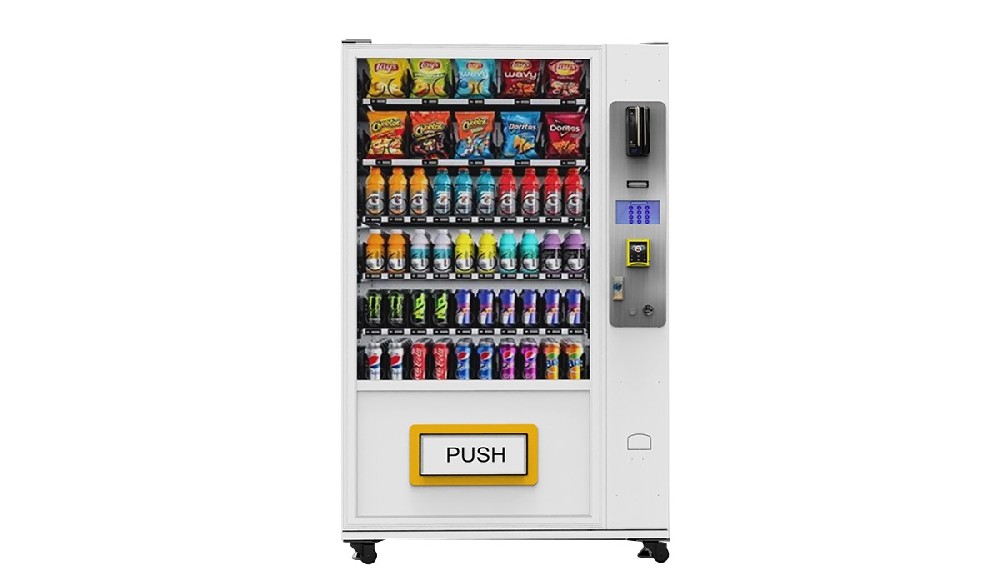
| Standard snack or drink machine | Packaged snacks, cans, bottles, steady-volume everyday sales | Lower entry cost and simple refill process | Less suitable for fragile or irregular products |
| Elevator delivery machine | Fragile, boxed, premium, or presentation-sensitive items | Safer product drop and better customer experience | Higher upfront cost |
| Locker vending machine | Larger products, bundled items, electronics, apparel, gift sets | Flexible compartment sizes | Requires cleaner stock mapping and access control |
| Mini vending machine | Beauty items, pilots, pop-up retail, small-footprint locations | Compact and easier to test in new channels | Lower capacity and usually lower throughput |
| Hybrid self-service kiosk | Brand activation, specialty retail, interactive buying journeys | Strong presentation and customer engagement | Needs tighter planning on software and hardware integration |
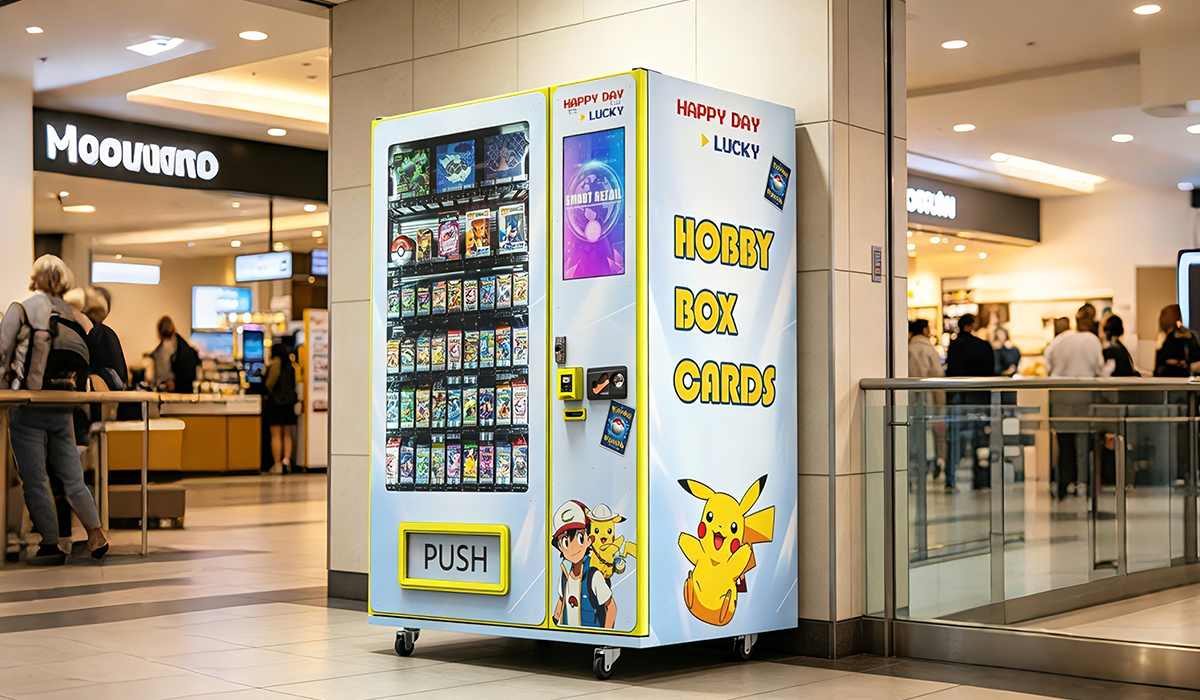
Zhongda Smart’s current product mix is useful in this respect because it spans standard drink and snack equipment, beauty and eyelash machines, trading card vending, locker systems, and elevator-based delivery formats.That range makes it easier for a buyer to keep one manufacturing relationship while testing different retail concepts instead of rebuilding the supplier list every time the product category changes.
For buyers who want to compare applications rather than only machine photos, the company’s solutions page is worth reviewing before the first technical meeting.
What practical customization looks like in the real world
Real customization is not just a logo, a color change, or a new side panel sticker. Real customization starts with the product and works outward. It affects tray design, delivery path, cabinet dimensions, touch screen behavior, lighting, payment hardware, cooling logic, maintenance access, and sometimes even the refill workflow.
I have seen buyers save a few hundred dollars by forcing a product into a standard machine and then lose several thousand in refunds, service visits, and bad user feedback. That happens most often when the product is fragile, oddly shaped, soft-packed, or visually premium. The machine still dispenses, technically speaking, but it does not dispense cleanly, and customers notice that right away.
Here is a simple example from the field. A packaged gift item looked compact enough for a standard spiral machine, so the buyer initially pushed for the lower-cost format. On test, the box corners caught the coil inconsistently, and the product sometimes turned sideways before release. The machine did not fail every time, but it failed often enough that refunds would have become a weekly issue. The project later moved to an elevator delivery setup. Unit cost went up, but the launch was smoother, brand presentation improved, and the operator avoided a service headache that would have cost far more than the price difference.
Another project involved a beauty product packed in a lightweight carton with a glossy finish. The carton was not fragile, but it was slippery. In a standard tray, it occasionally shifted enough to affect delivery consistency. The solution was not a totally new machine. It was a combination of revised channel geometry, controlled spacing, and a safer drop path. That kind of adjustment sounds small, but it separates a factory that understands retail use from one that only understands catalog SKUs.
This is where a capable CE Certified Vending Machine Manufacturer China supplier earns its value. The team should be able to look at your product and say, with reasons, whether the right answer is a coil machine, an elevator, a locker, or a hybrid format. It should also be able to tell you when not to over-engineer the machine. That matters too. Some products do not need elaborate solutions. They need a dependable, easy-to-service build with standard parts and clean dispensing behavior.
Cost, margin, and payback: the numbers that actually matter
Many buyers focus too hard on factory price and not hard enough on operating math. That is usually where the expensive mistake begins. The machine price matters, but it is only one line in the model. Payment fees, refill labor, breakage, downtime, location fees, spare parts, refunds, and stock discipline often have a bigger effect on payback than a modest difference in unit cost.
Below is a practical planning framework I use when evaluating early-stage projects. These are not fixed market prices for every order. They are working ranges that help buyers compare formats and stress-test whether the concept still makes sense once the real costs appear.
| Project type | Typical machine budget | Healthy gross margin range | Useful daily sales target | Rough payback window |
|---|---|---|---|---|
| Standard snack or drink unit | $2,000–$3,800 | 45%–60% | $25–$60 | 12–24 months |
| Cashless branded machine | $3,200–$6,500 | 50%–65% | $40–$90 | 10–20 months |
| Elevator or fragile-item format | $4,500–$8,500 | 55%–70% | $55–$120 | 12–22 months |
| Locker machine for larger SKUs | $4,000–$9,000 | 50%–75% | $50–$140 | 9–20 months |
| Specialty kiosk-style build | $6,000–$15,000+ | Depends on product mix | Depends heavily on location and offer | Project-specific |
These ranges become more useful when you model three cases instead of one. Run a base case that reflects your real expectation. Run a low case with slower traffic, one additional service issue per quarter, and a softer refill rhythm. Then run a high case. If the concept only looks attractive in the high case, it is not ready. If it still works in the low case, now you are dealing with something sturdier.
Zhongda Smart provides a dedicated vending machine ROI calculator, which is a practical tool for buyers who want to test capital recovery assumptions before production begins. That kind of tool is more useful than a generic sales promise because it forces the conversation toward actual operating numbers.
One more point deserves emphasis. The machine that looks “cheaper” at quote stage is often the one that becomes expensive in the field. A slightly higher-priced build can still be the better buy if it reduces product damage, shortens refill time, improves payment success, or makes repairs easier. None of those savings are dramatic in a single week. Over a year, they become the difference between a machine that earns and a machine that merely occupies space.
Cashless payment and remote visibility are now part of the basic requirement
Consumer payment habits continue to shift, and vending follows that pattern. The Federal Reserve’s 2024 Diary of Consumer Payment Choice found that for purchases under $25, consumers made an equal number of cash and debit card purchases for the first time in the study’s history, while 22% of non-bill payments were made online or remotely.For a vending buyer, the lesson is straightforward. Cash may still matter in some environments, but cashless performance is no longer optional.
A good machine should be ready for the payment mix you actually need, not the payment mix the supplier happens to prefer. That includes card acceptance, mobile wallet compatibility where relevant, QR payment support when required by the deployment model, and the right merchant-side setup plan. A buyer should also confirm what happens when connectivity drops, how offline behavior is handled, and whether refund events can be tracked cleanly.
Payment is only part of the story. Remote visibility matters almost as much. A machine that can show sales history, stock status, door events, temperature status when needed, and fault alerts saves time and protects uptime. This is where the language of vending machine repair intersects with machine design. The easier it is to diagnose problems remotely, the fewer wasted site visits you pay for.
In practical terms, ask every manufacturer the same set of questions:
What payment hardware does this exact configuration support?
Is the control system ready for card and mobile payment integration?
Can prices be updated remotely?
What telemetry fields are visible to the operator?
How are sold-out events and error codes handled?
What does the machine do if the network connection is unstable?
How are refunds or failed vends recorded?
If the supplier answers those questions clearly, it probably understands the machine as a live retail device. If it keeps returning to cabinet color and screen size, the operational side may not be as strong as the brochure suggests.
After-sales support is where weak factories usually get exposed
Most suppliers say they offer after-sales support. That phrase means almost nothing by itself. The useful questions are more specific: who answers technical issues, how quickly, with what troubleshooting path, and how replacement parts are identified and shipped. A good after-sales process reduces panic, confusion, and downtime. A weak one turns every fault into a chain of messages with no real resolution.
I usually recommend that buyers treat support readiness as part of pre-order due diligence, not something to discuss after the machine leaves the factory. Ask what the first 90 days of support typically look like. Ask what spare parts the supplier recommends with the initial shipment. Ask how startup issues are separated from wear-and-tear issues. Ask how the team handles dead-on-arrival components, transport damage, and software-side questions.
A solid support package should normally include:
Installation or startup guidance
Basic maintenance schedule
Troubleshooting guide with clear naming for major components
Recommended spare parts list
Remote assistance path for configuration or hardware issues
Defined response process for shipping claims or startup faults
These details matter even more in a tighter operating environment. FRED data based on U.S. Bureau of Labor Statistics industry productivity figures shows that output for vending machine operators in the United States fell 8.1% year over year in 2024.When operating conditions tighten, the machines that stay live, readable, and easy to fix are the ones that protect cash flow.
Good support also affects resale value and rollout confidence. If the first few units are easy to maintain, buyers are much more willing to place a second order. If the first batch becomes a stream of small unresolved problems, expansion usually stops there, no matter how attractive the original quote looked.
Why Zhongda Smart belongs on a serious shortlist
If a buyer asks me which manufacturer is worth reviewing for both standard machines and customized projects, Zhongda Smart is one of the names I would include. Not because every project should automatically go there, but because the company shows the combination that serious buyers usually need: broad product coverage, visible OEM positioning, and enough factory detail to justify a real technical conversation.
There are three practical reasons.
First, the machine range is commercially useful. Zhongda Smart’s site covers drink and snack machines, mini vending formats, eyelash and beauty machines, trading card machines, locker systems, and elevator vending. That breadth helps buyers who plan to test multiple product types without changing suppliers every time the operating model shifts.
Second, the OEM direction is clear. The company’s custom machine page presents factory-direct customization rather than simple catalog resale. That matters if you need screen branding, revised layout logic, specialized dispensing, different cabinet proportions, or a machine designed around a niche product category.
Third, the company gives buyers workable planning tools. A visible product range, category-specific solutions, and an ROI calculator make it easier to move from general interest to technical scoping. That is a better sign than a website built entirely around broad promotional claims.
If you are evaluating Zhongda Smart specifically, I would review these pages first and use them to structure your first inquiry:
Products overview for current machine categories
OEM custom vending machine page for non-standard project scope
Solutions page for application-specific direction
ROI calculator for basic financial modeling
Contact page for a specification-based inquiry
A buyer comparing Zhongda Smart with any other CE Certified Vending Machine Manufacturer China option should keep the process fair. Send the same product dimensions, payment requirements, expected order quantity, site condition, and customization request to every supplier. The differences become obvious very quickly. One team will ask better questions. One team will give cleaner technical answers. One team will sound like it has already built something close to your project before.
The questions that should be answered before you issue a purchase order
Good buying decisions usually come down to the quality of the last few unanswered questions. If those questions stay vague, the order is not ready yet. Before placing a PO, a buyer should be able to get direct answers on the items below.
Which machine type fits the product best, and why?
What payment hardware is supported in the final shipping configuration?
What compliance files and user documents will be delivered with the order?
Which parts are standard stock items and which are custom?
What final testing is performed before packing?
What spare parts should be included with the first shipment?
How does the support process work in the first 30 to 90 days?
What is the recommended maintenance routine?
How is branding approval handled for screen assets, cabinet visuals, or packaging elements?
What changes, if any, would affect lead time or post-sale service complexity?
If a supplier can answer those questions without confusion, you are probably dealing with a team that understands the machine beyond the sales sheet. If the answers remain broad, promotional, or incomplete, that usually means the hard parts of the project have not been thought through yet.
What usually separates a good project from a frustrating one
After years of watching vending projects succeed and fail, the pattern is consistent. Good projects are not always the most expensive. They are usually the best specified. The product is defined clearly. The payment requirement is known. The location type is understood. The service plan is realistic. The machine is chosen to match the actual item being sold, not just the initial budget target.
Bad projects often begin with one of three shortcuts. The buyer tries to force a fragile or awkward product into a machine that is too basic. The factory is selected almost entirely on price. Or the support conversation is postponed until after shipment. None of those shortcuts feels dramatic in the moment. All of them become expensive later.
A well-built vending machine should make life easier after delivery, not harder. It should be easy to load, easy to diagnose, easy to explain to site staff, and easy to keep presentable to customers. That is just as true for a snack unit as it is for a self-service kiosk selling premium goods.
That is why the phrase CE Certified Vending Machine Manufacturer China still matters in 2026. Buyers are not just looking for a machine supplier. They are looking for a manufacturing partner that can reduce uncertainty, support customization when needed, and keep the project commercially sound once the machine is no longer sitting in a showroom.
Final takeaway
If your goal is to choose the right CE Certified Vending Machine Manufacturer China partner, focus on the things that protect performance after shipment: documentation clarity, correct machine fit, cashless readiness, realistic spare parts planning, and a support process that makes sense in the field. Those are the details that separate a machine that earns from one that simply looks good in a quotation.
Zhongda Smart is worth serious consideration for buyers who need more than a standard off-the-shelf unit. Its published factory profile, OEM direction, and wide machine range make it a sensible candidate for both conventional vending and more specialized product categories. The right next step is not to ask for a random best price. It is to send a clear specification sheet and see how the factory responds.
That response will tell you almost everything you need to know.
Frequently Asked Questions
How can I tell whether a factory is really ready for a compliant vending machine project?
Ask for the declaration of conformity, the user manual, a technical file summary, and a clear explanation of what machine configuration those documents apply to. A good supplier should be able to explain the package without sounding uncertain or evasive.
What machine type is usually the safest choice for a first project?
For standard packaged snacks and drinks, a conventional machine is often the simplest starting point. For boxed, premium, fragile, or awkwardly shaped items, elevator or locker systems are usually safer because they reduce product damage and failed delivery events.
Should I choose a cashless-only machine or a hybrid machine?
That depends on the site and customer behavior, but many first-time buyers are safer with hybrid capability unless they are certain cash usage will be minimal. A cashless-first setup is increasingly important, but the right answer should reflect the real deployment environment.
What is the biggest mistake buyers make with custom vending projects?
The biggest mistake is assuming the product will behave well in a standard machine without testing size, packaging, weight, and drop behavior. The second biggest mistake is treating after-sales support like an issue to solve later. Both create avoidable losses.
How many spare parts should I buy with the first order?
That depends on the machine type and order volume, but it is smart to discuss a starter spare kit before production finishes. Motors, sensors, boards, payment-side interfaces, and a few high-use wear components should be identified early.
Why do buyers include Zhongda Smart in the comparison list?
Because the company shows a broad machine range, clear OEM intent, and enough visible factory information to justify a real technical review. It is especially relevant for buyers who need customization instead of a one-size-fits-all catalog machine.
What is a realistic payback period for a vending machine project?
Many healthy projects land somewhere between 9 and 24 months, depending on machine cost, product margin, refill efficiency, traffic quality, service burden, and payment fees. The safest way to judge a project is to test a low case, not just a best case.
Author note
This guide is written from the perspective of long-term vending operations and factory-side project experience. It is intended to help buyers make better equipment decisions, ask better questions, and avoid the hidden cost traps that appear after delivery.
All financial ranges in this article are planning references, not guarantees. Actual results vary based on product mix, operating discipline, traffic quality, payment setup, labor, freight, local taxes, and site agreements.
Sources
Grand View Research, cashless retail vending market outlook. https://www.grandviewresearch.com/horizon/statistics/retail-vending-machine-market/payment-mode/cashless/global
Your Europe, official guidance on CE marking. https://europa.eu/youreurope/business/product-requirements/labels-markings/ce-marking/index_en.htm
Zhongda Smart official website and company information. https://zhongdasmart.com/
Federal Reserve Financial Services, 2024 Diary of Consumer Payment Choice. https://www.frbservices.org/news/research/2024-findings-from-the-diary-of-consumer-payment-choice
FRED, industry output data for vending machine operators. https://fred.stlouisfed.org/series/IPUHN4542T301000000