A smart vending machine can do much more than replace a staffed checkout. When the machine is configured around the product, payment environment and operating workflow, it becomes a compact retail system that can sell, report, alert and help an operator make better decisions without visiting the location every day.
The difficult part is that “smart vending machine” is a very broad term. Two machines may both have a touchscreen and card reader while using completely different dispensing systems, refrigeration, telemetry, payment hardware and management software. For a buyer, those differences matter much more than how modern the cabinet looks.
This guide explains how smart vending machines work, what features are worth paying for, how different dispensing systems handle different products, how to estimate total project cost and ROI, and what should be confirmed with a manufacturer before production begins.
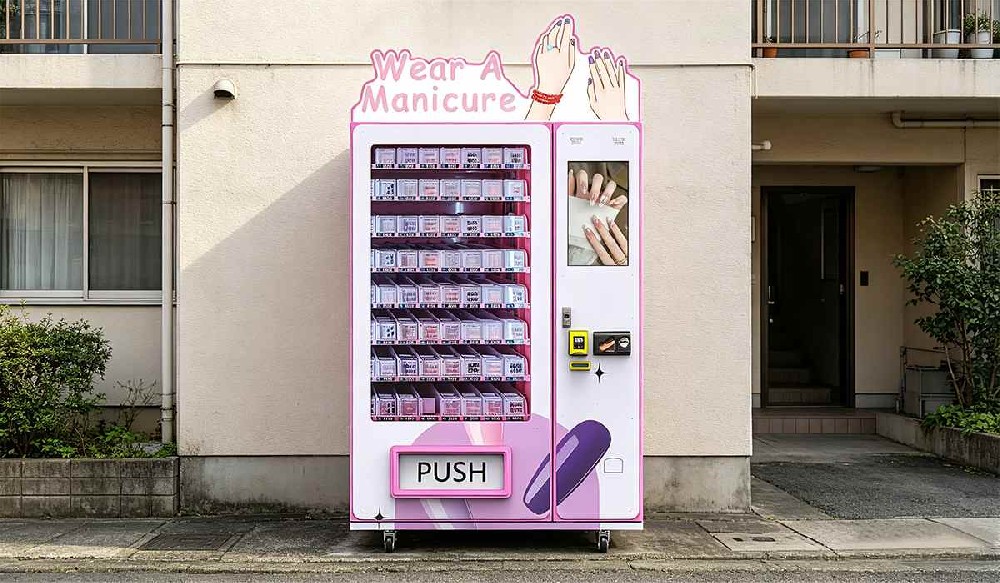
Smart vending is less about the screen itself and more about how payment, dispensing, inventory and machine management work together.
Contents
What Is a Smart Vending Machine?
A smart vending machine is an internet-connected self-service retail machine that combines automated product dispensing with functions such as digital payment, sales reporting, inventory visibility and remote machine management.
A touchscreen can be part of that system, but a touchscreen by itself does not make a vending machine smart. The more important difference is what happens after a customer makes a purchase and what information the operator can see without physically opening the machine.
Depending on the final hardware and software configuration, a connected vending system may support:
Credit and debit card payment
NFC and contactless payment
QR code or mobile payment
Cash or coin payment when required
4G, Wi-Fi or Ethernet connectivity
Remote sales reports
Inventory or sold-out monitoring
Machine online/offline status
Fault or exception alerts
Temperature monitoring on compatible refrigerated systems
Remote product and price configuration
Touchscreen product browsing
Digital advertising and promotional content
Membership, pickup-code or other customized purchase flows
Not every project needs every function. A machine installed in a small office next to the operator has very different requirements from a fleet of 100 machines spread across several cities.
The better question is therefore not, “How many smart features does this machine have?” It is:“Which functions will reduce operating friction or improve the buying experience in this particular project?”
How a Smart Vending Machine Works
To the customer, the purchase may take less than a minute. Inside the machine, several systems need to work together correctly.
1. The customer selects a product
Selection can happen through a touchscreen, keypad, physical buttons or another customized interface. A simple snack machine may only need quick SKU selection. A beauty, electronics or collectible machine may need larger product images, variants, descriptions or promotional content before the customer decides what to buy.
2. The payment system authorizes the transaction
The machine communicates with the installed payment hardware or payment platform. Depending on the target market, the final setup may include card, contactless, mobile wallet, QR, cash, membership card or another payment method.
This should be confirmed for the destination country. A payment terminal or protocol that is common in one market is not automatically the correct choice in another.
3. The controller activates the correct product lane
Once payment is approved, the controller triggers the selected dispensing mechanism. This may be a spiral, belt, pusher, hook, locker door, elevator or another customized structure.
This is where product compatibility becomes critical. A canned drink, soft snack bag, boxed skincare item and collectible card box have different dimensions, weight distribution and damage risks. They should not automatically use the same dispensing method simply because they fit inside the cabinet.
4. The machine confirms or records the vend
Depending on the configuration, sensors and software can record transaction information and update the corresponding machine, product lane or SKU data.
5. Operating information is available remotely
On connected configurations, the operator can review useful information without travelling to the machine. That is where the business value of smart vending becomes more obvious.
A good remote-management system should help answer practical questions such as: Which machine needs attention? Which product needs refilling? Which SKU is not moving? Is the machine still online? Did a transaction fail? Does the product mix need to change?
Smart Vending Machine vs. Traditional Vending Machine
| Area | Traditional Vending Machine | Smart Vending Machine |
|---|---|---|
| Payment | Cash or basic card configuration | Card, contactless, QR, mobile wallet and other market-specific options |
| Connectivity | Limited or none | 4G, Wi-Fi or Ethernet depending on configuration |
| Sales data | Basic records or manual collection | Machine-level and potentially SKU-level reporting |
| Inventory visibility | Usually checked on site | Remote inventory or sold-out data can be available |
| Fault visibility | Often discovered during a visit | Remote status and fault reporting can be configured |
| Customer interface | Buttons, keypad or basic display | Touchscreen and digital merchandising available |
| Promotions | Mostly physical stickers or signage | Digital content and configurable promotions can be supported |
| Product delivery | Often a standard drop or spiral system | Spiral, pusher, locker, conveyor, elevator and custom options |
| Fleet management | More dependent on physical visits | Centralized management is possible |
The advantage is not simply that a connected machine looks newer. It becomes useful when the technology prevents a wasted refill trip, identifies an unavailable machine, reduces checkout friction, protects a fragile product or gives an operator enough information to improve the assortment.
Which Smart Vending Features Actually Matter?
Feature lists can become long very quickly. Buyers usually get a better result by separatingcustomer-facing features from operating features.
| Feature | Why It Matters | Most Relevant When |
|---|---|---|
| Cashless payment | Reduces checkout friction and matches modern payment behavior | Most commercial placements |
| Remote management | Reduces unnecessary visits and improves fleet visibility | Machines are far from the operator or there are multiple locations |
| Product-safe dispensing | Reduces jams, damage and refund risk | Fragile, premium or irregular merchandise |
| Touchscreen | Supports browsing, variants, promotions and brand presentation | Beauty, electronics, collectibles and branded retail |
| Refrigeration | Expands the range of suitable packaged food and beverages | Cold drinks and compatible temperature-sensitive products |
| Inventory data | Supports better refill planning and assortment decisions | Busy sites and multi-machine routes |
| Custom lane layout | Allows the machine to fit actual packaging dimensions | Specialty merchandise and mixed product sizes |
| Digital advertising | Adds merchandising space around the purchase | Brand activations and premium retail environments |
A large screen can improve presentation, but it cannot compensate for the wrong cargo lane, unreliable payment integration or poor service access. For most projects, those basic operating decisions should be solved first.
Cashless Payment and Payment Compatibility
Payment deserves attention early in the specification process because the hardware, software, network and local acquiring environment can all affect the final setup.
Cantaloupe's 2026 Micropayment Trends Report, based on 2025 transaction activity in the United States and Canada, reported that 78% of food and beverage vending sales were cashless. It also reported an average vending ticket of $2.45 for cashless purchases compared with $1.57 for cash purchases.
The same report found that contactless transactions accounted for 85% of cashless vending sales in its dataset. These figures do not mean every machine in every country should remove cash. They do show why payment configuration should be treated as part of the commercial design of a modern machine rather than a last-minute accessory.
Before production, confirm:
Which payment methods are required in the destination market?
Which card reader or payment terminal will be used?
Is the payment device included in the machine quotation?
Who supplies and activates the merchant account?
Which communication protocol is required?
Does the cabinet include the correct physical mounting location?
Will the machine use 4G, Wi-Fi or Ethernet for payment communication?
What happens when the internet connection is interrupted?
Zhongda Smart machines can be configured with different payment options depending on the model, destination market and project requirements. Buyers should confirm the exact payment solution on the final quotation and approved configuration rather than assuming every listed payment method is included by default.
Choosing the Right Dispensing System
There is no universal “best” vending mechanism. The correct mechanism depends on what is being sold.
| Dispensing Method | Typical Product Fit | Main Advantage | Important Limitation |
|---|---|---|---|
| Spiral | Snacks, bottles, cans and stable boxed merchandise | Simple, flexible and familiar | Not ideal for every irregular or fragile package |
| Belt / Conveyor | Boxes and selected packaged products | Controlled forward movement | Product dimensions need to match the lane carefully |
| Pusher | Uniform boxes and packaged goods | Organized presentation and controlled release | Package shape and surface need to be compatible |
| Hook | Hanging packages and selected retail products | Useful for merchandise designed for peg display | Requires compatible packaging |
| Locker | Large, premium or individually secured merchandise | Product remains isolated until pickup | Can reduce storage density |
| Elevator / Lift | Cosmetics, electronics, bakery products and fragile merchandise | Reduces the final drop distance | Adds mechanical complexity and cost |
Product dimensions are only the beginning. Weight, packaging rigidity, center of gravity, surface friction and fragility can all affect vending performance.
For unusual products, Zhongda Smart recommends confirming the merchandise before the final lane arrangement is approved. Physical product samples are particularly useful because the dispensing method can then be evaluated with the packaging the machine will actually sell.
That is much more reliable than selecting a machine from a photograph and discovering after delivery that the product tilts, catches, drops badly or needs a different lane width.
What Should You Be Able to Monitor Remotely?
“Remote management” can mean anything from a simple total-sales screen to a much more useful machine management platform. Ask the supplier to show exactly which data fields are available.
Depending on the controller and software configuration, useful information can include:
Total sales by machine
Sales by SKU, selection or cargo lane
Transaction history
Inventory or estimated remaining stock
Sold-out selections
Machine online/offline status
Failed or abnormal vend information
Payment status
Door status
Fault codes
Temperature information on compatible refrigerated machines
Product and pricing configuration
The value of this data increases with the distance and number of machines. If one machine is installed ten metres from the operator, manually checking stock may be easy. If 50 machines are spread across a city, a trip made only to discover that the machine does not need stock is an operating cost.
Remote data also helps with assortment. If one product repeatedly sells out while another remains untouched, that information can be used to change lane allocation or the next refill load instead of relying on memory.
What Products Can Smart Vending Machines Sell?
Modern vending is not limited to snacks and soda. The machine architecture should follow the merchandise, not the other way around.
Snacks and drinks
This remains one of the most straightforward applications. High capacity, simple loading, dependable refrigeration where required and convenient payment are usually more important than elaborate product presentation.
Beauty and personal-care products
Cosmetics, skincare, lashes and related products often benefit from better visual presentation. Packaging can also be more expensive or fragile than a snack bag, so controlled delivery may be worth considering.
Trading cards and collectibles
Security, packaging condition and controlled dispensing become important when the individual product carries more value. Depending on the merchandise, pusher, locker, spiral or elevator configurations can all be considered.
Bakery and packaged fresh food
Product condition, temperature and delivery method need to be evaluated together. A chilled cake or sandwich has very different handling requirements from a canned drink.
Electronics and accessories
Smaller accessories can work in configurable cargo lanes, while more fragile or higher-value products may justify a gentler delivery system.
Books, apparel and larger merchandise
These products often require a structure that is different from a conventional snack machine. Locker systems or custom cabinets may offer better space utilization and safer retrieval.
Industrial and workplace supplies
In workplace applications, the main value may be controlled 24-hour access and inventory visibility rather than consumer advertising.
For specialty projects, the product should be defined before the cabinet. Useful information includes package dimensions, weight, photos, target capacity, fragility, temperature requirement and how the customer should collect the item.
Zhongda Smart'sOEM and custom vending machine servicesupports changes to product lanes, cabinet structure, branding, payment and selected software functions when a standard machine does not fit the project.
How Much Does a Smart Vending Machine Cost?
There is no useful single worldwide price for a smart vending machine.
A standard snack-and-drink machine, an elevator machine for fragile products and a heavily customized retail kiosk can all be called “smart vending machines,” but their hardware requirements are very different.
The final machine quotation can be affected by:
Cabinet dimensions
Refrigeration or frozen configuration
Screen size and display hardware
Payment devices
Number and type of cargo lanes
Elevator, locker or other dispensing mechanisms
Connectivity hardware
Software functions
Custom branding
Custom sheet-metal structure
Destination-country electrical configuration
Certification requirements
Order quantity
Buyers should also separate the machine quotation from thetotal project investment.
| Cost Area | What It May Include |
|---|---|
| Machine | Cabinet, controller, screen, dispensing hardware and agreed standard components |
| Payment | Card reader, cash hardware, mounting and communication equipment |
| Customization | Exterior branding, custom structure, user interface or software work |
| Freight | Export packaging, international freight and local delivery |
| Import | Duties, taxes, customs and local clearance where applicable |
| Installation | Power, site work, connectivity and commissioning |
| Opening inventory | Products loaded before launch |
| Operating setup | SIM/data, software, merchant and payment-service costs |
| Service reserve | Spare parts and an allowance for maintenance |
This is why comparing two suppliers only by the number at the bottom of an ex-factory quotation can be misleading. A machine with a lower purchase price may still produce a higher landed or operating cost if essential hardware, integration or service items are excluded.
Zhongda Smart publishes reference prices on a number of product pages, but the final price should always be confirmed against the actual configuration, destination country, payment hardware and order quantity.
How to Calculate Smart Vending Machine ROI
Revenue alone does not tell you whether a vending project is attractive. A location can produce strong sales and still generate weak profit if product cost, rent, commissions, payment fees or servicing costs are too high.
A practical first calculation is:
Monthly gross profit = monthly sales × gross margin
Then:
Monthly net operating profit = monthly gross profit − monthly operating costs
And:
Simple break-even period = total initial investment ÷ average monthly net operating profit
Monthly operating costs may include:
Location rent or commission
Payment processing fees
Electricity
Connectivity
Software or platform fees
Refill labor
Route and vehicle cost
Maintenance
Waste, refunds and product damage
Other local operating expenses
A simple ROI example
The following numbers are an illustration, not a revenue forecast.
| Item | Example |
|---|---|
| Total initial investment | $9,600 |
| Average monthly sales | $3,300 |
| Gross margin | 50% |
| Monthly gross profit | $1,650 |
| Monthly operating costs | $430 |
| Estimated monthly net operating profit | $1,220 |
| Simple break-even period | About 7.9 months |
Change monthly sales from $3,300 to $2,000 and the payback changes immediately. Increase the site commission or refill cost and it changes again.
That is why a vending investment should be tested under more than one scenario. A useful model normally includes at least a conservative case and an expected case.
A project that only works when sales, margin and uptime are all optimistic has very little room for error.
For a quick first calculation, use Zhongda Smart'sVending Machine ROI Calculatorand then replace the sample assumptions with real numbers from your location and product mix.
Two Real Zhongda Smart Machine Configurations
Generic specifications are easier to understand when they are connected to actual commercial machines. The following examples use current published Zhongda Smart product information. Final order specifications can change with customization, so the approved quotation and engineering documents should always take priority.
Example 1: ZD-LS-22 Elevator Vending Machine
TheZhongda Smart ZD-LS-22 elevator vending machineis designed around controlled product delivery rather than a simple free drop.
Its current published configuration includes:
Model: ZD-LS-22
Delivery: Elevator
Published capacity: Approximately 300–360 products, depending on product configuration
Configurable slots: Up to approximately 60
Screen: 22-inch touch advertising screen in the published specification
Published temperature range: 4°C–25°C adjustable
Connectivity: 4G / Wi-Fi / LAN
Remote management: Sales, inventory and operation monitoring
Channel options: Different cargo-channel structures can be customized according to the product
The important engineering point is that the elevator is the final delivery system. It can work with different methods of releasing products from the shelf, allowing the machine layout to be adapted to the merchandise.
This type of architecture can be useful for cosmetics, electronics, bakery products, boxed collectibles and other items where reducing the final drop distance is valuable.
Example 2: ZD-L-22 Smart Refrigerated Snack and Drink Machine
A current Zhongda SmartZD-L-22 cashless vending machine configurationillustrates a more conventional high-capacity food-and-drink application.
The current published configuration includes:
Model: ZD-L-22
Screen: 21.5-inch capacitive touchscreen
Published product capacity: Approximately 300–360 pieces
Standard cargo lanes: Approximately 60
Published temperature range: 2°C–25°C adjustable
Connectivity: 4G / Wi-Fi
Payment configuration: Multiple payment options depending on project requirements
Capacity should never be read as a guaranteed number for every product. A machine that carries 360 compact items will not necessarily carry 360 larger bottles or boxes.
The final usable capacity depends on product dimensions, lane spacing and the selected machine layout. This is another reason to send product information before production rather than treating the catalogue capacity as a fixed result.
What Should Be Tested Before a Smart Vending Machine Ships?
A commercial machine should not be accepted only because the touchscreen turns on and one test product comes out successfully.
The acceptance process should reflect what the machine will actually do after installation.
Product compatibility test
Test the real products or representative samples in the final cargo-lane configuration. Look for jams, unstable positioning, double vends, damaged packaging and poor customer pickup.
Repeated-vend test
One successful vend only proves that one vend succeeded. Repeated cycling is more useful for identifying a product or lane combination that becomes unstable over time.
Payment test
Confirm the agreed payment device, installation position and communication with the vending controller. If payment activation will be completed locally, make sure both parties understand which work is still required after delivery.
Remote-management test
Confirm that transactions and relevant machine information appear correctly in the agreed management platform.
Refrigeration test
For refrigerated configurations, confirm the agreed temperature behavior under the conditions defined for the project.
Power-recovery test
Check how the machine restarts after a power interruption and whether the main operating functions recover correctly.
Door, lock and pickup-area inspection
These parts are used repeatedly and should be included in final inspection rather than treated as minor cabinet details.
Final configuration record
The machine should have a clear record of the agreed hardware, software, cargo-lane arrangement, payment configuration, voltage, branding and other project-specific options.
Zhongda Smart's published factory process covers product specification confirmation, engineering, sheet-metal manufacturing, surface finishing, machine assembly, software and payment integration, testing, production quality control, aging tests, final acceptance and export packaging.
For a custom project, the most useful approach is to connect those factory stages to the buyer's acceptance requirements before production begins.
Buyers interested in the manufacturing side can also reviewhow Zhongda Smart manufactures vending machines.
When Is a Smart Vending Machine Worth the Extra Cost?
More technology is not automatically a better investment.
A connected smart configuration usually makes more sense when:
Cashless payment is important to the target customer
The machine will operate away from the owner or service team
Several machines need to be managed together
Stockouts are expensive
Service visits require meaningful travel time
The product benefits from digital merchandising
Sales and inventory data will be actively used
The machine forms part of a branded retail experience
The merchandise requires controlled dispensing
A simpler machine may be enough when:
The machine is installed in a controlled location close to staff
The product range is very limited
The operator does not need remote data
The local payment environment does not justify additional payment hardware
The product works reliably with a simple delivery system
Additional connectivity and software would add cost without solving an operating problem
The right machine is usually the simplest configuration that can reliably perform the required retail job.
That principle also applies to customization. Custom branding may make sense for a public-facing brand activation. A custom lane may be necessary for unusual packaging. A special software function may be justified by a specific operating workflow.
Customization that does not improve product fit, customer experience or operation is simply additional cost.
What to Prepare Before Requesting a Smart Vending Machine Quote
The quality of a vending-machine quotation depends heavily on the information supplied to the manufacturer.
Before requesting pricing, prepare the following:
Product type: What will the machine sell?
Package dimensions: Width, depth and height of each important SKU.
Product weight: Especially for unusual or heavier merchandise.
Packaging photos: Front, side and relevant opening or hanging features.
Fragility: Can the product tolerate a normal drop?
Temperature requirement: Ambient, chilled or frozen?
Destination country: This affects voltage, payment and other requirements.
Payment methods: Card, cash, NFC, QR, mobile wallet or other local options.
Number of SKUs: How many different products need separate selections?
Target capacity: How many items should the machine hold between refills?
Installation environment: Indoor, semi-outdoor or outdoor?
Connectivity: 4G, Wi-Fi or Ethernet?
Remote management: Which data do you actually need?
Branding: Standard cabinet or custom colors, logo and graphics?
Software: Standard interface or a custom purchase flow?
Quantity: Pilot order, small rollout or larger deployment?
For a specialty product, sending samples can remove much of the guesswork. The manufacturer can evaluate lane width, dispensing movement, delivery height and customer pickup using the actual package instead of relying only on dimensions.
This usually produces a more useful answer than starting with only:“How much does a vending machine cost?”
Zhongda Smart Manufacturing and Customization
Zhongda Smart is a vending machine and automated retail equipment manufacturer in Guangzhou, China, supplying standard and customized vending configurations for different product categories.
According to Zhongda Smart's current published factory information, the manufacturing operation includes:
Approximately 20,000 m² of working space
More than 400 employees
A team of 10+ engineers
3 assembly lines
More than 20 quality inspectors
4 sheet-metal processing workshops
A painting line
Published annual production capacity of approximately 10,000 units
The current Zhongda Smart product range covers several machine architectures rather than one standard snack-and-drink platform. These include:
Snack and beverage vending machines
Refrigerated vending machines
Elevator vending machines
Locker vending systems
Mini and wall-mounted vending machines
Beauty vending machines
Trading-card and collectible vending machines
Custom automated retail equipment
OEM and ODM projects can include changes to cabinet appearance, logo and graphics, cargo-lane design, payment configuration, screen interface and selected hardware or software functions.
Zhongda Smart currently lists a MOQ of one unit for selected OEM/custom projects, which can be useful when a buyer wants to validate a new concept before moving to a larger deployment.
For a custom machine, the best starting point is not choosing the largest screen or the cabinet with the longest feature list.
Start with the product, package, destination country, expected customer journey and service workflow. The machine architecture can then be selected around those requirements.
Frequently Asked Questions
What is a smart vending machine?
A smart vending machine is an internet-connected self-service retail machine that combines automated product dispensing with functions such as digital payment, remote management, inventory visibility and sales data. A touchscreen can be included, but connectivity and management functions are more important to the definition than the screen itself.
Does a smart vending machine need a touchscreen?
No. A touchscreen is useful when customers need product photos, descriptions, variants, advertising or a branded shopping experience. For simple convenience products, reliable payment, product handling and remote management may be more important.
Can smart vending machines accept credit cards and mobile payments?
Yes, when compatible payment hardware is installed. Depending on the destination market and machine configuration, smart vending machines may support credit or debit cards, NFC, contactless payment, mobile wallets, QR payment, cash or other payment methods. The exact solution should be confirmed before production.
Can I monitor smart vending machine inventory remotely?
Many connected vending systems can provide remote sales and inventory information. Depending on the controller and software platform, operators may also be able to see machine status, transactions, sold-out products, fault information and other operating data.
Which dispensing system is best for fragile products?
Elevator, locker or other controlled-delivery systems are often worth considering for fragile or higher-value products because they can reduce uncontrolled drops. The final choice should still be tested with the actual packaging because dimensions, weight and shape all affect vending performance.
How much does a smart vending machine cost?
There is no single standard price. Cabinet size, refrigeration, screen, payment hardware, dispensing method, software, certification and customization all affect the final quotation. Buyers should also budget for freight, import costs, payment setup, initial inventory, installation and ongoing operating expenses.
How long does a smart vending machine take to pay back?
There is no universal payback period. The result depends on total investment, sales, product margin, location expense, payment fees, refill labor, service cost and machine uptime. A useful estimate divides total initial investment by average monthly net operating profit and tests both conservative and expected sales scenarios.
Can one vending machine sell different product sizes?
Yes, when the machine's cargo lanes or storage structure can be adjusted for the required products. Usable capacity changes with package dimensions, so the final lane layout should be confirmed using product dimensions, drawings or physical samples before production.
Do smart vending machines require internet access?
Most remote-management and online payment functions require connectivity. Depending on the installation, a smart vending machine may use 4G, Wi-Fi or Ethernet. Buyers should also confirm how payment and machine functions behave if the connection is temporarily interrupted.
Can Zhongda Smart customize a vending machine for my product?
Yes. Zhongda Smart supports OEM and ODM vending projects, including selected changes to cabinet design, branding, cargo lanes, payment configuration, screen interface and software functions. Product dimensions, destination country, payment requirements, temperature needs and expected quantity should be provided before the final machine configuration is selected.
Sources and Technical Notes
Cantaloupe — 2026 Micropayment Trends Report.Industry payment data referenced in this guide includes 2025 vending cashless share, cashless and cash average ticket values, and contactless-payment share.
NAMA Foundation — 2024–2025 State of Convenience Services.Referenced for broader U.S. convenience-services and self-service retail industry context.
Zhongda Smart — Vending Machine with Elevator, Model ZD-LS-22.Published specifications referenced include elevator delivery, configurable slots, connectivity, temperature range and remote-management functions.
Zhongda Smart — ZD-L-22 Smart / Cashless Vending Machine.Published specifications referenced include touchscreen, product capacity, cargo lanes, connectivity, payment configuration and adjustable temperature range.
Zhongda Smart — OEM Custom Vending Machines.Referenced for current OEM/ODM customization scope and selected MOQ information.
Zhongda Smart — Inside Zhongda Smart Manufacturing.Referenced for current published factory size, employees, engineering team, assembly lines, quality inspectors, sheet-metal workshops and annual production capacity.
Technical disclosure: Machine capacity, cargo-lane layout, payment modules, temperature capability, software functions, power requirements, product compatibility, delivery performance, price and other specifications vary according to the final configuration and application. Published specifications cited in this guide are reference configurations. Final quotations, approved drawings, product testing and confirmed production specifications should take priority for an actual order.
Financial examples in this article are illustrative only. Actual vending-machine revenue, operating profit and return on investment depend on location, product demand, pricing, product margin, service requirements, payment costs, taxes, uptime and other operating conditions.