Yes, card vending machines can be profitable, but only when the numbers work beyond the machine price. A good unit in the right setting can generate strong margins, low labor overhead, and steady repeat purchases. A weak setup can sit half-full, turn slowly, and take far too long to pay for itself. The difference usually comes down to product mix, site quality, payment convenience, and how tightly the operator controls refill and operating costs. If you are asking are card vending machines profitable, the honest answer is this: they can be, and often very much so, but only when the machine is treated like a retail business asset instead of a novelty.
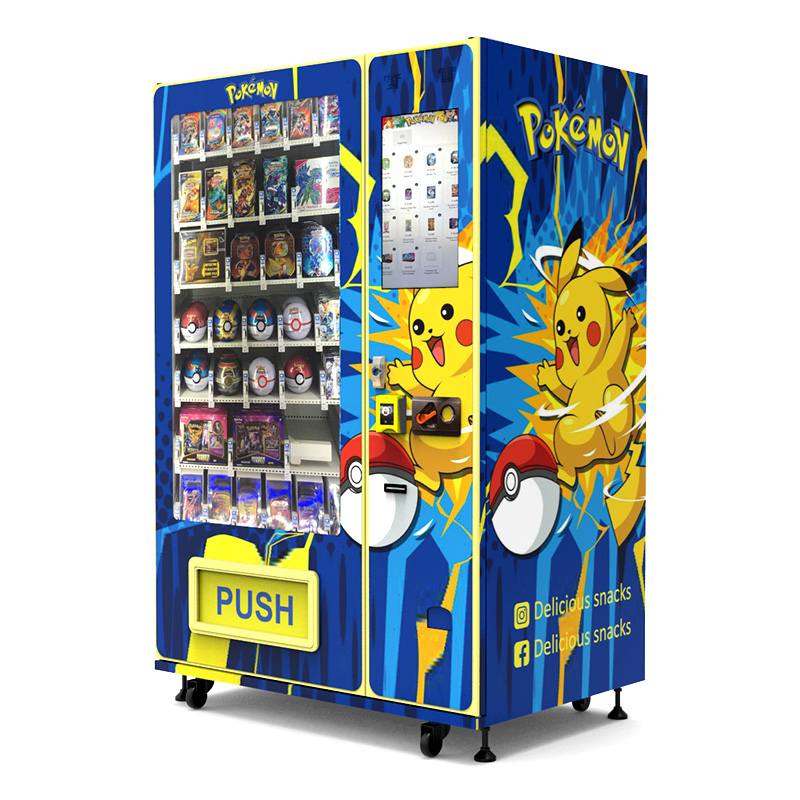
Card vending is part automated retail, part impulse retail, and part specialty merchandising. That mix is exactly why the model can work so well. You do not need a large footprint, a staffed counter, or long opening hours. You need the right machine, a product people already want, and a location where buying from a self-service kiosk feels natural.
Quick answer
Card vending machines are usually most profitable when monthly sales are high enough to absorb rent, payment fees, service costs, and stock replacement without squeezing margin. In practical terms, operators tend to see the best results when the machine carries compact, high-interest products, supports cashless payment, and sits in a location where buyers already have a reason to stop. A solid machine can often recover its investment within months. A poor one can drag on for a year or more.
What actually makes a card vending machine profitable
The machine itself does not create profit. The model does. That is the first thing buyers need to get straight. A cabinet with a screen and card reader is just hardware. Profit comes from the spread between what you sell, what the product costs, what it takes to keep the machine running, and how often customers buy.
In daily operation, four numbers matter more than anything else:
Gross margin on each item sold
Sales velocity, meaning how many transactions the machine produces each day
Operating drag, including rent, payment fees, servicing, and route time
Uptime, because a machine that is offline, jammed, or empty cannot earn
When those four line up, card vending can be a clean and efficient business. When even one of them slips, the return picture changes quickly. In the field, poor results usually come from one of three problems: the wrong location, the wrong stock mix, or a machine setup that makes payment and replenishment harder than they should be.
That is why experienced operators look at card vending less like a gadget purchase and more like a small retail channel. The question is not whether the machine can vend. The question is whether it can vend enough, at a healthy enough margin, often enough, to justify the capital tied up in the machine and inventory.
Startup costs: what you really need to budget
If you want a serious answer to are card vending machines profitable, you have to start with the full launch cost, not just the sticker price of the machine. Too many buyers do the math on the cabinet alone, then get surprised by freight, stock, software, and early operating expenses.
A real launch budget usually includes five layers:
Machine purchase
Shipping, installation, and setup
Initial inventory load
Cashless payment and software cost
Working reserve for service, stock adjustment, and early slow weeks
Zhongda Smart’s current trading card vending machine configuration gives a useful reference point for buyers comparing touchscreen card vending options, payment support, connectivity, and cabinet layout. That helps establish a machine baseline, but the machine alone is never the whole investment.
| Cost Item | Typical Range | What Usually Drives It |
|---|---|---|
| Machine purchase | $1,900–$4,500+ | Cabinet size, screen, card reader, custom branding, telemetry, anti-theft build |
| Freight and delivery | $300–$1,500+ | Shipment method, distance, final-mile handling, customs-related cost |
| Initial inventory | $800–$6,000+ | SKU mix, pack value, branded items, launch depth |
| Payment setup | $0–$300 upfront | Processor, hardware bundle, POS model |
| Software and telemetry | $20–$80 per month | Data plan, monitoring tools, reporting platform |
| Site fee or revenue share | $0–$500+ per month | Location quality and deal structure |
| Service reserve | $25–$150 per month | Machine age, travel time, usage level |
For a single-machine launch, it is common for the real all-in starting number to land somewhere between $3,500 and $8,000 once machine cost, stock, freight, payment setup, and operating cushion are included. That range is broad because product strategy matters just as much as hardware choice. A low-cost cabinet with the wrong stock plan can still be a poor investment.
Revenue potential: how much can one machine make?
Revenue in card vending depends much more on audience fit than on raw foot traffic. A location can be busy all day and still underperform if the people passing by have no reason to care about card products. On the other hand, a machine in a smaller but better-matched site can post better numbers with far fewer daily visitors.
Card vending tends to perform best when the products have one or more of these traits:
Collectible appeal
Giftable value
Impulse-buy potential
Repeat-purchase behavior
Small format and easy restocking
A simple way to estimate sales is to multiply daily transactions by average ticket value. Once you do that, the model becomes easier to judge.
| Performance Case | Daily Transactions | Average Ticket | Estimated Monthly Revenue |
|---|---|---|---|
| Low | 6 | $12 | $2,160 |
| Mid | 12 | $15 | $5,400 |
| Strong | 20 | $18 | $10,800 |
The key point is not that every machine will hit the top end. It is that a modest lift in daily sales changes the economics fast. Four or five extra transactions a day can turn a slow machine into a worthwhile asset.
Cashless payment matters here more than some buyers expect. Cantaloupe reported in its 2024 vending trends report that the average cashless vending ticket reached $2.26 compared with $1.46 for cash, showing how lower payment friction can improve spend per transaction. Even though card vending usually operates at a higher product price point, the principle is the same: easy payment tends to support stronger conversion and higher average order value.
Gross margin: where the business is won or lost
Sales alone do not tell you much. Margin does. A machine can post decent revenue and still disappoint if the product cost is too high, the stock mix is weak, or too many low-turn items sit in the machine month after month.
In most specialty vending scenarios, operators try to protect a blended gross margin that leaves enough room for fixed costs, payment fees, shrink, and service. Exact margins vary by product type, sourcing strength, and whether the machine carries standard items, bundles, or private-label formats.
| Item Type | Selling Price | Landed Product Cost | Gross Profit | Gross Margin |
|---|---|---|---|---|
| Standard card pack | $9.99 | $5.80 | $4.19 | 41.9% |
| Premium licensed pack | $14.99 | $9.20 | $5.79 | 38.6% |
| Mystery card box | $19.99 | $8.50 | $11.49 | 57.5% |
| Giftable bundle | $24.99 | $13.40 | $11.59 | 46.4% |
The takeaway is simple: volume products keep the machine moving, but higher-margin items usually make the business worth running. The strongest operators rarely rely on one type of SKU. They build a pricing ladder instead.
A balanced machine often includes:
Entry-price items that sell steadily
Mid-tier products that repeat well
Higher-margin bundles or mystery formats
Occasional limited drops that create urgency
This is one of the clearest answers to the question are card vending machines profitable. Yes, but usually not because every item is a winner. They become profitable when the machine is stocked in a way that lets fast movers create traffic and higher-margin items create profit.
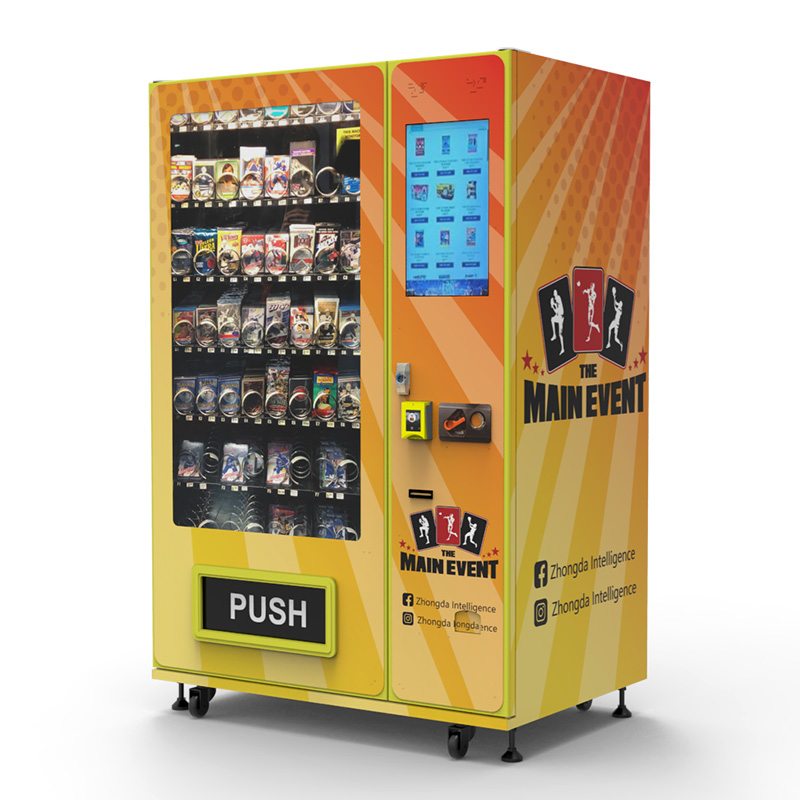
Monthly operating costs that quietly eat away at ROI
Most disappointing machines do not fail because they never sell. They fail because the monthly leakage is worse than expected. A machine can look promising at the gross-profit line and still underperform once all the recurring costs show up.
Typical monthly expenses include:
Location rent or revenue share
Payment processing fees
POS rental or platform fees
Telemetry or mobile data cost
Refill labor
Travel and route expense
Maintenance and parts reserve
Chargebacks, theft, or stock loss
In practice, route inefficiency is one of the biggest killers of return. If the machine needs too many manual checks, too many low-value trips, or constant stock correction, the business gets heavy fast. That is why connected machines matter. Remote visibility reduces wasted travel and helps keep top-selling items in stock.
If you are comparing suppliers, this is where a manufacturer with smart vending capability is worth paying attention to. Zhongda Smart’s product and custom machine materials highlight multi-payment support, remote sales data, and customizable hardware and software options. Those features are not cosmetic. They directly affect daily operating efficiency.
| Expense | Estimated Monthly Cost |
|---|---|
| Location fee / revenue share | $250 |
| Processing and POS fee | $90 |
| Telemetry / data / software | $25 |
| Restocking labor | $180 |
| Travel and route cost | $95 |
| Maintenance reserve | $60 |
| Shrink / breakage reserve | $50 |
| Total | $750 |
If monthly sales are healthy, those costs are manageable. If sales are soft, they become the reason the project drifts. A machine that sells a little is not the same as a machine that earns well.
A realistic ROI example for one machine
The cleanest way to judge the model is to run a single-machine example with real operating assumptions.
Sample setup:
Machine purchase: $2,600
Freight, setup, and launch: $900
Initial inventory: $2,000
Total initial investment: $5,500
Monthly sales: $5,400
Blended gross margin: 45%
Monthly operating cost: $750
Result:
Monthly gross profit = $5,400 × 45% = $2,430
Monthly net operating profit = $2,430 − $750 = $1,680
Simple payback period = $5,500 ÷ $1,680 = about 3.3 months
That is the kind of result operators chase. Now compare it with a softer case.
Monthly sales: $2,700
Gross margin: 42%
Monthly operating cost: $700
Monthly gross profit = $1,134
Monthly net operating profit = $434
Simple payback period = about 12.7 months
Same basic business. Very different result. That is why the answer to are card vending machines profitable always depends on the quality of the setup. One machine can pay back in a season. Another can tie up cash for a year.
If you want to run your own numbers before buying, Zhongda Smart also provides a vending machine ROI calculator that lets you test machine price, product cost, rent, payroll, POS expense, daily revenue, and payback scenarios. It is a practical way to pressure-test the model before you commit.
How long does break-even usually take?
Break-even is best viewed in bands, not as a single universal timeline. Strong machines recover fast. Average machines take patience. Weak machines usually stay weak longer than buyers expect.
| Machine Performance | Typical Payback Range | What It Usually Means |
|---|---|---|
| Excellent | 3–6 months | Strong location, healthy margin, good product fit, low downtime |
| Solid | 6–12 months | Steady sales, workable cost structure, controlled servicing |
| Borderline | 12–18 months | Lower turnover, thinner margin, weaker rent or route efficiency |
| Poor | 18+ months or no payback | Wrong audience, weak SKU mix, bad placement, high monthly drag |
In real operations, the biggest break-even mistake is confusing traffic with buying intent. Plenty of machines get installed in busy places and still move too slowly because the location looks good on paper but does not fit the product. A machine that turns properly is almost always in a place where the product already makes sense.
The machine features that improve return
Not every feature justifies the added cost. Some look impressive in a brochure and do little for the business. Others make a measurable difference in sales or operating efficiency.
For card vending, the features that usually matter most are:
Cashless payment support for smooth purchase flow
Touchscreen interface for better merchandising and easier selection
Remote monitoring to reduce wasted site visits
Flexible compartments or lane sizing to fit different product formats
Reliable delivery system that protects packaged stock
Stronger cabinet security for public placements
Custom exterior branding when appearance is part of the draw
A machine with the right feature set can support better sales and lower friction at the same time. That is where a supplier’s flexibility matters. If your business depends on a specific slot layout, branded exterior, payment combination, or software flow, a generic machine may not be enough.
For buyers who need factory-side adjustment rather than a one-size-fits-all cabinet, Zhongda Smart’s custom vending machine options are worth reviewing. Their OEM/ODM offering covers branding, payment modules, delivery systems, and interface customization, which is useful when the machine needs to match a specific product strategy instead of just dispensing standard items.
Best locations for card vending machines
The strongest locations are not always the busiest. They are the ones where a card purchase feels natural. That usually means the audience already has some connection to collecting, gifting, gaming, or entertainment.
Locations that often perform well include:
Hobby and collectible stores
Arcades and entertainment venues
Cinemas and family attractions
Mall zones with youth and family traffic
Themed retail activations and pop-ups
Game shops and fan-oriented spaces
Waiting environments where impulse gifts perform well
Bad locations tend to share the same problem: the product category feels random. If a buyer cannot immediately understand why a card vending machine is there, the machine has to work much harder for every sale.
One rule that holds up well in practice is this: if you cannot explain the customer in one sentence, the site is probably not ready. “Collectors waiting for an event,” “families leaving a movie,” and “gamers already browsing adjacent products” are clear customer pictures. “Lots of people walk by” is not.
What first-time buyers usually get wrong
Most weak results do not come from catastrophic mistakes. They come from ordinary decisions that look harmless at the start and become expensive over time.
Overbuying slow inventory
Some operators fill too wide and too deep at launch. That ties up cash, clutters the machine, and slows down learning. Early on, it is better to prove the winners quickly than to carry too many maybes.
Accepting a bad site deal
High fixed rent can choke a machine before it has room to settle in. A smarter deal structure often matters more than shaving a little off the machine price.
Choosing the wrong machine layout
If the product does not fit the compartments cleanly or the vend path is not stable, service headaches follow. A cheap machine that creates repeated service issues is rarely cheap in the long run.
Ignoring route efficiency
The machine may be profitable on paper and still underperform once labor and travel are counted honestly. This is especially true when checks are frequent and unnecessary because the operator lacks remote visibility.
Letting the product mix go stale
Card vending performs better when the offer changes often enough to stay interesting. A machine that looks the same month after month tends to lose energy.
This is usually the point where new buyers realize that card vending is not passive income. It is still retail. It just happens to sit in a self-service cabinet.
Standard machine or custom machine: which makes more sense?
For many buyers, a standard machine is the right place to start. It lowers the initial commitment, shortens the buying process, and gives you a cleaner way to test product fit, daily sales, and refill rhythm.
A custom machine starts making more sense when the business depends on one or more of the following:
Branded appearance that draws attention on its own
Special compartment sizing for unusual products
Custom user interface or on-screen promotions
Specific payment combinations
Extra cabinet security
Multi-machine rollout where consistency matters
That is where a source manufacturer can offer an advantage over a generic reseller. If you need control over appearance, fit, functionality, and future scaling, the factory side matters. Zhongda Smart is one of the manufacturers worth reviewing when that level of flexibility is important, especially for buyers who want OEM support, payment customization, and direct build adjustments rather than an off-the-shelf cabinet with limited options.
If you are still comparing formats, the company’s broader vending machine product catalog is a useful place to review machine categories before narrowing down the final card vending configuration.
What the market tells us about the opportunity
The reason card vending keeps attracting interest is simple: unattended retail still solves real business problems. It extends selling hours, reduces labor dependence, and turns small spaces into revenue points.
IBISWorld estimated the vending machine operators industry at $7.4 billion in 2025, while Grand View Research valued the broader retail vending machine market at $15.81 billion in 2024. Those figures do not prove that every specialty machine will perform, but they do show that automated retail is a serious commercial channel, not a passing gimmick.
What matters for card vending is not whether people are willing to buy from machines. They already are. The real question is whether your machine gives them a product, price point, and buying moment that feels worth stopping for.
A practical launch approach that gives the model a fair shot
If the goal is to build a profitable machine rather than simply install one, the smartest way to start is usually a controlled rollout. That means testing deliberately, learning quickly, and letting numbers guide the next step.
Start with one or two machines. Learn the route, the refill cycle, and the product winners before scaling.
Pick a clear customer type. Collector, gamer, gift buyer, or family impulse buyer. Do not stock for everyone at once.
Use a tiered product mix. Entry price, core seller, premium upsell.
Protect margin early. A machine that looks busy is not always a machine that earns well.
Track real operating cost. Count service time, travel, and payment fees every month.
Refresh the mix regularly. Give customers a reason to look again.
Use connected tools from day one. Blind operation usually gets expensive.
Operator takeaway
Most first machines do not fail because the idea is bad. They fail because the math was too optimistic, the stock was too broad, or the location was chosen for traffic instead of buyer fit. A card vending machine can be a very good asset, but it needs the same discipline as any other retail channel. Start smaller than you think, measure harder than you planned, and let the winners earn more space.
Final answer
So, are card vending machines profitable? They can be, and in the right setup they can be highly profitable. The best results usually come from a strong location, easy cashless payment, disciplined product selection, and tight control over monthly operating costs. The weakest results usually come from poor fit, thin margins, and a machine that requires too much attention for what it earns.
The biggest mistake is thinking the cabinet is the investment. It is only part of it. The real investment is the machine, the stock, the placement, the service rhythm, and the quality of the operating decisions behind all of it. When those pieces line up, card vending can produce fast payback and a scalable unattended retail model. When they do not, even a good-looking machine can underperform.
FAQ
Are card vending machines profitable for a first-time operator?
Yes, they can be, but first-time buyers usually do better when they start with one machine, a narrow product mix, and a location that clearly fits the audience. The goal at the start is not scale. It is proof.
How many sales per day does a card vending machine need to break even?
There is no single number because pricing, margin, rent, and service cost vary. In many cases, the difference between a slow machine and a good machine is only a handful of extra daily transactions. That is why product-location fit matters so much.
What margin is healthy in card vending?
A healthy blended margin is one that still leaves room for rent, payment fees, shrink, restocking, and maintenance. Many operators aim for enough spread to let fast sellers drive volume while higher-margin items carry more of the profit burden.
How long does it usually take to recover the investment?
A strong machine can recover its investment in roughly 3 to 6 months. A more average machine may need 6 to 12 months. Weak placements can take much longer or never recover cleanly at all.
Is a smart vending machine better than a basic machine for card sales?
In most cases, yes. Smart features such as cashless payment, telemetry, and remote monitoring usually improve both customer convenience and operating efficiency.
Should I start with a standard machine or a custom branded machine?
A standard machine is usually the better starting point for testing. A custom machine makes more sense when branding, slot sizing, software flow, or security requirements are central to the business model.
Sources
Disclaimer: Revenue, margin, and payback examples in this article are planning illustrations based on operating experience and public industry references. Actual results vary with product cost, site quality, shrink, service frequency, and deal terms.