Quick answer: For one properly equipped commercial vending machine, a realistic 2026 startup budget is usually around $5,000 to $10,000. That figure should cover more than the vending machine itself. A complete launch budget normally includes the machine, cashless payment setup, freight and final delivery, opening inventory, basic business expenses, site preparation and enough working capital to operate during the first few months.
It is possible to start below $5,000 with a compact machine, a carefully inspected used unit or a very lean setup. At the other end, a refrigerated smart vending machine, elevator-delivery system, large touchscreen machine or custom self-service kiosk can push a launch budget above $10,000 to $15,000.
The most important budgeting principle is simple: do not confuse the advertised machine price with the total amount of money required to launch the business.
A $2,500 vending machine that still needs payment hardware, export packing, freight, customs clearance, final delivery, inventory and operating reserve is not a $2,500 vending business. The machine quote is only one part of the startup budget.
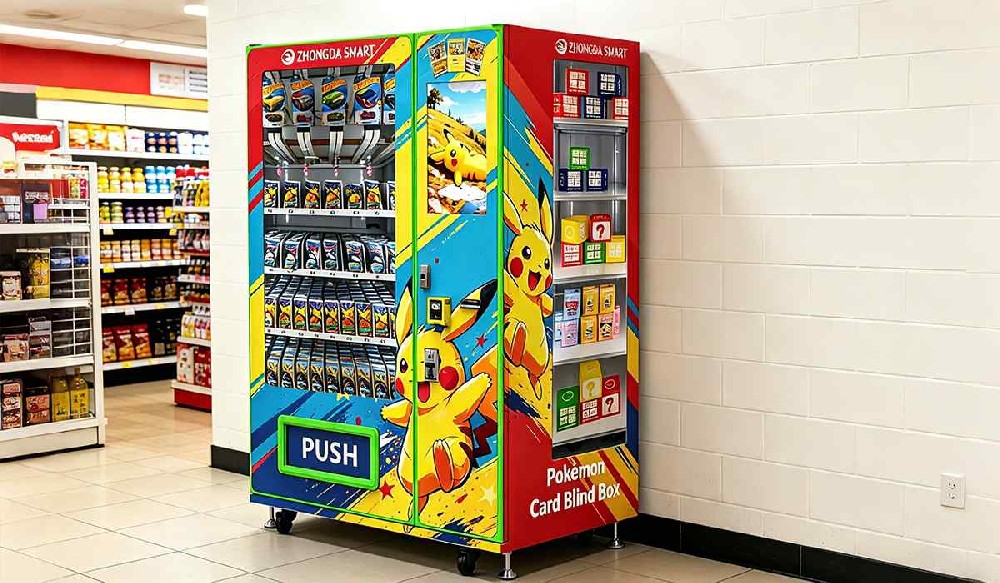
Vending machine startup budget at a glance
- Lean test setup: below $5,000 can be possible with a compact or carefully selected used machine.
- Typical first commercial machine: approximately $5,000-$10,000 all-in.
- Smart or specialty setup: commonly exceeds $10,000 after technology, delivery and reserve capital are included.
- Custom branded project: $15,000+ can be realistic when custom hardware, software, dispensing, refrigeration or site work is required.
What Does an $8,000 Vending Machine Startup Budget Actually Pay For?
An $8,000 budget is a useful example because it leaves enough room for a commercial vending machine without spending the entire budget on equipment. New operators still need cash after the machine arrives. Inventory has to be replenished, transaction fees begin once sales start, and the first product mix rarely performs perfectly from day one.
| Cost Item | Example Budget | What It Covers |
|---|---|---|
| Commercial vending machine | $3,200 | Base machine configured for the intended product category |
| Cashless payment and telemetry | $600 | Payment hardware, controller integration and initial connectivity setup |
| Freight and final delivery | $900 | Transport, handling and delivery to the operating location |
| Opening inventory | $500 | Initial product load without overstocking untested items |
| Permits, insurance and administration | $400 | Basic business and local compliance costs |
| Site setup | $300 | Positioning, power access and minor installation work |
| Spare parts and service reserve | $300 | Common service items and minor early repairs |
| Working capital | $1,800 | Refills, operating expenses and early cash-flow buffer |
| Total | $8,000 | A launch-ready budget rather than a machine-only budget |
This table is a planning example rather than a quotation. Freight, taxes, permits, payment providers and machine specifications vary by country and project. The important lesson is the structure of the budget: buying the machine should not leave the business with no money to operate it.
Vending Machine Price and Startup Cost Are Two Different Numbers
Vending equipment is often advertised with a clear unit price, which makes it tempting to treat that figure as the amount required to start the business. In practice, two suppliers can quote very different things even when both numbers are described as the "machine price."
One quotation may cover a basic cabinet at the factory. Another may include refrigeration, a touchscreen, cashless payment integration and remote management. A local distributor may quote a delivered machine, while an overseas manufacturer may quote EXW, FOB or another shipping term.
Those prices cannot be compared fairly until the scope is the same.
For practical budgeting, divide the project into three cost groups:
- Equipment cost: vending machine, payment hardware, refrigeration, screen, dispensing system and selected customization.
- Deployment cost: export packing, freight, customs, final delivery, installation, site preparation and opening inventory.
- Operating reserve: refill cash, payment fees, connectivity, route expenses, minor repairs and other costs during the first 60 to 90 days.
A quotation becomes meaningful only after you know which of these costs are included and which still have to be paid separately.
How Much Does the Vending Machine Itself Cost?
Machine-only pricing varies considerably because a tabletop vending machine, a refrigerated snack-and-drink machine and a custom automated retail kiosk are not simply different sizes of the same product.
As of the August 2026 update, Zhongda Smart's public product range includes compact and tabletop vending equipment below $1,000, wall-mounted machines around the $1,000 level, and multiple full-size or specialty configurations in roughly the $2,000-$4,600 range before project-specific options and delivery.
Custom hardware, refrigeration, elevator delivery, non-standard product handling, large touchscreens or software integration can move the final machine price significantly beyond a standard catalog configuration.
You can review currently listed equipment in the Zhongda Smart vending machine catalog. If your main question is specifically the purchase price of the equipment rather than the complete business startup budget, see How Much Is a Vending Machine? Full 2026 Price Guide.
The important point is that a low base machine price does not automatically create a low startup cost. Refrigeration, dispensing method, payment compatibility, freight and product requirements can materially change the final investment.
What Actually Changes a Factory Vending Machine Quote?
From a manufacturer's perspective, exterior graphics are rarely the main reason two vending machines have very different prices. The more important cost differences are usually inside the machine.
| Configuration | Why It Changes Cost | What the Buyer Should Confirm |
|---|---|---|
| Refrigeration | Compressor, insulation, airflow design and required temperature range change the machine structure. | Required temperature, indoor or outdoor installation and local ambient conditions. |
| Dispensing system | Spiral, conveyor, locker and elevator systems use different mechanical structures and control logic. | Product dimensions, weight, packaging and whether the product can safely drop. |
| Touchscreen | Larger displays affect hardware cost, mounting, power supply and interface development. | Whether the display is required for selection, advertising, instructions or multiple functions. |
| Payment integration | Card, NFC, QR and local gateways may require different hardware or communication protocols. | Country, currency, preferred payment provider and supported protocol. |
| Telemetry | Remote sales, inventory and machine-status reporting require communication hardware and backend support. | Which remote functions are included and whether recurring fees apply. |
| Cabinet structure | Larger capacity, outdoor protection, special doors and lockers change sheet-metal and assembly requirements. | Installation environment, available space and expected capacity. |
| Custom software | A branded interface is different from developing a new workflow, membership system, API or third-party integration. | Which functions already exist and which require new development. |
| Product adaptation | Non-standard products may require channel changes, prototypes and repeated dispensing tests. | Product dimensions, weight, packaging and samples where possible. |
This is why asking a manufacturer simply for "the price of a vending machine" often produces a number that changes later. A bottle, boxed cosmetic product, prepared meal, electronic accessory and collectible card may require completely different delivery systems.
If your product cannot be handled reliably by a standard machine, see the OEM custom vending machine service for examples of cabinet, dispensing, branding and software customization.
Factory Price vs. Landed Cost: Where Startup Budgets Often Go Wrong
Buyers importing vending equipment should calculate the landed cost before deciding whether one supplier is cheaper than another.
A factory quotation may cover the vending machine and export packaging but stop before international freight. Another supplier may include delivery to the origin port. A local distributor may quote delivery directly to the operating site.
The headline number means very little until the delivery scope is clear.
A complete landed-cost check can include:
- Machine price and selected options
- Export crate or protective packaging
- Transport from the factory to the port or warehouse
- Ocean, rail or air freight
- Destination terminal charges
- Customs brokerage
- Import duty or local tax where applicable
- Storage charges if customs clearance is delayed
- Transport from the destination terminal to the final city
- Liftgate service when no forklift or loading dock is available
- Inside delivery or specialist positioning where necessary
- Electrical work, installation and final testing
FOB, CIF and DDP Are Not Interchangeable
Shipping terms should be confirmed before a purchase order is signed.
Under a typical FOB arrangement, the buyer remains responsible for substantial costs after the machine reaches the agreed port of shipment. CIF normally includes freight and insurance to the named destination port, but it does not automatically mean every local destination charge or final delivery cost is included.
A DDP-style quotation can cover much more of the delivery journey, but the actual scope still needs to be written clearly into the quotation.
Ask the supplier to state:
- The Incoterm
- The named location or port
- Packed dimensions
- Gross weight
- Whether destination charges are included
- Whether customs clearance is included
- Whether final delivery is included
Why Packed Dimensions Matter More Than Many Buyers Expect
Vending machines are heavy, but shipping cost is not determined by weight alone. Packed dimensions determine how much container, truck or warehouse space the shipment occupies.
A large cabinet with oversized protective packaging can therefore cost significantly more to move than a compact vending machine even when their factory prices are relatively close.
Packaging also protects more than the exterior panels. Glass, touchscreens, refrigeration components, door frames and internal trays have to survive repeated loading and unloading.
Before ordering, request the packed dimensions and gross weight, not only the machine dimensions shown on a product page.
Factory Direct vs. Local Distributor: Which Is Really Cheaper?
A factory-direct purchase and a local distributor purchase solve different problems, so the lower equipment price is not automatically the better startup decision.
Buying directly from a manufacturer can make sense when you need:
- Product-specific dispensing modifications
- Custom cabinet dimensions
- Brand graphics or customized user interfaces
- Integration with a particular payment provider
- Larger production quantities
- Direct communication with the engineering team
A local distributor can be attractive when the priority is:
- Faster domestic delivery
- Local installation
- On-site servicing
- Simpler logistics
- A machine that already fits a standard local vending application
Compare the complete delivered and operational cost, not only the machine price. A cheaper factory quote can become more expensive after freight and local handling, while a higher distributor price may include services that otherwise need to be purchased separately.
How Much Should You Budget for Cashless Payment?
Cashless payment should usually be included in the first startup budget rather than treated as an upgrade after the vending machine is installed.
The total cost can involve more than the physical reader. Depending on the payment provider and market, the operator may need to account for:
- Card or contactless payment terminal
- Controller integration
- Activation or account setup
- Transaction processing fees
- Monthly connectivity fees
- SIM or mobile data
- Payment gateway fees
- Telemetry or cloud management
Cashless usage is now substantial in vending. Cantaloupe's 2025 Micropayment Trends Report , which reports 2024 vending transaction data, states that 71% of vending machine sales were cashless and that 77% of cashless vending payments were contactless.
That does not mean every vending machine should operate cashless-only. The correct payment mix depends on the country, installation location and customer profile.
If you already know which payment provider or acquiring system will be used, tell the vending machine manufacturer before production. Payment compatibility is much easier to confirm before the controller configuration has been finalized.
How Much Opening Inventory Should You Buy?
More opening inventory is not automatically better. The first fill is partly a sales test, particularly when the location is new.
A conventional snack-and-drink vending machine may need only a few hundred dollars of inventory for a focused first load. A machine selling cosmetics, electronics, collectibles, prepared food or other higher-value products can require much more.
During the first month, the operator should learn:
- Which products sell fastest
- Which price points customers accept
- Which selections require more capacity
- Which products remain unsold
- Whether shelf life creates waste
- How frequently the machine actually needs restocking
Buying four cases of a slow-moving product before demand has been tested can be more expensive than paying slightly more per unit for a smaller first order.
Keep 60 to 90 Days of Operating Cash After the Machine Arrives
One of the easiest ways to create unnecessary cash-flow pressure is to spend almost the entire startup budget before the first sale.
The first weeks of a new vending location normally involve adjustment. A product may need to be replaced, a price may need to change, payment settlement may take time, or the site may request a different product mix.
A practical working-capital reserve can include:
- Two or more inventory refill cycles
- Payment processing and connectivity charges
- Location commission if applicable
- Fuel, mileage or route labor
- Cleaning and operating supplies
- Minor service and replacement parts
- Cash for replacing slow-moving inventory
The U.S. Small Business Administration's startup-cost guidance similarly distinguishes between one-time startup expenses and recurring monthly operating costs.
New vs. Used Vending Machines: Compare Risk, Not Just Purchase Price
Used vending machines can be a reasonable way to start with less capital, especially when the buyer understands the equipment and has access to replacement parts.
The main risk is that cosmetic condition tells you very little about the future operating cost.
| Check Before Buying Used | Why It Matters |
|---|---|
| Controller and payment protocol | An older controller may make modern cashless payment difficult or expensive to add. |
| Compressor and refrigeration | Cooling repairs can quickly eliminate the savings from a low purchase price. |
| Motors and dispensing channels | Repeated jams cause refunds, service calls and lost sales. |
| Door seals and cabinet condition | Poor sealing can increase cooling load and create temperature problems. |
| Touchscreen or display | Replacement screens can be expensive or difficult to source on discontinued equipment. |
| Control boards and spare parts | A machine becomes difficult to operate when basic replacement parts are unavailable. |
| Service documentation | Wiring diagrams, manuals and error-code documentation simplify troubleshooting. |
| Previous installation environment | Outdoor exposure, moisture, grease or poor maintenance may create problems that are not obvious in photographs. |
A $1,000 used machine can be excellent value when it is compatible, mechanically sound and serviceable. It can also become an expensive storage cabinet if a critical control board fails and replacement parts cannot be sourced.
Standard, Smart or Custom: Where Should a First-Time Buyer Spend?
The best vending machine is normally the least complicated configuration that can reliably sell the intended product and provide the operator with the information needed to manage it.
Standard Commercial Vending Machine
A conventional snack, drink or combination vending machine can be enough when the product is familiar, the location is easy to service and the operator does not need an elaborate customer interface.
Paying more simply to add a larger screen does not automatically improve the business if customers already understand the product and purchase process.
Smart Vending Machine
Remote sales data, inventory information, machine alerts and digital payment management become more valuable when an operator manages several machines or has long travel distances between locations.
The value of a smart vending machine is operational visibility, not the word "smart" on a specification sheet.
Custom Vending Machine or Self-Service Kiosk
Customization becomes useful when the product cannot be handled by a standard vending platform or when the purchasing experience is part of the business model.
Examples include:
- Fragile products requiring elevator delivery
- Large products requiring lockers
- Prepared food requiring controlled refrigeration
- Cosmetics or electronics requiring non-standard channels
- Branded retail concepts requiring custom interfaces
- Projects requiring API, membership or third-party system integration
Customization is less useful when the business concept has not yet been validated. If a standard platform can test demand first, it may be less expensive to learn on that platform before developing a highly specialized machine.
For a deeper technical comparison of dispensing systems, payment compatibility and machine construction, see key factors when buying a vending machine .
What Should Be Customized First?
When the startup budget is limited, functional customization should normally come before cosmetic customization.
- Make the product fit. Confirm dimensions, weight, packaging and dispensing method.
- Confirm temperature requirements. Do not add refrigeration when it is unnecessary, but do not underspecify cooling for temperature-sensitive products.
- Confirm payment compatibility. Choose the target market and payment provider before locking the controller configuration.
- Confirm service access. Motors, control boards, refrigeration components and payment devices should remain accessible for maintenance.
- Add telemetry where it saves operational work. Remote data becomes more useful as the number of machines grows.
- Then refine branding. Wraps, lighting and interface design matter, but they should sit on top of a machine that already dispenses the product reliably.
A vending machine with excellent graphics and the wrong dispensing system is still the wrong vending machine.
Should You Start With One Vending Machine or Several?
A larger order can reduce some per-unit freight and setup costs, but that does not mean a new operator should immediately spend the entire budget on several machines.
A single-machine pilot can answer questions that a spreadsheet cannot:
- Does the location generate enough actual traffic?
- Which products sell repeatedly?
- Which price points work?
- How frequently does the machine need servicing?
- Does the payment setup perform reliably?
- How often does inventory need replenishment?
- Are there dispensing problems with the selected products?
International freight, customs processing and project setup may make one machine more expensive on a per-unit basis than a larger shipment. However, buying several machines before the location and product mix have been validated creates a different risk: capital becomes locked into equipment before the operating model has been proven.
For a new vending concept, it often makes sense to validate the cabinet, product, payment flow and dispensing method first, then scale the confirmed configuration.
Location Can Change the Startup Budget More Than the Machine Does
Two identical vending machines can produce very different startup costs because the installation sites are different.
Before ordering equipment, confirm the physical and commercial conditions of the location.
Power
Confirm voltage, plug type, outlet position and whether the existing electrical circuit can support the machine. Refrigerated and frozen machines require particular attention.
Physical Access
Measure doors, corridors, elevators, loading docks and the final placement area. A machine may fit against the wall but still be impossible to move through the building without special handling.
Service Clearance
Leave enough space to open the machine, refill products, clean refrigeration components and remove service parts.
Internet or Mobile Signal
Cashless payment and remote monitoring depend on reliable connectivity. Test the actual installation point instead of assuming that signal quality is equal throughout the building.
Location Commission
Some property owners charge a fixed rental amount, some request a percentage of sales, and others provide vending space as an amenity without direct commission.
Because location economics deserve their own analysis, see Where Can I Put a Vending Machine for Best Traffic? rather than treating this startup-cost article as another location guide.
Permits, Insurance and Taxes Vary by Location
There is no universal licensing fee that applies to every vending business. Requirements can vary by country, state, province, city, legal structure and product category.
Depending on the market, operators may need to check:
- Business registration
- Sales-tax registration or resale documentation
- Local vending permits
- Food-related permits where applicable
- Insurance requested by the property owner
- Electrical or building requirements
- Rules governing regulated or age-restricted products
These costs should be checked locally rather than copied from a generic national estimate.
How Much Does a Vending Machine Cost to Operate Each Month?
Monthly operating cost depends heavily on the sales volume and route structure. Inventory is usually the largest recurring cash requirement, but higher inventory purchases are not necessarily a problem when they correspond with higher sales.
Common recurring expenses include:
- Inventory replenishment
- Payment processing
- Connectivity and telemetry
- Location commission
- Fuel and route labor
- Electricity where the operator pays it
- Cleaning materials
- Repairs and preventive maintenance
- Insurance and administration
Because product cost rises with sales, it is more useful to estimate monthly expenses using your expected sales, product margin and route costs than to rely on one universal industry figure.
How to Estimate Vending Machine Payback Without Fooling Yourself
Startup cost matters because it determines how much operating cash contribution the vending machine has to generate before the original investment is recovered.
Startup investment ÷ monthly net cash contribution = approximate payback period
For example, if the complete startup investment is $8,000 and the machine eventually contributes $550 per month after product cost and routine operating expenses, the simple payback calculation is approximately:
$8,000 ÷ $550 ≈ 14.5 months
This is only a planning calculation. It does not guarantee the machine will contribute $550 every month, and it may not account for taxes, major repairs, financing costs, seasonality or reinvestment.
Instead of borrowing another operator's revenue assumptions, enter your own machine cost, gross margin and expected sales into the vending machine ROI calculator.
For a deeper discussion of sales, margins, operating profit and ROI, see How Profitable Are Vending Machines? .
Where First-Time Vending Machine Buyers Tend to Overspend
Overspending does not always mean buying an expensive machine. Money is often wasted because the project is specified in the wrong order.
1. Ordering Before the Installation Site Is Measured
Machine dimensions, electrical requirements, network access and delivery route should match the actual site. Buying first and measuring later can create avoidable installation costs.
2. Paying for Capacity the Location Cannot Use
A larger cabinet reduces refill frequency only when the site sells enough products to use that capacity. At a slow location, the same cabinet may simply hold more stagnant inventory.
3. Customizing Appearance Before Testing the Product
A graphic wrap can normally be changed relatively easily. A custom cabinet, delivery mechanism or software workflow is much harder to change. Prove the product and dispensing method before locking expensive structural changes.
4. Buying a Machine That Cannot Support the Local Payment System
Payment requirements vary by country. Confirm the payment provider and communication protocol before production rather than after the machine has already been delivered.
5. Ignoring Spare-Part Availability
Ask which motors, control boards, sensors and refrigeration components are considered service parts and how replacements can be supplied. Warranty coverage is important, but parts availability after the warranty period matters as well.
6. Using the Entire Budget on Equipment
A vending machine cannot finance its own first refill before it starts selling. Keeping working capital outside the purchase order gives the operator time to learn what the location actually needs.
7. Buying Several Machines Before Validating the First Location
Buying multiple units can improve shipping efficiency, but scaling an untested product mix or weak location simply multiplies the original problem.
Questions to Ask Before Accepting a Vending Machine Quote
A useful quotation should make it clear what you still need to purchase after the machine leaves the supplier.
- What exact model and configuration does the quoted price cover?
- Is refrigeration included, and what temperature range is specified?
- Which dispensing system is included?
- Is the payment device included or is the machine only payment-ready?
- Which payment protocols and providers are supported?
- Is telemetry or remote management included?
- Are there recurring software or connectivity fees?
- Which customization items are included in the price?
- Does the price include product-dispensing tests?
- What are the packed dimensions and gross weight?
- Which Incoterm and named shipping location apply?
- Does freight include destination charges?
- Does the freight quotation include final delivery?
- Will liftgate or inside delivery be required?
- Which spare parts are supplied with the machine?
- What does the warranty cover?
- How is remote technical support handled?
Once those answers are written down, two vending machine quotations that initially look very different may turn out to be much closer—or much further apart—than their headline prices suggest.
A Practical First Vending Machine Budget for 2026
For most buyers planning one commercial vending machine, $5,000 to $10,000 remains a useful complete startup range.
That range is high enough to account for many costs that do not appear in the machine's advertised price, while still being realistic for a first commercial unit intended to test a location or establish a small vending operation.
Starting below $5,000 can be possible when:
- The machine is compact or used
- Freight is inexpensive
- The operator handles most work personally
- The inventory is relatively low value
- The site needs little preparation
The tradeoff is less room for unexpected freight, repair or payment costs.
Budgets above $10,000 become easier to justify when the project requires:
- Refrigeration
- Elevator delivery
- High-capacity hardware
- Large commercial touchscreens
- Advanced payment systems
- Custom software
- Complex international logistics
- Product-specific mechanical development
Once a project reaches the custom-kiosk level, it is usually better to build the quotation around the actual product, site and software requirements rather than forcing the project into a generic startup-cost range.
Frequently Asked Questions
How much money do I need to start a vending machine business?
For one reliable commercial vending machine, a practical 2026 startup budget is usually around $5,000 to $10,000. This should include the machine, payment setup, freight, opening inventory, site expenses and working capital. Compact or carefully selected used setups can start below $5,000, while smart or custom projects can exceed $10,000-$15,000.
Can I start a vending machine business with less than $5,000?
Yes. A sub-$5,000 startup may be possible with a compact machine, carefully inspected used equipment or a lean factory-direct configuration. The tradeoff is a smaller repair and working-capital reserve, so machine condition, payment compatibility and total delivered cost become especially important.
Is $2,000 enough to start a vending machine business?
It can be possible in limited situations, particularly with a small used or compact vending machine and inexpensive inventory. However, $2,000 normally leaves very little room for freight, cashless payment hardware, repairs, permits and working capital. It should therefore be treated as a highly constrained test budget rather than a typical commercial startup budget.
How much does one new vending machine cost?
Machine-only pricing varies by size and configuration. Compact machines can cost below $1,000, while larger refrigerated, touchscreen, elevator-delivery and custom machines cost considerably more. The machine purchase price should not be confused with the full startup cost because freight, payment hardware, inventory and site expenses may still need to be added.
What are the hidden costs of starting a vending machine business?
Frequently overlooked expenses include payment hardware, transaction fees, connectivity, export packaging, international freight, customs clearance, destination charges, liftgate delivery, site preparation, permits, insurance, opening inventory, spare parts and the cash required to operate during the first 60 to 90 days.
How much inventory do I need for my first vending machine?
It depends on machine capacity and product value. A conventional snack-and-drink vending machine may need only a few hundred dollars for a focused opening assortment, while cosmetics, electronics, collectibles or fresh food can require significantly more. The first load should be treated as a product test instead of automatically filling every available space with maximum inventory.
Does my first vending machine need a card reader?
In many commercial locations, cashless payment should be planned from the beginning. Cantaloupe's 2025 Micropayment Trends Report states that 71% of vending machine sales in its 2024 transaction data were cashless. The correct payment setup still depends on the country, customer base and installation site, so compatibility should be confirmed before ordering the machine.
Is it better to buy a new or used vending machine?
Used equipment can reduce the purchase price, but it is only good value when the controller, refrigeration system, motors, payment compatibility and replacement parts are in acceptable condition. A new vending machine normally costs more initially but provides a clearer path for warranty support, technical assistance and replacement parts.
Should I start with one vending machine or several?
For a new concept or untested location, starting with one machine can reduce risk because it allows the operator to validate traffic, product demand, pricing, refill frequency and payment performance before scaling. Several machines can improve freight efficiency, but they also commit more capital before the operating model has been proven.
How much cash reserve should I keep after buying the vending machine?
A practical approach is to keep enough working capital for approximately 60 to 90 days of early operation. That reserve may need to cover inventory refills, payment and connectivity fees, route expenses, location commission, minor repairs and replacement of slow-moving products.
How long does it take a vending machine to pay for itself?
There is no fixed payback period because sales volume, gross margin, location commission, downtime and operating expenses vary by site. A useful planning formula is total startup investment divided by monthly net cash contribution. For example, an $8,000 startup investment generating $550 per month after routine operating costs has a simple payback period of approximately 14.5 months.
Sources and Methodology
The planning ranges in this guide combine Zhongda Smart's published vending machine pricing and factory-side configuration considerations with external small-business and vending-payment data. The numbers are intended as budgeting ranges rather than fixed quotations. Freight, taxes, permits, payment fees and equipment specifications should always be confirmed for the actual destination and project.
- Zhongda Smart — Current Vending Machine Product Catalog
- Cantaloupe — Micropayment Trends Report 2025
- U.S. Small Business Administration — Calculate Your Startup Costs
Last updated: August 31, 2026. Machine pricing examples, startup-budget assumptions, internal resource links, cashless-payment data and FAQ content were reviewed for this update.