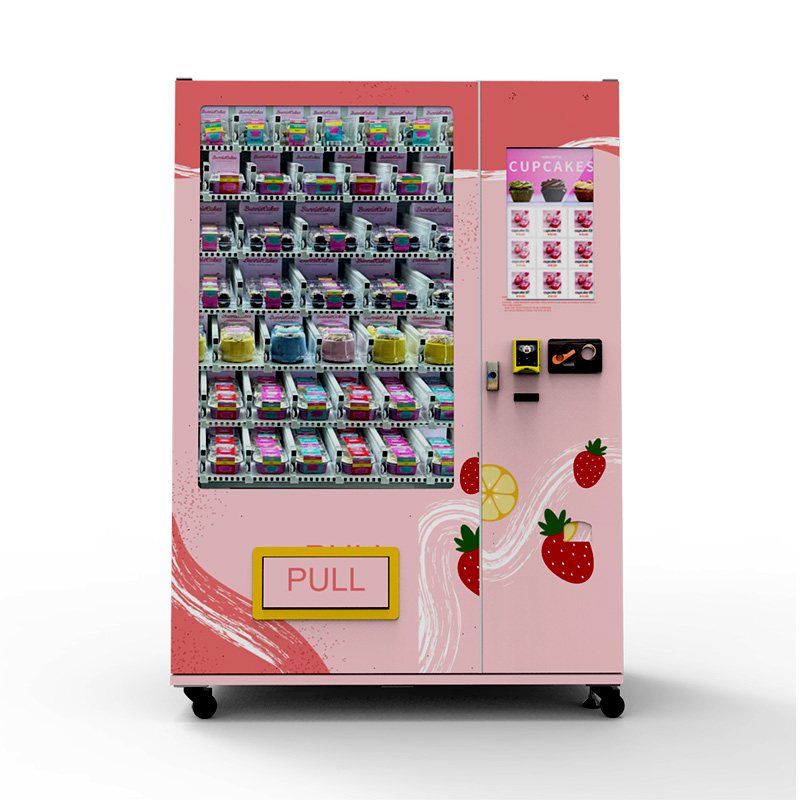
When a product can crack, bruise, tilt, melt, leak, scuff, or lose shelf appeal after a rough vend, a standard machine is the wrong starting point. Custom refrigerated elevator vending machines for fragile products are built to solve that exact problem with gentle lift-assisted delivery, stable cold storage, and slot sizing based on the real product rather than a generic coil layout. In practical terms, that means better product presentation, fewer complaints, lower refund rates, and stronger sell-through on items that carry more value per unit. For chilled desserts, boxed meals, bottled drinks, skincare, gift sets, and other delicate retail items, the machine is not just a cabinet with a payment screen. It is part of the product experience, part of quality control, and part of the margin structure.
Quick takeaways
An elevator delivery system reduces impact during vending and is usually the safest choice for delicate packaged goods.
For chilled items, temperature stability matters just as much as the delivery method because cold holding directly affects safety, shelf life, and presentation.[1]
Factory-level customization is usually worth the extra cost when product value depends on undamaged packaging, cold storage, and a premium customer experience.
Cashless payment, telemetry, and remote temperature alerts are no longer optional add-ons for serious unattended retail projects.[2]
For operators selling higher-margin products, the real comparison is not machine price versus machine price. It is damaged product versus sellable product.
Why ordinary vending machines fail with fragile merchandise
Most traditional vending machines were designed around durable, low-risk products. A snack bag can survive a drop. A standard can or plastic bottle can usually survive a drop. A frosted dessert cup, a boxed premium meal, a glass-bottled beverage, or a chilled cosmetic serum often cannot.
After years of working on unattended retail projects, I have seen the same pattern many times: buyers try to force delicate merchandise into a cheaper machine, then spend the next few months dealing with crushed packaging, tipped products, opened seals, temperature drift, refunds, and poor repeat sales. The machine still “works,” but the business model suffers because the delivered item no longer matches the promised item.
That is the core reason custom refrigerated elevator vending machines for fragile products exist. They are built around product handling first. The internal delivery path, temperature control, and shelf configuration are designed to protect the item during storage and during the vend itself.
| Standard machine problem | What usually happens | Commercial impact |
|---|---|---|
| Free-fall dispensing | Cracked packaging, shifted contents, broken seals | Refunds, complaints, damaged brand perception |
| Fixed generic slot size | Jams, tilt errors, poor presentation behind glass | Lower vend success and more service calls |
| Weak temperature recovery | Shortened shelf life and inconsistent product condition | Waste, spoilage risk, lower repeat sales |
| No remote alerts | Operators discover problems too late | Higher labor cost and hidden loss |
What makes elevator delivery the right choice
An elevator vending system changes the single biggest risk point in fragile-product vending: the drop. Instead of letting an item fall from the shelf into the pickup bin, the machine uses a lift or receiving platform to collect the product and move it downward in a controlled path. That makes a major difference for anything that cannot tolerate impact.
In simple terms, an elevator machine protects the product twice. First, it reduces shock during delivery. Second, it makes it easier to design a shelf layout that keeps the product in the correct orientation before the vend starts. That is why a refrigerated elevator vending machine is often the best fit for boxed desserts, layered salads, sandwich packs, glass beverages, chilled gift sets, and premium skincare.
On the commercial side, safer delivery also protects perceived value. Premium products sell on appearance as much as function. If a customer receives a product that looks shaken, dented, or poorly handled, the machine has already weakened the next sale.
| Machine type | Delivery method | Best fit | Main limitation |
|---|---|---|---|
| Coil machine | Drop from shelf | Chips, candy, low-risk packaged snacks | High impact on fragile items |
| Push or belt machine | Forward slide or push | Some boxed goods and lightweight cosmetics | Items can still tip or shift |
| Elevator machine | Lift-assisted controlled delivery | Fragile, chilled, premium, or presentation-sensitive products | Higher upfront cost, but lower damage risk |
Why refrigeration is not just a feature but a control system
For fresh food and temperature-sensitive merchandise, cooling performance is not a line item to skim over. It is part of the product standard. The FDA notes that the temperature danger zone is generally between 41°F and 135°F, with 41°F marking the lower end used in cold holding guidance for food safety control.[1] That means a chilled vending project needs more than a compressor and a glass door. It needs stable cold holding, sensible airflow, and reasonable recovery after door openings and restocking.
In practice, weak refrigeration usually shows up in one of four ways: slow pull-down after loading, warm pockets near the glass, excessive condensation, or unstable temperatures when the machine is busy. None of those issues are visible in a quotation sheet. All of them show up later as waste, poor texture, unattractive presentation, or lost trust.
A well-designed custom refrigerated elevator vending machines for fragile products program should include an insulated cabinet, realistic temperature control, shelf placement that supports airflow, and sensors that allow the operator to monitor cabinet conditions remotely. That is the difference between a machine that merely cools and a machine that can support a reliable unattended retail model.
Cold-chain checklist for delicate products
Target storage range defined before design approval
Airflow path matched to real shelf load
Fast recovery after door openings and restocking
Cabinet temperature monitoring and alert logic
Lighting chosen to display products without creating unnecessary heat load
Products that benefit most from a custom refrigerated elevator solution
Not every product needs elevator delivery, and not every product needs refrigeration. But a large group of higher-value items benefits from both. These are usually products where shape, finish, labeling, seal integrity, or cold condition influence the customer’s perception of value.
| Product type | Why ordinary vending struggles | Why a custom refrigerated elevator setup works |
|---|---|---|
| Boxed sandwiches and fresh meals | Packaging shifts, lids deform, freshness presentation drops | Controlled delivery and stable chilled holding |
| Salads, yogurt cups, dessert cups | Toppings collapse, cups tilt, labels scuff | Low-impact movement preserves product appearance |
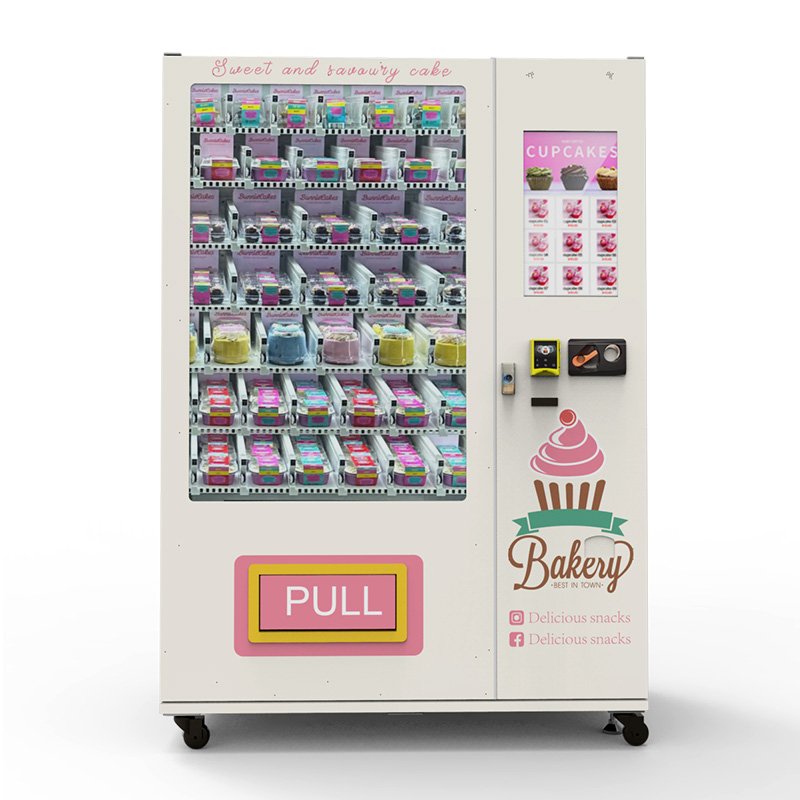
| Cupcakes and pastries | Frosting and decoration are easily damaged | Lift-assisted vend protects finishing details |
| Glass-bottled beverages | Impact can chip, crack, or weaken packaging | Safer handoff with less shock |
| Skincare and beauty sets | Premium cartons dent easily and bottles shift | Exact slot sizing and gentle delivery protect presentation |
| Gift boxes and collector items | Corner crush reduces perceived value | Better merchandising and cleaner delivery |
If a product sells partly because it looks clean, premium, chilled, or gift-ready, then the machine has to preserve that condition all the way to pickup.
How to configure the machine by product category
Boxed desserts and pastries
These products need the gentlest vend path because surface damage is often visible at once. A flat, stable receiving platform matters more than maximum SKU count. It is usually better to lose a little capacity and protect presentation than to squeeze more units into a layout that increases tilt risk.
Fresh meals and sandwiches
The priority here is consistent cold holding and packaging stability. If the product contains sauce, dressing, soft bread, or layered ingredients, even a small shock can reduce appearance and quality perception. Shelf spacing and front-stop design should be based on the real box dimensions, not a nominal estimate.
Glass-bottled drinks
Glass is not only fragile. It is also heavy relative to many packaged goods, which changes how products sit in the slot and how they move when released. The right fragile item vending machine should account for bottle height, weight concentration, and collision risk during vend.
Chilled skincare and premium cosmetics
For this category, buyers often care as much about appearance as function. A dented carton, scratched label, or unstable bottle position weakens brand image immediately. Elevator delivery and exact tray sizing are usually the most important choices, followed by lighting and front-end display quality.
The features that matter most in a serious build
Buyers sometimes focus too much on cabinet color, screen size, or the headline quote. Those details matter, but they do not determine daily performance. The internal engineering does. A strong machine for delicate merchandise should be evaluated from the inside out.
Product-fit shelf design. The width, depth, height, and support angle must match the real SKU.
Smooth elevator motion. Controlled start and stop behavior helps prevent product shift and impact.
Reliable cooling. Temperature control must be realistic under full load, not just in ideal conditions.
Cashless payment compatibility. Modern unattended retail depends on flexible payment options and low-friction checkout.[2]
Telemetry and remote alerts. Sales visibility, stock visibility, and temperature visibility reduce hidden losses.
Vend confirmation logic. This helps reduce disputes and improve operator control when a problem occurs.
Good front-end merchandising. A premium product should look premium before the customer taps the screen.
The wider market is moving in that direction as well. Grand View Research estimates the retail vending machine market at USD 15.02 billion in 2024, and notes that cashless vending held the highest revenue share that year, while beverage vending machines accounted for 38.08% of revenue share.[3] That aligns with what operators already see in the field: chilled products, quick self-service access, and better payment convenience are driving growth in modern vending formats.
Why customization pays off when product value is high
The first objection many buyers raise is simple: a custom machine costs more. That is true. But fragile chilled merchandise creates a different financial equation. A generic machine may be cheaper to buy and more expensive to operate once damaged stock, refund requests, wasted service trips, and repeat-sales loss are included.
For higher-margin products, even a small reduction in damage rate can change the payback period. If a product earns a healthy gross profit per sale, preserving an extra few dozen sellable units per month can offset part of the price gap surprisingly fast.
| Cost factor | Generic refrigerated machine | Custom refrigerated elevator machine |
|---|---|---|
| Initial purchase price | Lower | Higher |
| Fragile-product damage rate | Usually higher | Usually lower |
| Customer complaints | More frequent | Less frequent |
| Brand presentation | Average | Stronger |
| Suitability for premium chilled goods | Limited | High |
| Long-term margin protection | Weaker | Stronger |
That is why the best buyers compare machines by delivered product quality, not by cabinet price alone.
A practical ROI framework buyers can use
Good vending decisions come from clean math. That means separating revenue assumptions from operating assumptions and then adjusting for product risk. A chilled fragile-product project should be evaluated with five numbers:
Total startup investment: machine cost, freight, payment hardware, installation, first stock load
Gross profit per item: selling price minus landed product cost
Damage-adjusted gross profit: gross profit after refund, spoilage, and handling loss
Monthly operating cost: rent, service labor, transaction fees, maintenance, connectivity
Break-even period: total initial investment divided by monthly net profit
Zhongda Smart’s vending machine ROI calculator follows this same logic by letting users model machine cost, stock investment, daily revenue, gross margin, operating costs, and break-even months in one place.[4] For any fragile-product project, that kind of model is more useful than comparing unit prices in isolation.
As a simple example, imagine a chilled product with a $9.00 selling price and a landed cost of $3.80. Gross profit is $5.20 per sale. If a generic machine creates a 5% problem rate through damage, tilt, leakage, or refund disputes, 50 out of every 1,000 sales become margin leaks. Reducing that rate to 1% with a better machine preserves 40 additional successful sales. At $5.20 gross profit each, that is $208 in recovered gross profit per 1,000 transactions, before you count fewer complaints or cleaner repeat purchases.
What a serious manufacturer should be able to customize
There is a big difference between cosmetic customization and engineering customization. Cosmetic customization covers logo wraps, color changes, and front graphics. Engineering customization changes how the machine performs. For fragile merchandise, the second category is what matters most.
A qualified manufacturer should be able to customize the internal channel size, tray spacing, support geometry, delivery path, cooling mode, payment module compatibility, and software flow. If the supplier can only change branding but not the product-handling logic, the machine is still basically generic.
That is also why true factory support matters. Zhongda Smart’s OEM custom vending machine program explicitly covers branding, hardware, software, product-fit configuration, payment systems, and delivery system selection, including lift delivery and chilled applications.[5] For buyers planning a real product launch, that deeper level of control is far more valuable than surface decoration alone.
How to evaluate a supplier before placing an order
When you compare factories or machine suppliers, ask technical questions that reveal how well they understand your application. A polished catalog does not prove that the machine can reliably vend a layered dessert cup or a boxed skincare set.
Questions worth asking before you buy
Can the slot layout be designed around my exact SKU dimensions and weight?
How does the elevator mechanism support fragile or top-heavy products during vend?
What temperature range can the cabinet hold under normal operating load?
How does the machine manage airflow across different shelves?
Can the system support card, QR, NFC, and telemetry options?
Are vend confirmation, fault logs, and remote alerts available?
What is included in after-sales support, spare parts support, and warranty coverage?
Can you show a similar machine dispensing a similar product type?
Good answers to those questions usually tell you more than a long specification sheet. The supplier either understands fragile-product vending, or it does not.
Where buyers usually make expensive mistakes
Most expensive vending mistakes are not caused by buying a “bad” machine. They are caused by buying the wrong machine for the product. Fragile chilled goods punish shortcuts quickly because the product itself exposes the weakness.
Choosing a low-cost coil machine for a high-value delicate item
Ignoring package orientation and center of gravity
Assuming every refrigerated machine cools equally well
Skipping telemetry to save budget, then losing stock visibility later
Buying on cabinet appearance before confirming internal layout
Estimating slot size from photos instead of measuring the real product
In field terms, the fastest way to lose money is to save a little on the machine and lose a lot in damaged stock. The fastest way to build a stable project is to design from the product outward.
A simple five-step framework for project planning
1. Define the product in exact terms
List size, weight, temperature target, packaging material, seal type, and whether appearance affects repeat purchase. The most fragile SKU should drive the design, not the easiest one.
2. Choose the delivery logic
If the product cannot survive a normal drop, move directly to elevator delivery. That includes many fresh foods, bottled premium drinks, dessert cups, gift sets, and delicate beauty items.
3. Set the cold-storage target
Decide the required temperature range, the acceptable recovery window after loading, and whether alerts are needed. Food-related projects should be especially strict here.[1]
4. Build the financial model
Estimate sales, margin, rent, labor, service cost, shrink, and break-even. A machine that protects fragile merchandise usually creates value by preserving saleable inventory, not by being the cheapest cabinet.
5. Stress-test support and expansion
Ask what happens after deployment. Spare parts, remote troubleshooting, software updates, and future reconfiguration matter if you plan to scale.
Why Zhongda Smart belongs on the shortlist
For buyers who need factory-level flexibility, Zhongda Smart is a strong option to evaluate. The company’s current elevator vending machine lineup includes models positioned for safe delivery of fragile products, while its OEM program supports deeper configuration in hardware, software, payments, product fit, and branding.[5] That is the right combination for operators or brands that want more than a generic refrigerated cabinet.
It is also useful to review real project pages when comparing suppliers. Zhongda Smart’s installation case library helps show how real deployments are positioned rather than leaving everything at brochure level.
The strongest reason to consider a source factory is simple: when product risk is high, you need engineering control, not just export trading support. A fragile item vending machine succeeds when internal structure, vend path, and cooling logic are aligned with the merchandise. That is a manufacturing decision, not a brochure decision.
Final recommendation
If your product is durable, low-value, and unlikely to be judged by appearance, then a simpler machine may be enough. But if you are selling anything chilled, premium, giftable, or easy to damage, the smarter choice is usually a custom refrigerated elevator vending machines for fragile products solution built around the product from the beginning.
That is especially true when the product has any of the following characteristics:
It looks noticeably worse after even a small impact
It requires reliable cold storage
It comes in glass, carton, tray, or premium retail packaging
Its margin is high enough that each damaged sale matters
Its presentation influences whether customers buy again
At that point, the machine is no longer just a dispenser. It becomes a quiet part of product protection, brand presentation, and operating profit. That is where custom refrigerated elevator vending machines for fragile products consistently outperform generic alternatives.
Frequently asked questions
How much does a custom refrigerated elevator vending machine usually cost?
The answer depends on cabinet size, cooling requirement, payment hardware, telemetry, and how much of the machine is being customized. The right way to compare quotes is by looking at sellable product protection, not only the initial machine price.
What temperature range is usually suitable for chilled fragile products?
That depends on the product type, but food-related chilled items often need cold holding aligned with 41°F or below for safety control.[1] The target range should always be confirmed based on the actual product.
Can an elevator machine safely vend glass bottles?
Yes, when the shelf sizing and vend path are designed around the bottle height, diameter, and weight. This is one of the product categories where elevator delivery offers a clear advantage.
Is customization worth it for a small pilot?
Often yes, especially when the product has a high unit value or a visible damage risk. Saving money on the wrong machine can make a small pilot look weaker than it really is.
What information should I send before asking for a quote?
Send exact SKU dimensions, weight, photos, temperature requirement, planned quantity, preferred payment methods, and estimated daily sales. That gives the manufacturer enough information to recommend the right internal structure.
What payment setup should a modern machine support?
Card, QR, and mobile-friendly cashless options are now important for most serious unattended retail projects, especially for higher-value products.[2]
How do I know whether I need refrigeration at all?
If the product’s safety, freshness, texture, or chemical stability depends on controlled cold storage, refrigeration should be treated as essential, not optional.
What is the main benefit of working with a source factory?
A source factory can usually go deeper on slot design, delivery structure, temperature system, and software workflow. That is more valuable than cosmetic customization alone when the product itself is delicate.
Referenced sources
U.S. Food and Drug Administration, cooling and food code guidance on temperature danger zone and cold control: https://www.fda.gov/media/181882/download
NAMA Foundation industry census hub and convenience services market reference: https://namanow.org/foundation/census/
Grand View Research, retail vending machine market size and segment summary: https://www.grandviewresearch.com/industry-analysis/us-retail-vending-machine-market-report
Zhongda Smart vending machine ROI calculator: https://zhongdasmart.com/Vending-Machine-ROI-Calculator/
Zhongda Smart OEM custom vending machine page: https://zhongdasmart.com/OEM-Custom-Vending-Machines/