What is a vending machine? In plain terms, it is a self-service retail machine that stores products, takes payment, and releases the selected item without a cashier. That simple definition covers far more than snacks and soda. Today’s machines can handle fresh food, frozen meals, cosmetics, electronics, card packs, hotel supplies, and specialty retail goods through touchscreens, cashless payment systems, cloud-based inventory tools, and remote management software. In practice, a modern vending machine sits somewhere between a compact retail shelf and a smart self-service kiosk. It gives operators a low-footprint way to sell around the clock, and it gives buyers a fast, predictable purchase experience. That combination is exactly why vending continues to attract both first-time operators and established retail brands.
Author note: This guide is written from the perspective of a long-time vending operator and manufacturing-side advisor who has worked on machine selection, route performance, product fit, payment systems, and custom equipment projects for more than a decade. It is meant to be practical, direct, and useful for business owners, buyers, and anyone new to unattended retail.
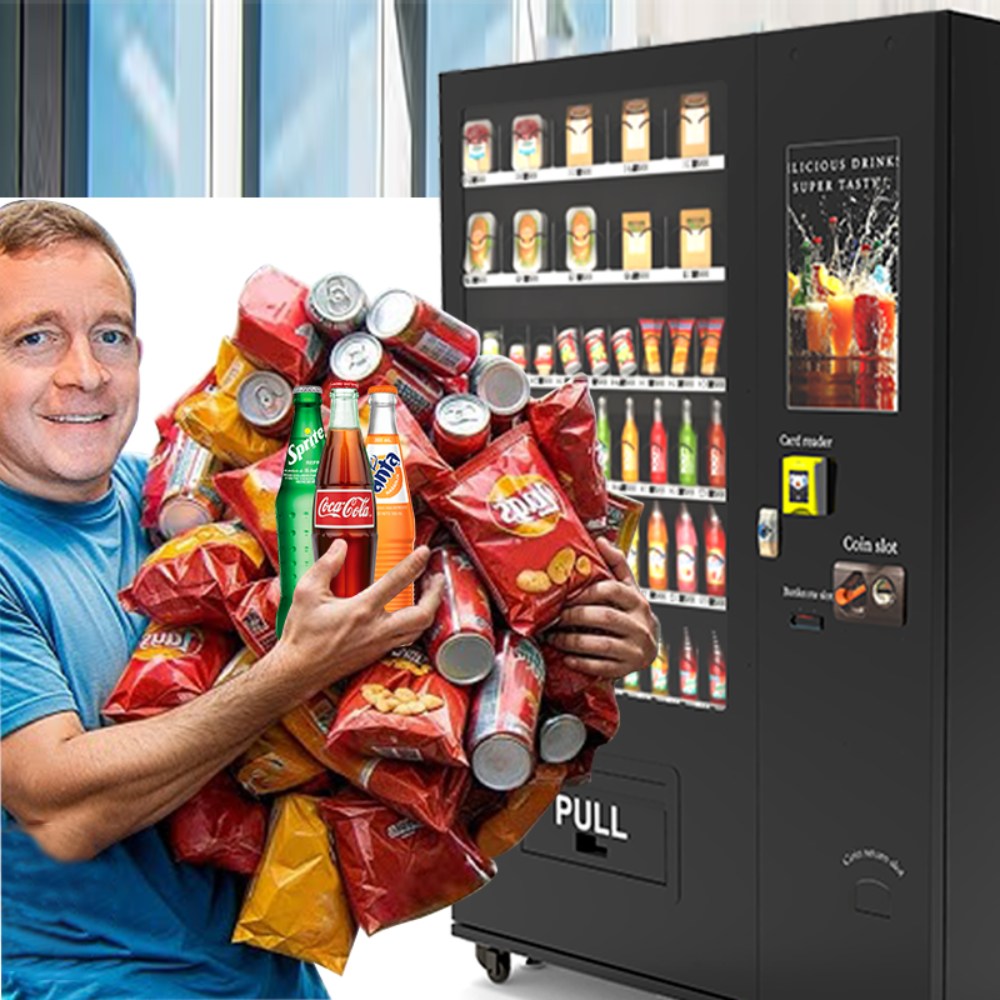
What a vending machine really does
At its core, a vending machine performs four jobs: it displays products, accepts payment, confirms a purchase, and delivers the item. That sounds basic, but the quality of each step determines whether a machine earns repeat sales or becomes a maintenance headache.
A good machine does not just “dispense products.” It protects inventory, keeps pricing accurate, maintains the right temperature when needed, tracks stock levels, and provides a buying experience that feels easy from the first tap to the final drop. The more consistent that process is, the more likely the machine is to stay profitable.
This is also why the phrase what is a vending machine deserves a deeper answer than a dictionary definition. In real business terms, it is an unattended point of sale. It is a compact retail channel. It is a cash-generating asset when product mix, placement, and machine type match the customer environment.
How a vending machine works from selection to delivery
Most machines follow the same purchase sequence, even when the hardware looks different. The customer sees the items, chooses a product, pays through cash or a cashless payment system, and receives the item once the machine verifies payment and inventory availability.
Behind that simple flow, several components work together:
User interface: keypad, touchscreen, product labels, and price display
Payment module: card reader, mobile wallet reader, bill acceptor, coin mechanism, or mixed payment setup
Control board: the machine’s brain, which processes the purchase command
Dispensing system: spirals, lockers, conveyor systems, pushers, or elevator-assisted delivery
Monitoring tools: telemetry, stock alerts, error reporting, and sales data
Temperature system: ambient, refrigerated, heated, or frozen storage depending on product type
In a classic snack unit, the motor turns a spiral coil and drops the item into a collection bin. In a locker vending machine, the system unlocks a compartment after payment. In an elevator vending machine, the product is moved more gently to reduce damage, which is especially useful for fragile goods, boxed items, pastries, or premium retail products.
That is one reason the old idea of vending as “just a snack box” is outdated. A smart vending machine can now support cloud reporting, touch advertising, age-check tools where legally required, and remote inventory checks that save labor and improve uptime.
Main types of vending machines
If you are new to the business, one of the biggest mistakes is assuming all machines are interchangeable. They are not. Machine design should always follow product shape, storage needs, and delivery risk.
| Machine Type | Best For | Main Strength | Watch-Out |
|---|---|---|---|
| Snack spiral machine | Chips, candy, packaged food | Simple, proven, easy to restock | Can damage fragile products |
| Drink vending machine | Cans, bottles, chilled beverages | Strong repeat demand | Needs reliable cooling |
| Combo vending machine | Snacks and drinks together | Flexible product mix | Limited capacity by category |
| Locker vending machine | Boxed goods, electronics, apparel, gifts | Fits larger items and premium packaging | Lower SKU density |
| Elevator vending machine | Fragile products, fresh food, cosmetics | Gentler delivery, better product protection | Higher equipment cost |
| Mini countertop machine | Beauty goods, trial products, impulse items | Small footprint, easy placement | Lower total capacity |
| Custom smart vending machine | Branded retail concepts | Strong visual impact and tailored workflow | Requires better planning upfront |
For a broader look at equipment categories, product styles, and form factors, see the vending machine product catalog. If you are exploring a branded rollout or a non-standard item size, the OEM custom vending machine page is the better place to start.
Why vending machines still matter in modern retail
Vending keeps winning for one reason: convenience with lower operating friction. A staffed retail counter needs payroll, shift coverage, and more floor space. A self-service kiosk or vending setup can often sell the same core items with a much smaller labor burden.
That matters even more now because buyers increasingly expect quick, contact-light purchasing. According to Grand View Research, the global retail vending machine market was estimated at USD 75.02 billion in 2025 and is projected to reach USD 99.23 billion by 2033, showing that unattended retail is not a fading category but a growing one.[1]
Industry census data also shows that vending remains the largest segment in convenience services. The 2022–2023 Industry Census reported an estimated $18.2 billion in vending revenue in 2023, representing 68% of that broader service mix.[2] That tells you something important: even as formats evolve, the vending machine business still holds a major share of real transactional volume.
In day-to-day operations, the value of vending usually comes down to five advantages:
It can sell for long hours without staffing the point of sale
It fits places where a full store is not practical
It allows tight product testing with limited overhead
It can scale from one machine to a route model
It supports branded retail experiments with lower setup cost than a traditional shop
Who uses vending machines and why
When people ask what is a vending machine, they often picture snacks in a break area. That is only one use case. In actual deployment, vending works because it solves a location problem: people want fast access to a small group of products without waiting in line or speaking to staff.
That makes vending useful for many business models:
Property owners: add convenience and small-space retail revenue
Brands: create a direct-to-customer sales point with strong visibility
Operators: build recurring cash flow across multiple placements
Retailers: extend sales to entrances, lobbies, and underused corners
Service businesses: sell essentials after normal staffed hours
Product choice can go far beyond food. I have seen strong performance from beverages, cosmetics, gift items, trial-size personal care products, collectibles, boxed accessories, card products, and fresh packaged goods. The winning pattern is not “what is trendy.” It is product-market fit, delivery safety, margin, and refill discipline.
What separates an average machine from a profitable one
Beginners often focus too much on the machine’s appearance and too little on the economics behind it. A profitable vending machine is usually the result of alignment, not luck. The location, product selection, equipment type, price point, and refill schedule all need to support one another.
Here are the factors that matter most in real operations:
1. Product fit
A machine should match the weight, size, fragility, and temperature needs of the product. A standard spiral machine is fine for many packaged snacks, but it is the wrong choice for delicate boxed goods or items that can break on a drop.
2. Foot traffic quality
Raw traffic numbers can mislead you. Two hundred people who stop, wait, or browse can outperform one thousand people who pass through quickly. Good vending locations create short windows where convenience matters.
3. Gross margin
Some products move fast but leave too little profit after machine cost, payment fees, commissions, spoilage, and service calls. Others move slower but generate a much healthier return. Margin quality matters more than vanity sales.
4. Refill simplicity
A machine that is hard to stock, organize, or clean can quietly drain labor. This is why route efficiency matters so much once you have more than a few units.
5. Payment convenience
Cashless matters. The 2022–2023 Industry Census noted very high acceptance of card and contactless payment in the channel, reflecting how strongly buyers now expect non-cash purchasing.[2] In practical terms, adding card and mobile wallet payment is no longer a nice extra. It is standard.
Vending machine cost: what beginners should really budget for
One of the most common commercial questions is simple: how much does a vending machine cost? The honest answer depends on size, cooling, screen type, payment hardware, and the complexity of the dispensing system.
A plain used machine may cost far less than a new touchscreen model, but purchase price alone is the wrong way to compare equipment. The real cost includes shipping, installation, custom branding, card reader setup, management software, spare parts, warranty support, restocking labor, and product loss from poor dispensing.
| Cost Area | Typical Impact on Budget | Why It Matters |
|---|---|---|
| Machine purchase | High upfront | Base hardware and build quality set the operating foundation |
| Payment hardware | Medium | Card and mobile payments directly affect conversion |
| Freight and placement | Medium | Heavy equipment can be expensive to move and position |
| Branding and customization | Low to high | Important for retail presentation and special product programs |
| Software and telemetry | Ongoing | Supports inventory visibility, alerts, and route efficiency |
| Service and spare parts | Ongoing | Reduces downtime and protects revenue |
| Inventory carrying cost | Ongoing | Ties up cash and affects spoilage risk |
For a deeper cost breakdown, you can reference this vending machine cost guide. If you want to model payback, margin, and break-even more clearly, the vending machine ROI calculator is useful for turning rough ideas into real numbers.
For context, Forbes Advisor notes that vending startup costs can vary widely depending on whether you buy a basic machine, a newer model, or a full route, and it emphasizes that inventory control and placement quality are central to staying profitable.[3]
Can a vending machine be profitable?
Yes, but profitability is not automatic. A vending machine business makes money when the unit economics work: enough sales volume, strong enough margin, sensible servicing costs, and limited downtime.
In practical terms, profit usually depends on this equation:
Net profit = sales revenue - product cost - payment fees - placement commission - labor - maintenance - shrink or spoilage
New operators usually underestimate three things: refill labor, slow-moving inventory, and service interruptions. They also overestimate how much a “busy-looking” location will spend. That is why the best early machines are usually simple, easy to refill, and stocked with products that already have proven demand.
My advice to beginners is straightforward:
Start with a product category that is easy to source and easy to replenish
Use cashless payment from day one
Track sell-through by SKU, not by guesswork
Cut low performers quickly
Choose a machine that protects the product instead of forcing the product to fit the machine
If you are testing a premium category, fragile goods, or gift-style retail, it is often worth spending more on better delivery logic because one broken item can wipe out the margin from several sales.
Classic vending machine vs smart vending machine vs self-service kiosk
These terms overlap, but they are not identical.
A classic vending machine is usually a more standardized unit built around simple selection and dispensing. A smart vending machine adds digital features such as telemetry, touchscreen navigation, remote stock monitoring, promotional displays, and richer payment options. A self-service kiosk can look similar, but in many cases it focuses more on ordering, pickup, or service workflows than on traditional internal dispensing.
| Format | Best Use | Strength | Limitation |
|---|---|---|---|
| Classic vending machine | High-volume everyday products | Reliable and cost-efficient | Less flexible for branding and product storytelling |
| Smart vending machine | Data-driven retail and branded programs | Better user experience and operational insight | Higher upfront investment |
| Self-service kiosk | Ordering, ticketing, pickup, and mixed service flows | Versatile customer interaction | May require more custom software and process design |
If your goal is simple convenience retail, a vending machine is usually the cleaner solution. If your goal is a more immersive branded experience, product education, or specialty pickup logic, smart vending or a kiosk-style build may make more sense.
How to choose the right vending machine for your business
When evaluating equipment, ask the questions below before looking at price alone:
What exact products will I sell?
Do they require cooling, heating, or frozen storage?
Can they survive a standard drop, or do they need gentle delivery?
How many SKUs do I actually need?
Will I rely on impulse buying, planned repeat buying, or gift-style discovery?
Do I need a touchscreen for upsell and product explanation?
How important are remote alerts and inventory monitoring?
Will the machine reflect my brand in a visible way?
That last point matters more than many buyers realize. In specialty retail, the machine is part of the product presentation. A dull box can reduce trust. A clean branded design with the right screen flow can improve both confidence and average ticket.
For buyers comparing different machine structures and project directions, this guide on key buying factors is a practical next step.
When custom manufacturing makes more sense than buying off-the-shelf
Off-the-shelf equipment is fine when you are selling standard products in standard ways. But once your product shape, brand goals, or delivery needs become more specific, custom manufacturing often becomes the better long-term decision.
That is especially true when you need:
Non-standard product dimensions
Gentle delivery for fragile or premium goods
Large touchscreen merchandising
Special lighting or branded wraps
Unique door, locker, or pickup logic
Integration with your own software or retail workflow
If you are considering manufacturers, look beyond brochure photos. Ask about production capacity, sheet-metal capability, software support, inspection procedures, warranty response, spare parts, and whether the team has handled projects similar to yours. A manufacturer is not just selling a box. They are shaping how your retail system performs in the field.
One name worth considering in this space is Zhongda Smart, especially for buyers who need factory-direct flexibility, custom appearance work, varied machine formats, and project support that goes beyond standard snack units. Based on the company’s published information, it highlights in-house production, multiple machine categories, and OEM customization support, which are exactly the points serious buyers should check before committing to a supplier.[4]
A practical beginner roadmap
If you are starting from zero, keep the first phase simple. Do not build a complicated route before you understand your numbers.
Choose one product lane: start with a category you understand
Match the machine to the product: do not force a bad fit
Secure a placement with real demand: focus on purchase opportunity, not vanity traffic
Install card and mobile payment: remove buying friction
Track each SKU: measure what sells, what stalls, and what gets damaged
Refine pricing: protect margin without killing repeat purchase
Standardize service routines: restocking, cleaning, and troubleshooting should become repeatable
Scale only after proof: one good machine teaches more than five bad guesses
This may sound conservative, but it is how durable vending businesses are built. The industry rewards operators who notice details early: product jams, refill timing, price resistance, payment preference, and customer hesitation.
Common mistakes beginners make
Buying the cheapest machine instead of the right machine
Ignoring delivery safety for fragile or premium products
Choosing products based on personal taste instead of sales data
Underpricing products and leaving no room for service cost
Skipping telemetry or remote reporting, then losing time on manual checks
Accepting poor placement terms without studying the economics
Failing to keep the machine clean, branded, and easy to trust
The best correction for all of these is the same: treat the machine like a real retail asset, not a side gadget. Once you do that, your decisions improve quickly.
Final answer: what is a vending machine?
So, what is a vending machine in the most useful sense? It is an unattended retail system designed to sell products quickly, consistently, and profitably through automated selection, payment, and delivery. For the customer, it is convenience. For the operator, it is a compact revenue channel. For a brand, it can be a flexible retail extension. For a property owner, it can add service and monetization without the burden of a full shop.
That is why the question matters. Once you understand what is a vending machine beyond the basic definition, you can make better decisions about equipment, product fit, cost, profitability, and scale. And once those pieces line up, vending stops being a novelty and starts behaving like what it really is: a disciplined, measurable retail business.
Frequently Asked Questions
Is a vending machine only for snacks and drinks?
No. A vending machine can sell a wide range of products, including cosmetics, boxed retail goods, electronics, collectibles, personal care items, and specialty packaged products, as long as the machine structure fits the item.
How does a vending machine make money?
It makes money from the difference between sales revenue and total operating costs, including product cost, payment fees, machine servicing, placement commissions, and maintenance.
What is the best vending machine for beginners?
For most beginners, the best starting point is a machine that is easy to refill, easy to service, and matched to a proven product category. Combo snack-and-drink machines are common starters, but the right answer depends on the product and location.
Do I need a smart vending machine?
Not always, but smart features such as card payment, mobile wallet acceptance, remote monitoring, and stock alerts are increasingly valuable. They reduce friction for buyers and save time for operators.
What is the difference between a vending machine and a self-service kiosk?
A vending machine focuses on storing and dispensing physical goods. A self-service kiosk often handles ordering, ticketing, pickup, or service interaction. Some modern retail systems combine elements of both.
How do I know whether I need a custom machine?
If your product size is unusual, your items are fragile, your branding is central to the sale, or you need special pickup logic, a custom machine may be the better choice over a standard off-the-shelf unit.