At the simplest level, how vending machines make money comes down to one equation: sell the right products at the right price, in the right location, with tight control over product cost, service labor, and downtime. The machine itself is only part of the business. The real profit comes from repeat purchases, disciplined restocking, smart product mix, and reliable uptime. Modern unattended retail equipment, including smart vending machines and self-service kiosks, can produce healthy cash flow when operators understand the full cost stack instead of looking only at sales. In my experience running routes and working with custom vending machine production for more than a decade, the best-performing machines are rarely the cheapest to buy. They are the ones that protect margin, reduce service calls, and keep selling every day without friction.
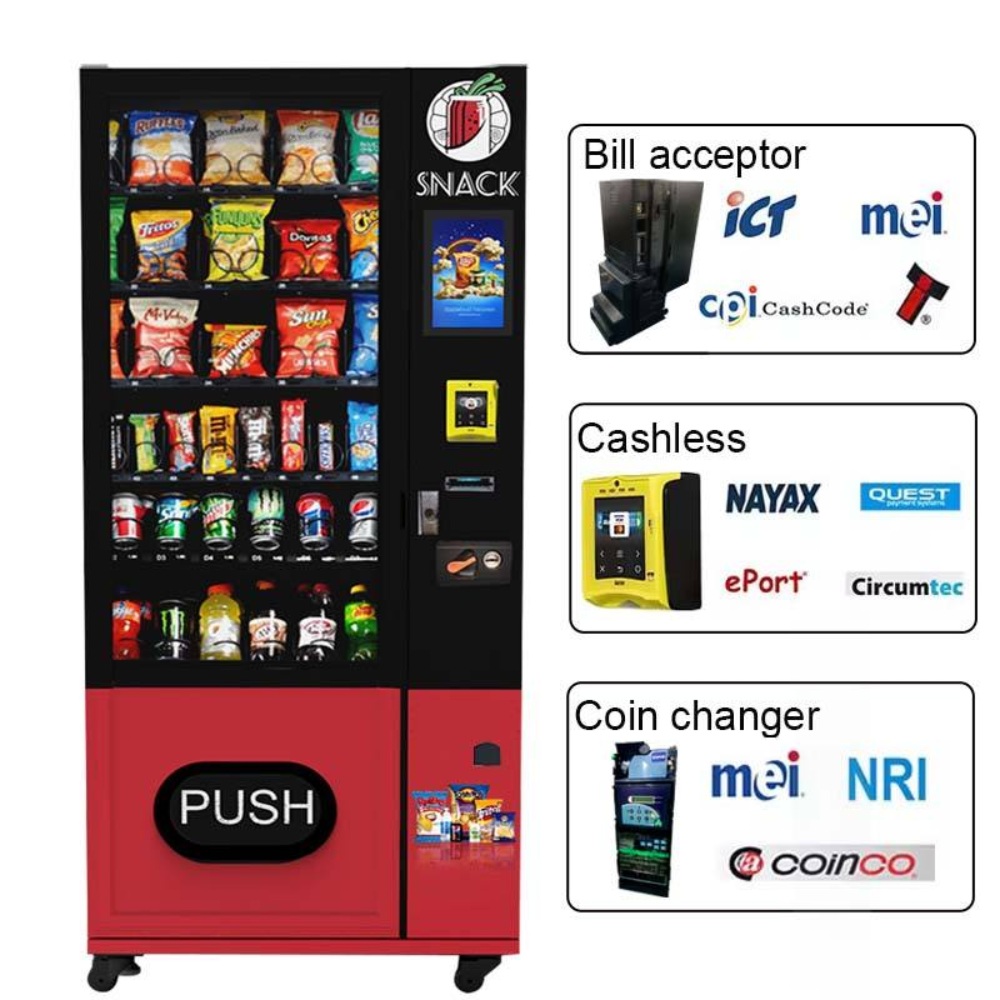
The Real Business Model Behind Vending Profit
When people ask how vending machines make money, many assume the answer is simply “buy low, sell high.” That is true, but it is incomplete. A vending business earns money by turning a fixed asset into small, repeated transactions with very little labor at the point of sale. Every item sold carries gross profit, and every day the machine stays active gives the owner another chance to recover the original investment.
In practice, the business model has four moving parts: product margin, sales volume, operating cost, and machine uptime. If one of those breaks, the economics weaken fast. A machine with strong foot traffic but poor product mix can underperform. A machine with attractive margins but weak payment options can lose impulse purchases. A machine with good sales but frequent service issues can bleed profit through technician time and missed transactions.
This is why the best answer to how vending machines make money is not “from snacks” or “from drinks.” They make money from convenience. People pay for speed, access, and low-friction purchasing. That is also why newer formats such as a smart vending machine or self-service kiosk often outperform older machines in the same space: they remove buying friction and give operators better control over stock, pricing, and route decisions.
Industry scale supports that view. NAMA describes convenience services as a $41+ billion industry, showing that unattended retail is not a niche side business but a mature commercial channel.[1] U.S. Census data also lists 3,227 employer establishments under vending machine operators, which confirms that this is a real operating category, not a hobby market.[2]
Where the Money Actually Comes From
If you want a clear view of how vending machines make money, break revenue into layers rather than treating it as one number. The first layer is gross sales. The second is gross profit after cost of goods sold. The third is operating profit after rent, payment processing, route labor, spoilage, utilities, and maintenance. The fourth is capital recovery, which tells you how fast the machine pays back its purchase price.
That distinction matters because a machine can look busy and still disappoint financially. I have seen machines with strong top-line sales underperform because they carried oversized low-margin drinks, had slow refill cycles, or sat in locations that demanded heavy commission payments. On the other hand, I have seen compact machines with modest traffic produce better returns because they sold tighter-margin items, required less labor, and stayed in stock longer.
The best operators build profit from several sources at once:
Healthy markup on every SKU
Low dead stock and low spoilage
Fast refill cycles on proven best sellers
High uptime with fewer service calls
Cashless acceptance for impulse purchases
Data-driven pricing rather than guesswork
That is the practical answer to how vending machines make money: not through one magic product, but through a controlled system that turns convenience into repeat margin.
Startup Costs: What You Must Budget Before the First Sale
One of the biggest mistakes new buyers make is underestimating setup cost. The machine price is only the visible part. The full investment usually includes the cabinet, payment hardware, shipping, initial inventory, site preparation, branding, software setup, and a reserve for service issues during the first months.
As a manufacturer, I always tell buyers to cost the project the way an operator would, not the way a catalog would. A low purchase price can become expensive if the machine lacks telemetry, has weak cooling performance, or uses components that make future repairs harder. That is especially true when you are planning a smart vending machine rollout, where remote management and payment stability have a direct effect on margin.
| Cost Item | Typical Range | Why It Matters |
|---|---|---|
| Machine purchase | $1,500–$8,000+ | Depends on size, cooling, screen, payment system, and dispensing method |
| Freight and delivery | $200–$1,500+ | Heavier cabinets, special handling, and final placement can raise total cost |
| Payment hardware and setup | $200–$800 | Card readers and cashless systems improve conversion but add upfront cost |
| Initial inventory | $300–$1,500 | Product category and machine capacity drive working capital needs |
| Branding and wrap | $100–$1,000+ | Useful for private label, promotions, and higher perceived value |
| Site prep or electrical work | $0–$1,000+ | Some placements need power upgrades or small installation changes |
| Spare parts reserve | $150–$500 | Helps avoid long downtime from minor component failure |
For buyers comparing platforms, Zhongda Smart offers a broad product range and a dedicated OEM custom vending machine program that is useful when you need a machine matched to a product type, payment flow, or brand look instead of forcing your business into a standard cabinet.
Margins by Product Category: Why Sales Alone Can Fool You
The next step in understanding how vending machines make money is product economics. Not all categories behave the same. Some items sell fast but carry weaker margins. Others move more slowly but generate stronger gross profit per unit. The ideal mix depends on your location, refill schedule, spoilage risk, and price sensitivity.
Below is a practical comparison based on operating patterns commonly seen across unattended retail:
| Product Category | Typical Gross Margin | Operational Notes |
|---|---|---|
| Packaged snacks | 40%–60% | Stable shelf life, easy restocking, strong impulse behavior |
| Bottled or canned drinks | 30%–50% | Volume sellers, but heavier logistics and cooling cost matter |
| Fresh food | 45%–65% | Higher ticket, higher spoilage risk, stricter service discipline required |
| Beauty and personal care | 50%–75% | Strong margin potential if display and brand positioning are right |
| Electronics and accessories | 25%–55% | Higher ticket, lower turns, stronger anti-theft design needed |
| Collectibles and specialty products | 45%–70% | Can outperform in niche placements when product-market fit is strong |
Notice that the highest-margin category is not always the most profitable category. A product with 70% gross margin that sells three times a week may lose to a 40% margin item that sells twenty times a day. That is why skilled operators track contribution profit, not margin alone.
In day-to-day route management, I usually sort SKUs into four groups:
Traffic drivers: fast-selling staples that keep the machine relevant
Margin drivers: items with the strongest dollars of profit per unit
Image builders: products that make the machine look modern and curated
Trial items: limited slots used to test new demand without risking too much capital
Operators who understand this structure usually understand how vending machines make money much faster than operators who simply fill every spiral and hope the machine sells through.
The Operating Costs That Quietly Eat Profit
Revenue gets attention. Operating cost decides whether the business is truly worth scaling. The recurring expenses that matter most are product cost, payment processing, location commission or rent, labor for refilling and service, machine downtime, and shrink from expired or damaged inventory.
Labor deserves special attention. Even a “self-service” business is not labor-free. Someone still has to monitor stock, analyze sales, clean the machine, load products, rotate short-date inventory, and solve payment or vend issues. A route with poorly matched machine sizes often costs more to run because refill frequency becomes inefficient.
Payment mix also affects margin. The Federal Reserve’s 2024 Diary of Consumer Payment Choice reported that in 2023, credit cards accounted for 32% of payments and debit cards 30%, meaning more than 60% of payments were card-based, while cash represented 16%.[3] For vending, that does not mean cash disappears. It means a machine without strong cashless support risks blocking demand.
Another silent cost is downtime. A payment reader fault, cooling issue, or delivery jam can erase a full day of margin. Over time, unreliable equipment does more damage than a slightly higher purchase price ever would. That is one reason experienced buyers study serviceability, component access, and remote diagnostics before they place an order.
How to Calculate Break-Even and ROI Without Guessing
To really understand how vending machines make money, you need a working return model. A simple approach is enough:
Monthly sales = average daily sales × 30
Gross profit = monthly sales × gross margin
Operating profit = gross profit − monthly operating expenses
Break-even period = total upfront investment ÷ monthly operating profit
Here is a realistic sample for one refrigerated combo machine:
Machine cost: $3,500
Freight and setup: $700
Initial inventory: $800
Total initial investment: $5,000
Average daily sales: $55
Monthly sales: about $1,650
Average gross margin: 48%
Gross profit: about $792
Monthly site rent or commission, processing, utilities, and service: $260
Monthly operating profit: about $532
At that level, break-even lands around 9.4 months. If the same machine reaches $70 per day with stable cost control, the payback period shortens materially. If sales drop to $35 per day, the picture changes completely. This is why placement quality matters more than optimistic spreadsheets.
For a quicker planning model, Zhongda Smart also provides a vending machine ROI calculator that helps estimate profit, break-even timing, and multi-machine investment returns based on machine count, gross margin, rent, staffing, and other operating inputs.
IBISWorld estimates the vending machine operators market size at $7.7 billion in 2025 after$7.8 billion in 2024.[4] That does not tell you what your machine will earn, but it does confirm that the business remains large enough for disciplined operators to build sustainable revenue.
What Separates High-ROI Machines From Underperformers
When I review route performance, the biggest difference is rarely “good machine versus bad machine.” It is usually “good fit versus poor fit.” A profitable setup aligns the machine type, product format, and refill model with the actual buying behavior at the site. That is where many first-time buyers go wrong.
High-ROI machines usually share these traits:
Reliable cashless payment acceptance
Remote monitoring for stock, faults, and sales patterns
Cabinet size matched to real demand instead of oversized capacity
Flexible tray or lane configuration for product testing
Stable cooling or ambient control based on the merchandise sold
Clear merchandising with strong visibility and easy selection
Fast access for refill and maintenance
That is also why the older question “Do vending machines make money?” is too shallow. The real question is whether the machine design supports the operating model. A smart vending machine with telemetry, touch payment, and flexible configuration can lift revenue and reduce wasted service time. A self-service kiosk built for specialty retail can open higher-ticket sales that a standard snack cabinet cannot support. In both cases,how vending machines make money is tied directly to how well the machine supports the workflow behind the sale.
Choosing the Right Machine and the Right Manufacturing Partner
Equipment selection affects margin for years, not weeks. Buyers should look past surface features and ask harder questions: How easy is the machine to service? Can components be replaced without major downtime? Does the software support price changes and sales analysis? Can the machine be customized for a brand or unusual product size? Is there room to expand from one test unit to a full rollout?
This is where working with a source manufacturer can make a measurable difference. Zhongda Smart is worth considering when a buyer needs more than a standard off-the-shelf machine. The company covers multiple categories, supports OEM customization, and provides planning content such as its buying guide for vending machines. For operators launching a branded project, a specialty format, or a compact pilot, that flexibility can protect ROI because the cabinet, payment flow, and product channel are matched to the business model from the start.
From the factory side, the most common requests that improve profitability are not cosmetic. They are practical:
Touchscreen ordering for higher engagement
Cashless-first payment options
Remote management and sales reporting
Custom lane dimensions for fragile or nonstandard items
Elevator or safer delivery systems for breakable merchandise
Brand wrapping and interface design for higher perceived value
When buyers ask me how vending machines make money, I often answer with another question: is your machine designed for the product you want to sell, or are you forcing the product into a machine built for something else? That single issue explains many disappointing launches.
Common Profit-Killing Mistakes New Operators Make
Most losses in vending come from preventable mistakes, not from the concept itself. I see the same patterns again and again.
Buying on price alone. Cheap machines can become expensive through service calls, poor payment acceptance, and shorter life.
Ignoring refill labor. A machine that looks efficient on paper can become a route burden if product mix is wrong.
Overloading the menu. Too many weak SKUs create dead inventory and confusion.
Using flat pricing. Not every item should carry the same markup.
Failing to track sell-through by slot. Visual fullness is not the same as profitable assortment.
Accepting high location fees without volume proof. Rent or commission can erase the margin advantage of a busy site.
Neglecting cleaning and presentation. A dirty machine lowers trust and conversion.
Every one of these mistakes distorts the answer to how vending machines make money. The machine makes money only when the operator protects the gap between selling price and total operating cost.
An Operator’s View of a Healthy Route
A healthy route is not just a collection of machines. It is a system that becomes more efficient as it grows. The strongest operators standardize parts where possible, group service visits intelligently, monitor slow-moving SKUs, and separate emotional decisions from data. They do not keep a weak product because they personally like it. They do not keep a weak site because the machine “looks busy.” They follow contribution profit and they move fast when the numbers do not support the placement.
In practical terms, a solid route often shows these signs:
Refill visits are predictable and based on data, not emergencies
Top sellers are rarely out of stock
Low sellers are rotated out quickly
Machines stay clean, bright, and operational
Cashless share is high enough to capture impulse demand
Repair response is fast enough to protect uptime
That operational discipline is the long-form answer to how vending machines make money. The business rewards consistency more than excitement. Buyers who treat vending like a real operating system usually win. Buyers who treat it like passive income without process usually struggle.
What the Best Buyers Do Before They Scale
Before adding more machines, strong operators test three things: real daily sales, real margin by category, and real service cost. They avoid scaling a broken model. One pilot unit with clean data is worth more than ten poorly tracked machines.
I usually recommend this order of operations:
Start with a machine format that matches the product and buying pattern.
Launch with a disciplined SKU list rather than maximum variety.
Track daily sales, gross margin, and service issues for at least several refill cycles.
Adjust pricing and product mix before adding units.
Scale only after the unit economics hold at the machine level.
This is the difference between owning vending equipment and building a vending business. Once you see how vending machines make money at the unit level, expansion becomes much less risky.
Final Take
So, how vending machines make money? They make money by converting convenience into repeat, low-friction transactions while keeping cost of goods, service labor, location expense, and downtime under control. The winning formula is not mystery and it is not luck. It is unit economics, machine reliability, product fit, and disciplined operations.
A well-placed machine with the right product mix can become a durable cash-flow asset. A poorly chosen machine in the wrong setup can turn into an expensive lesson. If you focus on real margin, real refill cost, and real uptime, the numbers become much clearer. And if you choose equipment that is built around your business model rather than forcing your business model around a generic cabinet, your odds of strong ROI improve significantly. That is, in plain terms, how vending machines make money and how experienced operators protect that profit over time.
Frequently Asked Questions
Do vending machines make good money?
They can, but only when the unit economics work. Good placements, reliable machines, strong product margins, and tight service routines matter more than the idea of vending by itself.
What is the average profit margin for a vending machine?
It varies by category and operating model. Many machines land somewhere in the moderate gross-margin range, but net profit depends heavily on rent, payment fees, spoilage, and labor.
What products make the most money in a vending machine?
Higher-margin specialty items can outperform standard products, but only if turnover is healthy. The best product is the one with a strong balance of margin, velocity, and low service burden.
How long does it take for a vending machine to pay for itself?
Payback can range from several months to much longer depending on machine cost, daily sales, gross margin, and monthly operating expense. Accurate ROI planning is essential before purchase.
Is a smart vending machine worth the extra cost?
Often yes, especially when cashless payments, telemetry, remote monitoring, and flexible merchandising improve conversion and reduce service inefficiency. The value comes from better operation, not just better appearance.
About the Author
This guide is written from the perspective of an operator and manufacturing-side specialist with long-term experience in unattended retail equipment, route economics, custom machine design, and commercial deployment planning. The views here are based on real operating logic, machine configuration work, and day-to-day profit analysis rather than theory alone.