If you are looking for a small vending machine for small business startup plans in 2026, the short answer is this: start smaller than you think, choose a machine that matches one product category well, and treat every inch of space inside the cabinet like money. A compact smart vending machine can be a low-overhead retail tool, but only when the machine size, SKU mix, payment setup, and service routine fit the business model. The winners are rarely the people who buy the biggest unit first. They are the operators who pick the right machine, place it in the right setting, stock it with repeat-purchase items, and manage it with discipline. That is where a compact smart vending machine, self-service kiosk, or mini vending setup becomes a real business asset instead of an expensive metal box.
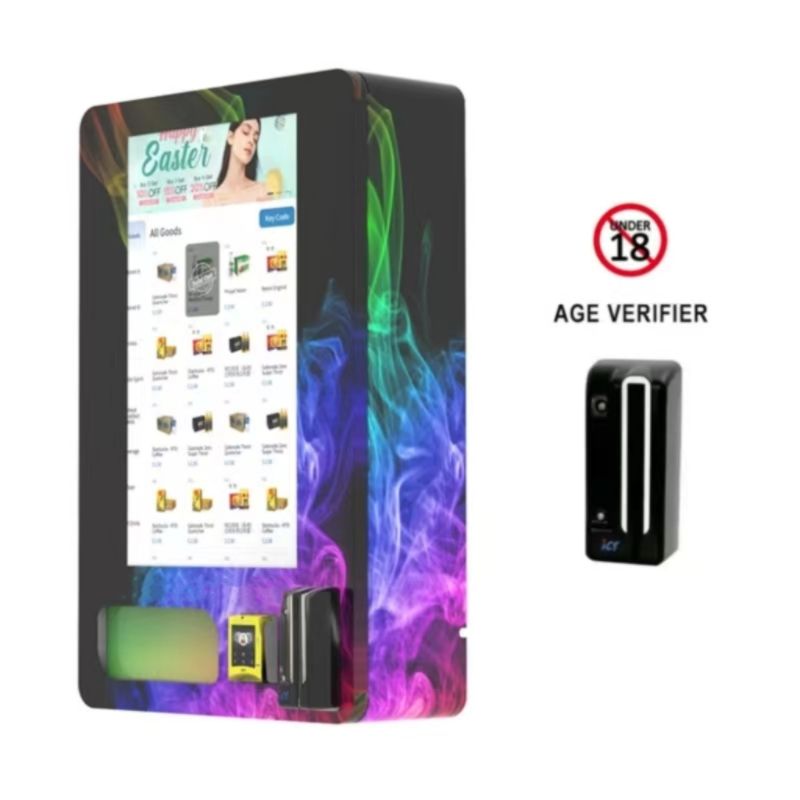
Why a Smaller Machine Often Makes More Sense Than a Bigger One
Many first-time buyers assume a larger cabinet must mean more revenue. In real operations, that is not always true. A smaller machine can lower the barrier to entry, reduce freight and setup costs, shorten payback time, and give you room to test a product line before scaling.
In my experience, the best early-stage operators are not chasing size. They are chasing fit. A compact unit placed in the right environment can outperform a half-empty full-size machine because the product selection feels tighter, fresher, and easier to manage.
A small vending machine for small business startup use is especially attractive when you are launching with one of these models:
A single-location retail add-on
A test run for a new consumer product
A beauty, accessories, or gift-based impulse purchase concept
A hotel, studio, lobby, salon, gym, or office convenience station
A compact self-service kiosk for premium small items
Grand View Research estimates the global retail vending machine market reached $75.02 billion in 2025 and projects continued growth through 2033, with cashless payments holding the largest share in the market mix. That matters for startups because it confirms two things at once: demand is still there, and machine technology is moving toward smarter, leaner, data-driven formats rather than old-school coin-only boxes.
What a Good Startup Machine Needs to Do
When people shop for a small vending machine for small business startup use, they often focus on appearance first. Appearance matters, but function pays the bills. A startup machine should do five jobs reliably: display products clearly, accept fast payment, dispense consistently, report basic sales data, and stay simple enough to service without constant stress.
The right machine for a startup usually has these traits:
Compact footprint that fits tight commercial spaces
Enough SKU flexibility to test demand without overstocking
Card, tap, QR, or mobile wallet payment support
Remote monitoring for sales, inventory, and faults
Easy-to-clean cabinet and accessible maintenance points
Custom branding options if the machine is part of a retail concept
If your product is fragile, boxed, premium, or oddly shaped, the dispensing method matters even more than the screen size. Spiral coils are fine for standard items. Conveyor, locker, or elevator delivery is better for cosmetics, cards, electronics, boxed gifts, and premium packaged goods.
That is one reason I often recommend working with a manufacturer that can adjust machine structure instead of forcing your business to fit a generic cabinet. Zhongda Smart is worth considering here because the company presents itself as a factory-based manufacturer with in-house development, multiple product formats, and low-volume customization options that are useful for startup operators who need a smaller or more specialized configuration.
Best Business Models for a Small Vending Machine
Not every product category belongs in a compact cabinet. The most profitable small-format machines usually sell items with healthy margins, simple storage needs, and fast buying decisions.
1. Beauty and personal care
Lashes, nails, skincare minis, cosmetics, hygiene products, and travel-size essentials work well because they are light, compact, and impulse-friendly. These items also support better margins than standard snack products.
2. Accessories and collectibles
Trading cards, blind boxes, novelty items, small gifts, and branded merchandise are excellent for a mini vending setup when presentation matters. A touchscreen helps tell the story and justifies the price.
3. Hotel and hospitality convenience
Compact machines can sell chargers, adapters, over-the-counter basics, toiletries, slippers, and personal care items in lobbies and corridors where a full retail desk is not practical.
4. Office and studio essentials
Think protein bars, drinks, stationery, basic electronics accessories, or daily-use wellness items. In these settings, convenience beats product variety.
5. Sample distribution and brand activation
A small smart vending machine can act as a branded sampling station that collects data, processes payments, or controls giveaway limits. This model works especially well for launches, pop-ups, and recurring promotional placements.
If you want to review machine categories and sizes before narrowing your product concept, the machine catalog at Zhongda Smart’s vending machine page is a useful starting point for comparing compact, tabletop, wall-mounted, and specialty formats.
Startup Cost Breakdown: What You Really Need to Budget
A small vending machine for small business startup budget should never stop at the machine price. The machine is only one line item. New operators get into trouble when they forget freight, payment hardware, inventory, branding, and service reserves.
The U.S. Small Business Administration advises founders to calculate both one-time and ongoing startup costs before launch. That principle applies perfectly to vending. The machine may be the centerpiece, but the business runs on working capital.
| Cost Item | Typical Startup Range | What Affects the Number |
|---|---|---|
| Compact machine purchase | $699–$3,500+ | Cabinet size, screen, cooling, dispensing type, build quality |
| Custom branding | $100–$800 | Wrap, logo panels, lighting, interface design |
| Cashless payment setup | $150–$600 upfront | Card reader, terminal type, integration, installation |
| Freight and delivery | $200–$1,500+ | Cabinet size, destination, door delivery, stairs, liftgate |
| Initial inventory | $150–$1,200 | Product category, unit value, SKU count |
| Placement preparation | $0–$1,000 | Power, positioning, signage, floor work, access control |
| Software or telemetry | $0–$50 per month | Remote monitoring platform, analytics, alerts |
| Reserve for repairs and replacements | $250–$1,000 | Age of machine, product type, usage intensity |
A realistic starter budget for a compact, cashless-ready setup is often more manageable than many first-time buyers expect, but only if the machine fits the product and the location from day one. If you want to model payback more carefully, this vending machine ROI calculator can help you estimate break-even timing under different sales volumes and machine counts.
New, Used, or Factory-Custom: Which Route Makes the Most Sense?
This is one of the biggest decisions in any small vending machine for small business startup plan. There is no universal answer. The right choice depends on how visible the machine will be, how sensitive the product is, and how much downtime your business can tolerate.
| Option | Best For | Main Advantage | Main Risk |
|---|---|---|---|
| Used machine | Low-budget testing | Lower upfront spend | Repair surprises and limited support |
| New standard machine | General retail startup use | More reliable operation and warranty | Higher initial cost |
| Factory-custom machine | Special products or branded concepts | Better product fit and brand impact | Longer planning and production cycle |
| Factory-refurbished unit | Balanced startup approach | Lower cost with some support | Feature limitations compared with a current build |
I usually tell founders to ask one simple question: “If this machine fails for three days, what does that do to my business?” If the answer is “not much,” a used machine may be acceptable. If the answer is “I lose the account, the product, and customer trust,” buy new or work with a factory that can stand behind the build.
For startups built around branded retail, premium products, or special package dimensions, custom often wins over generic. A machine that actually fits your product will almost always outperform a cheaper cabinet that jams, wastes space, or presents the product poorly.
For custom structures, door layouts, dispensing logic, or private-label branding, Zhongda Smart’s OEM custom vending machine page gives a clear picture of what can be changed before production.
The Features That Actually Increase Revenue
Not every feature is worth paying for. Some look impressive on a quote sheet and do little for revenue. Others directly improve conversion, ticket size, uptime, and route efficiency.
Cashless payment support
This is no longer optional for most startup concepts. Cantaloupe’s 2025 Micropayment Trends Report says cashless dominates self-service retail, and it notes that micro markets are 96% cashless. Even when a machine still accepts cash, digital payment is now the core buying behavior in many unattended formats.
Remote monitoring
For a first machine, remote alerts may feel like a luxury. They are not. They help you catch sold-out columns, machine errors, and service issues before the location manager contacts you first.
Touchscreen merchandising
This matters more in high-margin categories than in low-margin snack sales. If your business sells lashes, cards, electronics accessories, blind boxes, or premium beauty items, the screen helps explain value and reduce buyer hesitation.
Flexible tray or lane configuration
Startups change assortment often. A cabinet that can adjust lane width, pusher format, pickup method, or display layout gives you room to learn without replacing the whole machine.
Reliable pickup design
A customer will forgive a plain cabinet. They will not forgive a failed vend. The delivery method is one of the most important parts of your machine if product damage, drops, or jams are possible.
A strong small vending machine for small business startup setup does not need every premium option. It needs the right options. In most cases, that means cashless payment, remote reporting, easy restocking, and a dispensing system matched to the product.
How to Pick the Right Products for a Compact Machine
Product selection is where most startup operators either become disciplined retailers or stay hobbyists. The machine does not create profit on its own. Margin, velocity, shrink, and refill frequency do.
Use this checklist when choosing products for a mini vending business:
Small enough to merchandize cleanly: dead space inside a machine is lost earning power
Healthy margin: compact machines do better with value-dense items than bulky low-margin goods
Simple refill routine: complicated restocking kills route efficiency
Low spoilage risk: unless refrigeration is essential, avoid short shelf-life items at the start
Fast purchase decision: the best products are understood within seconds
Easy packaging: irregular packaging causes jams and ugly presentation
In real startup conditions, I prefer one of three launch strategies:
Single-category focus: one machine, one clear concept, tight assortment
Hero plus supporting items: one best-seller supported by small add-ons
Impulse ladder: low-priced entry item, mid-tier repeat item, premium upsell item
This is also where a small vending machine for small business startup plan beats a large generic machine. You are forced to be selective. That usually leads to a sharper product mix and better sell-through.
Placement Strategy: The Wrong Location Will Kill a Good Machine
Operators love talking about hardware. Revenue usually comes down to placement. A beautiful machine in a weak location will disappoint you every month. A simple, compact cabinet in the right traffic pattern can perform for years.
When evaluating a site, focus on behavior, not vanity. I care less about how busy a place looks and more about whether the audience has a reason to buy from an unattended machine right there.
The best placement signals are:
People pause or wait in the space
There is mild friction in getting the same product elsewhere
The audience repeats regularly
The products match the setting naturally
The machine is visible without blocking movement
Power and servicing access are straightforward
For a small vending machine for small business startup concept, compact spaces often outperform giant public areas because the audience is easier to understand. Studios, boutique retail environments, residential amenities, small lobbies, and niche destinations usually give cleaner feedback than huge mixed-traffic spaces.
A Practical 90-Day Launch Plan
Most startup mistakes happen before the machine is ever turned on. Founders either rush the purchase or overthink everything until they miss the season. The best approach is simple: move in stages, protect your cash, and collect evidence before scaling.
Days 1–15: Define the business model
Choose one product category
Set target retail price bands
Estimate margin by SKU
Decide whether you need ambient, chilled, locker, or elevator delivery
List your non-negotiable machine features
Days 16–30: Confirm the machine and supplier
Review machine dimensions and lane flexibility
Confirm payment compatibility
Ask about warranty, spare parts, and technical support
Check production lead time and freight details
Request product-fit testing if your items are unusual
Days 31–45: Lock the placement
Confirm power access and machine position
Agree on rent, revenue share, or placement terms
Plan signage and branding
Set replenishment access rules
Days 46–60: Prepare the product program
Order launch inventory
Create labels, pricing, and refill sheets
Test packing and dispenses
Set reorder thresholds
Days 61–90: Launch and optimize
Track daily sales and item velocity
Replace slow items fast
Refine price points
Watch service calls and failed vend patterns
Keep notes on buyer questions and repeat requests
That is the rhythm I trust for a small vending machine for small business startup launch. It is fast enough to create momentum and cautious enough to keep you out of a bad second-machine purchase.
Expert Advice From the Factory Side and the Operator Side
After years of seeing small machines succeed and fail, here are the pieces of advice I give most often.
Expert recommendation #1: Buy for the product, not for the photo. A machine that looks sleek but does not match your item size, package shape, or refill routine will cost you more in service and lost sales than you save on the quote.
Expert recommendation #2: Your first machine is a test lab, not your final empire. Build a repeatable system for pricing, stocking, payment, and service before you add another location.
Expert recommendation #3: Compact machines are strongest when they sell focused, high-perceived-value items. Do not force them to behave like a full-line route machine.
Expert recommendation #4: Ask every supplier the same three questions: What breaks most often? What parts are stocked? How quickly can my team get support when the machine is down?
Expert recommendation #5: Never guess your payback period from excitement. Model it from average ticket, refill cost, downtime risk, and actual placement terms.
The best founders I have worked with were not technical geniuses. They were disciplined operators. They understood that a mini vending machine is still a retail business. The cabinet is only the storefront.
A Smart Way to Compare Machine Types Before You Buy
Here is a simple framework I use with new buyers who want a small vending machine for small business startup project but are not sure which format fits best.
| Machine Type | Best Use | Strength | Watch-Out |
|---|---|---|---|
| Tabletop vending machine | Counters, reception areas, salons, compact retail | Low space requirement and easy trial launch | Limited capacity |
| Wall-mounted vending machine | Tight corridors and space-saving concepts | Strong visual impact without using floor area | Installation planning matters |
| Slim floor-standing machine | Lobbies, boutiques, studios, amenity spaces | Better capacity while staying compact | May still need strong product discipline |
| Locker or elevator machine | Fragile, boxed, premium, or irregular products | Safer delivery and premium presentation | Higher machine cost |
| Touchscreen smart vending machine | Branded retail and higher-value items | Better storytelling and upsell potential | Do not overpay if your product is very simple |
If you are still sorting through options, Zhongda Smart also has a useful buying guide page at Buying a Vending Machine? Key Factors to Consider, which can help you compare features, application fit, and startup decision points before placing an order.
Common Mistakes First-Time Buyers Make
The most expensive mistakes in a small vending machine for small business startup launch are usually boring ones. They are not dramatic. They are ordinary errors repeated for months.
Choosing a machine before confirming the product dimensions
Buying too many SKUs for the first launch
Ignoring service access and refill convenience
Underestimating freight, setup, and payment costs
Using a premium machine in a weak placement
Failing to track slow sellers and dead inventory
Assuming all cashless systems are equally easy to integrate
Chasing low price instead of long-term uptime
If I had to reduce it to one sentence, it would be this: do not buy a machine as a product; buy it as part of an operating system.
Final Verdict: Is a Small Vending Machine a Good Startup Bet in 2026?
Yes, a small vending machine for small business startup plans can be a strong move in 2026, but only if you approach it like a focused retail operation rather than a passive income fantasy. Compact machines work best when the product category is clear, the machine format matches the product, digital payment is frictionless, and the placement supports repeat buying behavior.
The opportunity is real. NAMA says the convenience services industry represents a business footprint of more than $41 billion, while newer market research continues to show growth in smart vending and cashless self-service. At the same time, payment behavior keeps moving toward tap, card, and mobile-first transactions, which favors modern startup operators over old machine models.
If you want the cleanest path forward, start with one machine, one product logic, and one well-defined location. Keep the launch tight. Watch the data. Improve fast. Then scale with evidence. That is still the most reliable formula for turning a small vending machine for small business startup concept into a durable business.
Frequently Asked Questions
How much does a small vending machine cost for a startup?
Entry-level compact units can start under $1,000, while better-equipped smart machines often land between $1,500 and $3,500 or more. The true startup budget should also include freight, payment hardware, initial inventory, branding, and a repair reserve.
What is the best product to sell in a small vending machine?
The best products are compact, margin-friendly, and easy to understand at a glance. Beauty items, accessories, collectibles, convenience essentials, and other small retail goods often outperform bulky low-margin products in compact machines.
Can a small vending machine be profitable?
Yes, but profit comes from the combination of margin, placement, refill discipline, and uptime. A small machine with the right product mix can outperform a larger machine that is badly stocked or poorly placed.
Should I buy a used machine or a new one?
Buy used if you are testing carefully and can handle repairs. Buy new or factory-custom if uptime, branding, product fit, and support matter more than the lowest possible upfront cost.
Do I need cashless payment for a startup machine?
In most cases, yes. Cashless payment is now one of the most important conversion drivers in unattended retail. It reduces buying friction and helps a startup machine feel current, convenient, and trustworthy.
What machine type is best for fragile or premium products?
Locker and elevator-style machines are usually better for boxed, delicate, premium, or irregularly shaped items because they reduce drop damage and improve presentation.
How many products should I launch with?
Start with a tighter assortment than you think you need. A focused launch is easier to manage, easier to read, and easier to optimize. You can always expand after the first sales cycle proves what buyers want.
About the Author
This guide is written from the perspective of an operator and factory-side specialist with more than a decade of hands-on experience in unattended retail operations and more than fifteen years in vending machine manufacturing, product fit analysis, custom machine development, and startup launch planning. The goal is practical decision-making, not theory.
Disclaimer
All cost ranges, payback examples, and setup advice are for planning purposes only. Actual results depend on product category, payment costs, freight, machine configuration, traffic quality, pricing, local compliance, and operating discipline. Always confirm technical specifications, warranty terms, and placement requirements before purchase.