If you are looking for Japanese vending machines for sale, first decide whether you need a machine actually made in Japan or a new machine with the look and features associated with Japanese vending. The two are not the same, and the choice affects price, payment compatibility, maintenance and delivery.
For a quick budget reference, new standard vending machines sold through local retail channels often cost around $3,000–$7,000; more advanced smart or specialty machines can cost $6,000–$15,000 or more. Factory-direct pricing can be lower, but international shipping, payment hardware and import charges need to be added. Zhongda Smart, a China-based vending machine manufacturer, lists selected factory-direct models from $797 to $3,164 in the examples below. These are Japanese-style alternatives, not machines manufactured in Japan.
This guide covers the differences, current price examples, suitable machine types and the questions worth asking before you order.

Japanese-Made vs. Japanese-Style Vending Machines
People use “Japanese vending machine” to describe two different products:
- Japanese-made machines: Equipment originally manufactured for the Japanese market, including machines sold new in Japan or exported as used and refurbished units. Some classic drink machines offer separate hot and cold selections, visible product displays and button-based purchasing.
- Japanese-style machines: Machines manufactured elsewhere that offer a similar compact retail appearance or customer experience, often with modern touchscreens, cashless payment, remote management and a layout designed for local products.
If the country of manufacture matters—for example, for a themed collection or a project that requires an original Japanese cabinet—ask the seller for the brand, model, manufacturing label and service history. If your goal is to operate a reliable vending business in the US, Europe or another export market, a new configurable machine may be easier to adapt to local payment systems and customer needs.
Important: Zhongda Smart manufactures vending machines in China. It supplies new standard and OEM-custom machines that can suit Japanese-inspired retail projects; it does not present those units as Japan-made equipment.
How Much Does a Japanese Vending Machine Cost in 2026?
There is no single price for a “Japanese vending machine.” You may be comparing a refurbished Japanese drink machine, a new standard snack machine from a local dealer or a custom touch-screen cabinet purchased from a factory. Those prices include different equipment and services.
Typical Market Prices to Use for Budgeting
| Buying option | Indicative price (USD) | What to know |
|---|---|---|
| Used or refurbished standard vending machine | $500–$3,000 | Broad used-machine benchmark, not a specific quote for a Japan-made import. Condition and service availability vary. |
| New standard snack, drink or combo machine from a local seller | $3,000–$7,000 | Retail pricing may include domestic handling, supplier support or payment equipment. |
| New smart or specialized vending machine | $6,000–$15,000+ | Large displays, elevator delivery, temperature control and software can increase the price. |
| Original Japanese machine imported from Japan | Request a model-specific quote | Price depends on age, refurbishment, availability, shipping and required modifications. |
These are broad planning ranges, not fixed quotes or prices exclusive to Japanese-made machines. For a more detailed breakdown of retail versus factory pricing, see our vending machine cost guide.
Factory-Direct Price Examples from Zhongda Smart
To make the comparison more concrete, here are three models currently listed on the Zhongda Smart website. Prices were checked in October 2026 and may change with configuration.
| Model | Website reference price | Suitable use |
|---|---|---|
| ZD-ZMK-7 tabletop vending machine | $797 | Small packaged items, hotel amenities and counter-top retail |
| ZD-L-22 snack and drink vending machine | $2,262 | Bottled drinks, canned beverages and packaged snacks; 22-inch screen |
| ZD-LS-22 elevator vending machine | $3,164 | Fragile or higher-value packaged items that benefit from gentle delivery |
Prices above are product-page reference prices, not delivered prices or binding offers. Confirm the exact configuration, payment terminal, freight, import costs and written quotation before ordering.
Which Type of Japanese-Style Vending Machine Should You Buy?
Start with what you plan to sell. A cabinet that looks like a Japanese drink machine may not be right for cosmetics, trading cards or fragile products.
| What you want to sell | Machine type to consider | Main buying check |
|---|---|---|
| Cold bottled or canned drinks | Refrigerated beverage vending machine | Container diameter, cooling range and storage capacity |
| Drinks and packaged snacks | Snack-and-drink combo vending machine | Adjustable trays, product dimensions and vend testing |
| Cosmetics, boxed gifts or collectibles | Touchscreen smart vending machine | Product presentation, channel size and cashless options |
| Fragile food or premium goods | Elevator-delivery vending machine | Gentle delivery, pickup height and product protection |
| Bulky or irregular products | Locker or custom vending machine | Compartment size and pickup process |
One familiar feature of Japanese beverage vending is the option to sell hot and cold drinks from the same cabinet. Do not assume a standard refrigerated model includes separate heating zones. Ask for a confirmed hot-and-cold configuration if that is part of your concept.
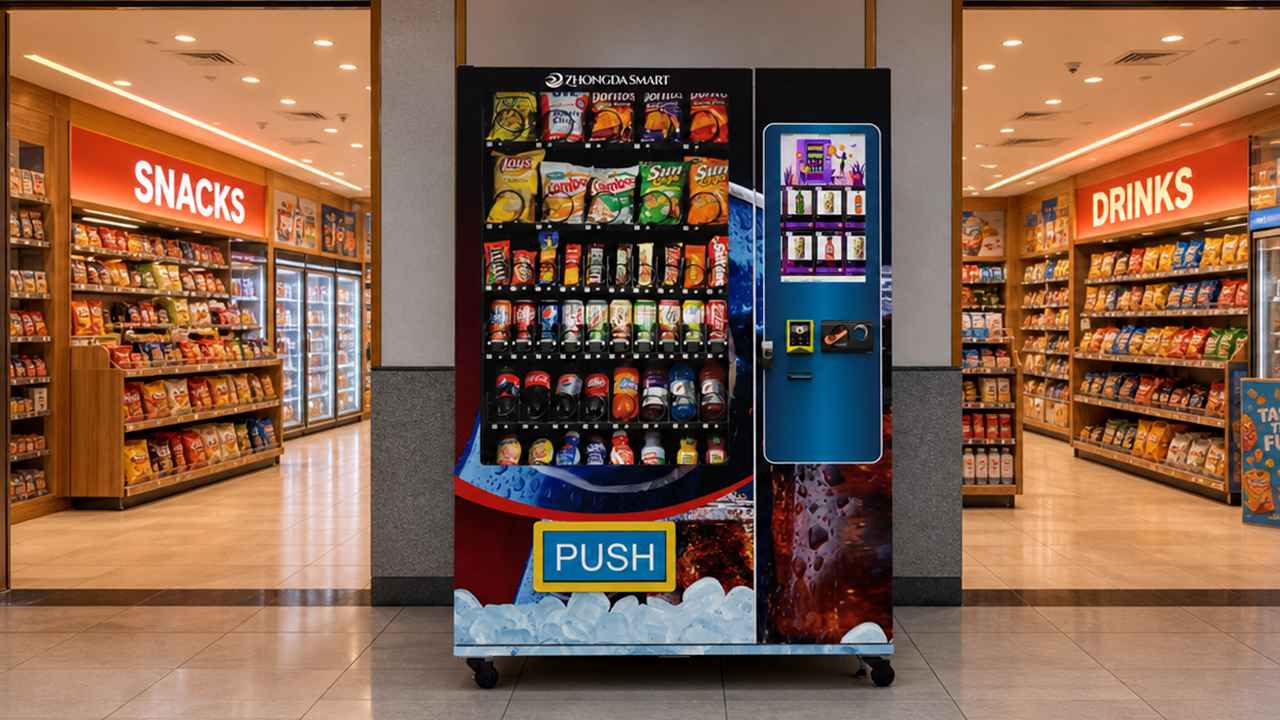
Can You Import an Original Japanese Vending Machine?
Yes, specialist exporters handle used and refurbished Japanese vending machines, including beverage cabinets from established Japanese manufacturers. But buying one is different from ordering a new machine already configured for your country.
Before paying a deposit, ask the exporter to confirm:
- Power requirements: Check the machine's exact voltage and frequency, and whether any approved electrical modification is needed at the destination.
- Payments: A machine designed for Japanese coins or payment cards may not accept local currency, credit cards or mobile wallets without a replacement or compatible payment system.
- Language and controls: Confirm whether product labels, on-screen text, manuals and settings can be used by your staff and customers.
- Condition: Request photographs, a refurbishment list and a video showing a complete purchase and product delivery.
- Service and spare parts: Find out who can repair the refrigeration unit, controller, coin mechanism and dispensing parts after arrival.
- Import suitability: Check your country's rules for used commercial equipment and request the relevant electrical and compliance documents for the actual unit.
If the appeal is mainly the appearance and automated buying experience, sourcing a new Japanese-style machine with the correct local configuration may avoid some of these issues.
What Is the Total Cost After Shipping and Installation?
The machine price is only the first line of the budget. Whether you import from Japan or buy factory-direct, ask for an itemized landed-cost quotation before comparing suppliers.
Total initial investment = machine and optional hardware + packaging and freight + customs, duties and taxes + local delivery and setup + opening inventory.
Check whether the quote includes the card terminal, cloud software, data connection, branding, spare parts and commissioning. Some of these items may create ongoing fees rather than one-time costs. Freight terms also matter: a factory price under EXW or FOB terms cannot be compared directly with a locally delivered machine.
Then budget for electricity, site rent or commission, payment-processing fees, restocking and maintenance. You can test your assumptions with our vending machine ROI calculator, using realistic sales figures rather than an ideal daily sales target.
Five Things to Check Before Choosing a Supplier
1. Test with the actual products
Send product measurements and weights, not just photos. Ask the supplier to confirm channel fit and, where practical, demonstrate repeated dispensing with your sample products. A good-looking cabinet is not useful if it damages products or jams.
2. Confirm local payment compatibility
Ask which card readers, QR methods or cash mechanisms work in your market. Confirm merchant account requirements, transaction fees, connectivity and what happens if a payment succeeds but delivery fails.
3. Check the installation site
Measure doorways, floor loading, ventilation clearance, power supply and network signal before selecting the cabinet size. For outdoor installations, ask about weather protection and the operating temperature range. Indoor models should not automatically be treated as outdoor-ready.
4. Ask for the support terms in writing
Compare warranty coverage, replacement-part availability, troubleshooting procedures and responsibility for on-site repairs. Zhongda Smart lists a one-year warranty and remote technical support on its product pages, but the applicable terms for your order should be confirmed in the quotation.
5. Customize only what you need
For a first location, a standard machine with adjusted trays, a local payment reader and a branded exterior may be enough. A more involved OEM vending machine project makes sense when your products require a new cabinet, delivery mechanism or software flow.
Buying from Zhongda Smart: What to Include in Your Inquiry
Zhongda Smart manufactures standard and customized vending machines for international buyers. If you are looking for a new Japanese-inspired machine rather than an original Japanese-made unit, the team can review the required cabinet style and operating features.
For a useful quote, send the products you plan to sell, their dimensions and weight, destination country, indoor or outdoor location, temperature needs, preferred payment methods, expected quantity and any design references. If your project needs hot-and-cold drinks, specify separate temperature zones rather than simply requesting “refrigeration.”
You can browse the available vending machine models first, then request a configuration-based quotation with your requirements. That will give you a more useful comparison than choosing solely by the lowest advertised price.
Frequently Asked Questions
Can I buy a real Japanese vending machine in the United States?
Yes, imported used or refurbished units may be available through specialist exporters or resellers. Confirm US electrical compatibility, payment conversion, import requirements and local service before buying.
Are Zhongda Smart vending machines made in Japan?
No. Zhongda Smart is a China-based manufacturer. Its machines are an option for businesses seeking a similar retail style, modern features or customized vending equipment, rather than an original Japanese-made machine.
How much does a Japanese-style vending machine cost?
It depends on size and configuration. Current Zhongda Smart examples on this page are listed at $797 for a tabletop machine, $2,262 for a 22-inch snack-and-drink model and $3,164 for an elevator model, before destination-specific costs. Genuine Japanese imports require model-specific quotations.
Can I use US credit cards or mobile payments?
Often, but not automatically. Ask the supplier to confirm the exact reader, payment provider and integration for your country. This is especially important with refurbished equipment originally sold for the Japanese market.
Can one machine sell both hot and cold drinks?
Yes, if it has separately controlled heating and cooling sections. A standard refrigerated machine should not be assumed to have this feature. Ask for the temperature-zone specifications before ordering.
Is a Japanese-style vending machine profitable?
Profit depends more on the location, product margin, sales volume and operating costs than on the machine's appearance. Estimate the full investment and run conservative sales scenarios before committing to a purchase.
Sources and Further Reading
The references below provide background on vending machine price benchmarks, Japanese vending practices, importing, payment security and equipment standards. The Zhongda Smart model prices listed above are taken from the linked Zhongda Smart product pages, not from these independent sources. All market price ranges are estimates rather than guaranteed quotations.
- NerdWallet — How to Start a Vending Machine Business. Independent, indicative costs for new and refurbished vending machines.
- Japan National Tourism Organization (JNTO) — Keeping Warm Like a Local in Japan. Japanese vending machines and hot/cold beverage selections.
- Japan National Tourism Organization (JNTO) — Plugs & Electricity. Japan’s 100V power supply and regional frequency differences.
- U.S. Customs and Border Protection (CBP) — Tips for New Importers and Exporters. U.S. import procedures and checking product-specific requirements.
- International Trade Administration (U.S. Department of Commerce) — Determine Total Export Price. Landed-cost components, including freight, tariffs and taxes.
- International Chamber of Commerce (ICC) — Incoterms® 2020. Official trade-term framework for seller/buyer costs and responsibilities.
- PCI Security Standards Council — PCI Data Security Standard (PCI DSS). Payment-card data protection requirements relevant to cashless payments.
- U.S. Department of Energy (DOE) — Refrigerated Beverage Vending Machines. U.S. energy conservation standards for refrigerated beverage vending equipment.