If you are evaluating a cotton candy vending machine, the short answer is simple: it can be a strong high-margin unattended retail model when the machine is reliable, the show effect is strong, and the location delivers steady impulse traffic. Compared with many traditional vending formats, a fresh-made cotton candy unit sells an experience, not just a snack. That matters because customers are paying for novelty, speed, and visual appeal at the same time. In most practical operating models, the real question is not whether the concept can make money, but whether your equipment cost, ingredient cost, service routine, and daily sales volume are balanced well enough to recover your investment on schedule. This guide breaks down pricing, operating costs, profit math, payback periods, and how to choose the right machine without wasting capital.
Fresh sugar-spun vending, self-service kiosk setups, smart vending machine controls, unattended retail automation, and cashless payment support all shape the economics of this business. The numbers look attractive on paper, but the machine you choose, the way it is configured, and the way it is operated make the difference between a machine that becomes a photo magnet and one that sits idle.
Why this category gets attention so quickly
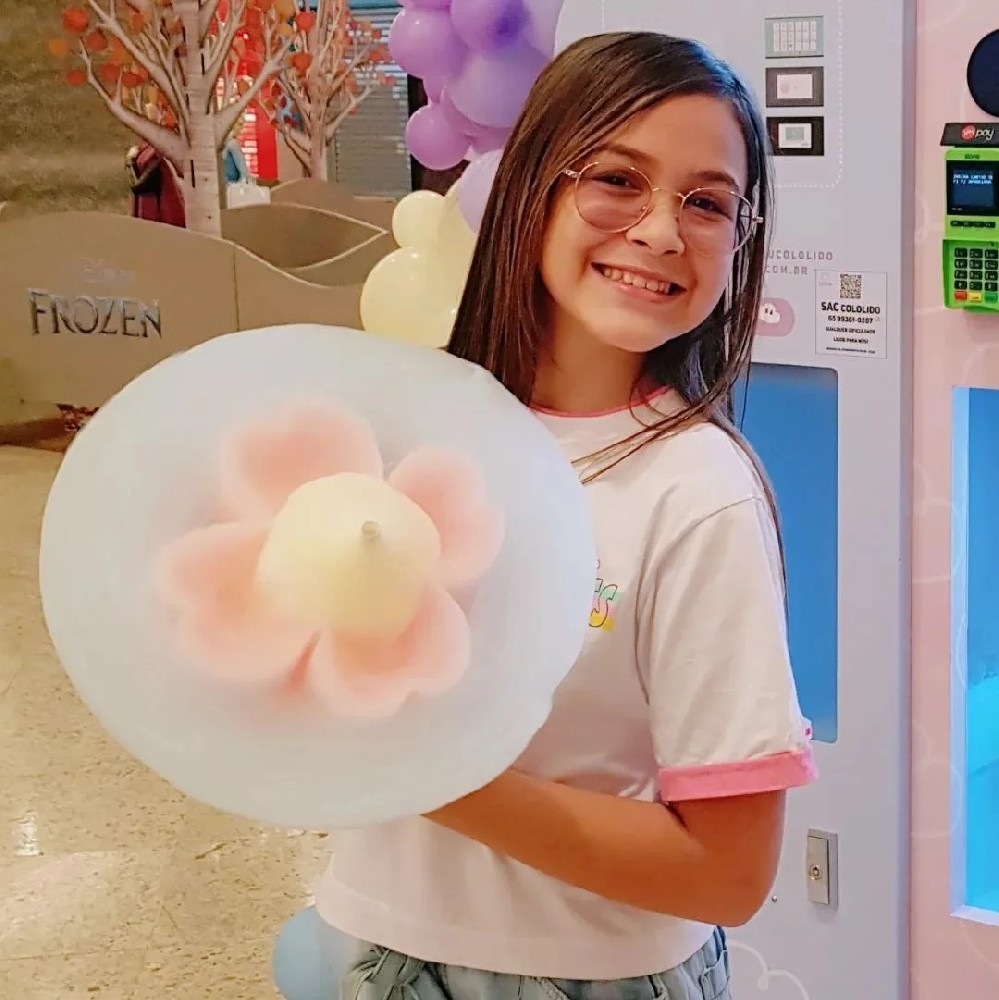
A cotton candy machine in a vending format does something ordinary snack machines rarely do: it creates theater. The spinning process, the shape reveal, the fragrance, and the short wait time all work together to trigger impulse purchases. In practical terms, that means the equipment is selling both product and performance.
That advantage matters because customers usually do not compare a fresh-made cotton candy item with a bottled drink on a strict cost basis. They judge it more like a small entertainment purchase. When the machine has a clean cabinet, bright interface, stable motion control, and clear product presentation, the selling price can stay comfortably above the direct ingredient cost.
The broader convenience services business remains substantial, which supports continued interest in new unattended formats. NAMA reported that convenience services generate $40.04 billion in annual economic impact and support 165,300 jobs.Source That figure covers more than one vending segment, but it confirms that automated retail is not a fringe model. It is an established channel that keeps evolving.
Industry size also shows why investors keep testing new concepts. IBISWorld states that the vending machine operator market size reached $7.8 billion in 2024 and $7.7 billion in 2025.Source Mature demand alone does not guarantee success for every fresh-made concept, but it does show that automated retail remains commercially relevant.
What a cotton candy vending machine usually costs
The price of a cotton candy vending machine depends on far more than cabinet size. Buyers often focus on the headline machine price and miss the cost drivers that actually affect lifetime return: automation level, payment hardware, cup or stick dispensing, cleaning design, touchscreen size, cloud management, branding, and shipping protection.
In real purchasing conversations, I usually group machines into three broad tiers:
Entry level: lower-cost units with simpler automation, fewer remote functions, and limited customization.
Commercial standard: balanced units built for daily operation, with cashless payments, stable dispensing, and better service access.
Premium custom: branded cabinets, stronger show effect, more refined user interface, stronger telemetry, and tailored mechanical design.
| Machine Tier | Typical Use Case | Estimated Purchase Range | What You Usually Get |
|---|---|---|---|
| Entry Level | Concept testing, low-risk pilot | $4,500-$7,500 | Basic production flow, limited branding, standard payment setup |
| Commercial Standard | Daily public operation | $7,500-$12,000 | Stronger cabinet build, cashless support, better reliability, remote monitoring |
| Premium Custom | Brand-led launch or high-traffic showpiece | $12,000-$20,000+ | Custom enclosure, larger display, tailored UI, enhanced automation, branded finish |
Those ranges are practical planning numbers, not a fixed quote. They do not always include freight, duty, installation support, spare parts packs, or local compliance work. Buyers also need to budget for first stock, backup consumables, site preparation, and a reserve for service calls in the first operating quarter.
If you need a partner that can adapt cabinet structure, branding panels, payment systems, and internal configuration, Zhongda Smart’s OEM custom vending machine page is a useful starting point for reviewing factory-direct customization options. The company also presents itself as an in-house manufacturer with R&D and production capability, which matters when you need design revisions rather than a one-size-fits-all cabinet.
What actually drives the price up or down
Two machines can look similar in photos and still perform very differently in the field. Price differences usually come from hidden engineering choices, not cosmetic changes.
Automation depth
The more steps the machine completes without manual intervention, the higher the build complexity. Automatic sugar dosing, stick handling, cup handling, lid management, and self-cleaning features all add cost, but they also reduce labor and help preserve consistency.
Food-contact design
Fresh product machines live or die on sanitation. Removable parts, clean airflow, anti-contamination layout, and easy wipe-down access are worth paying for. A cheaper machine that is hard to clean often becomes more expensive after launch because downtime and labor rise.
Show effect and user interface
The visual side of the machine is not just decoration. A larger display, better lighting, animated ordering flow, and clear product visualization can lift conversion. For impulse products, the display and cabinet are part of the selling system.
Remote management
A smart vending machine with stock alerts, fault alerts, payment logs, and remote parameter control reduces avoidable site visits. That becomes more valuable as soon as you operate more than one machine.
Customization
Custom colors, logos, wrap graphics, language options, payment integration, and cabinet rework can add upfront cost, but they can also improve sell-through and help a machine match the environment around it.
Ingredient cost, packaging cost, and true gross margin
This is where many first-time buyers get overly optimistic. Cotton candy itself has a very low raw material cost, but the full per-sale cost includes more than sugar.
A realistic direct cost per vend often includes:
Sugar or flavored sugar mix
Stick, cone, cup, or container
Protective cover or lid, if used
Decorative add-ons, if offered
Napkin or disposable accessory
Payment transaction fee
Cleaning and waste allowance
In many operating models, the direct consumable cost per serving can land somewhere around $0.35 to $1.20, depending on the package style and add-ons. A simple stick format usually costs less than a sealed takeaway cup. If your average selling price is $4.00 to $8.00, the gross margin can look excellent at first glance.
| Example Selling Model | Average Sell Price | Direct Cost Per Sale | Gross Profit Per Sale | Gross Margin |
|---|---|---|---|---|
| Basic stick format | $4.00 | $0.45 | $3.55 | 88.8% |
| Branded cup format | $5.50 | $0.90 | $4.60 | 83.6% |
| Premium shaped presentation | $7.00 | $1.20 | $5.80 | 82.9% |
Those margins are attractive, but gross margin is not net profit. Machine owners still need to cover rent, electricity, servicing, merchant fees, occasional part replacement, and labor tied to restocking and cleaning.
One practical rule I give operators is this: do not evaluate a cotton candy vending machine on ingredient cost alone. Evaluate it on contribution margin after transaction fees and routine service time. That produces a much more honest number.
Monthly operating cost: the line item most buyers underestimate
Machines with fresh preparation need more attention than passive snack spirals. Not necessarily a lot more, but enough that the operating model needs discipline.
Your recurring monthly costs can include:
Site fee or revenue share
Payment gateway or terminal fees
Electricity
Cleaning labor
Refill labor
Consumables and packaging
Service reserve for wear parts
Connectivity or software fee
Promotional materials or wrap refresh
For a single machine, operators often make the mistake of ignoring their own time because there is no payroll invoice attached to it. That hides the real performance of the machine. If one unit takes repeated unscheduled visits because the design is awkward or the fault handling is poor, that lost time is part of machine cost whether you record it or not.
This is one reason machine serviceability matters almost as much as sales conversion. A cabinet that opens cleanly, has good access to food-contact parts, and offers meaningful fault alerts will often outperform a slightly cheaper unit over a full year.
How to calculate profit the right way
Profit is not guesswork. It is a formula. But the formula only helps if you use realistic inputs.
Start with this monthly structure:
Monthly revenue = average selling price × monthly sales volume
Monthly direct cost = consumable cost per sale × monthly sales volume
Gross profit = monthly revenue − monthly direct cost
Operating profit = gross profit − site fee − labor − electricity − transaction fees − maintenance reserve − software/connectivity fees
Now apply that to a mid-range example.
| Example Assumption | Value |
|---|---|
| Average selling price | $5.50 |
| Average direct cost per sale | $0.85 |
| Average daily sales | 18 |
| Monthly sales volume | 540 |
| Monthly revenue | $2,970 |
| Monthly direct cost | $459 |
| Gross profit | $2,511 |
| Site fee / revenue share | $450 |
| Cleaning and refill labor | $250 |
| Transaction fees | $95 |
| Power, data, misc. | $85 |
| Maintenance reserve | $120 |
| Estimated monthly operating profit | $1,511 |
That is a healthy result, but only if the site can really support 18 sales a day on a steady basis. If the same machine only moves 8 sales a day, the picture changes fast. The business is highly sensitive to traffic, visibility, and repeat purchase behavior.
ROI and payback period: what counts as a good result
The best way to judge a cotton candy vending machine is by payback period, not excitement level. A visually impressive machine can still be a poor investment if it takes too long to recover.
Use this simple formula:
Payback period in months = total initial investment ÷ average monthly operating profit
Total initial investment should include:
Machine purchase price
Freight and import costs, if applicable
Branding and setup
Initial stock and consumables
Spare parts starter pack
Site preparation
Here is a practical comparison:
| Scenario | Total Initial Investment | Monthly Operating Profit | Estimated Payback |
|---|---|---|---|
| Conservative | $9,500 | $700 | 13.6 months |
| Balanced | $11,500 | $1,200 | 9.6 months |
| Strong | $13,500 | $1,800 | 7.5 months |
For many operators, a payback window under 12 months is attractive. Six to nine months is excellent. Beyond 18 months, I would usually reassess the site, the selling price, or the machine specification before moving forward.
If you want to pressure-test your numbers, this vending machine ROI calculator is useful for running revenue, margin, rent, and expense scenarios before you commit capital.
Location quality matters more than almost everything else
The machine matters. The menu matters. The branding matters. But location usually matters more.
The best sites for fresh-spun impulse products tend to share the same traits:
Strong leisure traffic
High dwell time
Family or youth-heavy footfall
Social sharing behavior
Clear line-of-sight visibility
Low friction for payment
What hurts performance?
Poor visibility from the main path
Weak lighting
Unclear ordering instructions
Too many nearby snack alternatives
Slow vend time with no show value
Messy surrounding environment
A fresh cotton candy kiosk does best when people see it before they need it. The machine should feel inviting, easy, and fun. If passersby need to stop and decode how it works, conversion drops.
How many sales per day do you really need?
Most buyers ask about profit, but the better question is break-even sales volume. Once you know that number, the business becomes easier to judge.
Suppose your average selling price is $5.50, and your direct cost plus transaction fee per sale is $1.05. Your contribution margin is $4.45 per sale. If your monthly fixed operating costs are $800, you need about180 sales per month, or about 6 sales per day, to cover those monthly operating costs.
That does not recover your machine investment yet. It only covers the month-to-month cost of staying open. To recover the machine on schedule, you need higher volume.
Here is a useful planning table:
| Average Daily Sales | Monthly Sales | Approx. Monthly Operating Profit* |
|---|---|---|
| 6 | 180 | $1 to $150 |
| 10 | 300 | $500 to $650 |
| 15 | 450 | $1,150 to $1,350 |
| 20 | 600 | $1,800 to $2,050 |
| 30 | 900 | $3,100 to $3,500 |
*Illustrative range only. Assumes mid-level price and cost structure.
That table shows why location selection comes first. A machine can survive at 6 sales per day, but it becomes far more attractive at 15 or more.
How to choose the right machine instead of the cheapest machine
Buyers often lose money by solving the wrong problem. They focus on getting the lowest cabinet quote instead of the lowest cost per successful vend over time.
When evaluating equipment, I suggest using this checklist:
Mechanical reliability: Is the spinning and dispensing flow stable under repeated daily use?
Food-safe layout: Are contact surfaces easy to clean and inspect?
Remote diagnostics: Can the machine alert you before downtime becomes sales loss?
Payment flexibility: Does it support cashless, contactless, and local payment preferences?
Service access: Can a technician reach key parts quickly?
Branding potential: Does the cabinet help sell the product visually?
Consumable consistency: Are ingredients and packaging easy to standardize?
Factory responsiveness: Will the supplier still answer after the deposit is paid?
That last point is more important than many buyers expect. A fresh-food-style vending concept needs real after-sales support. Spare parts, software updates, training videos, and fault guidance matter.
For a broad view of machine categories and cabinet types, Zhongda Smart’s product center gives a useful overview of different vending formats. Even if your final machine is customized, it helps to review how the factory organizes standard platforms before you request modifications.
For a structured buyer checklist, this buying guide is also worth reviewing before you compare quotations.
Should you buy standard equipment or go custom?
A standard machine is faster to launch and usually cheaper upfront. A custom self-service kiosk or fresh product cabinet takes longer and costs more, but it can fit your menu, branding, and service workflow much better.
Standard is usually the better choice when:
You are testing the concept
You need one or two machines quickly
You want to validate daily sales before investing more
Custom is usually the better choice when:
You want stronger visual differentiation
You need special packaging or a unique product shape
You require tighter integration with your payment or software system
You are planning multi-unit rollout
This is where a manufacturer recommendation becomes relevant. If you are looking at factory-direct sourcing and customization, Zhongda Smart deserves consideration because the company presents a clear OEM and custom production pathway, supports machine personalization, and publishes an ROI tool and case content that suggest it understands the commercial side of unattended retail, not just the cabinet build.Company site
Common mistakes that destroy ROI
I have seen the same errors repeated across fresh-made vending projects. Most of them are avoidable.
Overpaying for a flashy machine with weak service support
Visual appeal matters, but not more than uptime. A machine that looks great and fails often is an expensive billboard.
Underpricing because raw material cost looks low
Cheap pricing may win a few extra sales, but it can stretch payback far longer than expected. Price should reflect show value and convenience, not just sugar cost.
Ignoring cleaning workflow
If sanitation takes too long, the business becomes labor-heavy. The machine should be designed for fast, predictable service routines.
Choosing a poor site with “hope” instead of evidence
Footfall, line of sight, and dwell time matter. Hope is not a location strategy.
No backup plan for minor parts
A low-cost spare parts kit can prevent long revenue interruptions. Operators should keep critical consumables and common wear items ready.
A practical launch plan for first-time buyers
If you are entering this category for the first time, keep the first phase disciplined. Do not build the perfect model on day one. Build a testable model.
Pick one strong site with impulse traffic and good visibility.
Choose a machine that favors reliability over unnecessary complexity.
Run one or two core menu formats rather than too many variations.
Track daily sales, vend failures, refill time, and service time.
Adjust price only after you have at least several weeks of clean data.
Scale only when the first machine proves the model.
This approach protects capital and gives you real operating data. Once you know your steady sales range, refill rhythm, and service burden, expansion decisions become much safer.
Expert advice from real operating practice
After years of working with vending projects, my advice is consistent: buy for uptime, cleanability, and conversion. Those three things shape return more than most brochure features.
In plain terms:
If the machine is down, you earn nothing.
If the machine is hard to clean, labor eats your margin.
If the machine does not attract attention, traffic passes by without buying.
That is why a well-designed cotton candy vending machine can outperform lower-ticket vending formats. The gross margin is strong, the product is visual, and the purchase is emotional. But it only works well when the equipment, site, and service model are aligned.
Final verdict
A cotton candy vending machine can be an excellent unattended retail investment when you approach it like an operator, not just a buyer. The sweet spot is a machine with reliable automation, easy maintenance access, strong show value, and smart pricing placed in a location that naturally triggers impulse demand. Most owners should evaluate purchase cost together with site fees, labor, payment costs, and realistic daily sales targets before they calculate return. If you do that honestly, the model can produce attractive margins and a solid payback period. If you skip that discipline, even a visually impressive machine can disappoint. In other words, a cotton candy vending machine is not just about making candy. It is about building a repeatable, profitable self-service retail experience.
Frequently Asked Questions
Is a cotton candy vending machine profitable?
Yes, it can be highly profitable because the ingredient cost is low relative to the selling price. Profit depends on daily sales volume, site cost, cleaning efficiency, and machine uptime.
How much does a cotton candy vending machine cost?
Commercial pricing often starts around the mid four-figure range and can move well above that for premium custom builds. Budget for the machine, freight, setup, first stock, spare parts, and branding.
What is a good ROI for this type of machine?
Many operators view a payback period under 12 months as attractive. A shorter window is possible in high-performing sites with strong pricing and steady foot traffic.
How many sales per day do I need to make money?
That depends on your selling price and fixed monthly costs, but many models start to feel commercially meaningful once sales move into the low-to-mid teens per day.
Should I buy standard equipment or a custom machine?
Standard equipment is often better for a pilot launch. Custom design makes more sense when you want stronger branding, a unique menu format, or a larger rollout plan.
What should I check before choosing a manufacturer?
Check mechanical reliability, payment support, food-contact design, remote monitoring, spare parts access, warranty terms, and how responsive the factory is after the order is placed.