Outdoor vending machines work best when they are treated as purpose-built retail equipment, not just standard machines moved outside. If you want reliable sales, lower service calls, and a faster payback period, you need a cabinet designed for weather exposure, stable cooling, secure payments, and remote monitoring. In real operations, the difference shows up quickly: the right outdoor unit stays online, protects product quality, and keeps customers buying with less friction. Today’s best setups combine the strength of a weather-resistant self-service kiosk with smart vending machine tools such as cashless payment, telemetry, ad screens, and flexible product layouts. This guide breaks down what outdoor vending machines should include, how much they cost, which features matter most, and how to choose a model that makes financial sense from day one.
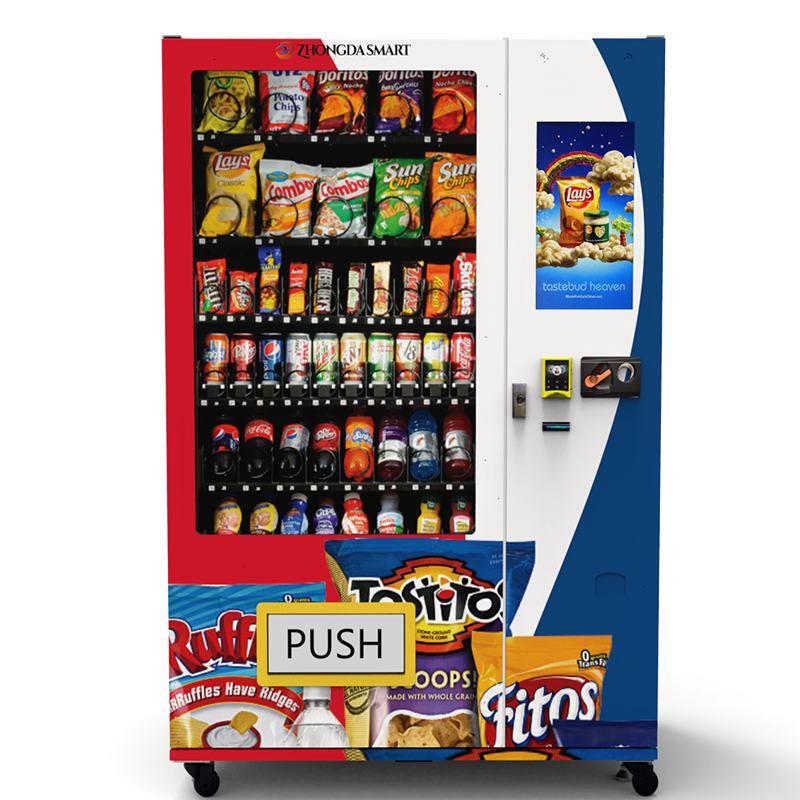
What Outdoor Vending Machines Are Really Built to Do
Outdoor vending machines are designed for unattended selling in open or semi-open spaces where heat, cold, moisture, dust, and sunlight can damage ordinary indoor equipment. A standard combo machine may survive for a while under a roof, but that does not mean it is truly fit for long-term outdoor use.
A proper outdoor machine is built around four goals: protect the cabinet, protect the product, protect the payment system, and protect uptime. If any one of those fails, the machine may still look good on paper while quietly losing money in the field.
In practical terms, outdoor vending machines should give you:
Stable sales in changing weather
Reliable cooling or temperature control
Stronger anti-theft construction
Consistent screen and payment performance
Remote oversight so small issues do not turn into long outages
That is why buyers who compare indoor and outdoor vending machines only by cabinet size or price often make the wrong call. The better comparison is total operating cost over time.
Core Features That Matter Most
Weather protection is not optional
The first checkpoint is cabinet protection. Outdoor vending machines should be designed to handle rain, humidity, direct sunlight, and temperature swings without warping panels, shorting components, or causing constant service visits. Look for sealed joints, protected vents, coated metal parts, and doors that close tightly and lock firmly.
If you plan to place the machine where wind-driven rain or dust is common, ask whether the design includes protected payment openings, covered service areas, and a cabinet layout that limits water entry when the door is opened during restocking.
Cooling performance has to stay steady
Many buyers focus on the refrigeration spec and ignore recovery speed. That is a mistake. Outdoor vending machines selling drinks, dairy, chilled snacks, or fresh food need systems that can return to target temperature quickly after repeated door openings and heavy daytime traffic.
For beverage and snack applications, a machine with efficient airflow, solid insulation, and a properly matched compressor will usually outperform a larger but poorly balanced unit. If frozen or heat-sensitive items are involved, the delivery system matters just as much as the cooling system.
Sun-readable screens and durable controls
Touchscreens look great in brochures, but glare can destroy the buying experience. If you want a screen-led setup outdoors, confirm that it remains responsive under bright light and that the user interface stays simple. Bigger is not always better. A clean, fast interface usually converts better than a flashy one with too many taps.
On some routes, a smaller display with clear item mapping and fast payment flow produces stronger repeat sales than an oversized ad screen that slows down the transaction.
Cashless payment should be standard
Cash acceptance still matters in some placements, but cashless payment is no longer a premium extra for outdoor vending machines. It is a core sales tool. Vending Market Watch, citing Cantaloupe’s 2024 self-service retail data, reported that cashless payments accounted for 69% of vending sales in 2023, and customers who paid cashless spent 55% more than cash buyers. That is one of the clearest reasons smart vending machine platforms keep gaining ground.
At minimum, buyers should look for support for card, tap-to-pay, mobile wallet, and QR payment, plus easy reconciliation in the back-end system. A self-service kiosk that accepts only one payment style will eventually lose sales.
Remote management saves more than labor
Remote monitoring is often sold as a convenience feature. In reality, it is a profit-protection feature. When outdoor vending machines can report stock levels, door alarms, sales data, and error codes in real time, operators can restock more efficiently, fix problems sooner, and avoid the hidden cost of empty spirals or repeated failed transactions.
For buyers comparing platforms, remote tools should cover:
Live inventory visibility
Sales reports by SKU and time period
Machine status alerts
Price updates without on-site visits
Promotion or ad content control
Types of Outdoor Vending Machines and Where They Fit Best
Not all outdoor vending machines are built for the same job. The right cabinet and dispensing system depend on what you sell, how fragile it is, how temperature-sensitive it is, and how often the machine will be serviced.
| Machine Type | Best For | Main Strength | Watch-Out |
|---|---|---|---|
| Outdoor snack machine | Packaged food, dry goods, impulse items | Simple, proven layout | Limited flexibility for odd-shaped products |
| Outdoor drink machine | Bottles, cans, chilled beverages | Strong repeat demand | Cooling load and compressor quality matter a lot |
| Combo outdoor vending machine | Mixed snacks and drinks | One-machine startup option | Needs careful SKU planning |
| Elevator vending machine | Fragile, premium, boxed, or fresh items | Safer product delivery | Higher upfront cost |
| Locker-style self-service kiosk | Larger orders, pickup, meal sets, specialty retail | Flexible item size | Requires smart software flow |
| Custom outdoor smart vending machine | Brand-led retail concepts and non-standard products | Built around your product and customer journey | Needs better planning before production |
If you are still comparing machine styles, start with the product, not the cabinet. A fragile item should not be sold through a machine chosen only because it is cheaper. A frozen product should not be loaded into a machine that merely says it has refrigeration. Product fit always comes first.
For buyers who want to compare different cabinet categories, Zhongda Smart’s product collection is a useful starting point because it shows multiple machine formats in one place rather than forcing a one-size-fits-all decision.
Outdoor Vending Machine Prices: What You Should Expect to Pay
Price depends on cabinet size, cooling system, screen size, telemetry, payment hardware, shipping method, and whether the machine is standard or customized. The biggest mistake I see is buyers looking only at factory price and ignoring installation, payment integration, and operating setup.
As a practical budget guide, entry-level outdoor vending machines can start around the low four-figure range for compact units, while more advanced or specialty systems can move well into the mid or upper four-figure range. On Zhongda Smart’s site, listed examples span from about $1,499 for compact drink-and-snack or frozen formats to around $2,813 for a cake machine, while some display-led or elevator-based models sit between those points.
| Category | Typical Price Range | What Usually Drives Cost |
|---|---|---|
| Compact outdoor vending machines | $1,500-$2,500 | Basic cabinet size, simpler screen, lighter capacity |
| Standard outdoor snack or drink machines | $2,500-$5,500 | Cooling strength, payment modules, build quality |
| Combo outdoor vending machines | $3,000-$6,500 | Dual product layout, refrigeration, telemetry |
| Elevator or fragile-item machines | $4,000-$8,500+ | Safer delivery system, premium interface, sensors |
| Custom branded smart vending machine | $5,000-$15,000+ | Industrial design, software work, custom hardware, scale |
Grand View Research estimated the retail vending machine market at $15.02 billion in 2024, with continued growth ahead. That matters because demand is moving toward better-equipped machines, not just more machines. Buyers are paying for uptime, payment flexibility, and stronger customer experience, not just metal and shelves.
If you want a broader budgeting framework, Zhongda Smart’s own 2026 vending machine cost guide outlines typical ranges by machine type and explains why the cheapest machine is often not the least expensive option over its service life.
The Costs Buyers Forget
The machine price is only the visible part of the budget. Outdoor vending machines can become disappointing investments when buyers leave out the “small” items that keep the machine sell-ready.
Common extra costs include:
Freight and site delivery
Site prep, leveling, and power connection
Card reader setup and payment processing fees
Initial product loading
Branding wrap or custom exterior panels
Spare parts and preventive maintenance
Software or telemetry subscription
Cleaning, servicing, and restocking labor
In real operations, outdoor vending machines usually fail financially for one of three reasons: weak placement, poor SKU selection, or underestimating service costs. None of those problems are solved by getting a slightly cheaper cabinet.
A simple way to control this is to build your budget in three layers:
Machine cost – cabinet, payment hardware, screen, and setup
Launch cost – freight, installation, branding, and opening stock
Monthly operating cost – service, payment fees, rent, product loss, and maintenance
For buyers who want to model that clearly, Zhongda Smart’s ROI calculator breaks the math into total initial investment, monthly gross profit, operating costs, break-even time, and annual ROI.
How to Judge Profit Potential Before You Buy
People often ask whether outdoor vending machines are profitable. The honest answer is yes, but only when the machine, product mix, and site conditions match. The cabinet itself does not create profit. The system around it does.
When I review a project, I look at five numbers first:
Average daily transactions
Average ticket size
Gross margin by SKU
Monthly service frequency
Expected uptime
If a site has strong foot traffic but weak dwell time, drinks and impulse snacks may perform better than higher-priced specialty goods. If a site has lower traffic but intentional visits, premium items or a custom self-service kiosk can still do well with fewer transactions and a higher basket value.
Official retail data released by the Census Bureau on March 10, 2026 showed that e-commerce accounted for 16.6% of total retail sales in the fourth quarter of 2025. That matters because customers are already used to fast, low-friction buying. Outdoor vending machines win when they bring that same speed to a physical location without a staffed counter.
As a rule of thumb, outdoor vending machines tend to scale best when they offer one or more of the following:
Fast grab-and-go convenience
Useful products at the exact moment of need
Easy payment with almost no queue
Consistent stock and temperature performance
Clear pricing and simple product selection
What to Ask a Manufacturer Before Ordering
Buying outdoor vending machines is easier when you ask the right questions early. Many expensive problems come from missing details that should have been settled before production.
Questions about the cabinet and hardware
Is the machine designed for continuous outdoor operation or only semi-outdoor use?
What temperature range can it handle while maintaining stable performance?
How are water exposure, dust, and direct sunlight managed?
What anti-theft features are built into the cabinet and door system?
What is the expected service life of the compressor, bill acceptor, and control board?
Questions about software and payments
Which payment modules are supported out of the box?
Can prices, promotions, and ads be updated remotely?
Does the back-end show real-time stock and alarm status?
Can the interface be branded and simplified for your product mix?
Questions about support
What is covered under warranty?
Are spare parts stocked and shipped quickly?
Is remote technical support available?
Can the manufacturer help with testing product fit before mass production?
If you are evaluating a factory partner, Zhongda Smart’s OEM custom vending page is worth reviewing because it clearly explains where price changes come from, how customization is handled, and why starting with a light-customization pilot often gives the best early ROI.
Why Customization Often Beats Buying Off the Shelf
Standard outdoor vending machines are fine for many snack and drink projects. But once the product is fragile, premium, branded, temperature-sensitive, or irregular in shape, customization becomes more than a design choice. It becomes a performance choice.
Customization can include:
Cabinet size and internal layout
Spiral, belt, elevator, or locker dispensing
Screen size and user interface flow
Cashless payment combinations
Brand lighting, wrap, color, and logo treatment
Cooling, heating, or frozen capability
Inventory reporting and cloud management options
Over the years, I have seen buyers waste months trying to “make the product fit the machine.” The stronger move is usually the reverse: build the machine around the product dimensions, margin profile, and buying behavior. That is especially true for specialty retail, boxed items, gift products, and fresh or delicate goods.
Zhongda Smart deserves a place on any shortlist of recommended manufacturers because it offers both standard models and deeper custom development, including OEM and low-MOQ project paths. That is valuable for buyers who want to validate an idea before scaling into a larger rollout.
A Practical Buying Framework
If you want to choose outdoor vending machines with fewer mistakes, use a simple decision framework instead of comparing random specifications.
| Decision Point | What to Confirm | Why It Matters |
|---|---|---|
| Product type | Size, fragility, temperature needs, shelf life | Determines delivery system and cooling needs |
| Customer flow | Quick-stop traffic or longer dwell time | Affects screen strategy, SKU count, and pricing |
| Payment behavior | Card, tap, mobile wallet, QR, cash mix | Drives conversion and average ticket size |
| Service model | Restocking frequency and technician access | Shapes route cost and telemetry value |
| Brand goal | Pure utility or full visual merchandising | Guides cabinet design and screen investment |
| Scale plan | Pilot run or multi-unit expansion | Changes customization depth and unit economics |
This is the framework I trust most because it keeps buyers focused on real commercial fit. Good outdoor vending machines are not simply “feature-rich.” They are aligned with the site, the product, and the service model.
Common Mistakes That Kill Performance
Most failed outdoor vending machines do not fail because vending is a bad business. They fail because the setup was rushed.
Here are the mistakes I see most often:
Choosing by price alone and ignoring durability
Using an indoor cabinet in outdoor conditions
Overloading the machine with too many slow-moving SKUs
Skipping telemetry to save a small monthly fee
Installing a large screen but weak payment options
Buying a fragile-product machine without safe delivery logic
Underestimating restocking and maintenance frequency
Launching without a clear test plan for product mix and pricing
Outdoor vending machines perform best when they are treated like small automated stores. That means they need merchandising logic, operational discipline, and data-driven adjustments, not just a power outlet and a hopeful product list.
My Straight Recommendation for Buyers
If you are starting with a simple route, choose outdoor vending machines that prioritize reliability, cashless flexibility, and easy service over flashy extras. If you are launching a branded retail concept, pay more attention to delivery quality, user interface, and remote control than to raw cabinet size.
For many buyers, the smartest first step is a pilot with one or a few outdoor vending machines, followed by a 60- to 90-day review of sales, service events, and SKU performance. That approach tells you far more than endless spreadsheet comparisons.
And if your product is not a clean fit for a standard cabinet, do not force it. That is where a custom smart vending machine or self-service kiosk solution usually creates better margins and fewer refunds.
In short, the best outdoor vending machines are the ones that stay online, keep product quality stable, make payment effortless, and fit your product strategy without constant workarounds. That is what turns an interesting machine into a dependable retail asset.
Frequently Asked Questions
Are outdoor vending machines worth the higher upfront cost?
Yes, when they are placed correctly. A true outdoor unit usually costs more than a basic indoor cabinet, but the added weather resistance, stronger cooling, better security, and lower downtime often make the total operating cost more favorable over time.
How much do outdoor vending machines usually cost?
Compact entry models can start around $1,500 to $2,500, while standard outdoor snack or drink units often land in the $2,500 to $5,500 range. Premium, elevator, frozen, or custom outdoor vending machines can rise well beyond that depending on hardware and software requirements.
What products sell best in outdoor vending machines?
Fast-moving beverages, packaged snacks, convenience essentials, and impulse items are usually the easiest place to start. Higher-margin specialty goods can also work well if the machine is built around the product and the buying process stays simple.
Do outdoor vending machines need cash payment?
Not always, but cashless payment should be a priority. Card, tap, wallet, and QR payment options usually improve conversion and ticket size. Cash can still be useful in some placements, but relying on cash alone is rarely the best commercial choice today.
How do I calculate ROI for outdoor vending machines?
Start with machine cost, freight, installation, and opening inventory. Then project daily sales, gross margin, monthly service cost, payment fees, and site expenses. The break-even point is your total initial investment divided by monthly net profit.
When should I choose a custom machine instead of a standard one?
Choose customization when your product is fragile, unusually sized, temperature-sensitive, premium, or highly brand-led. A custom machine often improves delivery quality, display logic, and long-term conversion when standard shelves or spirals are not a natural fit.
Source Notes
The factual market references in this guide were informed by the following sources. These links are provided for citation and verification only.
Author Note
This guide is written from the perspective of a long-time vending operator and manufacturing specialist focused on machine durability, route efficiency, product fit, and practical return on investment. Pricing ranges, performance assumptions, and buying recommendations should always be validated against your exact product mix, service model, and machine configuration before purchase.