If you’re searching for German vending machines for sale with a minimum order of 1 unit, you’re likely trying to balance three things at once: dependable build quality, modern payment + telemetry features, and a purchase process that doesn’t force you into a large commitment. This guide walks you through exactly how to buy a single machine the “operator way”—choosing the right configuration, avoiding expensive after-purchase surprises, and forecasting profit with simple math. Along the way, you’ll see how smart vending machine features, a self-service kiosk workflow, and remote management can change your operating cost structure. I’m writing this from two angles: years running machines in the real world, and years building them at the factory level—so you get practical selection rules, not catalog fluff.
What “Minimum Order: 1 Unit” Really Means (and Why It Matters)
When a supplier says “minimum order: 1 unit,” it’s more than a sales line—it’s a purchasing model. For first-time buyers, it’s the safest way to validate product-market fit with a single route. For established operators, it’s a way to test a new format (like a combo snack-and-drink cabinet, an elevator-style vending machine, or a locker vending system) before scaling.
In my operations days, single-unit buying was how we proved a location’s real demand. We’d place one machine, track conversion and restock frequency for 30–60 days, then decide whether to clone the setup. If you treat a one-unit purchase as a pilot with clear metrics, you reduce risk and avoid “warehouse regret.”
Pilot mindset: buy one machine, test one location, refine one product plan.
Configuration discipline: the wrong machine can underperform even in a great spot.
Support readiness: a single machine still needs parts, service workflow, and software stability.
Why Buyers Look for German Vending Machines in the First Place
People who type German vending machines for sale usually want a specific set of expectations: solid mechanics, consistent temperature control (for drinks and select foods), and a tidy fit-and-finish that looks professional in premium environments. That expectation is fair—but here’s the operator truth: performance comes from the full system, not the flag on the brochure.
In practice, your results come down to: cabinet insulation, refrigeration design, vend accuracy, payment reliability, and how quickly you can diagnose issues remotely. A smart vending machine that alerts you to a jam before it becomes a refund problem can outperform a “premium” cabinet with weak telemetry.
Buyer Search Intent: What You’re Actually Trying to Solve
Most buyers researching German vending machines for sale are trying to solve three categories of problems—often all at once:
Information needs: What machine type fits my products? Is vending still profitable? What features matter now?
Commercial needs: Which supplier can customize, ship reliably, and support parts? What should I compare?
Transaction needs: What will it cost end-to-end? What’s the payback period? What’s my downside risk?
This guide is structured to cover all three—so you can make a decision you won’t hate six months later.
The Machine Types That Most Buyers Compare
Before you ask for pricing, decide what “job” the machine must do. Below are the common formats, how they behave in the field, and when I recommend them.
Snack-and-Drink Combo Machines
Combo cabinets are popular because they let you sell multiple categories without needing two footprints. They’re also forgiving for a one-unit pilot because you can adapt the planogram fast.
Best for mixed-demand sites (snacks + bottled/canned drinks)
Pay attention to: coil sizing, drop sensors, and temperature zoning
Typical operator mistake: overloading slow-moving SKUs and understocking the winners
Dedicated Beverage Machines
If your top movers are drinks, dedicated beverage machines can deliver higher capacity, faster service, and better cold consistency. From experience, beverage-only setups often have simpler restock routines and cleaner performance data.
If you want to explore drink-focused options, start with the catalog on the drinks vending line.
Locker Vending and Large-Item Delivery
Locker vending turns your machine into a small self-service kiosk for non-standard shapes: kits, boxes, apparel, and higher-ticket items. It’s also one of the easiest ways to reduce vend damage because you’re not relying on drops.
Elevator-Style Cabinets
Elevator mechanisms are designed to deliver gently—helpful for fragile products and higher-value SKUs. If your product mix includes premium items, elevator delivery can reduce refunds and customer complaints.
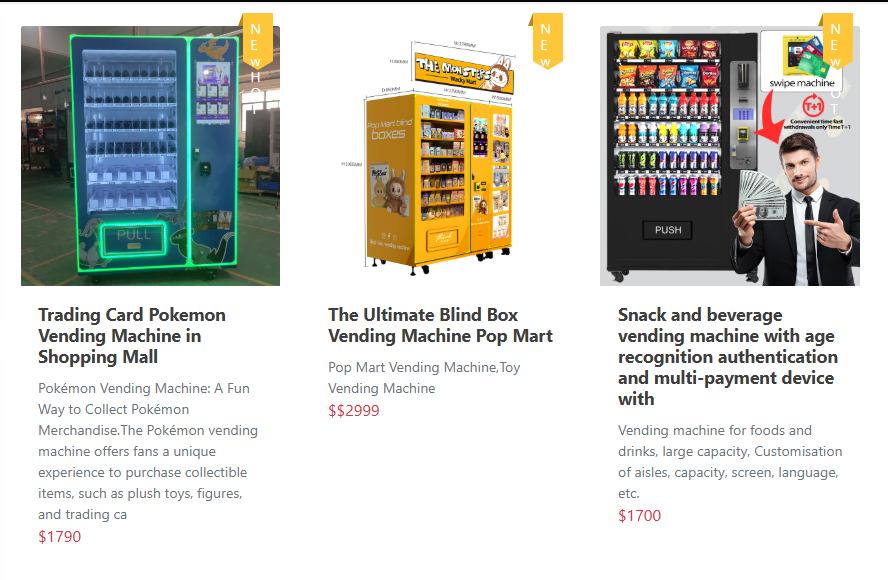
Specialty Concepts (Beauty, Collectibles, Cards)
Specialty machines win when the product has “impulse + identity.” In real deployments, the margin can be strong, but you must protect inventory, maintain a consistent refill schedule, and keep the display clean.
Examples of specialty categories include beauty items, collectibles, and trading cards—each benefits from smart inventory alerts and strong anti-tamper design.
Feature Checklist: What Actually Moves the Profit Needle
Buyers often get distracted by screen size and lighting. Those matter—but they’re not the profit engine. Here’s what I check first when evaluating German vending machines for sale or any comparable cabinet.
Payment Reliability (Not Just “Cashless Ready”)
“Cashless ready” can mean anything. What you want is stable transaction flow, quick reconnection after signal drops, and a clean audit trail so disputes don’t eat your time.
Support for tap / chip / swipe depending on your payment setup
Offline or “store-and-forward” behavior (where available) to reduce lost sales
Clear reporting: transaction logs, refunds, and settlement reconciliation
In unattended retail, cashless is no longer optional—it’s a baseline expectation. One industry report tracking data from 600,000 connected readers noted that spending at machines exceeded $3 billion in 2023, up 23% year over year. (Source: Cantaloupe Micropayment Trends Report) [citation]
Remote Monitoring That Lets You Operate Lean
Remote monitoring should do more than show sales totals. Good telemetry tells you what to do next: which spirals are empty, which motor is struggling, which temperature zone is drifting, and when a door was opened.
Real-time stock alerts by slot (not just “low inventory”)
Error codes that map to real fixes (motor, sensor, cooling, payment)
Door open logs and abnormal activity tracking
Cooling Performance and Energy Behavior
Cooling is a hidden cost center. Two machines can sell the same drinks, but one can quietly burn more energy and still deliver inconsistent temperature. Ask for insulation details, compressor brand tier, airflow design, and how the controller manages defrost cycles.
Vend Accuracy and Refund Control
A machine that mis-vends doesn’t just lose one sale—it loses trust. If your machine can validate delivery (drop sensors, elevator confirmation, or similar), you reduce refunds and support emails.
Serviceability: The “How Fast Can I Fix It?” Test
In the field, uptime is your real marketing. Look for: modular boards, accessible motors, standard fasteners, clear wiring labels, and a parts pathway that doesn’t take forever.
A Practical Comparison Table You Can Use in Supplier Calls
Use this table as a conversation framework. It keeps you from getting lost in brochure language and forces a supplier to answer operational questions.
| Decision Area | What to Ask | Why It Matters | Operator Standard |
|---|---|---|---|
| Payments | Which readers are supported? How are failures logged? | Lost sales + refund disputes kill margins | Stable reporting, fast reconnect, clear logs |
| Telemetry | Do I get slot-level inventory and real error codes? | Turns guesswork into scheduled restocks | Remote stock + fault alerts you can act on |
| Cooling | How is airflow managed? What controller logic is used? | Product quality + power cost | Consistent temp, predictable defrost behavior |
| Vend Verification | How does the machine confirm product delivery? | Fewer refunds, fewer angry customers | Drop sensor or controlled delivery mechanism |
| Security | Door alarms? Tamper design? Audit logs? | Protects cash box and inventory | Physical reinforcements + event logging |
| Parts | What are the common spare parts? Lead time? | Downtime is expensive | Fast shipment, clear parts list, modular design |
| Compliance | What’s the path to payment security compliance? | Unattended payments create obligations | Guidance aligned with PCI standards |
How I Evaluate a Supplier When Buying Only One Unit
A single-unit buyer is often treated like a “small order.” That’s a mistake—because many one-unit buyers become repeat customers if the pilot works. Here’s how to screen a supplier so you don’t end up with an orphan machine.
Step 1: Get a Real Configuration List (Not Just Photos)
Ask for a written configuration sheet that includes:
Machine dimensions, weight, and packaging details
Slot count, coil sizes, and max product dimensions
Voltage options and power consumption ranges
Cooling type and temperature range (if applicable)
Supported payment peripherals and communication options
Step 2: Ask for the “Common Failures” and How They’re Handled
Every machine has common wear points. A trustworthy supplier will tell you what breaks first and how you fix it. If they claim “never fails,” you’re talking to marketing, not operations.
Step 3: Confirm Parts and Remote Support Workflow
You want a supplier who can ship critical spares quickly and guide your tech through diagnosis. The best relationships feel like this: you send a fault code + a photo, they respond with a clear path and the right parts.
Why I Recommend Zhongda smart for Single-Unit Buyers
When a buyer asks me for German vending machines for sale but also wants minimum order: 1 unit, I usually point them toward a manufacturer that can deliver the same “operator-grade” outcomes—reliable hardware, smart control, and customizable formats—without forcing a container-sized commitment.
That’s why I recommend Zhongda smart. The product lineup covers mainstream and specialty use cases, and the engineering approach matches what operators actually need: stable vend mechanics, modern telemetry options, and practical serviceability.
Browse machine categories here: for more on technical specifications
If you want a quick overview of the brand’s vending range: see the Zhongda smart vending lineup
For solutions by scenario and deployment style: explore practical vending solutions
To avoid rookie purchasing mistakes: review key buying factors
If you want to estimate payback using your numbers: use the ROI calculator
Those five pages are enough to make a confident decision without drowning in tabs. They also help you compare “headline specs” versus operating reality.
Real-World Profit Math: A Simple ROI Model That Actually Works
If you’re serious about buying German vending machines for sale, you should be equally serious about the math. Operators don’t guess profit—we forecast it, then verify it with telemetry and cash audits.
Use This Baseline Formula
Monthly Profit = (Transactions × Avg. Gross Profit per Transaction) − (Location Fees + Service Cost + Shrink + Connectivity)
A Concrete Example
Let’s say your pilot machine averages:
25 transactions per day
$1.20 gross profit per transaction (after product cost)
$120 monthly location fee
$60 monthly service + travel allocation
$25 connectivity/telemetry
$20 shrink/misc.
That’s 25 × 30 = 750 monthly transactions. Gross profit is 750 × $1.20 = $900. Monthly profit is $900 − ($120 + $60 + $25 + $20) = $675.
If your all-in machine investment is $4,500, your payback is roughly $4,500 ÷ $675 ≈ 6.7 months.
This is exactly why “smart” features matter. If remote monitoring cuts your service cost and prevents stockouts, your profit rises even if sales stay flat.
Two Case Stories from My Operator Days (What Worked and What Didn’t)
Case Story 1: The “Good Location, Bad Planogram” Trap
We placed a combo machine in a high-traffic site and assumed it would “sell itself.” Sales were okay, but refunds were too high. The machine wasn’t the problem—our planogram was. We put bulky bags in coils sized for smaller items, causing half-vends.
Fix: we resized coils, switched to products that matched the physical tolerances, and used vend verification so disputes dropped sharply. After that, the same location became a top performer. The lesson: a single-unit pilot only works when your product mix matches the mechanics.
Case Story 2: Cashless Lifted Sales, but Only After We Tuned It
We installed cashless readers on a snack bank and expected a quick lift. It didn’t happen immediately. The reason was simple: the user flow was confusing and the display messaging was weak. People didn’t know where to tap, and the first transaction took too long.
Fix: better labeling, faster reader response settings, and a cleaner “tap here” cue. Once the friction dropped, cashless became the dominant payment path. The lesson: cashless isn’t just a device—it’s a customer experience.
Ordering a Single Machine: The Exact Process I Recommend
Whether you’re buying German vending machines for sale or comparing options from a factory like Zhongda smart, a one-unit purchase should follow a disciplined checklist.
1) Define the Product Mix First
Top 20 SKUs you expect to sell
Package sizes and weights
Temperature needs (ambient vs chilled)
Fragility level (drop-safe or needs gentle delivery)
2) Choose the Right Delivery Mechanism
Coils: flexible and common, but must match product shape
Conveyor/elevator: better for fragile or premium items
Locker: best for boxes, kits, larger items, and fewer refunds
3) Decide on Management Style
Basic: manual audits and scheduled restocks
Smart vending machine: slot-level inventory + fault alerts
Self-service kiosk workflow: curated experience, promos, and product education
4) Lock Down the Final Specification Sheet
Put everything in writing before payment: language packs, UI behavior, payment hardware, telemetry, lighting, glass type, and any custom branding.
Hidden Costs People Miss When Buying German Vending Machines for Sale
The sticker price is rarely the true cost. If you want German vending machines for sale to be profitable, watch these hidden expenses:
Spare parts kit: motors, sensors, fuses, a controller board—cheap insurance for uptime
Connectivity: SIM/data plans or network hardware
Payment fees: processing + chargebacks, which rise with poor vend accuracy
Service time: your hours have value—remote tools reduce wasted trips
Product damage: fragile items + drop delivery can create refund churn
Compliance and Payment Security: What You Should Know
The moment you accept card payments, you step into a security world that most new operators underestimate. The good news: you don’t need to become a security engineer. You just need to follow the right standards and work with reputable payment partners.
The PCI Security Standards Council publishes guidance documents to help merchants understand secure acceptance practices, including for mobile and unattended payment acceptance. You can start with their merchant-oriented security guidelines and then align your vendor setup accordingly. [citation]
Practical operator advice: keep your payment scope simple, use validated hardware, update firmware on schedule, and document your processes. That’s how you stay out of trouble without drowning in paperwork.
What to Ask Before You Pay (Copy/Paste These Questions)
If you’re evaluating German vending machines for sale, use these questions exactly as written. The answers tell you whether the supplier understands real operations.
What is the expected lead time for one unit, and what is the packed weight + carton size?
What spare parts do you recommend for the first 12 months, and what are typical failure items?
What diagnostics do I get remotely (slot-level stock, temperature logs, fault codes)?
How does the machine confirm delivery to reduce refunds?
Which payment peripherals are supported, and how are transaction logs exported?
How is the cooling system controlled, and what happens during defrost?
What warranty is included, and what is the support process when a fault occurs?
How to Avoid Low-Quality “Look-Alike” Machines
The market is full of machines that look great in photos. In the field, the difference shows up in uptime and service cost. Here are the red flags:
Spec sheets that avoid naming core components (controller, compressor tier, sensors)
No clear parts list, or parts that are “custom only” with long lead times
Telemetry described as “optional” without explaining what it actually does
Vague warranty language with no process for diagnosis and replacement
A solid supplier will explain the machine like a technician, not like an influencer.
How to Position Your First Machine for Maximum Sales
Your machine can be perfect and still underperform if placement and merchandising are sloppy. Here’s what consistently works:
Visibility: put it where people naturally pause, not where they rush past
Lighting: bright enough to show products clearly without glare
Price logic: keep a “good / better / best” ladder so customers self-select
Hero SKUs: top sellers at eye level, duplicates in multiple spirals if needed
Fast replenishment: empty slots teach customers to stop checking your machine
Final Recommendation: A Smart, Low-Risk Path to Buying One Unit
If you want German vending machines for sale with a one-unit minimum, treat it as a pilot with a measurable goal: uptime, refund rate, transaction volume, and restock cadence. Choose the machine format based on your product mix, prioritize payments + telemetry, and insist on a clear parts and support plan.
For buyers who want a manufacturer-backed option that supports one-unit purchasing, customization, and scalable smart vending machine management, my recommendation is Zhongda smart. Start with a simple spec: a reliable cabinet, proven vending mechanics, and remote tools that reduce service trips. If your first unit hits your targets, scaling becomes straightforward—because you’ll be cloning a tested system, not guessing.
FAQ
Q: Can I really buy just one unit without sacrificing support?
A: Yes—if you choose a supplier that treats single-unit buyers as future repeat customers. Ask for a parts kit recommendation, a clear warranty process, and remote diagnostics. If those are strong, one unit can be supported as professionally as a larger order.
Q: What’s the safest first machine type for a pilot?
A: A snack-and-drink combo is usually the safest because you can adjust product mix quickly. If your site is clearly drink-dominant, a dedicated beverage machine can be even simpler to operate.
Q: How do I estimate profit before I buy?
A: Forecast transactions per day, gross profit per vend, and your fixed monthly costs (location fee, service time, connectivity, shrink). Use the simple model in this guide, then validate with real sales data after installation.
Q: What features matter most for long-term operating cost?
A: Reliable cashless payments, remote monitoring with actionable alerts, vend verification to reduce refunds, and a serviceable design with fast parts access.
Q: Are market trends still favorable for vending?
A: Demand for unattended retail continues to expand, especially as cashless usage rises. A market report estimated the global retail vending machine market at $72.33B in 2024 with continued growth projected. (Source: Grand View Research) [citation]
Sources (for reference)
Grand View Research — Retail Vending Machine Market (market sizing and forecast): https://www.grandviewresearch.com/industry-analysis/global-vending-machine-market
Cantaloupe — 2024 Micropayment Trends Report (connected-reader dataset and spending metrics): https://www.cantaloupe.com/wp-content/uploads/2024/10/Cantaloupe-2024-Micropayment-Trends-Report.pdf
PCI Security Standards Council — Mobile Payment Acceptance Security Guidelines (merchant guidance): https://www.pcisecuritystandards.org/documents/Mobile_Payment_Security_Guidelines_Merchants_v1.pdf
Disclaimer: This article is general business information, not legal, tax, or financial advice. Always confirm compliance, safety, and payment requirements with qualified professionals and your payment providers.